

London has always resisted a single definition. It is not merely a city but a shifting organism, a dense accumulation of histories, bodies, architectures and contradictions that continuously rewrite themselves.
What emerges when multiple photographic practices attempt to grasp this unstable entity is not a unified portrait, but a constellation of perspectives where intimacy, distance, memory and absence coexist.
The projects gathered here do not attempt to define London; instead, they orbit around it, revealing fragments that, when read together, construct a deeper and more complex understanding of the urban condition.
In this sense, photography does not operate as documentation alone, but as a form of excavation. Each author approaches the city from a different emotional, temporal and conceptual position, transforming London into a psychological landscape where personal narratives intersect with collective realities. The result is not a city seen, but a city interpreted, filtered through grief, observation, isolation, architecture and movement.
The City as Personal Reconstruction
Photography as a way of reassembling identity through urban space
In Inner Child Playground: Unveiling Childhood Echoes in London’s Streets by Mister Geez, the city becomes a deeply personal terrain where memory and loss converge. The origin of the work, rooted in the traumatic experience of his mother’s passing, transforms photography into an act of emotional reconstruction. London is not merely the backdrop; it is the space where fragments of identity are reassembled. The camera becomes a tool to navigate grief, to rediscover light after darkness, and ultimately to reconnect with a sense of presence in the world.
This approach positions the urban environment not as an external subject but as an extension of the self. The streets of London, in this context, are imbued with echoes of childhood, traces of absence and gestures of healing, revealing how photography can function as both testimony and therapy.
The City as Collective Pulse
Street photography as a living archive of social energy
If Mister Geez turns inward, London’s Calling by Jon Bender expands outward, embracing the city as a living organism defined by its people. Conceived as an “ongoing conversation,” the project captures London at a moment of transition, emerging from lockdown into a fragile post-restriction reality. Here, photography operates as a form of social recording, preserving fleeting encounters, subcultures and everyday gestures that define the rhythm of the city.
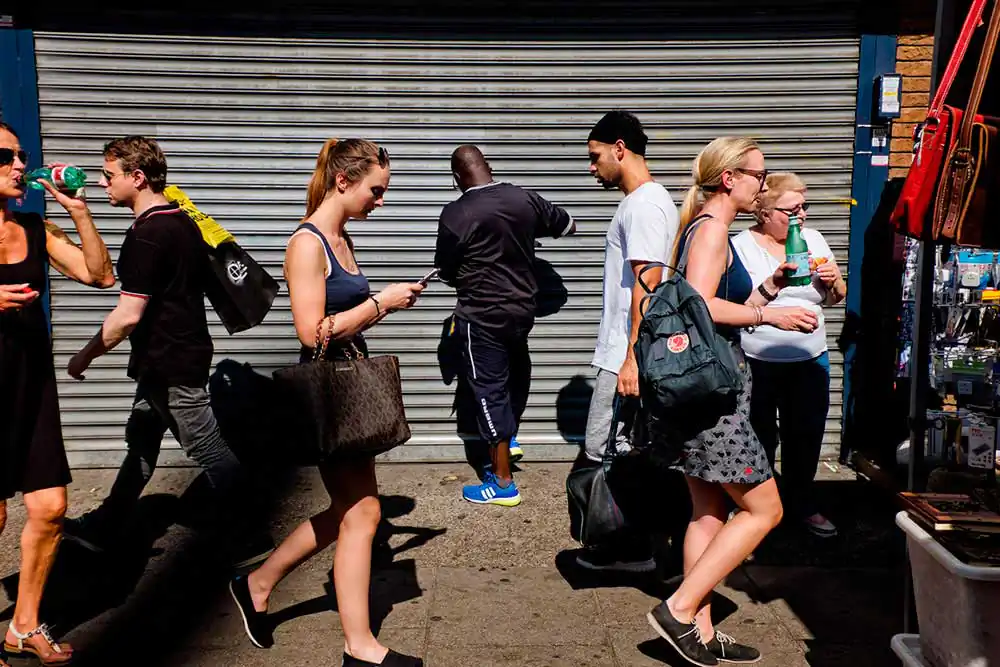
Similarly, London street portraits by Lorenzo Grifantini reinforces the idea that London is inseparable from its inhabitants. The city reveals itself through its diversity, through the coexistence of contrasting identities that occupy the same space simultaneously. What emerges is not harmony, but a dynamic tension that defines the essence of urban life. Both works position the photographer as an observer embedded within the flow of the city, capturing not only appearances but the underlying social fabric.
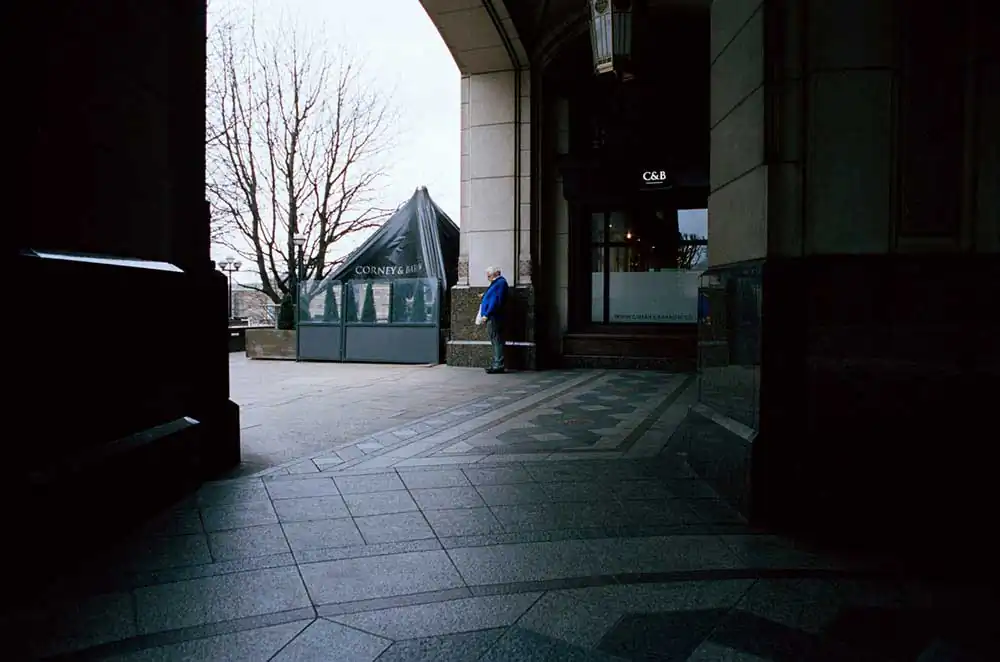
In Urban Poetry – London by Robin Cassiau, this observation takes on a more lyrical dimension. The city becomes a stage where anonymity and individuality collide, where gestures, movements and fleeting interactions form a visual language of their own. The photographer navigates this complexity by isolating moments that condense the chaos into fragments of meaning, revealing the poetic potential embedded within everyday life.
The City as Isolation and Psychological Space
Lockdown, absence and the invisible weight of urban life
A radically different perspective emerges in The Truth; Quarantine in London: Living together but apart by Monika K.Adler, where the city is stripped of its social density and transformed into a space of psychological tension. The pandemic reveals a London marked by absence, silence and fragility, where human presence is felt more through its disappearance than its visibility.
This work shifts the focus from the external spectacle of the city to its internal fractures. The references to loneliness, death and mental health underscore a fundamental paradox: in a city of millions, isolation becomes one of the most defining experiences. Photography here does not seek to represent the city, but to expose its emotional undercurrents, revealing the invisible structures that shape human experience within urban environments.
The City as Architecture and Timeless Form
Stripping away the human to reveal the essence of space
In contrast to the human-centered narratives, Cities : London in Black and White by Rene Siebring proposes a radical reduction. By removing the distraction of color and minimizing human presence, the city is transformed into a study of form, light and structure. London becomes almost abstract, a composition of lines and volumes where architecture takes precedence over narrative.
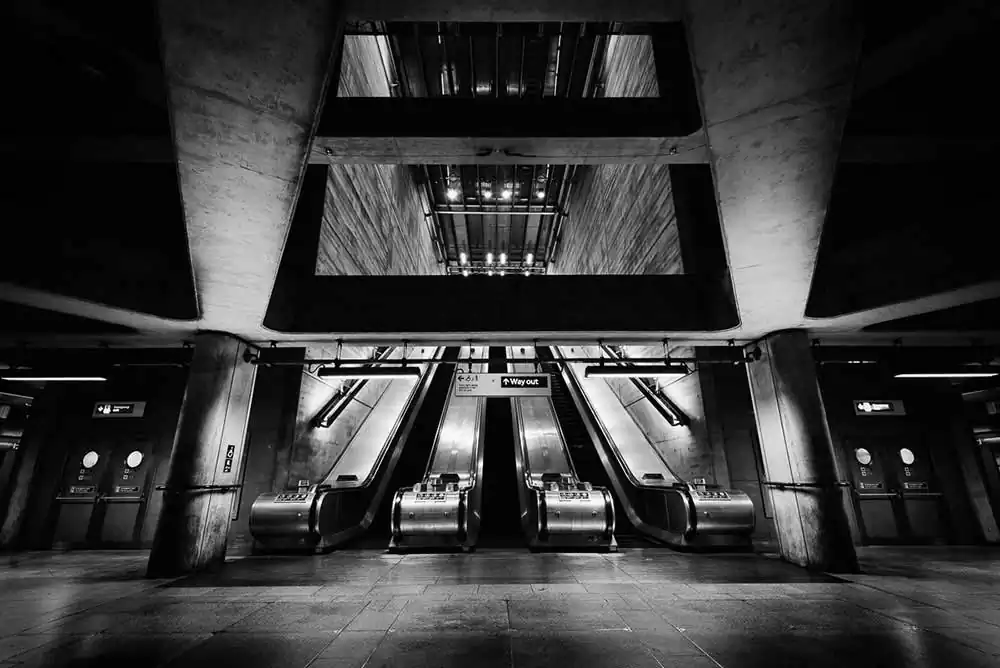
A similar fascination with structure and materiality can be found in London Underground by Katherine Young, where the subterranean network is reinterpreted as a space of aesthetic exploration. The focus on textures, materials and light transforms functional infrastructure into a visual language that oscillates between minimalism and monumentality. In both cases, the absence of people does not diminish the city; rather, it reveals another dimension of its identity, one that exists beyond human activity.
The City as Stage and Representation
The performative dimension of urban culture
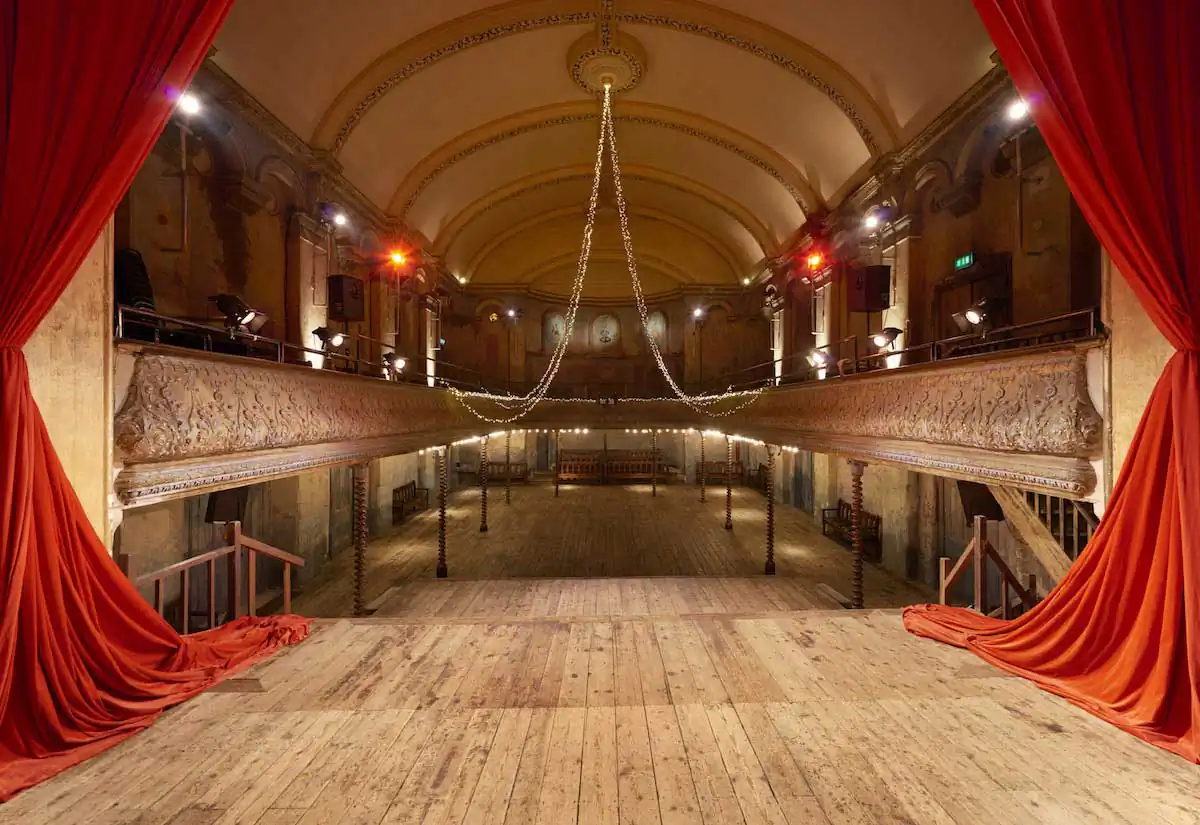
Finally, Dazeley discovers London’s Theatres introduces a meta-layer to the understanding of the city. Here, London is not only a place where life unfolds, but a space explicitly designed for performance. By exploring both the visible and hidden areas of theatres, the project reveals the mechanisms behind representation itself.
This perspective reframes the entire city as a stage, where everyday life and constructed spectacle coexist. The backstage areas, normally invisible, become a metaphor for the hidden structures that sustain the visible surface of urban life. Photography, in this context, becomes a tool to uncover these layers, bridging the gap between what is seen and what remains concealed.
London as a Fragmented Totality
A city that can only be understood through multiplicity
Taken together, these projects do not offer a definitive image of London, but rather a fragmented totality. Each perspective reveals a different layer of the city: the personal and the collective, the visible and the invisible, the inhabited and the empty. What emerges is a complex and often contradictory portrait, where meaning is not fixed but constantly negotiated.
This multiplicity is precisely what defines London, and perhaps any contemporary metropolis. Photography, in this context, does not resolve these contradictions but embraces them, transforming the act of seeing into an act of thinking. The city, ultimately, is not something that can be captured in a single image, but something that must be continuously reinterpreted through a diversity of gazes.
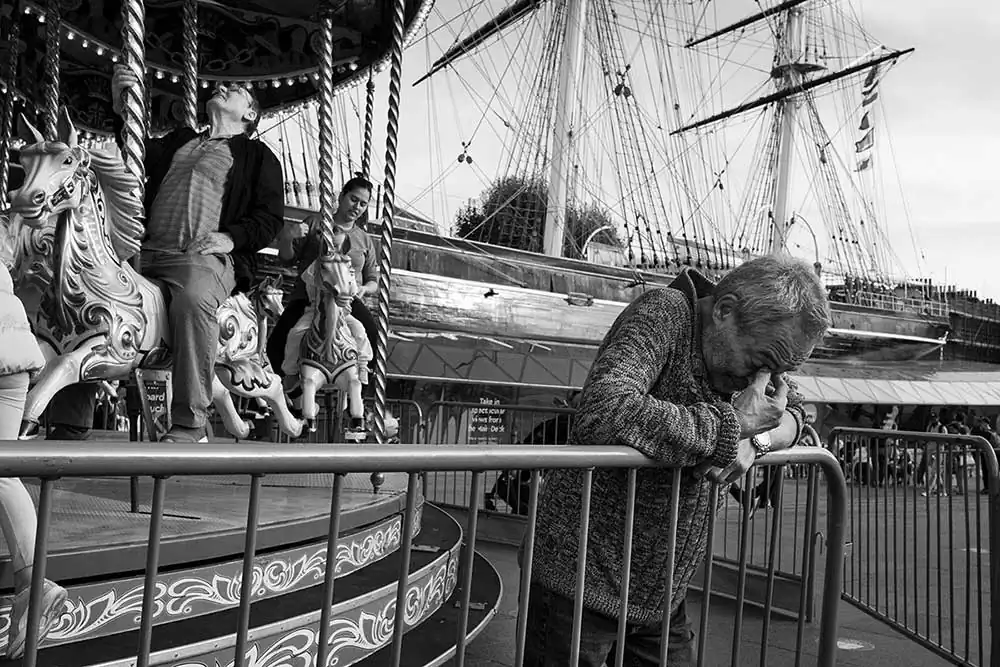
Inner Child Playground: Unveiling Childhood Echoes in London’s Streets by Mister Geez
Gerald Marie-Nelly, known as Mister Geez, is a visual artist originally from Martinique and now based in London for the past 15 years. His artistic journey, deeply intertwined with personal experiences, unfolds as a narrative of unexpected turns, transformative moments, and the power of visual storytelling. His venture into photography was catalyzed unexpectedly in 2011 when the passing of his mother marked a poignant turning point. During the preparations for her funeral, a series of autopsies mandated keeping the coffin closed during the wake. Determined to honor her memory, he embarked on a quest to find a photograph encapsulating her beauty and personality. What began as a brief search unfolded into a six-hour journey, unveiling the profound power of photography. Since that pivotal day, photography has been his means of seizing light and immortalizing moments, guiding him from a dark place to a newfound appreciation for the inherent beauty that surrounds us… Read More
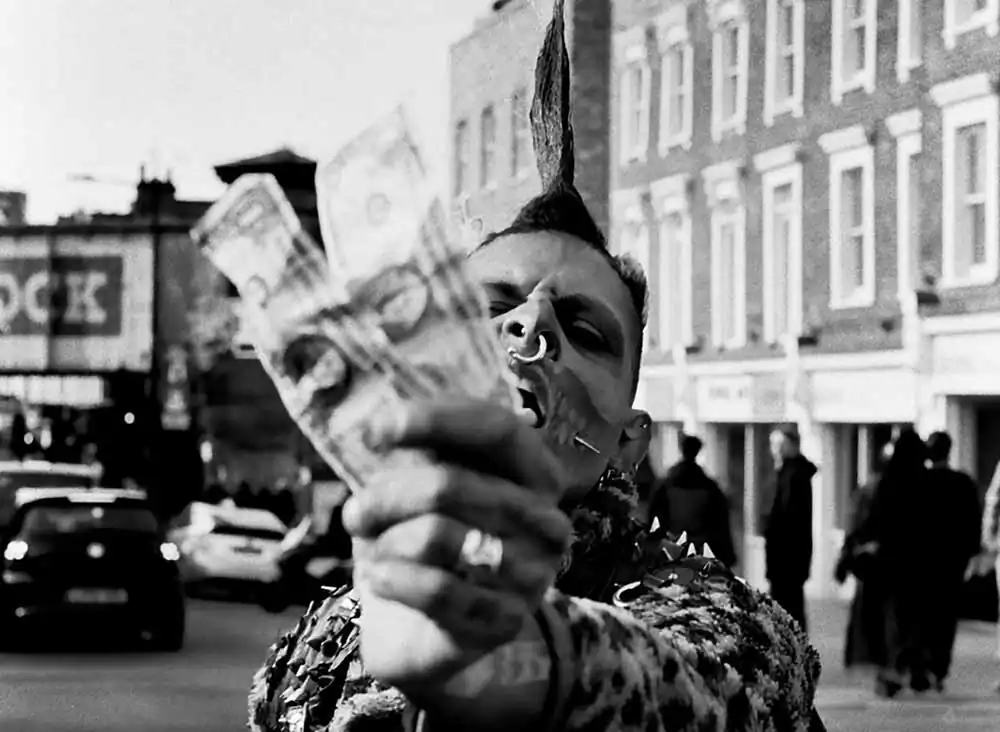
London’s Calling by Jon Bender
‘London’s Calling’, is a documentary style street photography series dubbed, ‘an ongoing conversation’. Starting in Summer of 2021, the images provide glimpses of London during the end of the first lock down and in the post restriction climate. This series of images marks the beginning of a much larger body of work that intends to act as a record of people. For now, the work centers in Central and East London with depictions of community faces, commuters, subcultures, statements and club scenes. However, as it grows it will explore many more themes and communities.Named for the famed The Clash song, London’s Calling is both a love letter to London but also preservation of the people who make the city what it is. There is simply no other city like it, a melting pot of culture, politics and food, it is practically a country in its own right differing greatly from the majority of the UK. The images here aim to capture some of that essence, some of that spark and character that gives London its life, with all of its juxtapositions and disparities… Read More
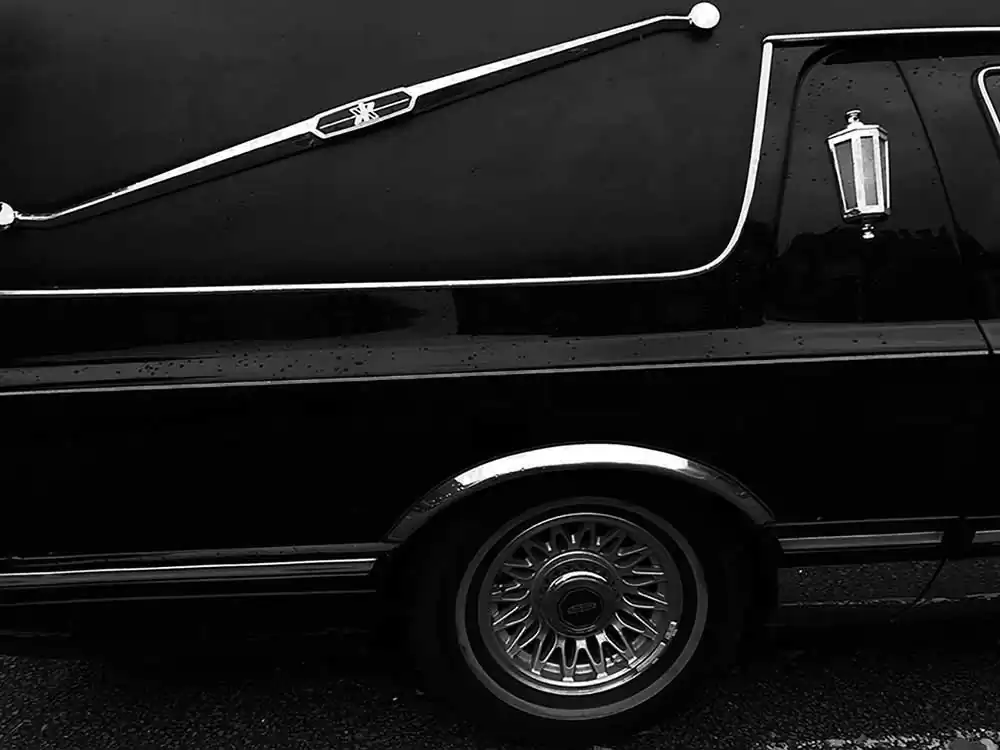
The Truth; Quarantine in London: Living together but apart by Monika K.Adler
The photography series ‘The Truth’ is a personal reflection on lockdown in London: with its subtle meetings with loneliness, death, and traces of human presence. “All of humanity’s problems stem from man’s inability to sit quietly in a room alone,” wrote the French philosopher Blaise Pascal. We often find it hard to feel comfortable with ourselves; many find the burden of isolation unbearable. There are places in London where every few days your neighbours disappear. In the apartment block facing mine, a young woman committed extended suicide, a family-annihilation, killing herself and her two sons. Afterwards, the burnt-out building decorated with waves of white roses, balloons, and handwritten notes, became memorial and egregore to the psychological impact of the pandemic. Every ninety minutes in the United Kingdom, someone loses their life to suicide… Read More
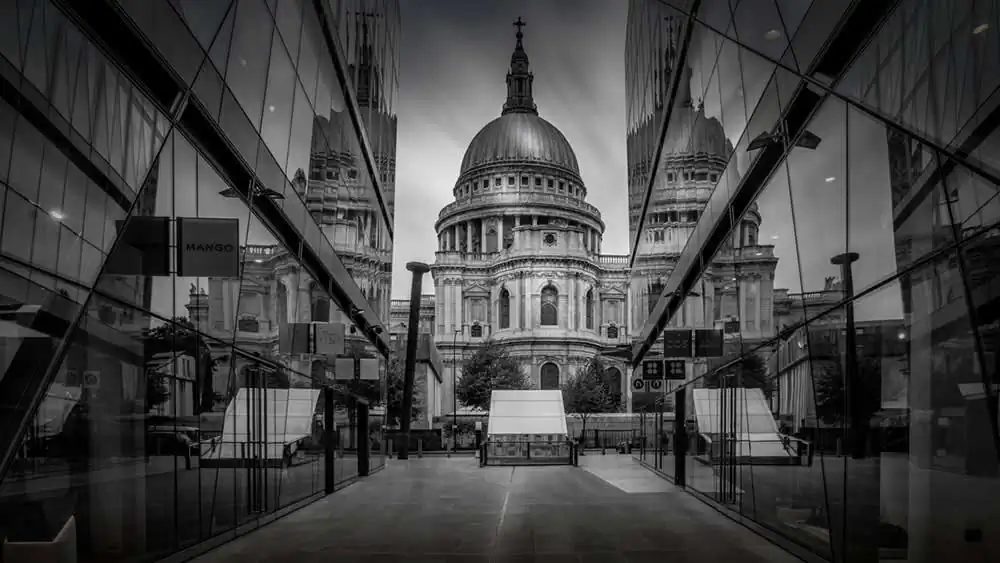
Cities : London in Black and White by Rene Siebring
For the London Project I wanted to show the serenity of London. A city with almost 9 million inhabitants. One of the most important global cities. To see the beauty of the city I want to show the city without distraction. In photographing in Black and White it enables me as a photographer to focus on the beauty of the scene, the buildings, the streets, not being distracted by colors or many people moving about. By playing with the light I can lead the eye of the viewer through the scene of the photo, towards the star of the photo. I am a fine art photographer specializing in architecture and cities. My goal is to capture the beauty of the city from the moment the sun begins to go down till sunrise, to photograph the city in the evening, night and dawn. With my photo art I capture the city when most of us have already gone, or still are inside. I work with slow shutter speeds so that on most photos no people can be seen, they are passersby who are, so to speak, dissolved in the photo / city. I am fascinated to capture the beauty of architecture in buildings as well as in interior design… Read More
 London Underground by Katherine Young
London Underground, colloquially known as the Tube, it is the oldest underground railway in the world. The Metropolitan Line was the first to be opened in 1863 and ran between Paddington and Farringdon. The endless tunnels are normally overrun with human activity at all hours of the day. The architecture of each station is unique, although a number of stations share similar characteristics and styles. I personally favour the ones with smooth, stainless steel escalators and contrasting concrete walls. The simplicity of the materials emphasises texture and form of each structure and determines the way it renders light and shadow. My fascination with the architecture of the underground eventually translated into four separate series of images capturing my impressions of it…Read More
London street portraits by Lorenzo Grifantini
The sixties changed the relationship between the city and its inhabitants forever. From the ruins of Victorian austerity and the interminable years of war, arose a “swinging” time that revolutionised the inter-connection between people and their built environment. London “is” the people who live there. The eight million inhabitants constitute a melting pot of different social classes which for better or worse, cannot be found in other cities. You can find nonchalant gentlemen rolling in the grass with their highly-bred dogs; at the same time and at the same time afro-Caribbean families enjoying a parade; children with hula hoops and women with niqabs shoulder to shoulder with weary women relaxing in park; happy, though chilly, little ballerinas; impatient traders in Portobello; old people, rather overwhelmed, but still mixing with everyone; colourful models, street musicians playing as if at their own home and actors who use the pavements as their own green room…Read More
Dazeley discovers London’s Theatres
As a born and bred Londoner and regular theatre goer, Dazeley had been intrigued to investigate and learn more about the history and what goes on behind the scenes in London’s amazing theatre buildings. His project is about recording London Theatres as they stand in the 21st Century, offering a unique front-of-house and behind-the-scenes overview of the capital’s world-class theatrical spaces. So, over a period of several years he gained permission and photographed 47 London Theatres, from the Grandes Dames of the West End, to some of London’s smaller gems, the most famous and the least well-known, for his project London Theatres. Peter did quite a bit of research before he went to each theatre, but in essence he went with an open mind to try to discover all the areas we never appreciate as we sit in the dark watching a show, the hidden behind the scene areas that the public don’t normally see. Such as flyfloors, grids, dressing rooms, trapdoors, thunder runs, orchestra pits, above the stage and under stage, technical areas, inside the Royal Boxes etc…Read More
Urban Poetry – London by Robin Cassiau
In the jungle of the cities, I’m a quiet observer who’s trying to capture people passing by and the urban movements. This serie is an immersion in London. The colorful playground of Picadilly Circus, the darkness of little streets, the anthill of “La City”, all those places where I catch the everyday and the essence of the crowd. Everything can happen in the same crossroad and my goal is to get those instants of pure life. I’m trying to find anonymity and solitude, gestures and faces, sum up the best and worst aspects of cosmopolitanism. In such a place as London you can be surrounded by an endless cast of characters : tourists, outcasts, ladies, crammed into the same space… Read More
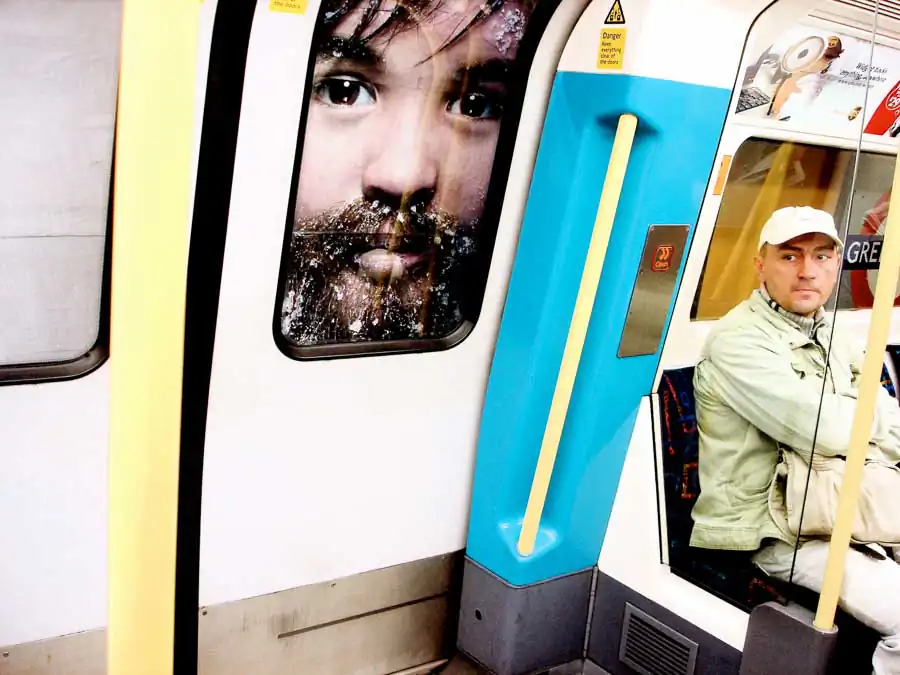
London Underground; Surreal Line by Yusuf Ozkizil
The Surreal Line came about during another project to document my trips on the London Underground. At the time, I’d only recently developed an interest in photography, and always had my camera with me, ready for opportunities to take photos during my tube commutes. Very early on I spotted a poster for the TV show Heroes, ginormous faces pressed together, all looking the same direction, perfectly framed peering into an empty carriage on the Victoria Line. It was a nice moment, which I quickly snapped before the carriage moved on. I didn’t think much of it at the time and went back to taking photos of commuters, but a few weeks after I ended up seeing more of these moments. They were all happy coincidences whilst waiting on platforms, inside my tube carriage or just coming out from one. It was like I’d passed through to another world, where these static billboards and posters coalesced with the world around them… Read More
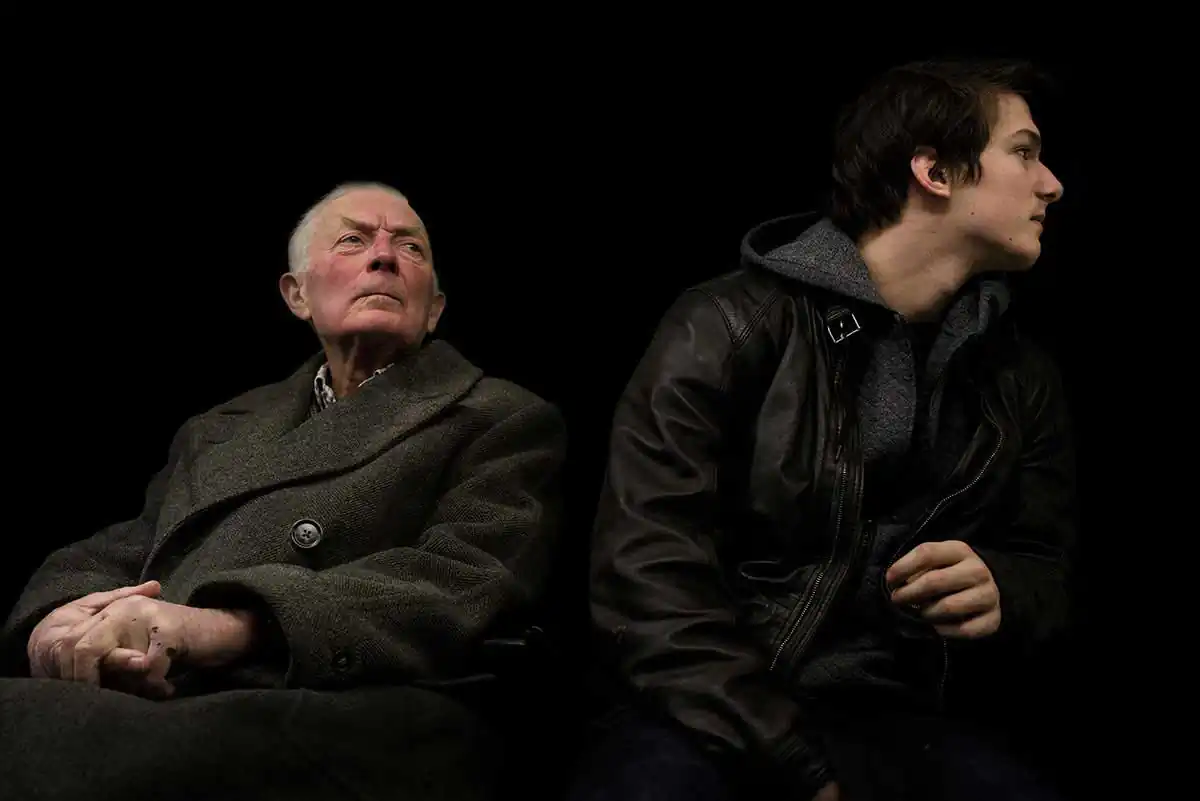
Photography and Streets of London by Romeo
I am an Italian architect who worked in Italy for many years and since 2011 I have lived and worked in London. Thanks to the cultural and visual richness that this city offers, my passion for photography has evolved into a single project, “Streets of London”. It is the everyday life of the metropolis that provides me with my subjects. The hustle and bustle conceals profound truths about the relationship that exists between humanity and the artificial organism in which it lives. Photography allows me to document these truths picking up the essence of certain dynamics which reveal themselves to the eyes for a split second. The seemingly impeccable image of this city hides cracks and contradictions that reveal unknown universes, imperfect and defenseless creatures surrounded by auras of beauty and folly which will vanish a second later among the many flows that make up the blood vessels of “The London Machine”… Read More