

India cannot be understood through a single narrative, but it can be read through a language.
That language is not written, nor spoken in a conventional sense, but manifested through color, gesture, ritual and material culture.
Across regions, religions and communities, visual intensity becomes a form of communication, where every element carries meaning beyond its surface. Color in India is never neutral. It signifies belief, hierarchy, celebration, labor and resistance, forming a complex semiotic system that structures everyday life.
The projects brought together here converge around this central idea: India as a visual language where aesthetics are inseparable from cultural, spiritual and social realities. Whether through pigments, fabrics, bodies or rituals, each work reveals how visibility itself becomes a form of expression, a way of articulating identity in a country where multiplicity is not the exception but the rule.
Color as Cultural Language
From symbolism to lived experience
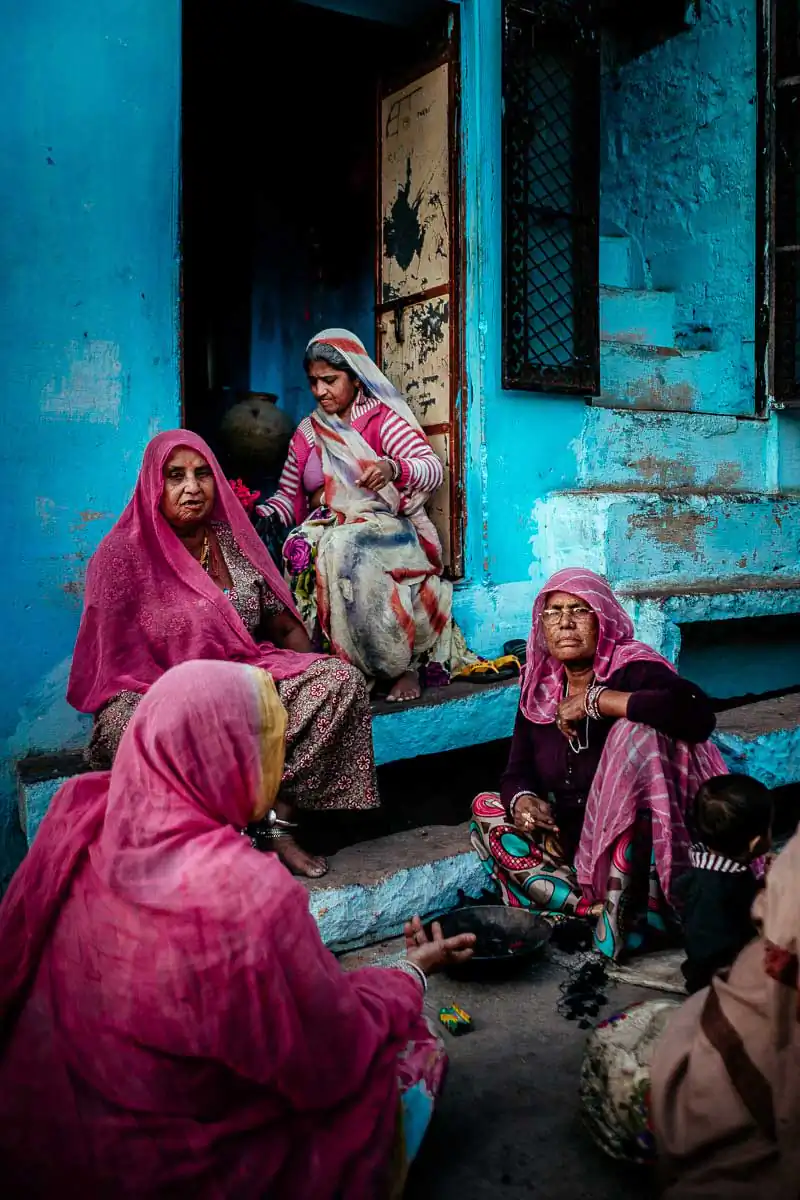
In Colour of Life by Sudeep Lal, color emerges as the fundamental structure through which India expresses itself. It is not decorative, but deeply embedded in ritual, belief and daily life. Each hue carries emotional and symbolic weight, transforming the visual field into a system of meaning that connects individuals to collective traditions.
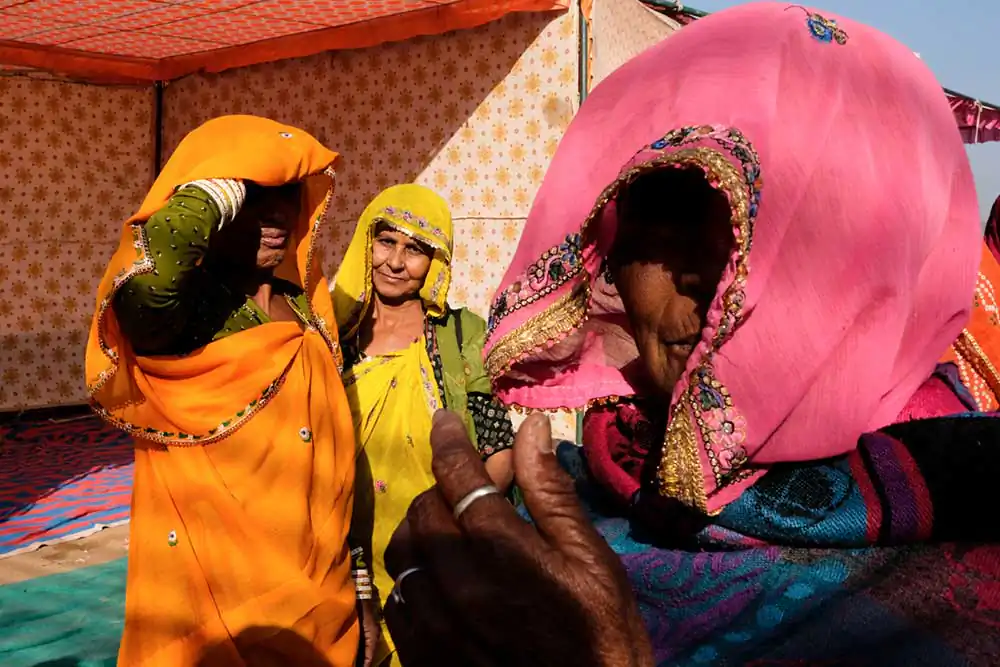
This idea resonates in India – The colors of life by Lucio Farina, where the streets become a living stage. The human body, adorned in vibrant garments, becomes an extension of this chromatic language, turning everyday movement into a form of visual performance. Color here is not static; it is dynamic, relational and deeply social.
The Sacred Imprinted in the Urban Fabric
Spirituality as a visible and public presence
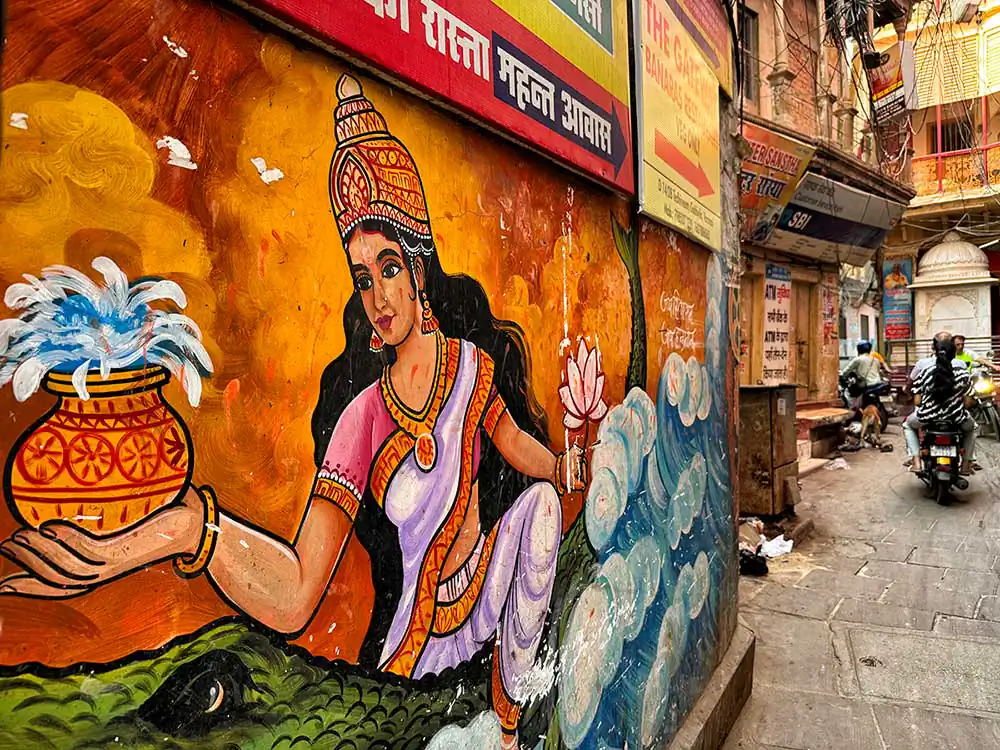
In Vibrant Street Art in Varanasi by Kaushik Dolui, the sacred is inscribed directly onto the walls of the city. Religious iconography merges with urban space, transforming the streets into a continuous narrative of myth, devotion and history. The city itself becomes a canvas where spirituality is not confined to temples but permeates everyday environments.
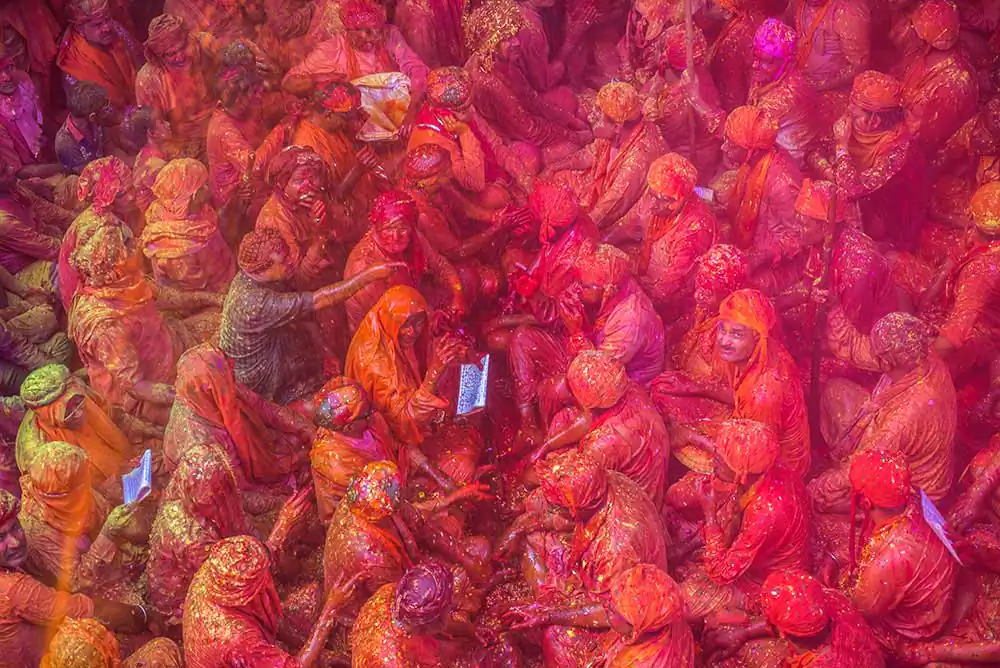
This visibility reaches its most intense expression in Holi in India by Aman Chotani, where color transcends representation and becomes action. The festival dissolves boundaries between individuals, covering bodies in pigment and temporarily suspending social structures. Color here is both symbolic and physical, a force that transforms space and identity simultaneously.
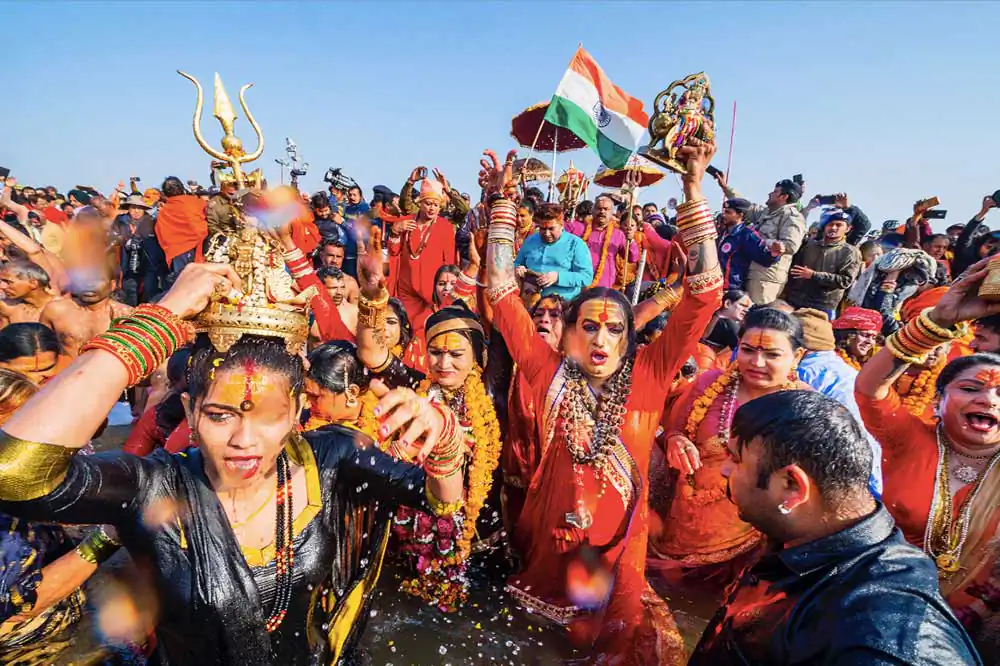
In Mystic India by Parul Sharma, this sacred visibility takes on an even denser form, centered on the Kumbh Mela and the figures who embody renunciation, devotion and transformation. The Naga Sadhus and transgender participants photographed in the project reveal how ritual space in India can also become a space of social visibility, where faith and identity are performed with extraordinary intensity.
Material Culture and the Labor of Color
How textiles, threads and craft sustain tradition
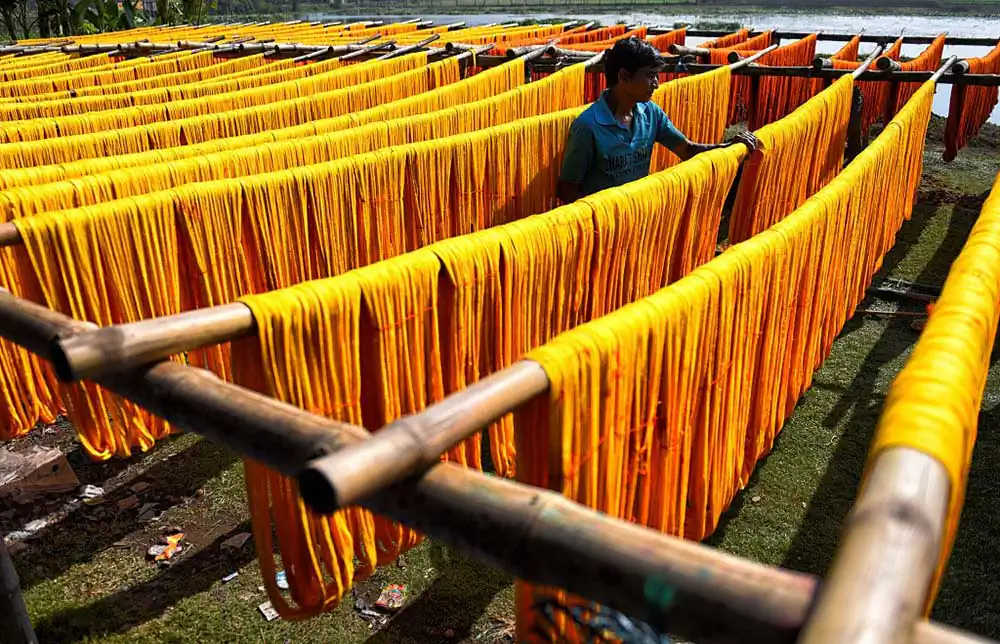
Color in India is not only worn or celebrated; it is produced through labor. In Processing of Saree from raw yarn by Shaibal Nandi and Preparation of Indian Traditional Dress – Saree by Avishek Das, the process of making cloth reveals a complex chain of inherited knowledge, technical skill and economic precarity. Dyeing, drying, winding and weaving are not simply stages of production, but acts through which culture becomes material.
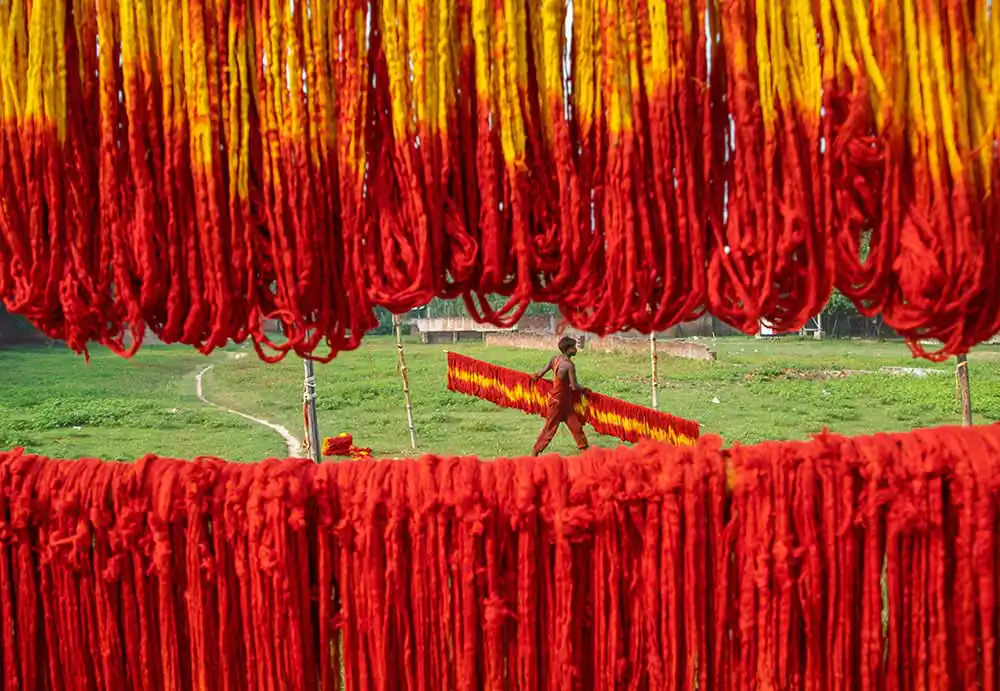
A related symbolic density appears in India; Kalava – The sacred thread by Sirsendu Gayen, where the red and yellow thread becomes both object and sign. The kalava embodies devotion, protection and continuity, but also communal coexistence, as Muslim artisans produce an object central to Hindu ritual life. Here, material culture reveals how color, labor and faith intersect within everyday practices.
Communities, Bodies and Social Identity
Visibility as a form of cultural and political expression
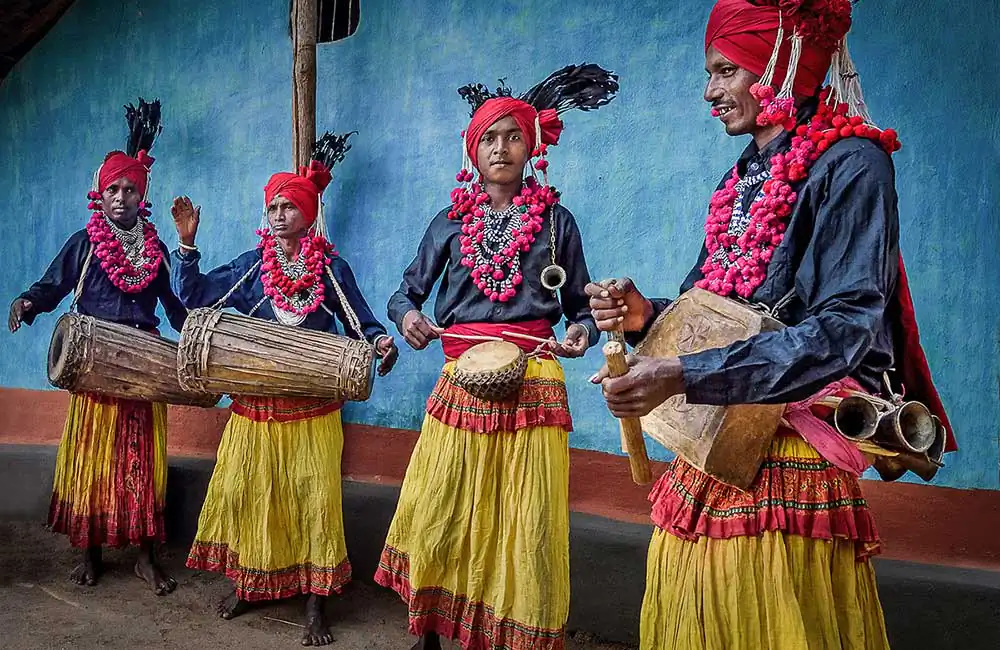
In The Tribal Heartland of India by Tania Chatterjee, identity is rooted in dress, tattoo, dance and marketplace exchange. The body becomes a carrier of belonging, while the weekly haat functions as a social stage where culture is displayed, negotiated and transmitted. These communities are not presented as static remnants of the past, but as living systems with their own rhythms, aesthetics and internal coherence.
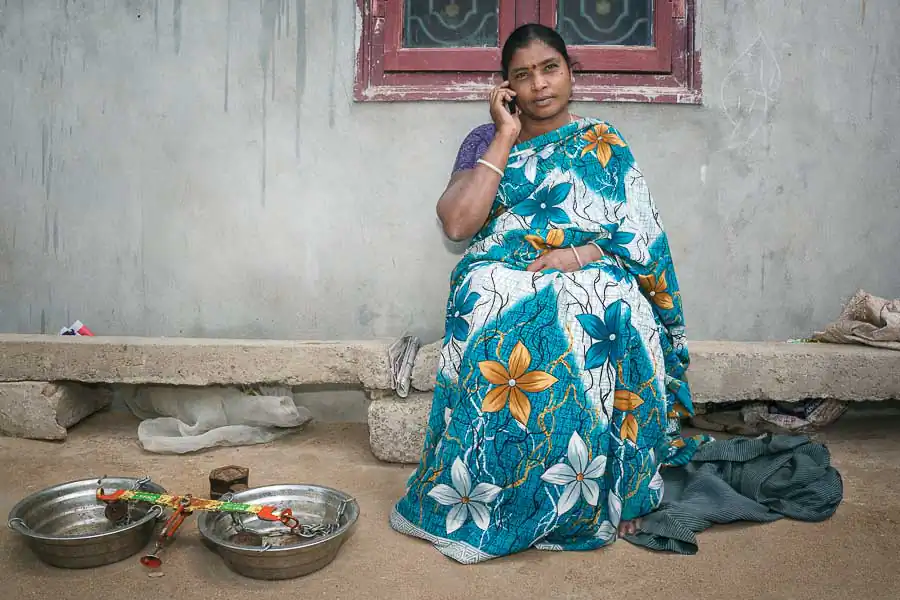
This relationship between visibility and identity is reframed in India in Search of Gender Equality by Francisco Alcalá, where the body enters a different field of struggle. Here, photography addresses the ongoing transformation of women’s position within Indian society, showing that visibility can also be a political demand. The article expands the broader argument of this pillar by revealing that the visual field in India is not only celebratory or ritualistic, but also contested.
India as a Country That Speaks Through Images
Color not as ornament, but as structure
Taken together, these projects reveal that color in India is never simply an aesthetic choice. It is a cultural grammar through which religion, labor, gender, celebration and belonging are made visible. The photographic image does not merely record this reality; it enters into it, translating a world where surfaces are always charged with meaning.
India appears here not as a unified image, but as a dense visual civilization where the symbolic and the material are inseparable. What these works ultimately demonstrate is that to photograph India is to photograph a language, one written not with words, but with pigments, fabrics, rituals and bodies moving through history.