China is not a country. It is a scale. A constant friction between deep time and extreme speed.
A millenary civilization coexisting with skyscrapers that rise in weeks. A political memory that continuously rewrites itself while millions of bodies move through elevated highways, public parks, teahouses, and Tibetan plateaus.
Contemporary photography has found in China a fertile territory where not only landscapes are documented, but tensions. The projects published in Dodho Magazine offer a complex cartography of the country: from cultural intimacy to state propaganda, from rural spirituality to unrestrained metropolitan expansion.
This journey does not aim to illustrate an exotic postcard, but to understand how different authors visually construct a China oscillating between origin and future.
Ancestral China Facing Relentless Expansion
In China; The Great Wall by Chiara Felmini, China appears as a geography of irreconcilable contrasts. The photographer does not approach it through monumental epic, but through the friction between the ancestral and the invasive. The Miao and Dong minorities in Guizhou survive while modernization advances like a tide of concrete. Fishermen with cormorants, their hands knotted and faces weathered, reconstruct a practice that no longer belongs to the present but to memory.
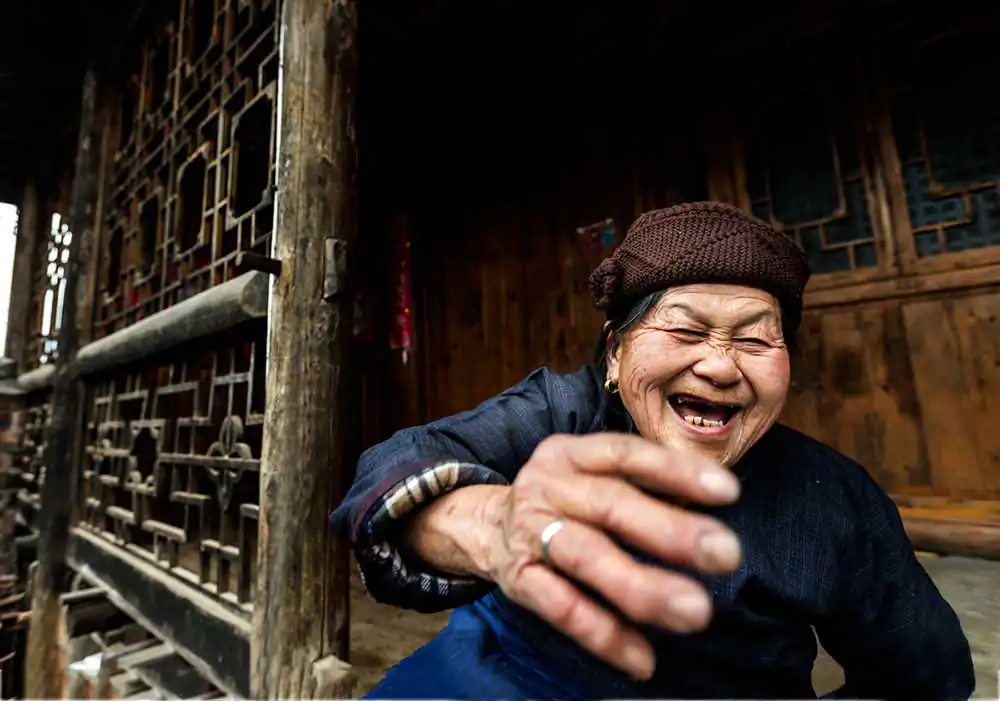
Felmini understands something essential: travel is not only physical displacement, but the dismantling of prejudice. China does not confirm what we think we know; it unsettles it. Her gaze insists on the uneasy coexistence between tradition and urban absorption. The Great Wall ceases to be a tourist symbol and becomes a metaphor for a country that protects its past while simultaneously reshaping it.
Here photography acts as an act of honesty. There is no exoticization. There is friction.
Chengdu: Urban Happiness and Everyday Life
In Chengdu China Streetscapes by Roman Wolczak, the focus shifts toward everyday urban life. Chengdu, the capital of Sichuan province, is famous for spicy cuisine and giant pandas, yet Wolczak deliberately ignores the tourist spectacle. He is interested in people.
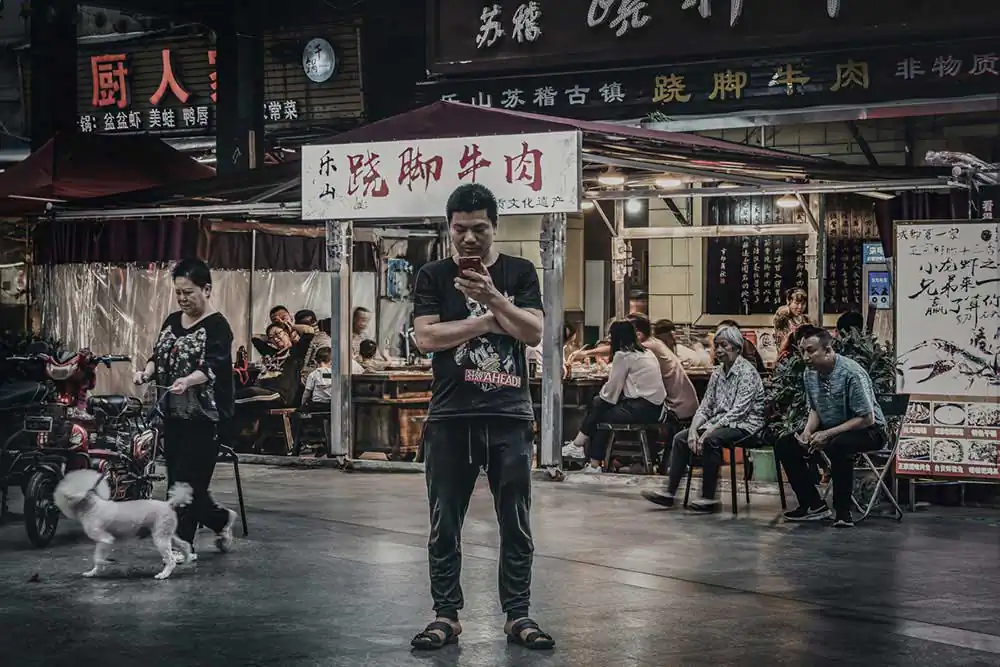
For two weeks he wandered through squares, parks, and backstreets, composing his images meticulously on a tripod and blending multiple exposures to construct the final frame. The modern city—skyscrapers, shopping centers, wide avenues—coexists with traditional neighborhoods that still retain a distinctly local Chinese atmosphere.
The happiness associated with Chengdu is not a slogan; it is visible in the relaxed faces that largely ignore the photographer’s presence. Here modernity does not completely erase identity; it reconfigures it. The tension is less dramatic than in rural regions, but equally revealing: China can be hyper-urban without entirely losing its local texture.
The Teahouse as Cultural and Political Space
In China Culture: Teahouse by Thomas Phoon, the setting changes radically. The teahouse becomes a microcosm. Historically, it functioned as a space for intellectual debate where social hierarchies were temporarily suspended. Today, in Huaibei, Anhui province, it remains a morning meeting point: men smoking pipes, playing cards, conversing slowly while tea circulates in rough sand bowls and rusty copper pots.
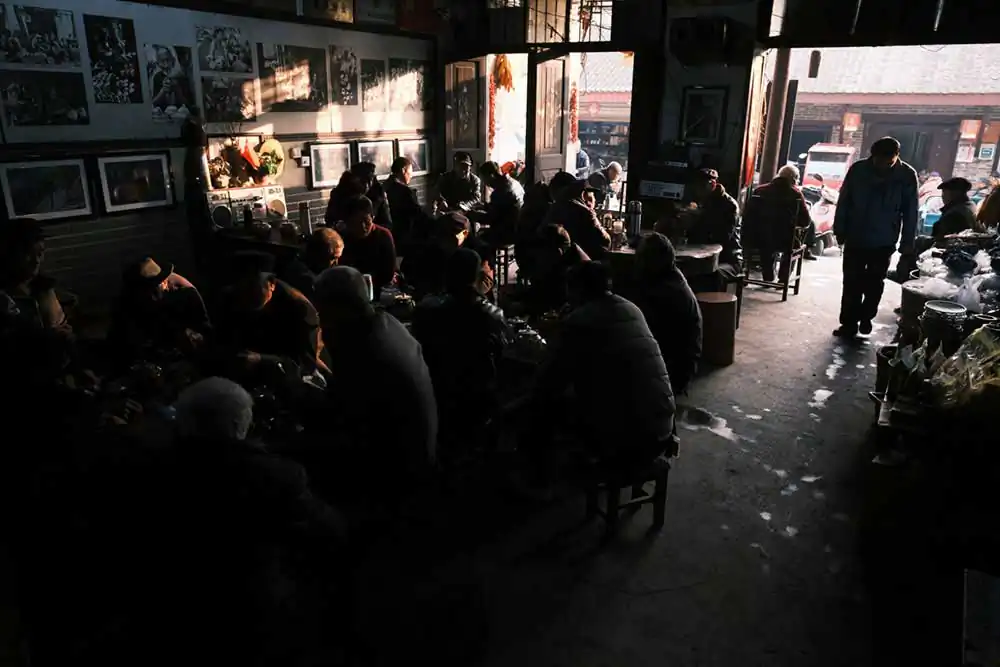
Phoon approaches the subject with a clear documentary ethic. He believes photography can influence and inspire. His first series on Chinese tea culture was in black and white; this second body of work embraces color, convinced that emotional resonance can also live in chromatic nuance.
The teahouse reveals a China where tradition is not decorative, but lived practice. Against urban acceleration, here slowness dominates. And that slowness is political.
Return to Origins: Spirituality and the Land
In The Earth by Mi Zhou, the gaze moves to the Tibetan plateau of Tagong in Sichuan province. Black-and-white negative film, hand-developed in a humid hotel bathroom. Visible grain. Deliberate imperfection.
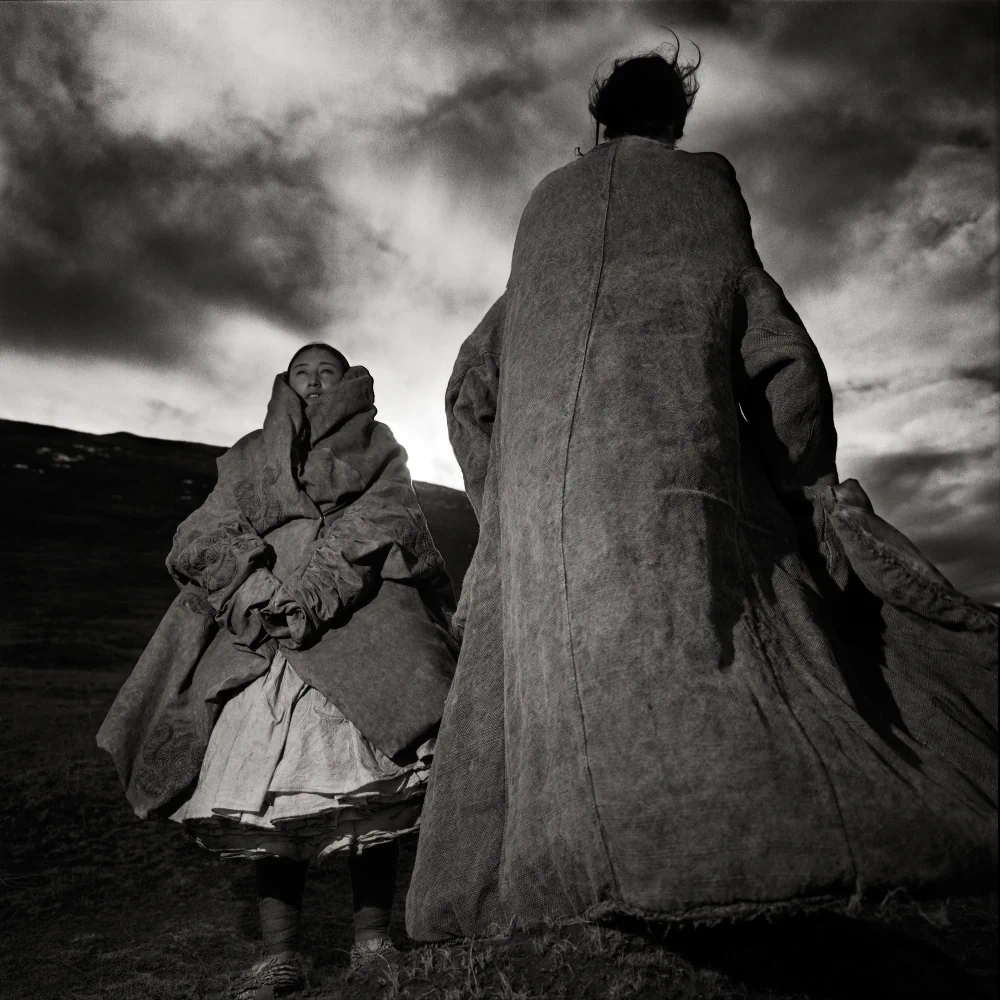
The collaboration with fashion designer Ma Ke is not about fashion but essence. The land is not a backdrop; it is origin. The herders and their children, portrayed in elemental landscapes at 3,730 meters above sea level, embody a humanity still bound to nature. There is no propaganda here, no skyscrapers. There is dignity and spirituality.
Zhou understands photography as a search for human essence. In a country accelerating at breakneck speed, this series radically decelerates. It becomes aesthetic resistance against vertigo.
Political Memory and Ideological Construction
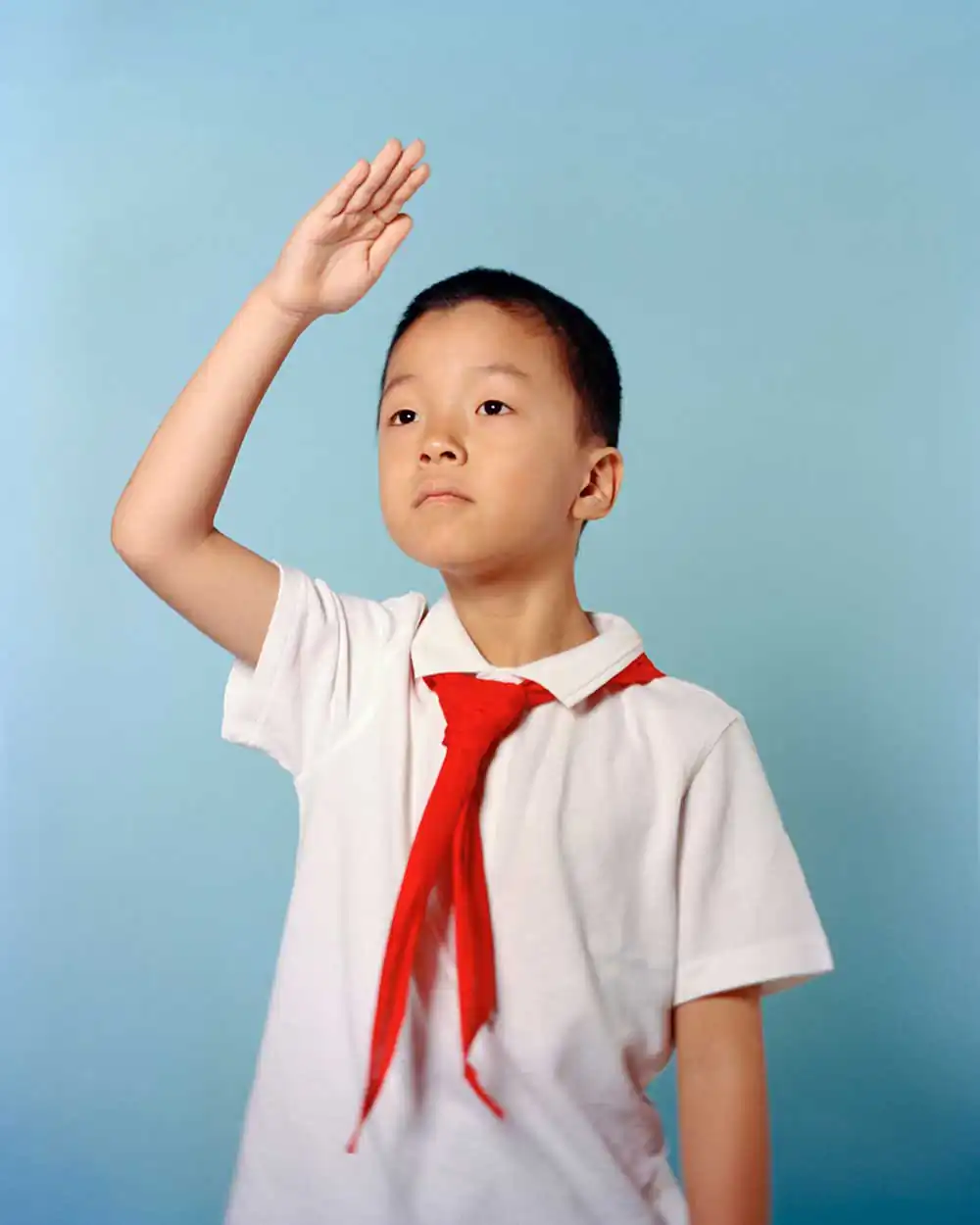
The political dimension emerges forcefully in The Long March by Zexuan Zeng. Born in Ganzhou, the symbolic starting point of the historical Long March, Zeng grew up surrounded by patriotic iconography. The message is clear: all suffering is part of a journey toward collective success.
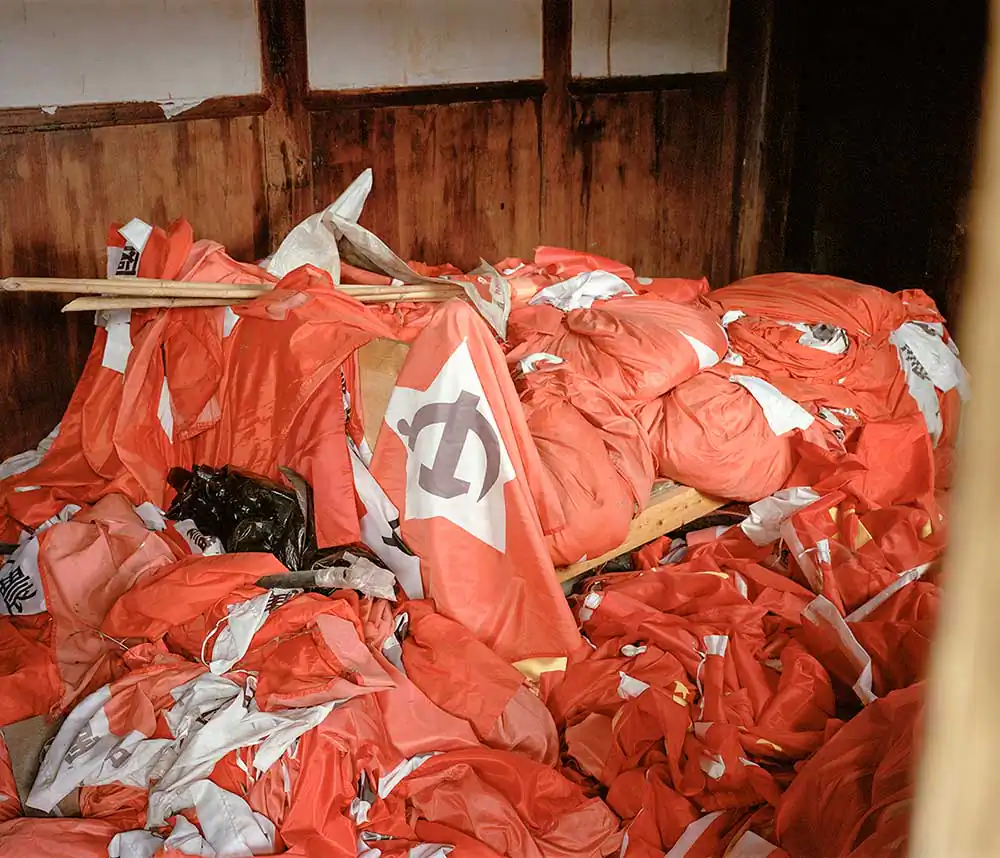
In the summer of 2024, he undertook a two-month journey along the historic route, documenting its contemporary symbolic representations. The result is a photobook of 110 sequential images that questions the instrumentalization of individual suffering as necessary sacrifice.
Photography here becomes critical response. It does not openly denounce; it reveals layers of fiction and memory embedded in everyday space.
Similarly, Red Illuminates by Jialin Long examines how loyalty to the state is cultivated in socialist China. A white orchid placed under artificial pink light listens to official CCTV broadcasts for thirty consecutive days. Can it eventually turn red through conditioning? The metaphor is direct and unsettling.
Following the 1989 Tiananmen Square protests, patriotic education intensified. Long scrutinizes the symbolic environment in which new generations grow. Photography here becomes ideological analysis.
Beijing and Chongqing: Extreme Urbanization
In Burning North by ChengLong Zhang, Beijing is explored as a living organism. After more than a decade residing there, the photographer admits he did not truly know the city until photography forced him to confront it. Exploration becomes both physical and spiritual. In a metropolis of twenty million people, migration is constant, dreams and disappointments overlap.

Urban space shapes desire and lifestyle. Zhang feels both inside and outside at once. When the constantly dissolving stream of reality becomes a photograph, he arrives at another side of truth.
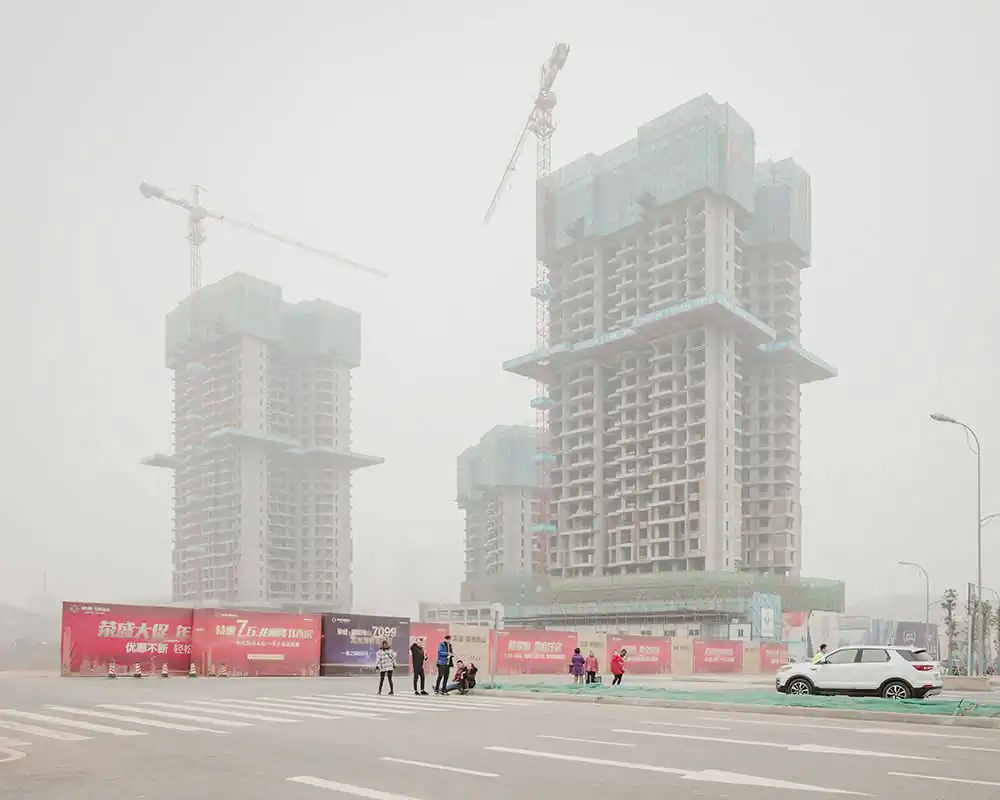
Even more radical is Chongqing, on the Four Shores of Passing Times by Cyrus Cornut. With a municipality population of thirty-four million, Chongqing grows at dizzying speed. Skyscrapers multiply almost identically, like metastases. Infrastructure pierces mountains and crosses rivers. Progress outpaces fishermen, river erosion, and natural rhythms.
Urbanization here is not neutral development; it is unstoppable force.
Imagined China and Cultural Fusion
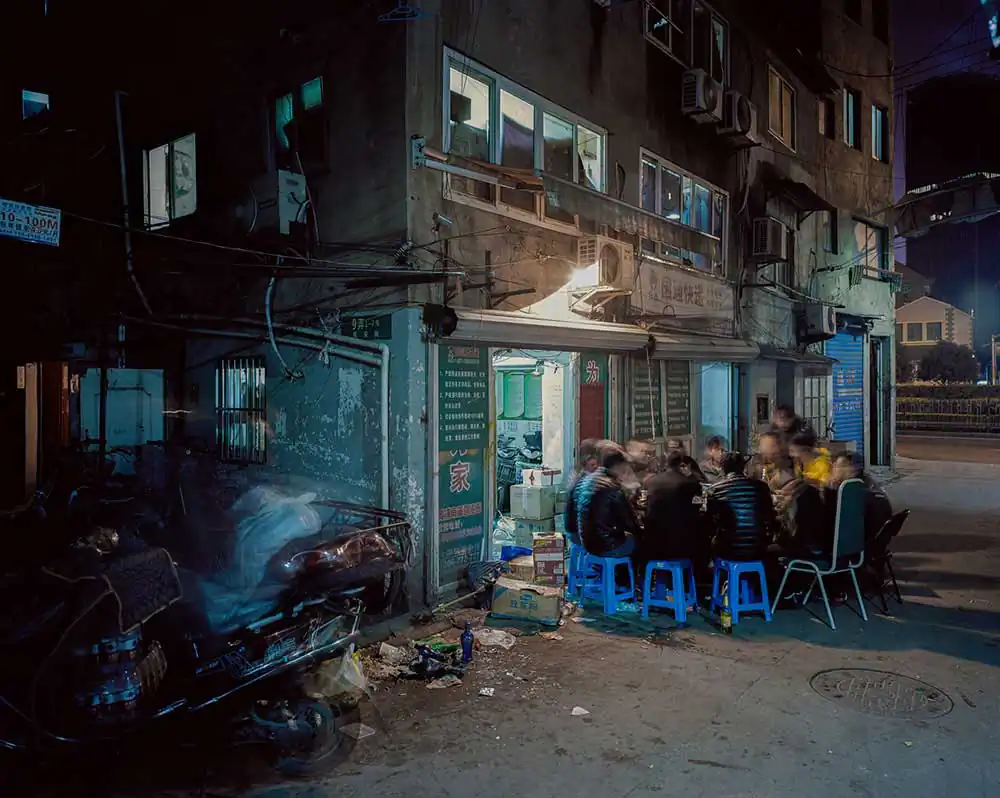
In Neither Horse nor Tiger by Alnis Stakle, China becomes almost imagined territory. The photographer refuses sensationalism and exoticism. He observes the mundane: high-rise neighborhoods, parks, carefully tended gardens watered by murky ditches. Beauty and decay coexist without dramatization. Meaning is left open, constructed by the viewer.
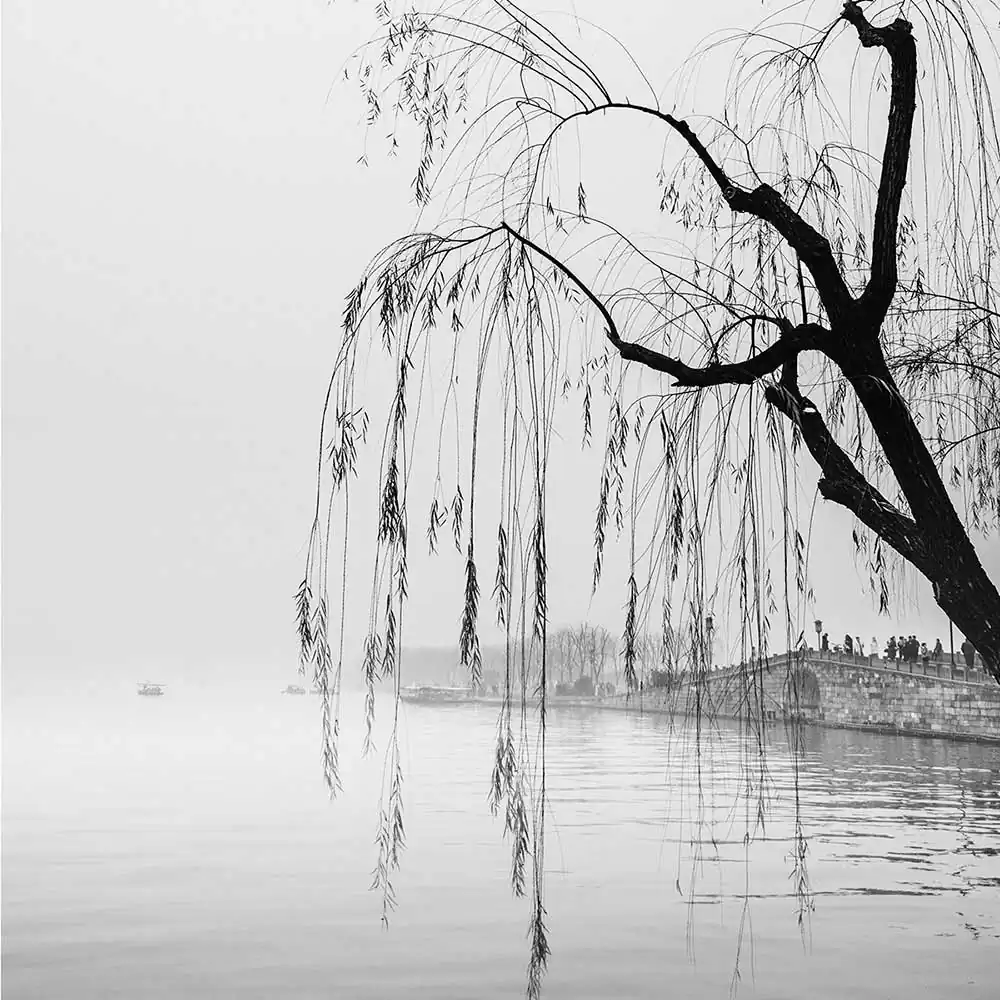
Finally, Somewhere in Time by Loh Soo Mui proposes a fascinating cultural synthesis. A second-generation Malaysian Chinese artist, she merges traditional Chinese ink painting aesthetics with contemporary photography. Landscapes from Xiapu, Lishui, Hangzhou, Shennongjia, and the Yellow Mountain region are transformed into compositions that dialogue with the philosophy of Zhuangzi.
Here modernity does not erase tradition; it reinterprets it.
China as Permanent Superimposition
The projects published in Dodho Magazine demonstrate that China cannot be reduced to a single narrative. It is living tradition, visual propaganda, accelerated urban expansion, rural spirituality, political memory, and cultural hybridization.
Contemporary photography operates as a tool of analysis, resistance, and reinterpretation. Each author addresses a different layer, yet together they construct a complex portrait where past and future collide without definitive synthesis.
China is neither a frozen myth nor a soulless industrial machine. It is a territory of constant superimposition. And photography, when practiced with rigor and critical awareness, becomes the medium capable of revealing that tension without simplifying it.