
Raised along Lithuania’s Amber Coast, Monika Maroziene has developed a photographic language where memory, landscape, and personal identity become inseparable.
With a background in chemistry, her work brings together scientific precision and emotional intuition, creating images that are both tactile and deeply poetic. Working almost exclusively in black and white, she transforms photography into a personal act of remembrance, using raw pine tree resin on her prints to preserve not only the image itself, but also the scent, texture, and atmosphere of the places that shaped her childhood.
Her latest project, Amber Coast, is an intimate tribute to the Curonian Spit and the women who have profoundly influenced her life. Inspired by the shifting dunes, the Baltic Sea, and the quiet presence of solitude, the series explores themes of femininity, memory, melancholy, and freedom. The women portrayed throughout the work become metaphors for the landscape itself—powerful, fragile, mysterious, and constantly changing—while the distinctive use of pine resin reinforces the emotional and physical connection between the photographs and the place from which they emerged.
Following the publication of Amber Coast in Issue #37 of Dodho Magazine, we had the pleasure of speaking with Monika Maroziene about the origins of this deeply personal project, the influence of her childhood, and the unique intersection of chemistry, memory, and photography that defines her artistic practice. [Official Website][Issue #37]

Looking back, what first led you to photography, and when did you realize it had become the language through which you wanted to express yourself?
Although I studied chemistry and built a life around formulas and experiments, I always sensed something was missing. There was a silence that science alone couldn’t fill. Photography became that voice — a way to merge my scientific knowledge with the longing I had for beauty, memory, and expression. In many ways, it was not a choice but a calling.
Your background is in chemistry, yet your photographs are deeply emotional and poetic. How have these two seemingly different worlds influenced one another?
My first language was science.
I studied chemistry because I wanted to understand how the world works, how materials change, react and preserve traces of time. But alongside that curiosity, there was another one that science couldn’t answer: why certain places stay with us forever, or why a single image can carry emotion more powerfully than words.
Photography became the point where those two worlds met. Instead of separating science and art, I realized they could exist together. Today I still work like a chemist in many ways, testing materials, observing reactions, embracing chance but my experiments are driven by memory rather than formulas.
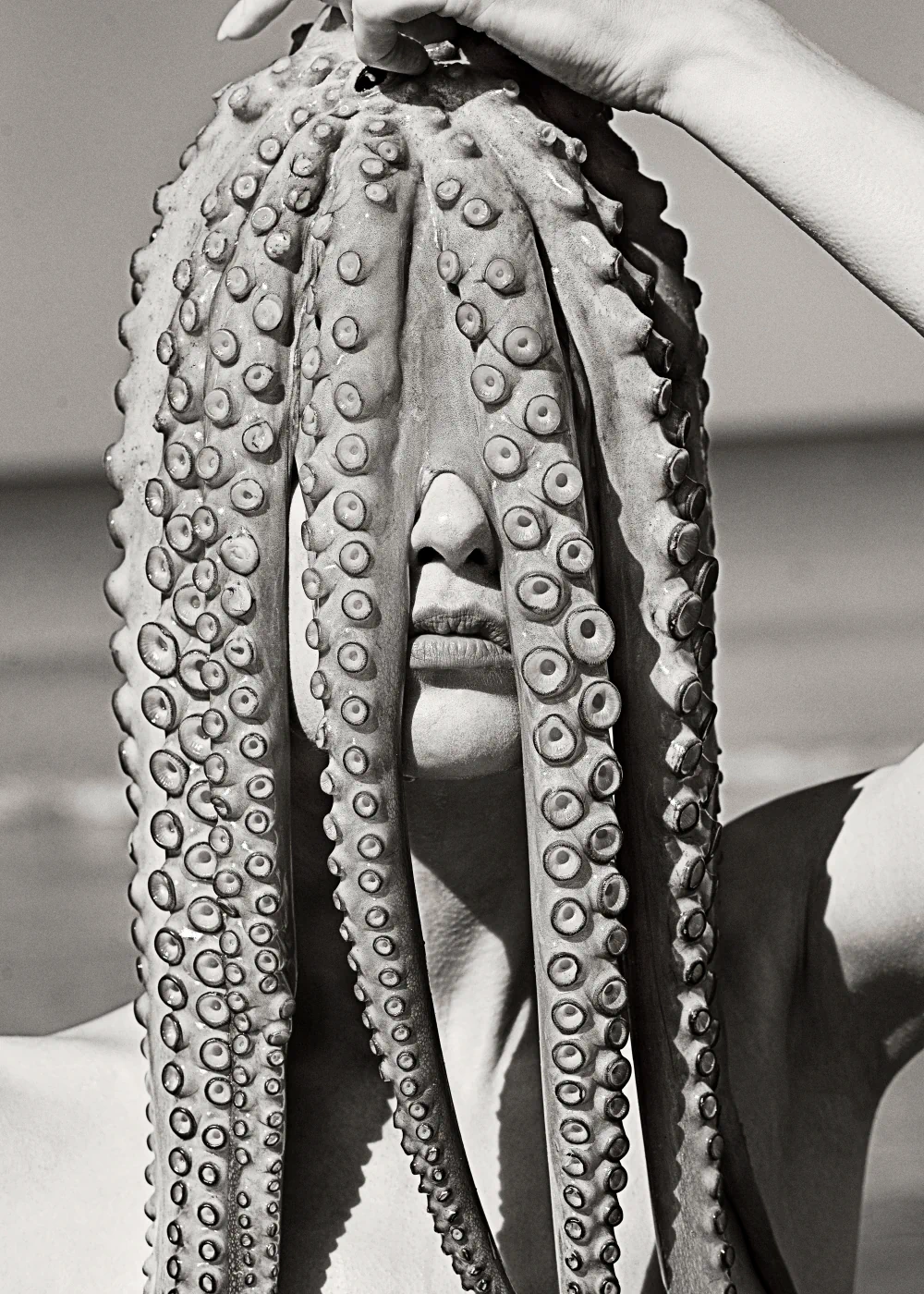
The Curonian Spit has been part of your life since childhood. What continues to draw you back to this landscape, both personally and creatively?
Growing up near the Amber Coast, I carried with me the sound of seagulls, the restless movement of the sea, and the shifting dunes that felt as vast as the desert. Those landscapes are alive in me, and I long to translate them into something lasting.
In Amber Coast, the landscape and the women you photograph seem almost inseparable. How did that relationship become the foundation of the project?
The Curonian Spit, with its amazing and unique landscape created by wind and sea, rare wildlife and fascinating sand dunes, reminiscent of the Sahara Desert, alongside the powerful sea, have always inspired me. Women – powerful, endless, giving, mysterious, dramatic, dangerous, calm, fragile, ironic, and poetic – remind me of every tiny sand particle sliding in the wind. Women like the sea, have so many faces and are never fully understood.
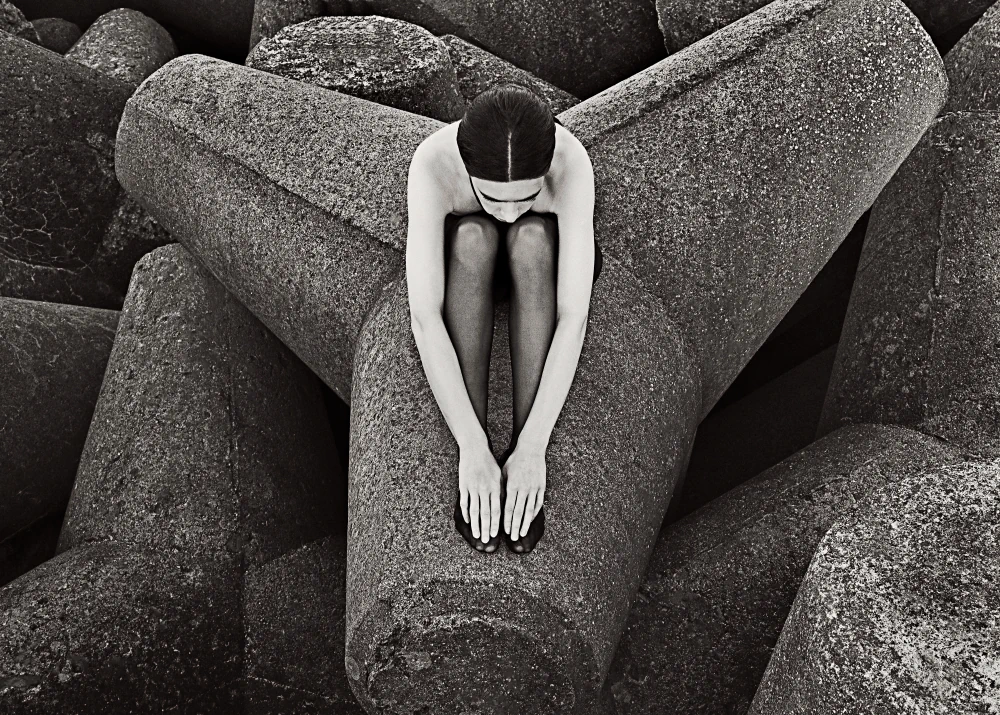
Your grandmother appears to have been a profound influence on both your life and your artistic vision. In what ways does her presence continue to shape your work today?
My passion for women stems from my grandmother, with whom I grew up. She was very feminine but with dirty thoughts.
That why my photography is intertwined with irony and melancholy.
You describe your photography as a way of freeing yourself from the past. Could you tell us more about that idea?
There are so many depressing and sad things in the world. I grew up in it. Through my lens, I capture moments to liberate myself from the past. It’s my form of freedom.
Black and white photography plays a central role in your visual language. What does monochrome allow you to express that color cannot?
In my world, colors feel out of place. Black and white create a comforting distance from reality, while the touch of pine tree resin transports me to warm, sunny days.
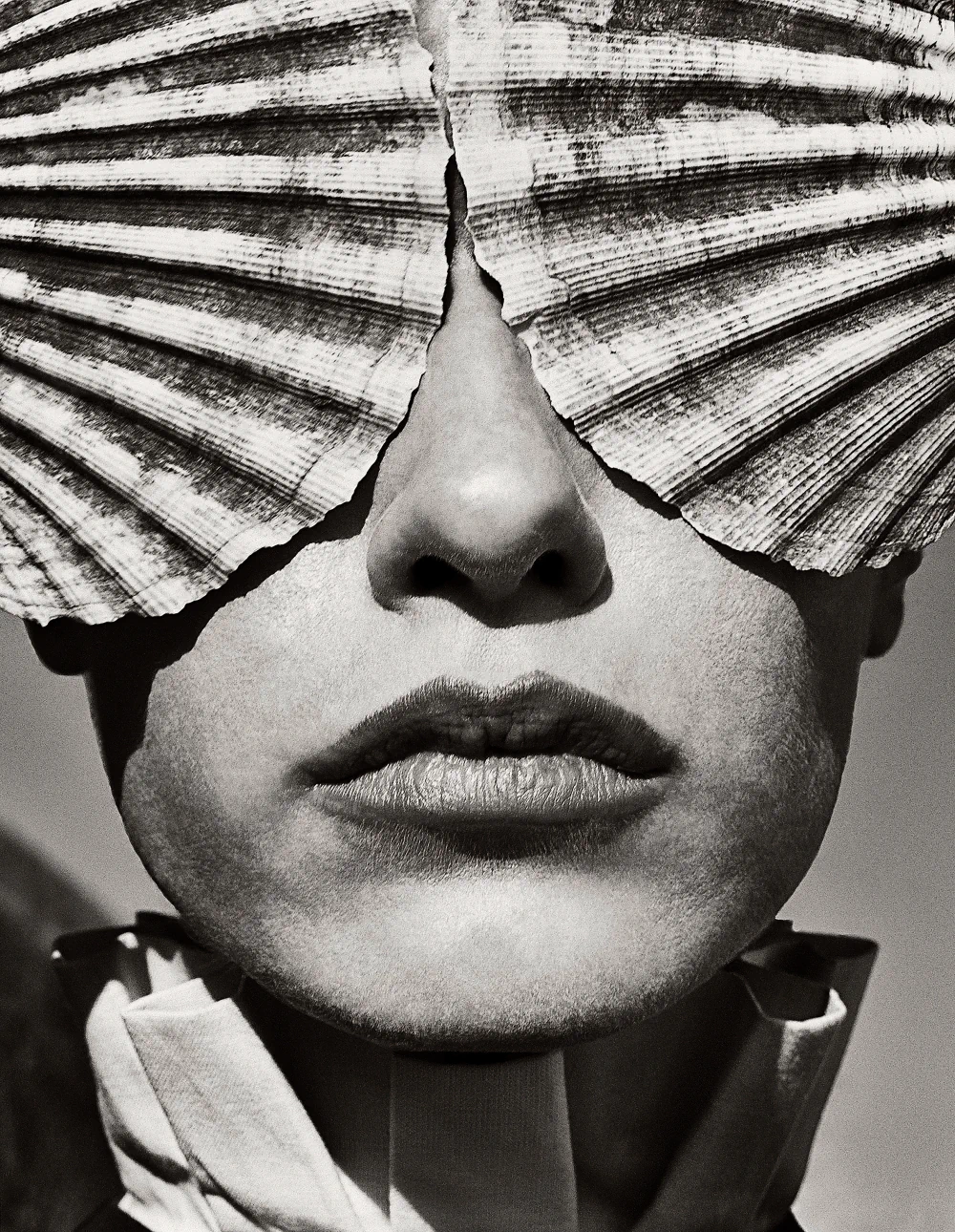
One of the most distinctive aspects of your work is the use of raw pine tree resin on your prints. How did this technique emerge, and what does it add beyond its visual qualities?
My artistic practice merges my scientific expertise with a love for photography, creating a unique art form that I see as a type of alchemy. I incorporate pine tree resin into my prints, adding warmth and durability while preserving the images—symbolic of my Lithuanian roots and my connection to the natural world. My black and white photography, evoking a sense of calm, solitude, and reflection, complemented by touches of resin that transport viewers to sunny, nostalgic days.
Your images balance melancholy with subtle irony. How do these seemingly opposite emotions coexist within your work?
Because melancholy and irony are the best companions, it’s like unperfect perfection.
Solitude appears throughout both your photographs and your writing. Has your relationship with solitude has changed over the years?
Solitude was my childhood companion. I embraced the pain it brought and eventually found comfort in it.
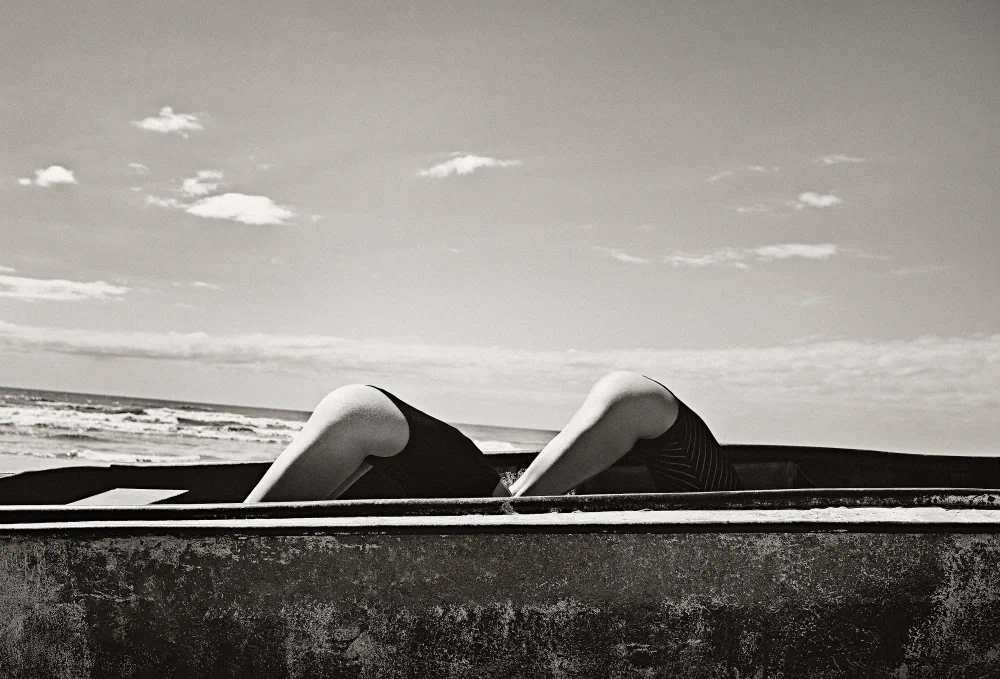
Many of your photographs feel deeply symbolic rather than descriptive. How much of your work begins with intuition, and how much is carefully planned?
Preparation is very important for me, but arranging situations, surprises are very welcome. Usually, it shows me something I didn’t know or was not able to imagine. I use my technical experience for photography and chemical/physical experience for post-production.
But in the end, photographs come not from cold equipment, but from the inside of you, from the heart. Perspective is more important than technique.
The women in Amber Coast are portrayed as complex, ever-changing figures. What do they represent within your personal narrative?
I love women for their complexity and ever-changing nature; because of that, they are an inexhaustible source of creativity.
Your work appeals to multiple senses—not only through the image itself but also through texture and even scent. Is creating a more physical experience of photography something you consciously pursue?
I see my art as a kind of alchemy, where chemistry and poetry blend into something new. Technique gives me structure, but it is never the heart of my work. The true essence comes from within — from solitude, memory, and the need for freedom. I add pine resin — a living material that warms the image and preserves it, as if holding time in its grasp.
What do you hope viewers discover about the Amber Coast—and perhaps about themselves—through this series?
I hope my photographs allow people to pause and see beauty in places they might not expect. Life is often heavy with loss and struggle, but through my work, I want to transform melancholy into poetry, solitude into quiet strength. If someone looks at my work and feels comfort, or smiles despite their struggles, then I have achieved what I set out to do. My art is, at its core, about liberation: freeing myself from the past, and offering others a glimpse of that freedom through the lens of my camera.
I want that my works would bring viewiers to sunny, nostalgic days and their irony make them smile. I want that in challenging situations, in hard experiences they find inspiration from my pictures like I do.
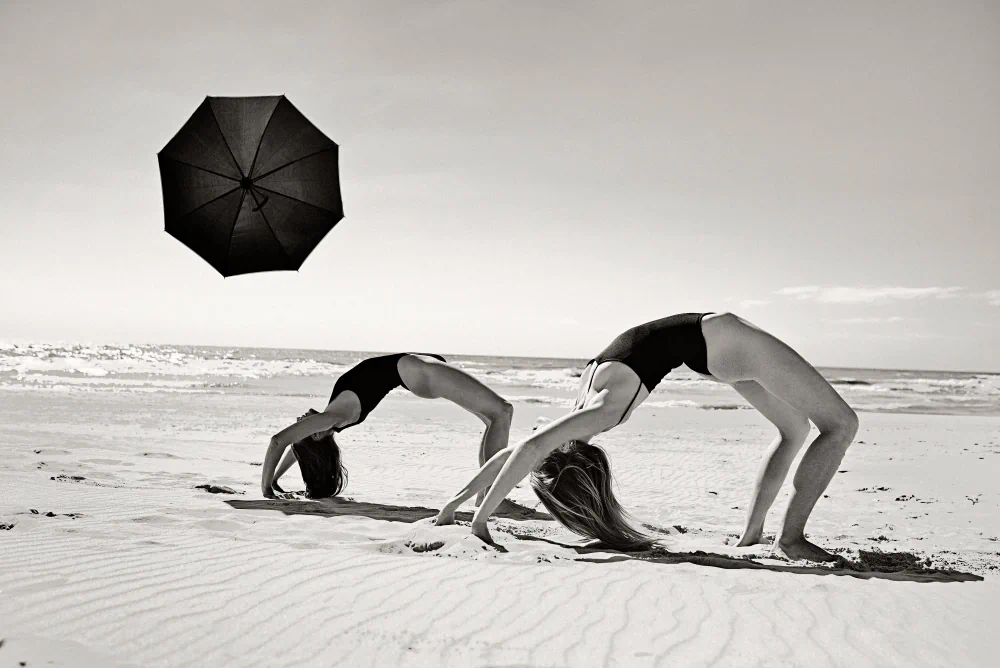
Looking ahead, do you see Amber Coast as the beginning of a longer exploration of memory and identity, or do you already feel drawn toward new creative directions?
My work returns again and again to women and the sea. Women remind me of the coastline I grew up with — powerful and fragile, calm and stormy, endlessly mysterious. They embody contradictions: giving yet dangerous, poetic yet ironic. This complexity fascinates me. The Curonian Spit, with its rare dunes and restless waters, mirrors these qualities and has been a lifelong source of inspiration. By using resin, I connect these themes back to my roots on the Amber Coast. It is not fossilized amber, but something alive — adding warmth, resilience, and the idea of preservation, both physical and symbolic.