
The flower has long been one of the most persistent motifs in the history of Western art.
Yet its apparent simplicity has led to a persistent misunderstanding: it has often been reduced to ornament, to sentimental beauty, to a minor category within artistic discourse.
Nothing could be further from the truth. The flower is one of the most complex symbolic devices available to visual culture. It is form and it is time. It is body and it is disappearance. It is fullness and it is loss at once. And when contemporary photography turns to it, it does not do so to reproduce its appearance, but to activate its conceptual force.
To photograph flowers today is not a decorative gesture. It is a way of thinking about time. It is a way of confronting human fragility, biological memory, bodily decline, ecological anxiety, and contemporary spirituality. The flower functions as a mirror. It returns to us an image of ourselves in transition.
From the Dutch Golden Age still lifes, where each tulip served as a silent warning about the fleeting nature of life, to current digital explorations that dissolve petals into liquid abstractions, the flower has operated as a metaphor for the life cycle. The vanitas tradition has not disappeared; it has simply transformed. In contemporary photography, that legacy is reactivated through new layers of meaning.
The projects articulated here should not be read as a thematic compilation, but as a collective visual essay on the ephemeral condition of existence. In each of them, the flower ceases to be a subject and becomes a territory.
Beauty as Warning
The inheritance of the still life and the persistence of vanitas
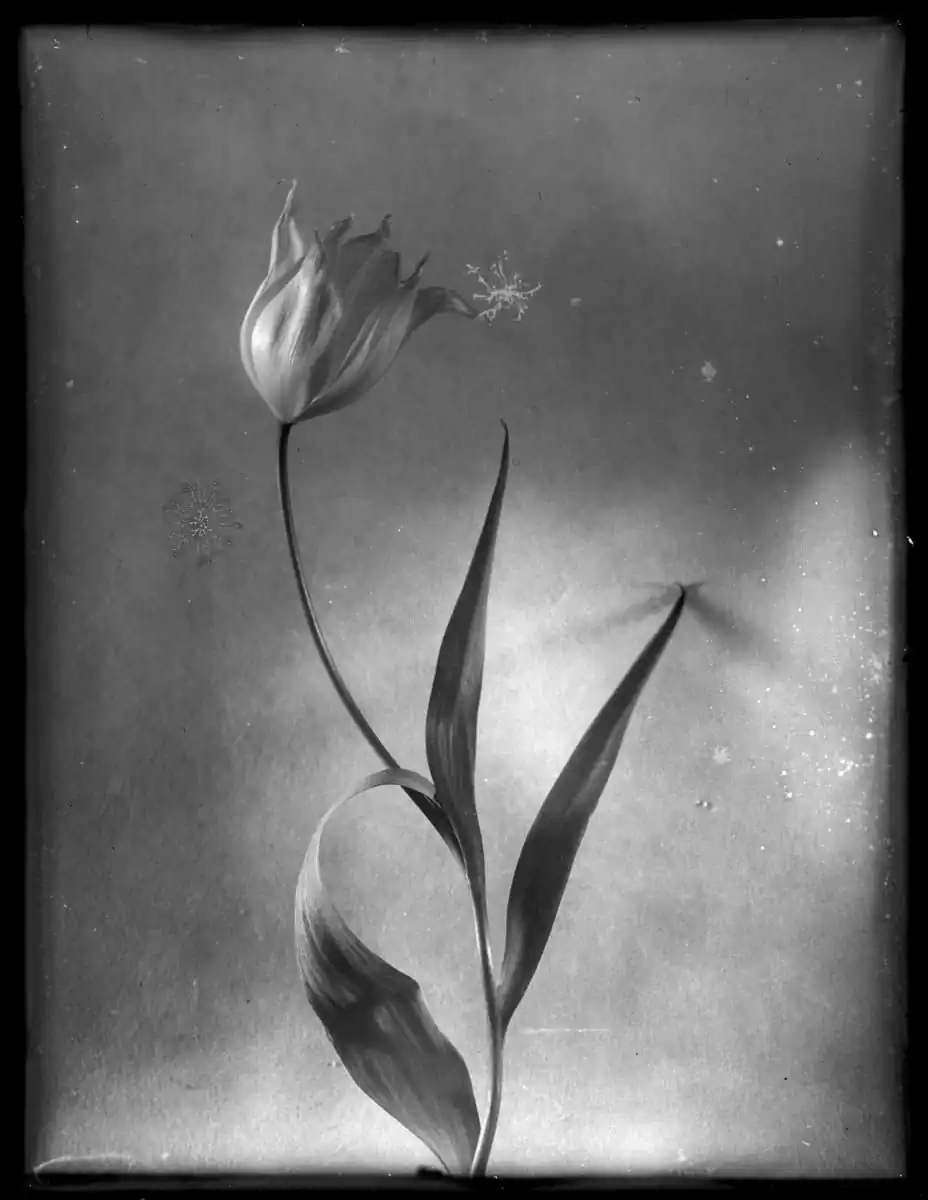
In My Heart of Glass by Margrieta Jeltema, the flower is not a botanical object but an exposed heart. Her tulips inevitably recall the seventeenth-century Dutch tradition, not as nostalgic quotation but as conceptual structure. The transparency suggested by the title introduces an emotional dimension: fragility is not merely physical, it is affective. Beauty, as in the old still lifes, appears inseparable from its own disappearance. The image becomes anticipated memory.
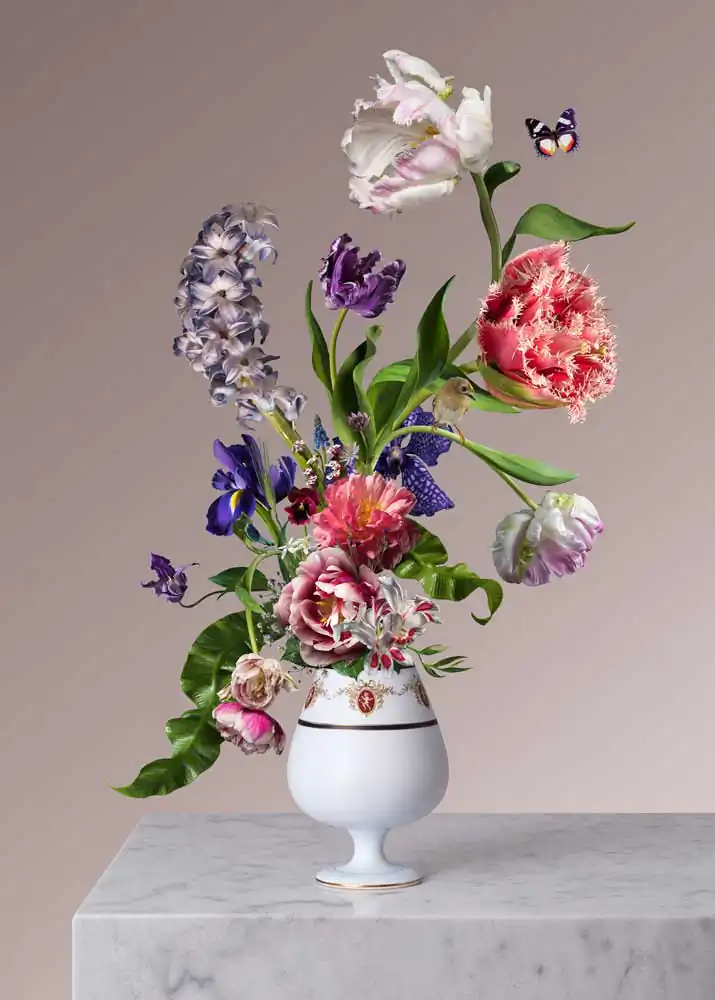
Julija Levkova, in Silent Beauties, intensifies this dialogue with painterly tradition. Influenced by Rembrandt and the Flemish masters, she constructs still lifes that verge on Baroque theatricality. Her saturated compositions do not simply celebrate chromatic exuberance; they dramatize vulnerability. Each illuminated petal already seems to be retreating. The flower is splendor, but it is also imminent collapse. In that tense equilibrium between excess and restraint, the contemporary vanitas is fully activated.
Decay as Revelation
The moment when the flower begins to wither
If floral photography once pursued the instant of peak bloom, many contemporary artists now direct their gaze toward the moment after, when structure begins to yield and form transforms. In Fiori Morti: The Beauty of Death by Rob Linsalata, death is not an ending but a point of maximum visual intensity. Withered flowers acquire unexpected sensuality. Petals become translucent, almost spectral, as if loss reveals a deeper truth.
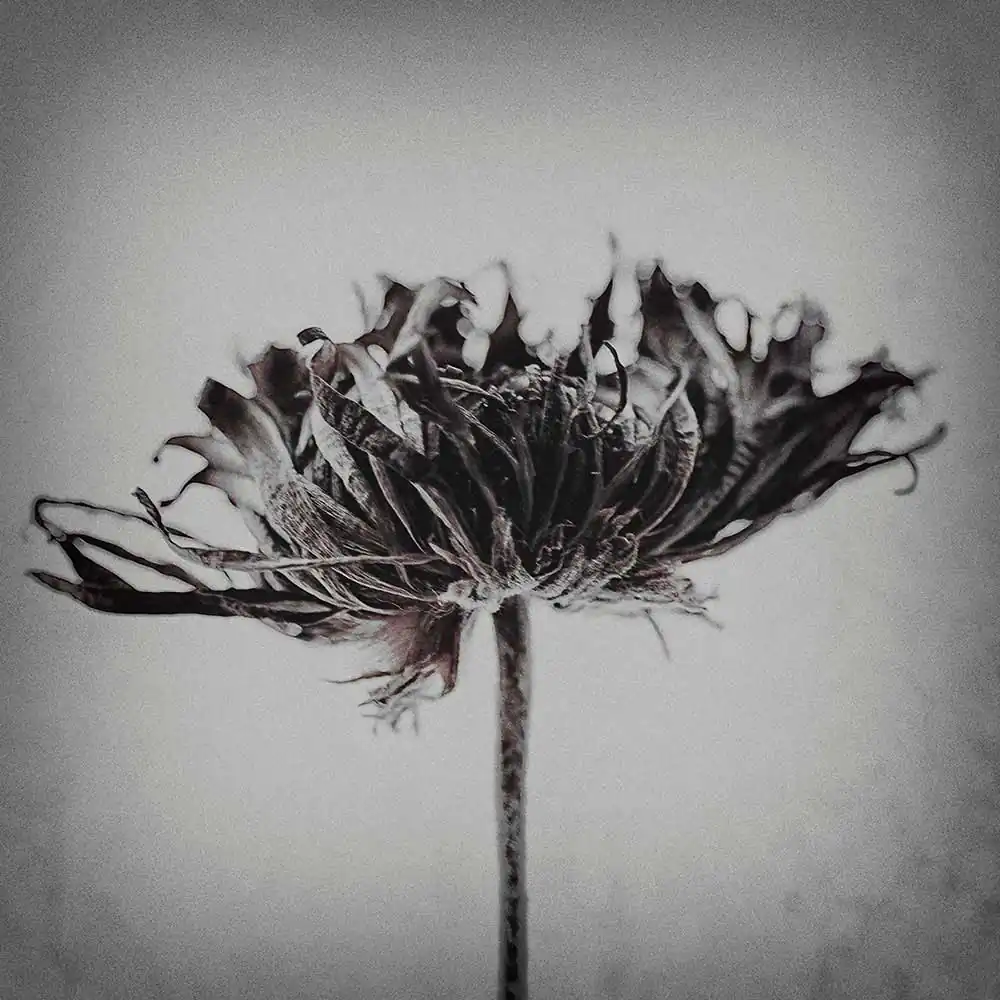
A similar shift occurs in Flora Vida by Alva Martín, where deterioration becomes a metaphor for human transition. The series does not linger in nostalgia but frames decay as transformation. Each inclined stem and fallen petal speaks of continuity. Beauty no longer resides in perfection but in passage.
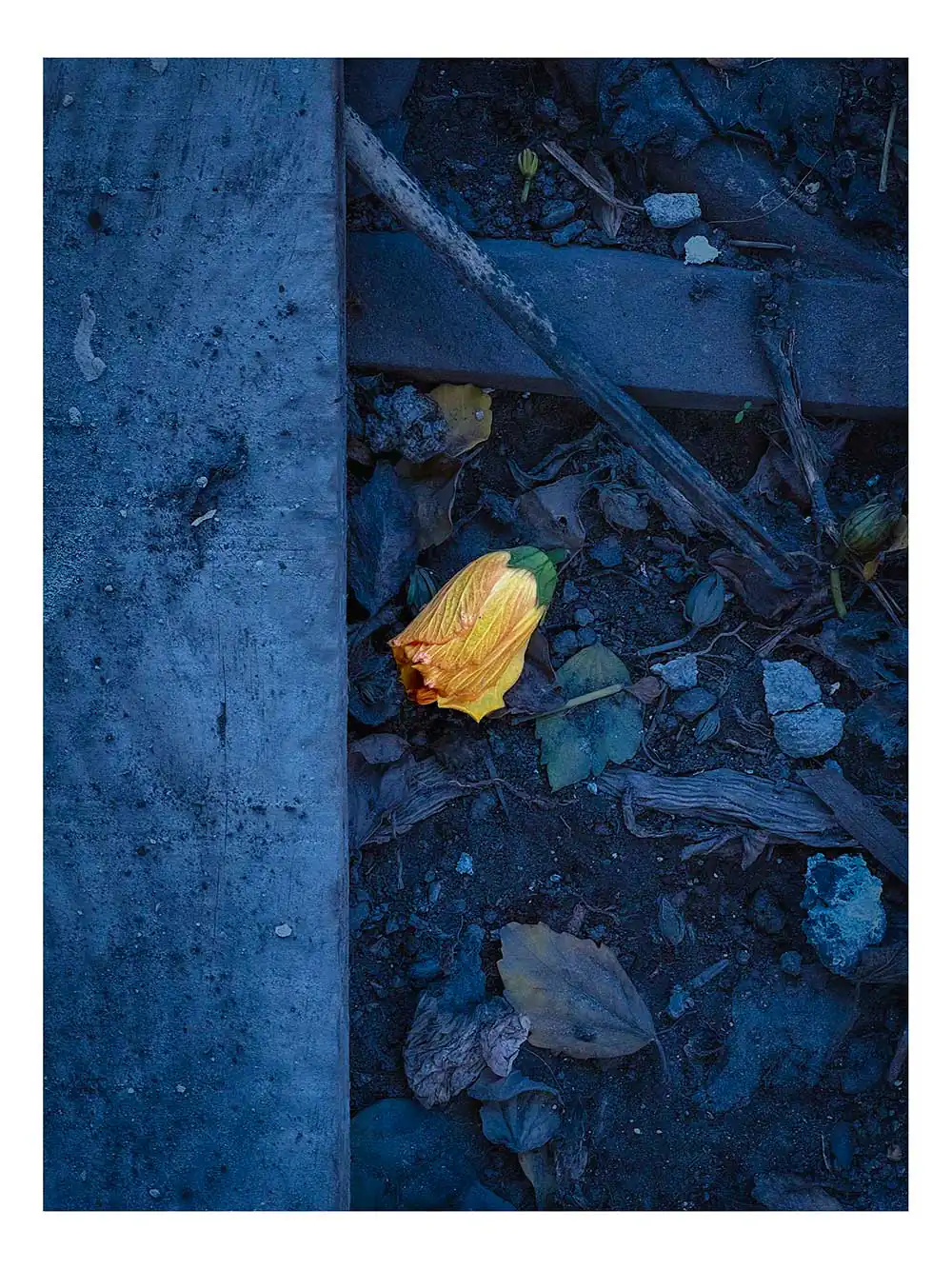
In Hibiscules II, Manas Arvind works with dried hibiscus flowers that twist like devastated landscapes. The flower ceases to be a romantic emblem and becomes an ecological allegory. Fragility is not individual; it is systemic. The wrinkled petals evoke eroded territories and bodies strained by climate crisis. The image acquires political dimension without relinquishing poetic force.

Botany, Memory, and the Body
The flower as biological and emotional archive
In Memory Pods: Botanical Portraits of Aging, Memory, and Loss, the progression of aloe flowers toward seed becomes a direct metaphor for neurological degeneration. The vegetal structures, almost anthropomorphic, evoke the human brain affected by Alzheimer’s disease. The flower is biological memory; the seed is archive. When memory disappears, the body remains, but hollow. The formal elegance of the images contrasts with the implied tragedy. The viewer is confronted with a double reading: aesthetic contemplation and awareness of decline.

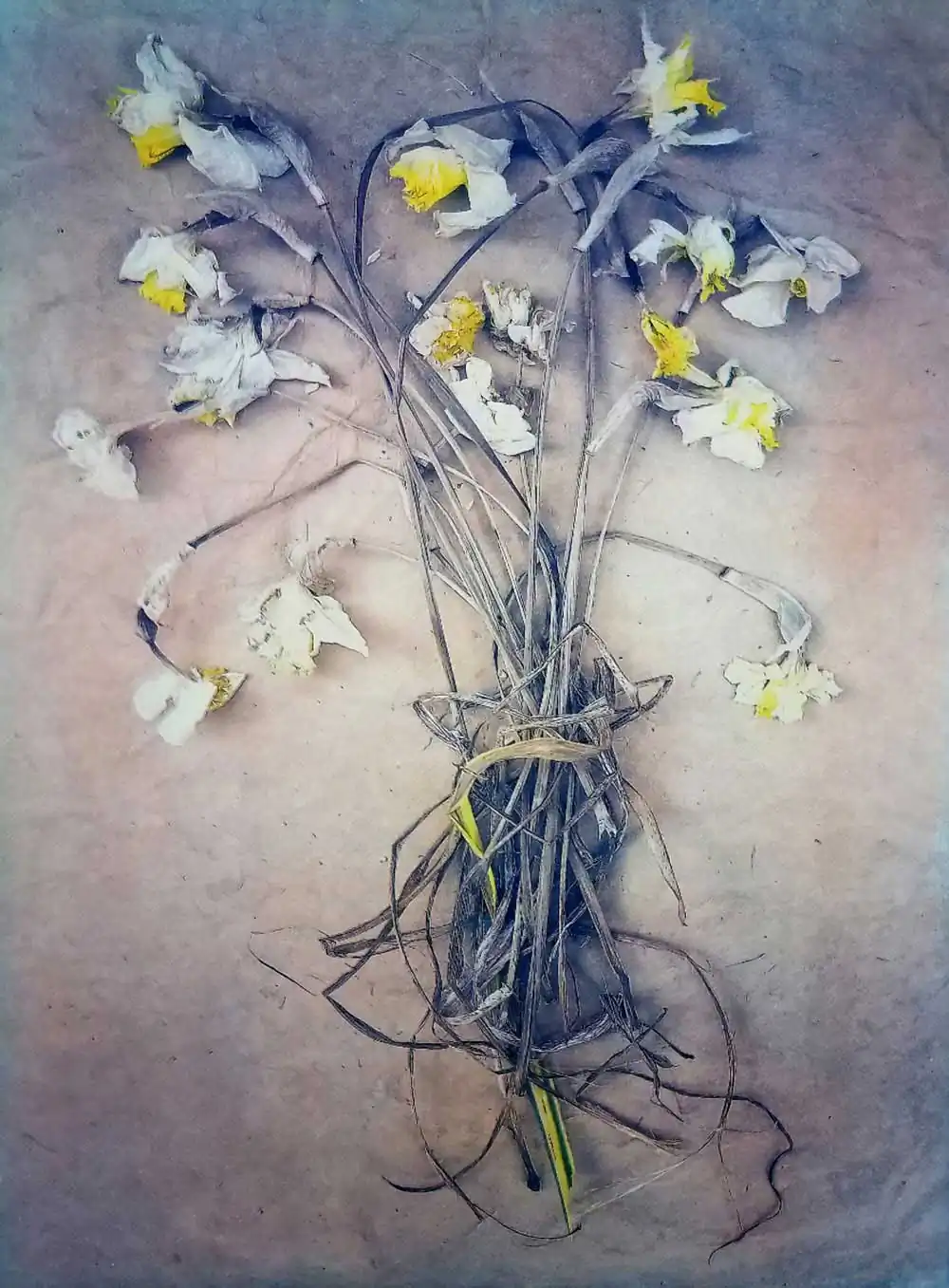
Diana Bloomfield, in The Old Garden, places the flower within the terrain of intimate memory. Her hydrangeas and camellias are not simply botanical species but familial recollections fixed in pigment. The garden becomes mental space. What withers is not only the flower, but shared time. Photography operates as preservation against loss.
Nature, Science, and Spirituality
The flower as bridge between knowledge and contemplation
In J.W. Fike’s Photographic Survey of the Wild Edible Botanicals of the North American Continent, the focus shifts toward scientific and ecological dimensions. Plants floating against black backgrounds recall historical botanical photograms, yet simultaneously activate a contemporary reflection on interdependence between humans and environment. The flower ceases to be abstract symbol and becomes tangible evidence of symbiosis. Art and science converge within a single frame.

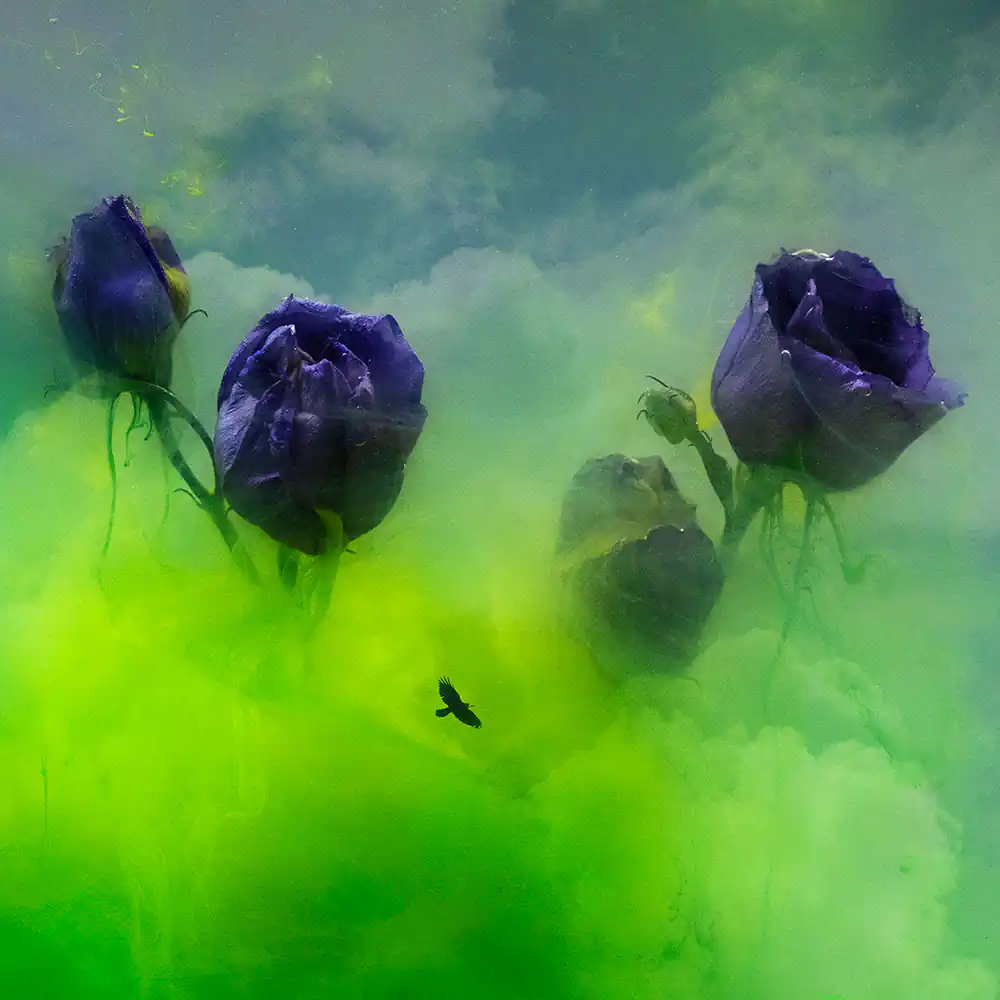
August Langhout, in Sunken Beauty, introduces water, pigment, and distortion as transformative elements. Submerged flowers lose contour and verge on abstraction. Recognition dissolves. The image shifts toward the spiritual. What we see is no longer merely a flower, but a process of dissolution. Beauty is redefined as movement.
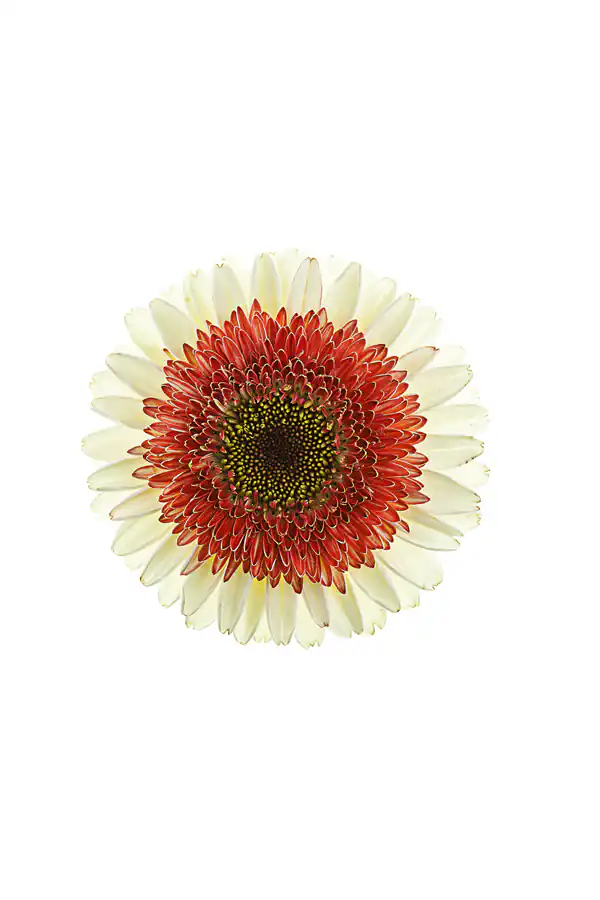
In Mandala by Luigi Bussolati, cut flowers are reorganized into circular structures evoking mandalas. Here the flower integrates into symbolic order suggesting return, repetition, continuity. Nature appears as rhythmic system rather than isolated fragment.
The Flower as Contemporary Metaphor
Between aesthetics and temporal awareness
What ultimately unites these approaches is an acute awareness of time as visual material. In each of these projects, the flower is an organism subjected to transformation. There is no true stillness. Even when apparently frozen by the camera, its ephemeral condition persists as latent tension.
Contemporary photography has ceased to idealize the flower as perfect object and instead embraces its symbolic complexity. The flower is vulnerable body. It is deteriorating memory. It is landscape shaped by environmental crisis. It is familial recollection. It is spiritual metaphor. It is evidence that beauty resides not in permanence, but in transition.
To look at flowers in contemporary photography is to look at the entire cycle of existence condensed into organic form. It is to accept that what moves us is not merely their appearance, but our awareness of their disappearance. And it is precisely in that disappearance that the image acquires its deepest density.
The flower is not a minor motif. It is one of the most precise mirrors of our condition.