
Over the past decades, Spain has produced a generation of photographers whose work resists easy classification.
Far from a single aesthetic or a unified movement, these authors share a sustained commitment to territory, memory, identity, and the observation of others. Their work is not driven by spectacle or immediacy, but by time, proximity, and attention. These are projects that do not exhaust themselves in a first reading and gain depth when revisited.
This selection brings together five Spanish photographers whose practices begin from different places yet resonate through a shared sensibility. Travel understood as a method, absence as presence, everyday life at the margins, cultural encounter, and the transformation of the face through light are some of the threads running through these bodies of work.
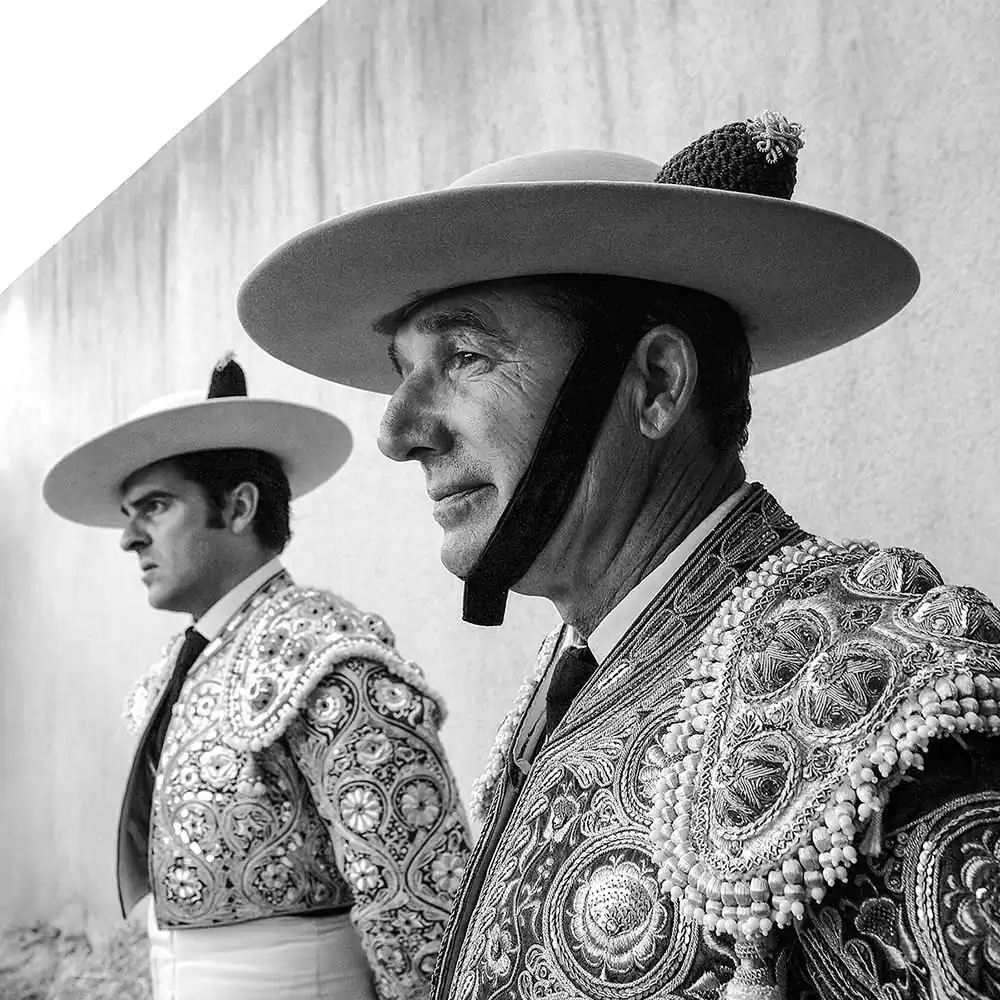
In Candy Lopesino, movement becomes a form of visual writing. The Iberians unfolds as a continuous journey across the Iberian Peninsula, understood not as a political map but as a lived territory. Spain and Portugal appear as a shared space where light, memory, borders, and identity intersect. His photography does not aim to describe a place, but to inhabit it, observing what emerges when one walks without a fixed destination.
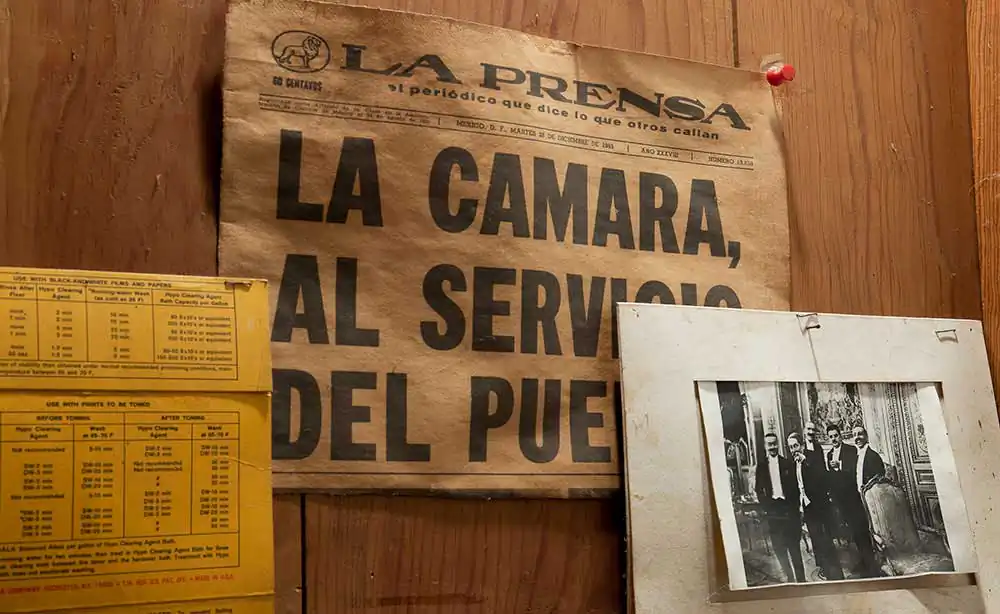
The work of Rafael Navarro is articulated through memory and personal connection. In The presence of an absence, space becomes a trace. Starting from the home and workspace of a mentor who is no longer present, Navarro constructs a restrained tribute, free of emphatic gestures, where photography functions as an act of listening. What is shown is not so much what is missing, but what remains.
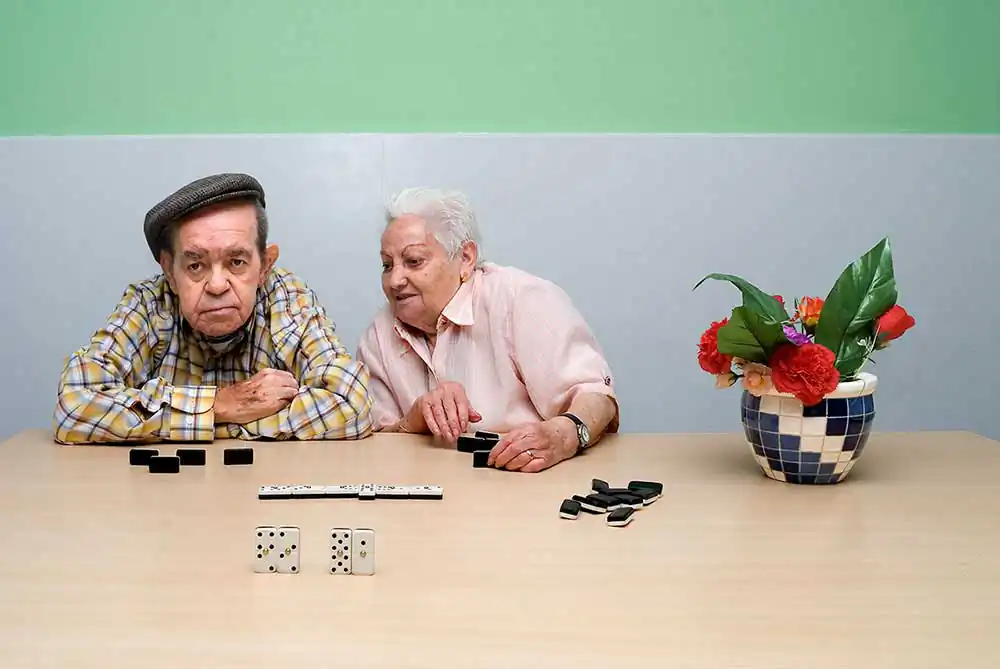
In Life Center, Josep Echaburu turns his attention to geriatric centers, spaces often portrayed through narratives of neglect or denunciation. His approach is different. Echaburu observes the life that continues: the relationships that form, conversations, everyday gestures, late affections. Fragility is present, but it is not turned into spectacle. The camera accompanies without intruding.
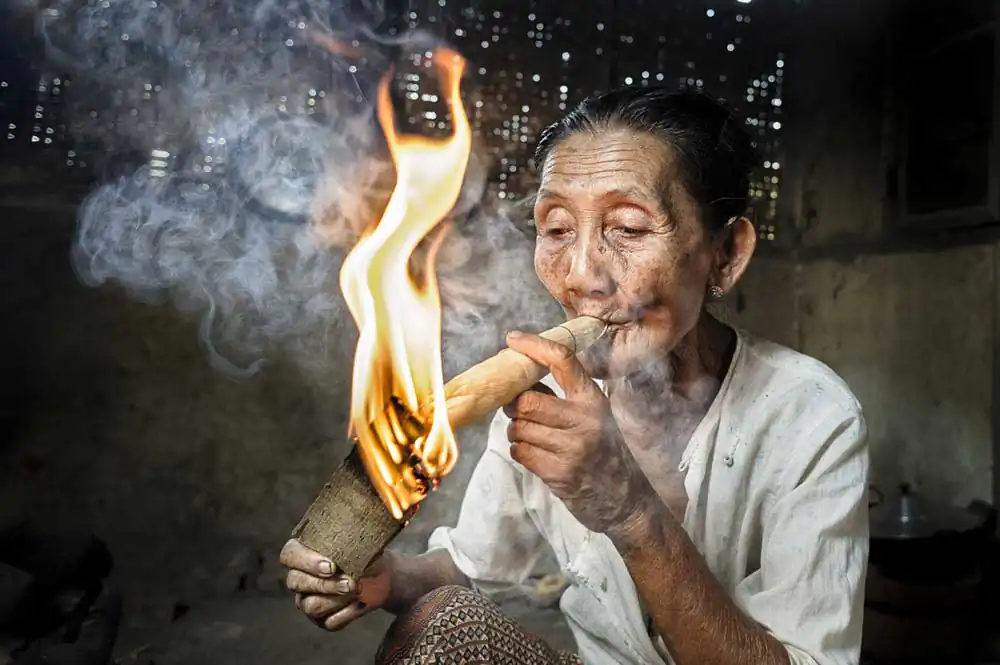
The trajectory of Jorge Fernández is marked by travel, but his photography goes beyond geographic movement. After more than twenty years visiting over eighty countries, his work focuses on people and their ways of life. From a documentary perspective, Fernández is interested in traditions, customs, and everyday practices, seeking to show cultural diversity as an expression of a shared human condition.
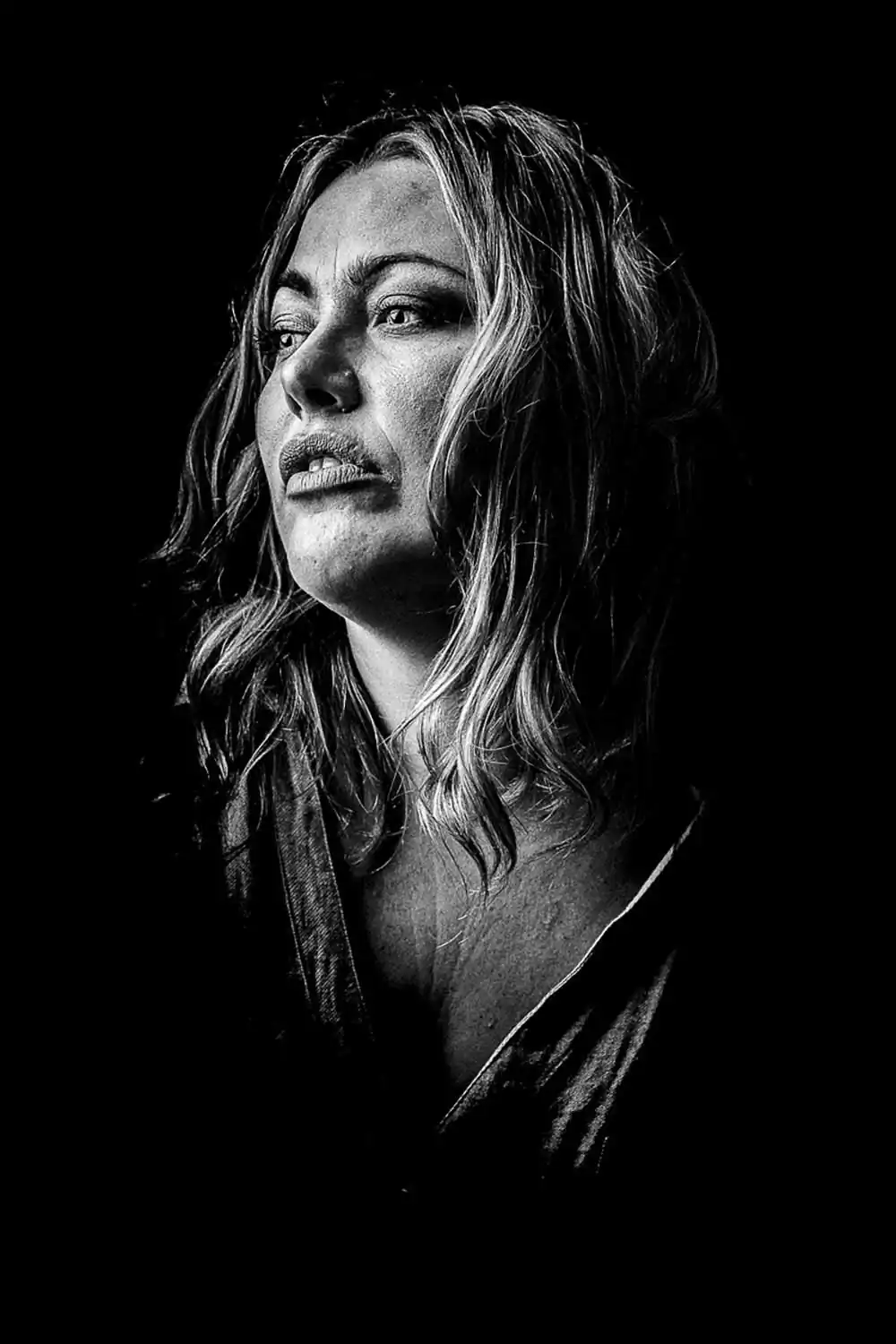
Finally, Nick Gandano explores portraiture as a space of transformation. In Anthracite, light acts as a narrative element capable of altering the perception of the face. People close to the photographer, familiar faces, are momentarily transformed into characters. The project does not seek resemblance, but that precise moment when lighting reveals something different, fragile, and ambiguous.
These five authors do not represent a single or closed idea of Spanish photography, but they do share a way of looking that privileges depth over immediacy. Their projects propose a relationship with images based on time, attention, and experience. Below, their publications are presented as an open invitation to discover — or rediscover — these perspectives.
The Iberians by Candy Lopesino
The Iberian Peninsula is a geographical concept formed by Spain and Portugal, two geographically united countries but separately by an invisible border. THE IBERIANS is an essay about my travels through this territory, visually narrating the things that happen while wandering around Iberia (Spain & Portugal), how to write in a sketchbook. The knowledge of a specific territory gives depth and meaning to my project, that is why my work is a continuous journey through Spain and Portugal . They are places where I explore the concepts of territory, border, light, memory and identity through the observation of the other. In The Iberians I rediscover the common places, their people, their culture, their realities circumscribed to a geography, in short I explore the human condition… Read More
The presence of an absence by Rafael Navarro
This series of photographs was born as a heartfelt tribute to the great Mexican teacher whom I had the privilege of meeting. He was an open and generous person with whom contact was easy and enriching. His work undoubtedly influenced my career as a photographer.Some years after his death I was exhibiting in Mexico and during my stay in Mexico City. I asked his widow to allow me to take photographs in his house and workspace in Coyoacán, in order to create a tribute through the sensations that he could capture in the environment. I received all kinds of facilities on his part and my work took shape in this series of 28 images… Read More
Life center by Josep Echaburu
It’s very posible that the geriatic center will be the last home for a human being, his last refuge. Most of the photographic reports already done about geriatic centers are focused on this aspect or are trying to show abuse cases or negligences towards the elders. However there’s an usual reality less advertised revolving around the life created in geriatric centers, to these new friends and new romances emerge, games of cards or dominoes, conversations among elders, embraces or cryings between colleagues, stories safeguarded in each elder’s memory, to their wishes of being and sharing… Read More
Jorge Fernandez ; Travel Photography
Jorge Fernandez was born and raised in the small Spanish town of Monzon. After finishing high school he moved to Madrid to get a technical engineering degree. In the late 90’s he started to study film photography during a few years and after that he decided to do the jump to digital, the craft of which he learned for himself. The passion for photography grew hand by hand with the passion for traveling. After more than twenty years of traveling Jorge Fernandez has visited more than 80 countries and the photography portfolio grew with every trip, evolving from focusing mainly on landscapes to the center of his work nowadays which is, above all, the people that live in the places he visits and their everyday lifes and customs.
This series of photographs are part of his work as a documentary travel photographer. The aim of his photography is to show the traditions of the different peoples living in this planet, following the philosophy of the famous collection “The family of man” assembled by Mr.Eduard Steichen for the MOMA, showing the big cultural differences to come to the conclusion that the whole humankind are part of the same essential “oneness”… Read More
Anthracite by Nick Gandano
Anthracite is the most metamorphic mineral coal and has the highest carbon content. Its colour ranges from black to metallic grey depending on how light falls on it. The anthracite project is made up of ordinary people, people around me, friends, acquaintances, colleagues or even I. I have always been fascinated by the way in which lighting is able to modify the human face. Sometimes the miracle occurs, a certain lighting can interpret a gesture or a look in a special and different way. The light falls on the face of the portrayed transforming it, getting the person to become at that precise moment a character. It’s what I look for in my portraits, but I don’t always achieve it… Read More