

Few natural phenomena engage us as profoundly—as viscerally—as waterscapes.
They are, all at once, visual, physical, psychological, emotional, and acoustic experiences.
We do not merely see the waterfall or the sea surf—we hear and feel them. With their sometimes colossal eruptions and fearsome pandemonium, they inspire awe, humility, and daring. Lingering alongside them or braving immersion, enshrouded in their mist, spray, and symphonic soundscape and engulfed by their vitality, can induce physical and emotional catharsis.
But the calmer waterways of rivers, streams, lakes, and ponds are no less enthralling. With their gentler rhythmic movements, they too can provide us with profound feelings of contentment, joy, wonder, and gratitude.
As 99% of the human body’s molecules are water molecules and humans cannot survive more than a few days without water, its importance to us is impossible to exaggerate. Circulating through our blood, composing our cells, and regulating our temperature, water sustains nearly every biological process on which life depends. But beyond being essential for our survival, water plays many other roles in our lives.
From our very beginning as newly formed zygotes in our mothers’ wombs, immersion in water remains essential to our well-being, and neurological connections to water formed through our continuous relationship with it provide us with some of our deepest experiences of delight and comfort. Scientific research confirms what we already know—that being in, on, under, or near water can be abundantly beneficial to our psyche, as it triggers neural responses that promote well-being and relaxation and enhance a feeling of connectedness. Even water’s sounds—from the white noise of waterfalls and the galloping of ocean waves to the patter of rain and the babbling of rivers—can induce a flood of neurochemicals that calm and relax us.
But quite apart from the fact that we are drawn to water for our physical and emotional well-being, we look to it to express something essential about our inner lives. Artists around the world and throughout history have understood that, given our intimate and intricate relationship with water and its power to induce deep emotion, waterscapes also carry unique imaginative powers.
Even a simple shoreline, river, or reflection on the surface of a lake can feel charged with philosophical significance—a way of representing states of mind and the larger passage of human life: always changing yet remaining themselves; cleansing, nurturing, concealing, dividing, connecting, destroying, and renewing. Perhaps because their physical behaviour resembles so many aspects of human experience, waterscapes can also offer profound allegorical significance, and artists have long looked to them to explore birth, death, and other transformations; spiritual passage; human vulnerability; and our relationship to forces larger than ourselves.
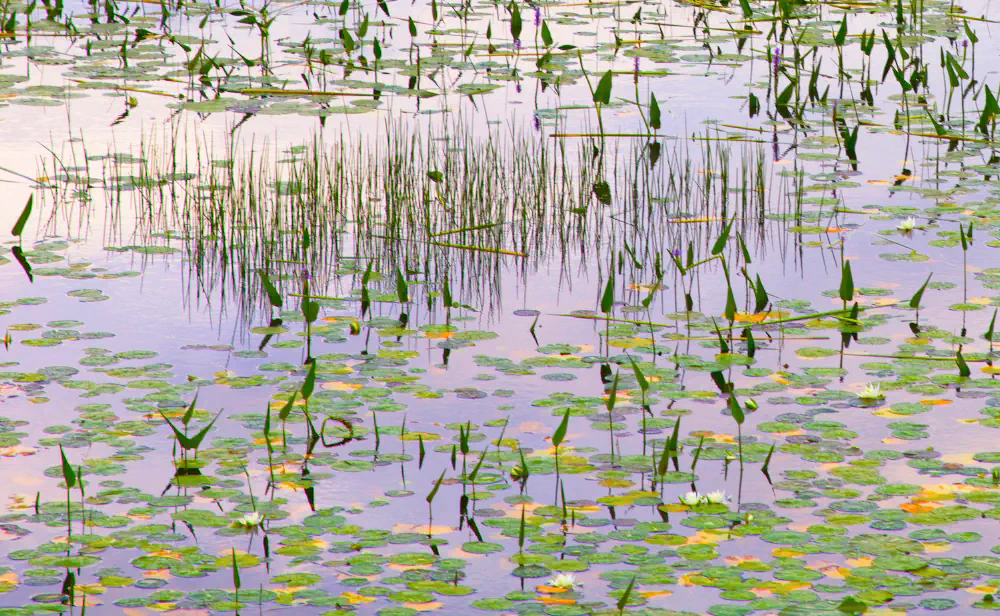
Psychologically, waterscapes often invite contemplation even as they offer both stimulation and relief. The repetitive sounds of moving water and the shifting patterns of light gently hold our attention without demanding it. Reflections on water’s surfaces quiet other visual distractions and create a sense of inwardness, allowing the mind to loosen its grip on everyday concerns and enter a more reflective state.
We can see in Savarese’s work that she too is often drawn to the way water seems to hold both surface and depth at once, and how large horizontal or vertical expanses of water can alter our sense of scale, reminding us that we are part of something larger than ourselves.
Emotionally, water is also unusually rich in association, and in Savarese’s work, we see clearly how she uses waterscapes as natural metaphors for human experience. The meditative quality of quiet lake images registers deep notes of peace and renewal. Her renderings of waterfalls convey immense power, helpless surrender, profound exhilaration, and continual renewal. Portraits of fog and mist naturally evoke uncertainty or loss. A violent sea—painted by nature with aggressive strokes, compressed space, distorted perspective, and unnatural colours—induces fear. The character of the water—its pressure, agitation, weight, speed, or stillness—provides a fluent language through which emotional states can be expressed.
Understanding that a strong metaphor grows from physical truth, Savarese also actively seeks out the metaphorical potency in her waterscapes. For her, a river does not merely “symbolize time”—as it flows forward, carrying things, changing course, flooding, disappearing underground, and eventually entering something larger than itself—it also prompts new insights beyond the passage of time, aging, and mortality.
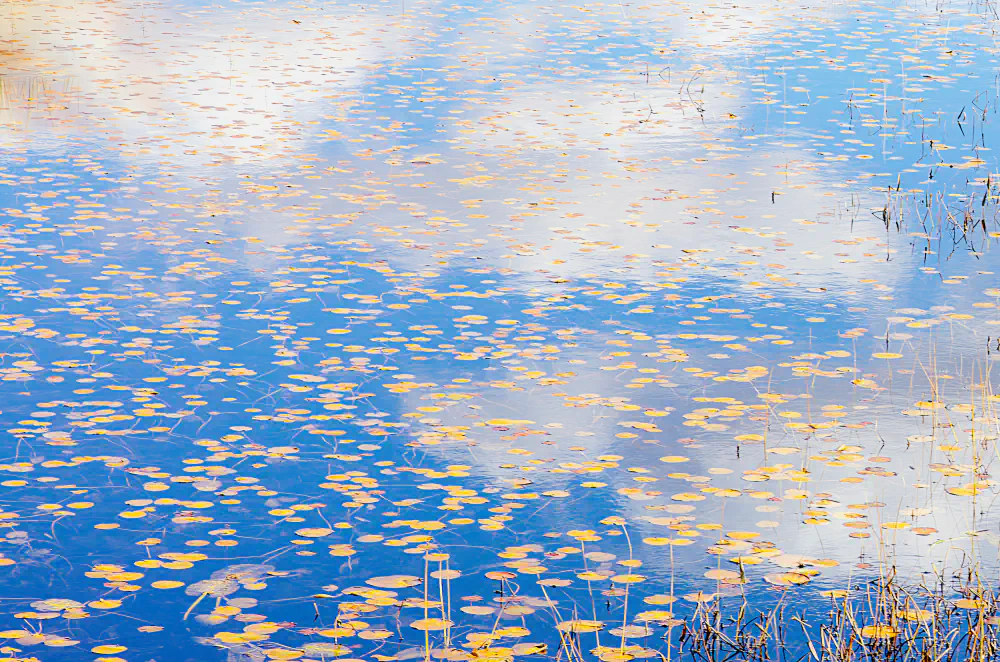
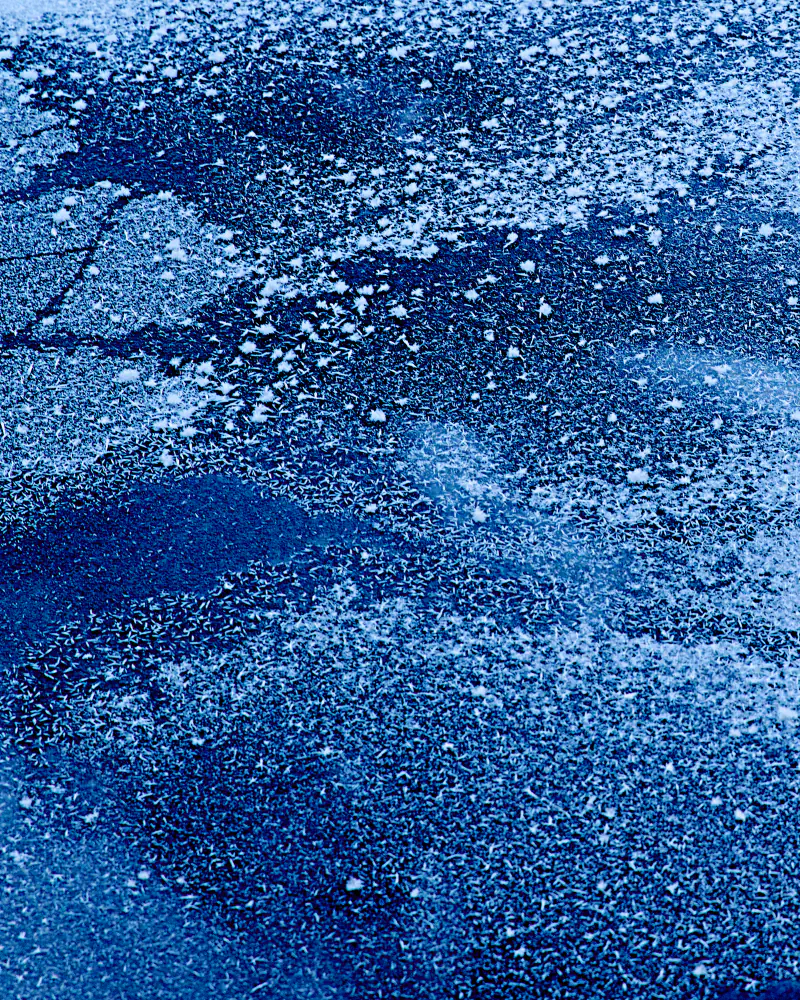
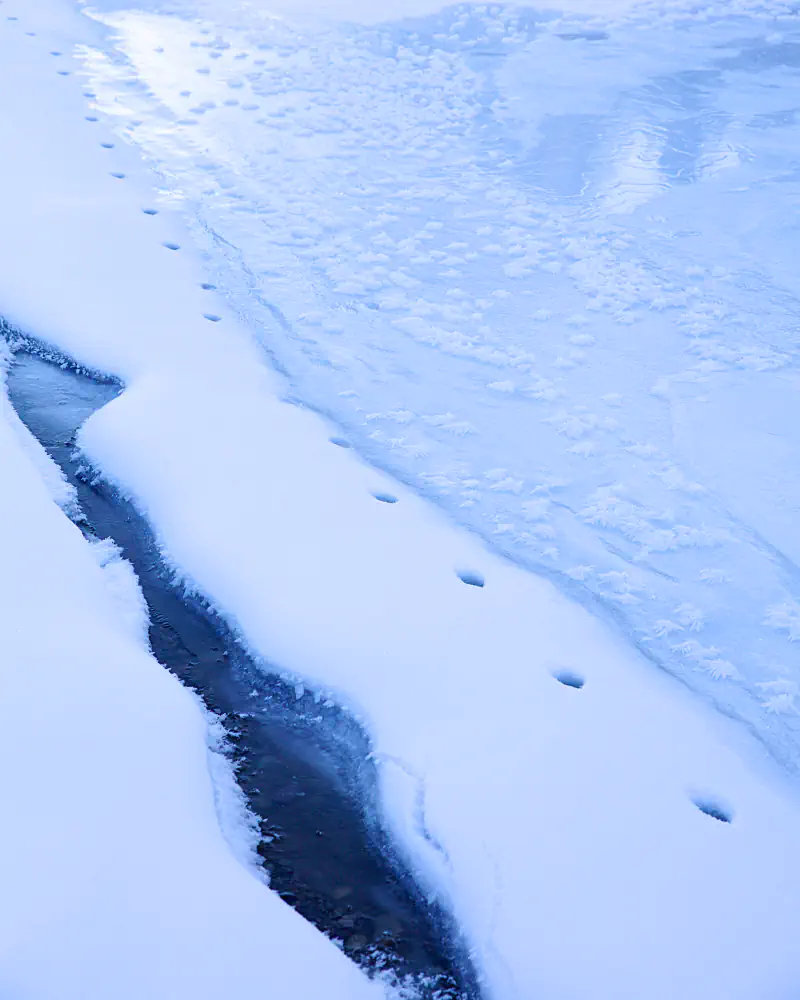
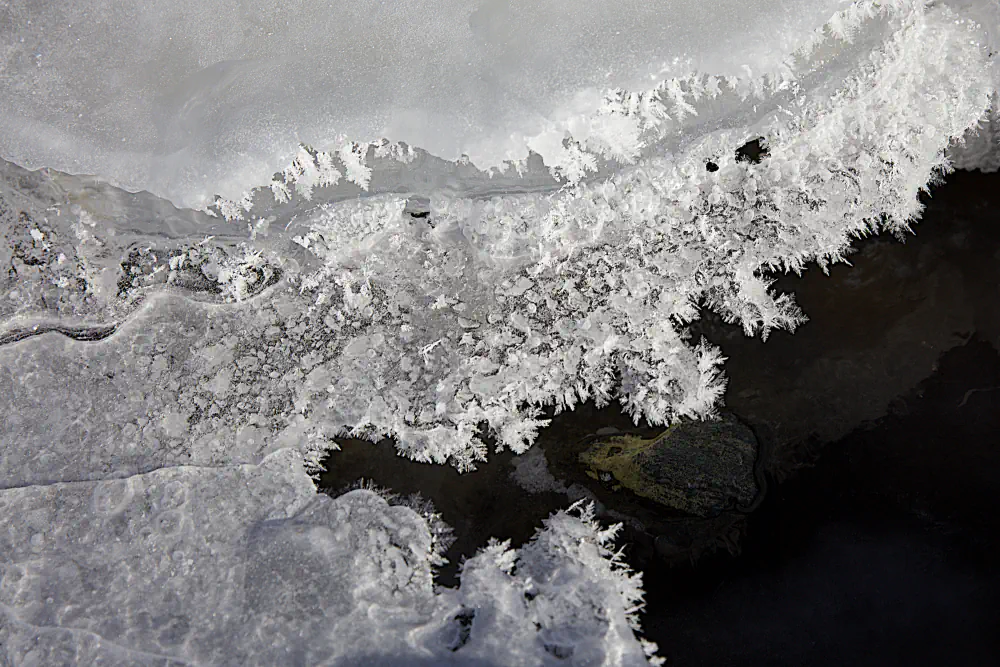
Similarly, her ocean images convey vastness, freedom, danger, the unknown, the unconscious, infinity, isolation, or human insignificance. Water’s other unique physical states offer still more metaphorical possibilities. Images of ice viscerally stand for suspended life. Melting ice captures release. Snow crystals represent uniqueness and transience. Rain cleanses, obscures, nourishes, or mourns, while mist portrays mystery and uncertainty. It is no wonder, given how powerfully water can symbolize purity, life, and spiritual cleansing, that it also plays a vital role in virtually all religions.
The artist never needs to state any of these meanings explicitly, as water carries them almost instinctively. But in addition to providing promising subject matter, gazing at waterscapes can also offer the artist invaluable artistic instruction.
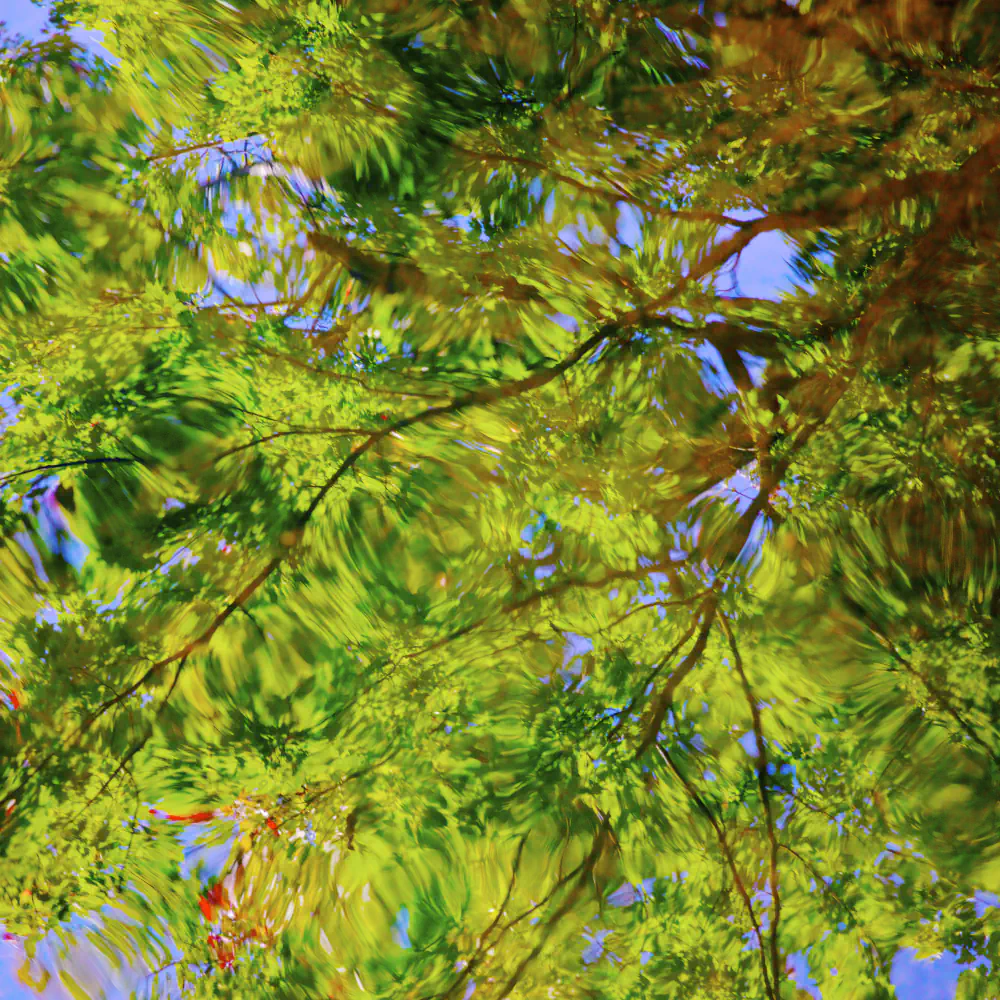
For an artist drawn to Impressionism, carefully viewing water teaches the eye to notice broken colour, reflected light, atmospheric haze, and the constant instability of appearances; how light changes colour from moment to moment; and how water’s own broken brushstrokes can suggest shimmer, atmosphere, and fleeting perception rather than precise detail.
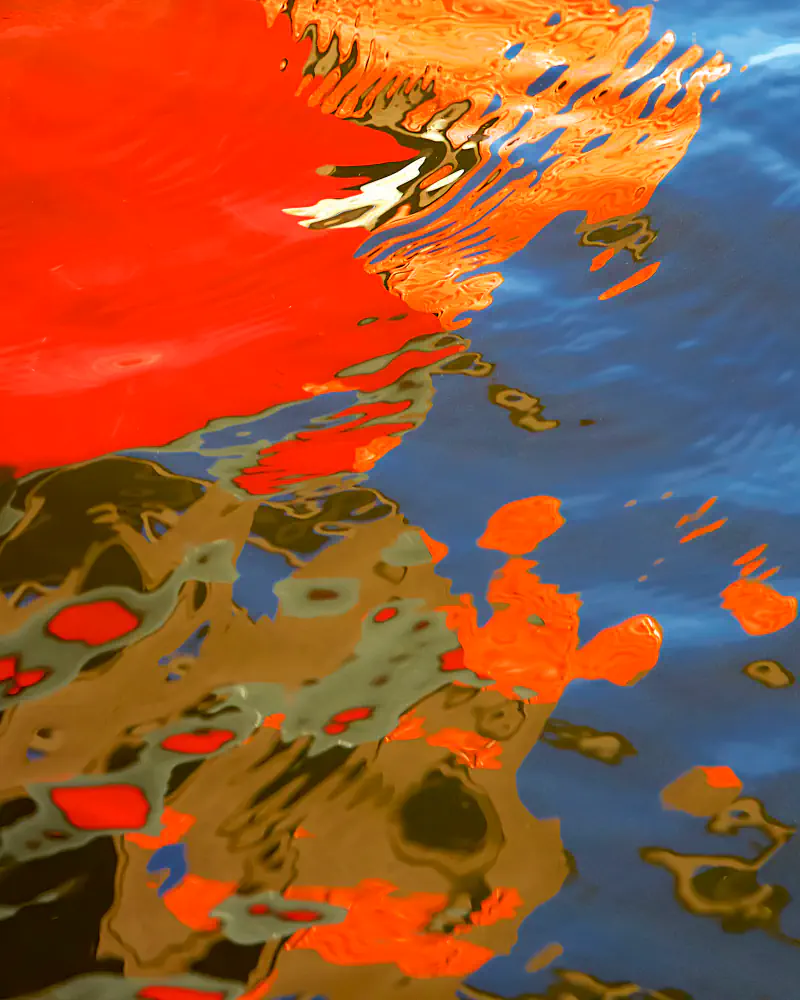
Reflections on the surfaces of water are never exact copies of the sky, trees, buildings, or figures above them; they break into flickering patches of colour that change with wind, weather, and time of day. Water encourages the artist to try to capture the impression of a moment rather than carefully outlining every object.
For an artist drawn to Expressionism, gazing at water offers a different lesson. As already observed, because its forms can correspond remarkably well to human emotion, waterscapes offer, through their colours, reflections, movement, distortions, and rhythm, a powerful array of expressive possibilities.
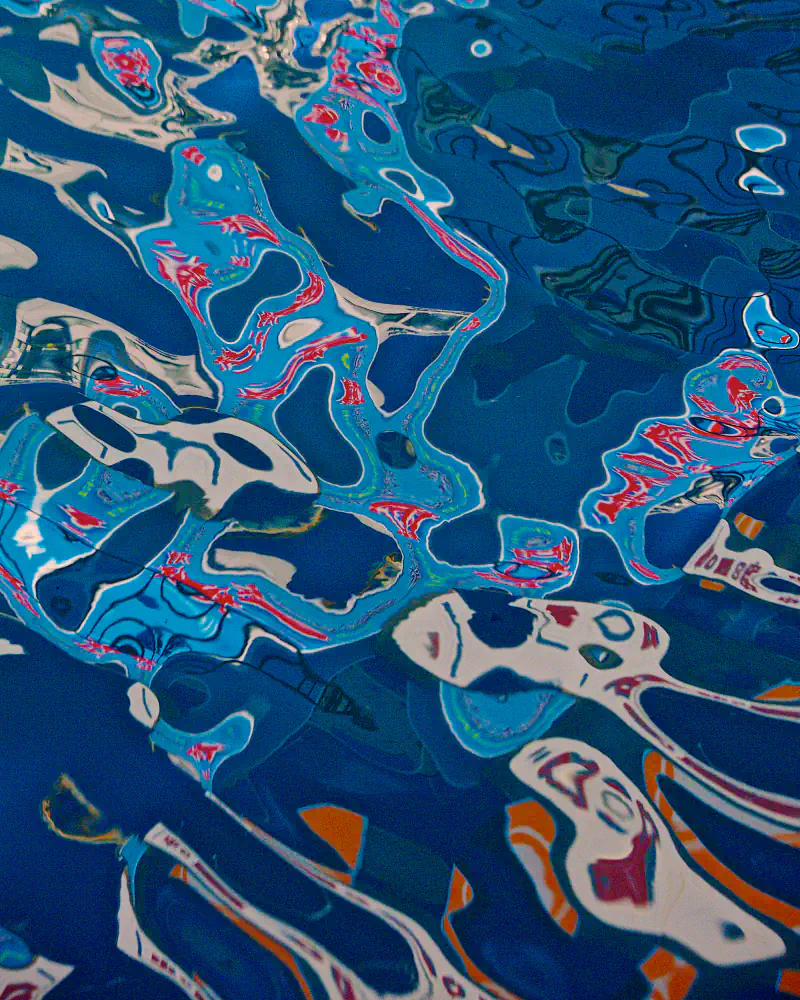
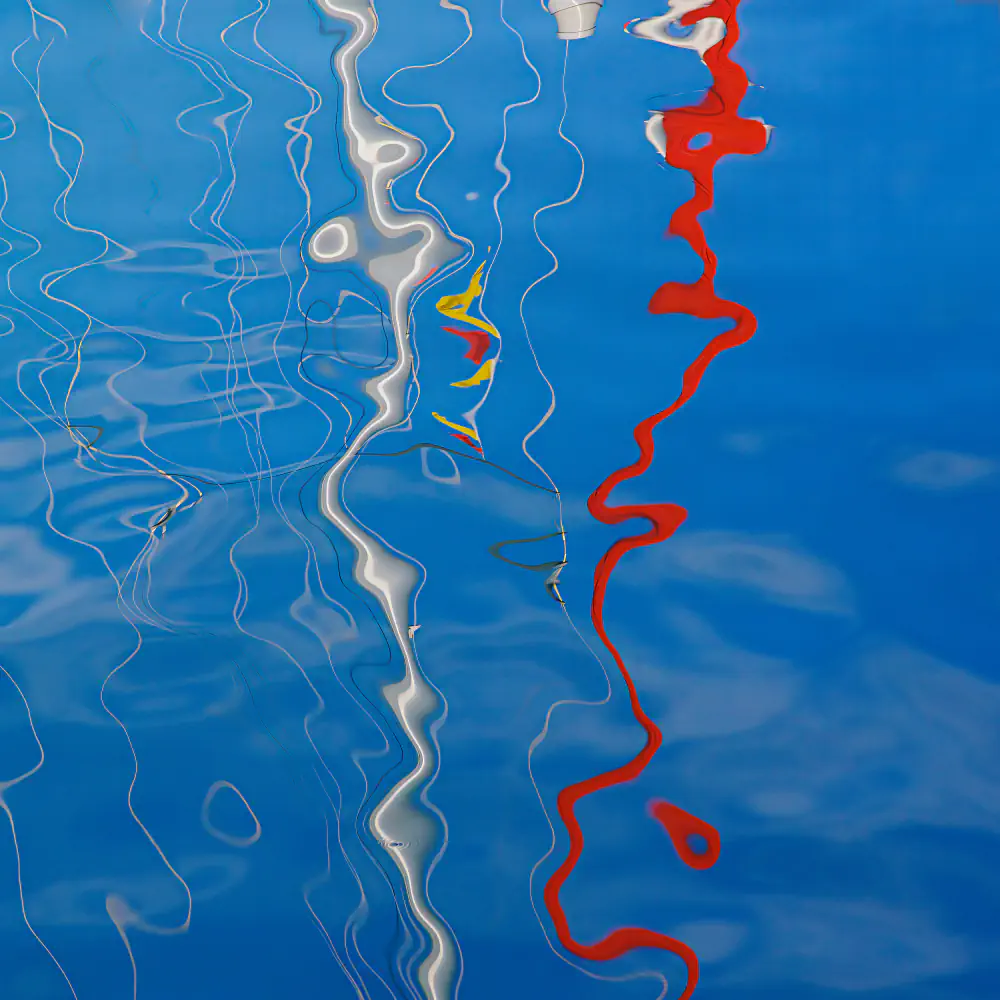
For guidance on abstract rendering—creating non-representational compositions that focus on colour, form, line, and texture—there is perhaps no better starting point than the careful observation of water, as it continuously dissolves recognizable objects through its reflections into bands, shapes, patterns, and fragments. Trees dissolve into green and black marks. Sunlight becomes scattered geometry. Ripples divide reflections into irregular shapes that may have little obvious connection to the objects that produced them. The artist begins to see line, rhythm, interval, colour, pattern, and movement rather than “river,” “tree,” or “sky.” Nature itself seems to perform the act of abstraction.
The colour palette offered to the artist by water is also unparalleled. Without water, Earth itself would be stripped of all its blues and greens, but the range of colours offered by water is vastly richer than these basics. Not only does water, through reflection, borrow all the colours around it, but it also takes on hues from differently angled light and varying water depth, mineral content, organisms, sediment, and sky, producing a vast array of countless blues and greens; greys, silvers, and golds; oranges, reds, and pinks; as well as the purest white and darkest black.
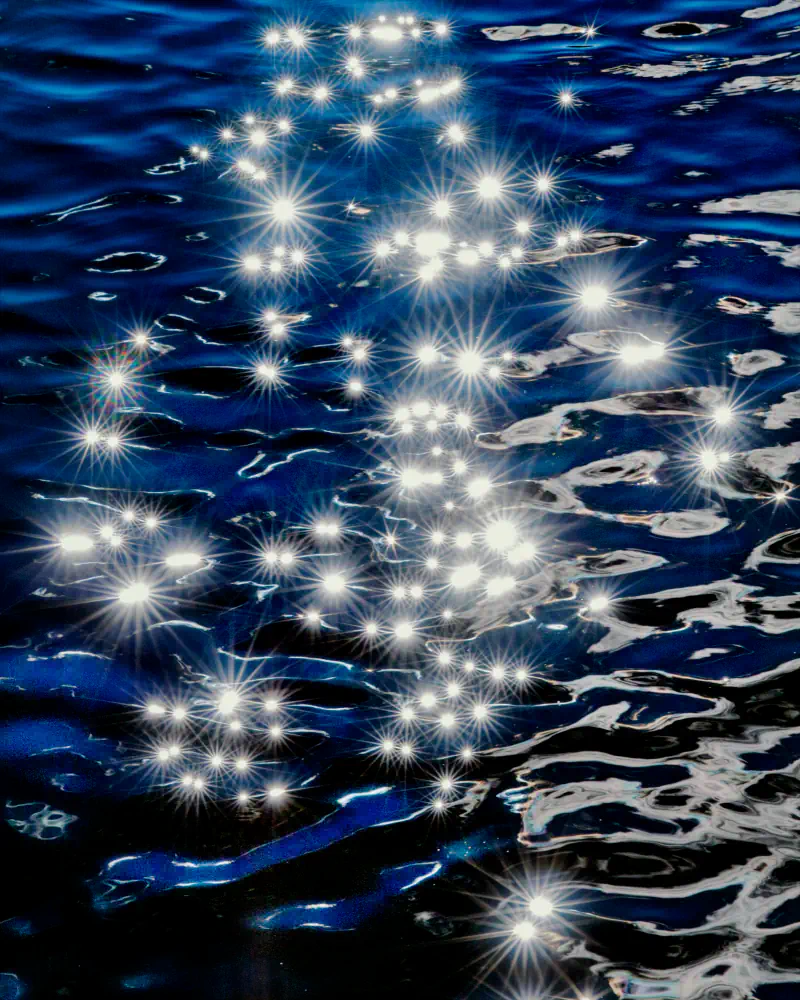
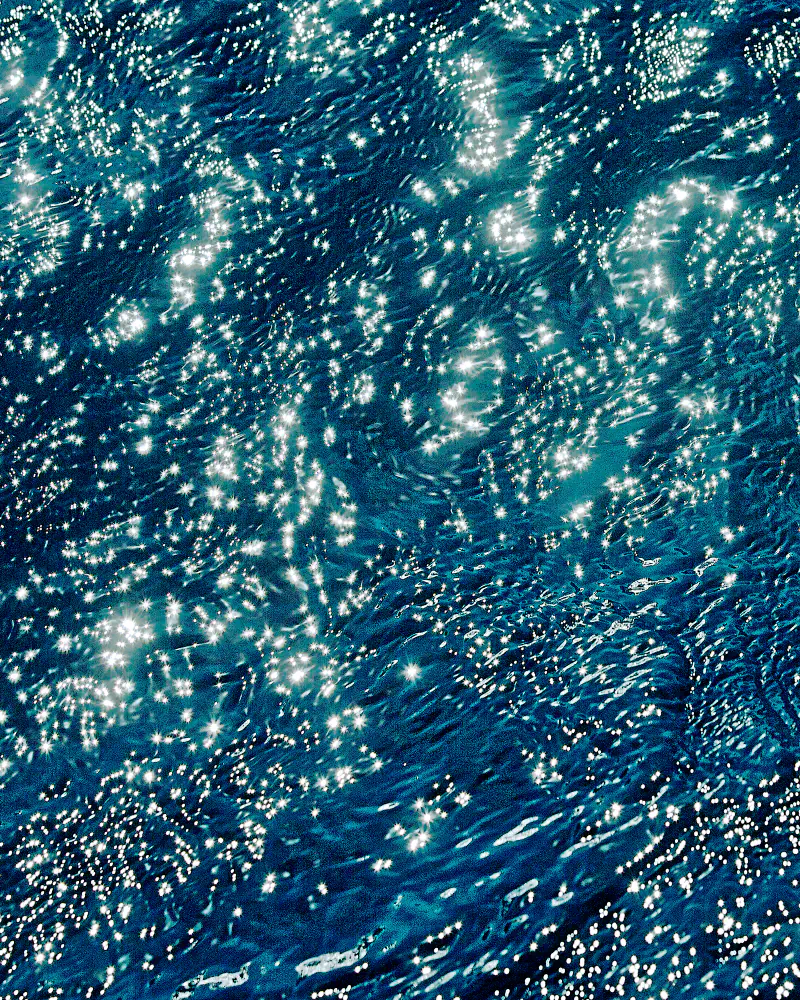
In her many series of water images, Savarese explores all these aspects of water while also attempting to tell water’s own stories. In her “Water Galaxy” series, by capturing images of light hitting water that appear as galaxies of starbursts, she portrays the story of how water was first formed from dust and gases produced by stellar processes before being delivered to Earth by asteroids.
In her “Metamorphosis” series, Savarese imagines all that water carries within itself, having been an intrinsic part of countless plant and animal lives, and all that water has created and dissolved as it continuously metamorphoses among liquid, ice, and vapour states.
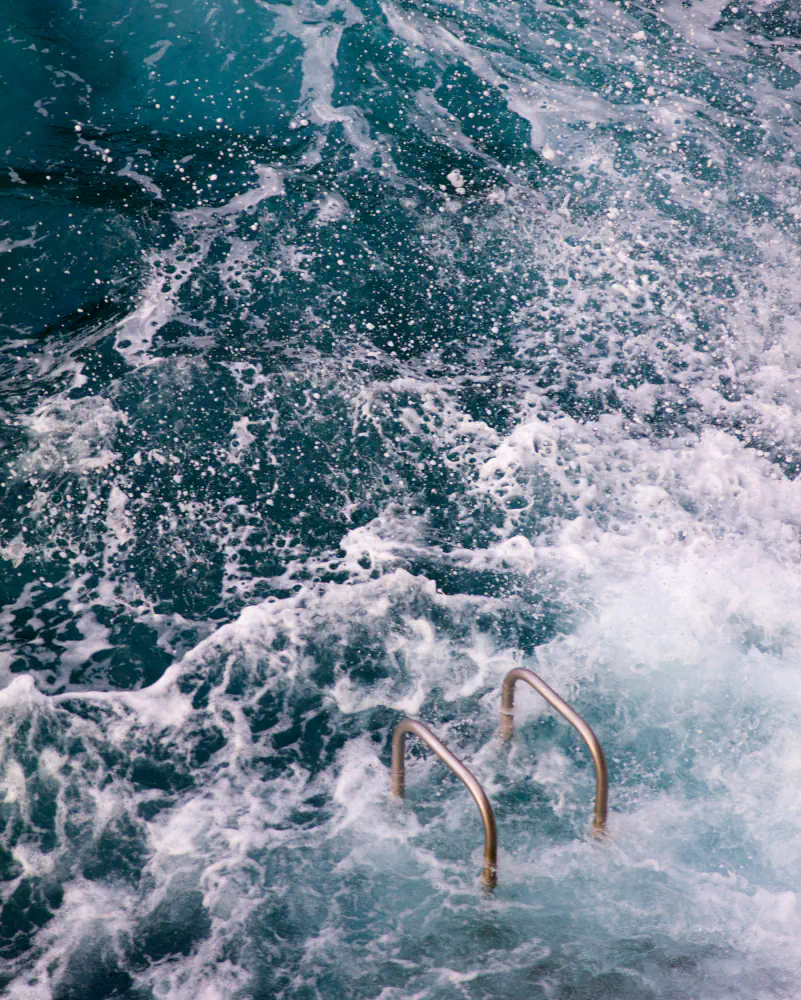
In her “Dive In” series, Savarese invites the viewer to brave life’s challenges as well as the unknown. In her ever-expanding “Oceanscape” series, most often photographed during weekend strolls along Hampton beaches, she captures the many moods of the sea, from the quiet birth of serene pastel mornings to the fearsome churning of late-afternoon summer storms. She also finds herself drawn like a magnet—through Earth’s gravitational pull—to the infinitude of sea and sky meeting at a distant horizon.
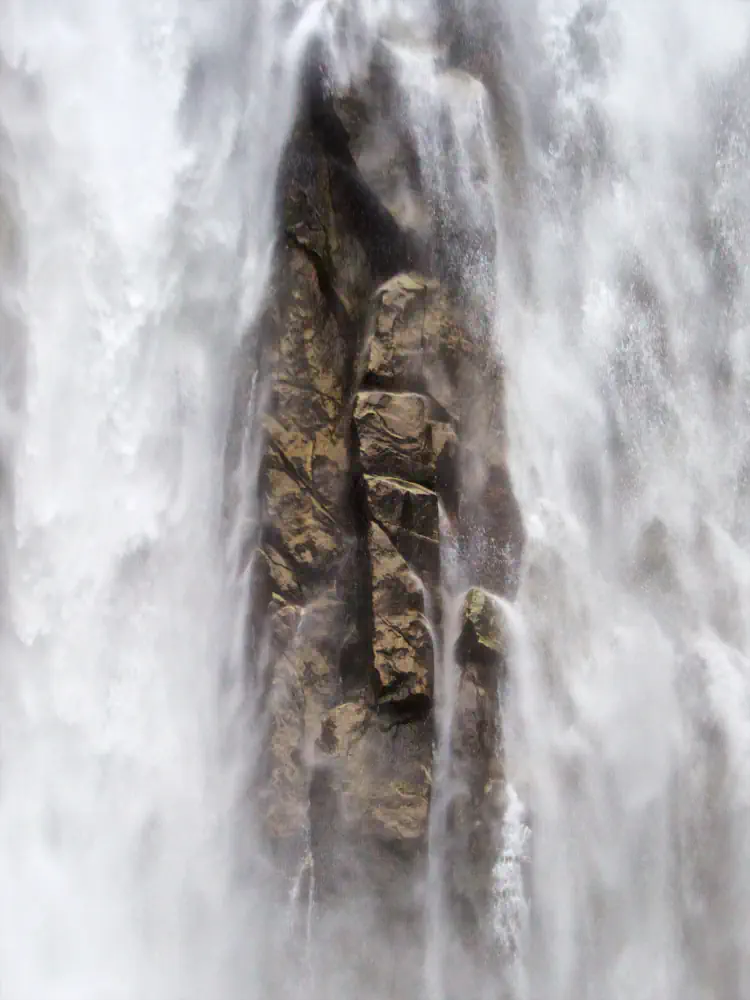
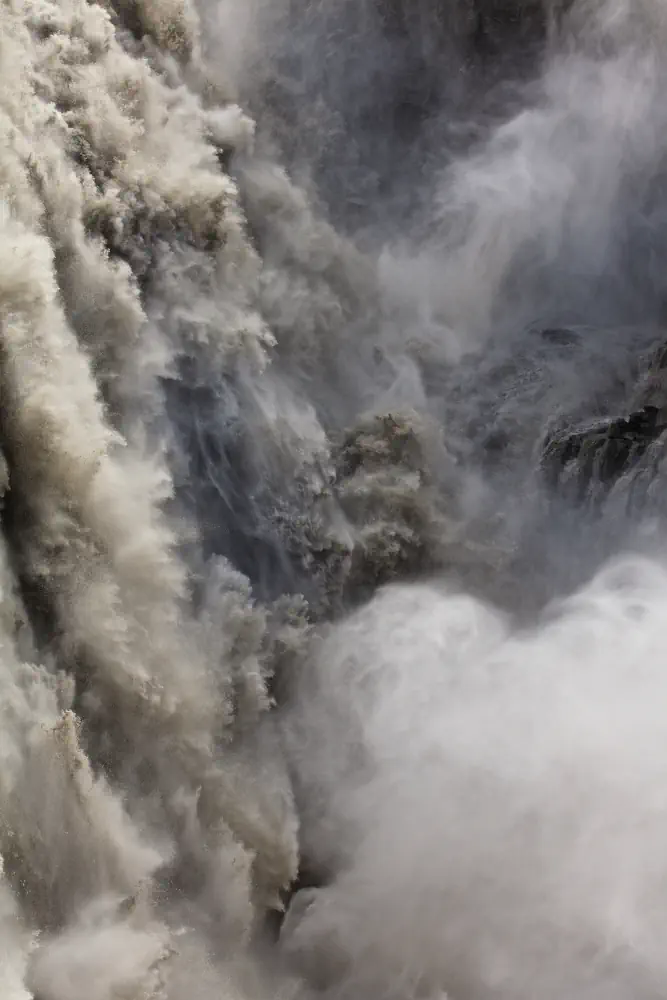
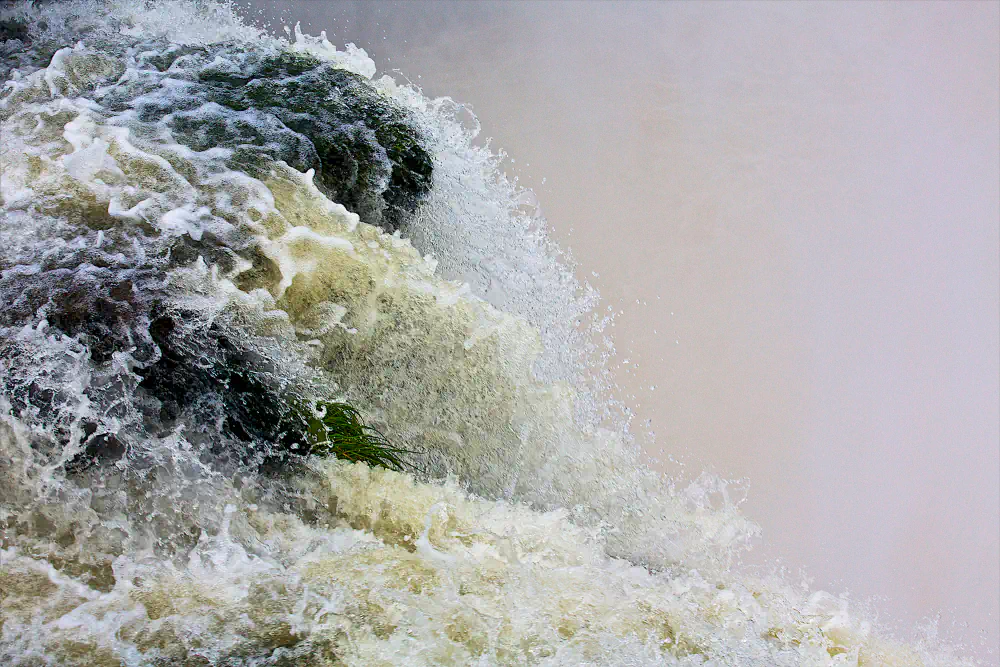
In her “Ode to Waterfalls” series, featuring images taken on trips to Iceland, Greenland, Japan, Argentina, New Zealand, and the United States, Savarese aims to intimately portray the profound life force of waterfalls. Waterfalls present two different scales of time simultaneously: the instantaneous and the geological. For us, whose own lives occupy a brief interval between these extremes of time, the waterfall produces a powerful sense of perspective.
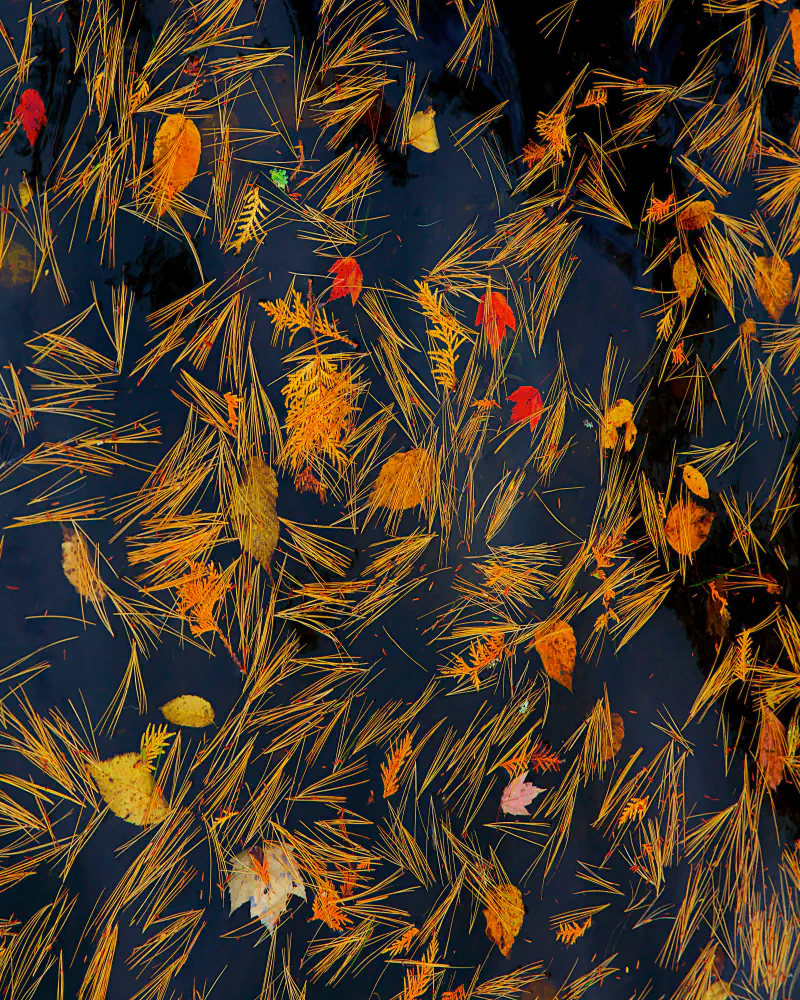
Savarese has stood directly beneath waterfalls alongside meditating Japanese monks to experience their reverence for waterfalls as expressions of purity and energy and as sacred sites where kami—spirits and deities—are believed to dwell. Mindful that in many other cultures throughout the world, waterfalls are also viewed as sacred sources of life, energy, and healing, Savarese attempts to reveal through her images why such views are so widely held—why, in Hinduism, waterfalls may be associated with reincarnation through their continuous cycle of birth, death, and rebirth; why, in Buddhism, waterfalls are also viewed as powerful symbols of the transient nature of existence; and why, in some Native American belief systems, a waterfall’s rushing waters and thundering sounds are understood as manifestations of spiritual forces and divine entities whispering messages of wisdom, guidance, and protection to those who listen.
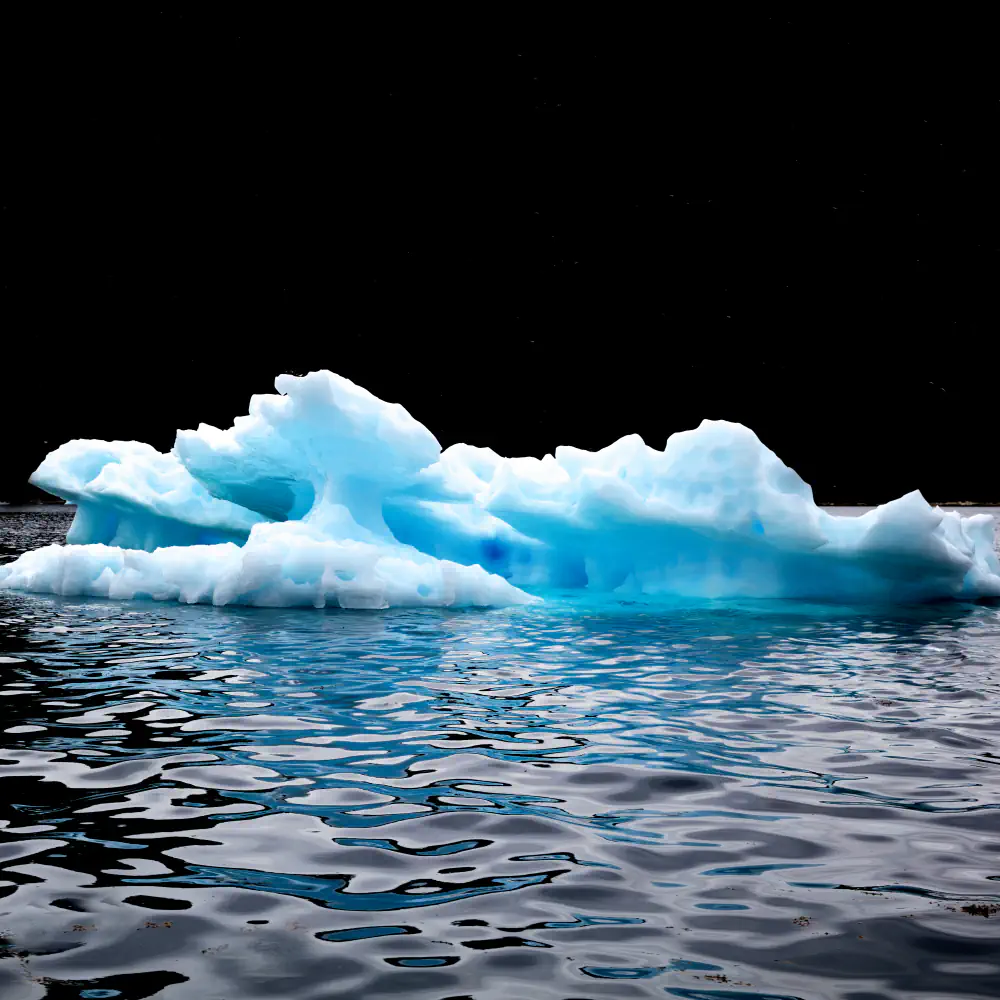
In her “Ode to Icebergs and Glaciers” series, Savarese vividly captures the dramatic melting and calving of glaciers and icebergs in ways that not only suggest the tragedy of global warming but whose ancient formations and continuous transformations remind us that human life is both small and inseparable from something vast.
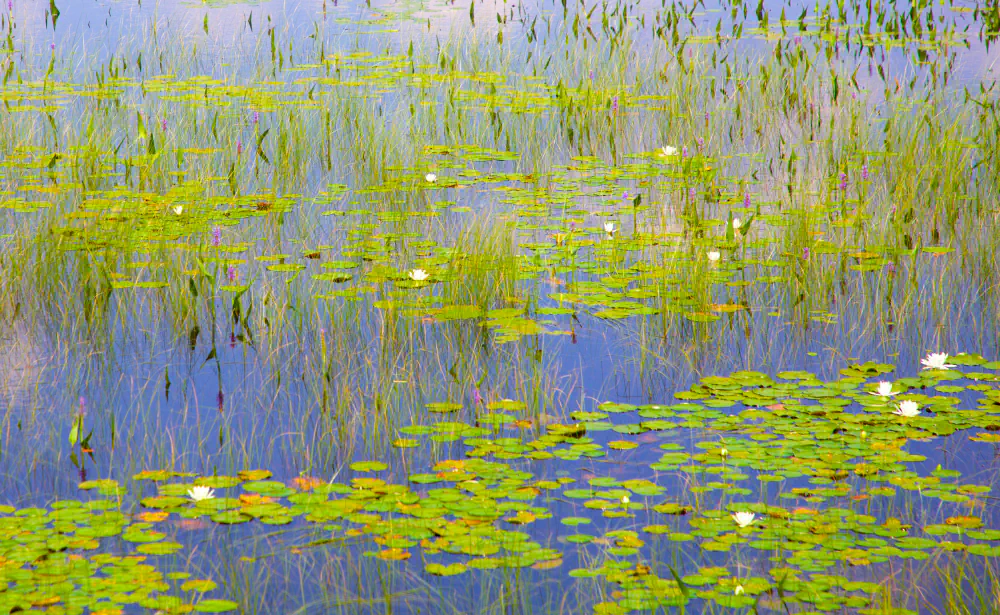
And in her ever-expanding and prize-winning “Monet in the Adirondacks” series, photographed over numerous summers while walking back and forth alongside the Raquette River as it spills into Tupper Lake, she imagines herself much like Monet strolling alongside his beloved pond at Giverny, capturing nature’s extraordinary impressionistic renderings of water intermingling with water lilies and other plants, amid fleeting shades of light and rippling reflections of passing clouds.
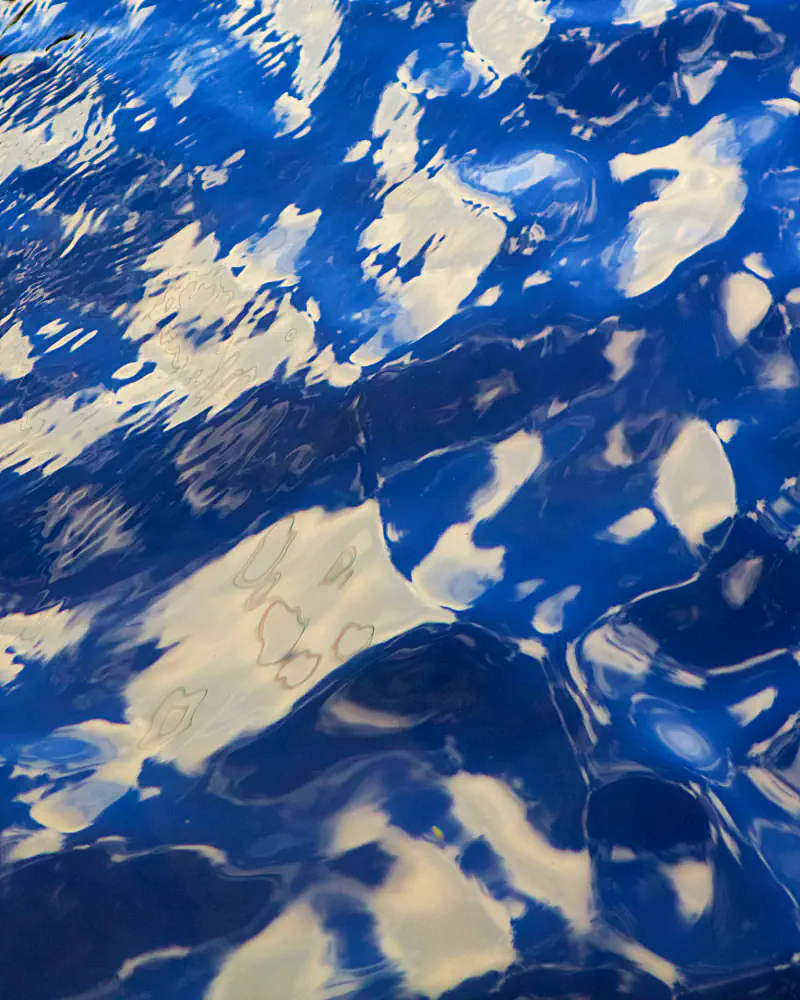
In all its moods, from raging tumult to ecstasy, water mimics our own. Savarese captures water as a kindred being—clusters of restless molecules, always vibrating. As the most intimate companion of every one of us who has ever lived, she demonstrates how well water knows us.
Intensely bonded to itself and yet clinging to all else, continuously absorbing and dissolving what it encounters, water also reveals itself as inherently relational. Like much of life, it is rarely found in a perfectly pure state, and it conducts electricity only when dissolved substances allow charged particles to move through it.
For a portion of time, before it moves on, water becomes our blood, our tears, our breath, and our cells. Through her water images, Savarese aspires to remind us that this continuous exchange is one of the simplest and most profound connections we have with one another and with the planet on which we live.
We are not spectators standing outside nature. We are temporary forms within it. Our private anxieties can be set aside when viewed against this larger scale. For a moment, immersed in images of water, the world does not seem arranged around our ambitions or fears, but instead embraces and unites us with all of nature.
About Lynn Savarese
For Lynn Savarese, the greatest joy of photography lies in the intimate observation of elements from the natural world. Her devotion to water as a subject began more than a decade ago, while standing alongside the Charles River as a devoted spectator of her daughter’s college crew team and waiting to photograph their boats as they came into view.
During those moments of waiting, Savarese became mesmerized by the river before her—by the way its surface whimsically reflected its surroundings, from overhead clouds to trees and other spectators gathered along its banks, and by how rapidly those reflections changed, shifting from impressionistic renderings to dynamic abstractions as the surface of the water was altered by a breeze, a racing boat, or the occasional duck swimming past.
Photographing water in its many manifestations—from rivers and lakes to oceans and waterfalls, and from glaciers and icebergs to mist and rainfall—has fascinated Savarese ever since. As humankind’s most intimate and nurturing companion, water sustains life in countless essential ways. For Savarese, her ever-expanding series of water images is intended to honour and express the profound wonder and gratitude that water inspires.
If Savarese considers herself an artist at all, it is because of the sense of adventure she experiences when venturing into nature with her camera. In those moments when she is struck to the core by the raw miracles of the natural world, she also feels an intense, childlike need to imprint herself upon it and make it her own.
Unlike a painter, who typically begins with a blank canvas and creates an image from scratch, Savarese begins with an image drawn from nature as her canvas and then layers her own emotional and metaphorical intentions through creative cropping and the manipulation of colour and light. She is especially drawn to images of water that are best rendered impressionistically or abstractly, that dwarf her through a new sense of perspective, or that appear wild, untameable, and implacable.
For Savarese, the streaming cascades of a waterfall or the thudding of ocean waves, as well as water’s mist, spray, and white-noise music, become a welcome from the universe that whispers: “You too are made of water. You too are blessed and belong here.” [Official Website]