
Nepal resists simplification in much the same way its geography does.
It is a country defined by extremes, where altitude is not only a physical condition but a cultural and existential one.
From the dense humidity of the lowland valleys to the thin air of the Himalayas, life unfolds in constant negotiation with nature, not as a backdrop but as a determining force. Photography in Nepal, therefore, cannot detach itself from this condition. It is not merely about people or landscapes, but about the fragile equilibrium that sustains both, a balance that extends across the Himalayan region and is further explored in this analysis of Tibetan photography, where identity, territory and cultural survival are equally shaped by extreme environments.
The projects brought together here reveal a country where time moves unevenly, where ancestral practices coexist with contemporary pressures, and where resilience is not an abstract concept but a daily necessity. Through these works, Nepal emerges not as an exotic destination, but as a living structure shaped by community, risk, spirituality and survival.
The Territory as a Living System
Nature and human life as an inseparable continuum
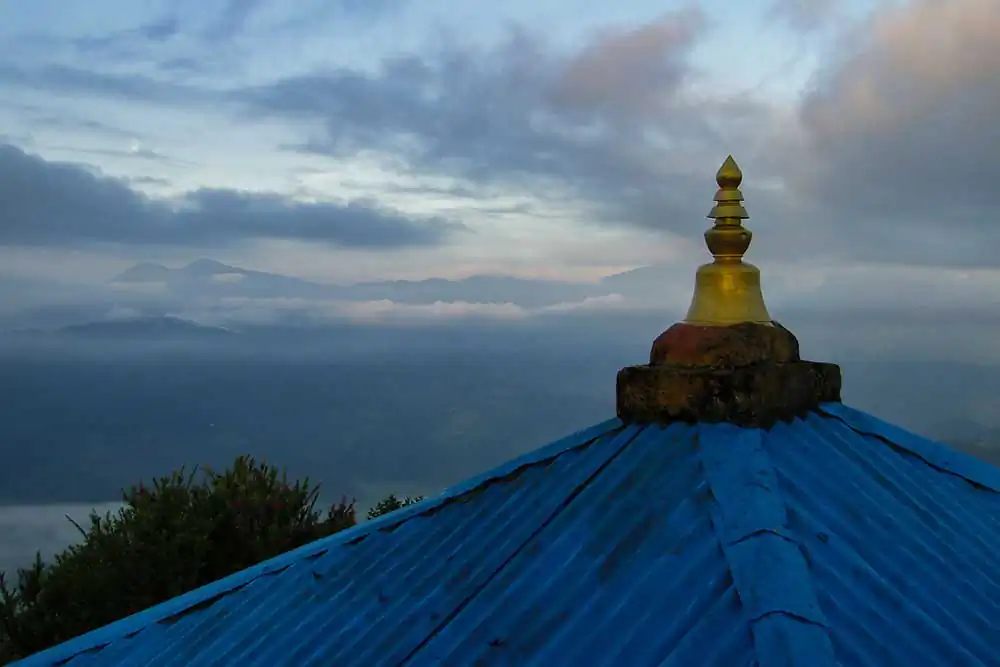
In The valleys of Nepal; Living Within by Inaê Guion, the relationship between humans and nature is not symbolic but functional. Life unfolds along the Rapti River, where the boundary between village and wilderness is almost nonexistent. The presence of endangered species, the dependence on the river and the coexistence with a potentially dangerous ecosystem define a way of life that is deeply embedded in environmental rhythms.
This is not a romantic vision of nature but a pragmatic one. The landscape provides sustenance, risk and identity simultaneously. Photography here becomes a way of understanding how closely survival is tied to geography, revealing a balance that is both fragile and deeply rooted.
The Face as Cultural Mirror
Portraiture as a way to understand collective identity
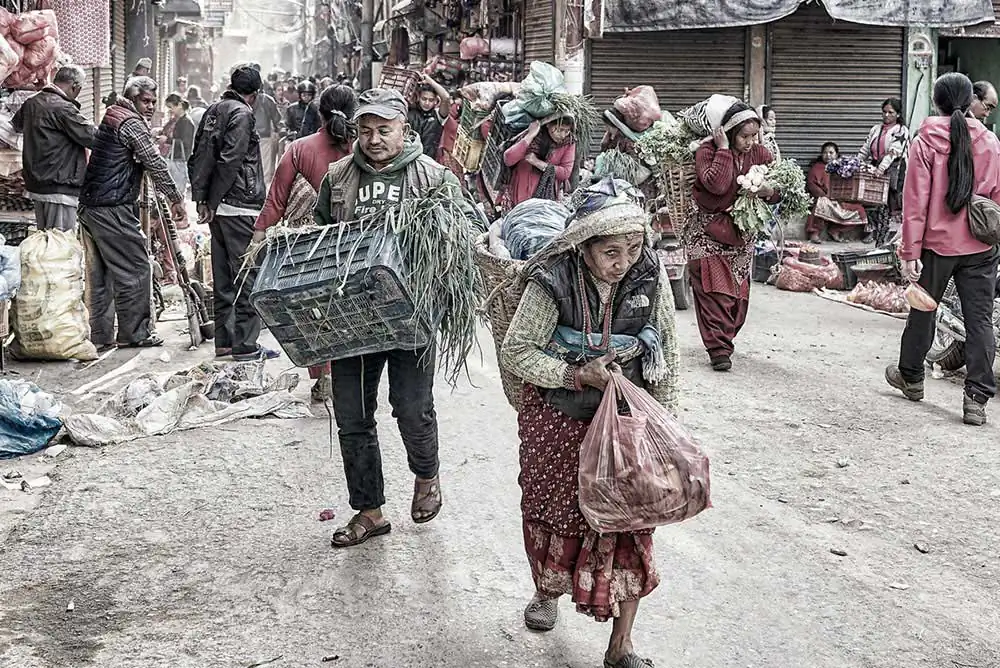
A different layer of Nepal emerges in Nepal: Faces of Kathmandu by Roman Wolczak, where the focus shifts to the individuals who inhabit the urban density of the capital. The portraits reveal a population navigating a complex environment marked by rapid change, yet anchored in a persistent sense of humanity.
What stands out is not the chaos of the city but the introspection of its inhabitants. The decision to photograph openly, allowing subjects to be aware of the camera, creates a direct exchange that transforms each image into a moment of recognition. Kathmandu is not reduced to its infrastructure or its disorder; it is defined by the presence, resilience and dignity of its people.
The Body in Risk and Ritual
Ancestral practices at the edge of disappearance
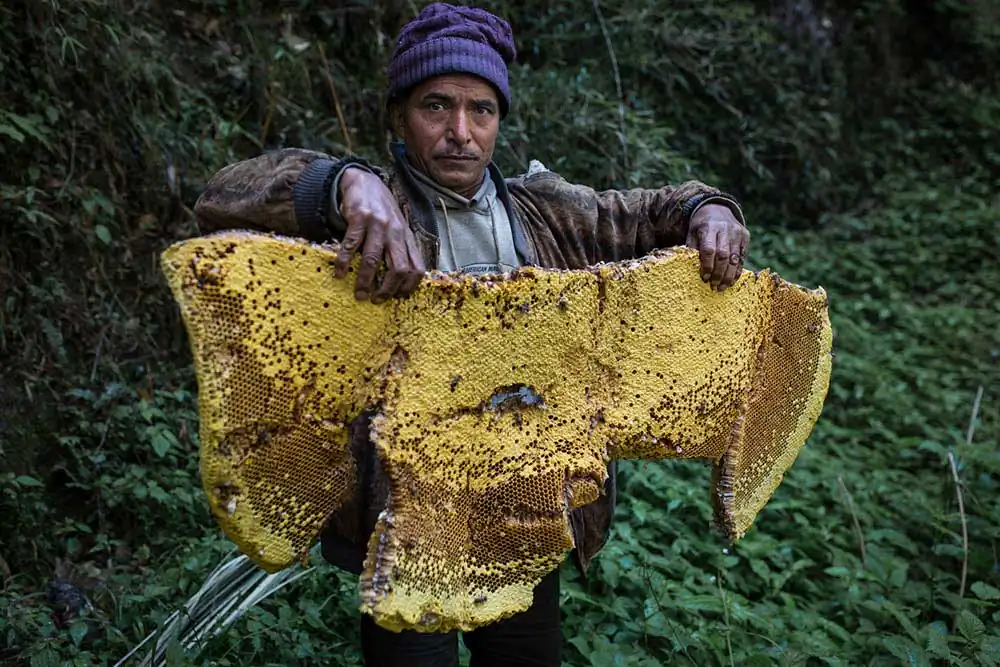
In Sweet Gold, the honey hunters of Nepal by Mauro De Bettio, photography enters a territory where tradition and danger intersect. The ritual of harvesting honey from Himalayan cliffs is not only physically extreme but culturally significant, representing a knowledge system passed through generations.
This practice exists on the verge of extinction, threatened by environmental changes and global demand. The images capture not only the action itself but the tension surrounding it, where survival, economy and identity converge. Photography here functions as both documentation and preservation, recording a practice that may soon disappear under the pressures of modernity.
The Everyday as Shared Survival
Community and light in conditions of scarcity
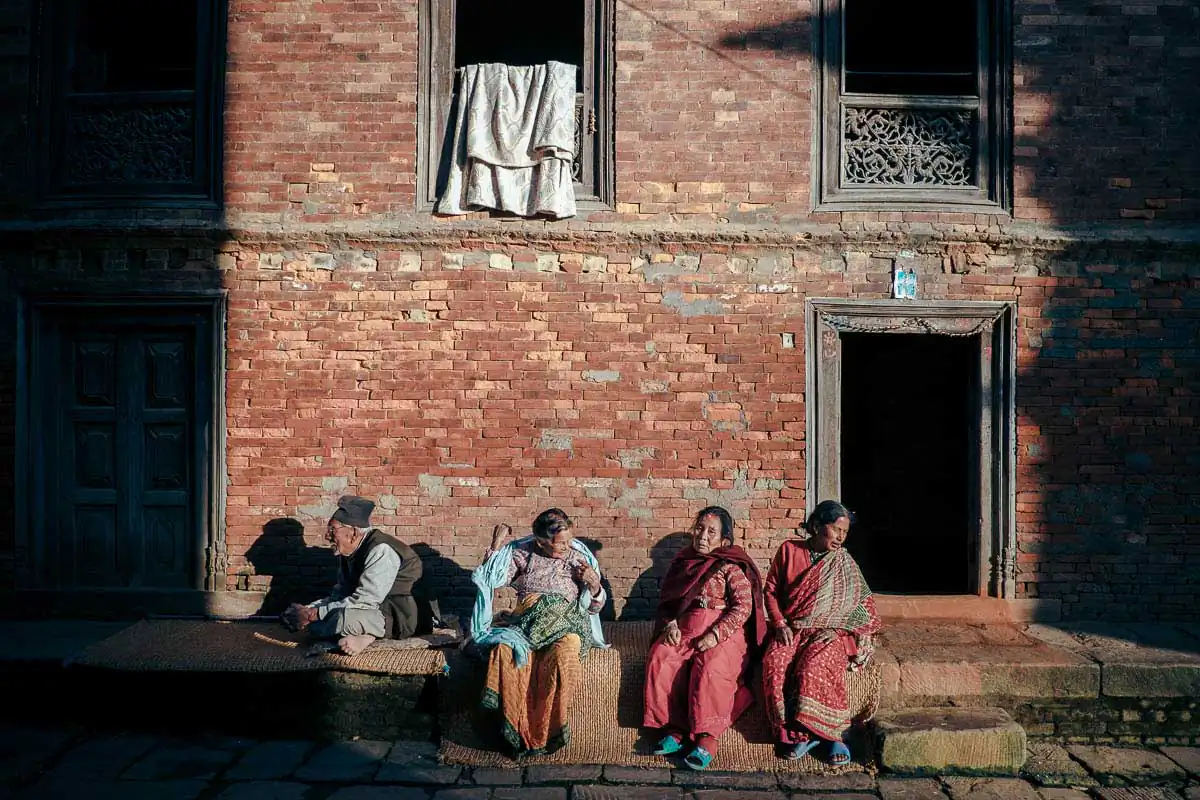
In Lucio Farina : Nepal – A day in the life, the focus shifts to the ordinary rhythms of life under constraint. The daily blackouts in Kathmandu Valley redefine the structure of time, pushing life into the streets and making sunlight a fundamental resource.
What emerges is a portrait of community built through necessity. The absence of electricity does not result in isolation but in proximity, in shared spaces where intimacy and collective presence become essential. The city, under these conditions, transforms into a network of human connections sustained by light, both literal and symbolic.
The Aftermath as Ongoing Condition
Disaster not as an event but as a prolonged reality
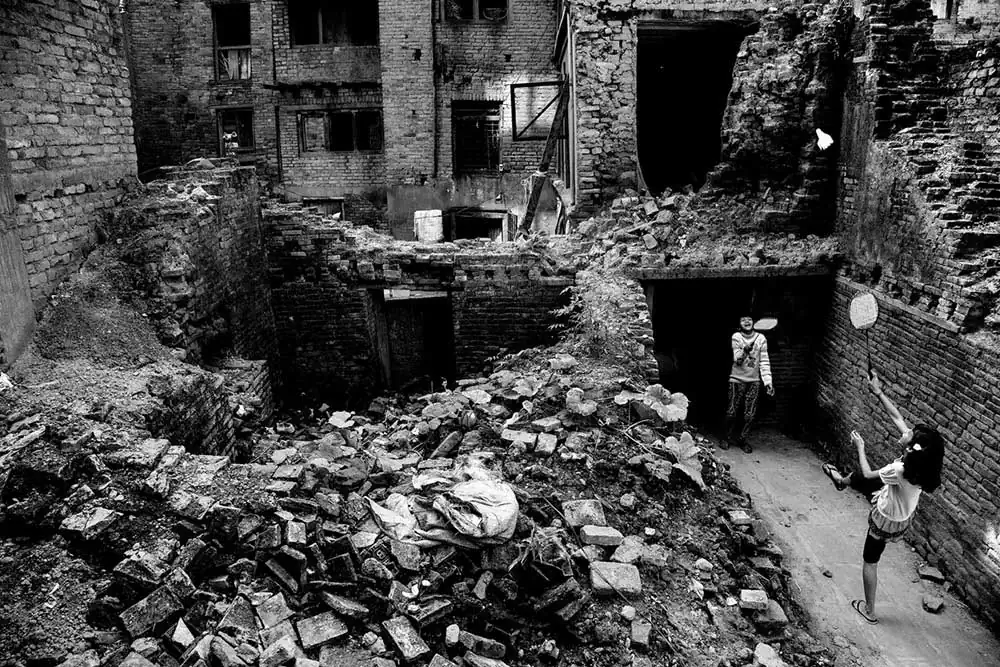
The devastating earthquake of 2015 redefined Nepal in ways that extend far beyond the moment of impact. In Nepal : Earthquake by Larry Louie, the focus is on the prolonged aftermath, where displacement, political paralysis and economic instability shape the lives of thousands.
This perspective challenges the immediacy often associated with disaster imagery. The real story unfolds in the months and years that follow, where recovery becomes uncertain and suffering persists in less visible forms. Photography here operates as a reminder that catastrophe is not confined to a single moment but unfolds over time, affecting the most vulnerable populations with greater intensity.
The Collective Response to Rupture
Resilience as a social structure
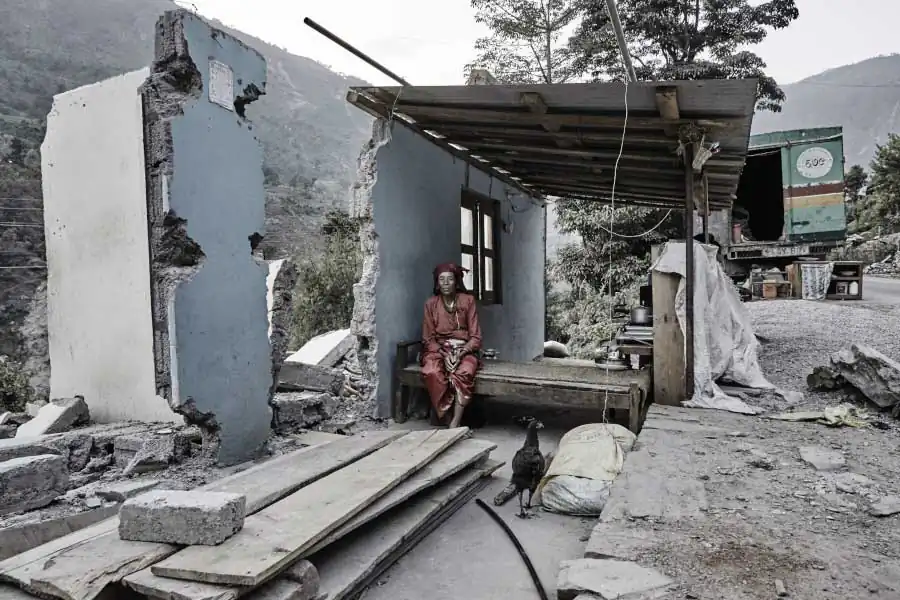
A complementary vision appears in Earthquake; Bhukhampa Nepal by Jan Møller Hansen, where the emphasis is placed on the collective response to disaster. The images reveal not only destruction but solidarity, as communities come together to rebuild, support and endure.
Despite delays, political obstacles and harsh conditions, what persists is a sense of resilience that transcends individual hardship. This is not an idealized strength but a necessary one, born from the need to continue. Photography captures this tension between loss and continuity, revealing a society that, despite everything, refuses to collapse.
Nepal as a Structure of Balance and Tension
A country defined by coexistence and endurance
Across these projects, Nepal emerges as a space defined by balance, though never a stable one. Nature and culture, tradition and change, disaster and resilience all coexist in a dynamic equilibrium that shapes everyday life. Photography does not resolve these tensions but makes them visible, allowing us to understand Nepal not as a fixed identity but as an ongoing process.
What ultimately defines these works is their refusal to reduce Nepal to a single narrative. Instead, they reveal a country where life persists through adaptation, where beauty and hardship are inseparable, and where every image carries the weight of both survival and continuity.