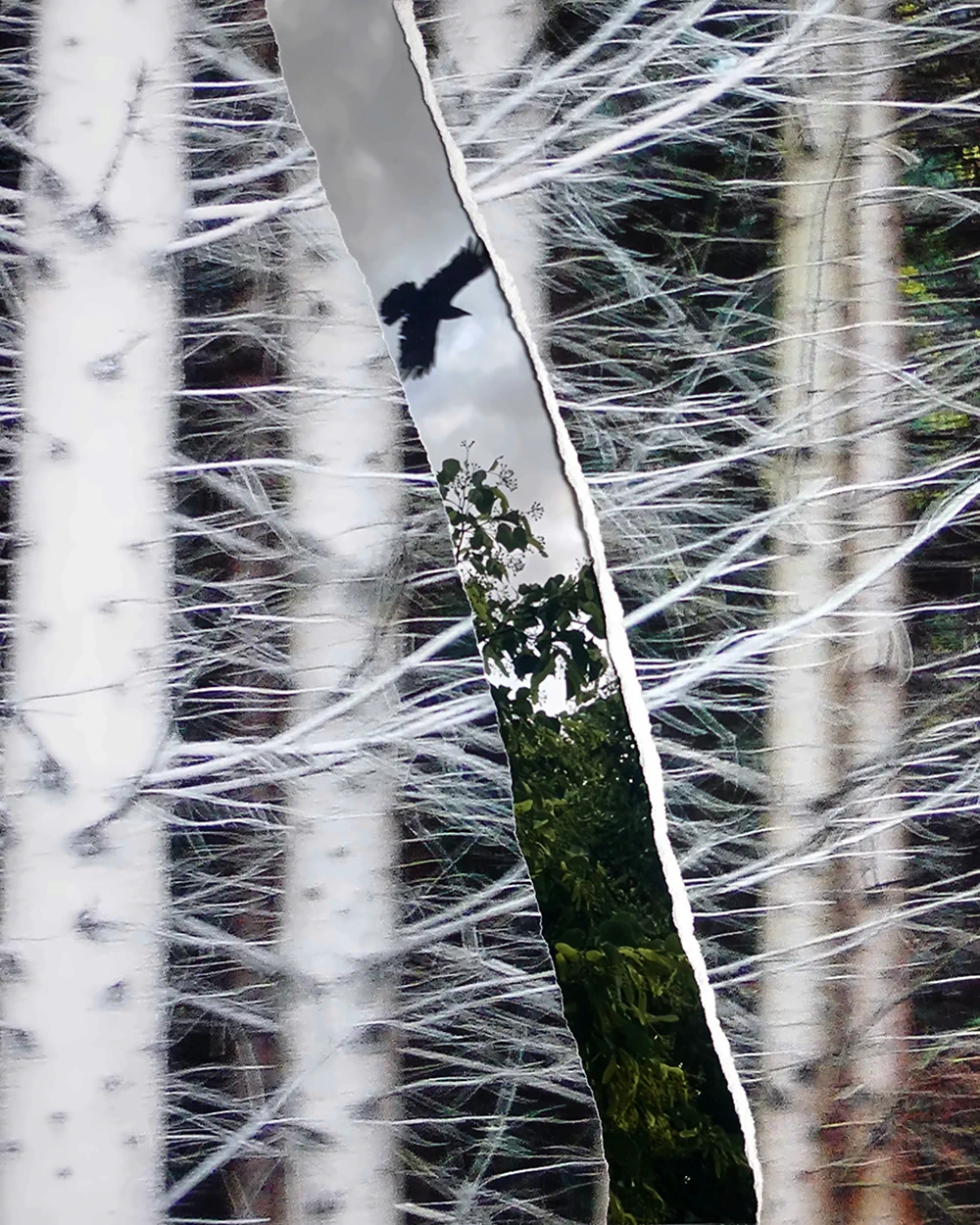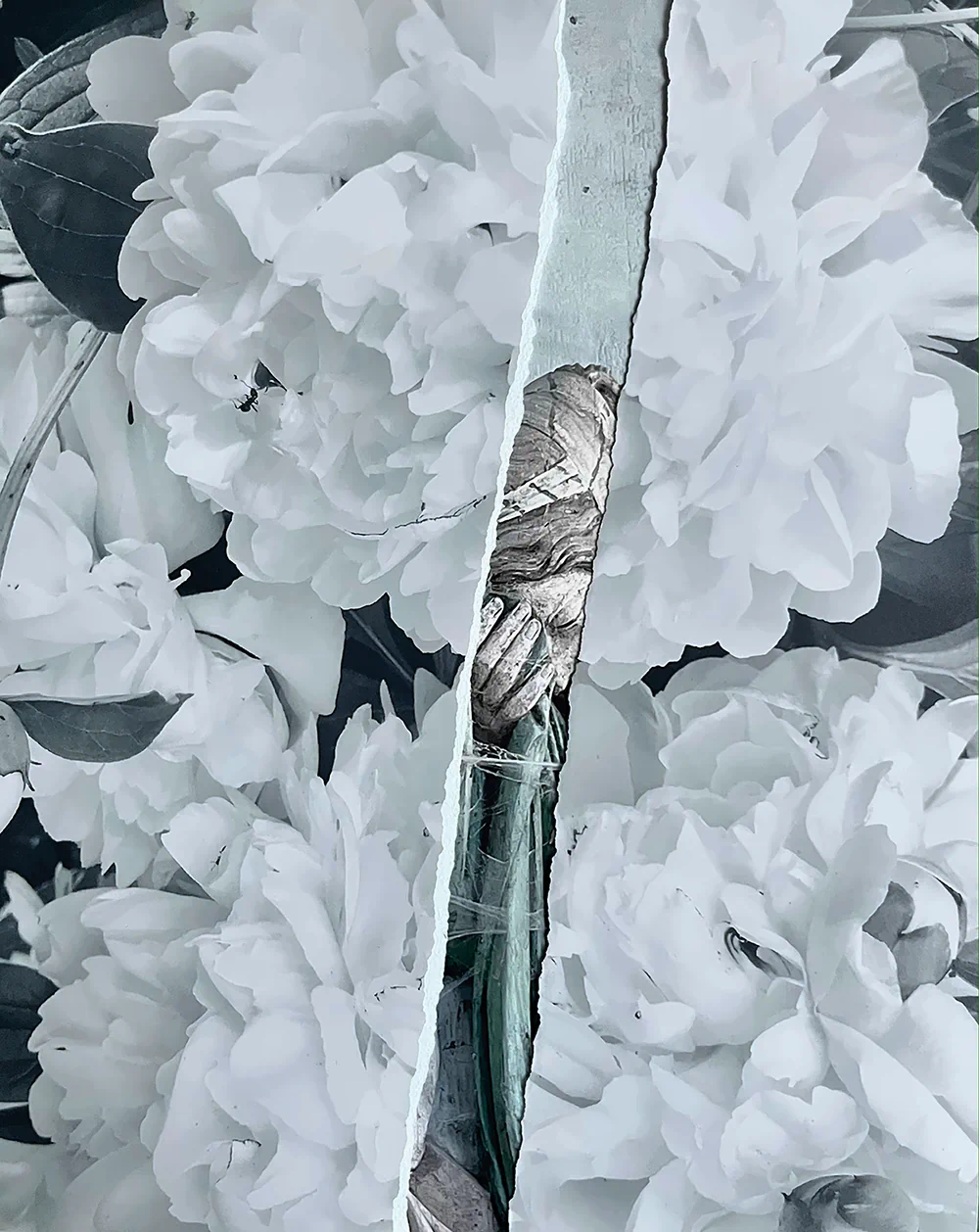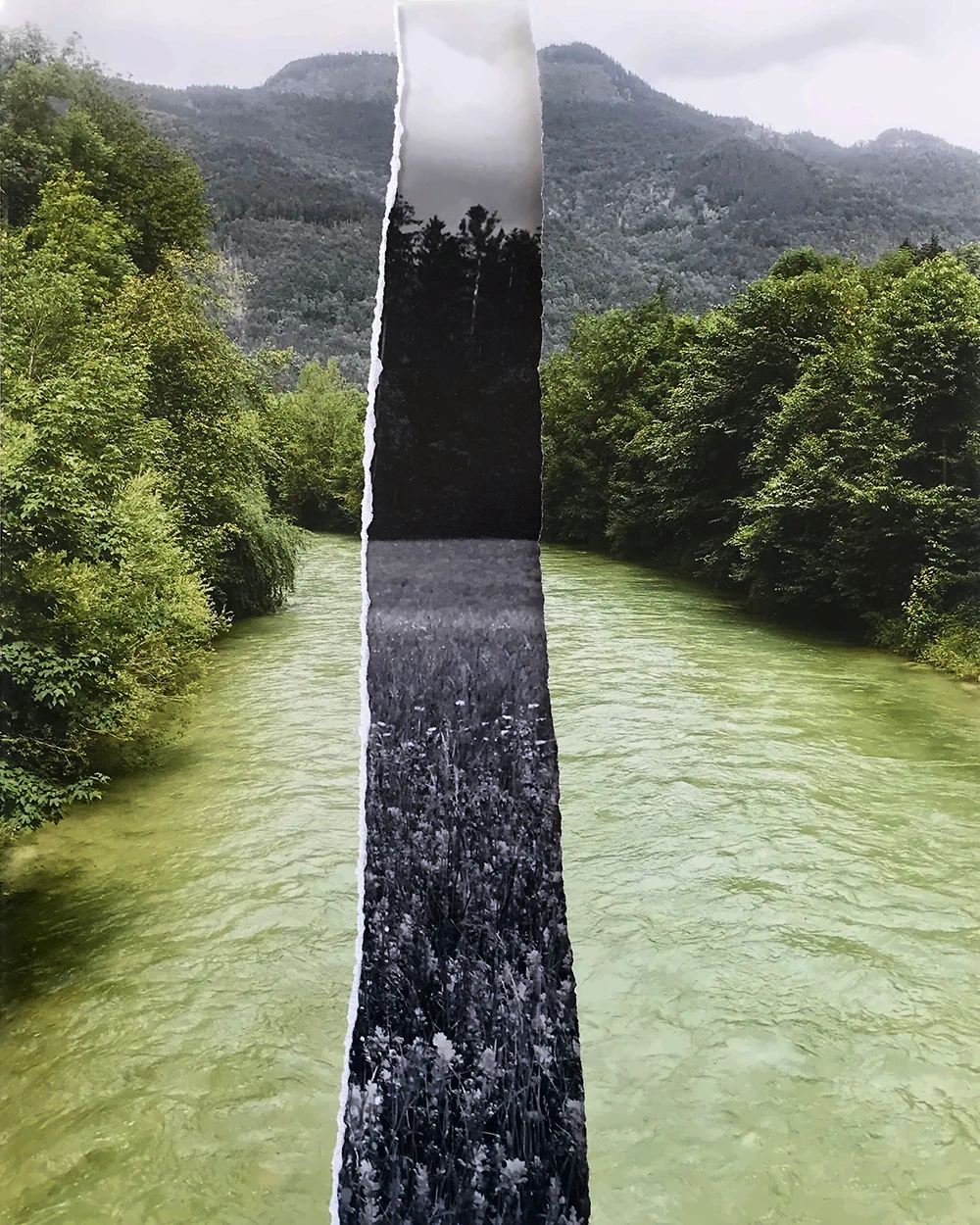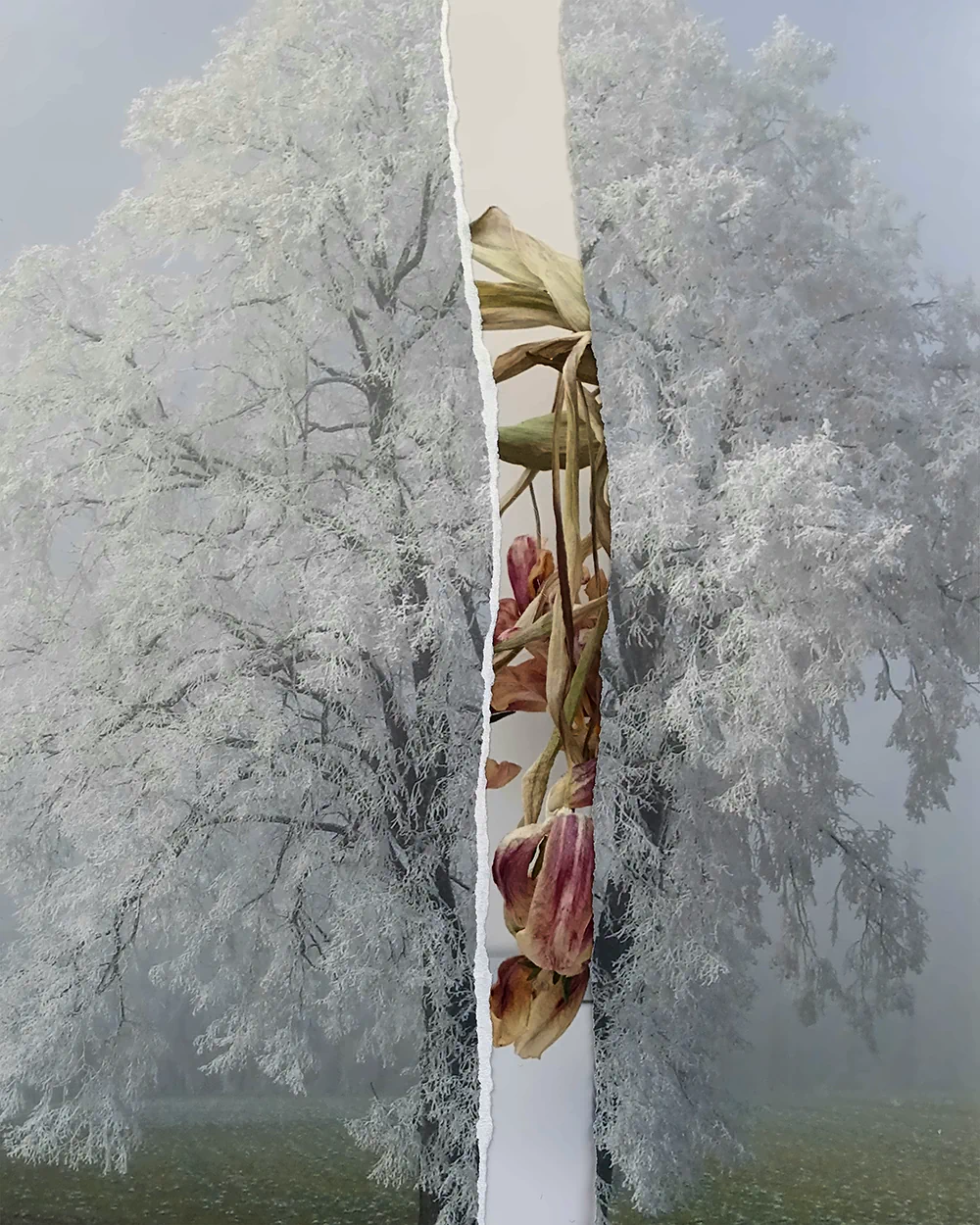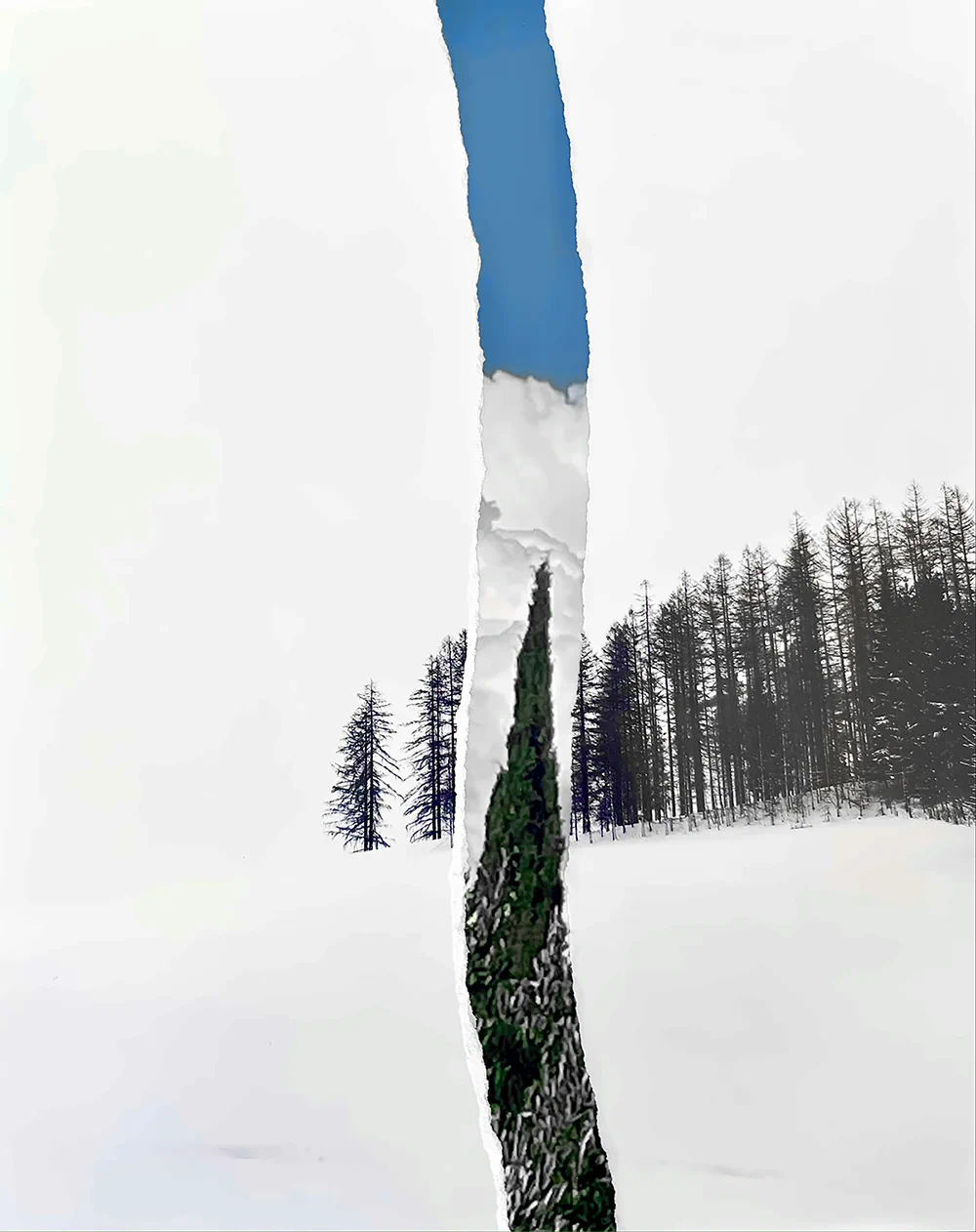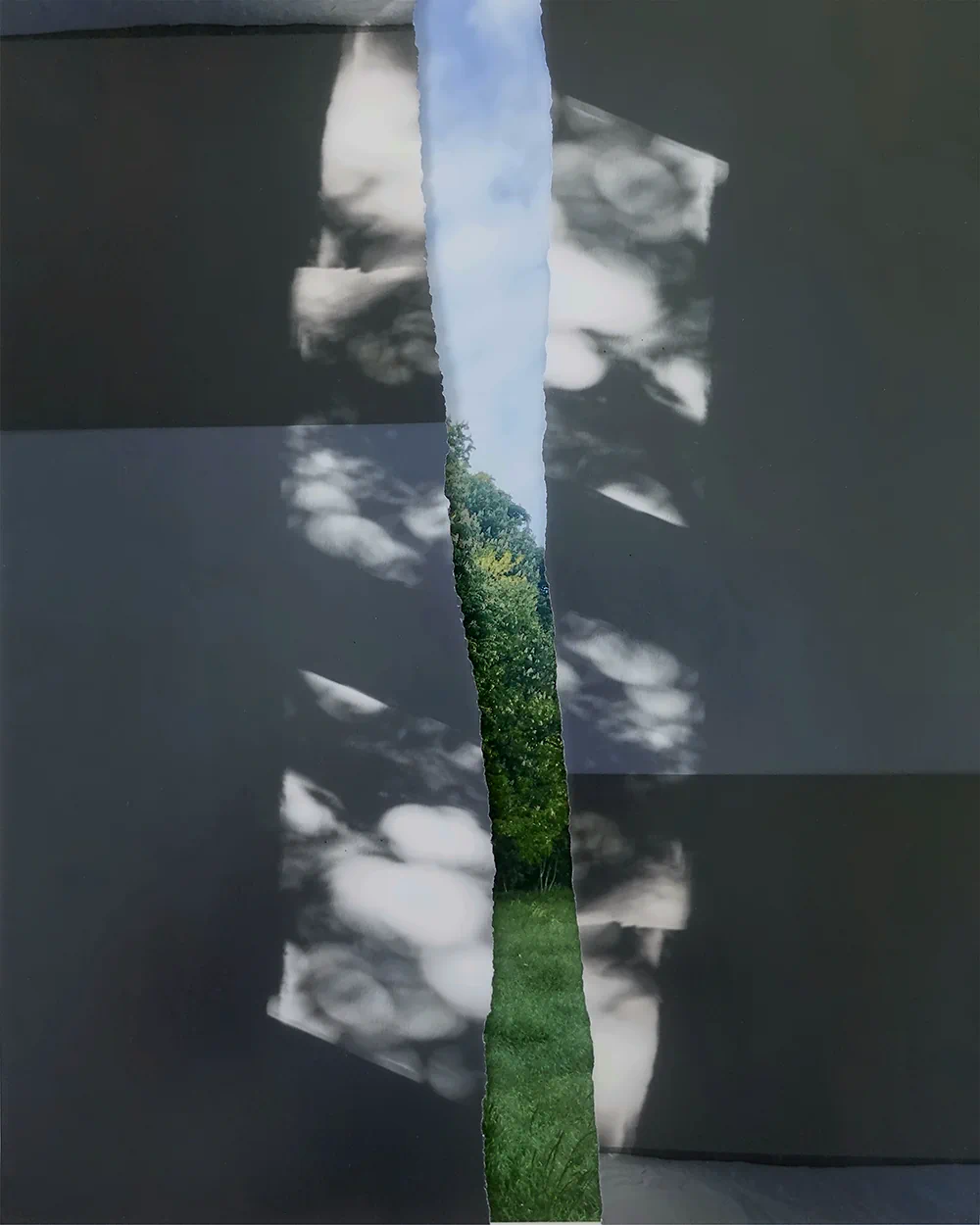
In my artistic practice, photographs are not an end result but rather a starting point for new image constructions, as is also the case in my series Moods.
By tearing, cutting, or fragmenting the photographic material—I work exclusively with photographs I have taken myself—I engage in an act of destruction.
This act not only expresses a distrust of the supposedly faithful photographic representation of reality, but is also constructive, opening up possibilities for something new.
For Moods, a photograph addressing essential states of being is torn apart and placed over a second photograph. Emotions and states such as hope, fear, love, or resignation are collaged as opposing pairs. The polarities of life, as well as the simultaneous presence of different emotions, are thus brought into focus.
The work seeks to encourage a dialogue with oneself and to reflect on one’s own emotional state. Ultimately, it is sometimes a matter of choosing the direction in which we allow the pendulum to swing and how we respond to the world around us.
The intention is not to establish a clear hierarchy or to resolve these oppositions. Rather, the images remain in a state of in-betweenness: between construction and destruction, between visibility and concealment, between what has been and what may emerge from it. The photographic moment is stripped of its supposed finality and transformed into an open process. The image loses its coherence and becomes a fluid, fragile structure.
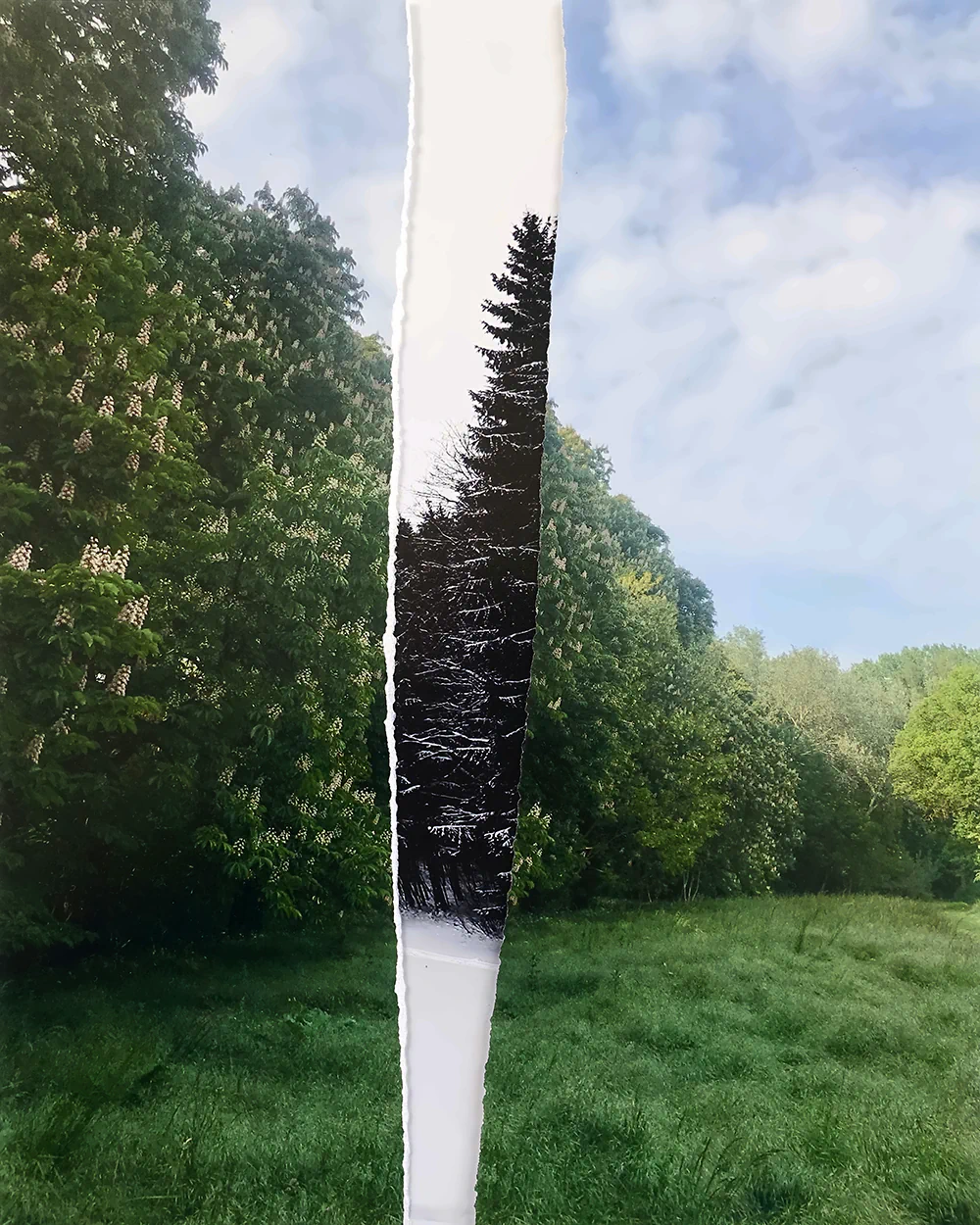
The tearing is not merely a trace of intervention; it becomes an essential part of the visual language itself. It marks ruptures and transitions, creates new spaces, and brings different layers of the image into dialogue with one another. What initially appears as a wound inflicted upon the photographic material becomes a means of expanding it. The fragmented nature of the work points to the incompleteness of perception and to the fact that our emotions are rarely clear-cut or free from contradiction.
In this sense, Moods can also be understood as an exploration of how identity and reality are constructed. Our perception is composed of memories, experiences, expectations, and present emotions. It is never static but constantly changing. The collages reflect this process by not separating different states from one another, but instead intertwining them.
The image thus becomes a site of inner movement. It does not merely depict a state but makes its transformation visible. A field of tension emerges between the fragments, in which opposites do not exclude one another but are mutually dependent. Hope can be accompanied by fear, love can contain resignation, and even in a moment of despair, the possibility of change may already be present.
The destruction of the photographic original thus becomes an act of liberation: only by dismantling what appears to be whole can something new emerge. The rupture is not understood as a loss but as a prerequisite for transformation. Photography moves from being a document to becoming material—and from this material emerges a new image that speaks less of an external reality than of the complex and contradictory reality of our inner experience. [Official Website]