
Cuba has been photographed relentlessly, often through a narrow set of symbols that repeat themselves until they lose meaning.
The island is frequently reduced to nostalgia, color, decay, or political shorthand. What makes certain projects endure is not their subject, but their position. The ability to work within a place without trying to summarize it, explain it, or exhaust it. The following five projects share no single aesthetic, yet they are connected by a common refusal: none of them attempts to “define” Cuba. Instead, each approaches the island as a lived space, shaped by time, improvisation, and human presence.
Jeffrey Milstein’s American Cars in Cuba operates at the intersection of history and adaptation. The classic American cars that populate his images are not treated as decorative icons, but as evidence of a forced continuity. These vehicles survived not because of nostalgia, but necessity. Milstein’s gaze acknowledges the ingenuity behind their persistence, the hybrid engineering, the patched bodies, the layered paint. His photographs read less as travel imagery and more as visual archaeology, where material culture becomes a record of political constraint and everyday problem-solving. The cars are not frozen in time; they are active participants in a living system.
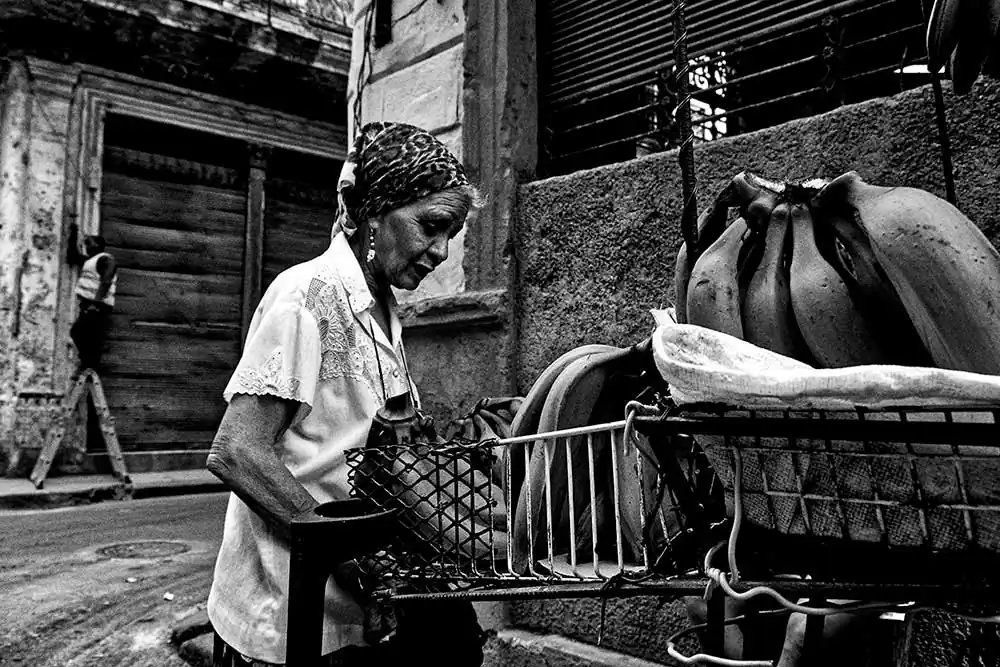
Jessica Rocco’s The People of Cuba shifts the focus away from objects and toward human resilience. Her photographs are grounded in direct encounters, shaped by listening rather than observation from a distance. Rocco does not romanticize hardship, but neither does she strip her subjects of warmth. What emerges is a portrait of daily life defined by generosity, endurance, and shared presence. The strength of the work lies in its modesty. These images do not claim to speak for Cuba, only to reflect moments of exchange that reveal something essential about dignity under pressure.
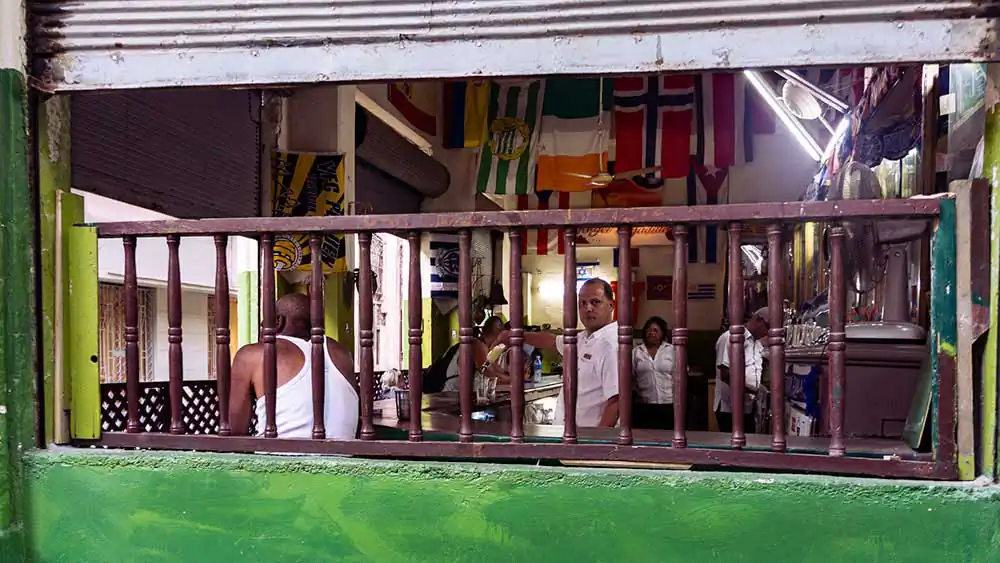
Henri Kartmann’s Ahorita introduces a different temporal register. His Cuba is not defined by crisis or spectacle, but by duration. The absence of billboards and smartphones becomes less a political statement than a perceptual shift. Time loosens. Kartmann’s images move toward abstraction without losing their grounding in reality. Forms, gestures, and urban rhythms suggest a place where immediacy is suspended, where “now” stretches into something imprecise. The project resists narrative urgency and instead embraces ambiguity, allowing the viewer to linger rather than decode.
Gaelle Guse’s photographs begin with sensory immersion. Her first encounter with Cuba is marked by weather, texture, and movement: rain on streets, barefoot walking, shared shelter. The camera follows that initial openness. While vintage cars and musicians appear, they do so as part of a broader visual field rather than as isolated motifs. Guse’s work acknowledges Cuba’s photogenic intensity without collapsing into cliché. The island appears as a place that invites looking, where color and light do not perform for the camera but coexist with it.
Raquel Carro’s portrait series brings the focus back to relationship. Her work is built slowly, through proximity and trust. These are not images taken in passing. They emerge from sustained contact, from time spent with people rather than among them. The portraits reflect a Cuba in transition, but without grand statements. Change is registered through faces, gestures, and posture. Carro’s interest in emotion and staging does not distance the subject; it deepens engagement. The photographs sit between documentation and collaboration, allowing complexity to remain unresolved.
Taken together, these projects form a fragmented yet coherent constellation. They do not align stylistically, nor do they share a unified narrative. What connects them is a shared resistance to simplification. Each photographer approaches Cuba as a place that cannot be summarized by a single image or idea. Cars become systems. People become interlocutors. Time becomes elastic. Space becomes relational.
In an era saturated with fast travel imagery and instant visual consumption, these works insist on something slower and more attentive. They remind us that photographing a place is not about extracting meaning, but about entering into dialogue with it. Cuba, in these projects, is not a subject to be captured, but a context to be engaged with, patiently and without closure.
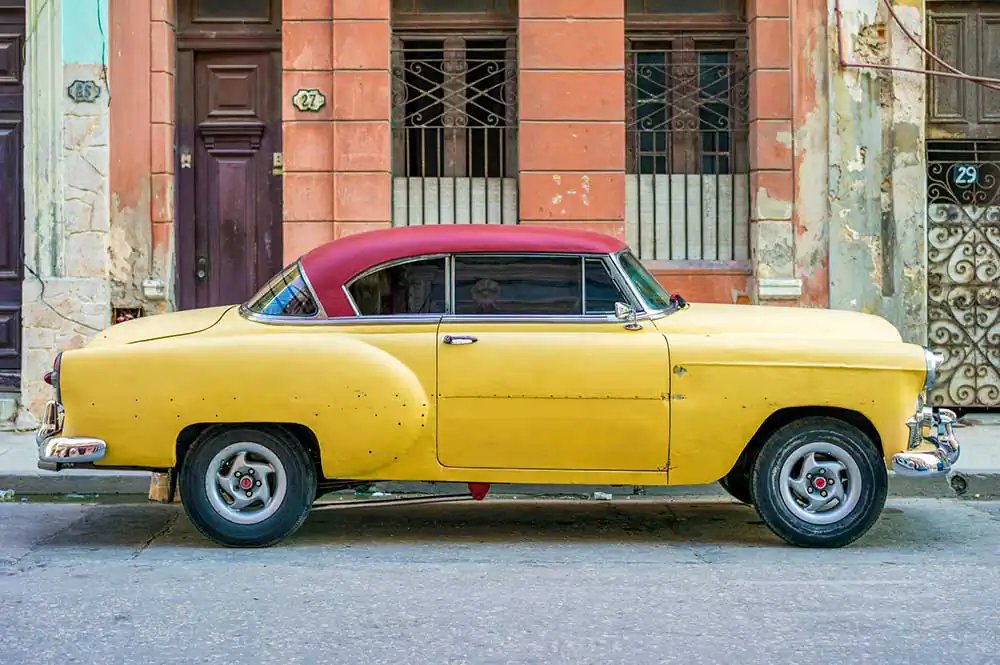
American Cars in Cuba by Jeffrey Milstein: History, Ingenuity, and Vintage Heritage
When you arrive in Cuba, one of the first things you notice upon exiting the terminal at Havana International Airport are the antique American cars parked outside.It’s like you have gone back in time. For me the cars bring back childhood memories of a more innocent era. It’s not that the Cubans wanted to keep a bunch of old American cars running forever. They had no choice. The US Embargo restricted new American cars from arriving and helped to impoverish the island, making many material purchases out of reach. Like the Johnny Cash song “One Piece at a Time”, they use their ingenuity, making parts and in some cases mixing and matching parts from different years and models in order to keep them running. Now considered a national treasure, some are meticulously restored, usually seen as cabs plying tourist hotels. Others, usually in non-tourist working areas have a patina made from paint layers and hammered metal. They often have an artistic beauty of their own… Read More
Travel photography; The People of Cuba by Jessica Rocco
These images aim to capture the vibrant spirit of the Cuban people. While many of them face numerous hardships on a daily basis, including finding food to put on their tables, they are a kind, generous and resilient people. I am grateful to all of those who were willing to share their stories with me during my time in their country. The insight they shared into daily life as a Cuban was eye opening, and I hope to portray a glimpse of that through these photos… Read More
Cuba ; Ahorita by Henri Kartmann
Streets without billboards, passers-by who are not looking at their smartphones: you are in Cuba. Time has a relative value, it is the reign of “ahorita” a more approximate ahora (now). These images were taken in Cuba in 2013 during an exhibition I did at the “Fototéca de Cuba” in Habana. Henri Kartmann; Photographer and visual artist, lives in Haute Provence, in the south of France. Since his first exhibition in 1969, he has sought in unquestionably concrete shots a form of personal and creative abstraction… Read More
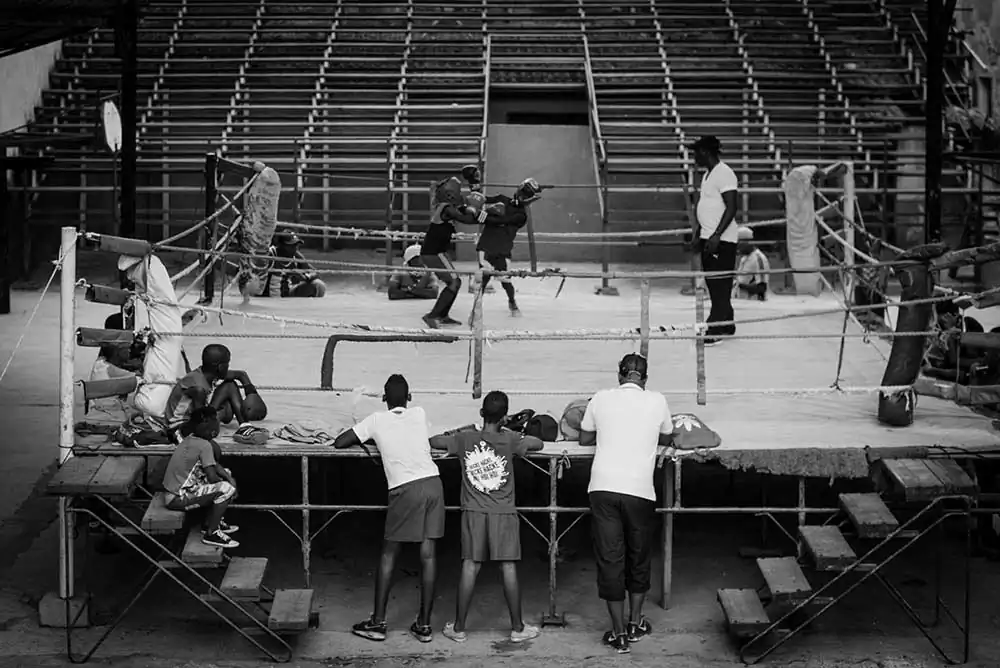
Cuba by Gaelle Guse
My first experience of Cuba was unforgettable: walking barefoot on the Malecon, the broad seawall which stretches for 8 km along the coast in Havana, we were surprised by a sudden storm and had to seek shelter with other locals under an apartment building. After the rain subsided, I took my first picture of Cuba: the narrow streets and vibrant buildings glistening after the rain. I have rarely seen a more photogenic setting than Cuba. The beauty around urged me to take pictures everywhere I looked – photos of the beautiful vintage cars which we so often associate with Havana, of musicians playing on the street, of the urban artworks reminiscent of a not so distant revolution…Read More
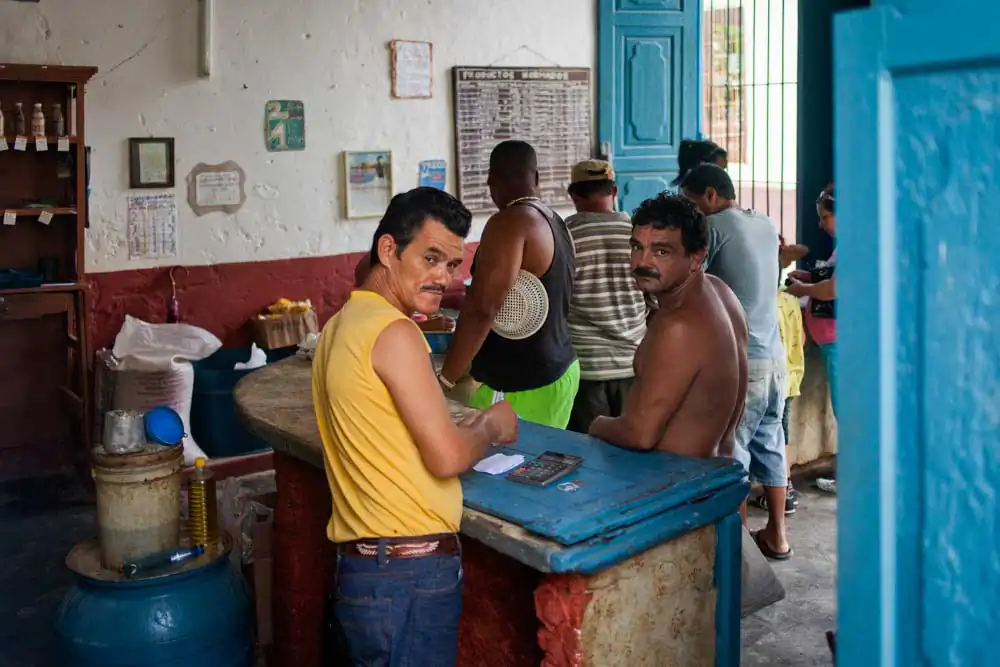
Cuba by Raquel Carro
This series of portraits is about the changes that these island peoples are going through and the repercussions of these changes in their lives. A series of photographs about contemporary Cuba revealing a personal experience about discovery; lived, danced and learned from an unique culture. Through close relationships with her subjects, Raquel manages to give an accurate picture of the complexities of everyday Cuban life. Raquel’s work highlights her interest in using photography to capture her subjects’ emotion. She develops genuine relationships with real people over time, which makes them comfortable enough for Raquel to take staged portraits… Read More