For Lorenzo Mancini, documentary photography is not about creating dramatic images or chasing extraordinary moments.
Instead, it is about presence, patience, and the responsibility of witnessing lives that often remain unseen. Working primarily in black and white, the Belgian-Italian photographer has developed a restrained visual language that strips away distraction, allowing vulnerability, dignity, and resilience to emerge with remarkable honesty. His photographs do not seek to speak for their subjects but rather to create a space where their stories can be seen and acknowledged.
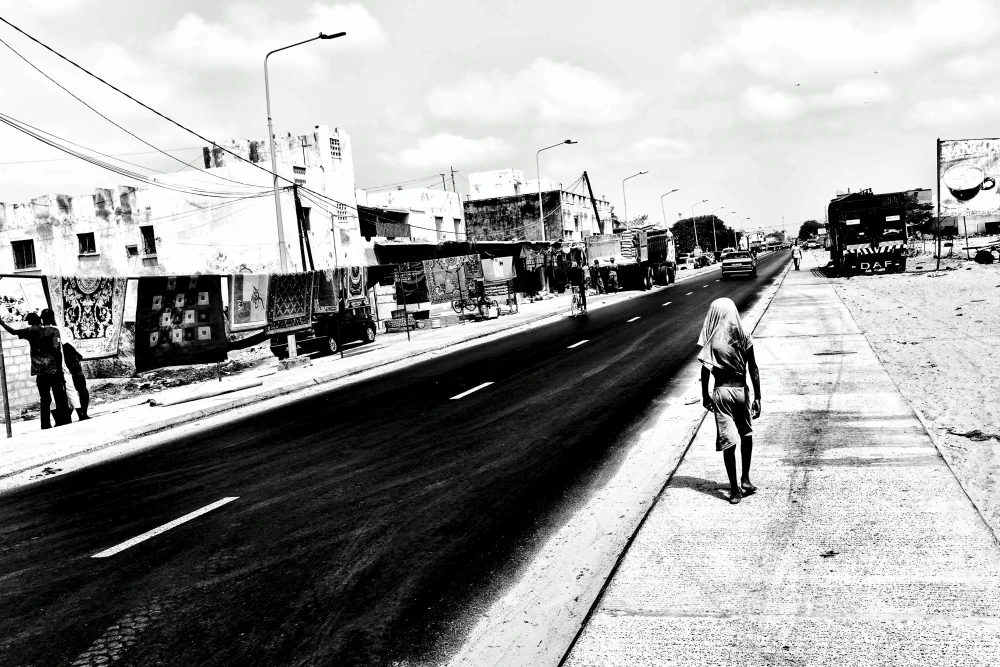
In The Forgotten of Saint-Louis, Mancini turns his attention to the lives of the talibé children of Saint-Louis, Senegal. Produced in collaboration with the non-profit organization Action Senegal, the project documents the harsh reality faced by many children living under the guise of religious education, where exploitation, neglect, and extreme poverty remain part of everyday life. Through a direct, quiet, and unstaged approach, the series avoids sensationalism, focusing instead on gestures of endurance, fleeting moments of humanity, and the dignity that persists despite unimaginable hardship.
Following the publication of The Forgotten of Saint-Louis in Issue #37 of Dodho Magazine, we spoke with Lorenzo Mancini about the making of this documentary project, the ethical responsibilities of photographing vulnerable communities, and the role photography can play in making invisible realities impossible to ignore. [Issue #37]
Could you begin by telling us what first drew you to photography and how documentary work found its place alongside portraiture in your practice?
I am first and foremost a portrait photographer. What drew me to photography was its ability to move beyond the surface of a face and explore the distance between who a person is inwardly and the identity they present to the world. Faces are everywhere; presence is far rarer. It cannot be manufactured. It emerges through an encounter, or it does not emerge at all.
Documentary photography has never replaced portraiture in my practice; it has expanded its scope. With The Forgotten of Saint-Louis, I widened the frame to show not only the children, but also the social, economic, and religious forces shaping their lives. Portraiture concentrates attention on the individual; documentary photography restores the surrounding context. Both pursue the same intention: to reveal the person behind the roles and circumstances that risk erasing them.
Your photographs consistently focus on human vulnerability and social invisibility. What motivates you to tell these kinds of stories?
I am not drawn to vulnerability as a subject in itself. What concerns me is the point at which a category begins to replace a person. In Saint-Louis, words such as “talibé,” “beggar,” or “victim” describe a real situation, but they can also reduce a child to that condition and erase their individuality.
This is precisely where my perspective as a portrait photographer comes in: I try to place the individual back at the center. Social invisibility is not always the result of too few images; it often comes from too little genuine attention. In a world saturated with representation, everything is seen, yet very little is truly looked at.
I do not claim to speak on behalf of the people I photograph. I try to create a pause in which their presence can assert itself. The viewer should first encounter a child and an individual before encountering a social issue.
How did you first become aware of the situation faced by the talibé children in Saint-Louis, and what compelled you to dedicate a project to them?
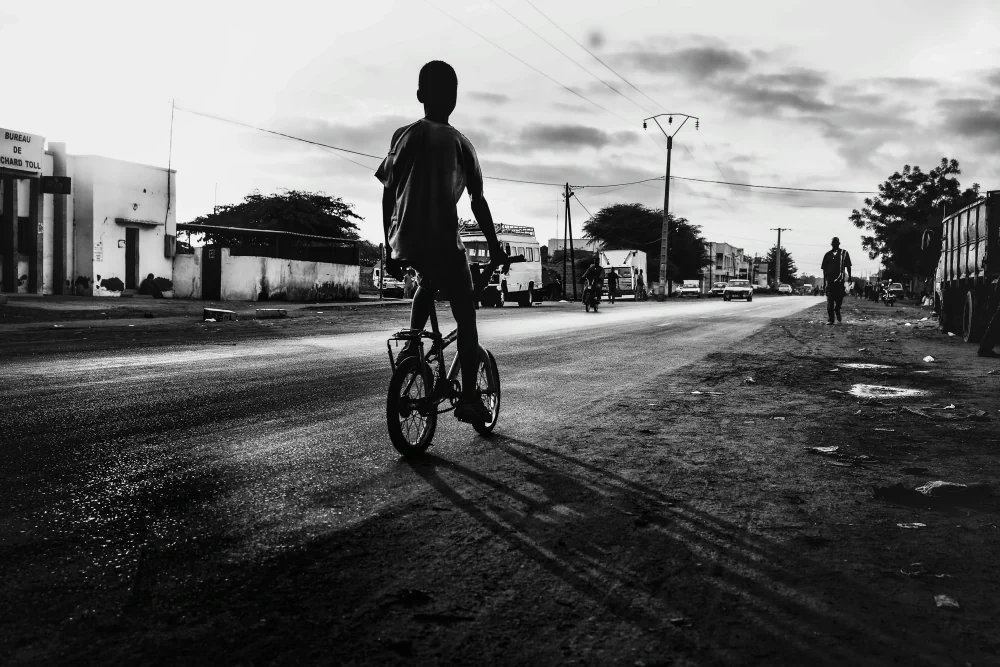
I first became aware of this reality through Marie-Pierre Decocq, then president of the Belgian association Action Sénégal. She told me about children entrusted to Quranic teachers, some of whom then forced them to beg every day, sometimes under threat of violence.
In Sor Pikine, a district of Saint-Louis, I realized that the situation went far beyond poverty. I was confronting a system of exploitation operating under the cover of religious education, one in which the children’s innocence and vulnerability were used against them. It was this systemic dimension that convinced me of the need to bear witness.
At the same time, it was essential not to confuse these abuses with the talibé tradition itself, or with Islam. The project addresses the misconduct of certain marabouts and the failure of child protection mechanisms, not a culture or religion as a whole.
This project was produced in collaboration with Action Senegal. How important was that partnership in helping you understand the community before picking up your camera?
That partnership was essential. Action Sénégal had knowledge of the area, local relationships, and a continuity of engagement that I could not possess as an outsider. The association did more than provide access; it gave me the context I needed to understand what I was seeing and avoid hasty interpretations.
I accompanied a medical team treating the children. Photography had to find its place within that work and never compete with it. The children’s care and immediate needs came first; my approach had to adapt accordingly.
The experience also taught me that access to a place does not automatically confer the right to photograph everything. Legitimacy is built through trust, listening, and restraint. The association could open a door, but it was my responsibility to understand its limits.
The Forgotten of Saint-Louis never feels sensational or intrusive, despite the difficult realities it portrays. How did you approach photographing children in such vulnerable circumstances with respect and sensitivity?
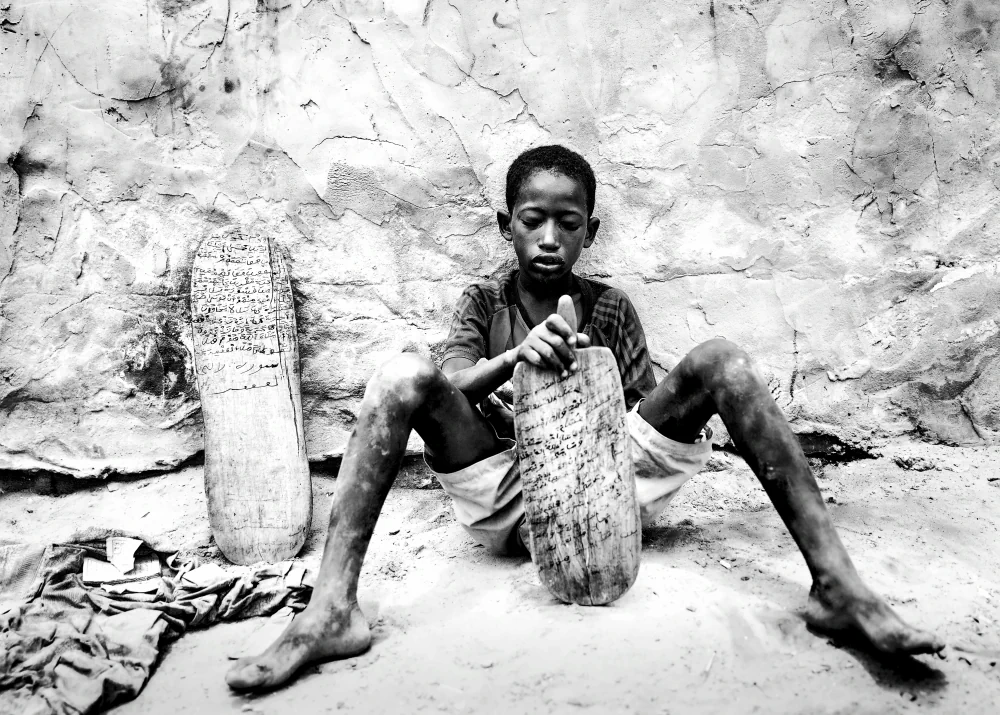
My first rule was never to treat suffering as visual material. I needed to be accepted as a person before I could be accepted as a photographer. I therefore spent time observing, listening, and allowing the children to grow accustomed to my presence without immediately taking out the camera.
I worked with available light, spontaneity, and minimal intervention, without staging or repetition. Consent is not a single permission granted once and for all. It requires continuous attention to gestures, expressions, and signs of withdrawal. The moment discomfort appeared, photography ceased to be the priority.
Responsibility also means not photographing everything that could technically be shown. I wait, look again, and often choose not to make the image. Sometimes the most responsible decision is simply to lower the camera.
Was there a particular encounter or moment during your time in Saint-Louis that fundamentally changed your perception of the project?
Rather than one particular scene, what remains deeply etched in my memory, even though the project was made several years ago, is a feeling: powerlessness.
I watched medical teams treat the children’s injuries while, at times, some of the people responsible for those injuries were only a few meters away. That proximity was extremely difficult to accept. We were trying to address the immediate consequences without being able to remove the children from the system producing them.
The experience confronted me with the distance between witnessing and acting. Making photographs did nothing to lessen my powerlessness or repair what they depicted. It made my practice more humble and more restrained. A photograph should never become a form of moral consolation for the person who makes it. It can communicate, bear witness, and resist oblivion, but it cannot replace the work being done on the ground.
Throughout the series, moments of hardship coexist with moments of play, care, and resilience. Why was it important for you to include both sides of their daily lives?
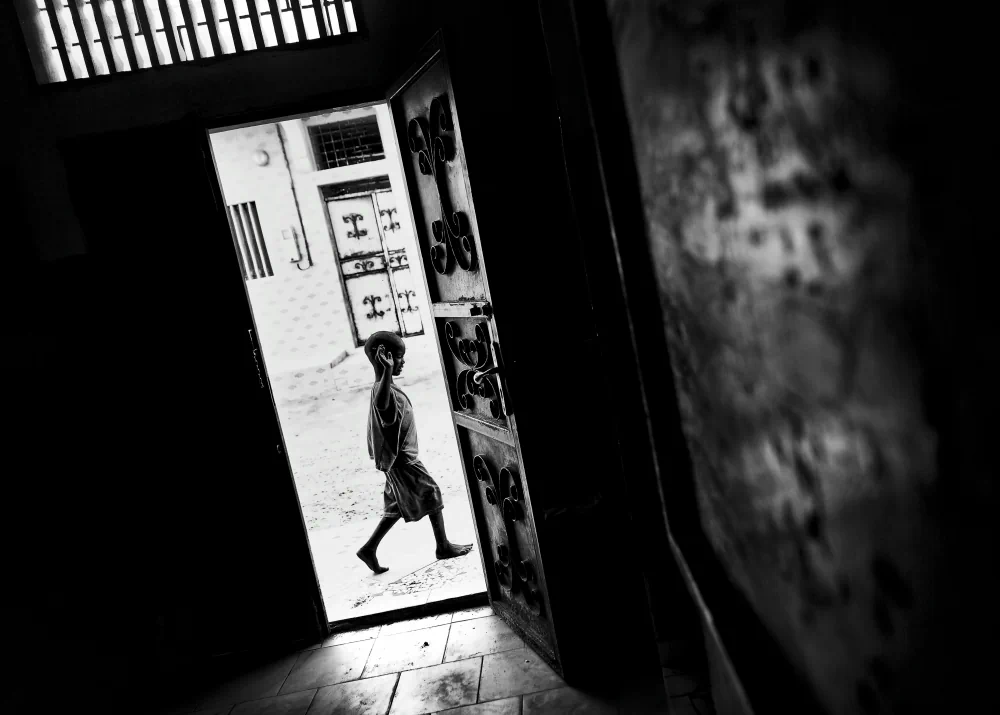
I wanted to show the harshness of their living conditions without reducing the children to those conditions. They faced hunger, forced begging, insecurity, and sometimes violence, but they were still children. They played, looked after one another, laughed, and created pockets of freedom within an extremely constrained daily life.
It was important to preserve that complexity. If I showed only suffering, I risked turning them into passive symbols. If I focused only on their capacity to endure, I risked minimizing the seriousness of what they were experiencing.
Resilience must never make injustice easier to accept. It speaks to the children’s strength, but it does not make their circumstances any more tolerable. The entire series rests on that tension: revealing the violence of the system without erasing the individuality of those who endure it.
You work almost exclusively in black and white. What does monochrome allow you to communicate in a project like this that color perhaps could not?
Black and white is neither nostalgia, refuge, nor aesthetic pose for me. It is a discipline of reduction. It removes the distractions of color and concentrates attention on light, gestures, expressions, textures, and the relationships between bodies and their environment.
This approach reflects both my portrait practice and my commitment to minimalism. Dark tones and strong contrasts allow me to express the complexity of a presence without dispersing it. In a world that continually demands more images, delivered faster and made more emphatic, this reduction is also a way of resisting what passes too quickly.
Monochrome does, however, carry a risk: aestheticizing suffering. Form must remain at the service of the subject. Beauty can hold the viewer’s attention and open a space for reflection; it must never make distress seductive.
Documentary photography often raises ethical questions. How do you decide where the line lies between documenting reality and protecting the dignity of the people you photograph?
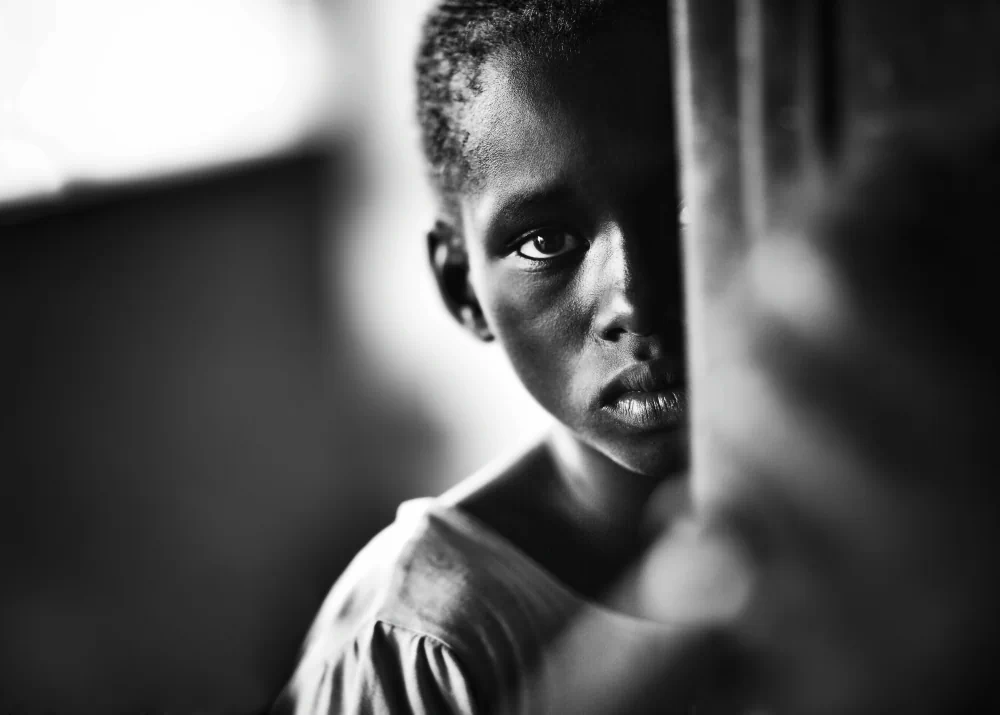
The line must be reassessed constantly. I ask myself three questions: Is this image necessary? Does it respect the person depicted? What happens to it once it leaves its original context?
Preserving dignity does not mean softening reality. A photograph can be difficult and still be fair. Exploitation begins when the person becomes nothing more than evidence, shock, or a means of provoking an emotional response. At that point, they cease to exist as an individual.
Responsibility continues after the photograph is made, through selection, cropping, captioning, sequencing, and the context of publication. An image created respectfully can become problematic if it is isolated or used sensationally. Visual power alone never justifies publication.
While making this series, did you ever struggle with the feeling that photography alone might not be enough to change the situation you were witnessing?
Constantly. Photography cannot feed a child, treat a wound, or change a law on its own. To attribute that power to it would overstate the photographer’s role and understate that of the people working on the ground every day.
Its influence is more indirect. An image can bear witness, interrupt indifference, support the work of an organization, or make visible a situation the public might prefer to ignore. It can also help ensure that certain realities do not disappear without a trace.
Recognizing these limits does not make photography useless; it prevents us from confusing it with action. It can open a space for awareness and amplify an existing commitment, but it cannot replace medical care, legal protection, political work, or sustained community action.
What did this experience teach you—not only as a photographer, but also as a person?
I learned that presence matters more than technical performance. Confronted with the human consequences of what I was witnessing, the formal success of an image became secondary. The real question was no longer how to photograph, but why I was there and what my presence produced.
I also became acutely aware of the privilege of being able to leave. I could return home with my photographs, while the children remained in the same conditions. That asymmetry rules out any heroic posture.
Empathy does not give us access to another person’s experience. On the contrary, it requires us to acknowledge the distance that remains and to work with humility. My role was not to speak for the children, but to build the most faithful testimony I could and take responsibility for the choices involved in sharing it.
Many viewers may be unfamiliar with the reality of the talibé children. What is the most important misconception you hope this work challenges?
The first is the idea that they beg by choice, or that their situation is simply a cultural custom. Many are required to meet daily quotas of money or food and face punishment when they fail. Their behavior is often a survival strategy, not the expression of free choice.
It is also important to remember that the word talibé originally means disciple or student. It does not inherently mean a street child or a victim. The problem lies in the exploitation of this educational tradition by certain marabouts, not in Quranic education itself.
That distinction is fundamental. The situation should neither be romanticized in the name of tradition nor used to condemn an entire religion or culture. Documentary photography should bring greater precision to the way we look, not replace one prejudice with another.
After completing this project, has your understanding of documentary photography changed in any way?
This project taught me that authenticity is not the appearance of truth. An image may look spontaneous, raw, or documentary while still being artificially constructed. At a time when images can be generated or imitated instantly, sometimes without any encounter or lived experience, that distinction feels more important than ever.
Authenticity lies in the conditions of the encounter, the duration of observation, and the responsibility assumed by the photographer. It does not imply neutrality. Framing, timing, and editing remain subjective choices, and they should be acknowledged rather than concealed.
Since this experience, my editing has become more exacting. To me, documentary photography is not a promise of absolute objectivity, but a contract of honesty with both the person photographed and the viewer.
What do you hope viewers feel after spending time with The Forgotten of Saint-Louis?
I am not seeking to provoke pity alone. Pity can be immediate, but it often disappears as quickly as it arises. I would rather create lasting attention and ask the viewer to recognize each child as a person who cannot be reduced to the system exploiting them.
If the series succeeds, these children do not remain anonymous figures in a distant crisis. Their looks, gestures, and individual presence stay with the viewer after they have left the photographs behind.
I also want viewers to understand that these living conditions are neither natural nor inevitable. They result from decisions, power structures, and collective failures. A photograph cannot transform that reality on its own, but it can make it harder to look passively and then forget.