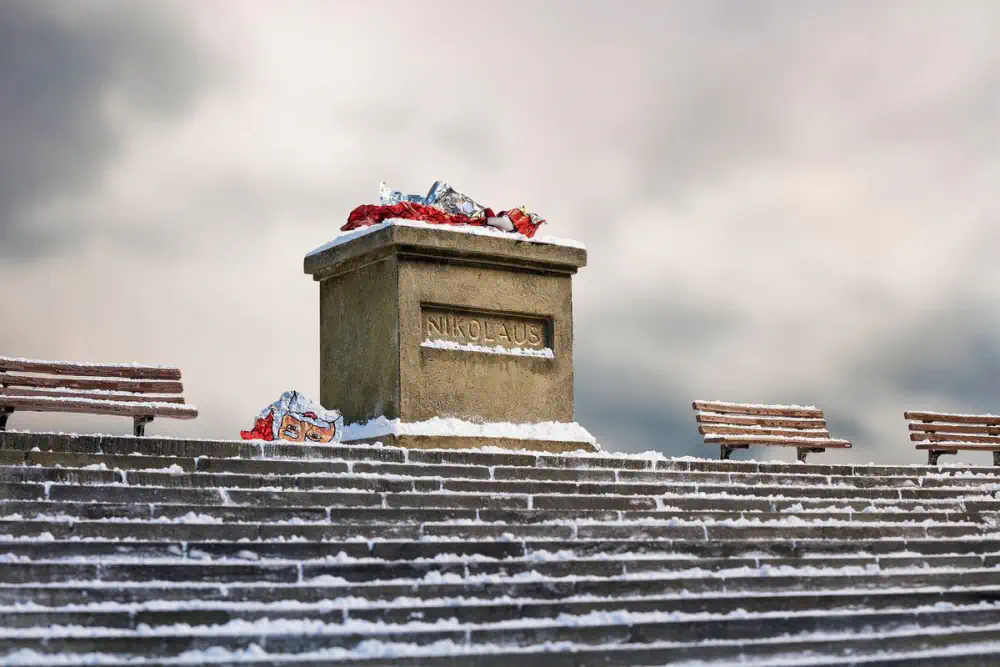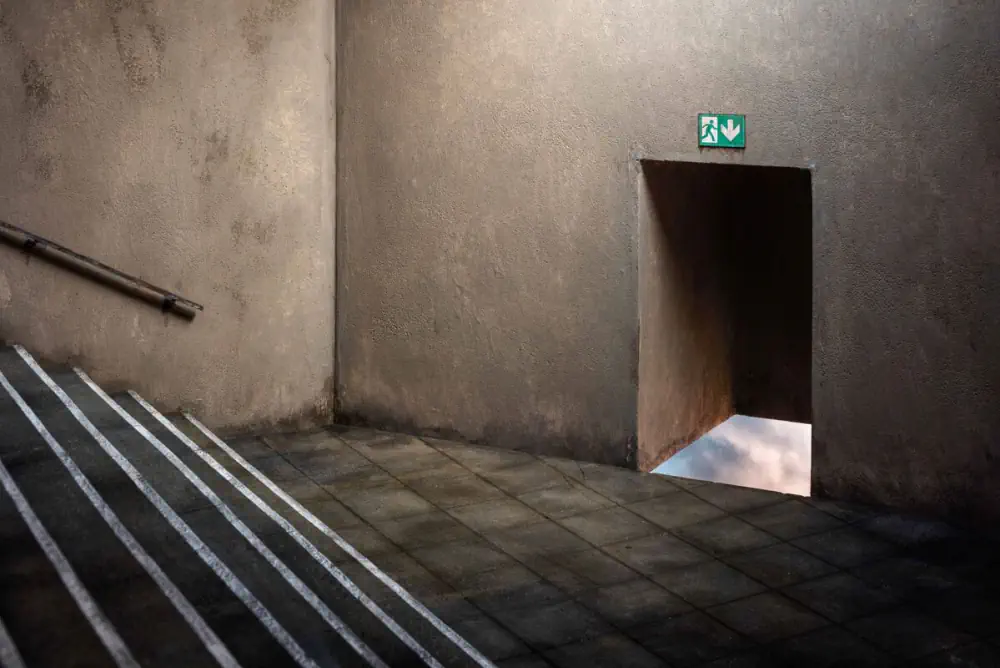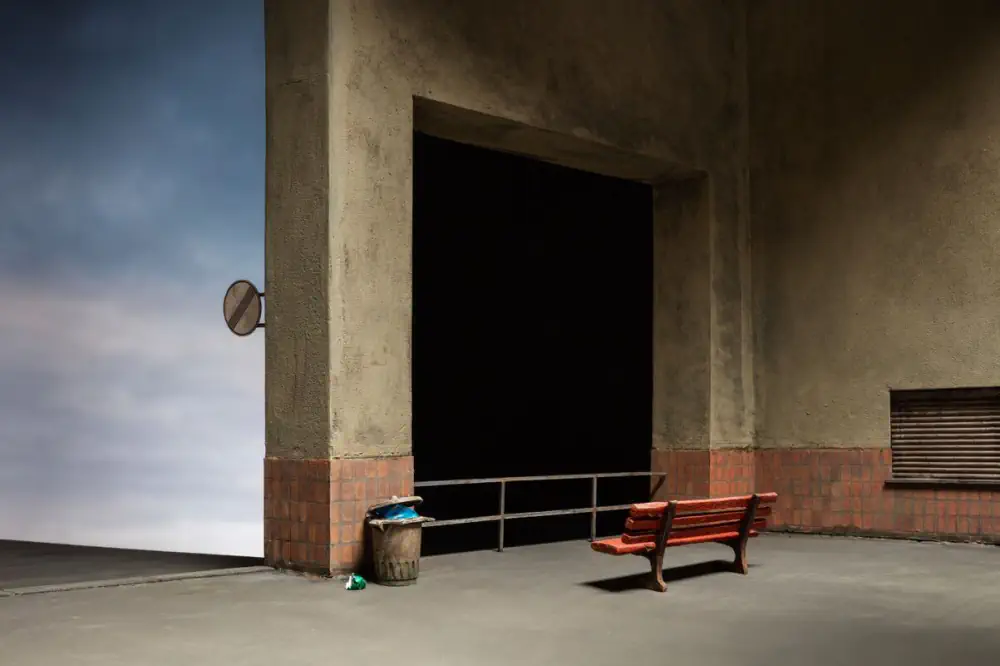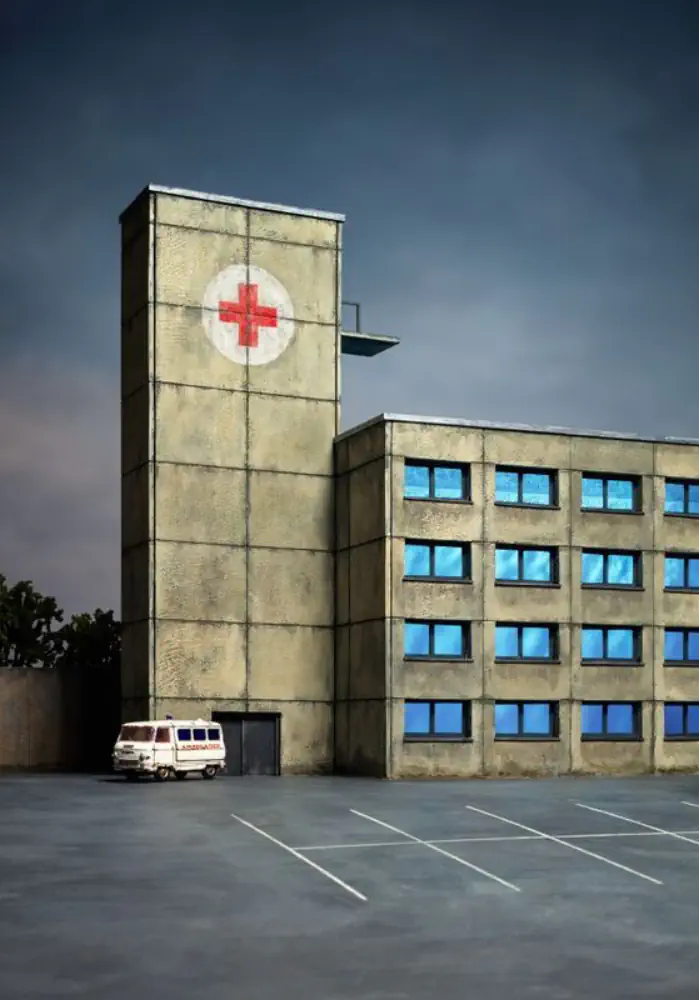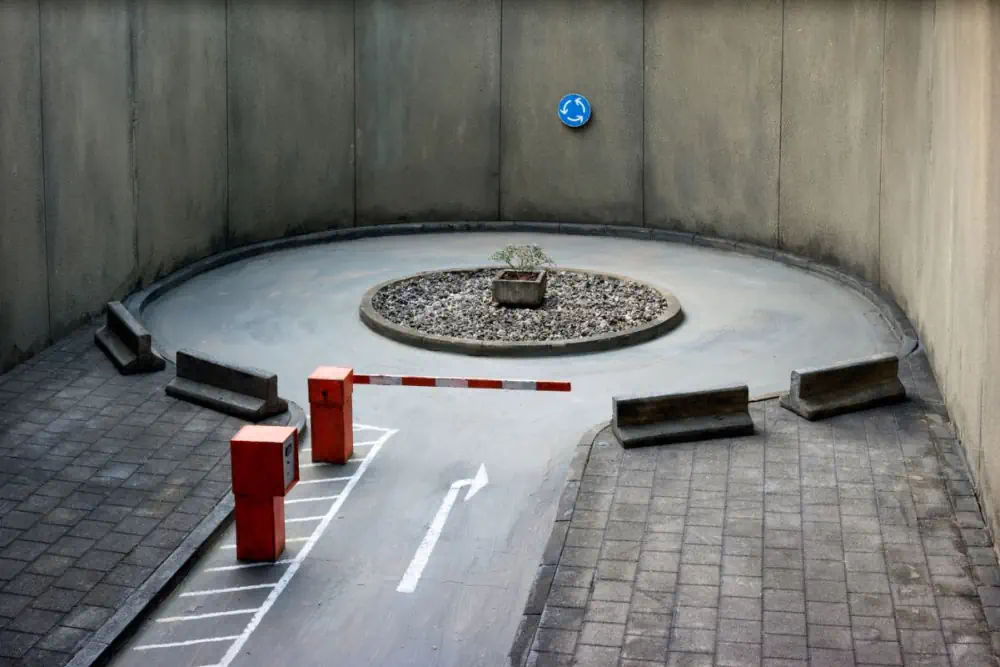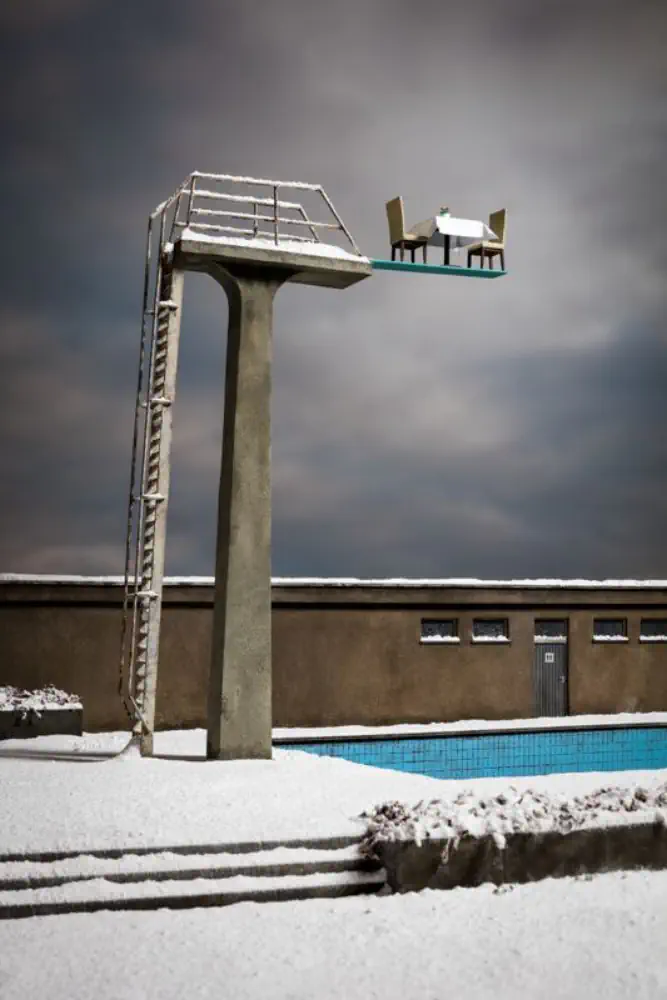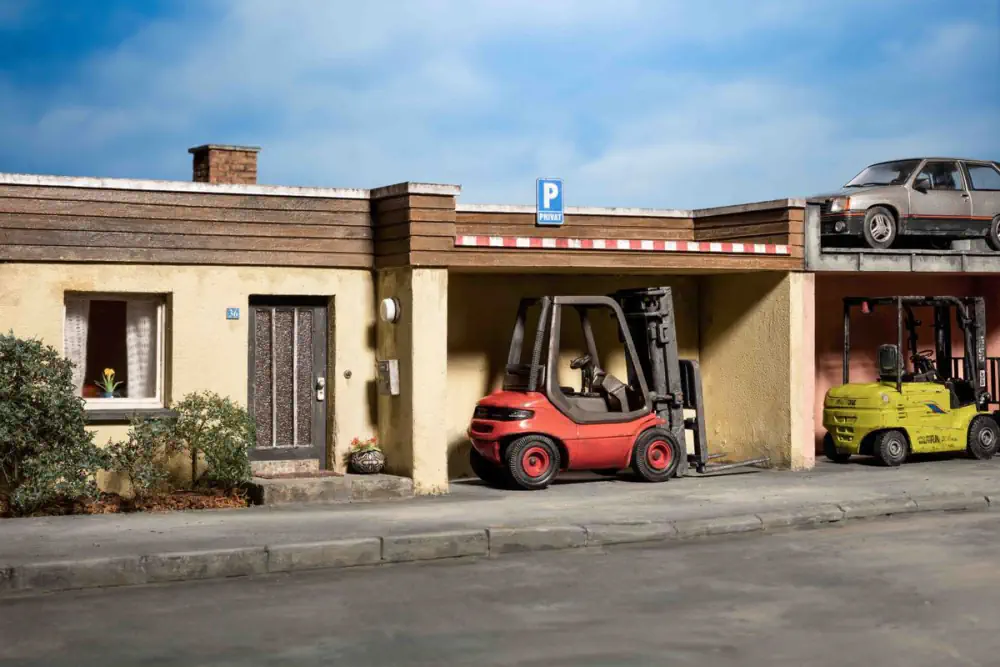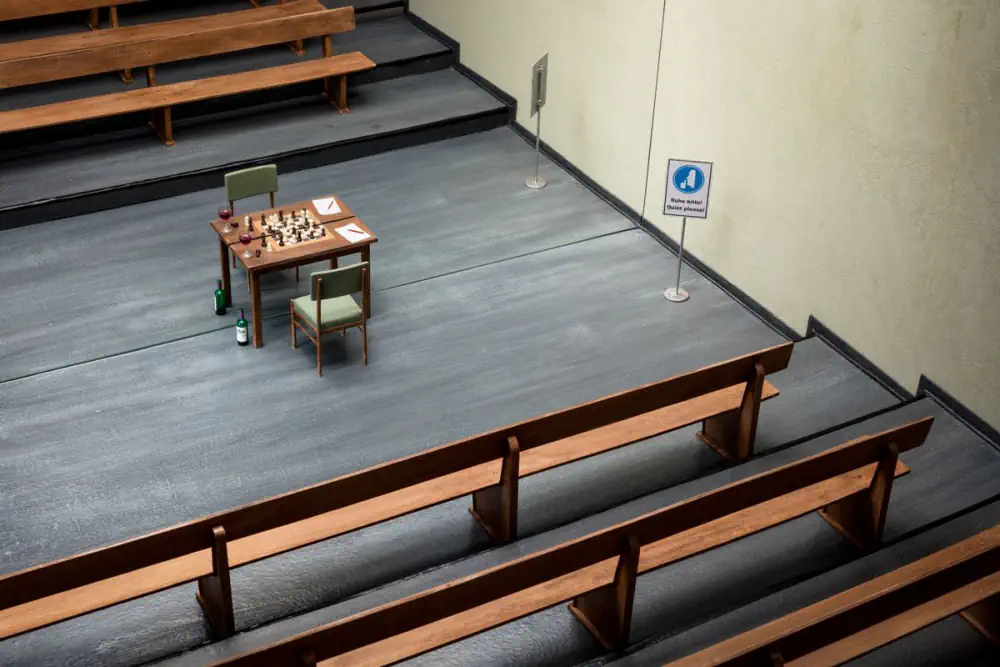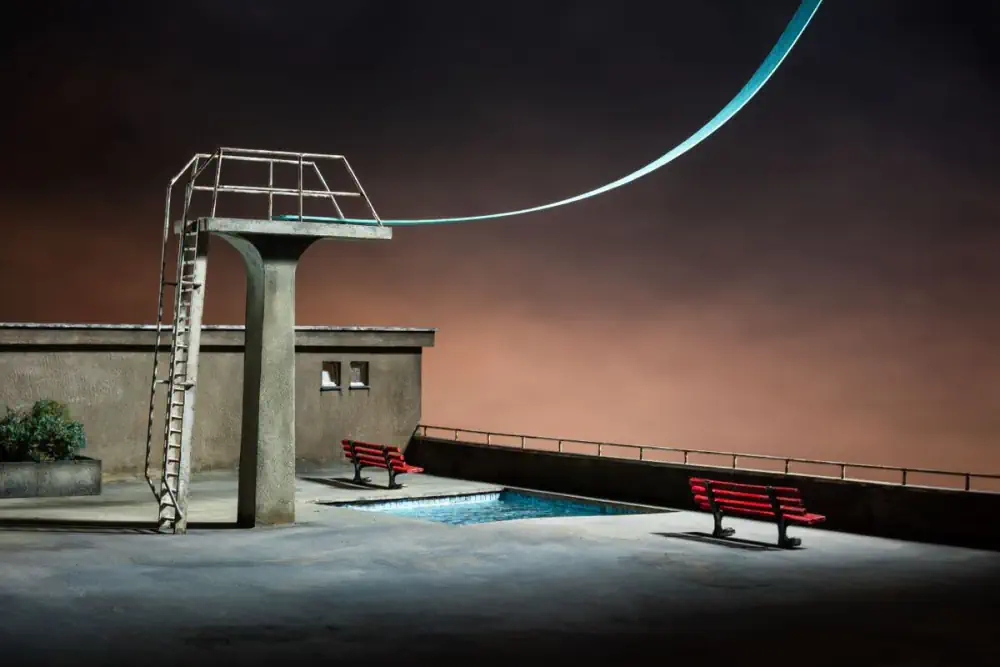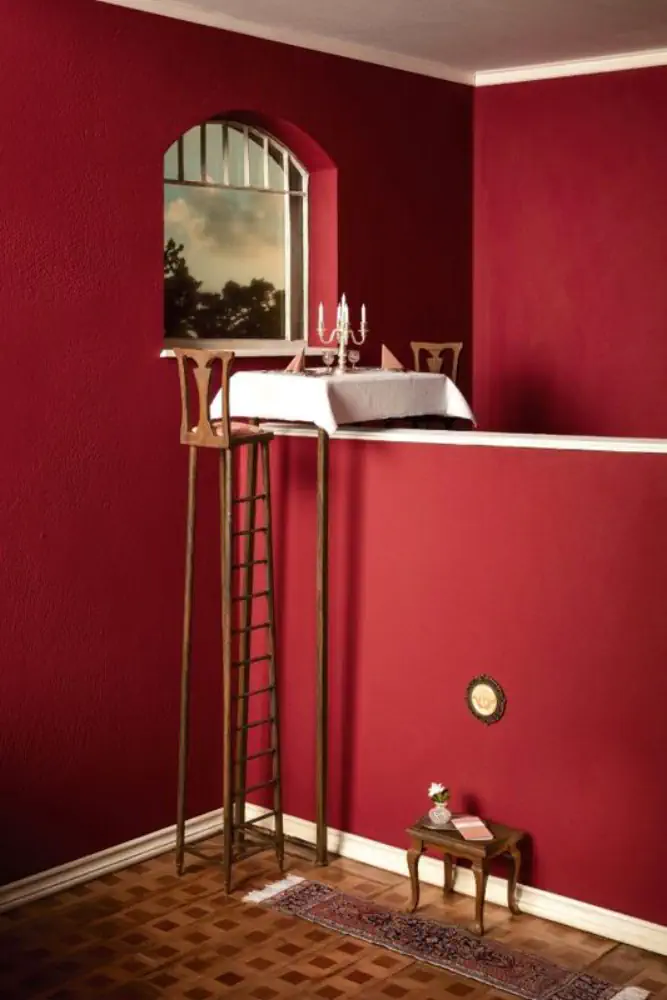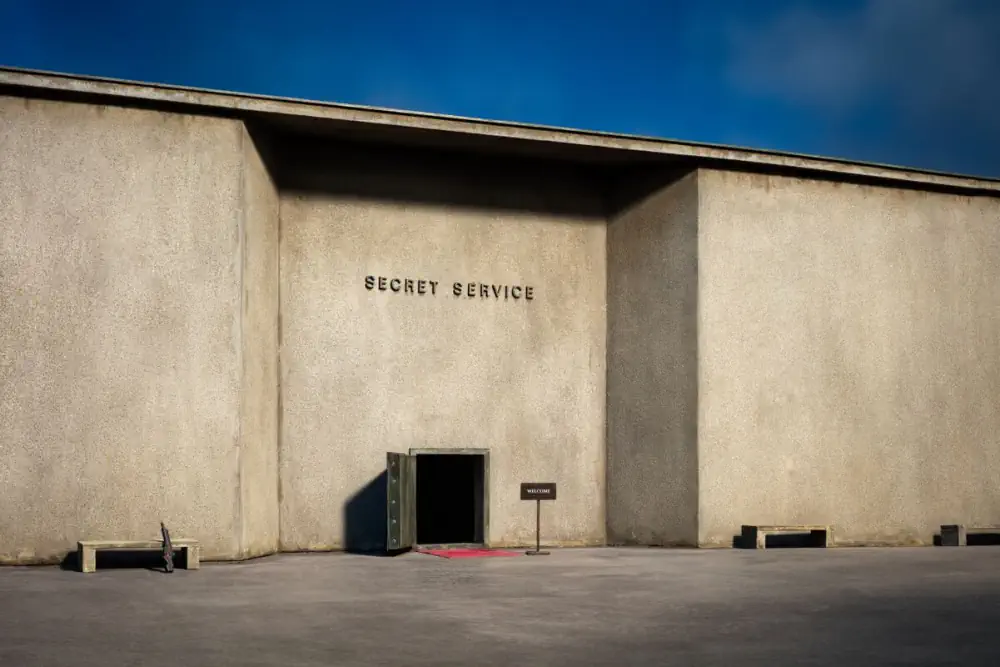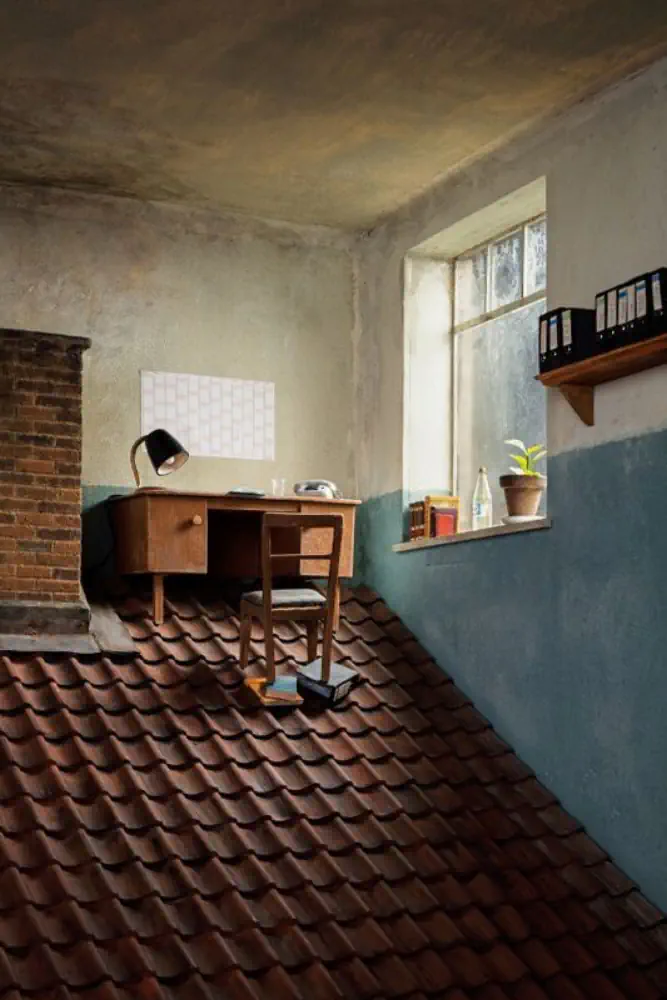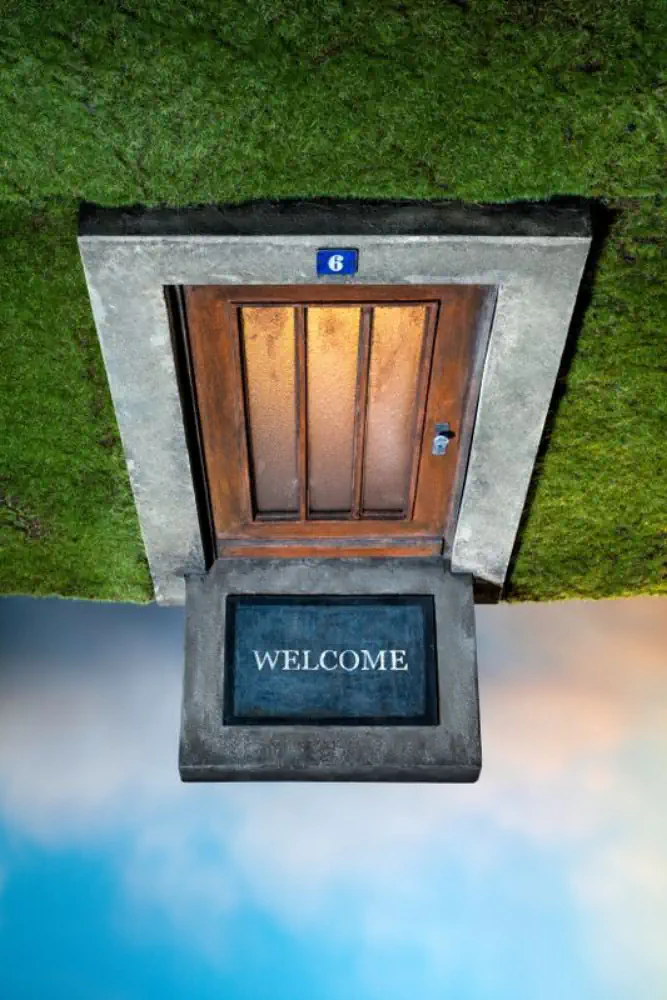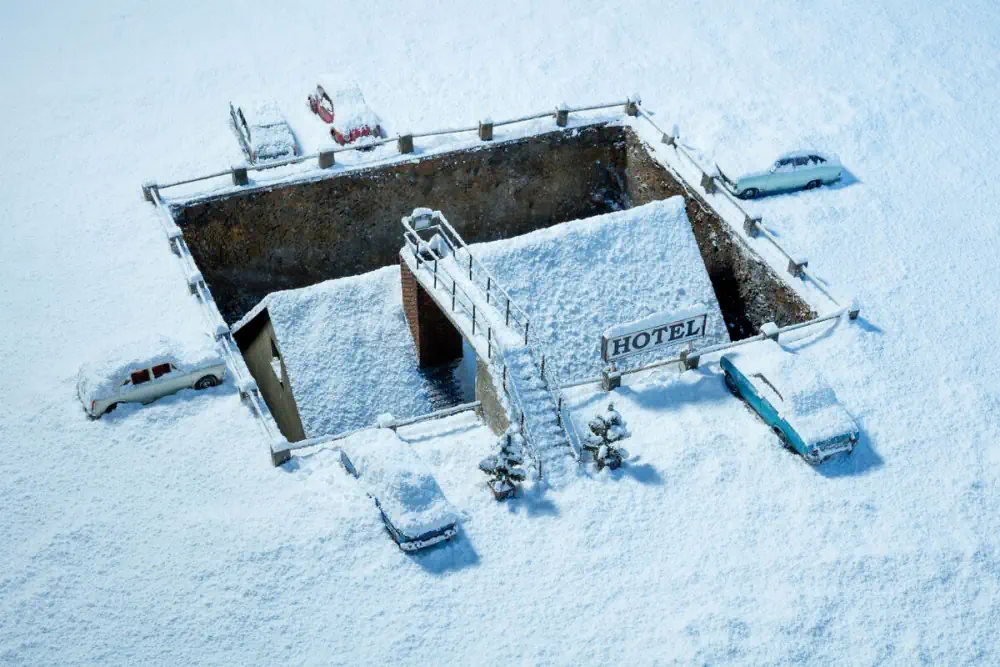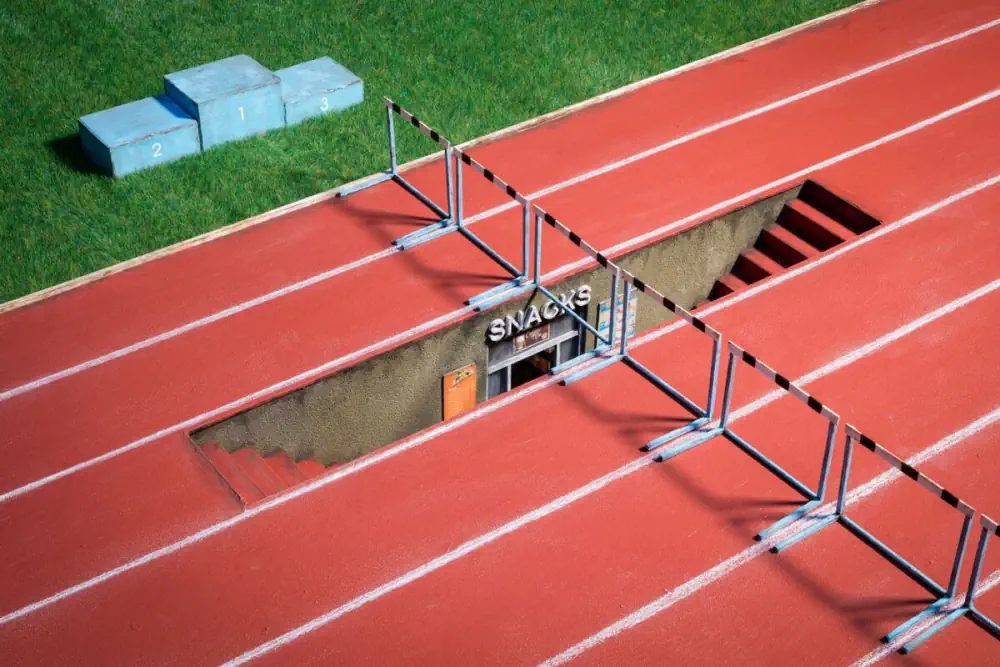

In Frank Kunert’s photographs, everyday life appears to follow its familiar rules until something no longer fits.
The architecture feels recognizable, the spaces have an apparent logic, and the surfaces bear the marks of time.
Yet this seeming normality contains a contradiction. The eye pauses, returns to the image, and discovers that the world before it operates in a disconcerting way.
His work unfolds in that interval between recognition and estrangement. Kunert builds and photographs miniature scenes in which absurdity takes on a tangible presence. Humor invites us in, but what we find inside is often less comfortable: unfulfilled desires, ways of living together fraught with obstacles, and attempts to organize existence that produce unexpected results.
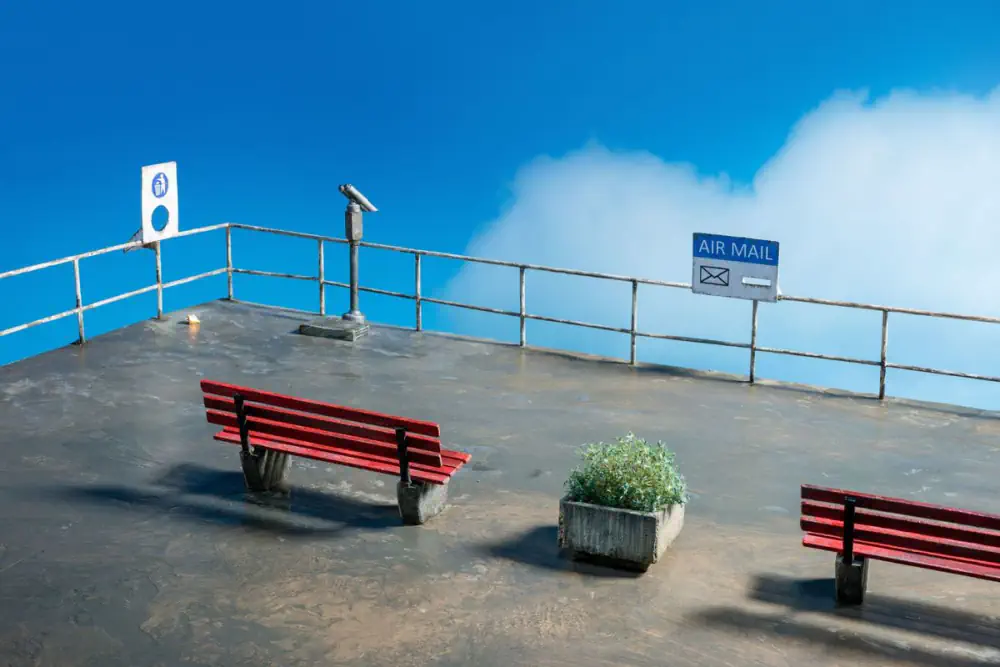
Architecture as a Portrait
Although spaces and structures occupy the center of his images, his photographs speak about people. A home expresses an idea of privacy; a facade presents an image to others; the arrangement of a room determines how it can be inhabited. Building involves decisions about what we want to protect, display, share, or keep at a distance.
Kunert works with this language, pushing it to a point where its contradictions become visible. Architecture ceases to be a passive setting and becomes part of the narrative. His miniature worlds invite us to consider how our aspirations take material form and what happens when that form begins to dictate the life it was intended to accommodate.
In her essay for the book Wunderland, Elizabeth Clarke connects these constructions to our fears, needs, and desires. Her reading identifies a fundamental dimension of Kunert’s work: absurdity belongs to everyday experience. The artist recognizes it, concentrates it, and gives it a space where we can observe it more clearly.
The reduced scale contributes to this distance. Faced with a miniature, viewers gain a perspective they rarely have on their own lives. They can contemplate the whole, notice its tensions, and find comedy in a situation that might feel distressing from within.
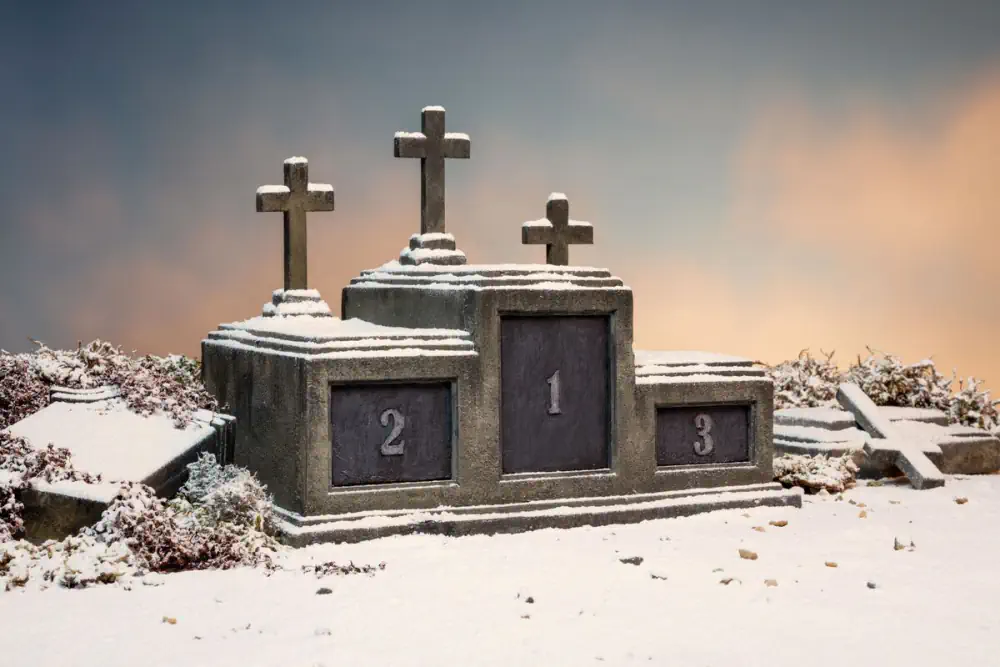
Laughter That Leaves Questions
The relationship between tragedy and comedy runs throughout this universe. The grotesque emerges when something familiar becomes distorted enough to feel unsettling while retaining the features that make it recognizable. This proximity gives Kunert’s humor its impact: we can laugh at the scene while recognizing something of ourselves within it.
His images leave room for that ambivalence. The precision of their construction coexists with the instability of what they represent. Everything appears carefully arranged, even when the logic sustaining the scene might lead to a dead end.
Clarke emphasizes that Kunert avoids an accusatory stance, drawing instead on subtle, sometimes eccentric humor. This approach allows the photographs to remain open to interpretation. Viewers may find an observation about coexistence, a reflection on the past, or an expression of their own concerns. The image presents a situation; its interpretation continues beyond the frame.
There is also affection in this way of looking. The care devoted to spaces, traces of use, and objects grants significance to elements that usually go unnoticed. Even when a scene feels uncomfortable, the everyday world retains its capacity to awaken curiosity.
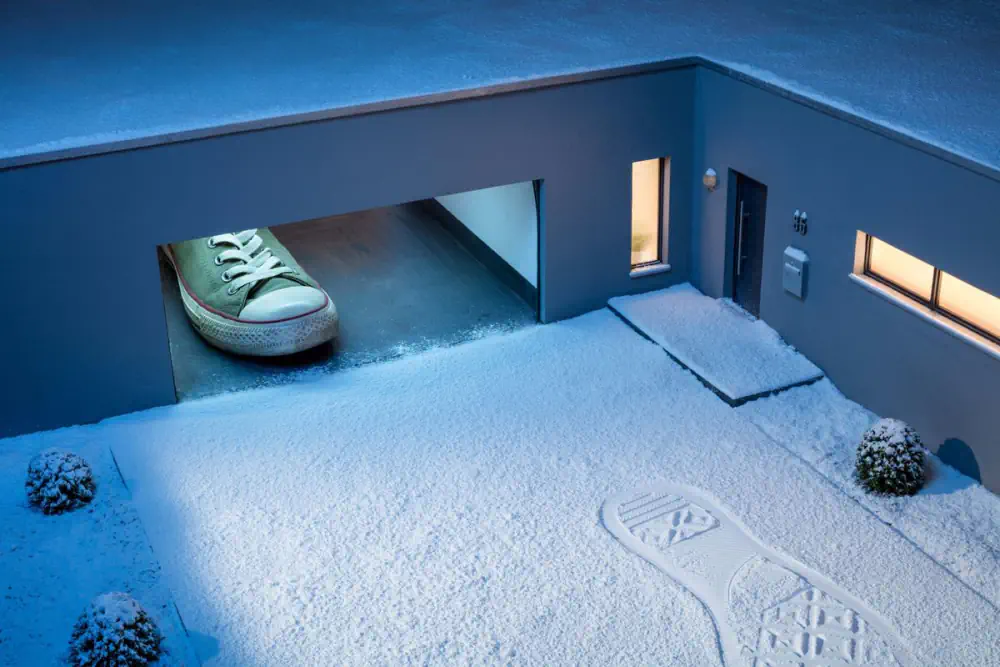
Time Contained in a Miniature
The power of these photographs depends on the material work that precedes them. Kunert spends weeks constructing his settings: cutting lightweight boards, assembling structures, installing windows, making furniture, and developing surfaces through successive layers of paint. Studio lighting completes a process in which every decision changes how the space is perceived.
The most ordinary materials can take on unexpected functions. A bottle cap becomes a trash can; salt represents snow; cotton suggests clouds or steam. These transformations require close attention to the possibilities of each object and an understanding of how it will appear before the camera.
Detail matters because it sustains the credibility of the fiction. For an impossible situation to feel convincing, its setting needs visual coherence. Textures, proportions, and light encourage the eye to accept that world before questioning what happens within it.
Yet the process also allows for accidents. A layer of paint may flake away or leave a mark resembling the weathering of a facade. As Clarke describes, mistakes can open new paths and prompt fresh decisions. Patience provides room to reconsider an idea as it takes shape.
This way of working establishes a particular relationship with time. The scene develops slowly through direct contact with materials, while the photograph gathers the entire process into an image that appears immediate. Looking closely allows us to recover something of the time it contains.
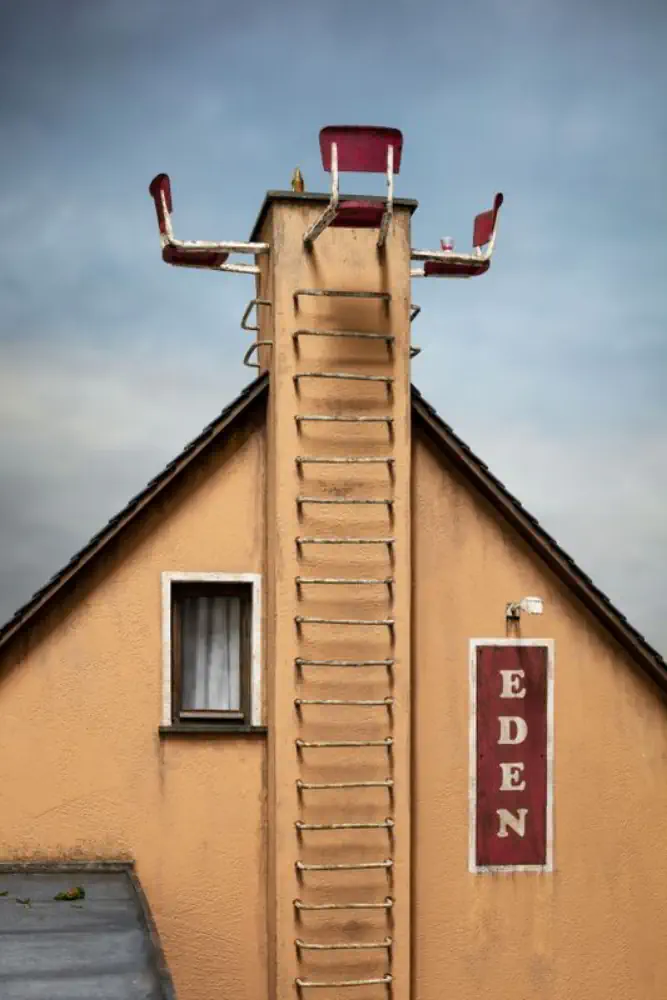
Building for the Camera
Born in Frankfurt am Main in 1963, Frank Kunert began taking photographs as a teenager, initially focusing on landscapes. His professional training introduced him to studio work, which would become central to his practice. Building miniatures and photographing them developed into a single field of exploration.
The camera determines how we encounter these settings. Framing establishes the boundaries of the narrative; light defines its atmosphere; perspective organizes the relationships between its elements. The constructed object provides the conditions of the scene, and the photograph shapes the viewer’s experience.
His work, exhibited in Germany and internationally, thus retains a dual quality: we can admire the craftsmanship while becoming absorbed in the question the scene poses. The artifice serves an expressive purpose that extends beyond the demonstration of skill.
Kunert’s grotesque universe draws its strength from this combination of care and bewilderment. His miniature constructions reveal tensions we tend to accept as part of the everyday landscape. They allow us to pause, recognize their absurdity, and discover that laughter can be a way of paying attention. [Official Website]