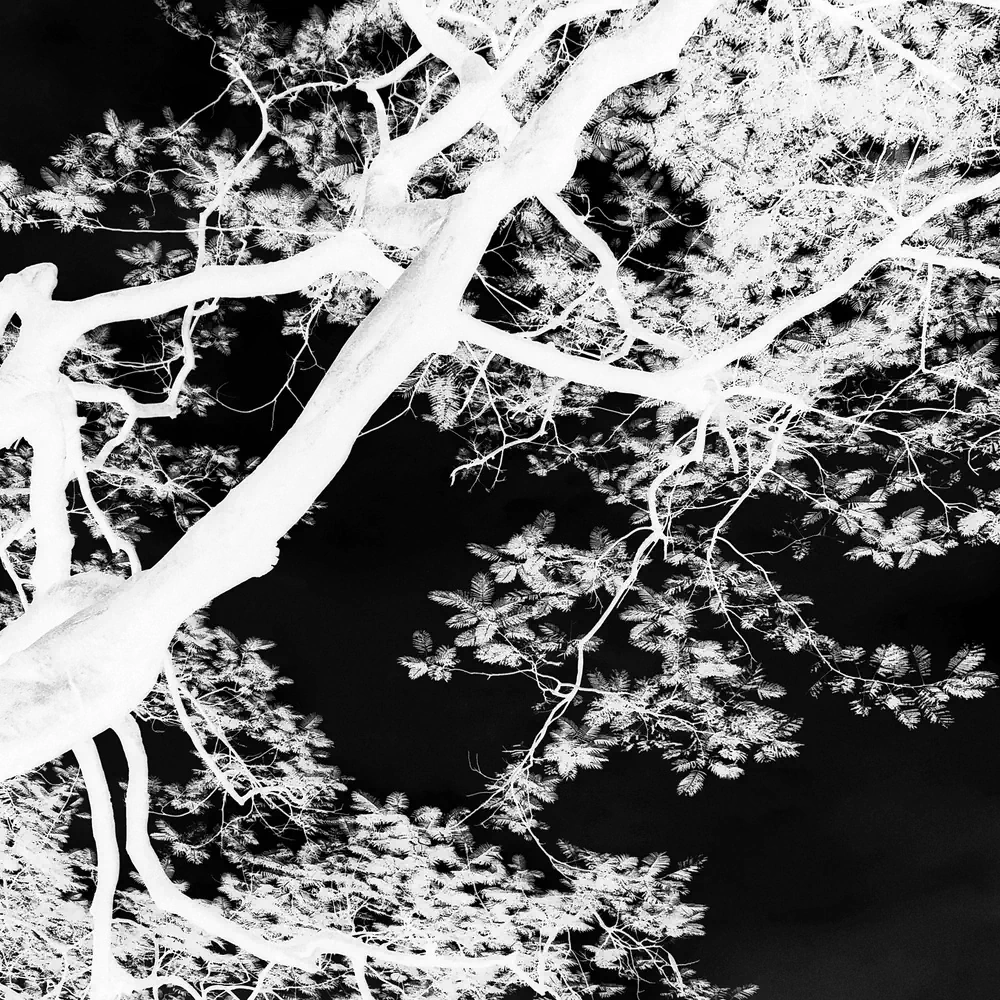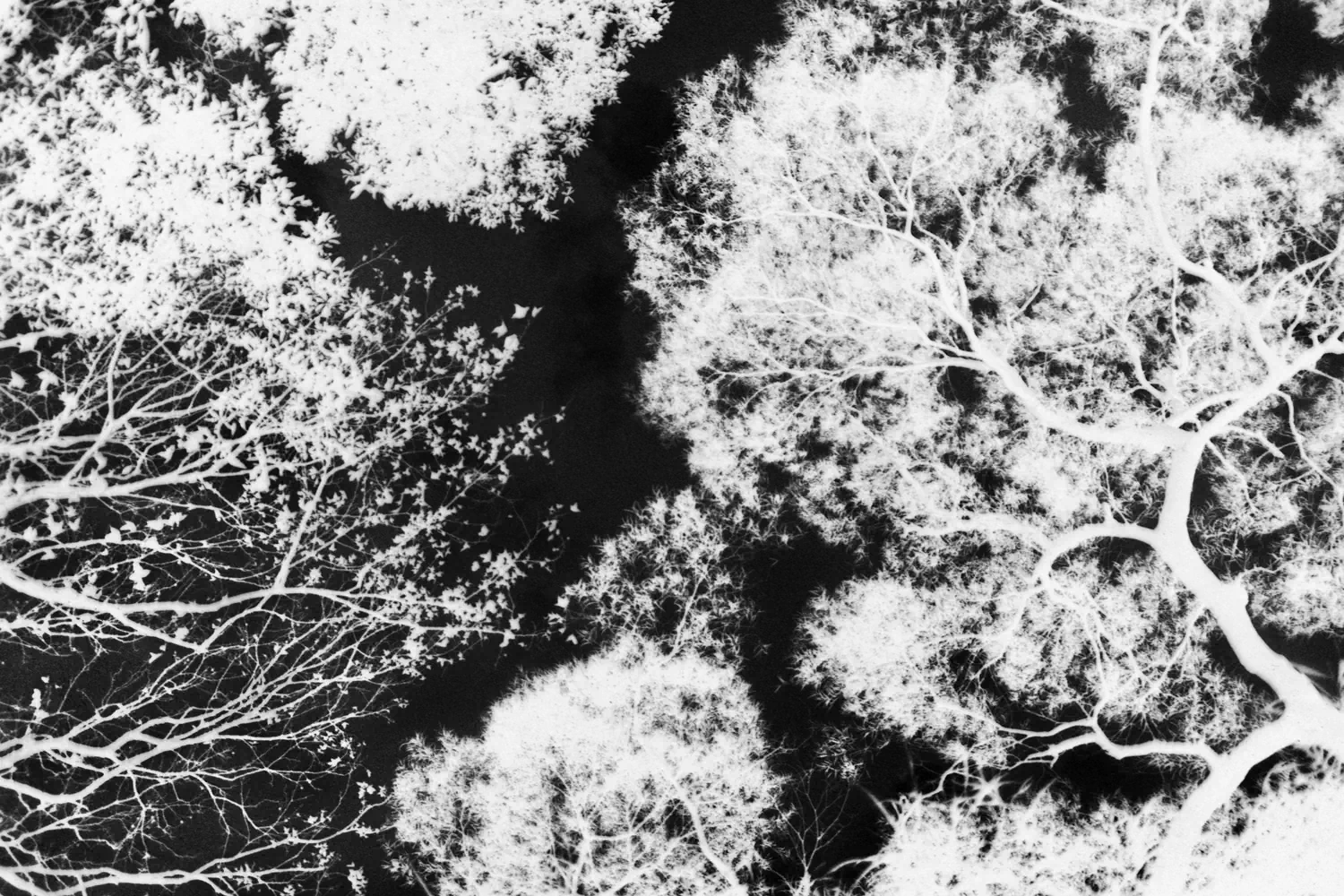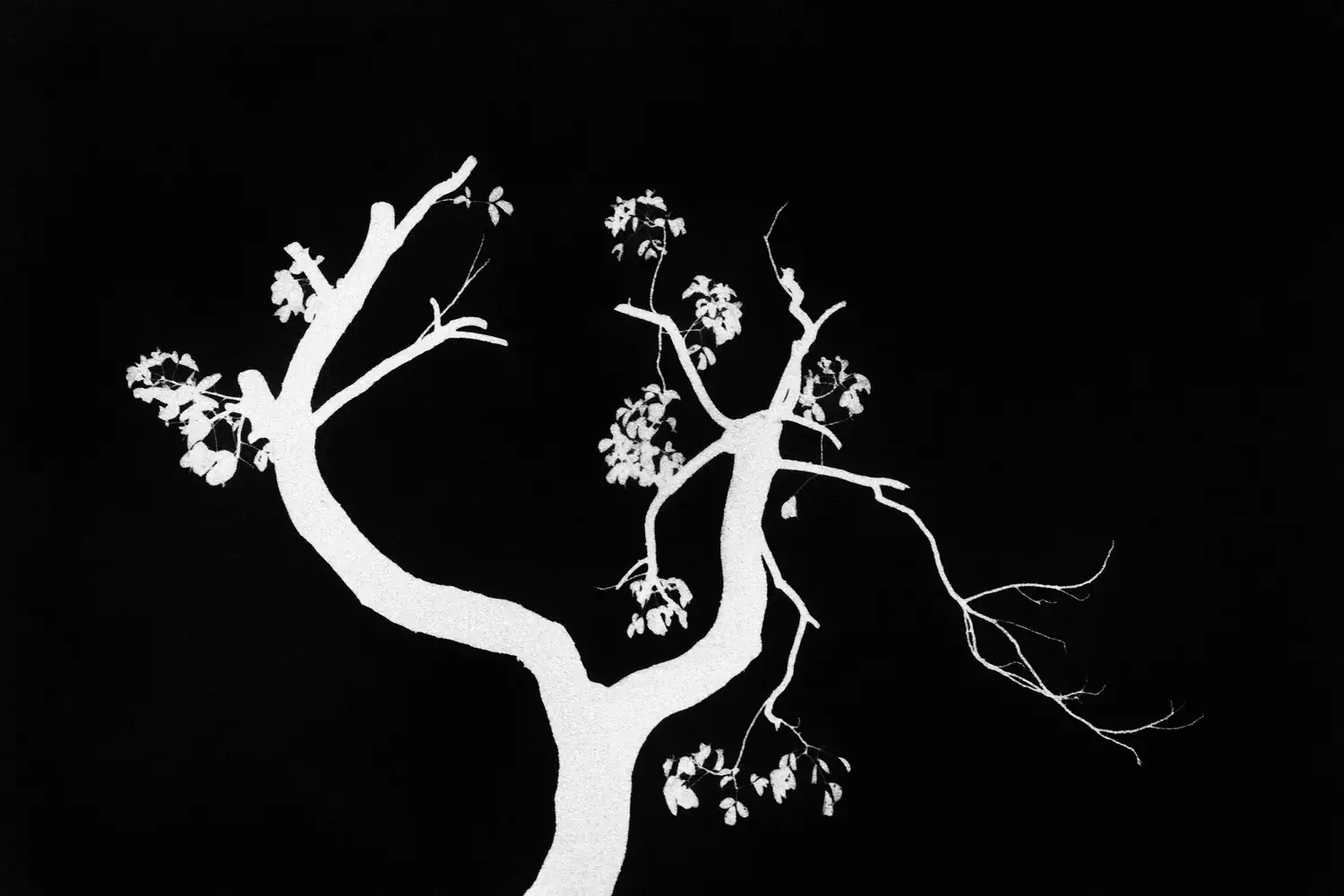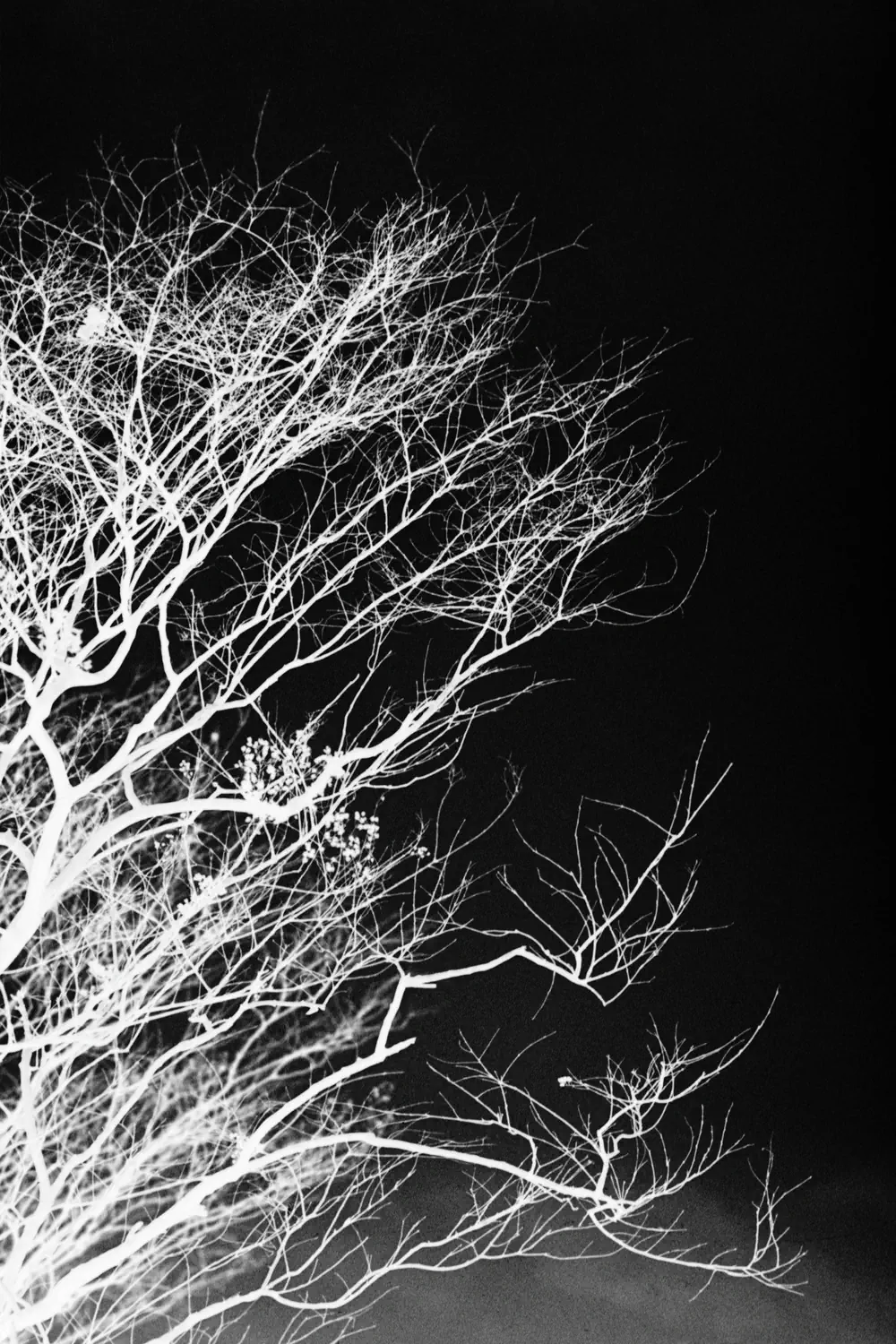
Black Day began with my enjoyment of photographing trees and an unexpected discovery while scanning film.
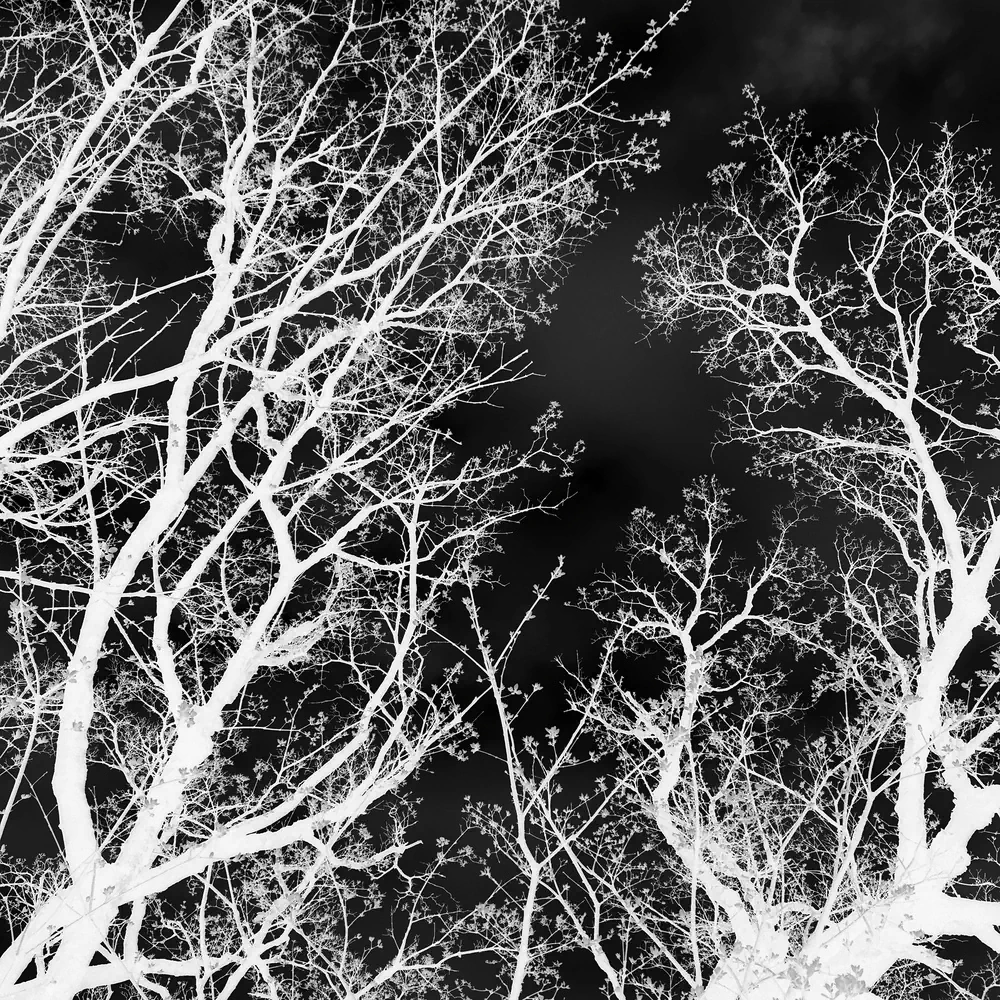
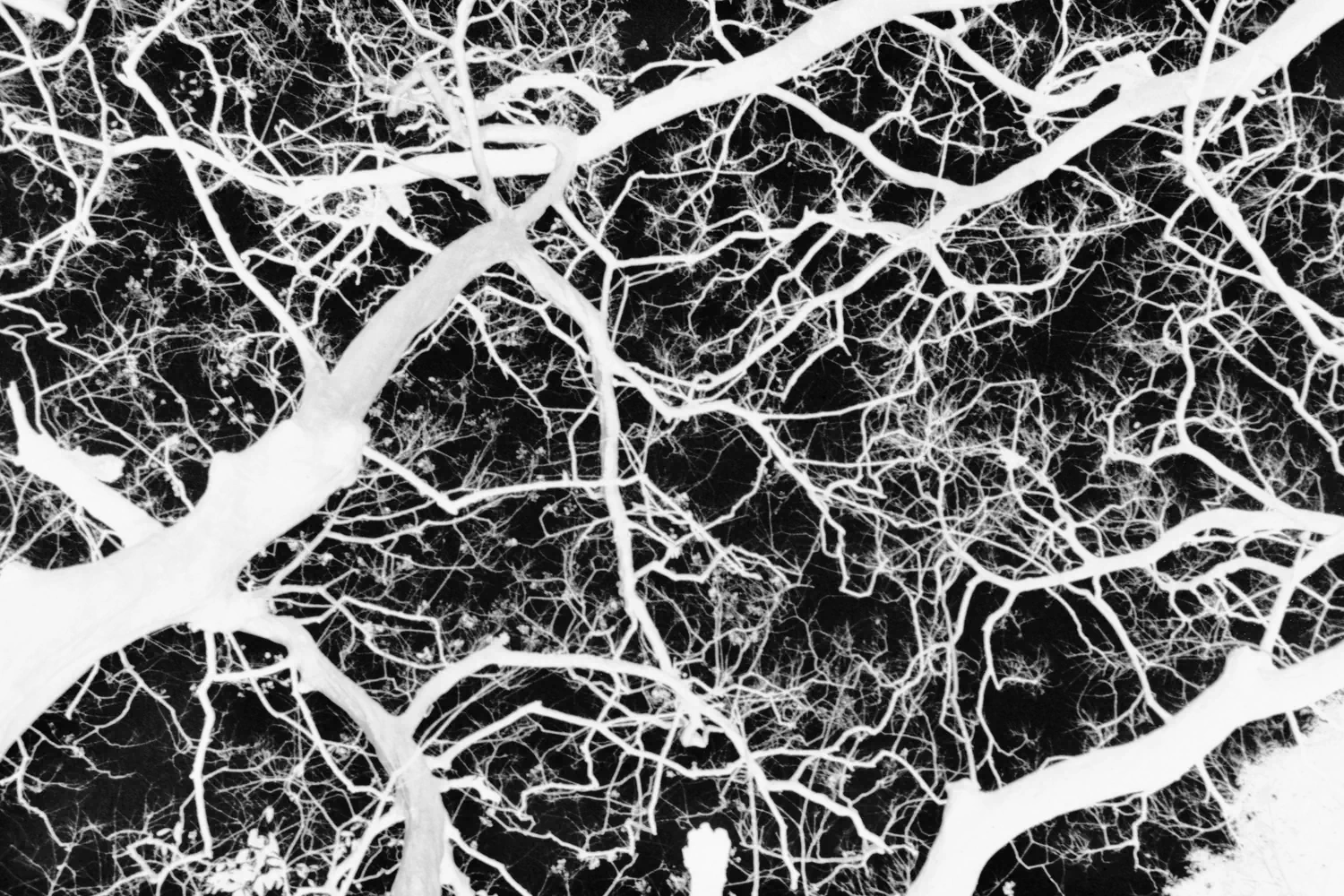
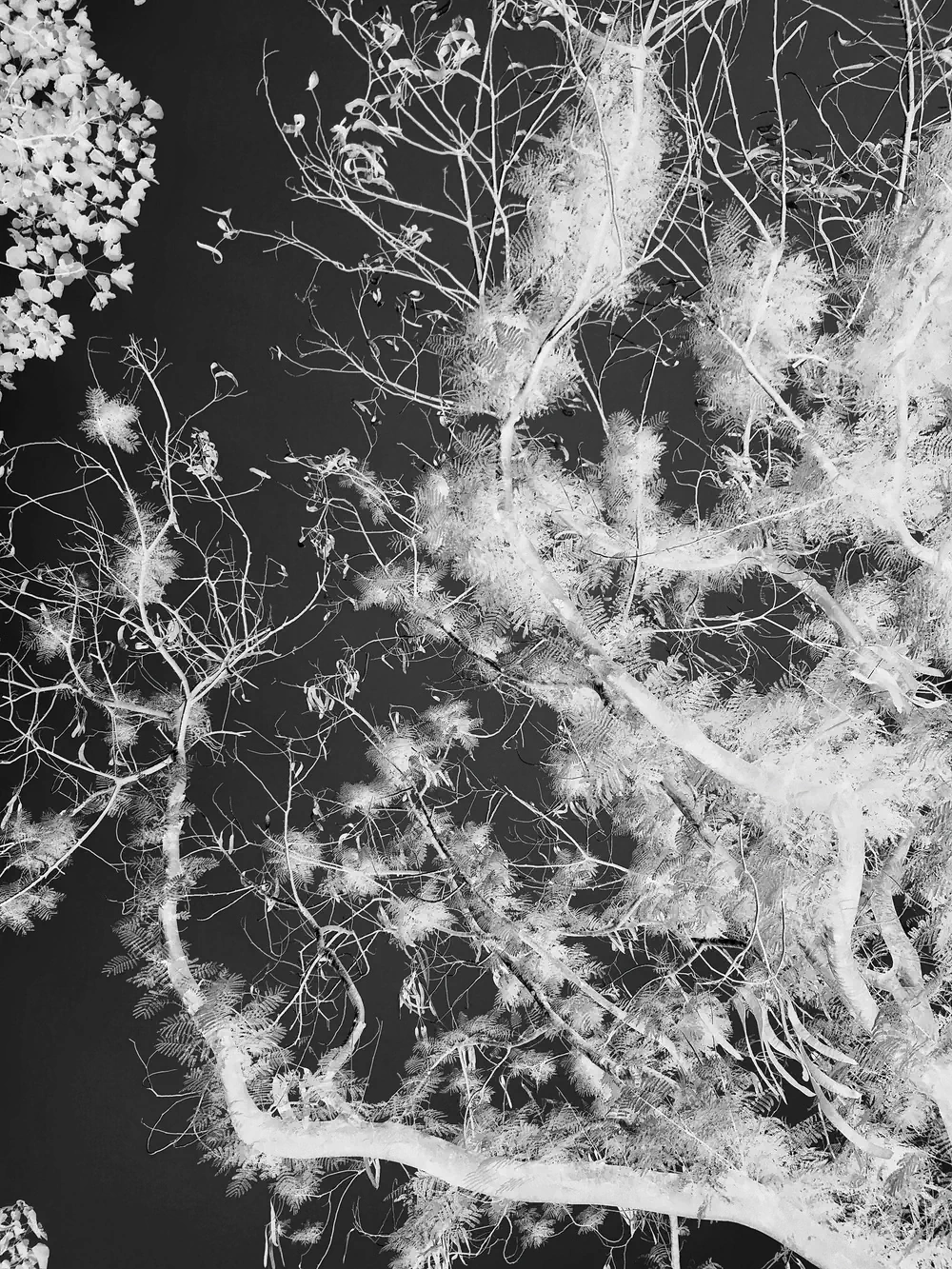
I noticed that some photographs of trees appealed to me more in their negative state than after being converted into positive images.
The subjects were familiar, but reversing light and dark changed how I saw them. That discovery led to the sister series Black Day and White Night, through which I began exploring black-and-white inversion and its possibilities for photographic images.
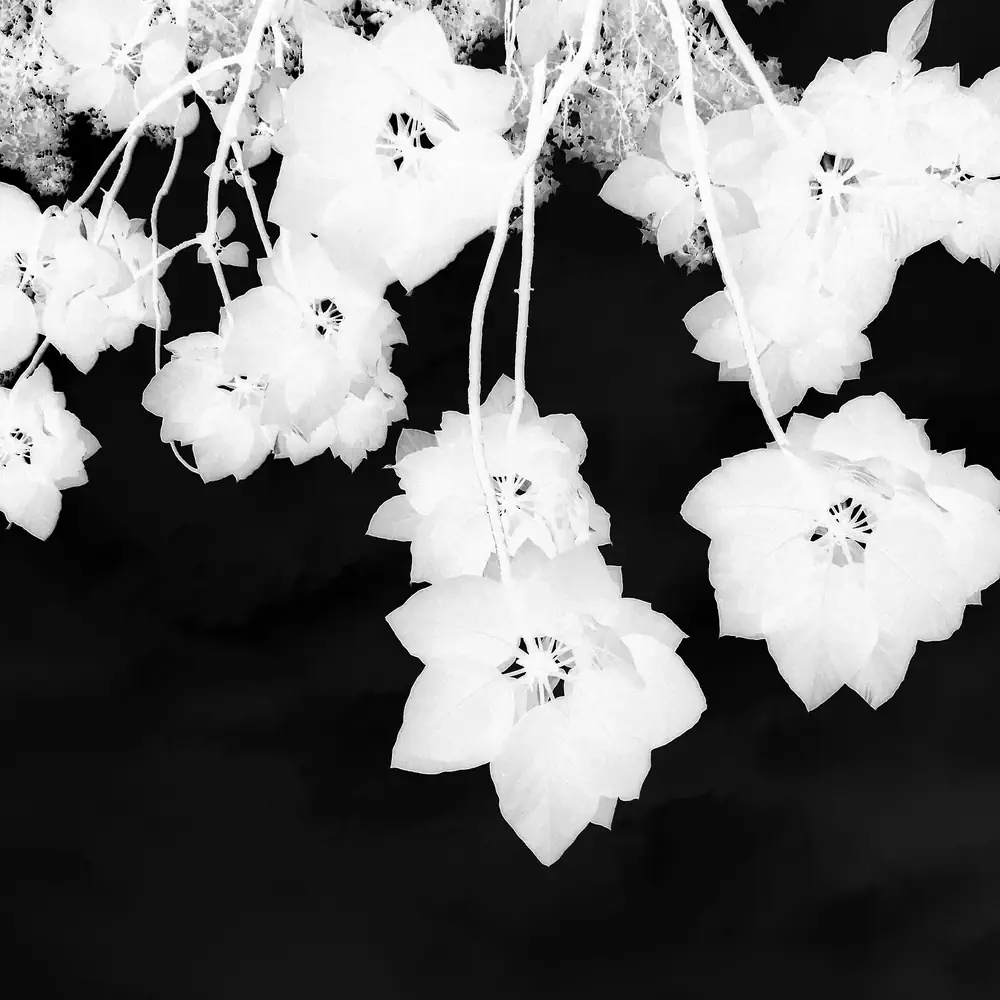
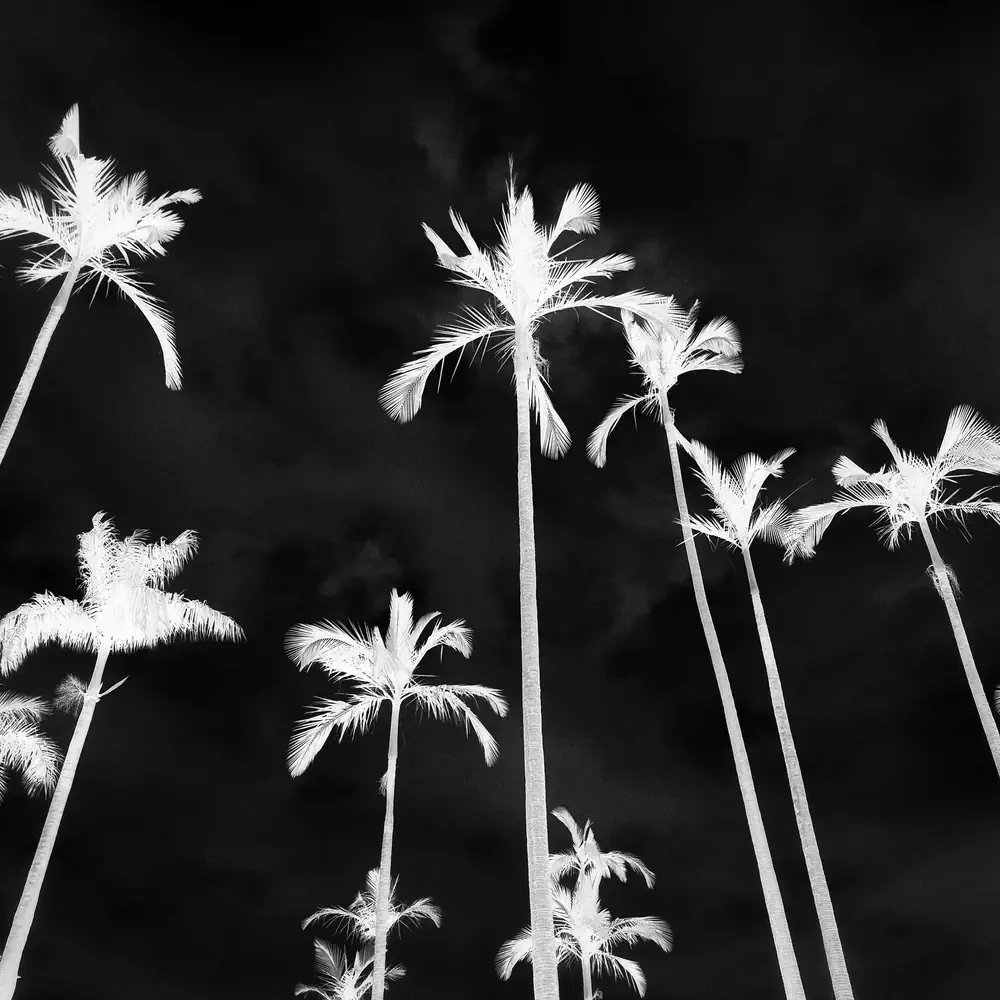
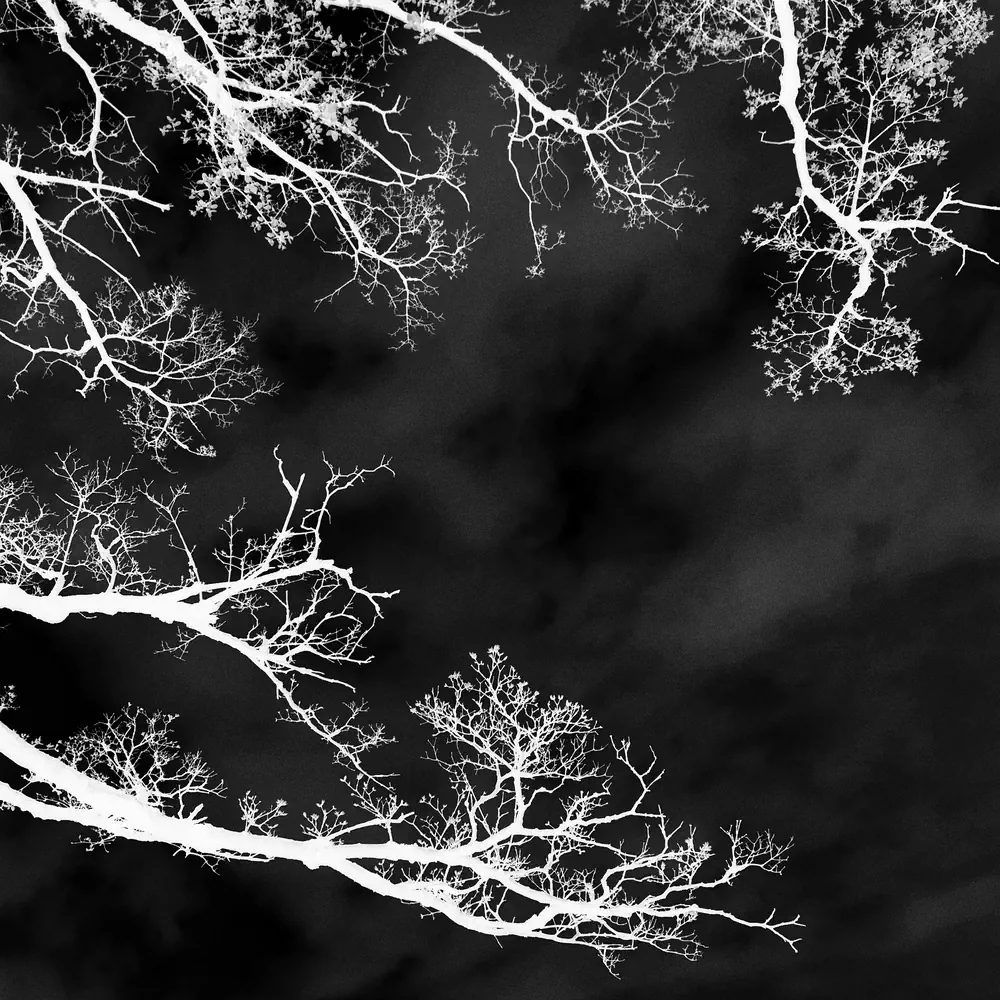
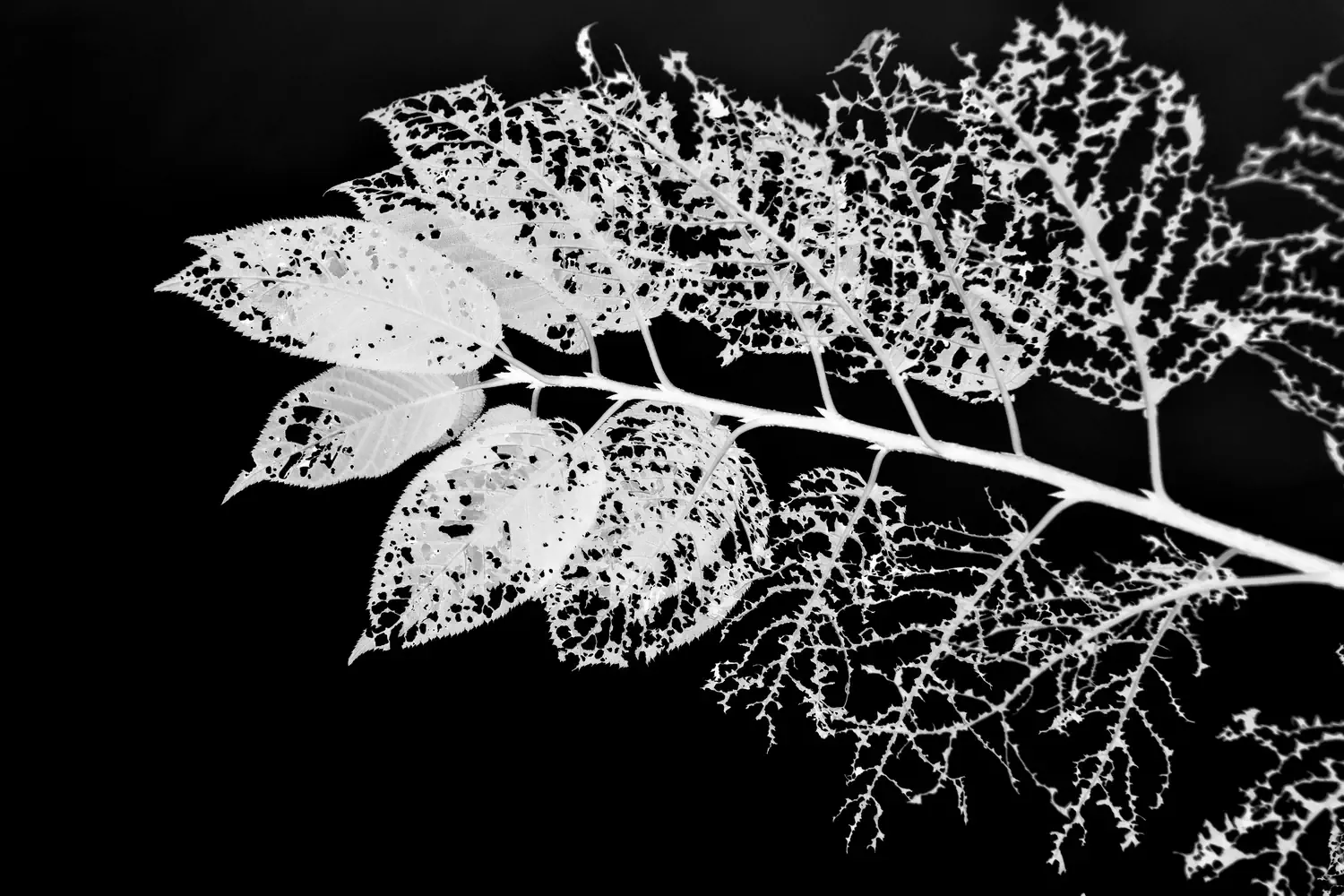
In Black Day, a bright sky can become a black background, while dark branches and foliage become lighter forms. This changes the emphasis within the picture: the branching of a tree, the density of its leaves, and the spaces between them take on different relationships. The image still contains the forms recorded by the camera, but the tonal reversal gives me another way of looking at them. My attention moves between recognising the tree and following the lines and textures that make up its image.
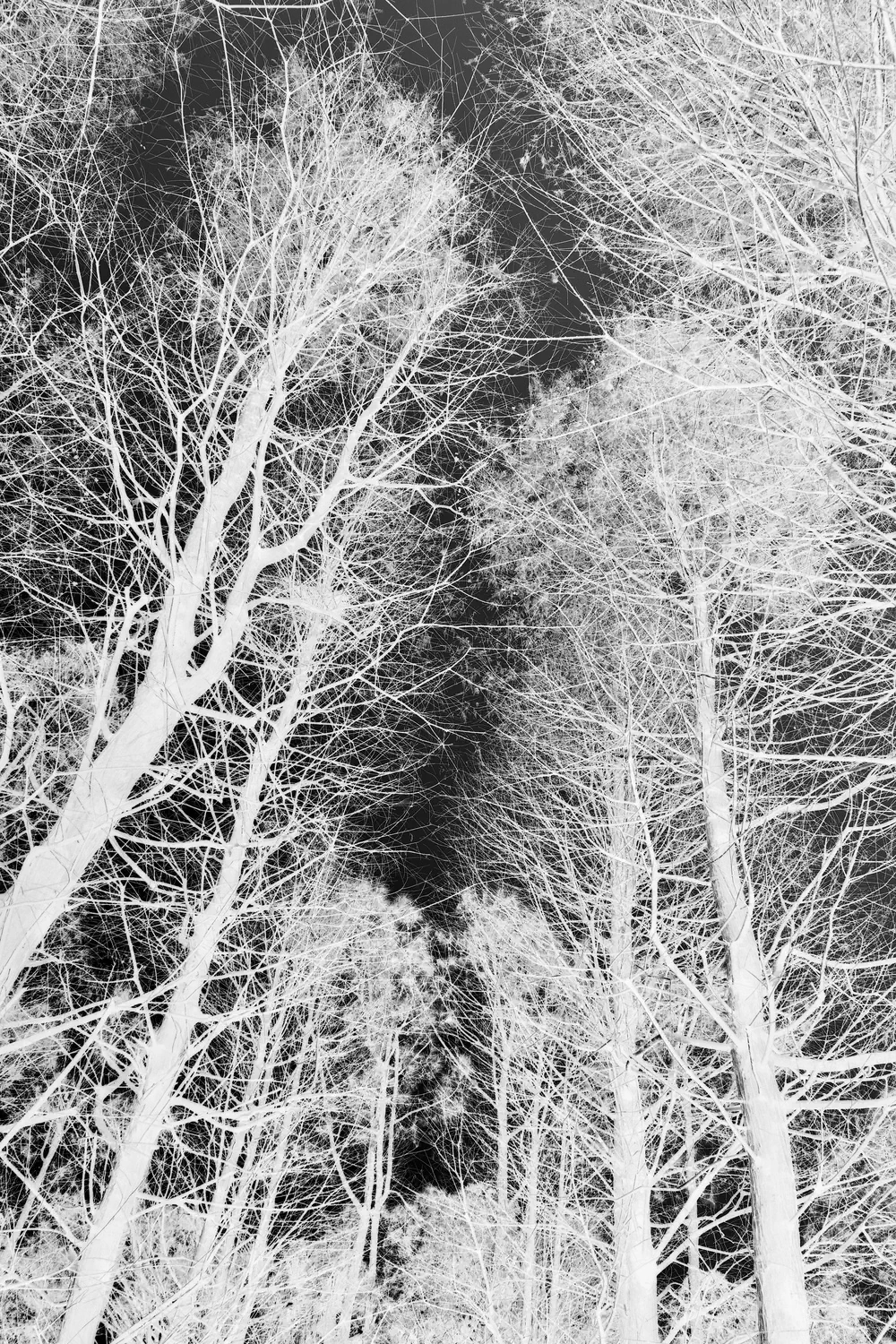
The results also bring other media to mind. Photographs taken at night can acquire qualities reminiscent of drawing or ink painting, while those made in daylight can develop a texture closer to that of a woodcut print. Black Day explores the latter direction, alongside White Night. I find it interesting that the same operation can produce such different appearances, depending on the original photograph. These qualities emerge from the interaction between what the camera records and the reversal of its tones.
This experience prompted me to think about the relationship between photography and painting. When a photograph resembles a drawing or a print, how does that resemblance affect the way I look at it? The camera has recorded an actual subject, yet the resulting image can draw attention to qualities I also enjoy in painting: line, texture, and a balance between light and dark. I like to understand photography as painting with light. In these works, that idea becomes tangible through the process of taking a photograph and then discovering what its recorded light can become through inversion.
Inversion remains an experiment throughout this process. I compare the results and judge each photograph by its composition, tonal detail, and contrast. I am drawn to a sense of stability and balance, and to images that remain calm even with strong differences between light and dark. The method is repeatable, while the decisions depend on the particular photograph. I look for images I want to return to, beyond the initial surprise of the tonal reversal.
This exploration later extended into colour inversion in my photographic practice, including Be and Alaksana. Black Day remains rooted in my affection for trees and the pleasure of looking at them. At the same time, it has led me to pay closer attention to the photograph itself and to explore the relationship between the subject I photograph and the resulting image.
About Tsung-yu Lu
Tsung-yu Lu is a Taiwan-based artist working in photography and algorithmic art. He holds a master’s degree in mechanical engineering from National Taiwan University. He began working with photography in 2013 and expanded his practice into algorithmic art in 2022, exploring images and subjects that are difficult to realise through photography alone.
His practice combines an interest in structures, systems, and rules with an intuitive approach to composition, colour, and texture. Through photographic experimentation and the construction of images using code, he has developed a visual language that spans both media. His photographic series include Black Day, White Night, Be, and Alaksana.
Lu was selected for the seventh edition of PHOTO GO TAIPEI in 2026. His work has also been exhibited at Sohn Fine Art and the Plymouth Center for the Arts in Massachusetts and featured in Artdoc Photography Magazine. [Official Website]