“Fard” began in June 2024, with the urgent desire to return to my native village (Plombières, Belgium) to recharge, to fill up on “emptiness” after agitated weeks spent in the city.
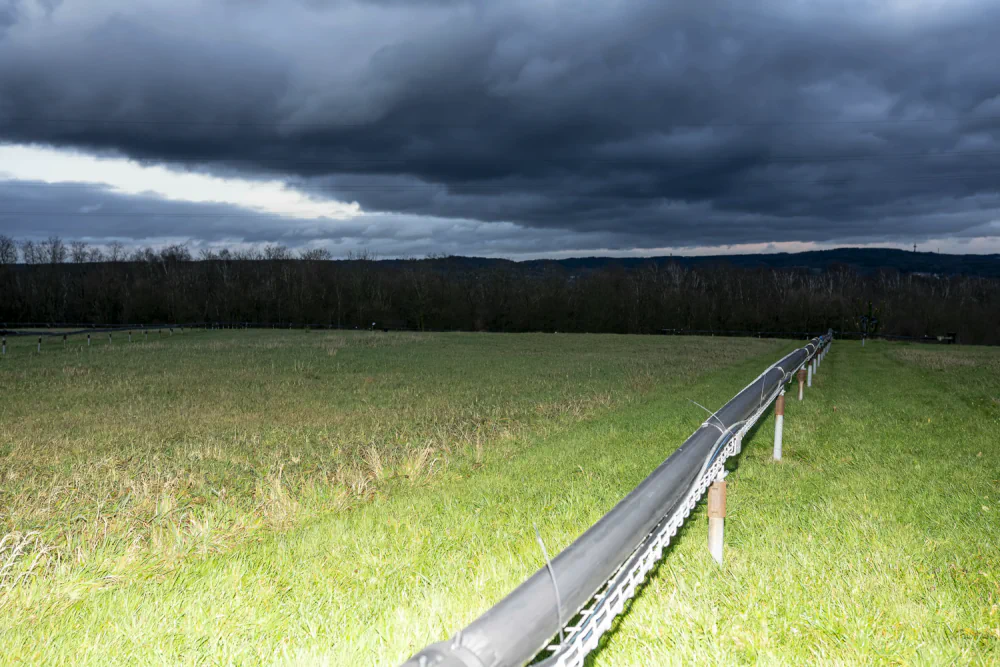
Armed with my camera and, above all, my flash, I roamed the countryside searching for a subject to document.
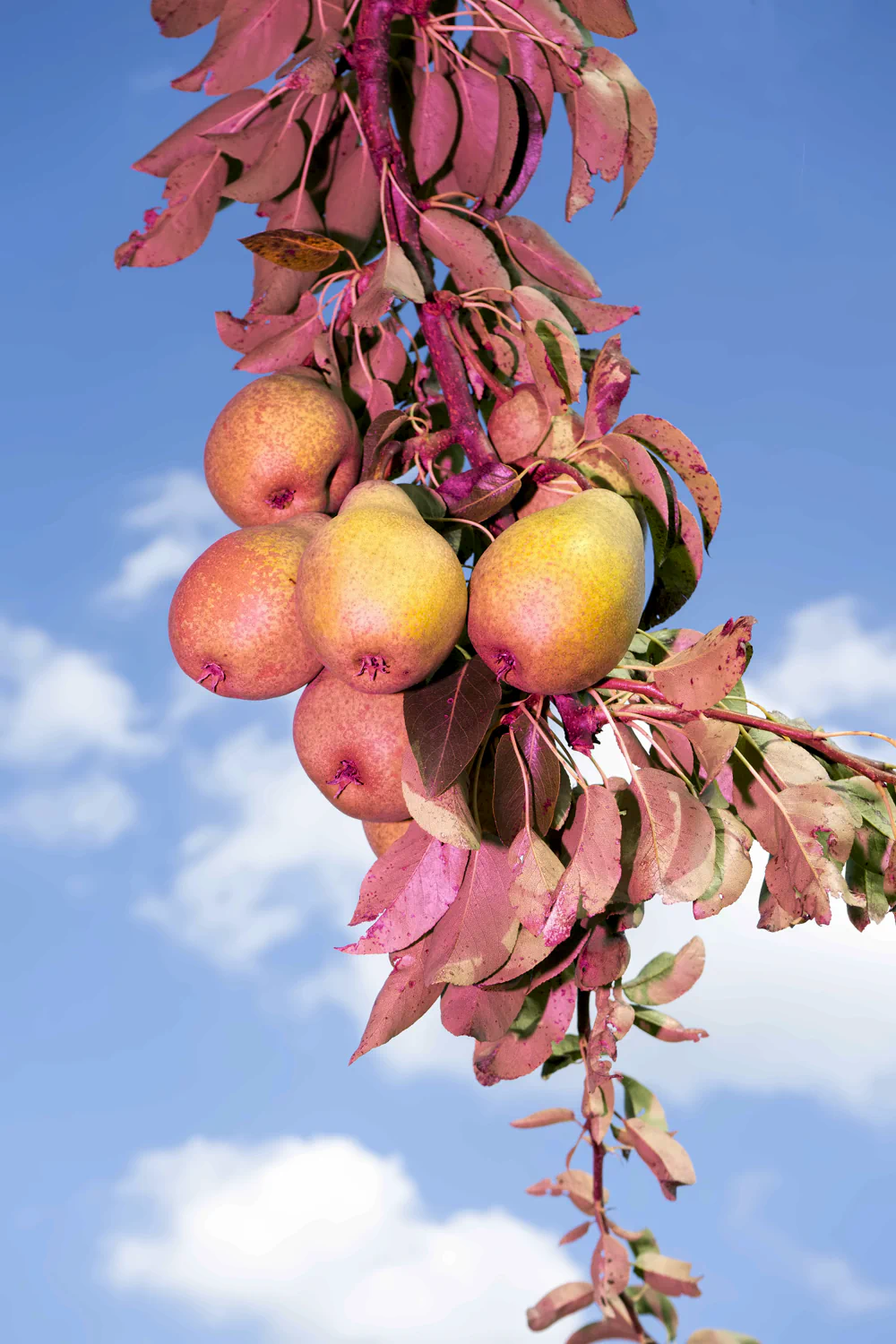
One day, as I photographed a pear tree branch using a pink gel, the color of the flash turned the green of the pears into a golden yellow. This image was born of a raw idea, of a sensation, and it belongs to those instinctive shots that make up the borders and bridges of my artistic project. It matters because it’s this photograph that made me want to turn my native village into a paradise through plays of light and color.
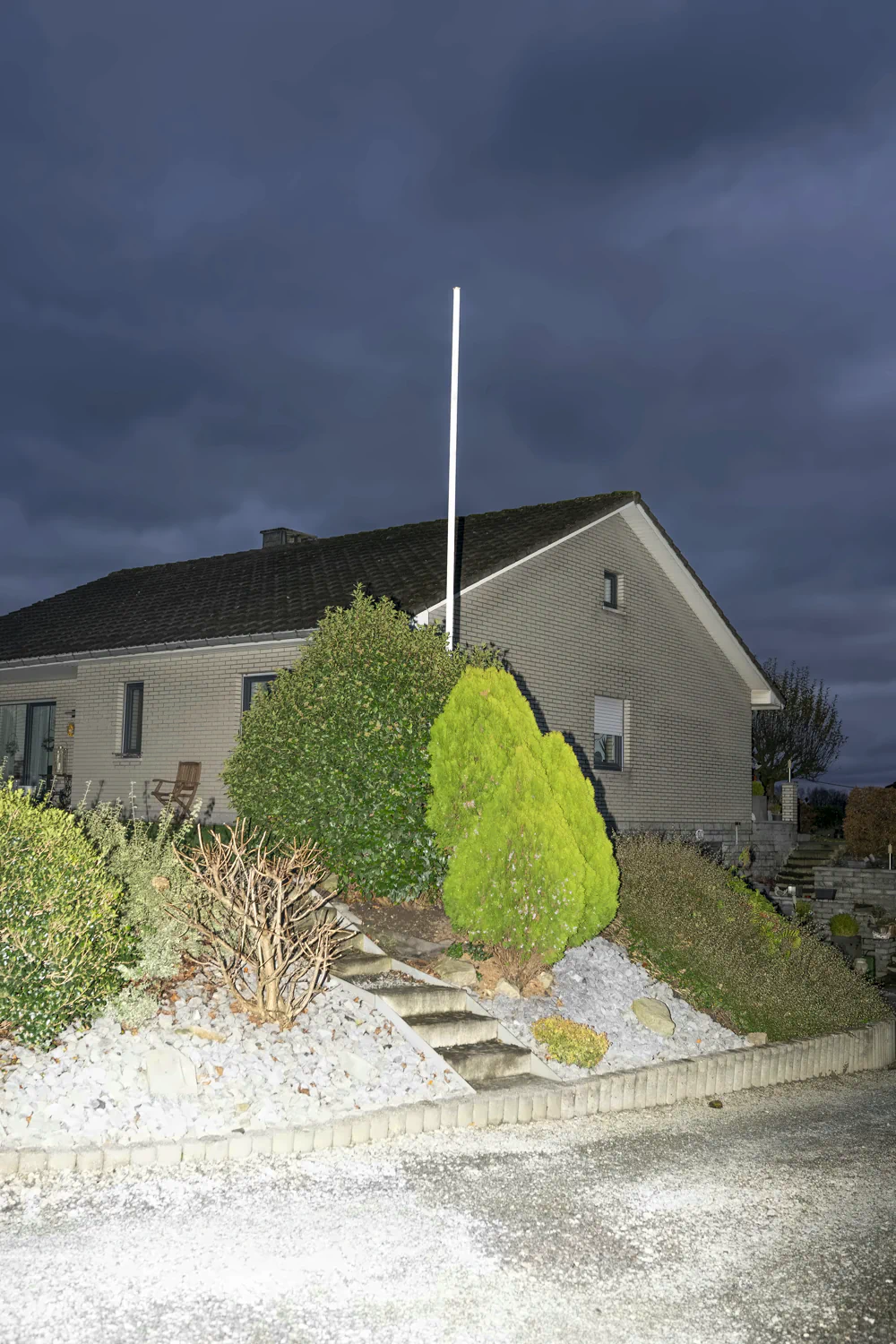
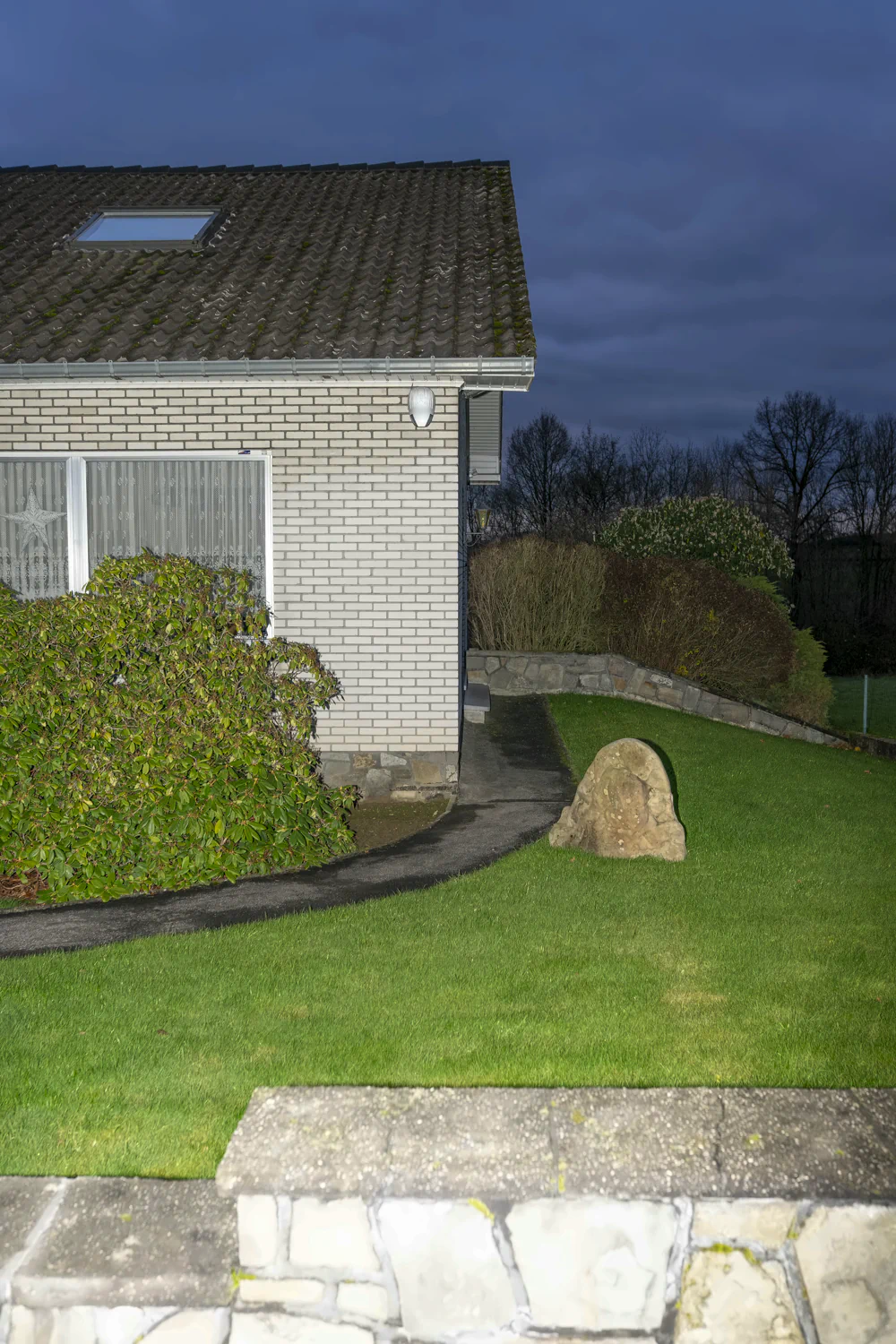
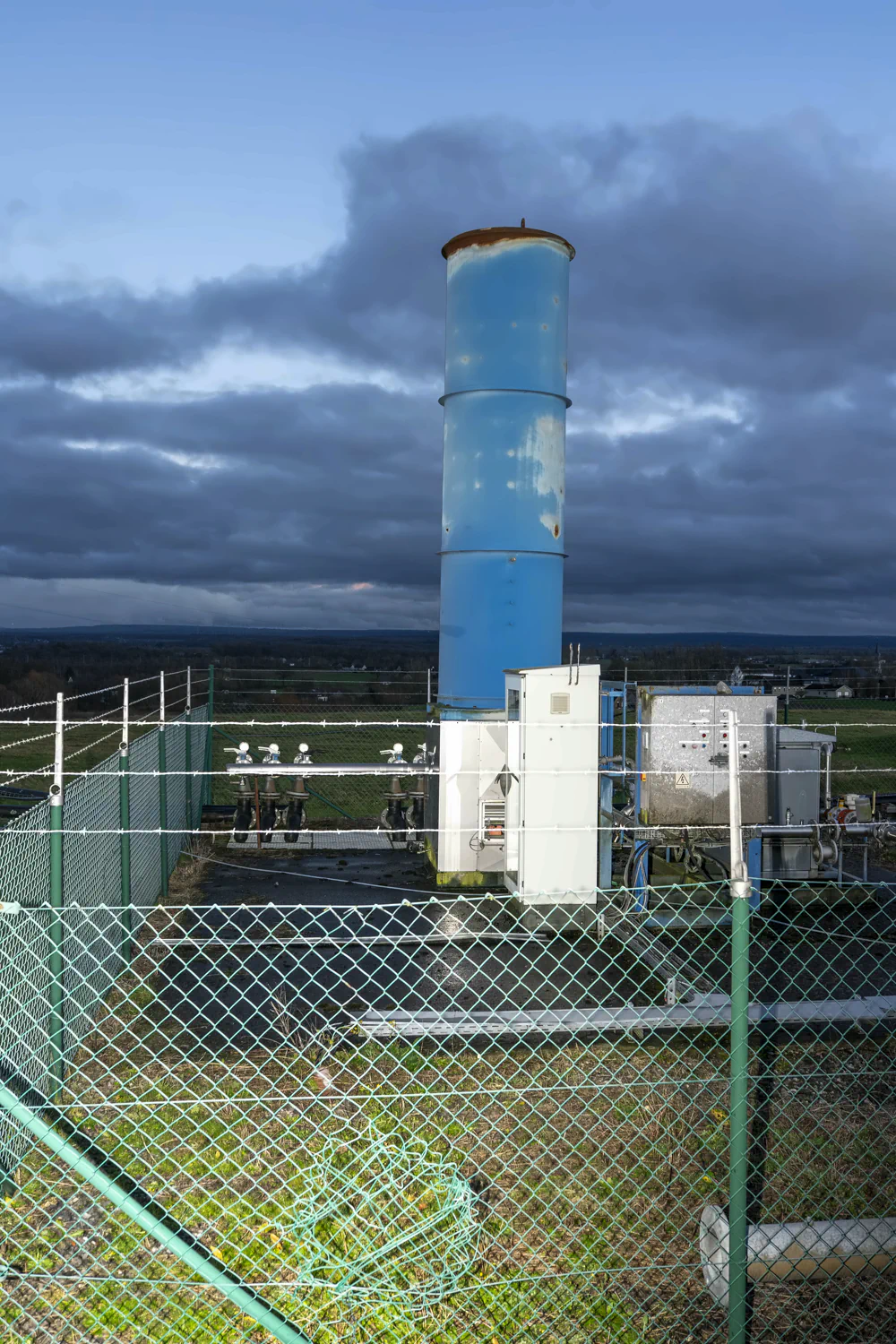
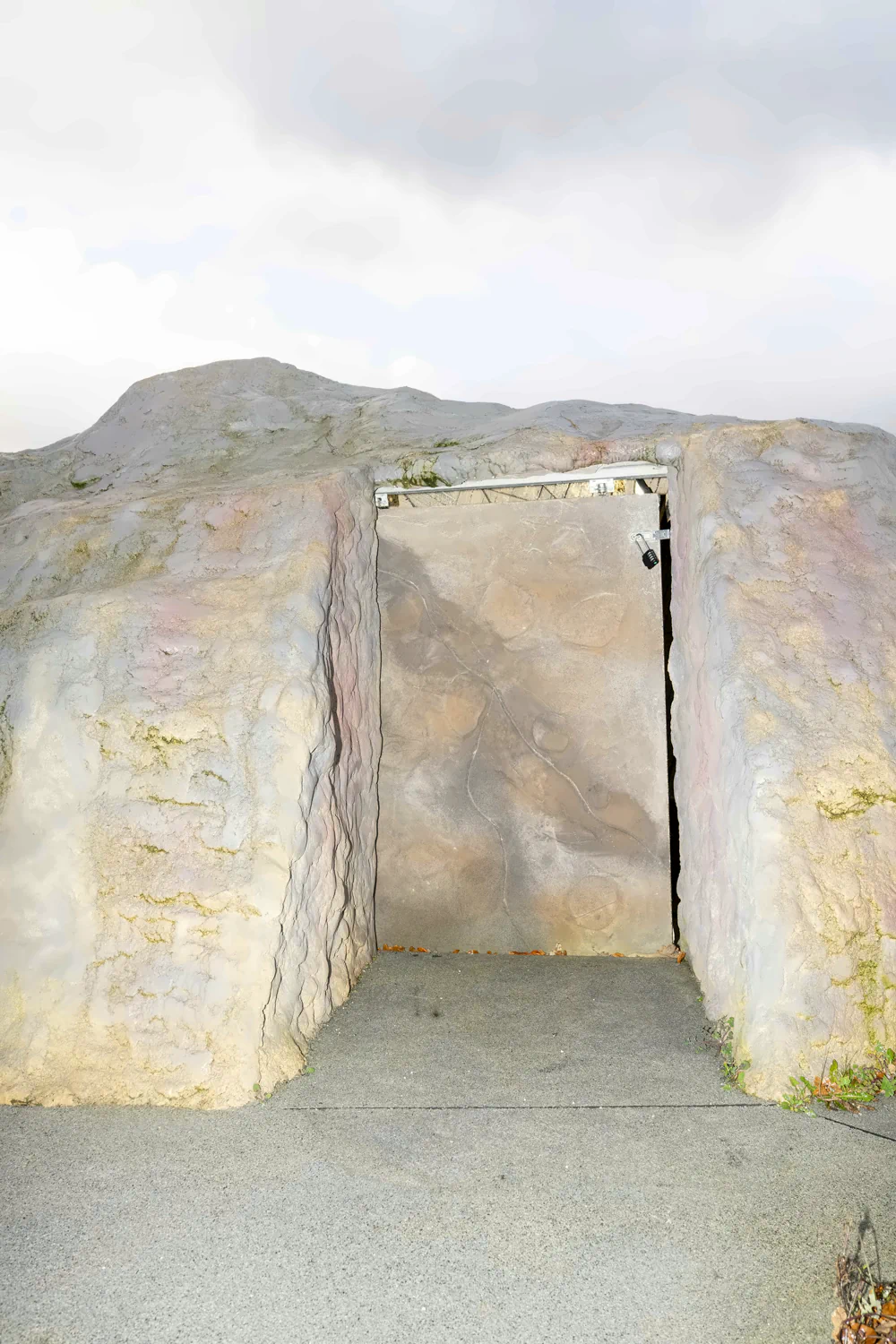
“Houses grow like mushrooms.” I very often heard this phrase spoken by the elderly people of my region. Entire new neighborhoods, magnificent villas, social housing, apartment blocks… appear from one year to the next, stamped with modernity and coldness. They bring, however, no life or movement to the villages, apart from parked cars and a good number of drivers in a hurry on the roads. By the end of the day, the sidewalks are always empty, not a living soul on the horizon, the shutters closed, and people barricaded in their homes.
My research around territory led me to photograph these houses of strangers. Mysteriously lifeless until then, I try, in my work, to bring them to life. I add the missing “light” so they seem occupied, colorful, unreal. These repeated outings make me rediscover the physical landscapes and borders of my village, but also the sentimental landscapes and borders, memories of my youth.
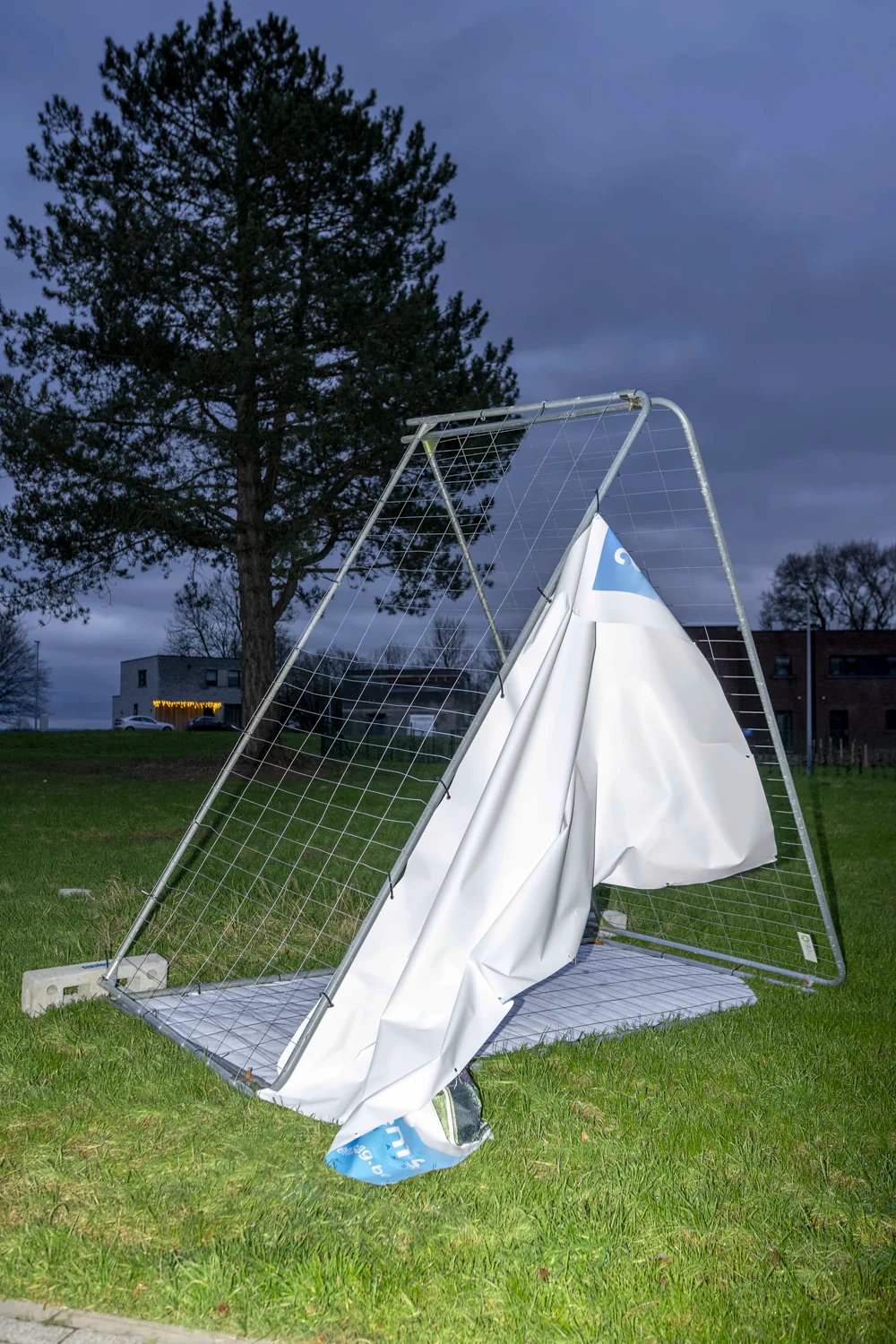
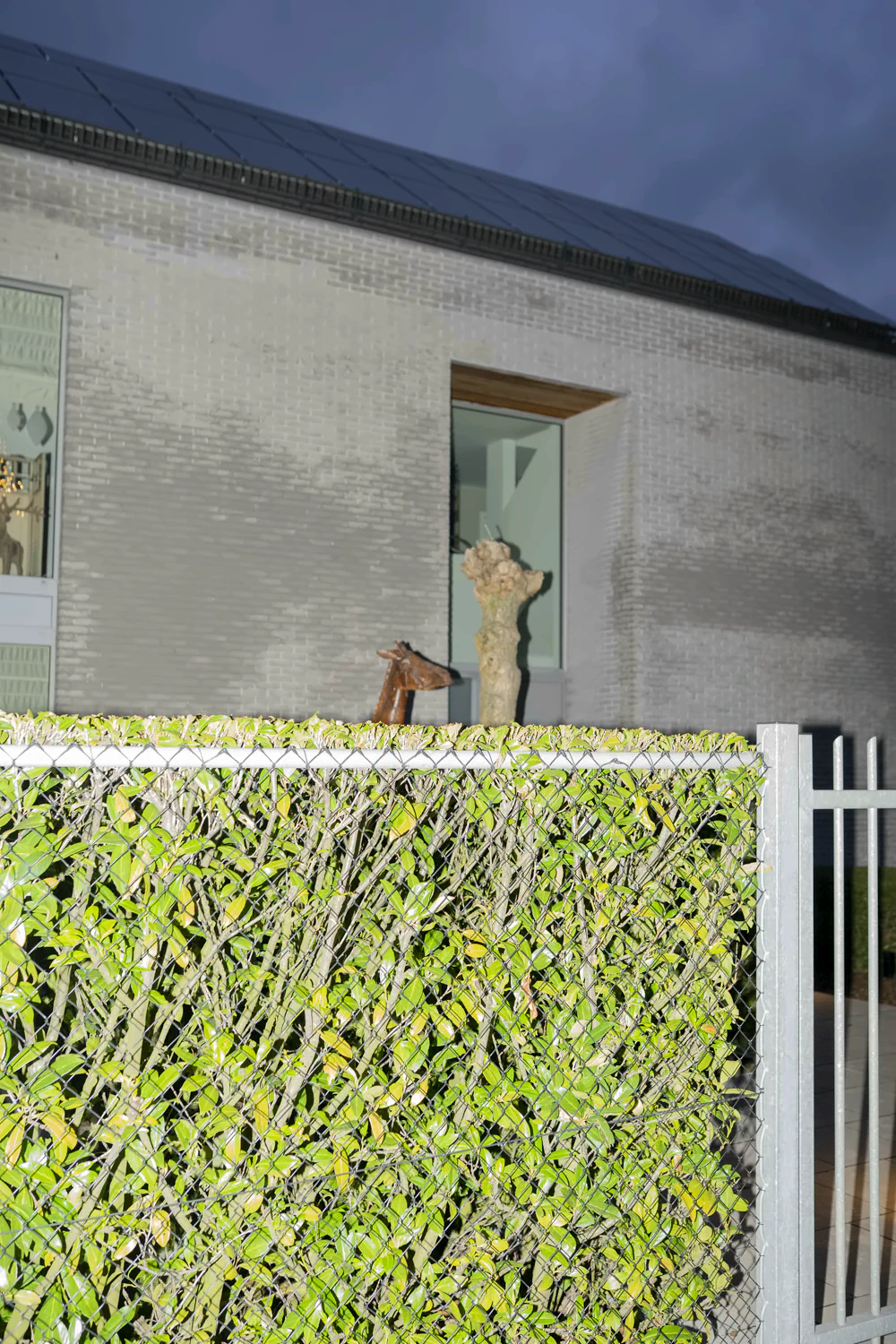
At first, my photographic outings could have been compared to wandering (as seen by Depardon). My intentions were purely introspective and based on an instinctive, meditative approach. Although I had already set the borders of my town as a space for work and play, I would cross this territory with no other aim than the contemplation of what I did not yet know.
Later, my wanderings would gradually transform, giving way to a new form of movement through space. Political, subversive, diverted, my journeys turned into drifts (dérives). Carried by the Situationists and their founder, Guy Debord, this form of displacement is meant to oppose the way modern urbanism shapes our behavior and influences how we think. The drift pushes individuals to deliberately lose themselves in order to rediscover a territory through unplanned interactions and subjective sensibilities. It’s a way of recreating a playful and critical relationship with the urban environment. One of its aspects is the search for points that pull us out of the everyday. The approach is theorized and the intention deeply social.
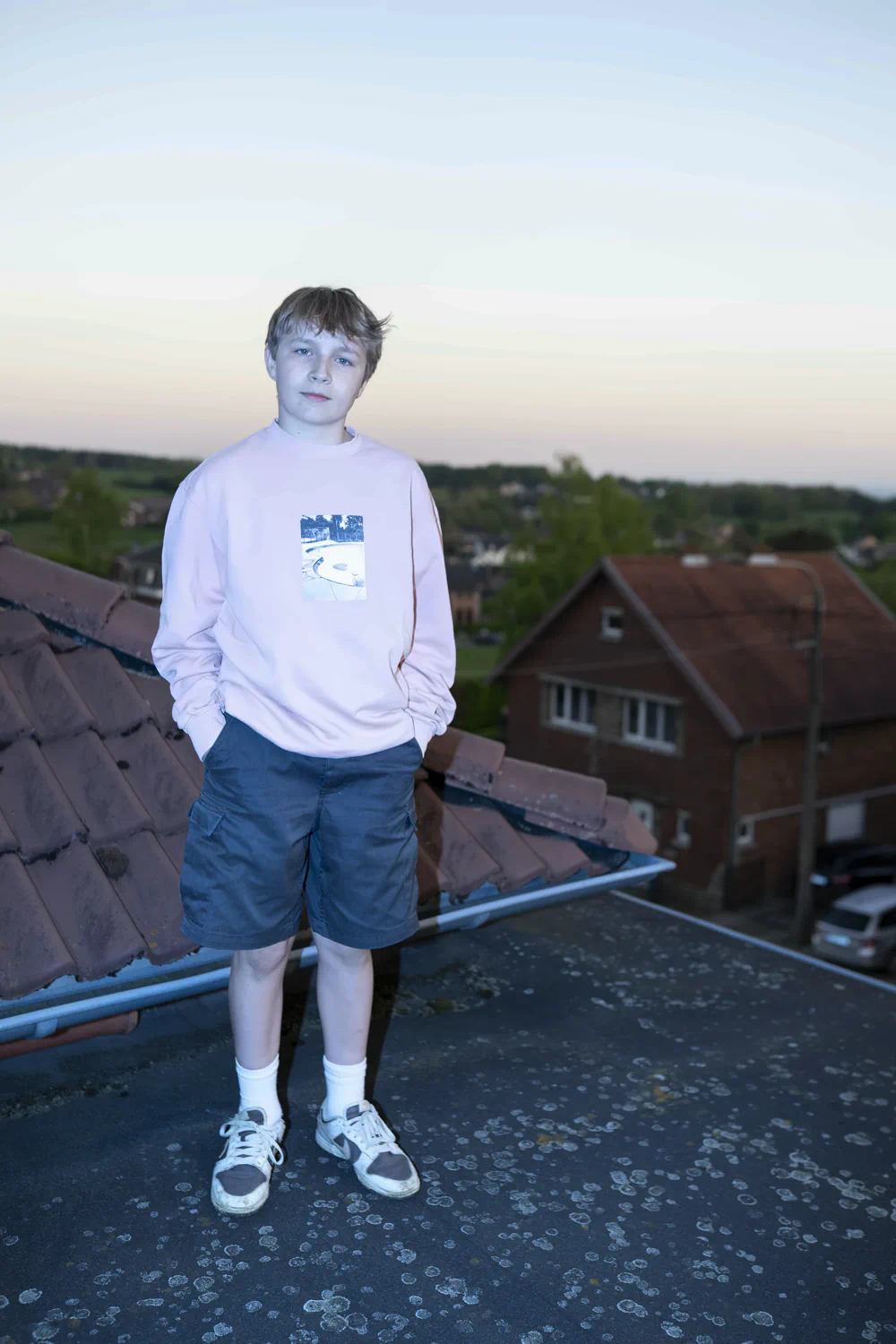
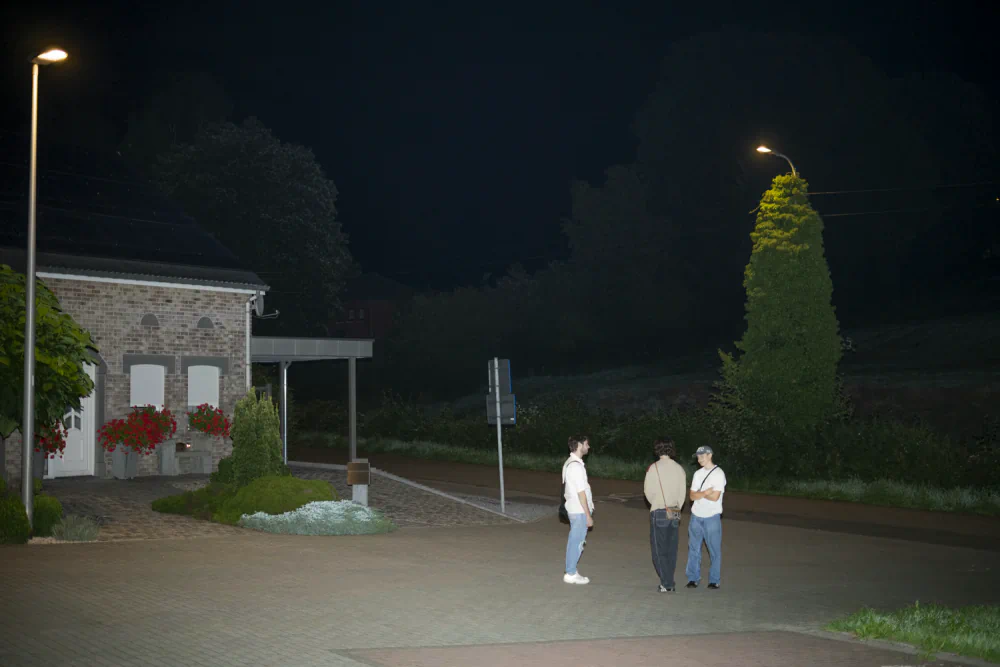
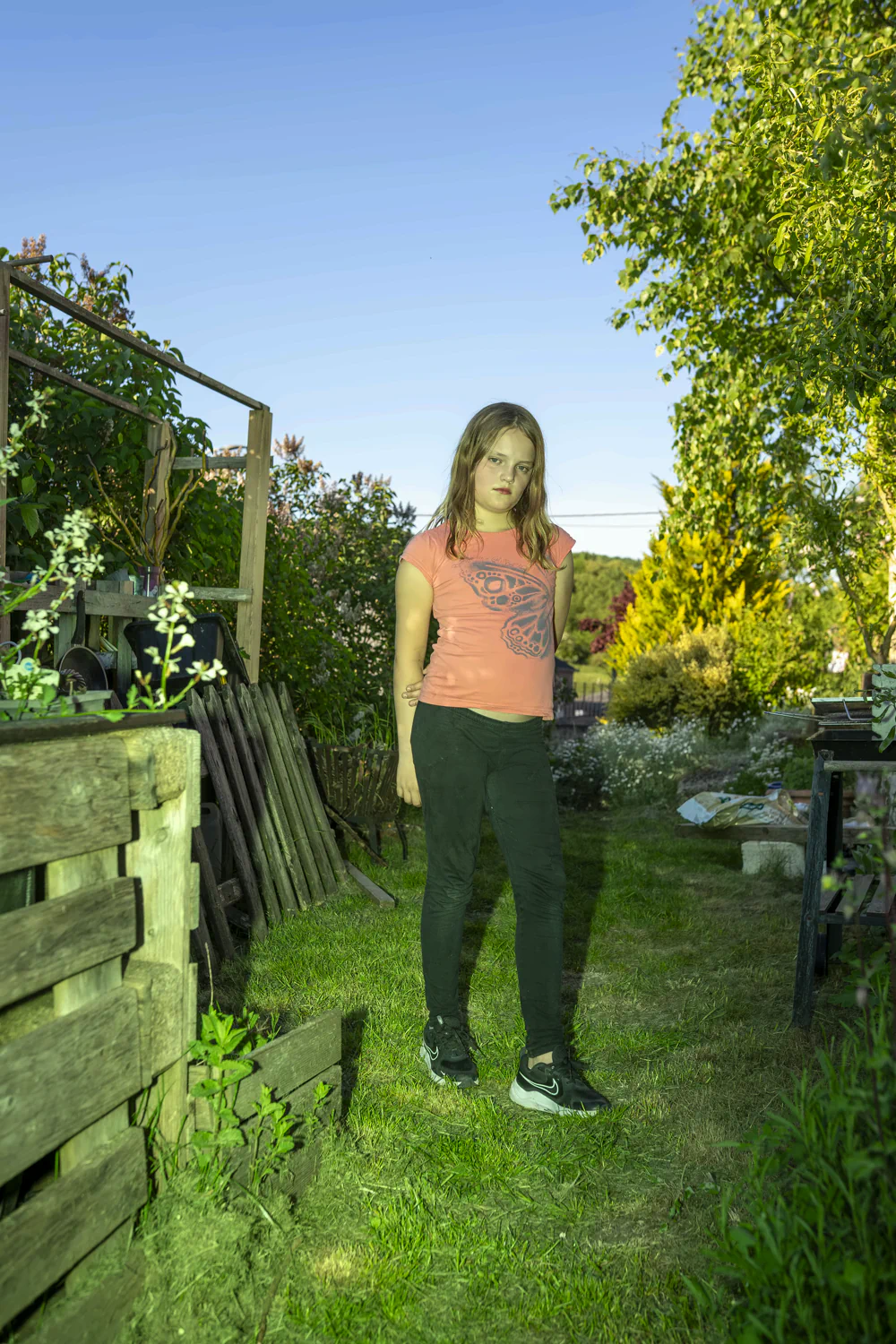
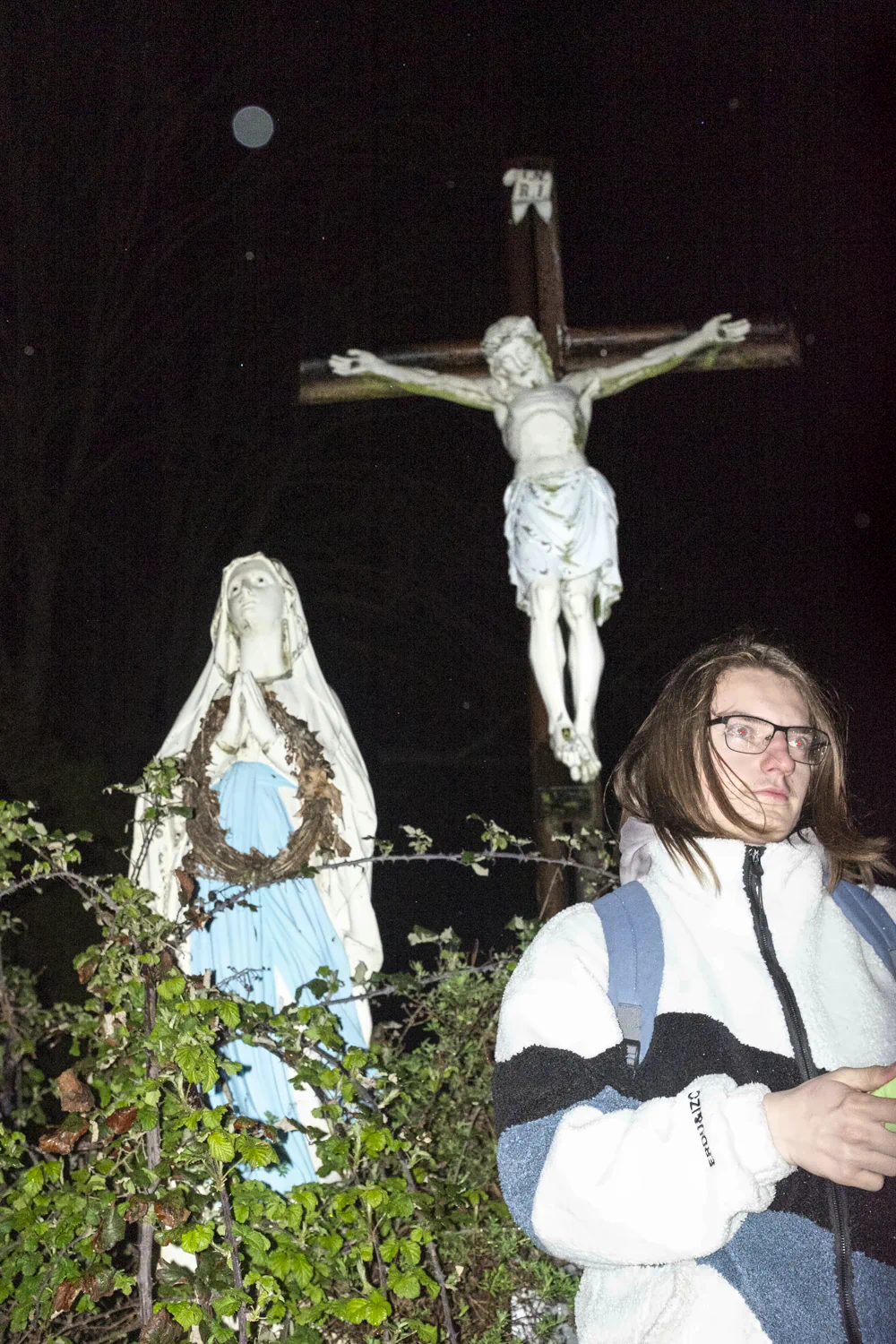
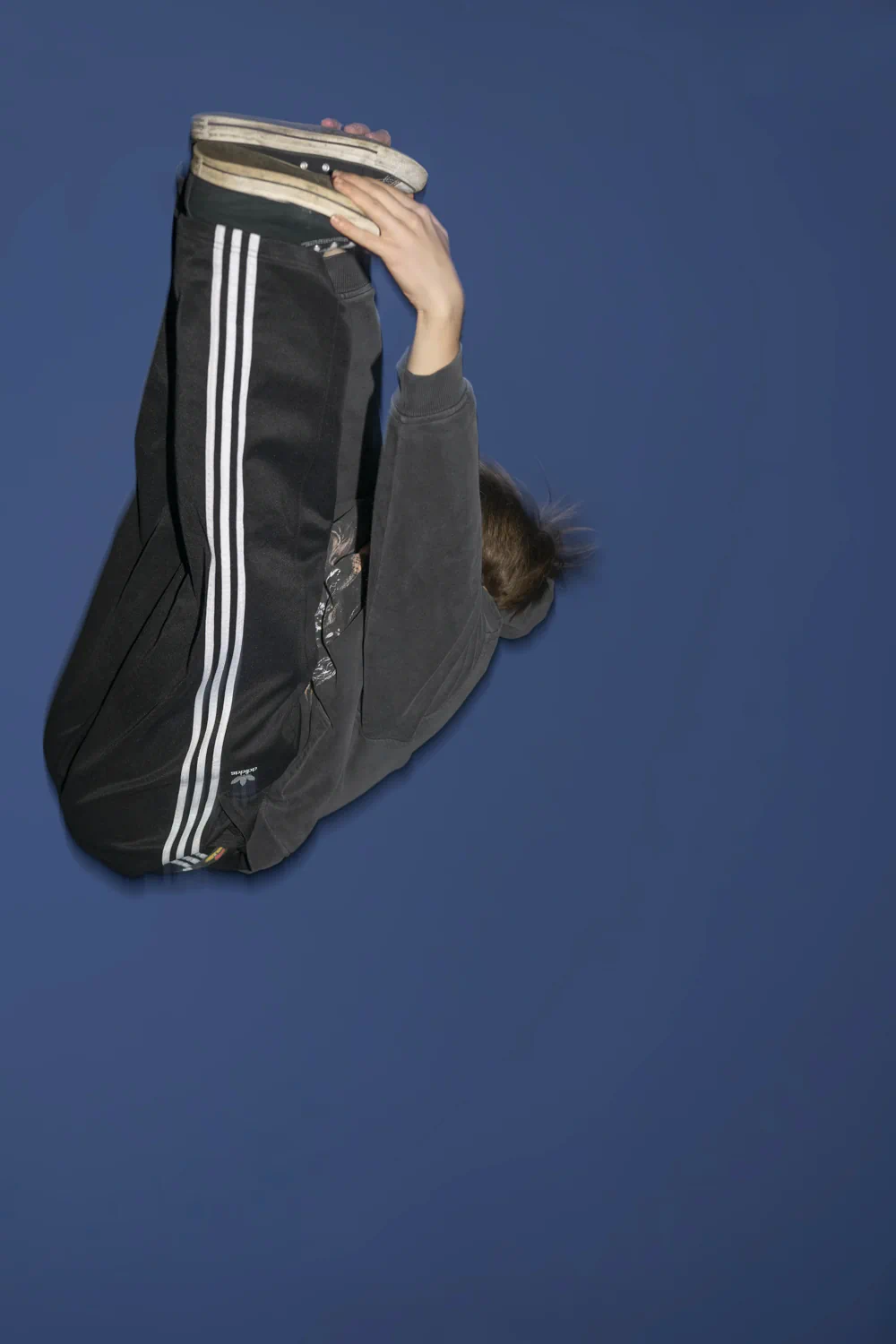
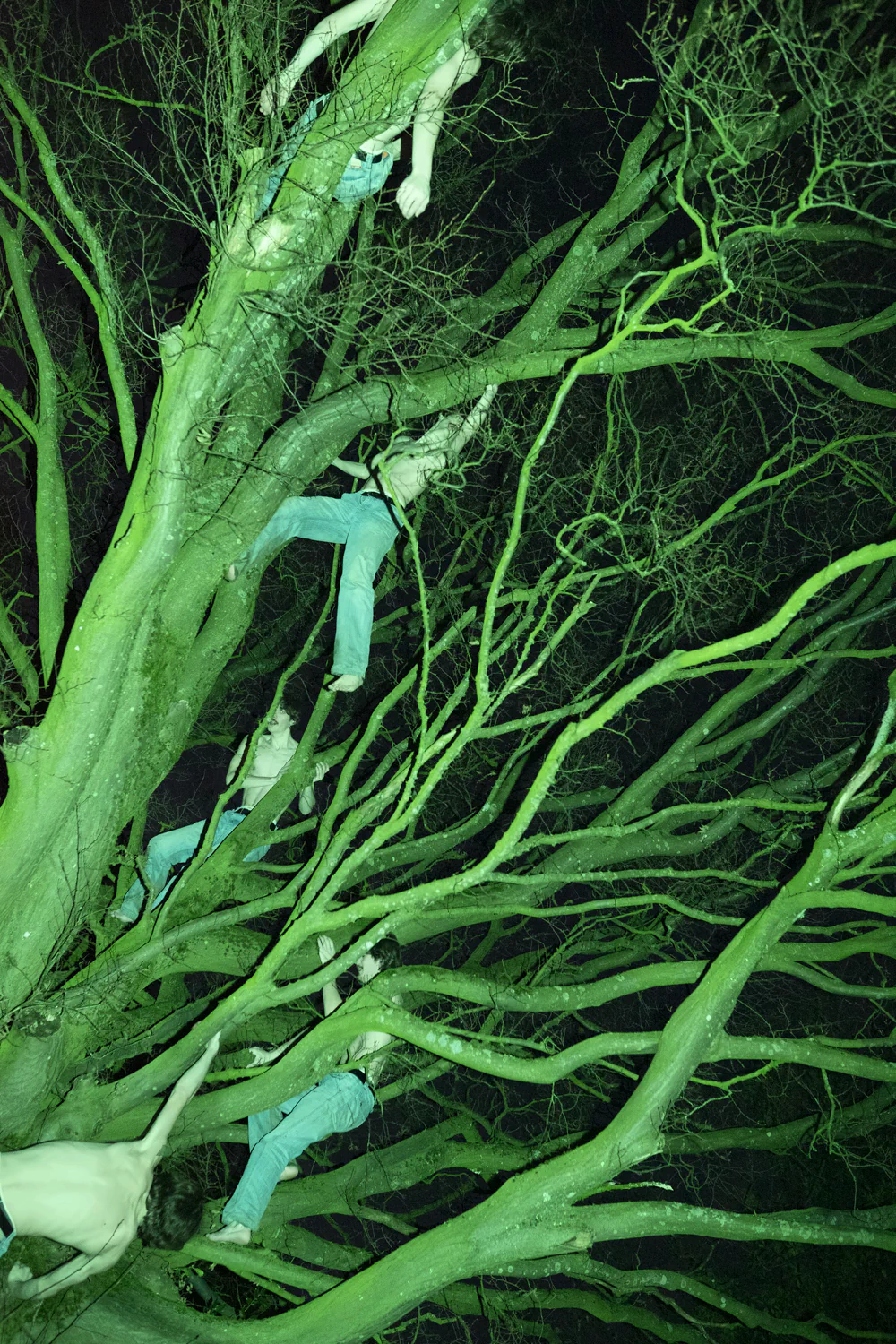
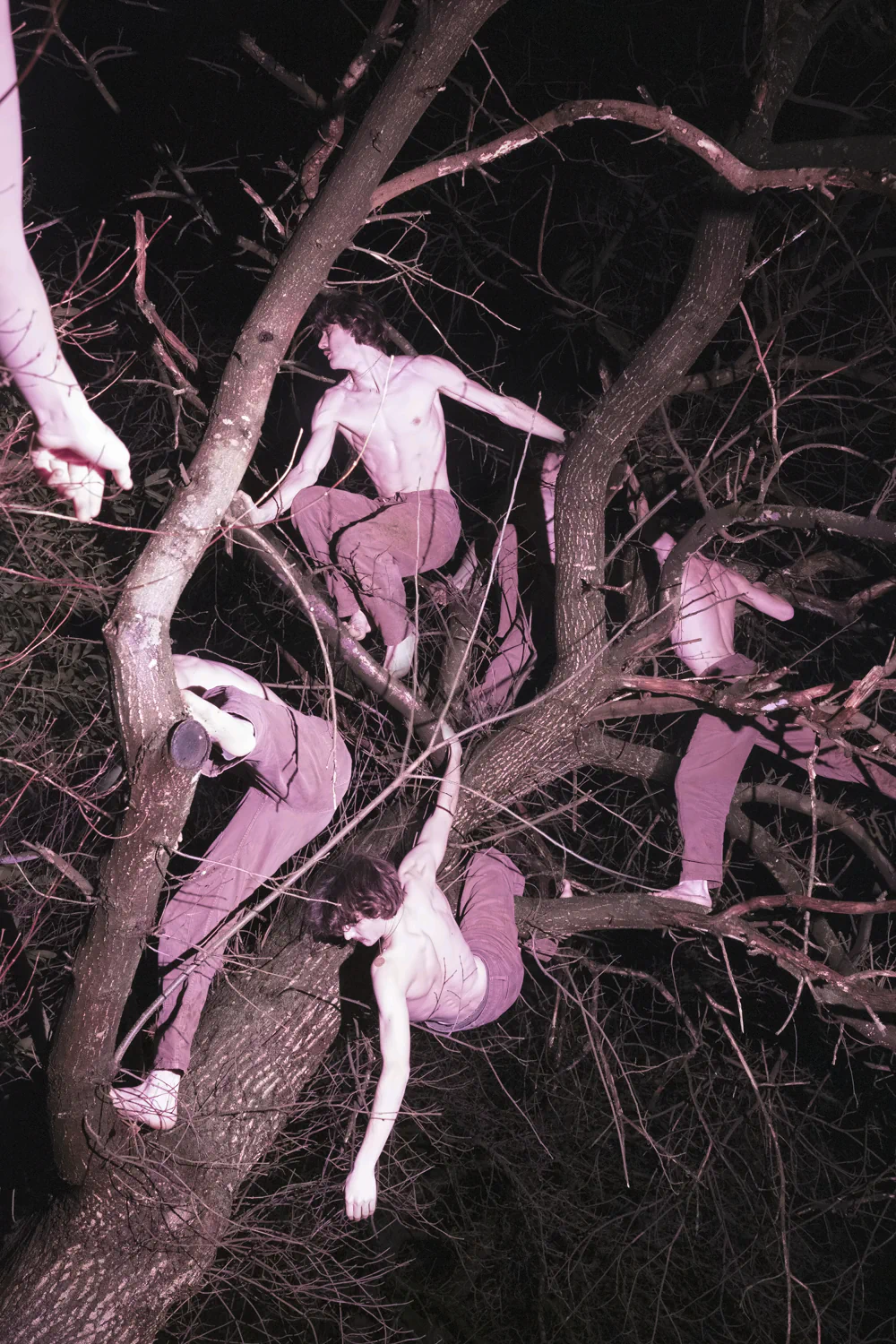
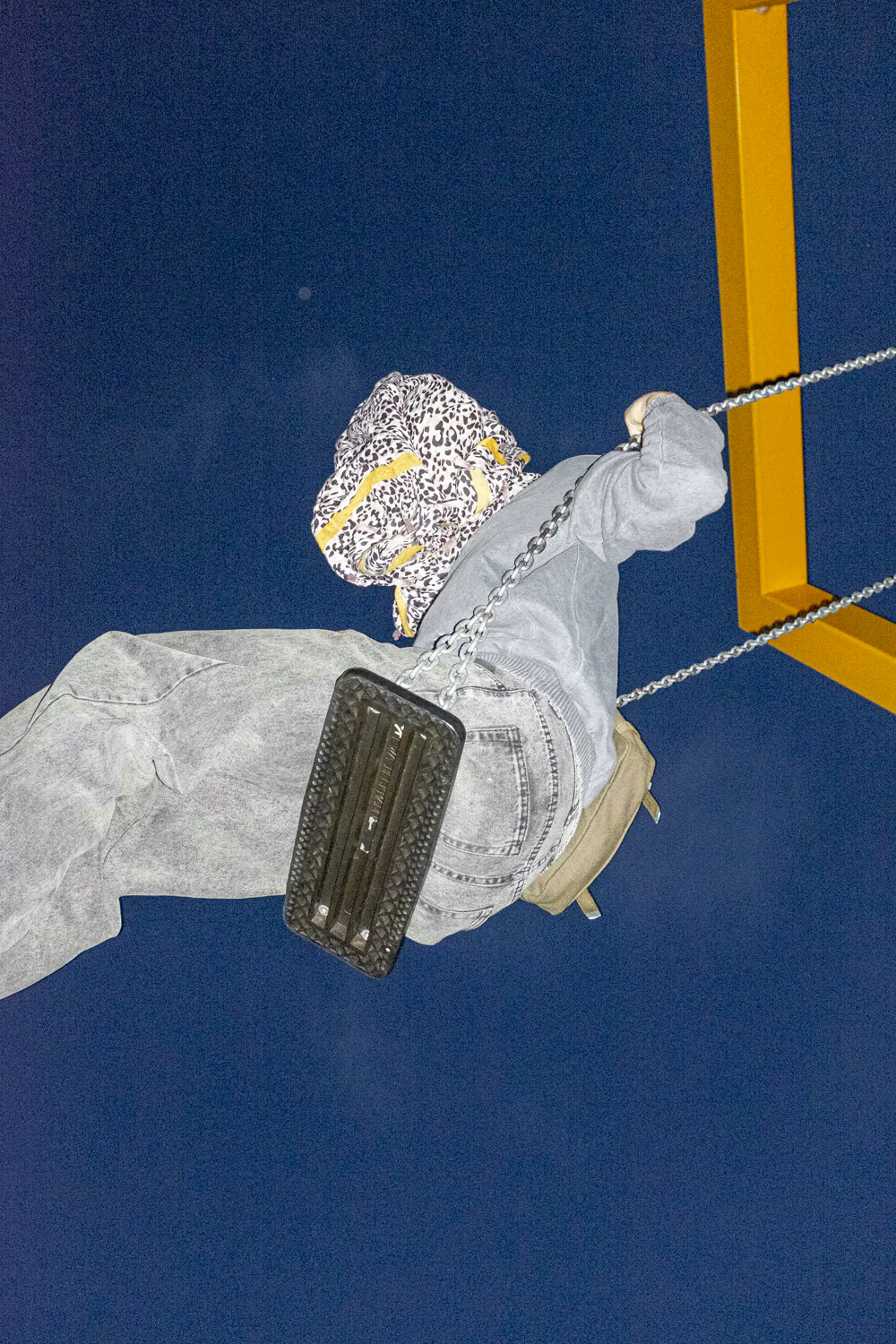
In November 2024, I deepened the second part of this work by joining my cousin and his friends to photograph their pastimes, their distractions, their diversions. There are few of them, but they too fill the emptiness. Aged 16 to 18, they are currently experiencing the same adventures I lived through at that age, so I wander with them, I follow them, I photograph them in the thick of their actions. Together, we drift about, we scheme and plan banal but particularly “occupying” activities. Indeed, boredom can be shared, and that makes it more bearable. To counter the ever-present feeling of boredom, the only harmless weapon left is absurdity. Putting oneself into ridiculous, comical situations frees the mind, gives bursts of adrenaline, and adds color to the everyday.
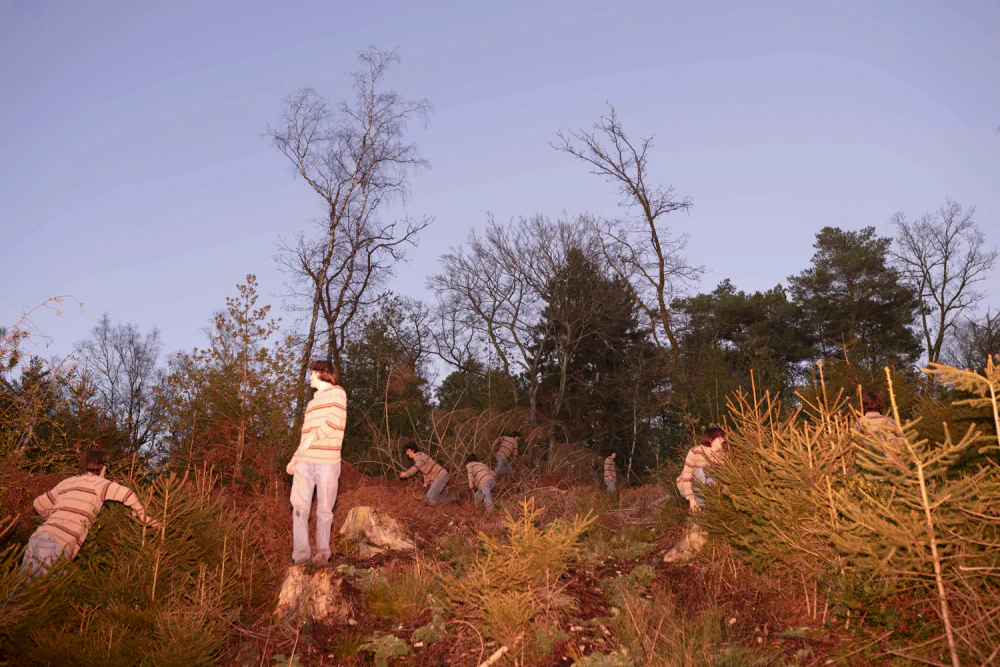
Lastly, I explored collage as a form of self-portraiture. Often, these photographs took place at moments when subjects came to be lacking, to the point where I became the subject myself. I think they are also more intimate, even though they represent the culmination of the transformation and the use of aesthetics. Their conception comes from the deep unease I can feel during these moments of solitude.
Color as Makeup
Makeup (“Fard”): a cosmetic composition intended to mask certain flaws in the skin, to enhance the glow of the complexion, or to alter its color.
Many artists and philosophers have described color in art as trickery or a diversion. Roland Barthes would write in Camera Lucida: “A coating applied later on top of the original truth of black and white. Color is for me a disguise, a makeup (the kind used to paint corpses).”
And yet, color has always played a key role in photography. Today especially, we are surrounded by digital colors, by vivid pixels that feed us dreams. These highly manipulated, artificial, surreal images are no longer representative of reality, but of a dreamlike imaginary created to deceive us. An imaginary one can suffer from, or one can embrace as a new artistic practice.
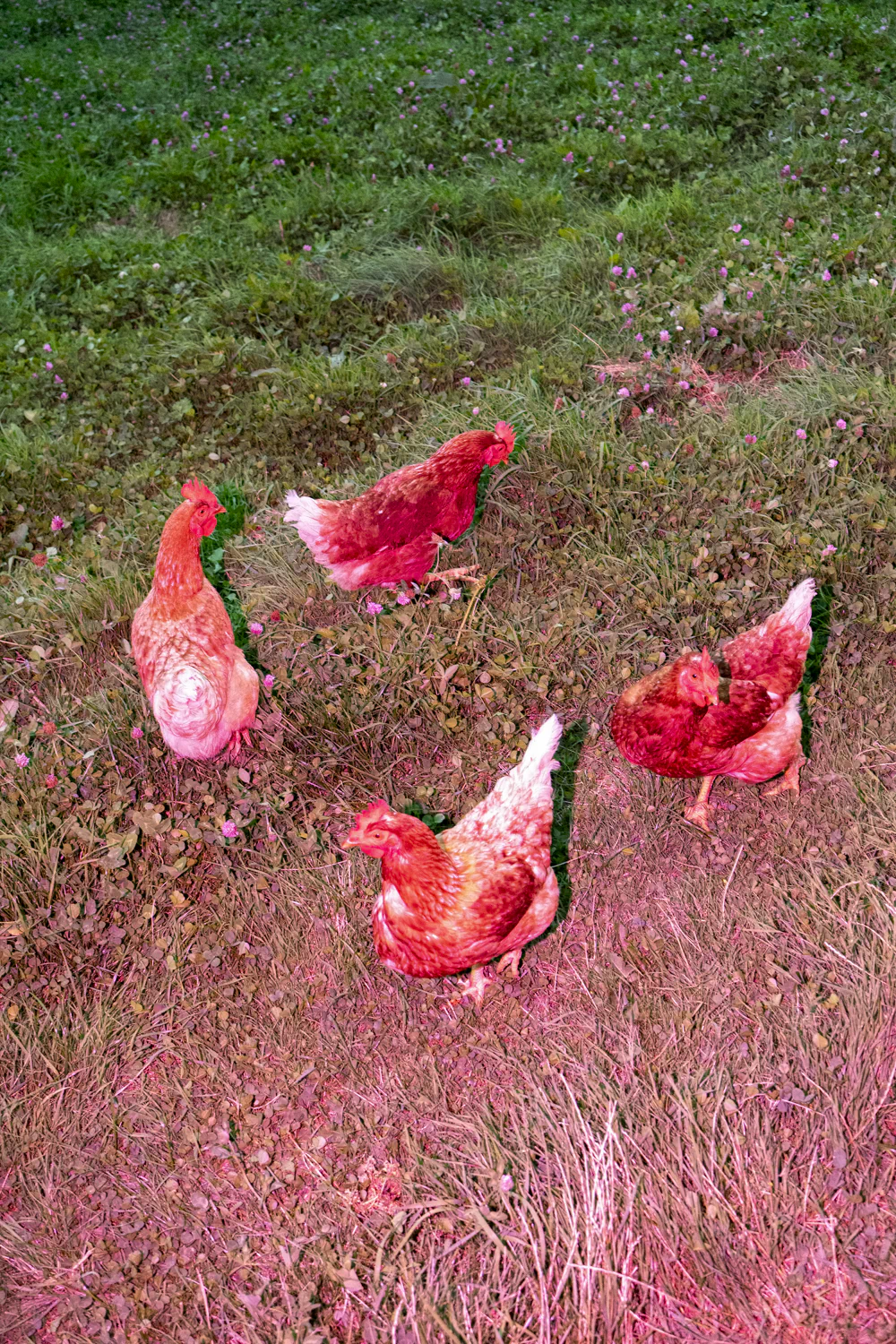
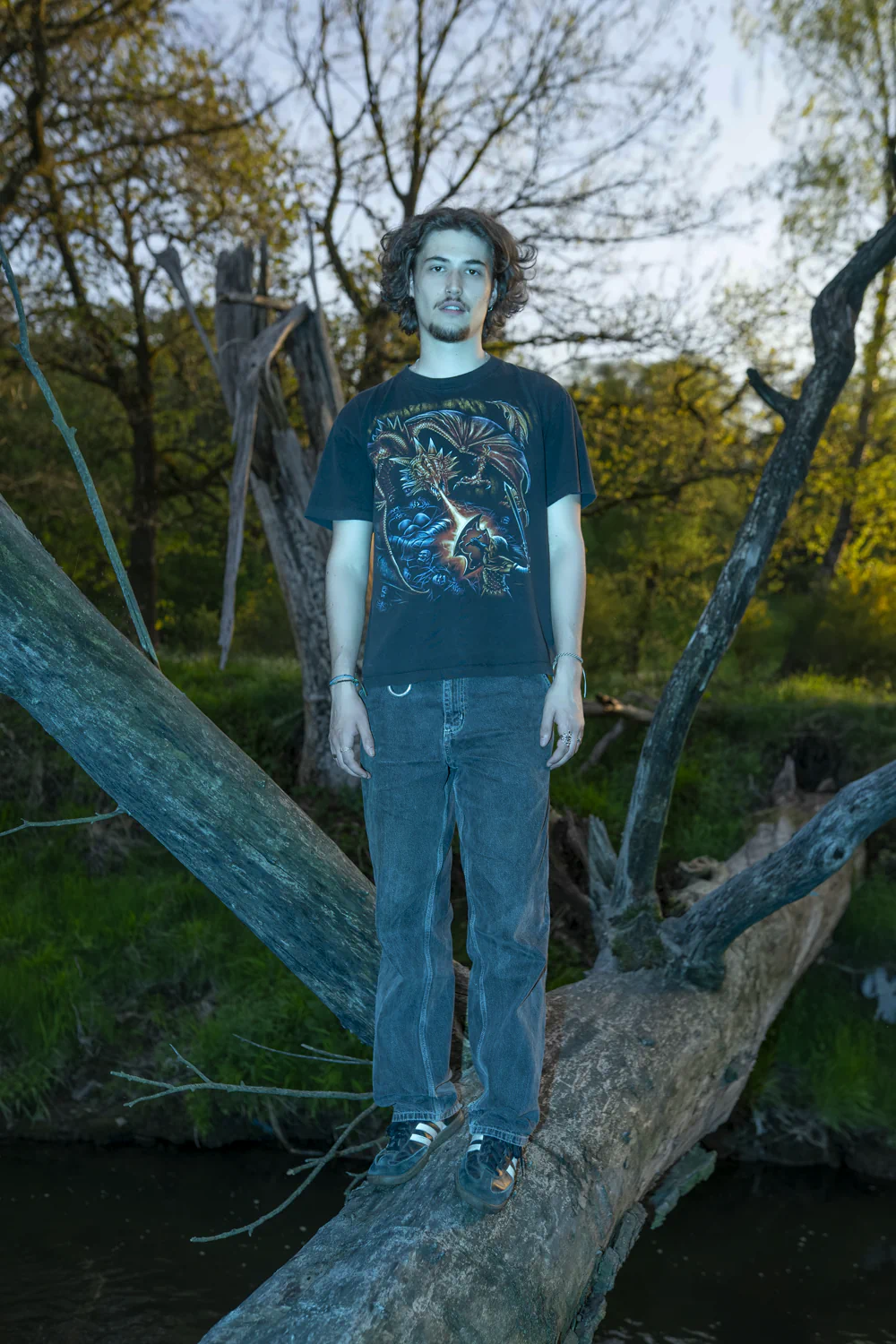
In my practice, my flash served to reveal the colors of existing, monotonous scenes. It increases contrast and clarity. Moreover, this change also brings about the impression of an increase in the saturation of the photographed scenes. In this context, it doesn’t serve to transform, but rather to enhance what is monotonous. It alters existing colors by adding relief, luminosity, and so on.
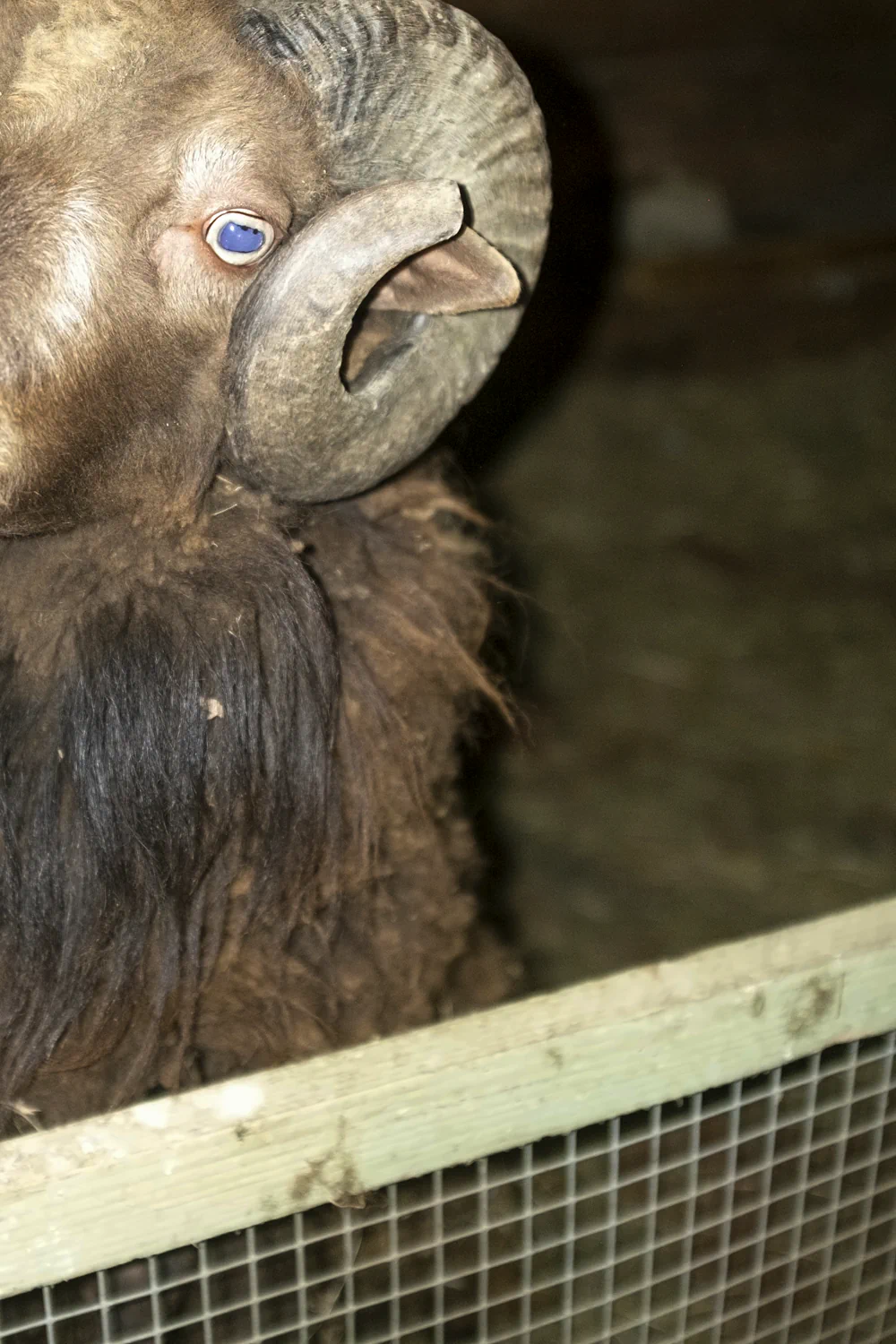
At night, my flash transforms. I use it differently. First, it goes from being a complement to being the sole light source. Then, I add a gel and offset it in order to transform, to create rather than reveal, making it evolve in the same direction as my creative process, taking into account the degree of madness, of boredom.
Color in urbanism was also an important choice for the Situationists. It, too, pulls you out of the everyday, because its presence is rare in our architecture and in the layout of the territory. Emmanuel Roux writes, in his analysis of The Society of the Spectacle by Guy Debord: “Life has become spectacular, and the spectacular has become life.”
Edition
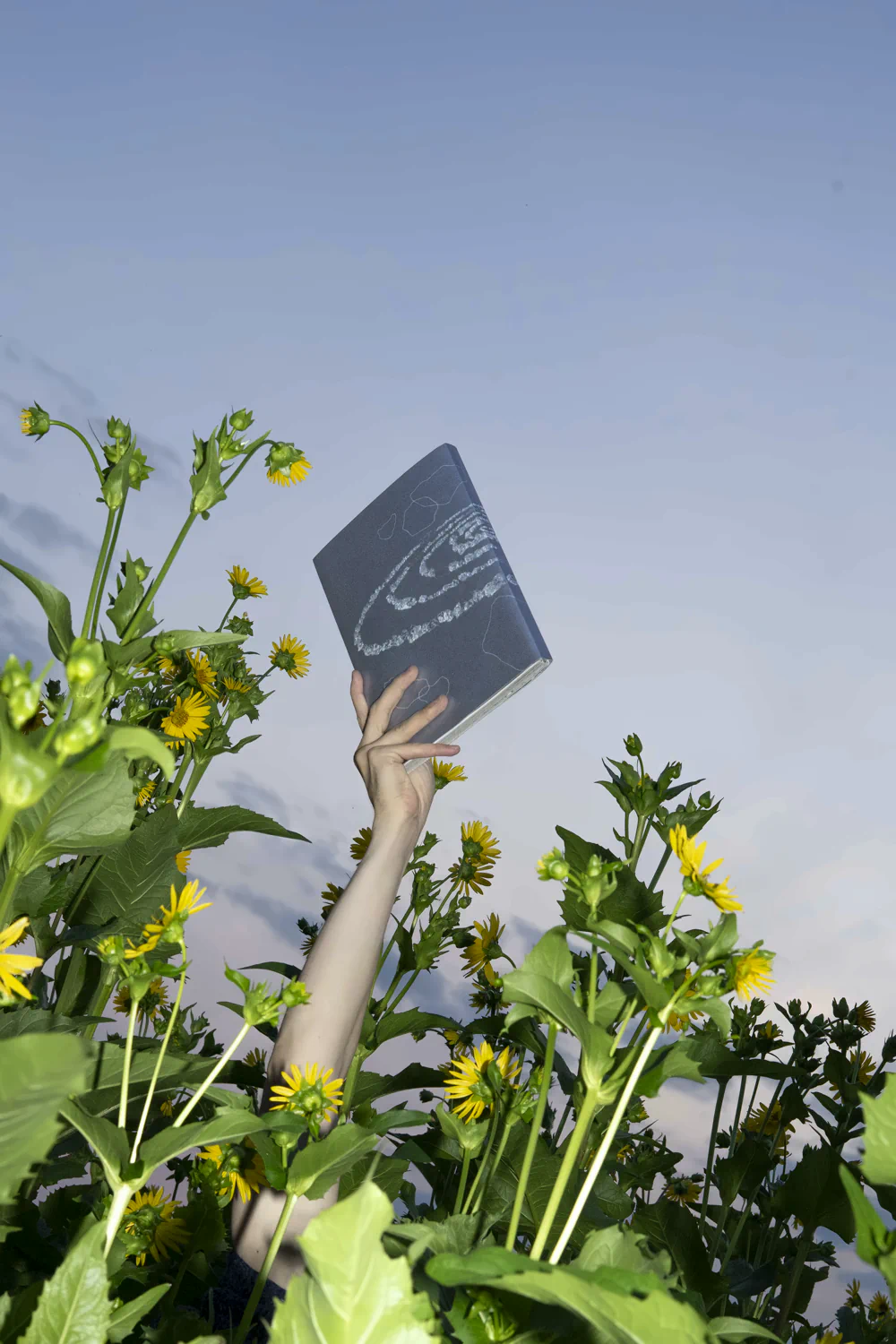
Self-published, I conceived my book as a continuous narrative following the progression of my process, sinking gradually into the night, changing the use of flash as the project unfolds. Like building a cabin, tagging the walls of one’s village, or building a land art structure, making a book is, above all, leaving a trace. A physical object that endures through time, holding its contents in its memory. A concept that seems obvious to me for my project, but that is above all obvious for myself.
This work truly represents my need to keep traces, my fears regarding the loss of a part of my life and of the bonds attached to it. Making it into a book, for me, means allowing myself to move forward while keeping all these memories close to me.
Books were the first artistic form that a photo project could take that interested me. I dove into it headfirst, dreaming of my perfect library, of references I don’t want to forget. Inspired by artists such as Laurent Henrion, Letizia Le Fur, and Guy Bolongaro, but also by students or former students such as Lyoz Bandie, books are, for me, an act of transmission more than an exhibition.
They bind authors and readers together for as long as the object exists, allowing for a constant plunge into the past. They also take part in a different form of diffusion than an exhibition, which is often ephemeral. By publishing this project, I hope to share my drifts with a future generation, with the participants of the project, and to open for them a door toward an accessible and traveling form of art. [Official Website]