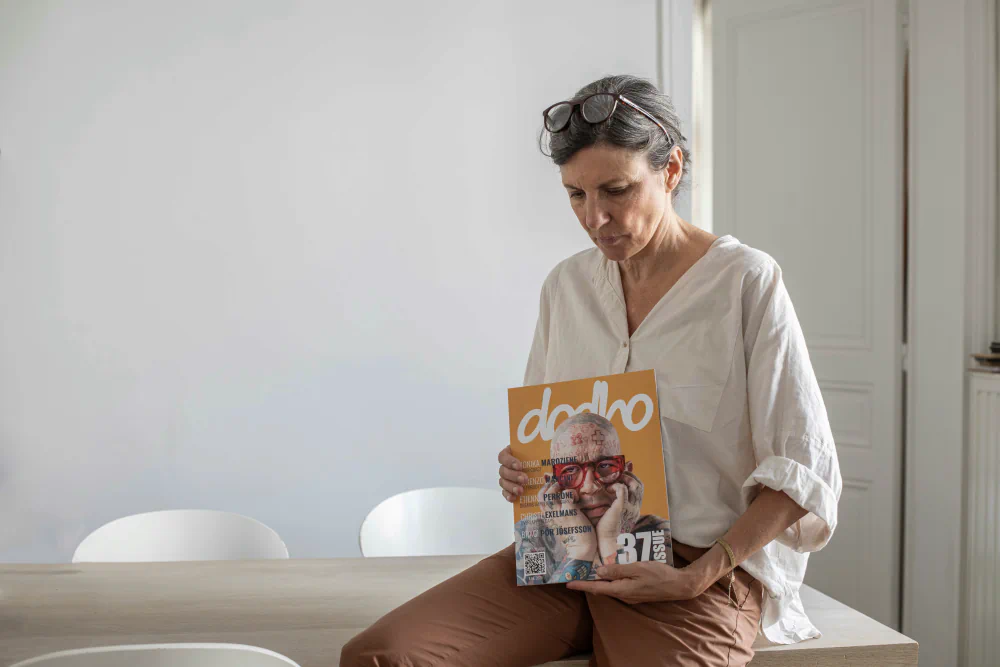
Working between Brussels and Paris, Christl Exelmans has developed a photographic language rooted in intimacy, vulnerability, and the quiet poetry of everyday life.
Her images unfold with remarkable delicacy, embracing natural light, muted tones, and subtle narratives that invite viewers to slow down and observe what often goes unnoticed. Rather than seeking spectacle, her work explores the fragile beauty found in imperfection, memory, silence, and the fleeting nature of human experience.
In Overlapping Days, Exelmans brings together photographs made over several years to create a deeply autobiographical reflection on love, motherhood, transformation, loss, and remembrance. Set primarily within the intimate space of the family home, the series follows the gradual transition of her daughters from childhood to adulthood while simultaneously exploring the emotions of change, absence, and the inevitable passage of time. More than a family archive, Overlapping Days becomes a visual meditation on the moments we long to preserve before they quietly disappear.
Following the publication of Overlapping Days in Issue #37 of Dodho Magazine, we had the pleasure of speaking with Christl Exelmans about the origins of this long-term project, the autobiographical nature of her work, and the ways photography can preserve memory, tenderness, and the emotions that shape our lives. [Official Website][Issue #37]
Looking back, when did you realize that photography would become much more than a creative outlet, but an essential part of your life?
After graduating from art school, I worked for quite some time as a photo stylist. Photography had always been part of my professional life. Gradually, I felt the need to take things into my own hands. At the time, I mainly wanted to illustrate the stories I wrote myself, as well as capture personal subjects. So I went back to school to learn the technical side of photography.
Taking photographs myself was a real turning point, both professionally and personally. It gave me a great sense of freedom and changed the way I look at things. I really love taking photographs. I sometimes joke that my camera is my best companion.
Your photographs reveal a remarkable sensitivity toward everyday moments. What is it about ordinary life that continues to inspire your work?
As I mentioned, it is mainly about observing, combined with a certain openness and sensitivity. There is so much beauty in the small, seemingly ordinary details and rituals of everyday life. The simple play of light and shadow moving through the rooms, for example, can really move me. A posture, a pose, or a gesture can also suddenly touch or inspire me.
Natural light plays a central role in your visual language. What draws you to it, and how does it influence the emotional atmosphere of your photographs?
I am a strong believer in using natural light. It comes from the desire to simply capture what I see. What I find beautiful is authenticity. By working with available light, I remain observant and present in the moment. I am not interested in smooth, saturated images in which I can no longer recognise reality.
At most, I use a tripod and reflectors. Flash and artificial lighting create distance and a staged setting in which spontaneity disappears. Natural light has an inherent warmth, vulnerability, and timelessness.
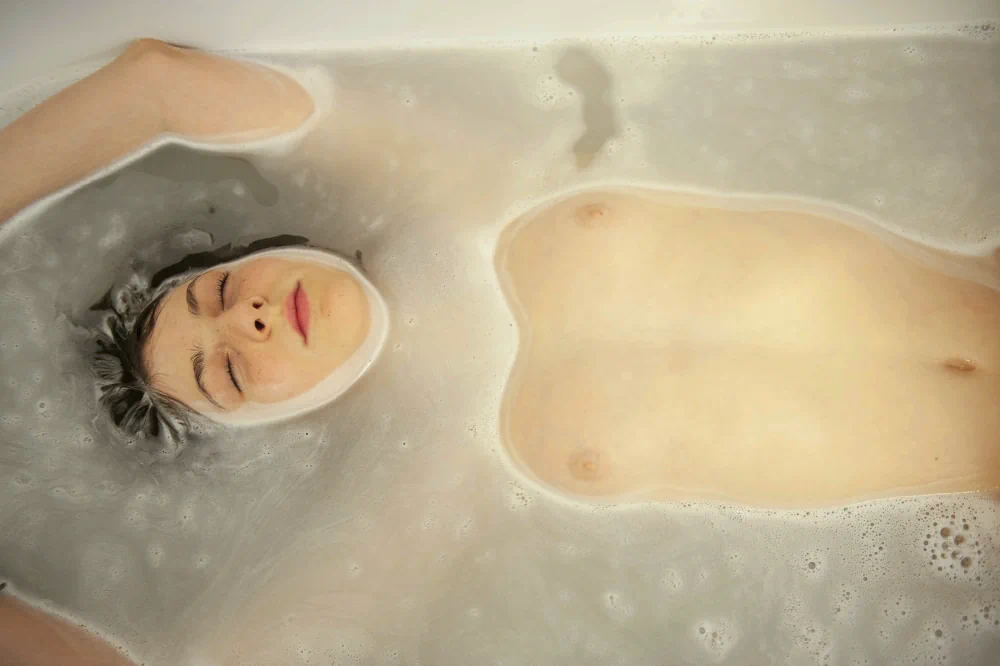
Vulnerability, impermanence, and the passage of time are recurring themes throughout your work. Why do you find yourself returning to these subjects again and again?
Because that is simply the reality of life. Years ago, I became very interested in Eastern philosophy. It sharpened my sensitivity and awareness. These themes are also at the heart of parenthood. Every day, you are confronted with how quickly everything changes. That awareness creates a desire to hold on to those moments.
By photographing the same people over many years, I make time visible. Light changes every second, the seasons change every month, and my children change every year. Everything is constantly moving.
Silence is also an important element in my images: the unspoken, the intangible. Debussy, whose music I love, said that his music is not in the notes, but in the silence between them.
How did Overlapping Days begin, and at what point did you realize it was becoming a long-term project rather than a series of individual photographs?
In the series Overlapping Days, my daughters are at the centre, or rather, the way I experience them. I have always photographed them. I wanted to leave something tangible behind for them and for myself.
The project certainly didn’t start with a preconceived idea. I photograph whatever instinctively draws me in. Over time, I started to see patterns and clues that led me to develop the theme further. The idea of a series gradually took shape.
There is, for example, an image of a little bag containing hearts made from soap scraps, which I used to receive regularly from one of the girls. Those childish declarations of love are priceless to me.
At one point, I came across the poem Farewell to Girls by the Dutch poet Rutger Kopland. In it, he beautifully describes the transition from childhood to adulthood through the eyes of a parent. It was a striking text that inspired me and encouraged me to keep working.
Photographing your own family requires both emotional closeness and artistic distance. How did you find a balance between living those moments and documenting them?
Finding the balance between emotional intensity and artistic distance wasn’t an intellectual decision. It was something that developed naturally over time. The emotional intensity is there by itself. Artistic distance is not about being cold or detached, but rather about being interested and attentive.
It is a challenge to let the scenes breathe. You will never see an image of someone smiling at the camera. As soon as you start directing too much, you break the genuine emotion and take over the moment.
The camera was simply always there, as part of everyday life. It is also a particular balance because I observe my children not only as a photographer, but also as a mother. It is precisely in everyday life that moments arise when a look, a movement, or a gesture reveals something essential about their character.
When a moment like that touches me, I want to evoke it again and photograph it. I may ask them to repeat a posture or movement, but only when I feel that they have the mental and emotional space for it and are willing to take part in my artistic exploration. Sensing the right moment is essential.
I don’t want to force anything. I want to find a way for their individuality and my artistic vision to meet. For me, that is also where the distance I need as an artist comes in. I am both part of the story and someone who looks at it from a certain distance.
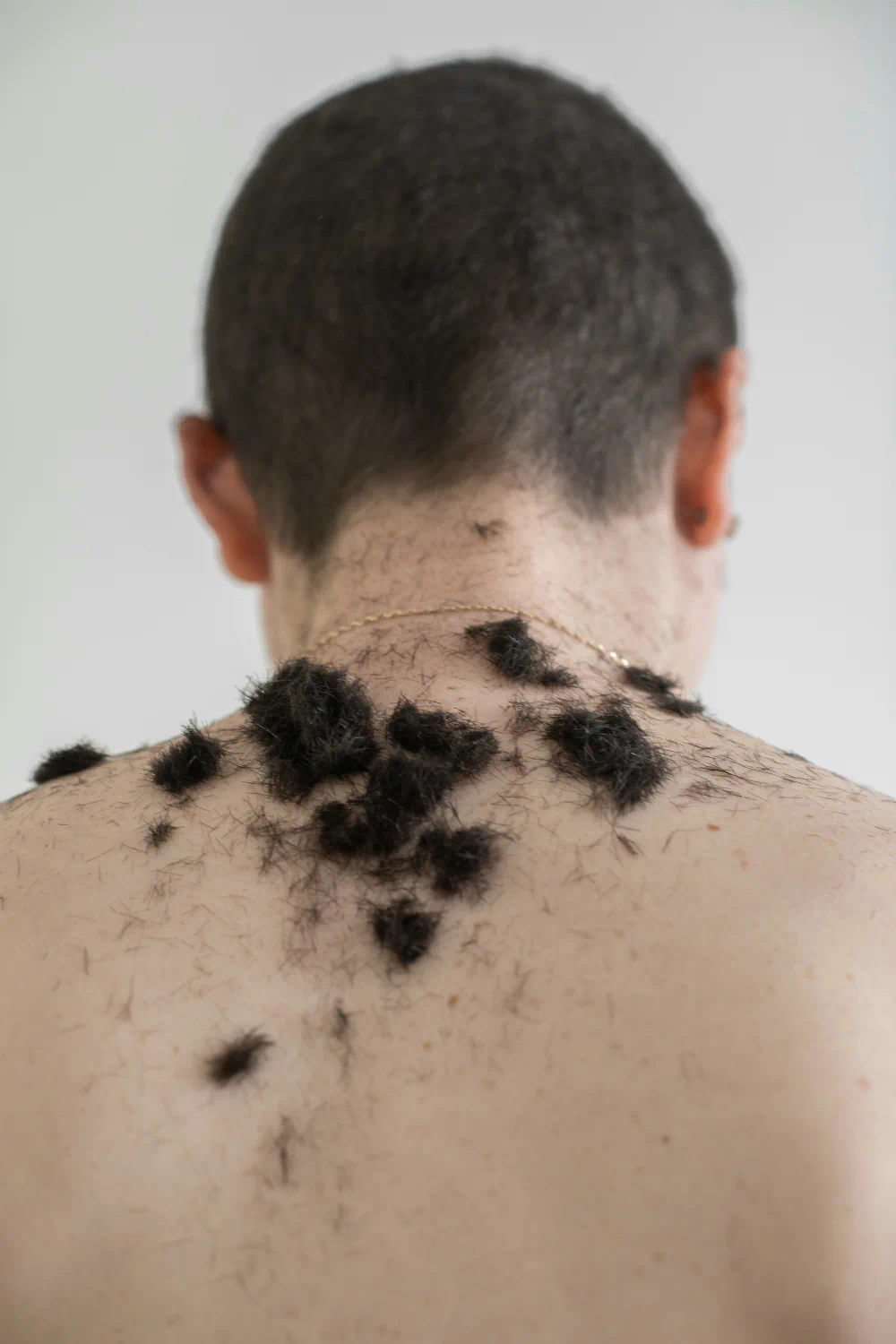
Much of the project unfolds within the intimate space of your family home. What does that environment represent to you as a photographer?
Life is a journey that can take many different directions. Memories of the past and thoughts about the future are an essential part of it. Somewhere along the way, everyone finds that one place that feels like home. Not in the sense of physical walls, but as a feeling of safety and protection that you don’t find anywhere else. A place where physical and emotional barriers fall away. That allows me to capture pure moments.
It is also the place where different lives intertwine. In this project, the family home is an active part of the story. It holds all those years of growing up and is a silent witness to the transformation into young adults.
The relationship between the physical space and the growing body makes the passing of time visible. The house is the tangible memory of our family. It transforms the photographs of my children from portraits into a universal story about the warmth of the nest, growing up, and, ultimately, letting go.
As your daughters grew from childhood into adulthood, did your way of photographing them change as well?
They have always been used to me pointing a camera at them. Seeing your children grow from childhood into adolescence and then into young adulthood is physically visible, but emotionally, each stage also brings change. For me too, these were always new stages of life. It certainly helped me understand my own identity as a mother better.
I hope that being photographed has also shaped my daughters’ sense of self and awareness, and has given them a mirror of their own development.
Being photographed with care and attention gives a child the message: “Your presence matters, exactly as you are.” They know they don’t have to perform for the camera; simply being themselves is enough. The fact that they continued to open up to me over time is a sign of deep trust.
One of the most striking aspects of the series is that very little seems to happen, yet everything is constantly changing. Was capturing that quiet transformation one of your intentions from the beginning?
In this kind of artistic process, a theme often starts with an intuitive fascination, and the conscious intention gradually becomes clearer. I am drawn to small details: physical changes and quiet moments at home. The project grew out of real life. Simple details can convey emotion without the need for a big scene. I also work slowly.
It was only when I later looked back at the earlier material that I noticed a pattern: the subtle, almost imperceptible tension between outward calm and the constant undercurrent of change. Once you recognise it, it becomes a conscious artistic tool.
My particular focus on these small movements within constant change was probably something I discovered and developed through the process of making the work. The images connect personal experiences with the passing of time. Small moments, growing older — it is something gradual.
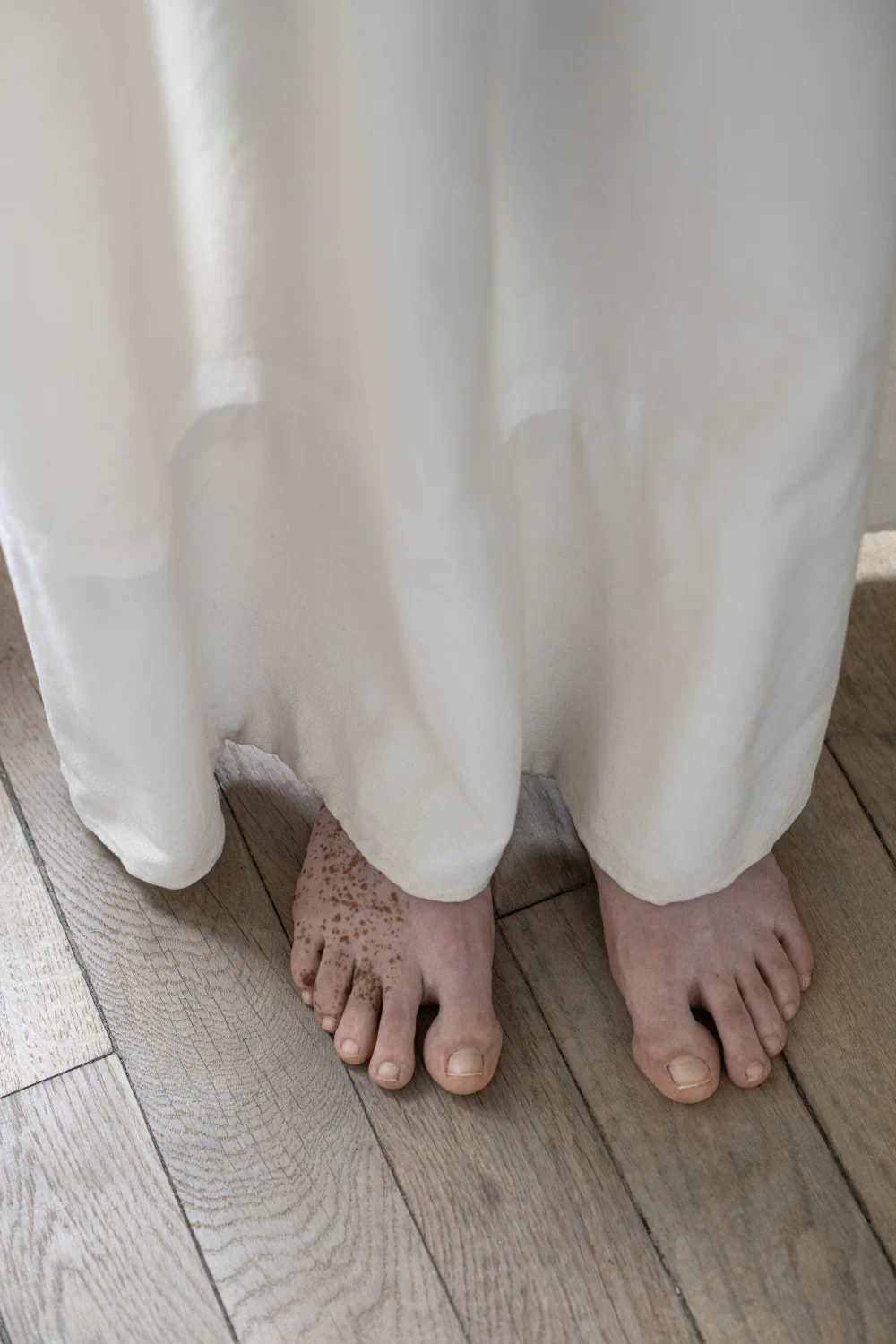
Your photographs feel deeply intimate without ever becoming intrusive. How do you preserve that sense of trust and tenderness when photographing those closest to you?
First and foremost, I want to respect my children. They are never simply the subjects of my photography, and they are not there to serve the purpose of the artist. I always photograph them with their consent. They have a voice and a part in the image.
The intimacy in the photographs comes from the closeness of our relationship. There is a natural familiarity between us, which means that the camera is not necessarily experienced as intrusive. That doesn’t mean, of course, that everything can simply be photographed. Sometimes the most meaningful form of intimacy is actually respecting a moment that you don’t photograph.
I don’t think tenderness in photography comes from moving closer, but from knowing how close you are allowed to come. It is a constant process of feeling out trust, boundaries, and closeness. Ultimately, the images are the result of a shared experience.
In your project text, you quote Nan Goldin’s reflection on photography and loss. Has her work, or that particular thought, influenced your own understanding of what photography can preserve?
Nan Goldin has a very different way of working and inhabits a very different world, but the underlying idea is universal. Her quote reminds me that photography is not a lifeline, but a way of witnessing something that is fleeting.
Goldin photographed the people close to her out of a need to preserve her friends and protect those memories from time. That comes very close to my own approach, although with a different nuance.
Where Goldin often captured the raw intimacy of life in an attempt to save it from being forgotten, my focus is more on small, quiet transformations. Photographs don’t actually hold on to time, but they can make the otherwise invisible ripples of time felt by others.
You describe the project as an attempt to keep memories alive in a way that words perhaps cannot. Do you see photography as a personal form of writing?
Photography and poetry share the same essence: they leave out what is unnecessary and trust in the power of what is left out — the white space and the rhythm. In my photography, the silence and the space around the subject are my blank lines.
It is not about describing or explaining the photograph — the images speak in their own poetic way — but about creating a two-dimensional conversation between image and language. Every image tells a different story.
The lens is my pen, the light my ink. A visual poem communicates directly through feeling, rhythm, shadow, and texture. Photography is not a replacement for writing; it is writing in another dimension.
After spending so many years working on Overlapping Days, what have you discovered about yourself that you didn’t expect when the project first began?
Working on a long-term project like Overlapping Days is like looking into a mirror that only becomes clear with time. When you spend many years focusing on impermanence, your own inner world also begins to shift, almost without you noticing.
The project started with the urge to capture and preserve what was passing, but I gradually discovered that it was actually teaching me to let go. Although I point the camera at someone else, I realised afterwards that the images I selected, the white spaces, and the tenderness are also a reflection of my own vulnerability.
Our lives constantly cross and are deeply connected. There is something fragile about photography: a tension between raw reality and moments of delicate magic.
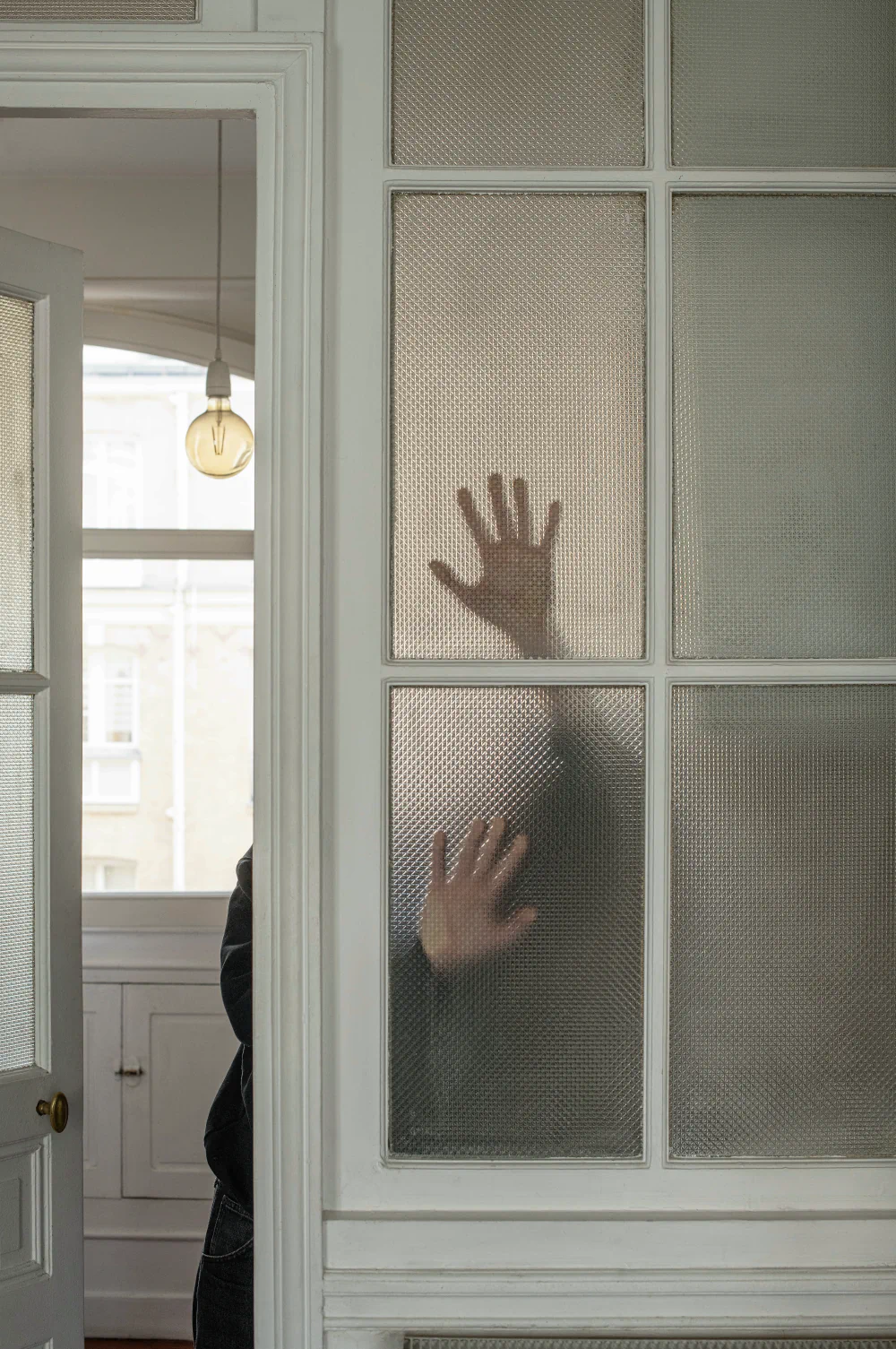
What do you hope viewers will take away from this body of work? Do you hope they see your personal story, or that they recognize something of their own?
When work comes from a specific, intimate place, it is precisely that honesty that can open the door to something universal. A viewer doesn’t need to know my specific memories to recognise the feeling. They may not see my own nest becoming empty, but they can feel the echo of their own loss, or the sense that time is slipping through their fingers.
In a hurried and noisy world, the quiet transformations and tenderness in this series offer a place to pause for a moment. I hope my work gives viewers a chance to allow their own melancholy and sense of wonder to emerge. My way of looking at the world becomes a mirror — a universal reflection on what it means to be human, to love, and to let go. The personal is the foundation; the universal is the resonance.
Moments of connection with others are often shared in private, away from the eyes of outsiders. In photography that gives us a glimpse into an intimate world, the boundary between inside and outside begins to blur. A kind of intimate exchange takes place between the viewer, the maker, and the subject, shaped by vulnerability and emotion.
I want to remind viewers that images can connect us with our inner selves and with other people. Photography can be an intimate medium that captures the subtle fabric of human relationships and gives form to that sense of connection and to our universal search for it.
Looking ahead, do you feel that Overlapping Days has reached its natural conclusion, or do you think the story is still unfolding?
That series has now come to an end. My daughters have left the nest and are living their own lives as strong, independent young women.
I am currently working on a series about my elderly parents. It is a delicate exercise because the perspective has shifted. My approach here is much more abstract. Whereas Overlapping Days was about letting go of a life that is blossoming and taking flight, the movement with my elderly parents is the opposite: a slow, inevitable withdrawal.
Just as I photographed what I knew I would eventually lose in my children, this more abstract way of looking at my parents is a way of keeping them with me for just a little longer. Not by trying to hold on to their physical appearance, but by capturing something of their essence before it fades.
A growing awareness of mortality can be beautiful. I hope, through this work, to complete a cycle.