In January 2024, Isabelle Hayeur began a close examination of the borderlands of Southern California—the latest chapter in a decade-long engagement with the American West that has repeatedly taken her into the deserts of Arizona, New Mexico, and California.
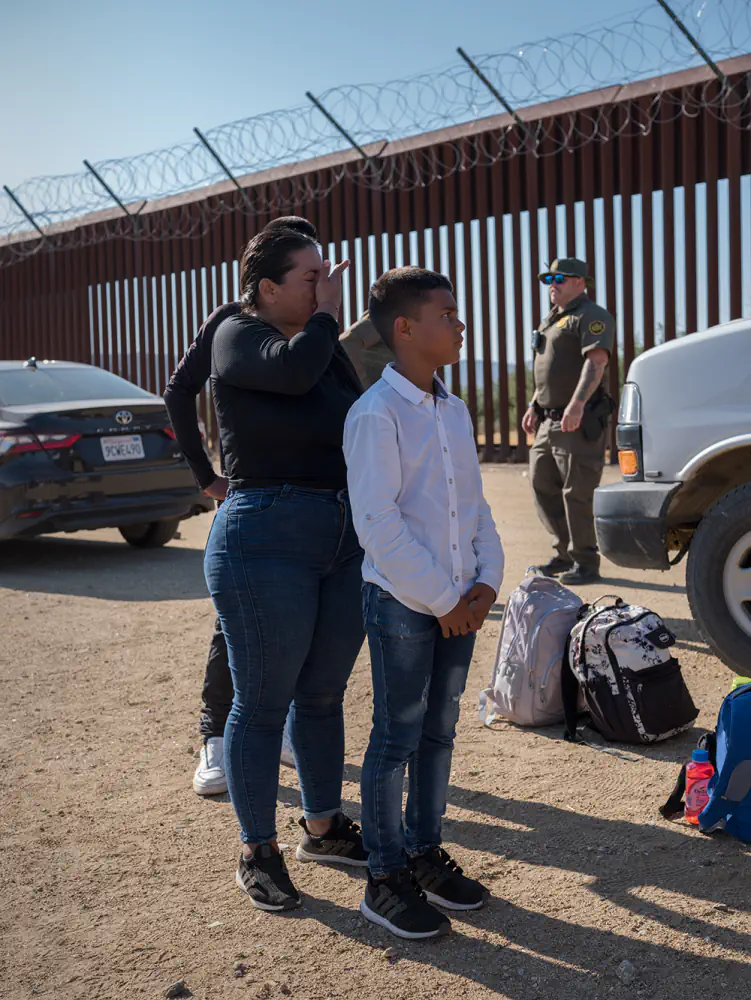
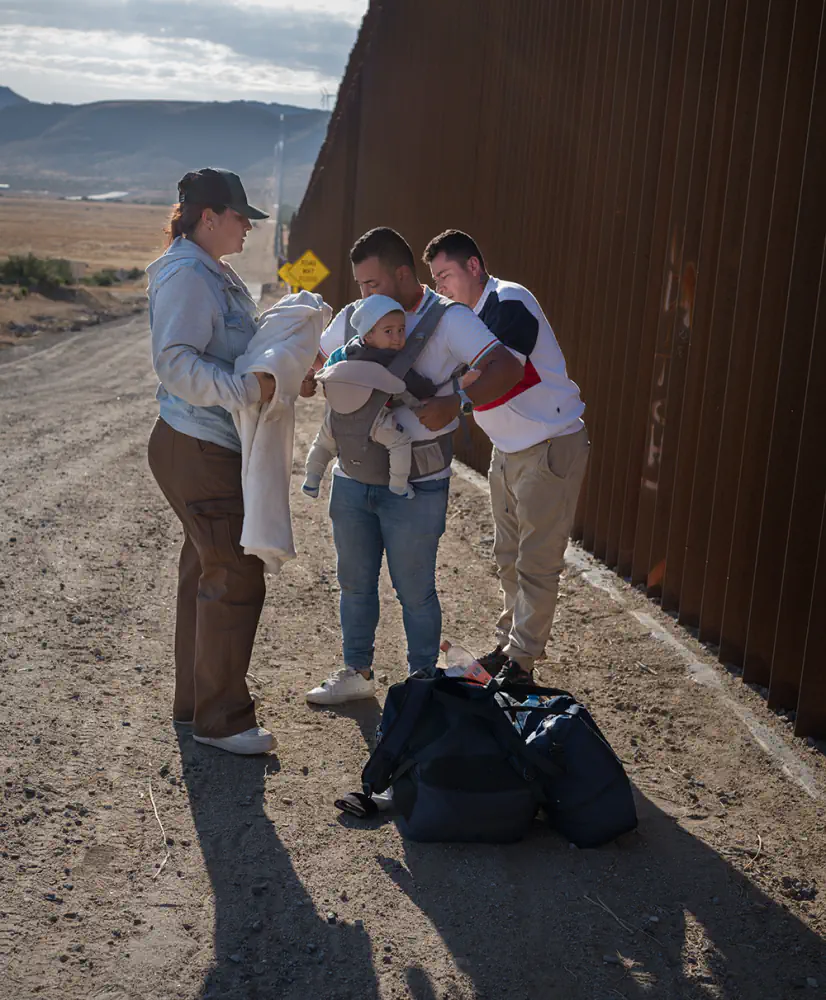
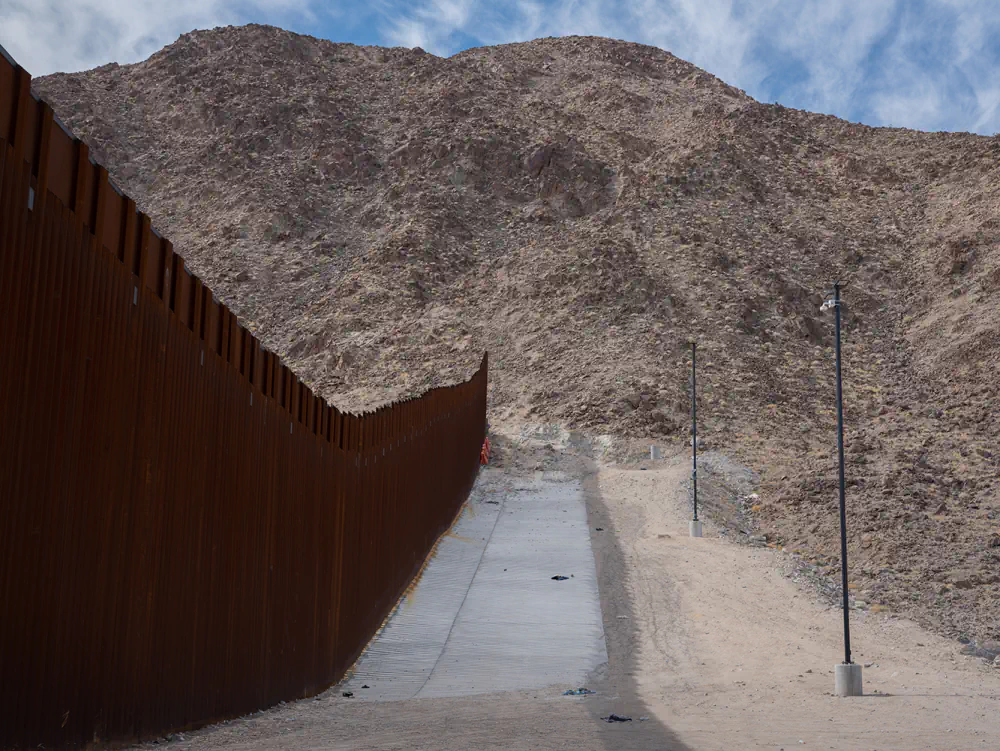
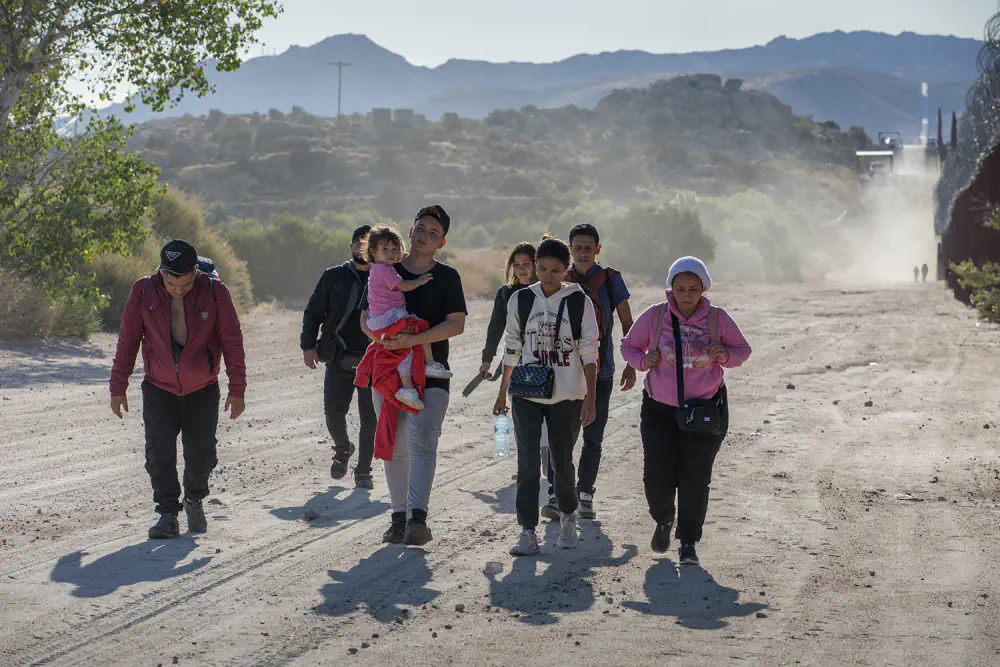
Her research led her to Jacumba, a small community in the Pacific Coast Ranges where a steel wall cuts through rugged, sun-bleached terrain. Borderlands, the photographic series and accompanying video that emerged from this research, marks Hayeur’s first sustained encounter with this landscape and with the people who move through it clandestinely.
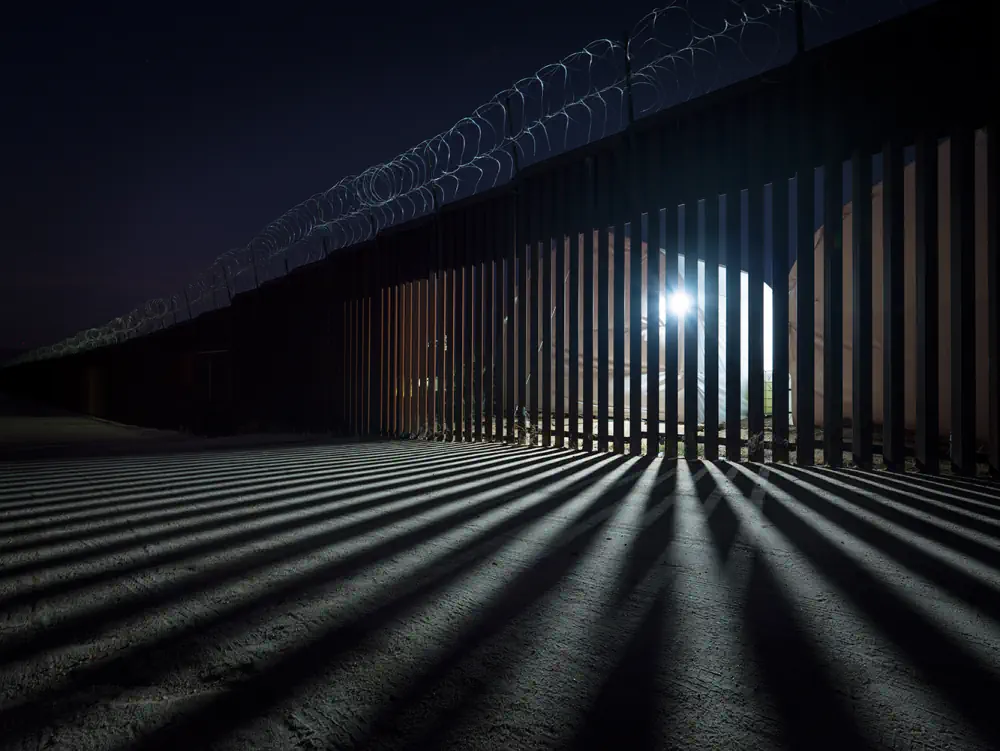
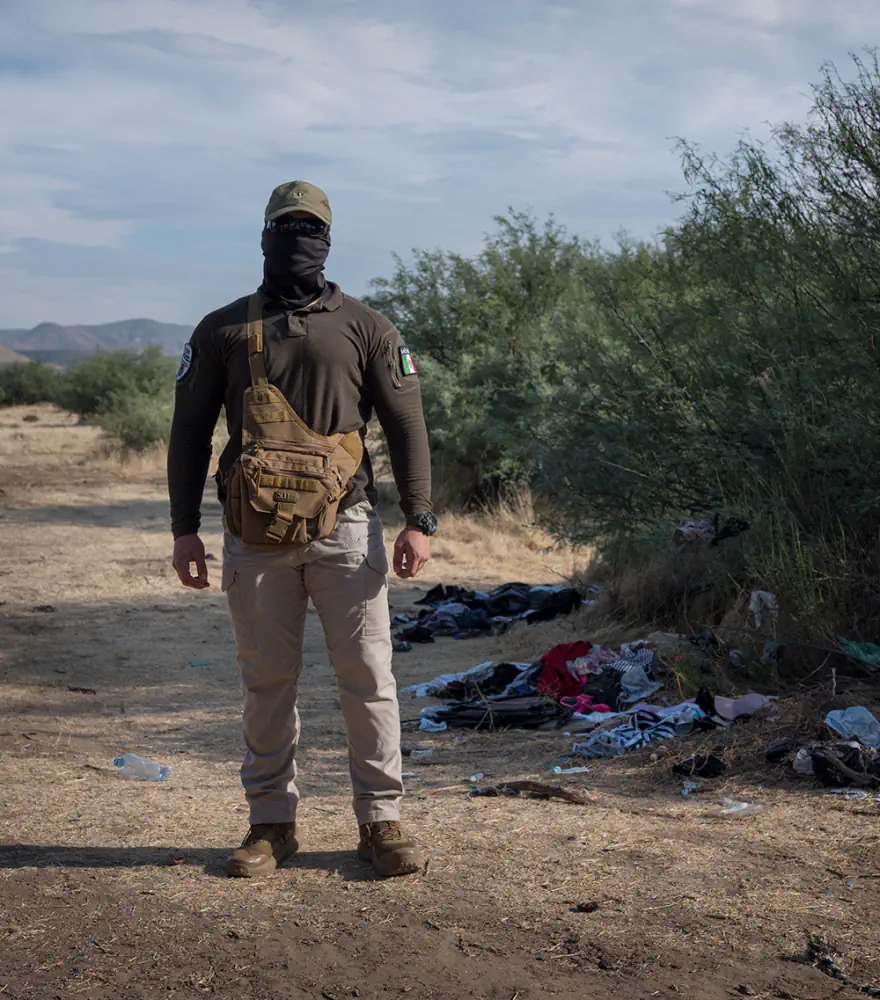
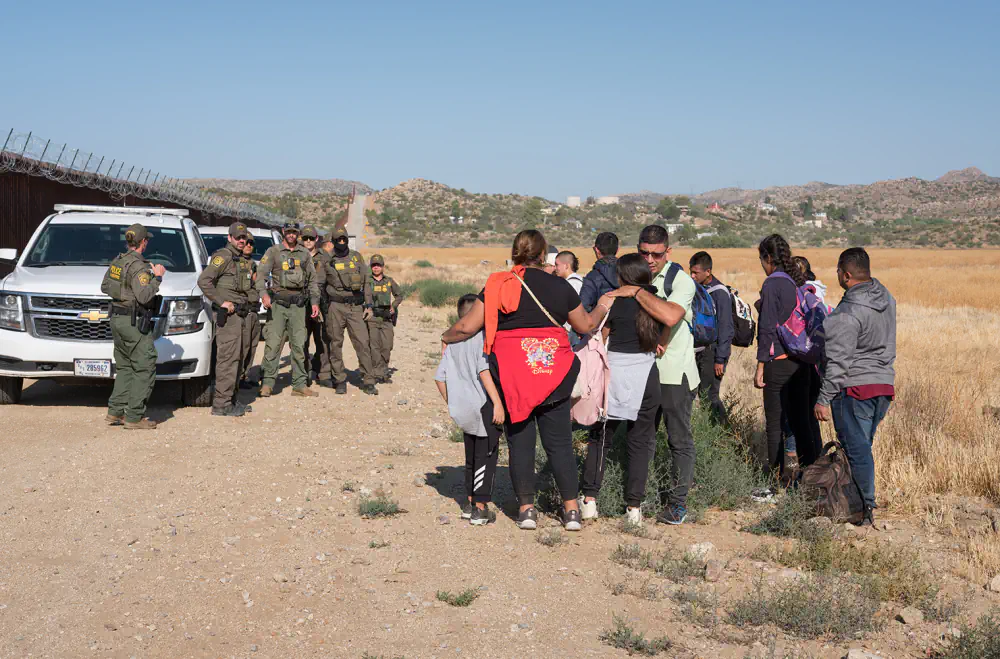
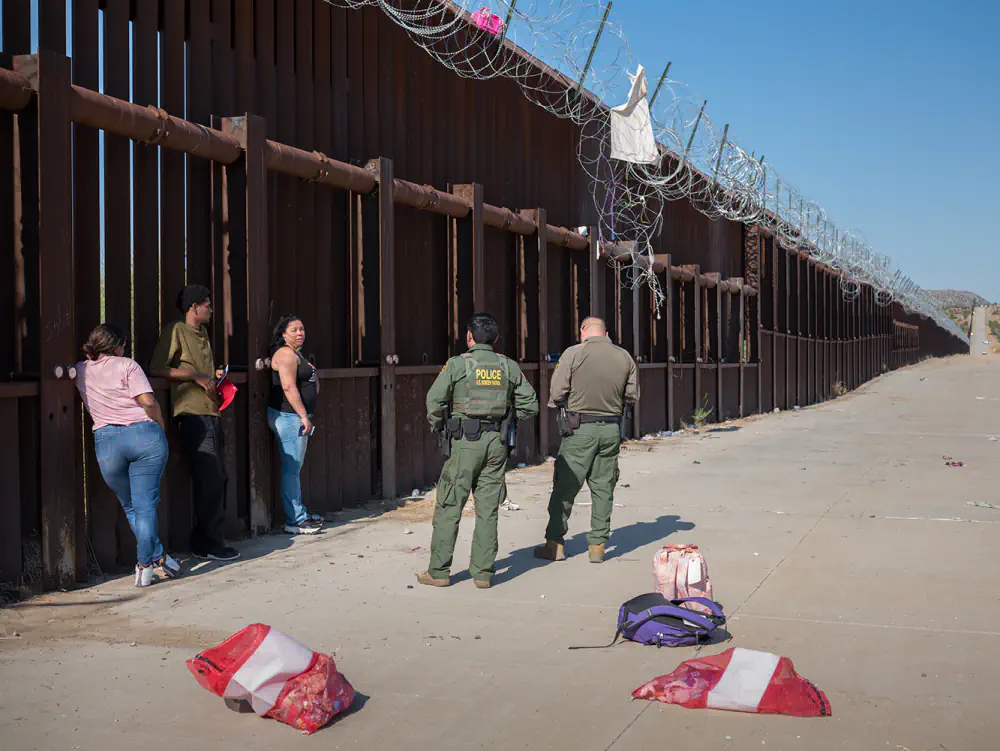
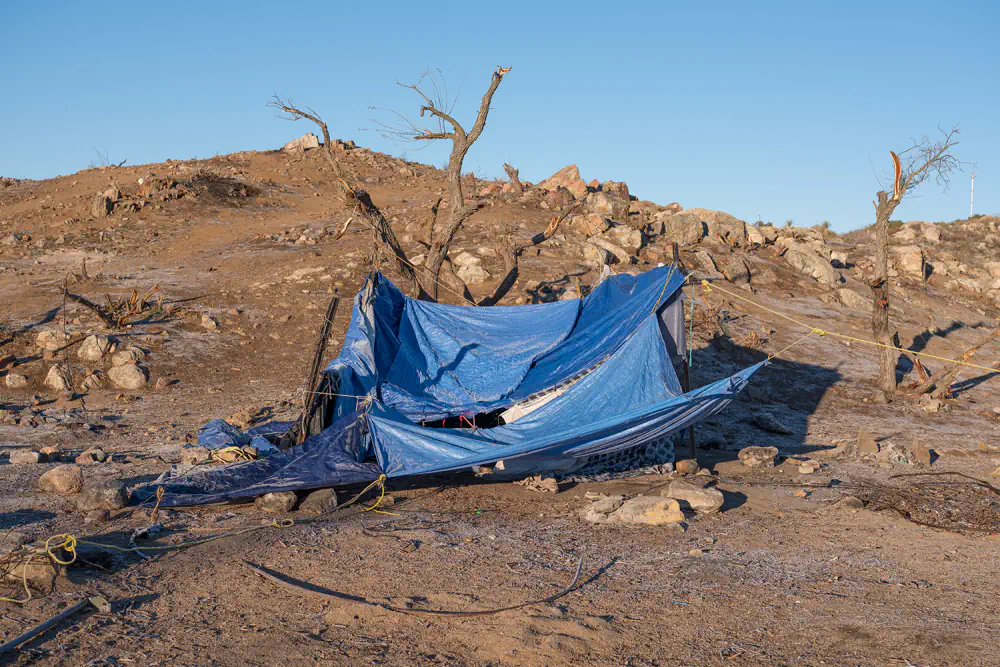
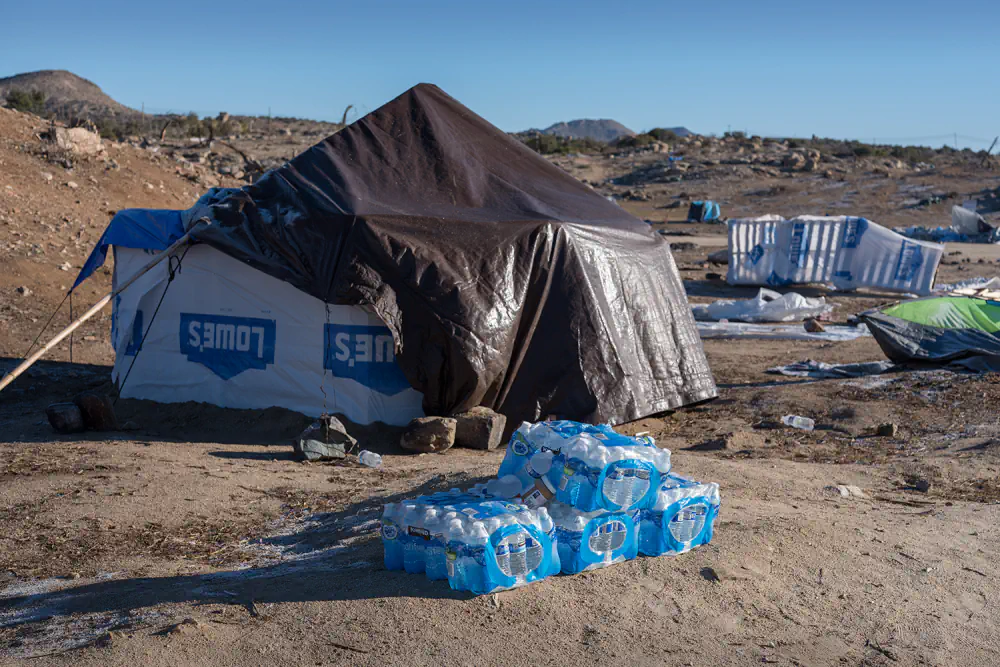
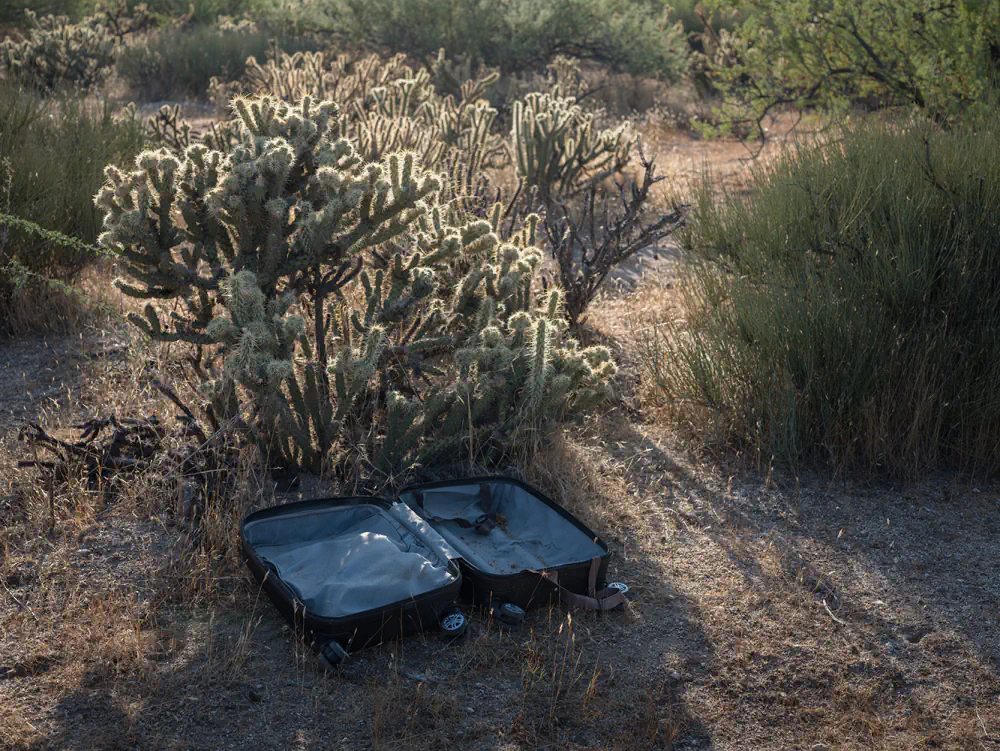
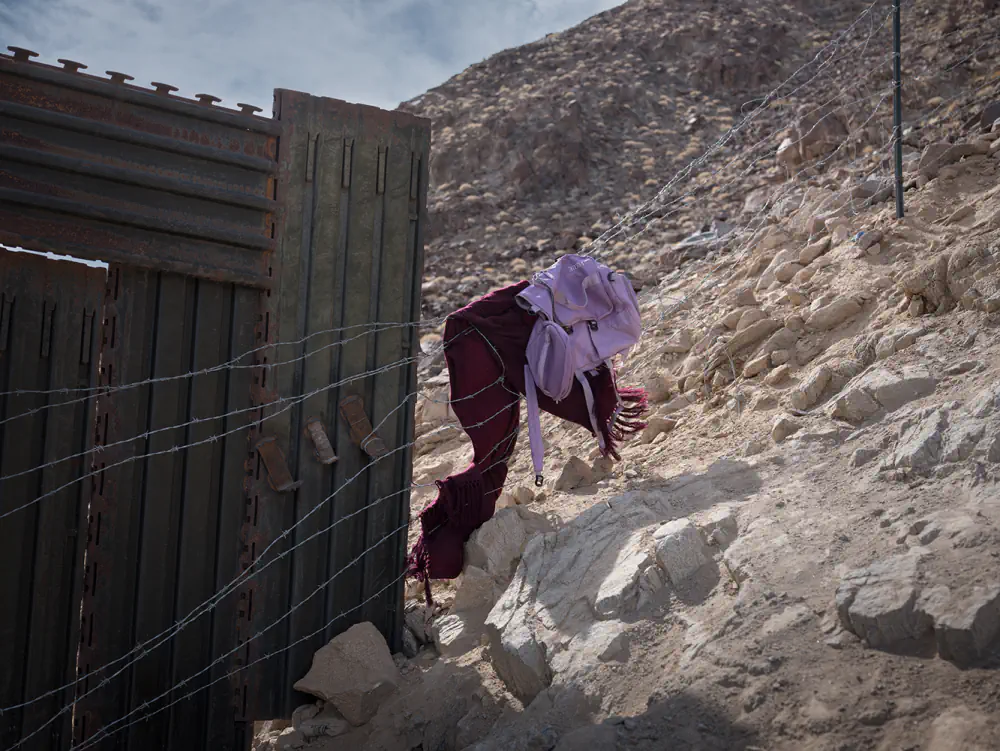
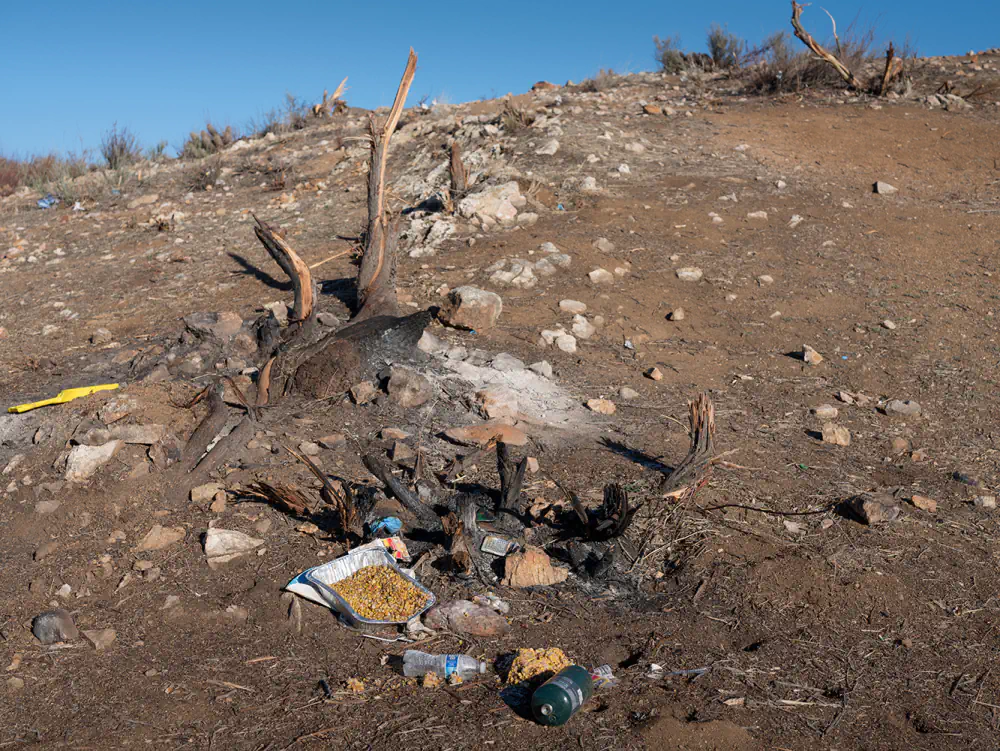
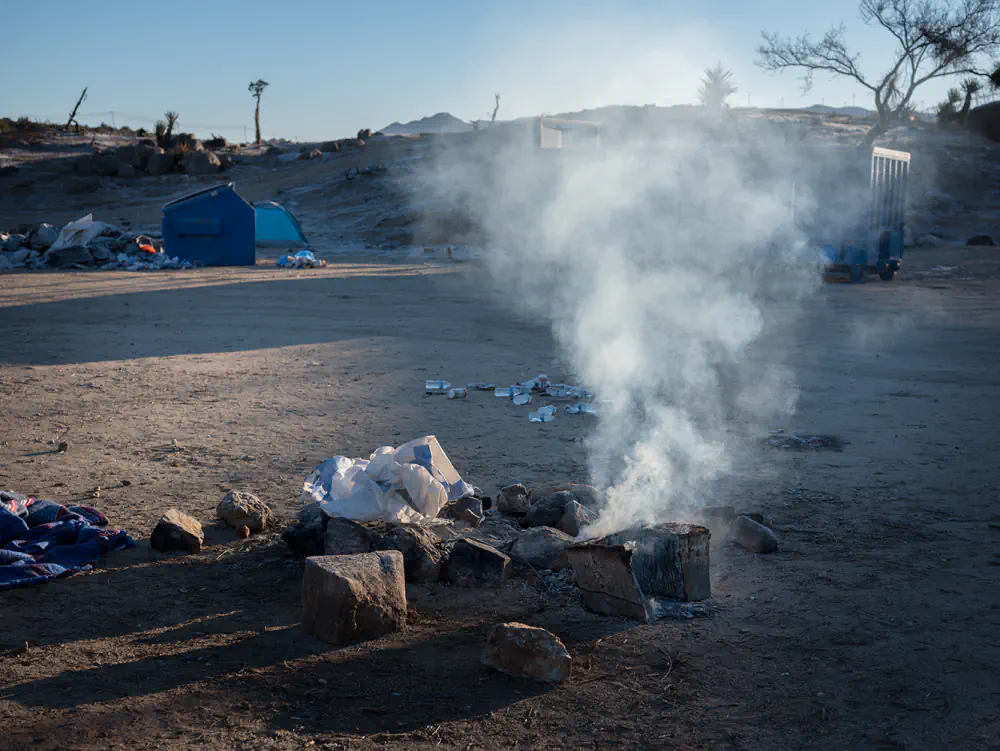
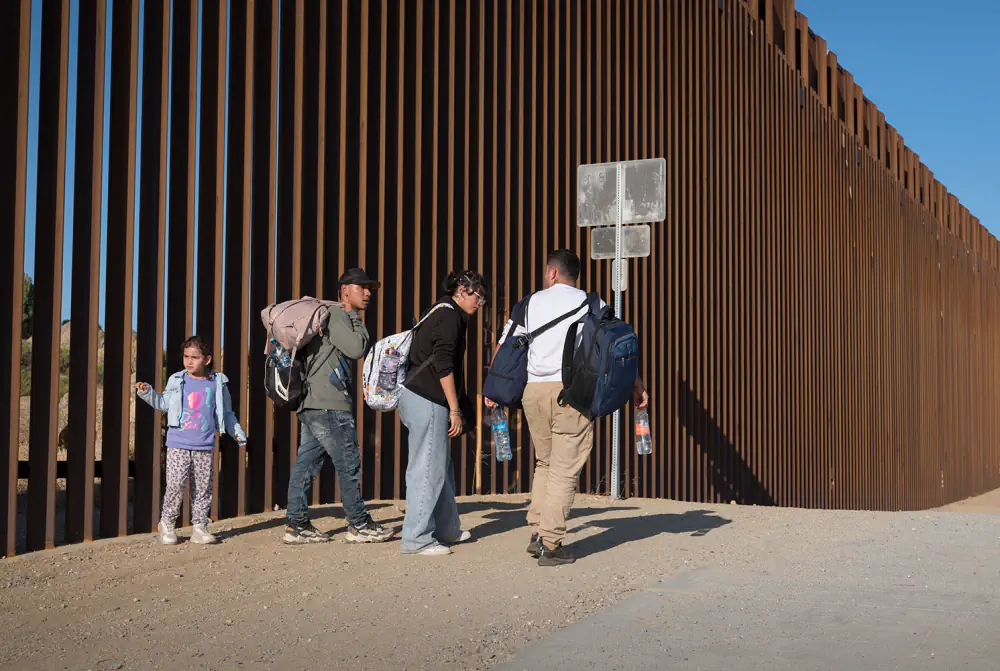
Throughout the series, the wall functions both as subject and metaphor: a rigid architectural line imposed upon an indifferent desert, rising and falling with the contours of the land, breached in places by cut fencing and scaled elsewhere with ropes and sheer determination. Hayeur photographs the traces left behind by those who have already moved on—clothing snagged on barbed wire like skin shed by a moulting animal, a suitcase abandoned in the sand, tents left behind in the desert, and the embers of a fire still glowing in a deserted migrant camp. More than any individual portrait, these remnants carry the emotional weight of the work. They bear witness to lives interrupted and to a crossing that promises escape from the past without ever guaranteeing a future.
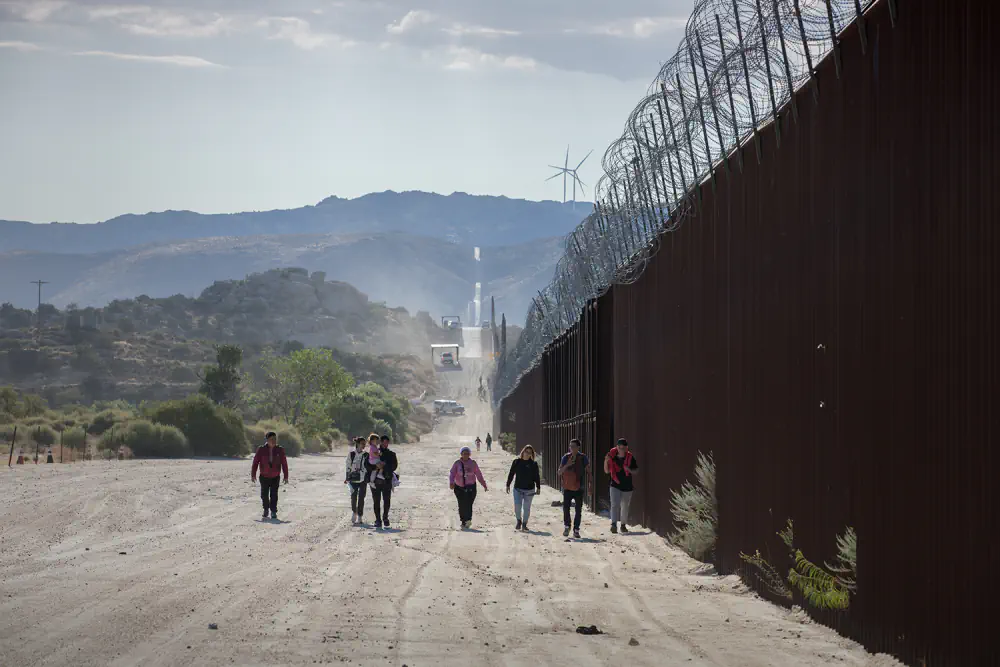
This uncertainty lies at the heart of the project. The routes into the United States through this stretch of desert are treacherous, and many who attempt them never complete the journey. Hundreds of deaths are recorded along the border each year, while on the Mexican side, kidnapping, extortion, and sexual violence are among the many hazards faced by those attempting to cross; credible evidence also points to the trafficking of children. Hayeur situates her camera at the intersection of these dangers and the wider political storm surrounding them.
Since the reopening of the U.S. border in 2021, following its pandemic-era closure, unauthorized crossings have surged, intensifying a public debate divided between those who describe a humanitarian emergency and those who characterize the situation as an “invasion.” Hayeur does not attempt to resolve these opposing positions. Instead, her images hold their tensions in view, suggesting that a crisis rooted in poverty, violence, and corruption cannot be understood—let alone solved—by a wall alone.
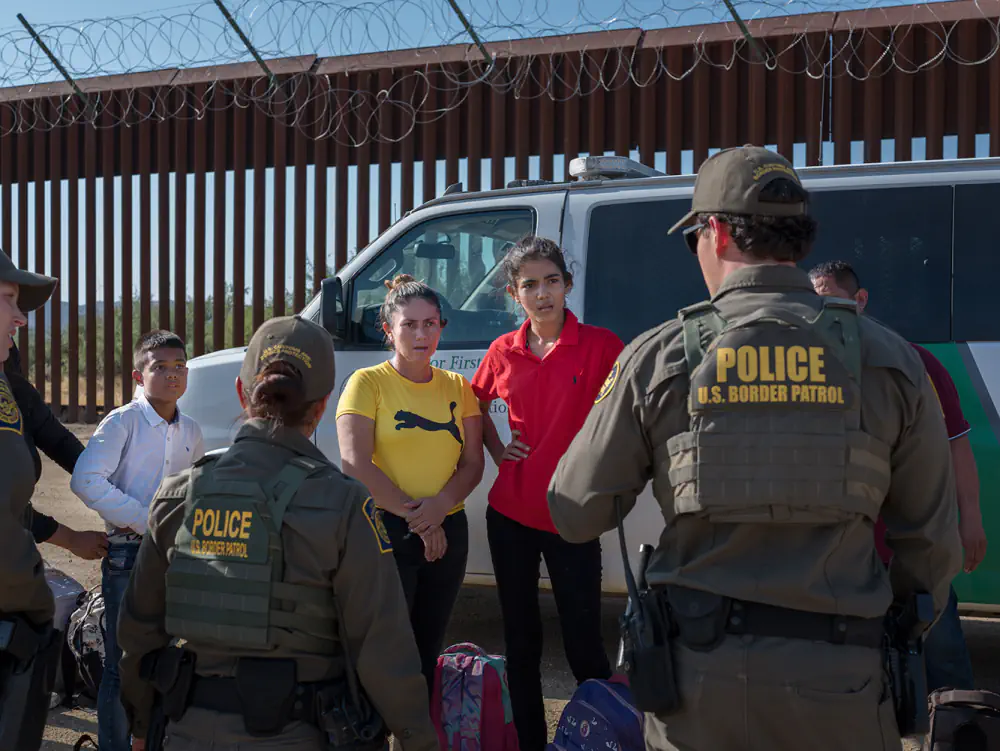
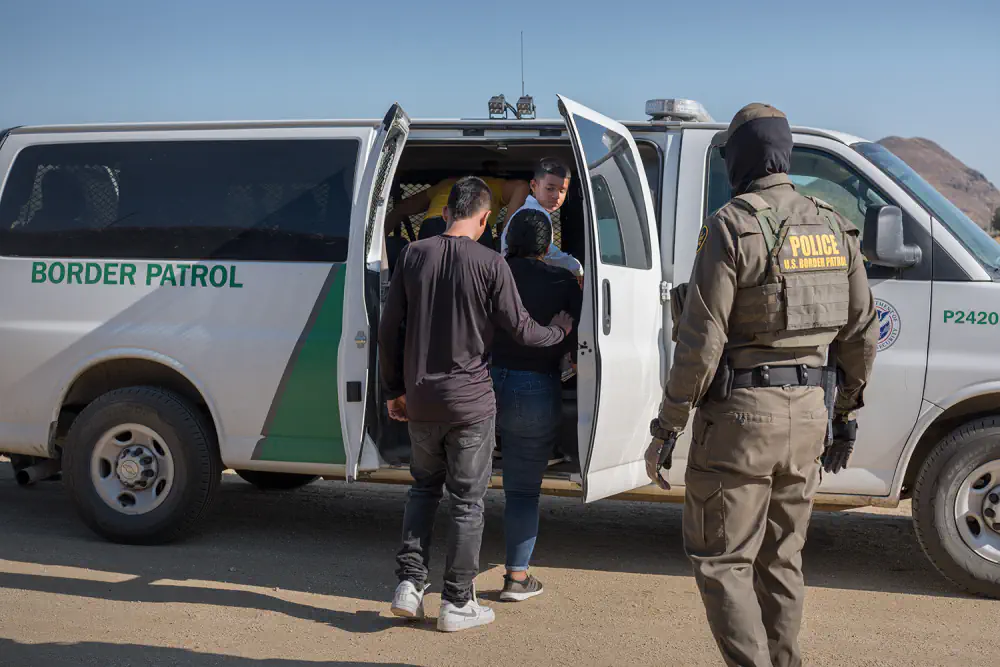
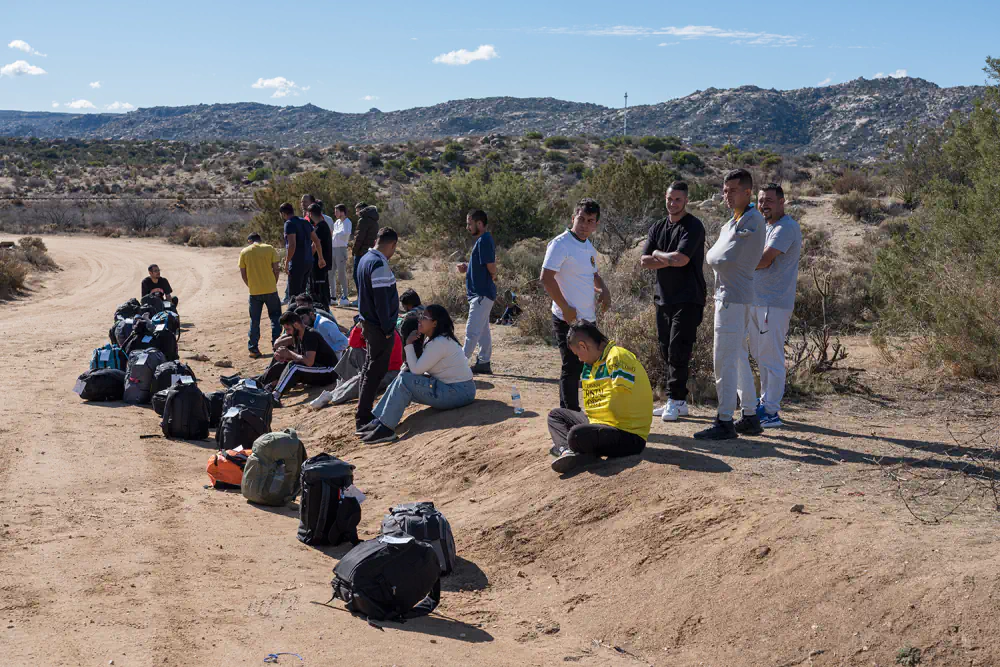
Much of the series was made at night and in the early hours of the morning, following the rhythm of the crossings themselves. Hayeur spent time alongside Border Patrol agents, who described a routine that never lets up: a fence cut in one place, a newly discovered gap in another, a van dispatched to transport a group of young migrants intercepted near Old Highway 80 to a triage centre.
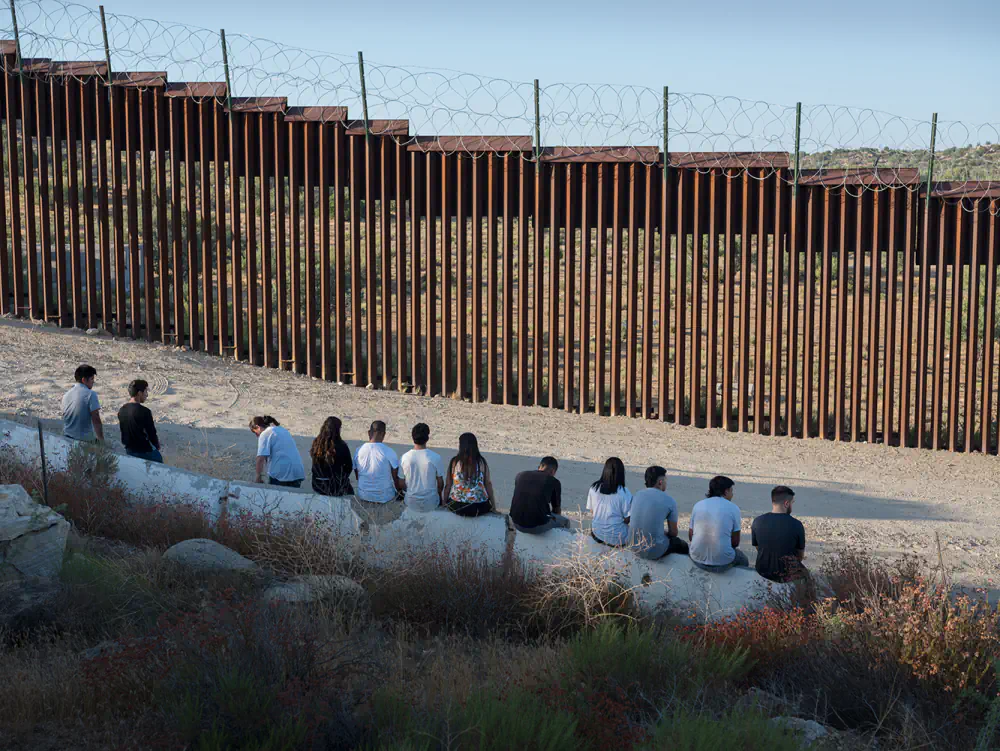
Borderlands extends concerns that have shaped Hayeur’s practice since the late 1990s: the fate of landscapes and communities transformed by political and economic forces, and the liminal spaces in which documentary fact intersects with a more poetic and unsettled way of seeing.
The series premiered after receiving Toronto’s 2025 Prefix Prize, leading to a solo exhibition presented during the CONTACT Photography Festival, as well as a publication featuring an essay by curator Scott McLeod. It subsequently travelled to the Canadian Cultural Centre in Paris, where it was presented alongside work by other international artists bearing witness to the world’s inequalities in the exhibition Contrast and Indifference.
Wherever it is shown, Borderlands asks viewers to look beyond the wall as a political symbol and to confront what—and who—is left behind at its foot.
About Isabelle Hayeur
Isabelle Hayeur was born in 1969 and grew up on Montreal’s North Shore. Since launching her career in the mid-1990s, she has developed a diverse body of work encompassing photography, experimental video, site-specific installations, public art commissions, and artists’ books. Across these media, she examines the ways in which contemporary societies transform and reshape the territories they inhabit.
Her work has been exhibited internationally, including at the National Gallery of Canada, MASS MoCA, the Neuer Berliner Kunstverein, and the Canadian Cultural Centre in Paris. Her work is held in the collections of institutions such as the National Gallery of Canada, the Art Gallery of Ontario, and the Vancouver Art Gallery. She has also completed residencies at institutions including the Rauschenberg Residency and the Bemis Center for Contemporary Arts.
Her honours include the Prefix Prize (2025), the Hnatyshyn Foundation Mid-Career Award (2021), and the Duke and Duchess of York Prize in Photography (2019). She lives and works in Quebec. [Official Website]