
For readers discovering your work for the first time, could you tell us how your journey into photography began and what first attracted you to the medium?
My interest in photography began in high school when I was elected to run the photography club and felt I needed to learn more about the medium. For several years I was an enthusiastic amateur, without any particular direction or philosophy behind what I was doing. I simply wanted to make good photographs. I have always been a very visual person, drawn to things that catch my eye – something beautiful, unusual, or simply interesting to look at.
In those early years, I was particularly interested in strong colours, shapes and graphic compositions.
Deciding to study photography in the United States changed everything for me. Of course, part of it was about becoming technically better, but much more importantly, I began to understand photography as a visual language. I was introduced to the work of photographers I had never encountered before, to the history of the medium, and to very different ways of looking at and interpreting the world. Photography gradually became much more to me than simply making beautiful pictures.
After returning to Iceland, I began working professionally, mainly doing editorial work and everything else that came my way. But commissioned work has never been enough to satisfy my need to create something of my own. Alongside my professional work, I have therefore always pursued personal projects where I can decide what to photograph, how to approach it and, perhaps most importantly, where there is no editor or client telling me what the final result should be.
Looking back on more than three decades as a photographer, what do you think has changed the most—not only in your work, but also in the way you see the world through a camera?
I think the biggest change is that I have become much more confident in my own way of seeing. I trust my own instincts much more now and don’t feel the need to justify or apologise for the way I interpret what I see. Photography is inevitably subjective, and I have become very comfortable with that. I am simply showing the world as I see it.
Your photographs often explore the relationship between people and the places they inhabit. What is it about that connection that continues to inspire you?
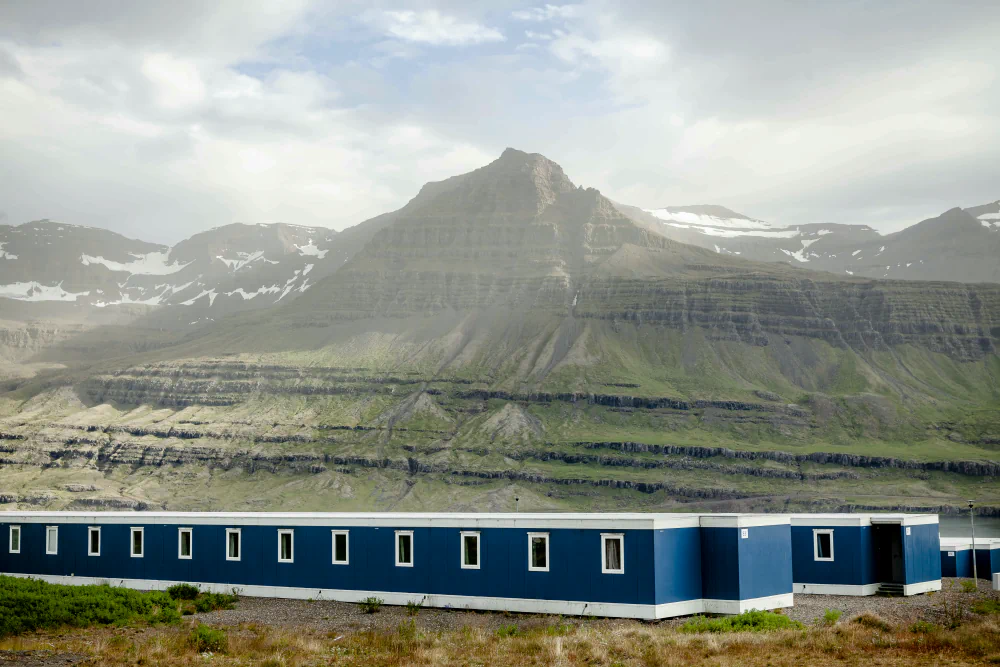
In Iceland, the landscape is such a strong presence, and I think it inevitably influences the people who live within it – how they see themselves, how they live and how communities develop.
Iceland is usually portrayed through its breathtaking natural scenery. What led you to turn your attention instead toward its villages and small towns?
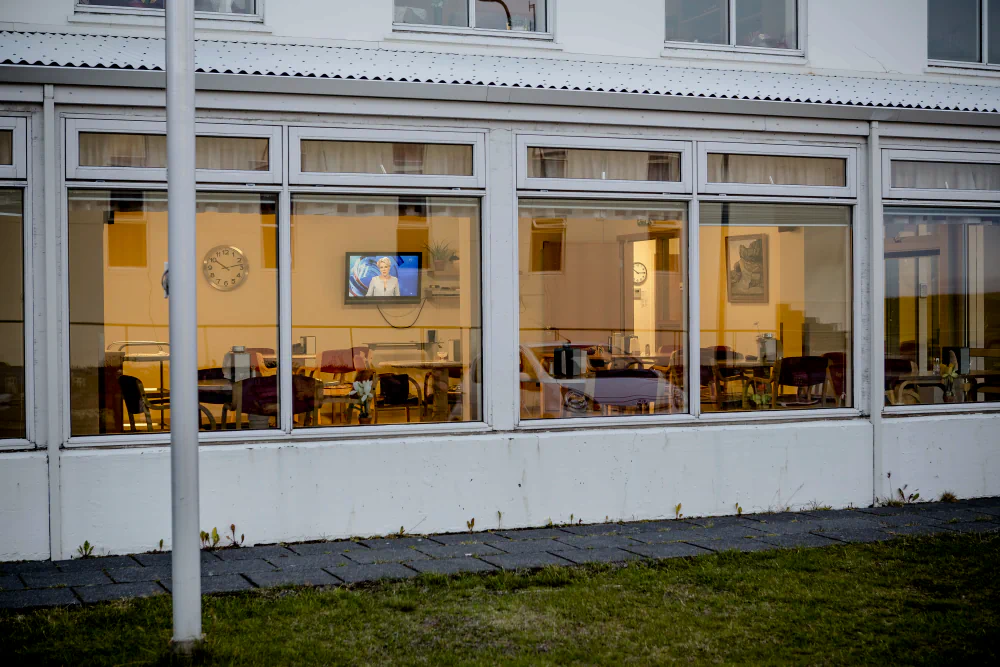
Travelling around Iceland, I have always been fascinated by the villages and their surroundings – their architecture, their atmosphere and their particular visual language. I often find them more interesting to photograph than the dramatic landscapes Iceland is famous for. As extraordinary as that landscape can be, it has also been photographed so extensively that I find it difficult to approach it as a subject in itself.
I do photograph landscapes, but usually only when something catches my eye rather than as part of a deliberate project. With the villages, it was different. I felt there was something there I wanted to explore more deeply – places that are very much part of Iceland, but rarely the image of Iceland that is presented to the outside world.
When did you realize that Village had become something much larger than a collection of photographs?
For a long time, whenever I passed through a village, I would make a few photographs if something caught my attention. There was no plan behind it at first. Eventually, I realised I had several images that I found particularly interesting and that seemed to belong together. That was really the turning point. I decided there was something worth exploring further and began approaching it more systematically as a project.
Before photographing these communities, how important was it to understand their history and the role the fishing industry has played in shaping them?
It was very important, because most of these villages were originally built around fishing and fish processing, and that became a major part of their identity. In recent decades, however, the fishing quota system has changed the balance dramatically. In some cases, companies sold or moved their quotas away, leaving communities with very limited employment, while fishing rights became increasingly concentrated in fewer places. Some villages have grown and prospered as a result, while others have struggled to survive.
Understanding this history was important to me because many of the differences I encountered between these communities – their growth, decline, confidence or uncertainty – are closely connected to it.
Village seamlessly combines landscapes, architecture, and portraits. How did you decide that these three elements were essential to telling the story?
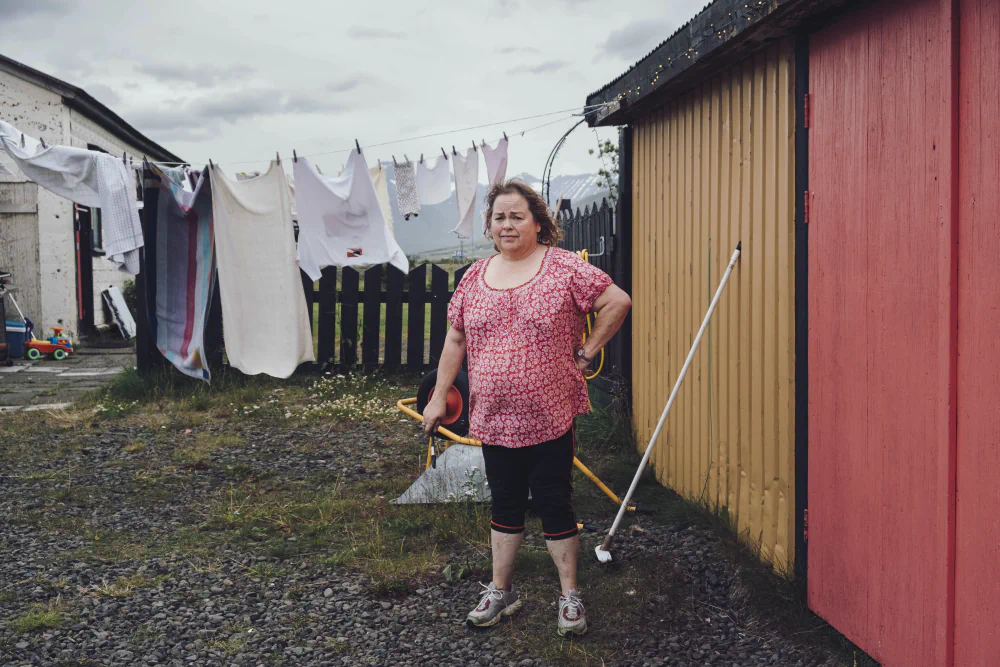
The landscape shapes these villages to such an extent that it would have been impossible to tell their story without including it. But in the project, the landscape is always more of a background than the main subject. The villages themselves – their buildings, streets and public spaces – are at the centre.
At the same time, the people are inseparable from these places. I felt that bringing together the landscape, the built environment and the people was the only way to give a complete picture of these communities.
Your images have a remarkable sense of stillness and authenticity. How do you approach photographing people and places without disrupting their natural rhythm?
My approach was usually very simple: I walked or drove slowly through the villages and photographed whatever caught my attention. The stillness in the photographs is not something I deliberately created; it is very much part of these places, especially in the smaller villages.
Sometimes you can walk around for quite a long time and almost feel as if nobody lives there. You may not see another person for some time, and when there is movement, it is often a passing car rather than someone walking down the street. I simply tried to observe and photograph that atmosphere as I found it.
Was there a particular encounter or moment during the making of Village that left a lasting impression on you?
I think it was actually one of the very first photograph I made for the project. It was a very simple image of a few old houses, but there was something about it that really spoke to me. I kept looking at it, trying to understand why I found it so compelling. Somehow the lines, shapes and colours came together perfectly.
The next photograph I made, of some industrial sheds with stunning mountains in the background, had a similar effect on me. Those two images made me realise the visual and artistic possibilities these villages could offer, and in many ways they helped define the direction of the project.
Although the project reflects on change and the passing of time, it never feels nostalgic. Was that a conscious decision from the beginning?
No, it wasn’t a conscious decision. I was never trying to romanticise the past or suggest that things were somehow better before. My interest was always in photographing these places as they are today. Change and the passing of time are inevitably part of the story, but I wanted the photographs to remain observational rather than nostalgic.
Architecture plays a central role throughout the series. What do buildings and public spaces reveal about a community that portraits alone cannot?
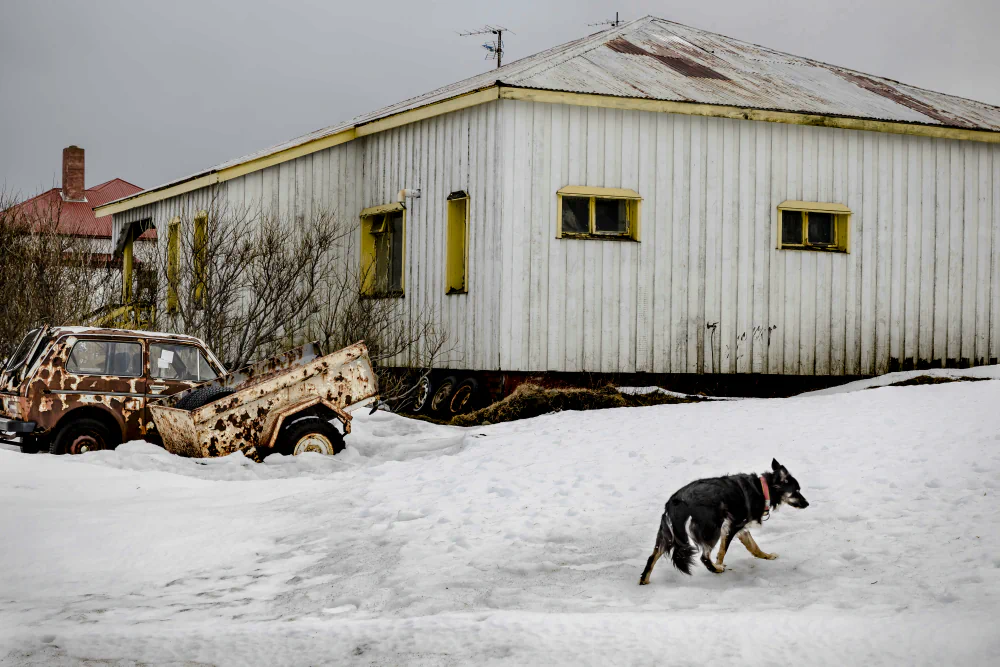
Architecture and public spaces can reveal a great deal about the economic and cultural status of a community. The condition of buildings, what has been maintained, what has been abandoned, and how public spaces are used all say something about how a place is doing. In that sense, they can tell a different part of the story than portraits alone.
After spending so much time documenting these villages, has the project changed your own understanding of Iceland and its identity?
Not really. I was born and raised in Iceland and have travelled extensively around the country, so I already felt I knew it quite well. The project didn’t fundamentally change my understanding of Iceland or its identity, but it did make me look more closely at these communities and notice details and differences that I might otherwise have passed by.
Do you see Village primarily as a contemporary documentary project, or do you hope it will become an important historical record in the years to come?
I see it very much as a contemporary documentary project rather than a historical record. It is my personal view of these places, shaped by what I chose to photograph and how I chose to photograph it, and it should be understood as such. Of course, with time the photographs may acquire historical value, but that was never the intention behind the project.
What would you like an international audience—particularly those who have never visited Iceland—to discover through this work?
I would like them to discover that there is much more to Iceland than the spectacular landscapes it is so often associated with. There are communities, everyday environments and ways of life that are just as much a part of the country and its identity. Village is my way of showing another side of Iceland.
Finally, looking ahead, what continues to motivate you as a photographer, and are there any new projects or stories you feel compelled to pursue?
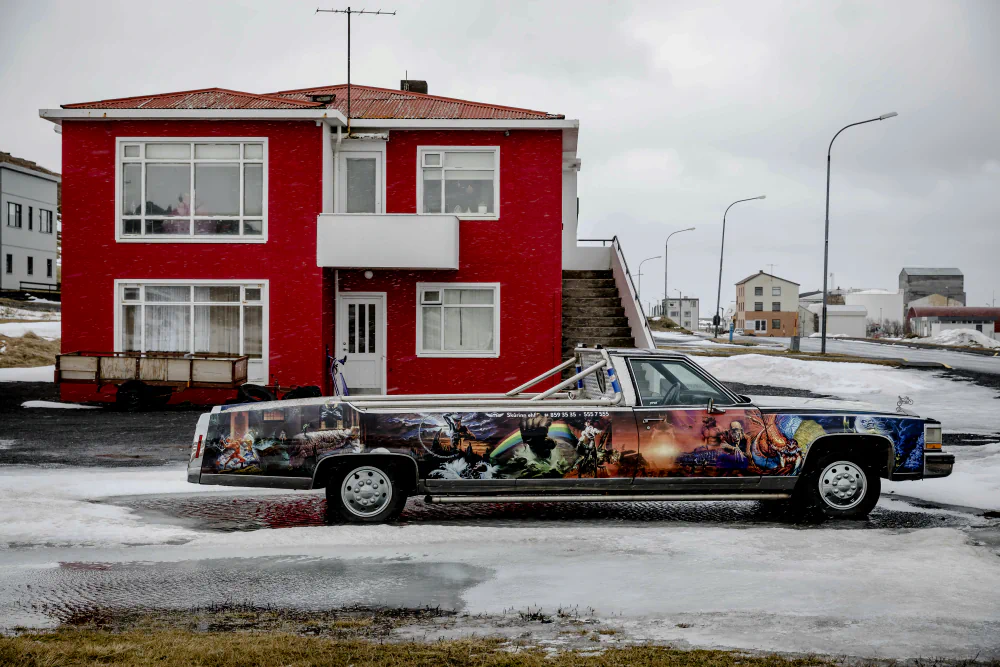
What continues to motivate me is still very much the visual side of photography – light, lines, shapes and the way things come together within the frame. That fascination has never really changed.
As for new projects, nothing is firmly underway at the moment. In addition to Village, I have also recently completed another project, Where Pavement Dreams, which I photographed during an artist residency in Rennes, France. Part of the work can be seen on my website. Having just completed these two major projects, I am giving myself some time before committing to anything new. There are several ideas in the back of my mind, but nothing has taken a definite shape yet.