

Architecture is one of the most enduring expressions of human imagination.
Every city, every building and every structure reflects the ambitions, values and cultural context of the society that created it. Yet architecture is not only experienced through physical presence.
Photography has played a crucial role in shaping how we see and understand the built environment. Through the camera, architectural spaces are transformed into visual narratives where geometry, light, materials and perspective become the language through which photographers interpret the world around them.
Architectural photography occupies a unique position within the photographic landscape. Unlike other genres that focus primarily on human presence, architectural work often explores the relationship between structure and atmosphere, between design and perception. Buildings are not simply objects to be documented. They are spaces to be interpreted, environments where form, light and shadow interact in ways that can completely transform the viewer’s experience. A skilled architectural photographer understands that capturing a building is not about recording its appearance but about revealing its character.
The projects gathered in this selection highlight how contemporary photographers approach architecture from very different perspectives. Some explore the historical legacy of influential design movements, others transform urban spaces into abstract compositions of light and shadow, while some investigate the delicate balance between minimalism, geometry and imagination. Together these works demonstrate how architectural photography can move far beyond documentation to become a powerful form of artistic interpretation.
In Bauhaus by Ralph Gräf, the photographer turns his attention to one of the most influential architectural movements of the twentieth century. The Bauhaus school, founded in 1919 by Walter Gropius, fundamentally reshaped modern design by rejecting historic ornamentation and embracing a new language based on functionality, clarity and modernism. Gräf’s images focus on the Bauhaus buildings in Dessau, Germany, a city that still carries the architectural legacy of the movement. Through careful composition and attention to structure, the series reveals the timeless clarity and visual rhythm that made Bauhaus architecture such a defining force in the development of modern urban environments.
Urban atmosphere takes a darker and more mysterious turn in Dark City by Arnaud Bertrande. Working primarily in black and white, Bertrande transforms the city into a dramatic landscape of shadows and luminous fragments. Although many of the photographs were taken during the day, long exposure techniques and a carefully controlled tonal palette create the illusion of perpetual night. The result is a series that feels almost cinematic, where the city appears as an abstract and enigmatic stage in which human presence fades into the background and architecture becomes the central protagonist.
A different visual exploration emerges in Kerstin Arnemann: The Power of Lines, Shapes and Light. Arnemann’s work focuses on the essential elements that define architectural perception: geometry, structure and the interaction of light with form. Her use of long exposure photography and monochrome aesthetics allows her to simplify complex environments, reducing them to elegant compositions of lines and shapes. By combining architectural photography with elements of street observation, she creates images where the built environment becomes both subject and visual playground.
Minimalism and abstraction play a central role in Architecture by Mihai Florea. Florea approaches the urban environment with the intention of transforming ordinary structures into unexpected visual compositions. Through careful framing and an emphasis on balance, lighting and spatial relationships, his photographs reveal a different way of seeing contemporary architecture. Long exposure techniques often introduce subtle motion within otherwise static scenes, allowing natural elements such as clouds or water to interact with the rigid geometry of buildings and add a sense of depth to the image.
The selection is completed by the work of Julia Anna Gospodarou, an architect and internationally recognised fine art photographer whose practice merges architectural knowledge with photographic creativity. Based in Athens, Gospodarou approaches architecture not only as a subject but as a language. Her black and white images reinterpret buildings through dramatic perspectives and carefully controlled light, transforming familiar structures into powerful visual statements. With a background in architecture, she brings a deep understanding of spatial design to her photography, allowing her to explore the emotional and aesthetic potential of architectural form.
Together these photographers demonstrate the many ways in which architecture can be interpreted through the photographic lens. From the historical legacy of Bauhaus modernism to the abstract geometry of contemporary structures, their work reminds us that architectural photography is not merely about buildings. It is about perception, about the dialogue between design and light, and about the endless possibilities that emerge when the built environment becomes a canvas for visual exploration.
Bauhaus by Ralph Gräf
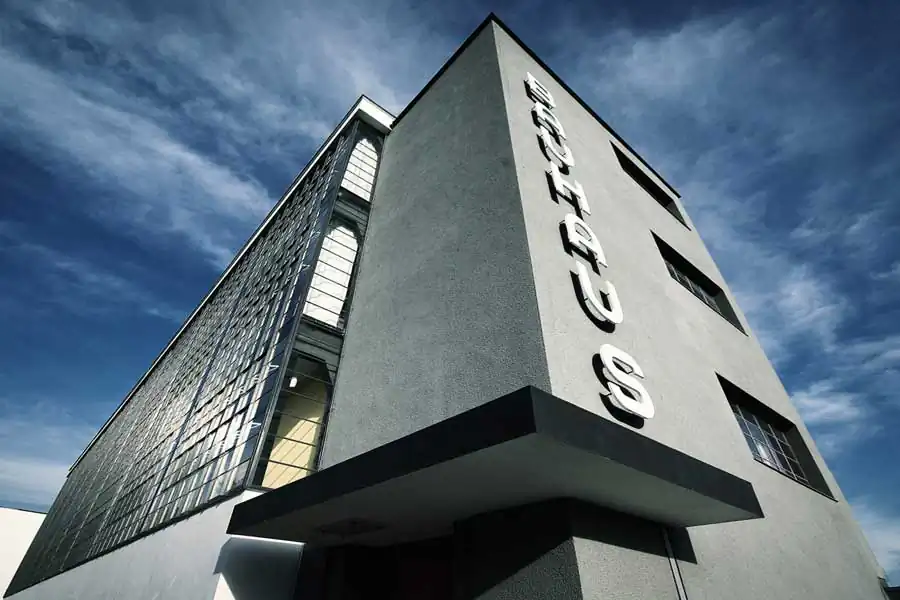
Since my first visit in Dessau I’m fascinated by ”Bauhaus“ architecture. Dessau is an industrial city in the German federal state of Saxony-Anhalt and it is famous for its UNESCO world heritage ”Bauhaus“ buildings. Here the ”Bauhaus“ school of arts has left its most famous buildings. The school was founded 1919 by Walter Gropius in Weimar. In 1925 it moved to Dessau and from there for its last period from 1932-1933 to Berlin, where it was finally shut down by the Nazis. Among all art trends and art periods of the last centuries, ”Bauhaus“ maybe the one with the highest impact on our contemporary urban environment. ”Bauhaus“ was based on modernism and proclaimed a radical stylistic change, which was opposed to the aesthetics of historism with all its reproductions of earlier ornamentic styles. More…..
The ultimate goal of the architect…is to create a paradise. Every house, every product of architecture… should be a fruit of our endeavour to build an earthly paradise for people.
Alvar Aalto ( Architect and Designer )
Dark City by Arnaud Bertrande
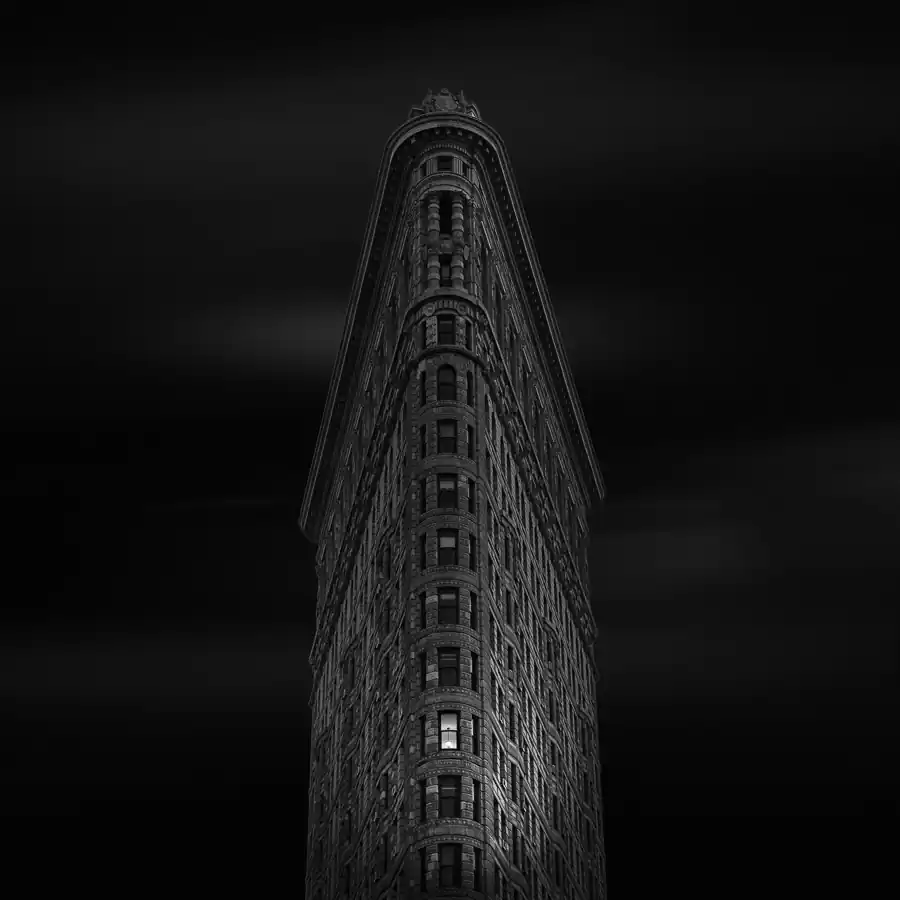
“Dark City” is a series in black and white on the theme of the city. The work on light and shadow draws the black areas of the imagination with subtlety The night here is éternelle..Man is a mere spectator invisible without a past, in search of its future. The work on the black strengthens the dark and mysterious side of the city. One can easily imagine in this series that we are in the night while the photos were taken during the day. The technique of long exposure sometimes leads a stream of light making us lose track marks in time and space. The atmosphere is heavy and oppressive. “Dark City” takes us into the night and shows us a different side of the city. More….
Kerstin Arnemann : The Power of Lines, Shapes and Light
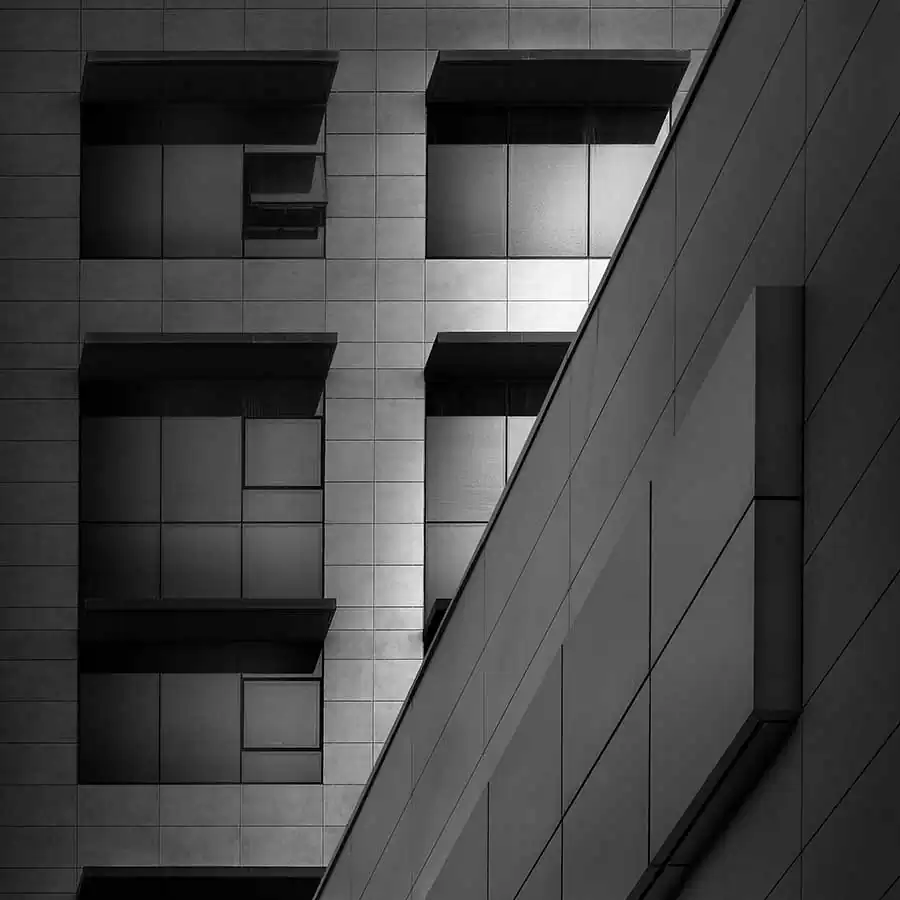
I started my photography journey in late 2009, at that time I shot everything and none of them made me fully happy and satisfied until I started shooting long exposure photography. The reason I love long exposure photography and presenting my images mainly in black and white/monochrome is it enables me to express my own personal vision and to recreate the world in my images according to my imagination thus giving them a personal note. I have a slight preference for Architecture Photography as well as for “Architectural Street Photography, where I combine two subjects of equal importance. It always fascinates me to see how different shapes, lines and light combine and play off each other. More….
Architecture : Mihai Florea
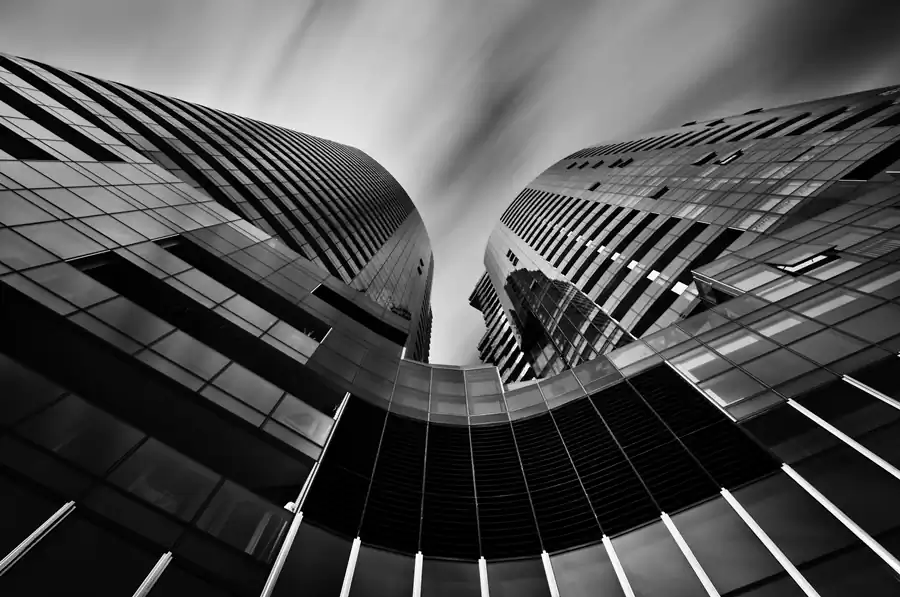
I consider myself a minimalist architectural and photographer with a desire to create abstract images from the reality surrounding me. I would like to believe that my images are pushing beyond the expected and that they offer a different way of looking at the built environment, especially the contemporary one. I place an emphasis on composition, balance and lighting, which, in my opinion are the three most important aspects of the architectural photography. The forth one is.. imagination. I also like to use long exposure techniques to allow the flow of nature to be visible in my images and to create a sense of depth, a third dimension in a two dimensional format. More….
Architectural photography of Julia Anna Gospodarou
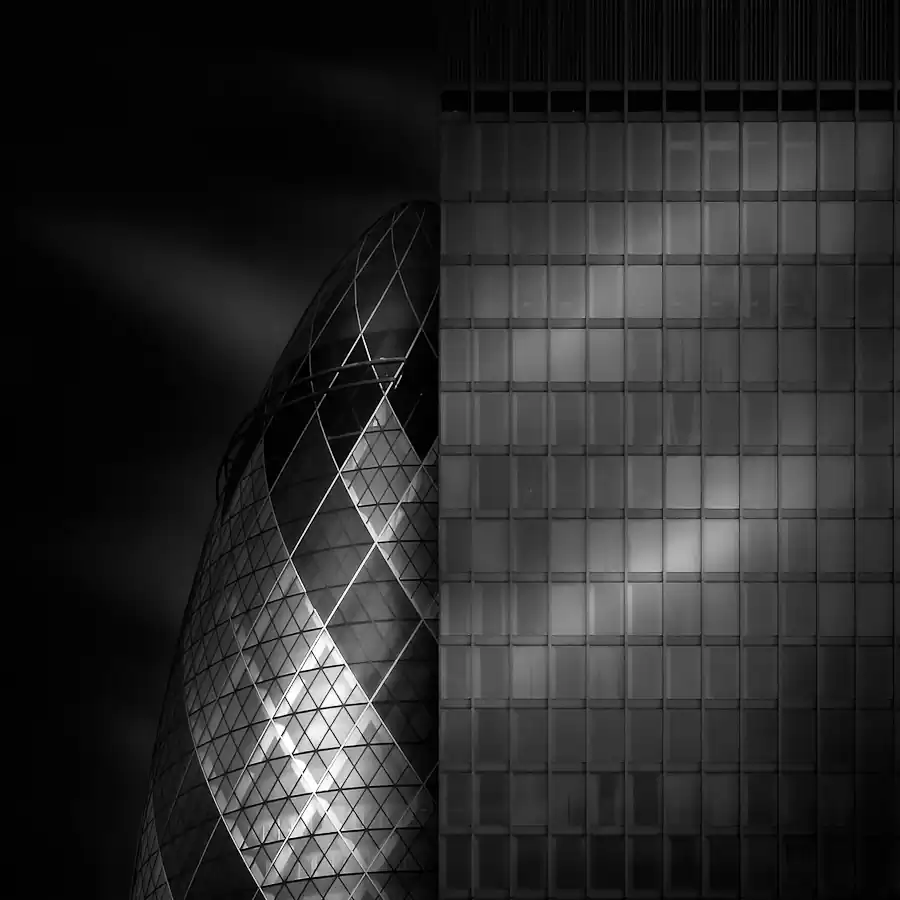
Architect and International Award-Winning B&W Fine Art Photographer, Julia lives in Athens and has a passion for both architecture and photography, doing them with the same dedication and joy. Interested in photography from a very young age, she is used to think in images and considers them even more important than words. Published internationally in numerous books and magazines, her photographic work can also be seen online on the most important photography sites. More……