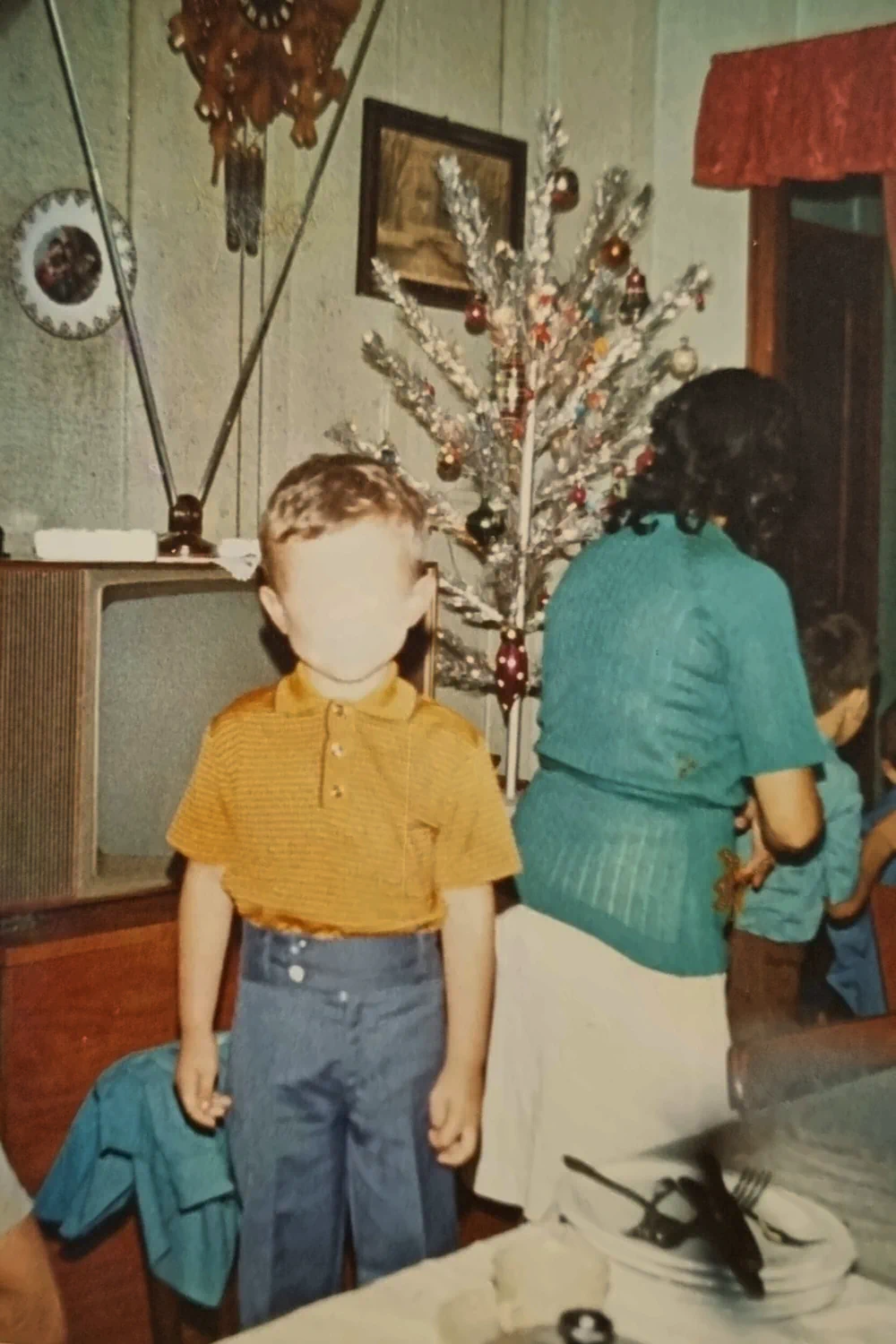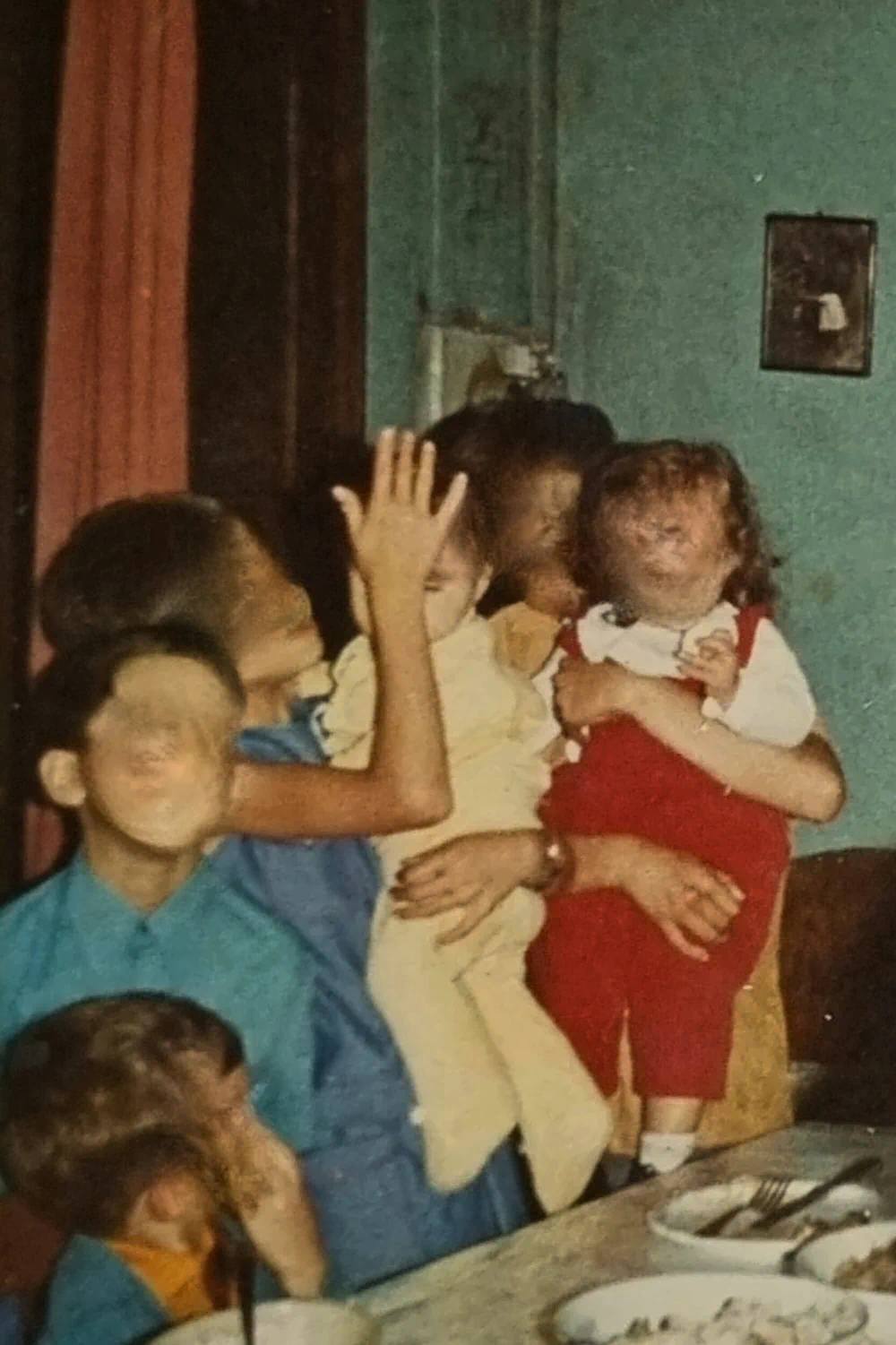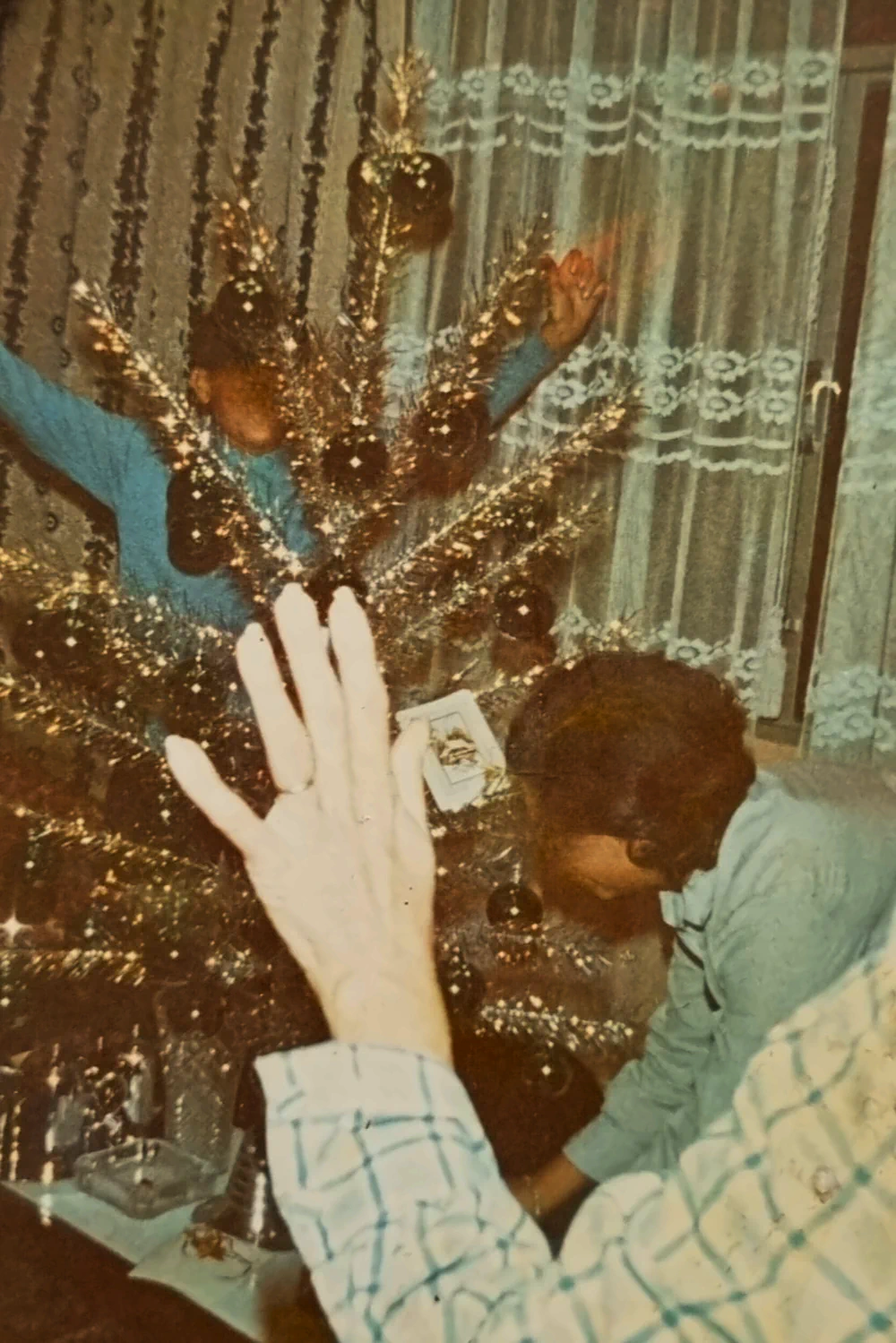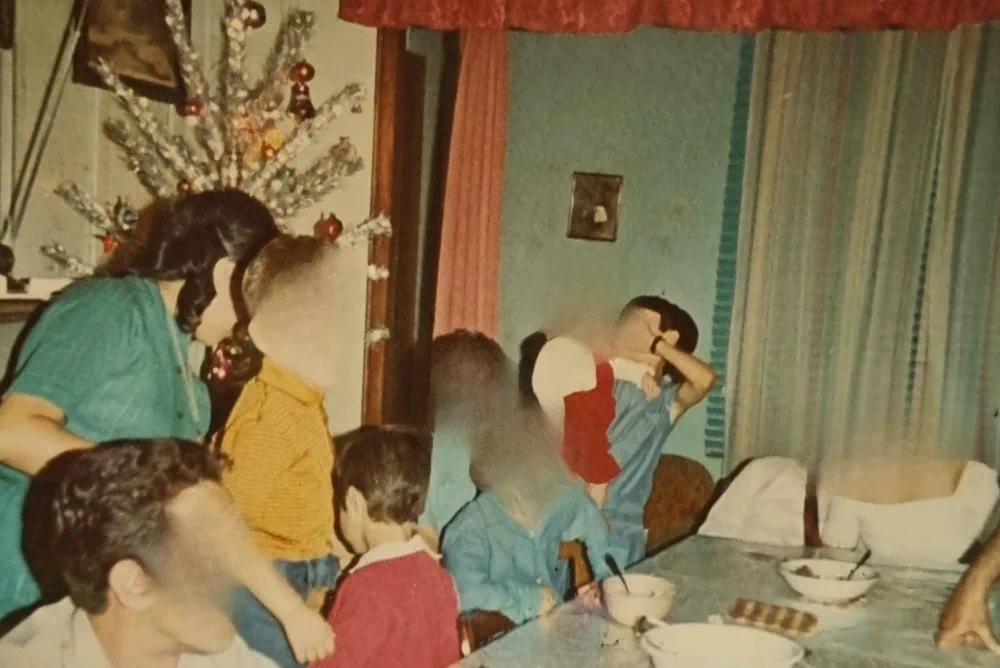


In this visual essay, I work with my family’s photographic archive as a starting point to investigate the gaps, erasures, and fragments that shape the fabric of memory.
These photographs, originally created to preserve moments, faces, and relationships, are revisited through digital manipulation, where altering the image becomes a way of reflecting on the unstable nature of remembering.
Rather than treating the family photograph as a fixed record of the past, I approach it as something constantly transformed by time. Memories are never preserved exactly as they happened. They fade, change, overlap with other memories, and are reconstructed through what remains. In this process, the photograph becomes less a document of what once existed and more a space where presence and absence can coexist.
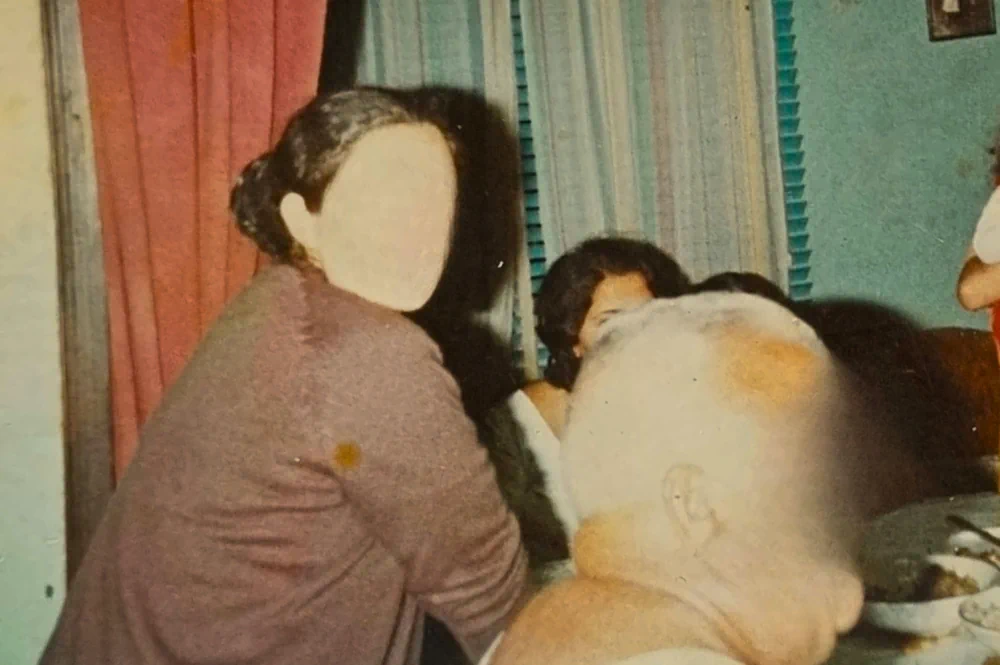
The images in the series carry marks of erosion, interruption, and disappearance. Figures become partially obscured, details dissolve, and fragments of the original photographs remain suspended between recognition and loss. Through these interventions, I seek to evoke the gradual deterioration of memory and the impossibility of fully recovering what has been lost.
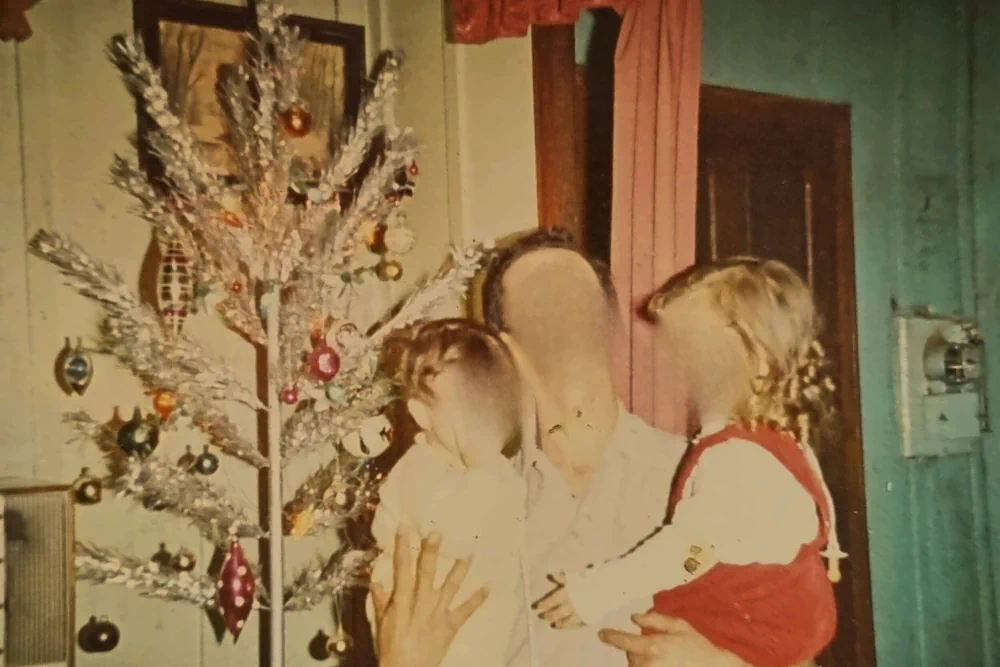
The family archive occupies an intimate space in this investigation. It contains traces of people, places, gestures, and moments that can no longer be experienced in the present in the same way. Looking at these photographs means confronting both what they preserve and what they cannot preserve. Every image holds a presence, but also reveals an absence: someone who is no longer the same, a moment that cannot be returned to, or a memory that has already begun to disappear.
The act of manipulating these photographs is therefore not intended to destroy the archive, but to make visible something that is already happening within it. The alterations become metaphors for the processes of remembering and forgetting, revealing the instability that exists beneath the apparent permanence of a photograph.
Between the traces that resist disappearance and those that gradually dissolve, What Memory Leaves Behind explores the space between permanence and loss. The work reflects on the intimate and collective experience of living with time, asking what remains when memories begin to change and what is created in the space left behind by what we can no longer fully remember.
Ultimately, What Memory Leaves Behind proposes that memory does not exist as a complete image of the past. It survives instead through fragments, interruptions, silences, sensations, and traces. Like the photographs themselves, memory is continually being altered—preserved and erased at the same time.
About Ana Carolina Fraga
Ana Carolina Fraga is a Brazilian visual artist and photographer based in Curitiba, Brazil. Her artistic practice explores memory, time, absence, and the fragile relationship between photography and the construction of personal and collective narratives.
Currently completing a Bachelor’s degree in Visual Arts at the Federal University of Paraná (UFPR), her research focuses on expanded photography, archives, and the materiality of memory. Working primarily with photography and expanded photographic practices, she investigates family archives and vernacular images as spaces of remembrance, transformation, and loss. Her practice incorporates digital manipulation, material interventions, transfers, textiles, and other processes that question the permanence and reliability of photographic images.
Her work has received recognition through international photography platforms, competitions, and exhibitions. She was selected as a semifinalist for the Head On Photo Festival in Australia and shortlisted for the BBA Photography Prize in Germany, where her work was presented as part of an exhibition in Berlin. She was also selected for the Fotodoc competition in Brazil in both 2025 and 2026, and her work was exhibited at Ficha Fest – International Festival of Analog Photography in Chile. In 2025, she received the Silver Award (Second Place) in the Conceptual Photography category at the 1839 Awards, as well as an Honorable Mention in the Conceptual Photography category at the ReFocus Awards.
Through intimate archives and processes of fragmentation and transformation, her practice reflects on the ways in which images survive alongside memory, preserving traces of what has been while simultaneously revealing everything that time inevitably alters. [Official Website]