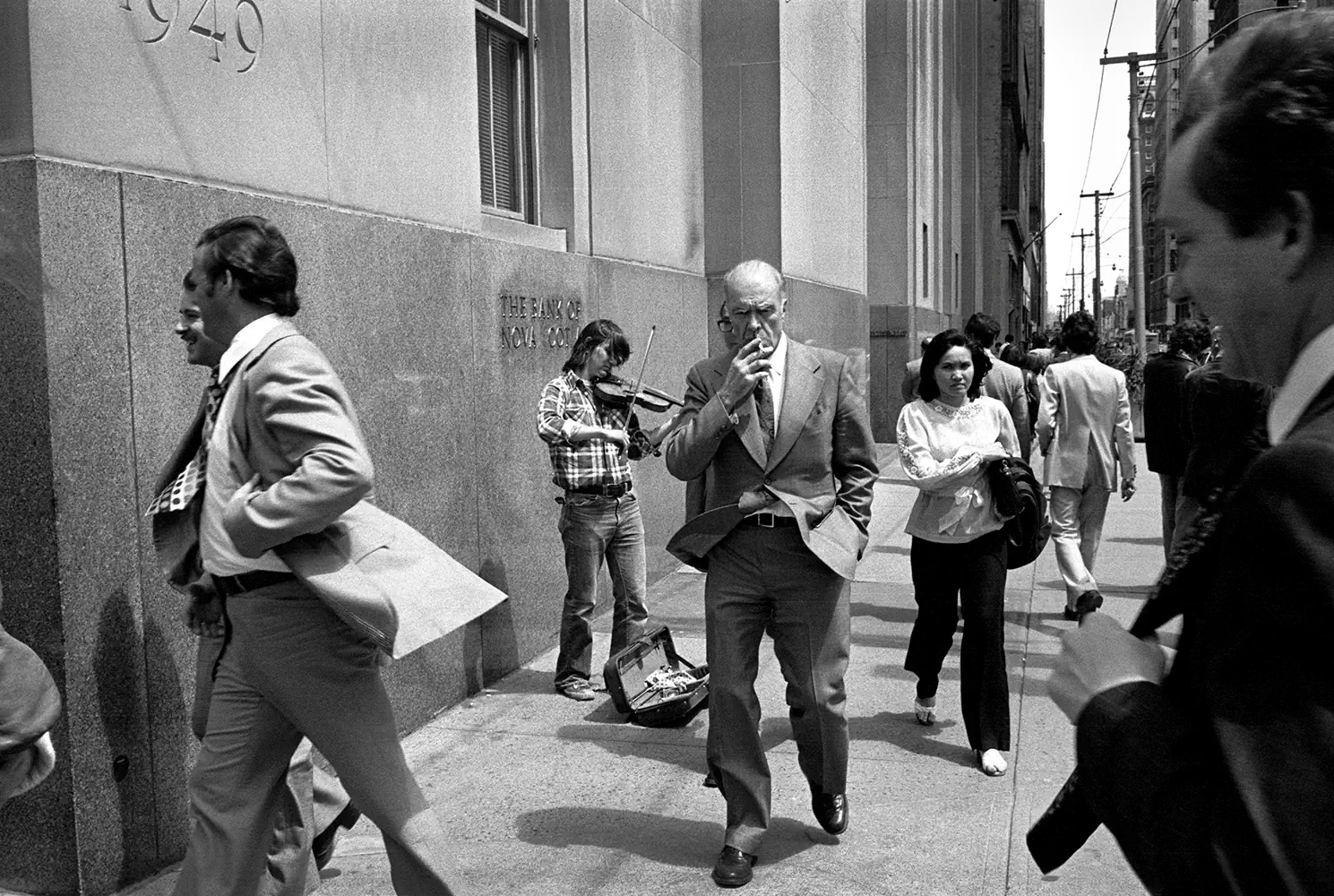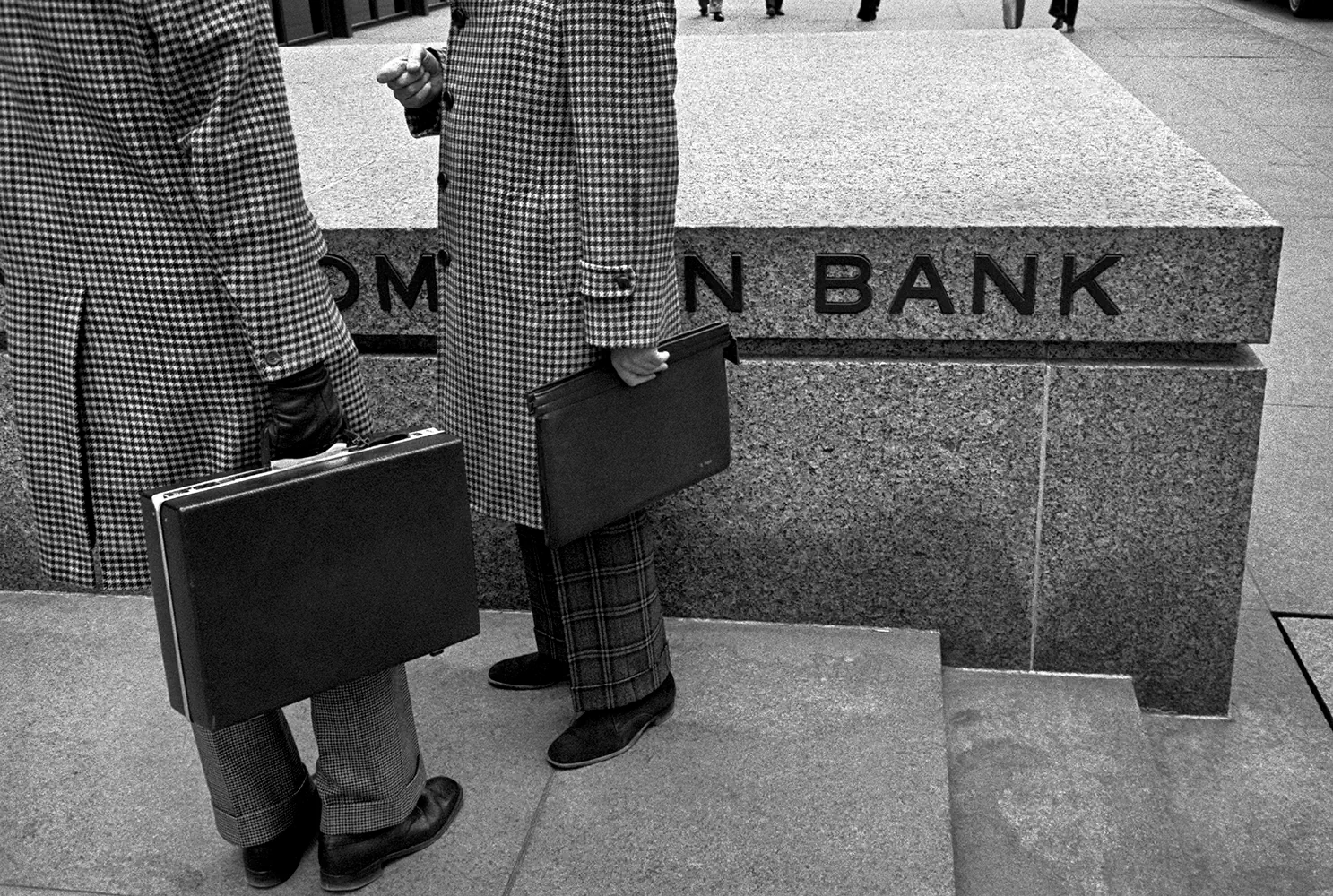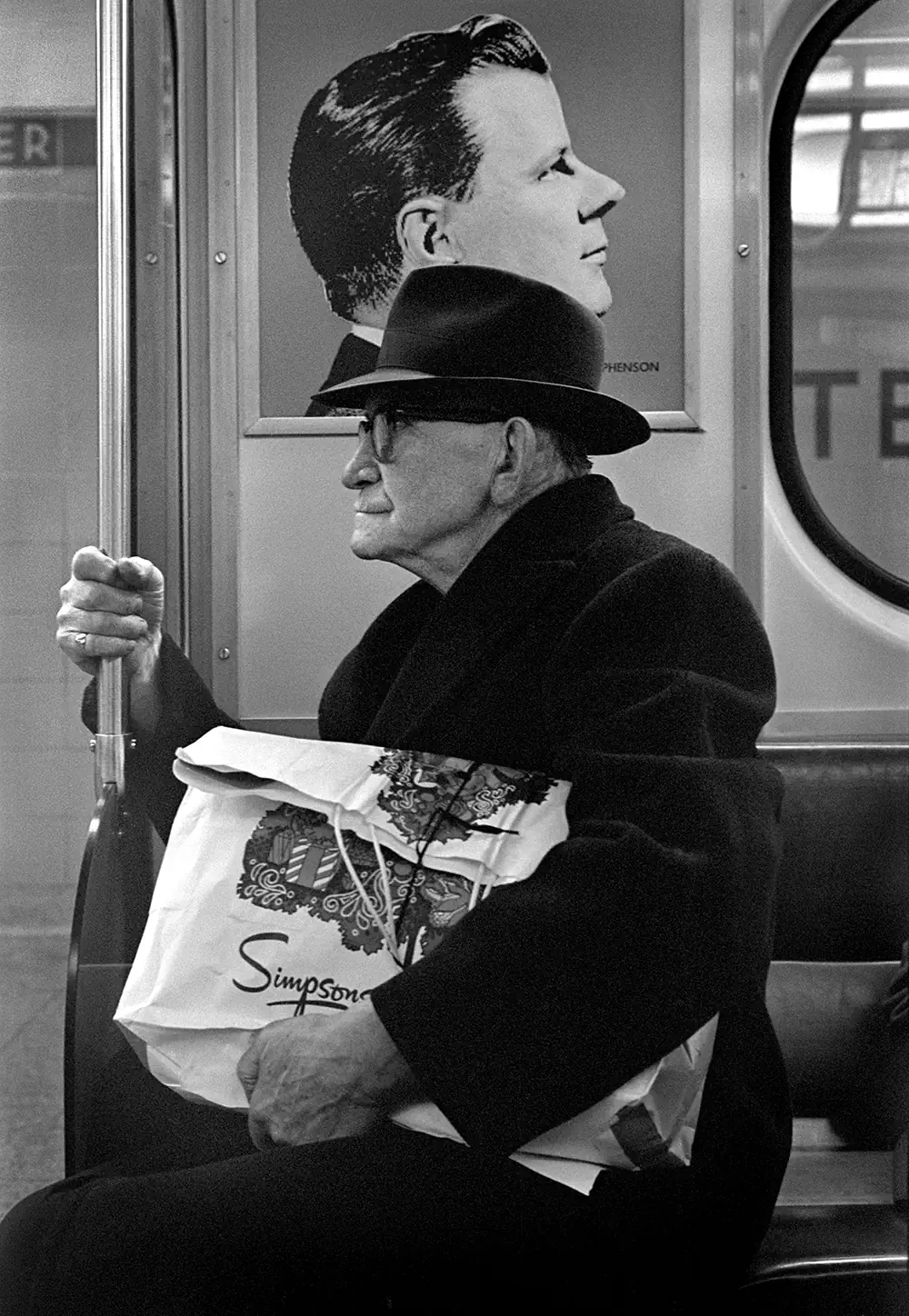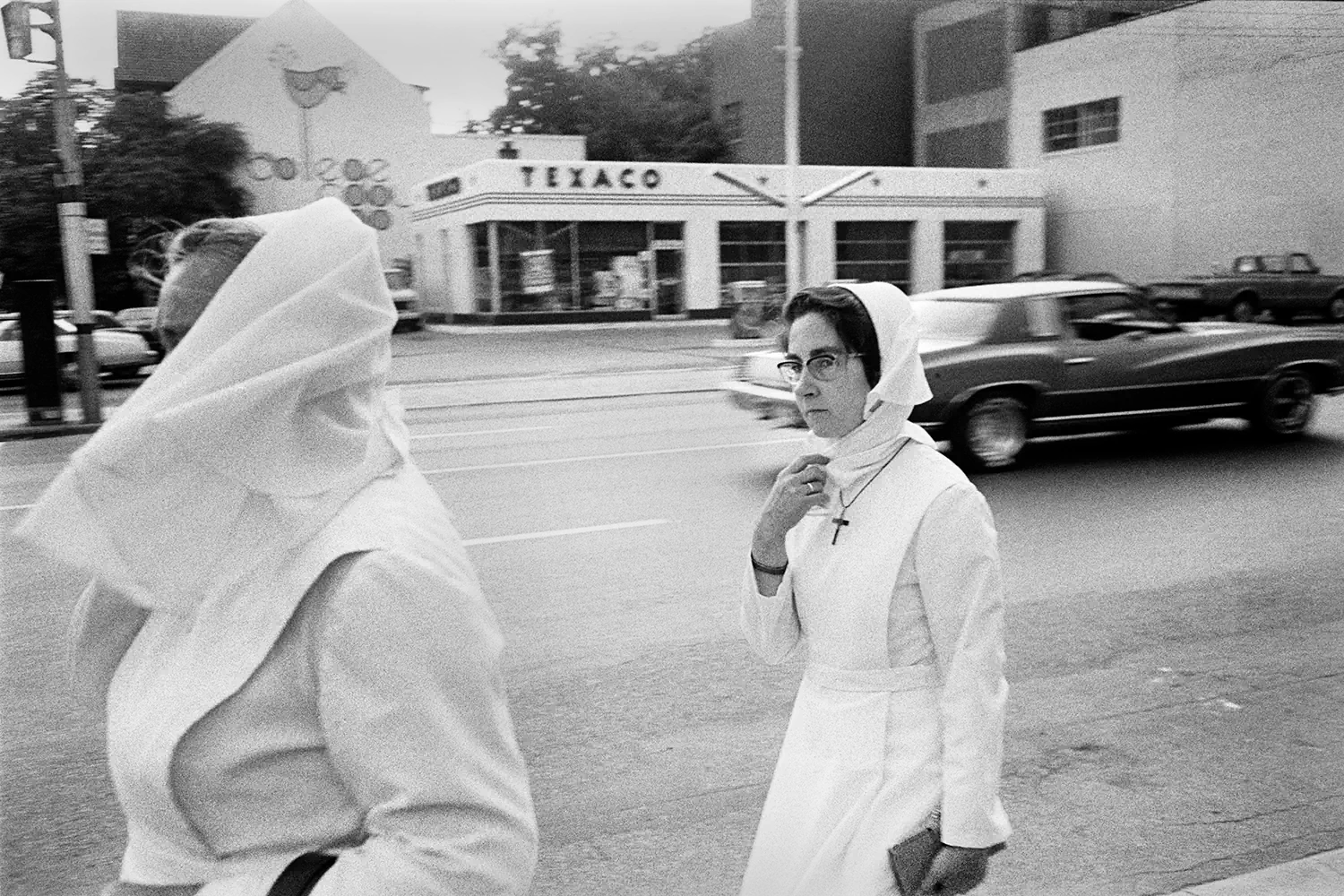
While out walking one day, I bumped into a couple I knew.
“We saw you on the street the other day,” they said, “but we didn’t want to interrupt. You were standing in traffic, taking pictures of pedestrians crossing the road.”
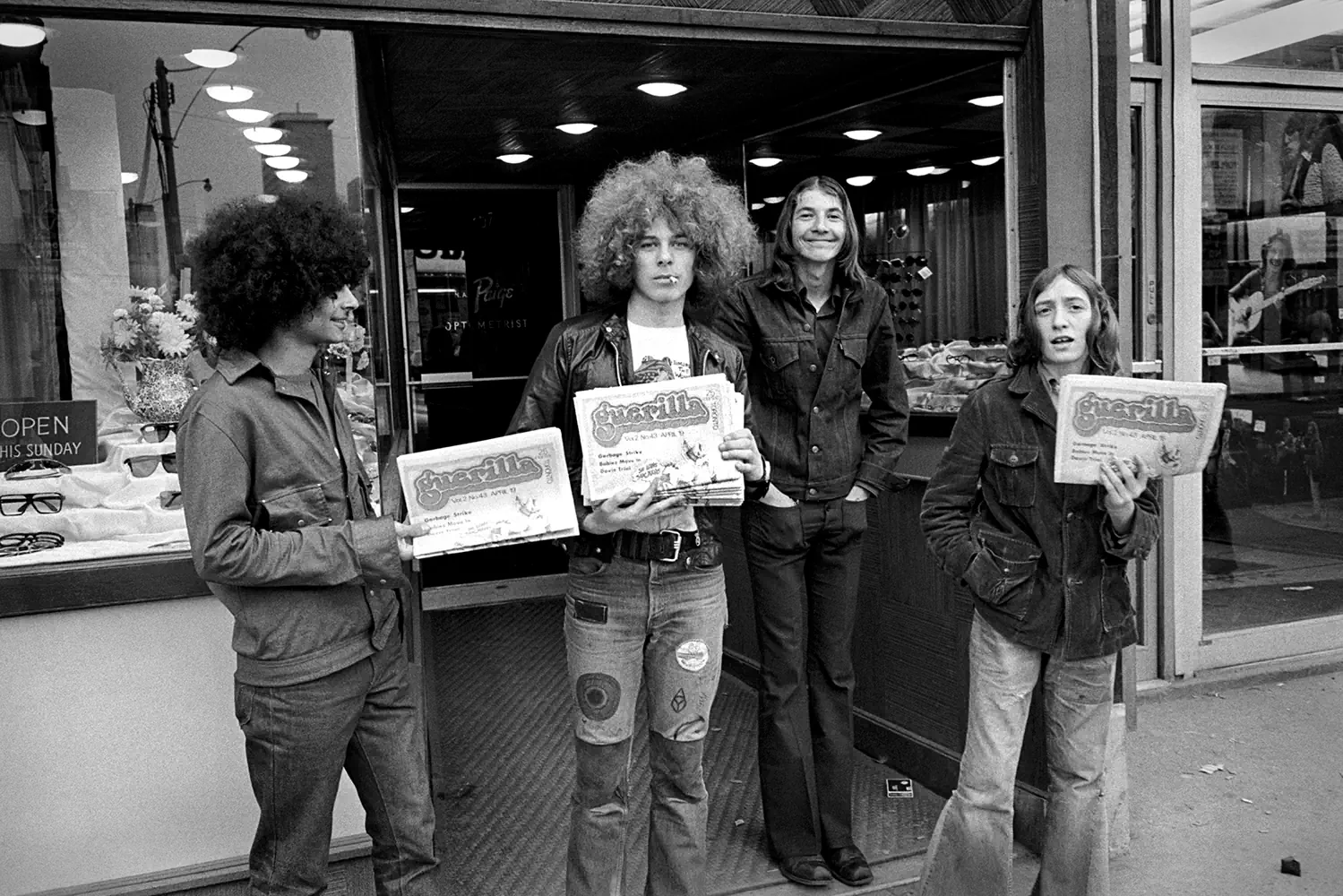
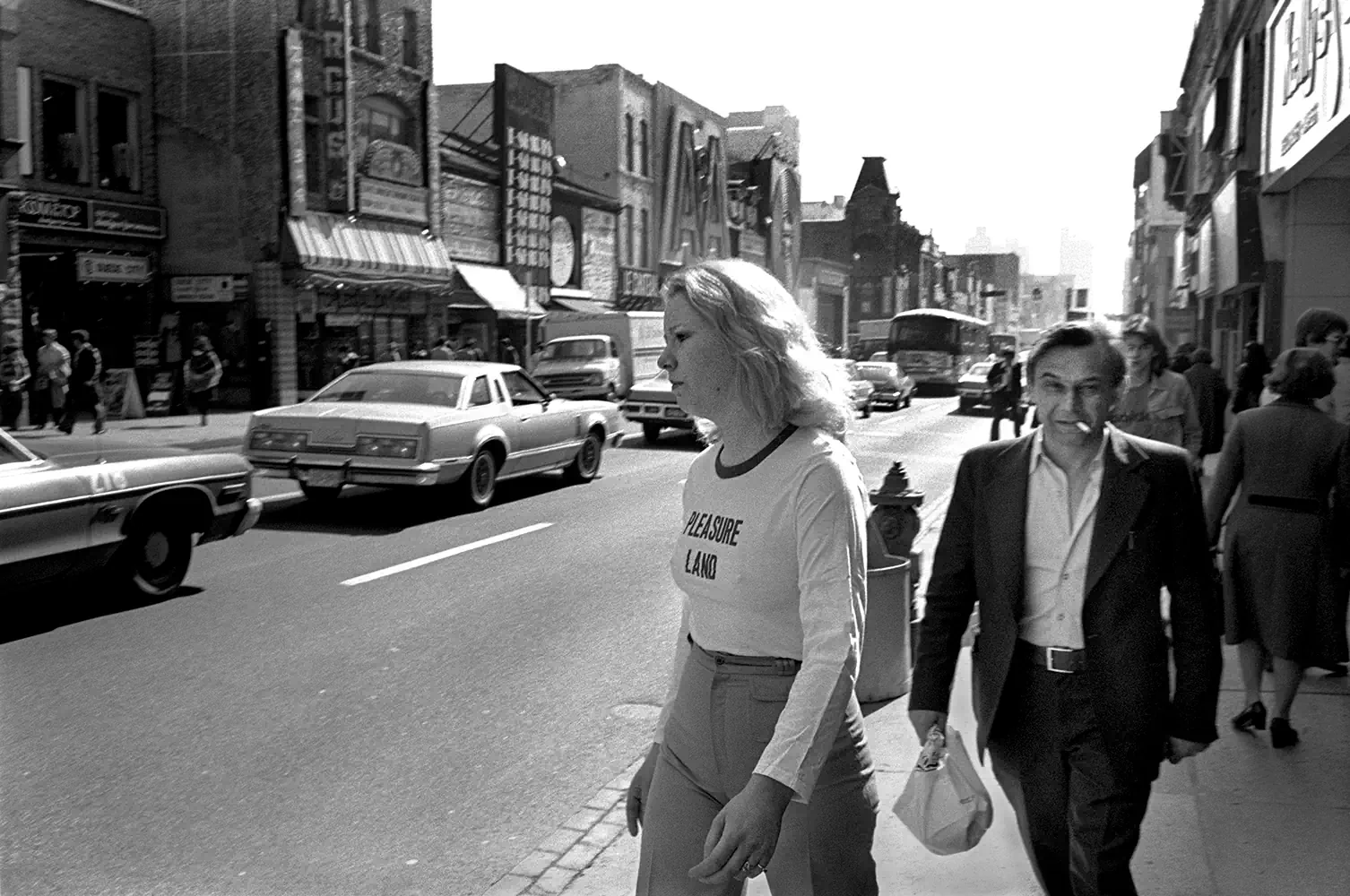
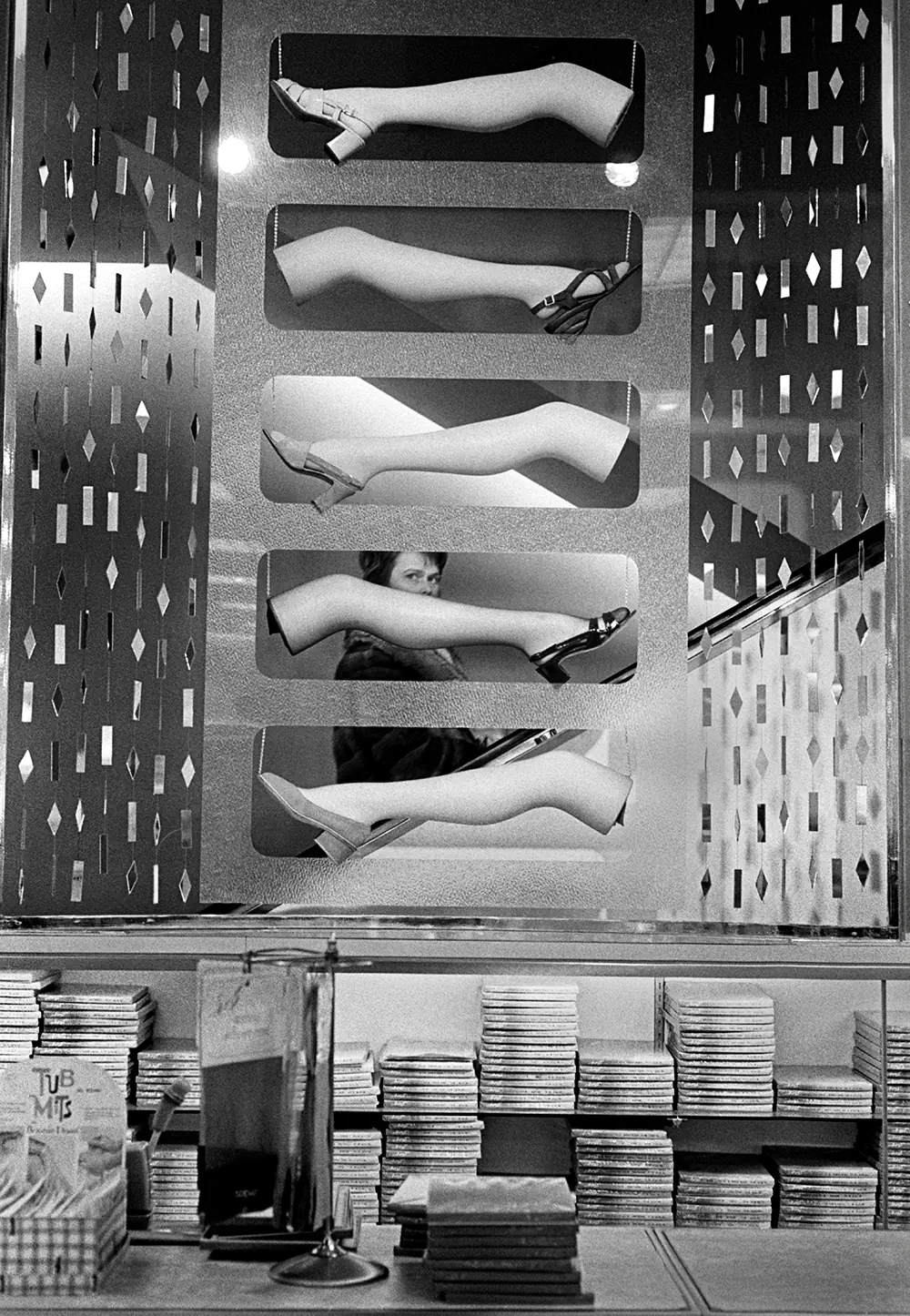
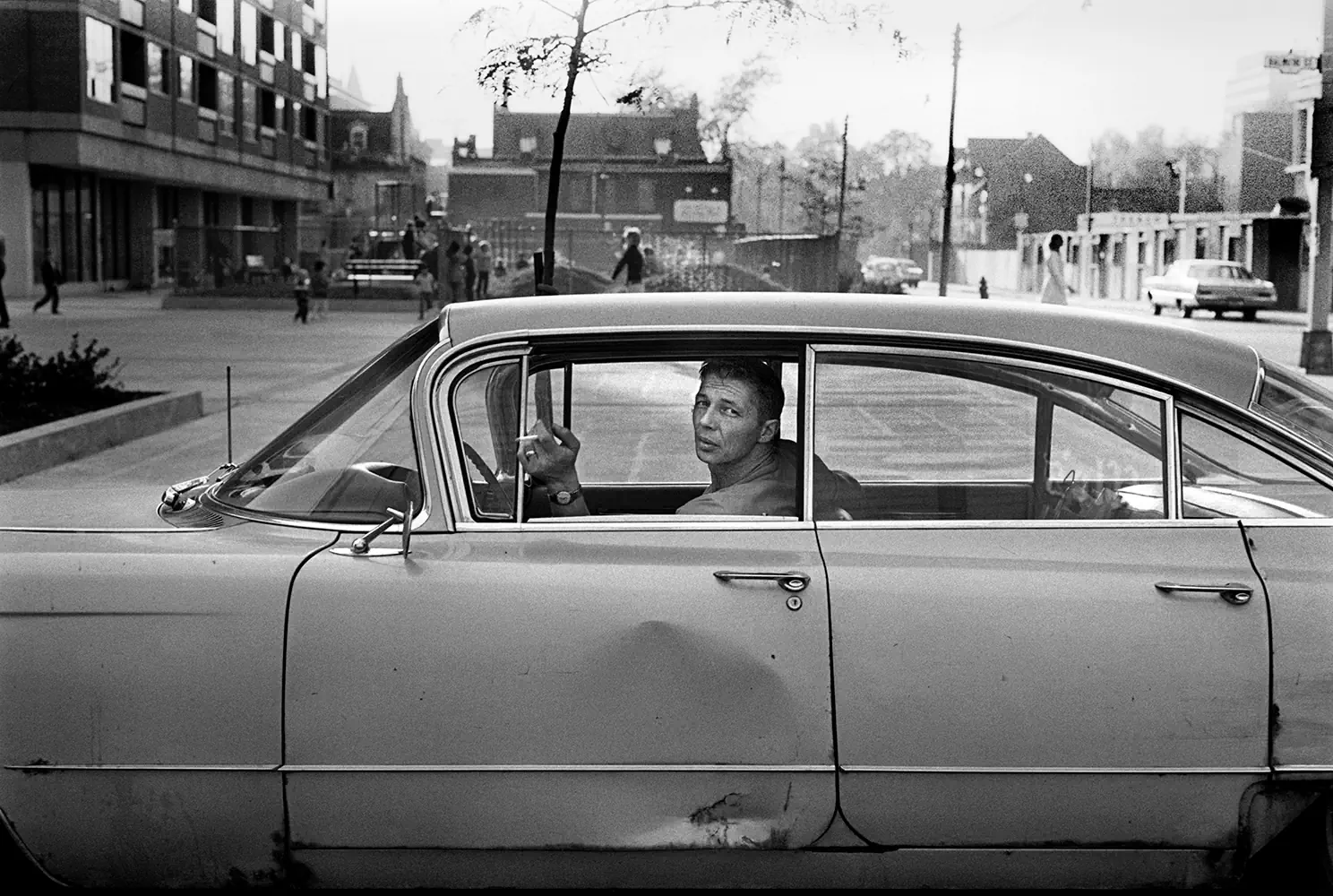
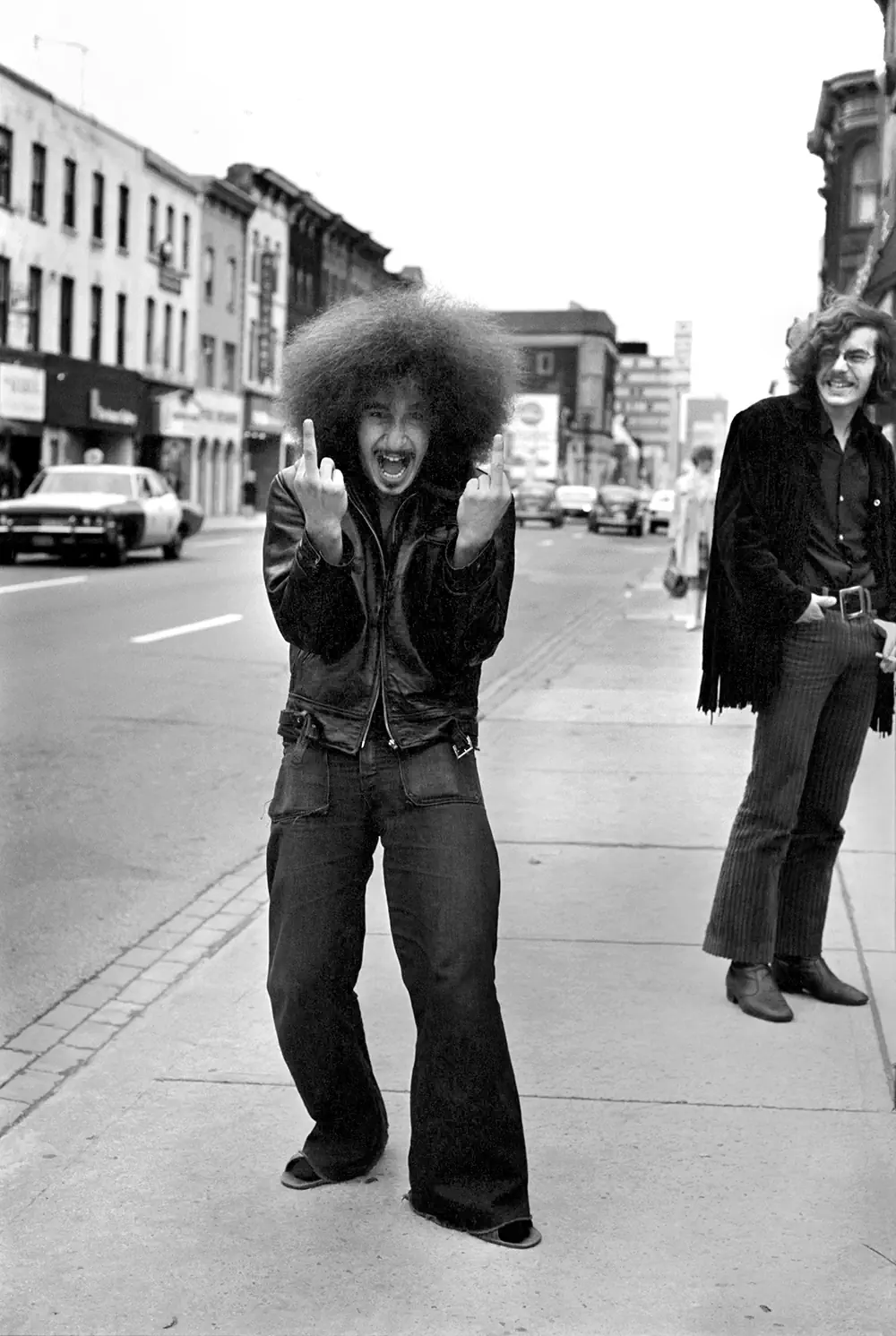
In those days, the seventies, I was a young man, keen to record my candid observations of people and their routines, and the trifling (or important) moments that can slip by unnoticed in the crowd.
It was in 1968, in Nathan Phillips Square, at the age of eighteen, that I first took a photograph that inspired me to document the world through my lens in this way. The photograph was of a young man resting his head on a rubbish bin in the spring sunshine. He had the appearance of a hippie, at odds with the business suits scurrying past in the background. The photograph I took was simply that: a young man in this environment. It wasn’t until later, when I looked at my contact sheets, that I saw how chance had intervened. Just as I had pressed the shutter button, a man in business attire appeared in the frame, looking at the hippie in a most judgemental way.
It was the resulting image, with its humour and pathos, that encouraged me to begin my search for curious juxtapositions. I came to see myself as a kind of visual anthropologist, someone who preserved traces to be observed at a later time. I stood within my environment and my culture, yet tried to view them from the periphery. At that time, cameras rarely appeared in everyday life. They were reserved for tourist sites and special occasions. Bringing a camera onto the street was my way of saying that every occasion is special.
As the seventies gave way to the eighties, the photographic arts community began losing interest in this type of third-person, black-and-white candid street photography. The uphill struggle to continue using my spontaneous approach suddenly became steeper. Instead of being exhibited and reviewed, my photographs were now collected in the familiar “box under the bed”.
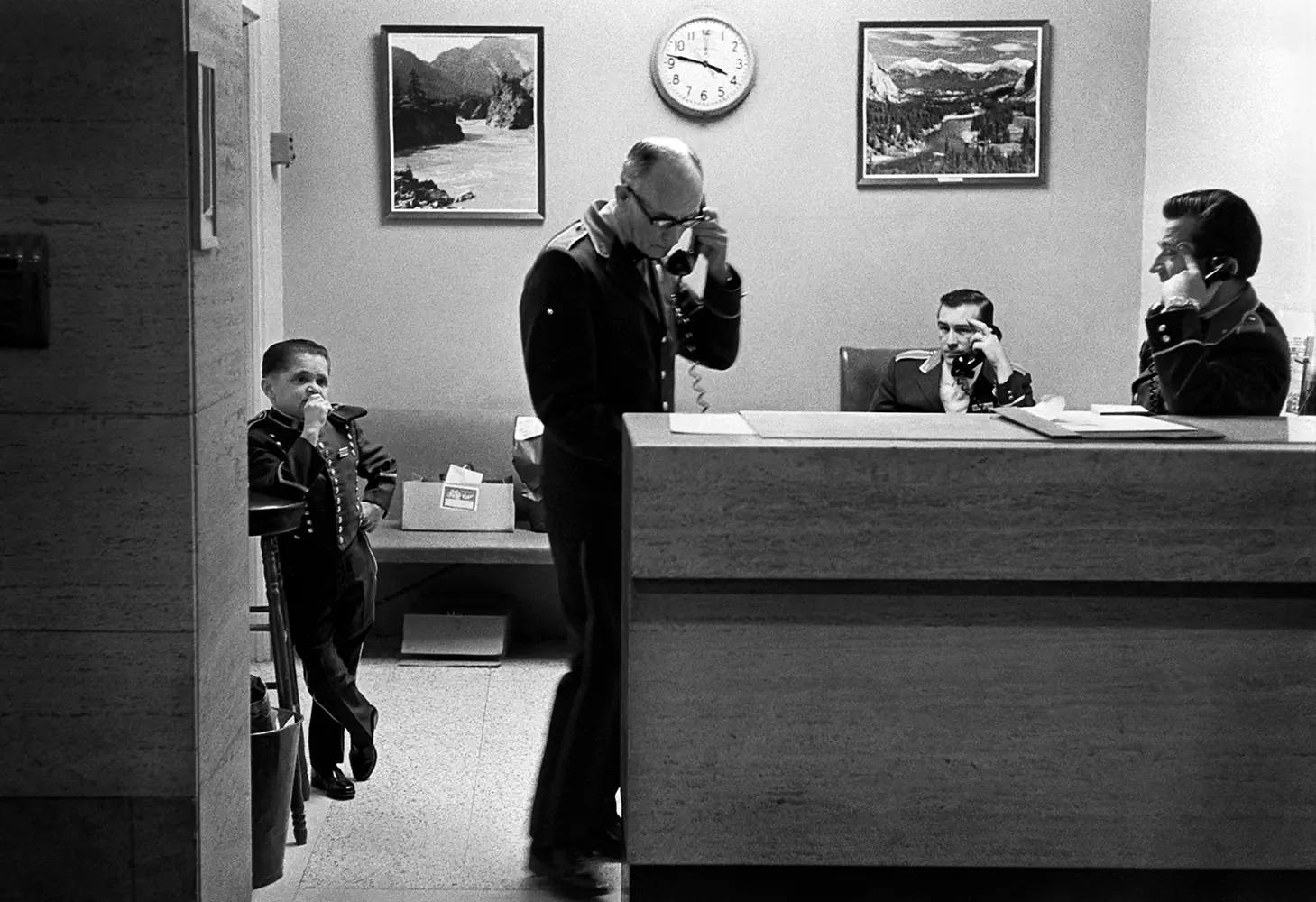
In the mid-1980s, in another instance of sheer coincidence, a dear friend of mine who worked at Maclean’s Magazine overheard a conversation in which someone mentioned that The Financial Post was looking for a part-time black-and-white darkroom printer. It’s amusing to think that I was successful in that Financial Post interview by showing a portfolio of images such as Bellhops, Toronto 1971 and Chester Subway, Toronto 1971.
So I became a newspaper photographer for The Financial Post. I worked under the pressure of a daily publication schedule and on The Financial Post’s glossy monthly magazine, using studio equipment on location. I loved the work and the very clever people I was fortunate enough to work with. I had a press pass and a car phone, and I carried a heavy camera bag containing two of everything because of the risk of technical failure. I went to press conferences and annual general meetings, chasing images of the financial newsmakers of the day. It was a massive shift from walking alone on the street carrying a tiny Leica.
But change beckoned, and after five years at The Financial Post, I left and began a new life “down under” with my Australian wife. I’ve carried the original ten thousand or so negatives of my work from the seventies through most of my adult life. These fragile mementoes have survived moves from house to house in Toronto, two dusty home renovations, and a six-week overseas voyage in a shipping container to Australia.
Like tiny silver fossils, they are clues to a former time, waiting to be rediscovered. For years, from somewhere in my memory, they have nudged me to bring them back to life and hold them up for examination by those who currently inhabit that Toronto space, or by any interested viewer drawn to the timelessness of human nature.
About Brian Condron
Born in Toronto, Canada, in 1949, Brian Condron developed an interest in photography at the age of eighteen after visiting Call Them Canadians, a travelling exhibition organised by the National Film Board. The experience marked the beginning of a lifelong dedication to photography, which would eventually shape both his artistic practice and professional career.
Condron studied Applied Photography at Sheridan College, graduating in 1971, before completing a Bachelor of Fine Arts in Visual Arts at York University in 1976. During these formative years, he became particularly interested in black-and-white photography and the social landscape, exploring everyday environments and the relationship between people and their surroundings. His work was exhibited extensively, while he supported his photographic practice through part-time teaching, print sales, and financial assistance from the Canada Council and the Ontario Arts Council.
His professional direction changed in the mid-1980s when he began working part-time for The Financial Post in Toronto. This opportunity opened the door to newspaper and magazine photography, although Condron maintained an independent approach to image-making. His Leica camera remained a constant companion, allowing him to continue pursuing spontaneous observations beyond his professional assignments.
In 1990, Condron relocated to Australia, where he worked as a photographer for The Australian newspaper and BRW magazine. Despite the opportunities and experiences that photojournalism provided, his strongest artistic interest remained rooted in candid street photography. The unpredictable nature of everyday life and the possibility of capturing unguarded moments continued to influence his personal work.
Today, Brian Condron lives near Brisbane with his wife, Desley. He remains actively involved in photography and has recently resumed exhibiting his work. Decades after first discovering the medium, his commitment to observing and documenting the world around him continues, with his Leica still close at hand. [Official Website]