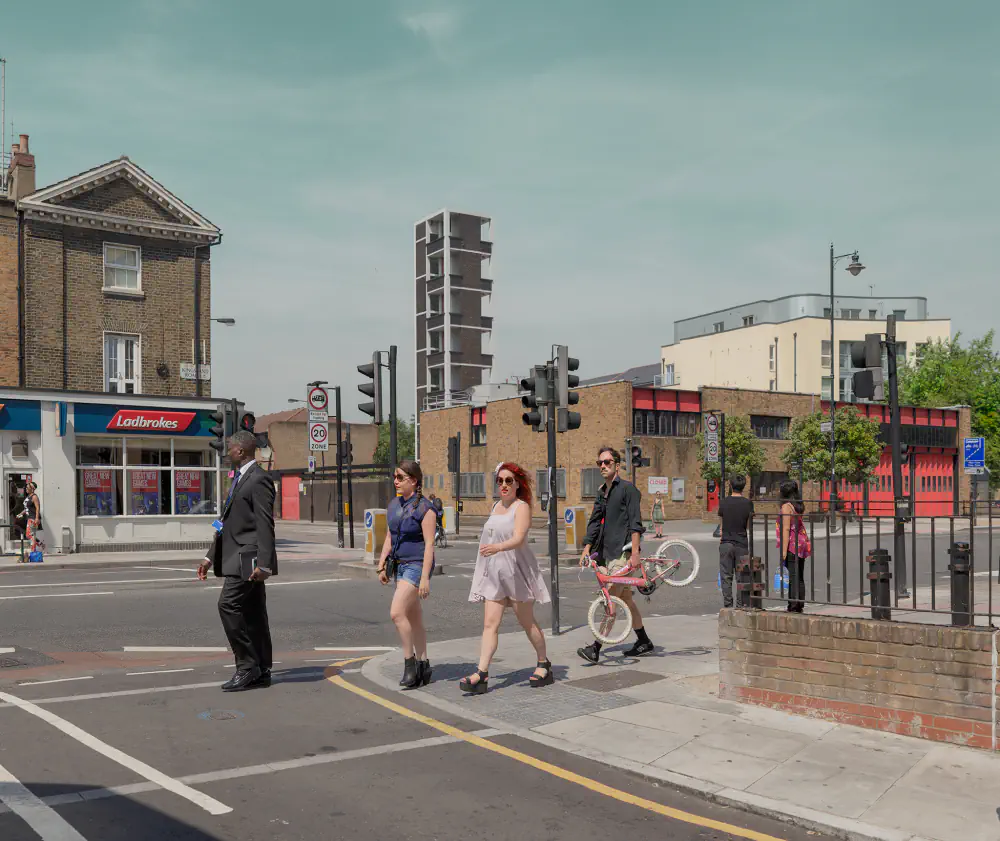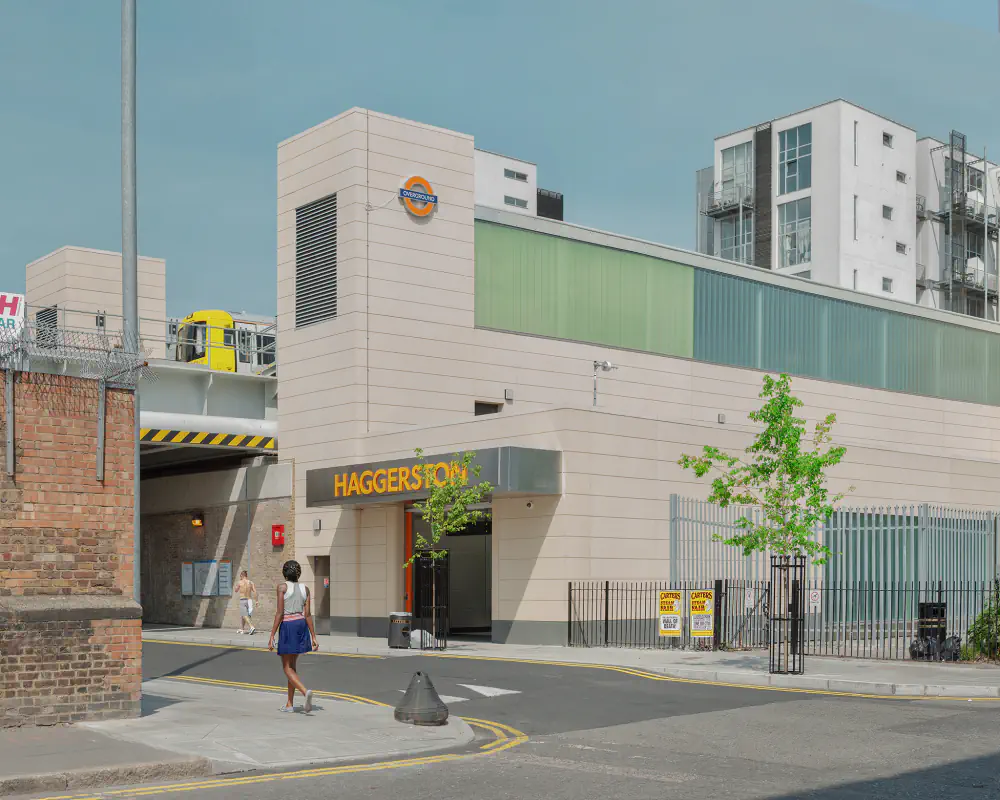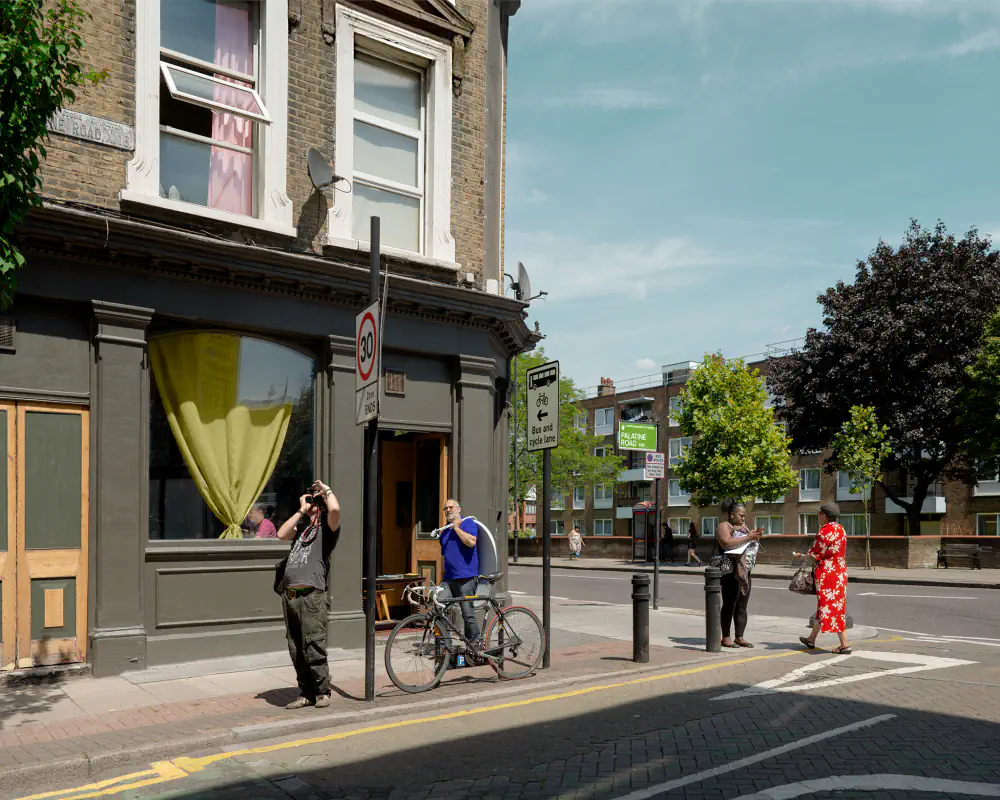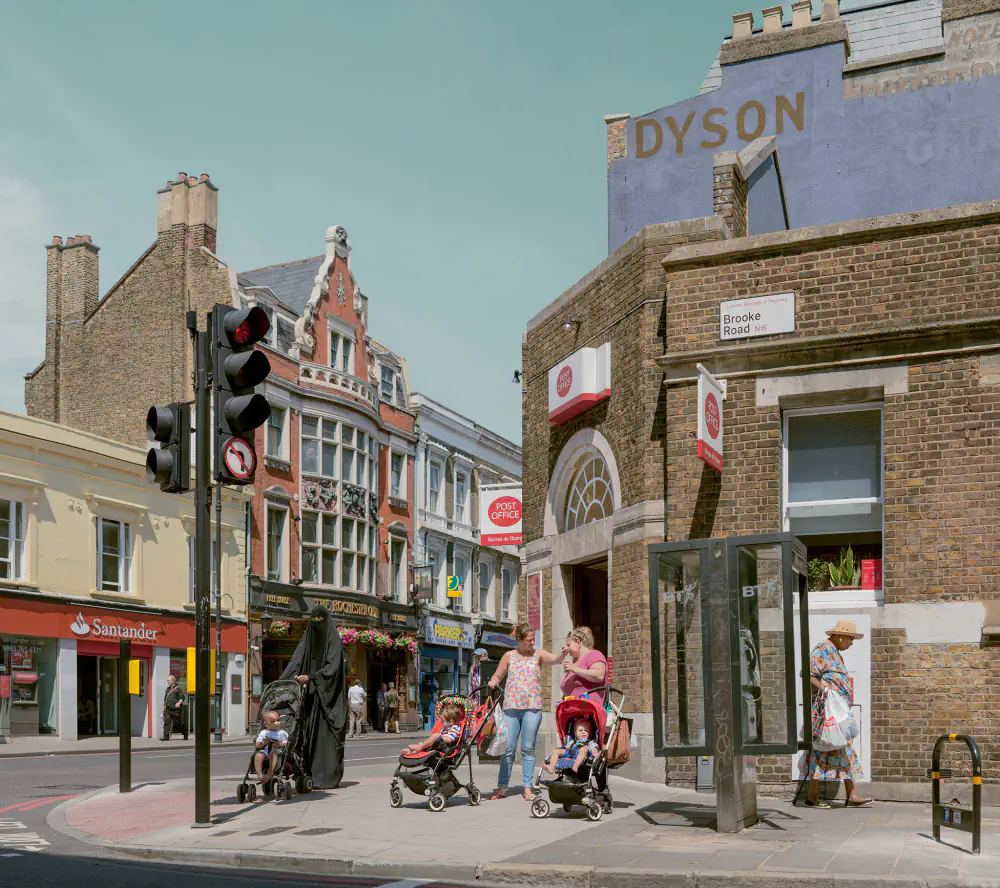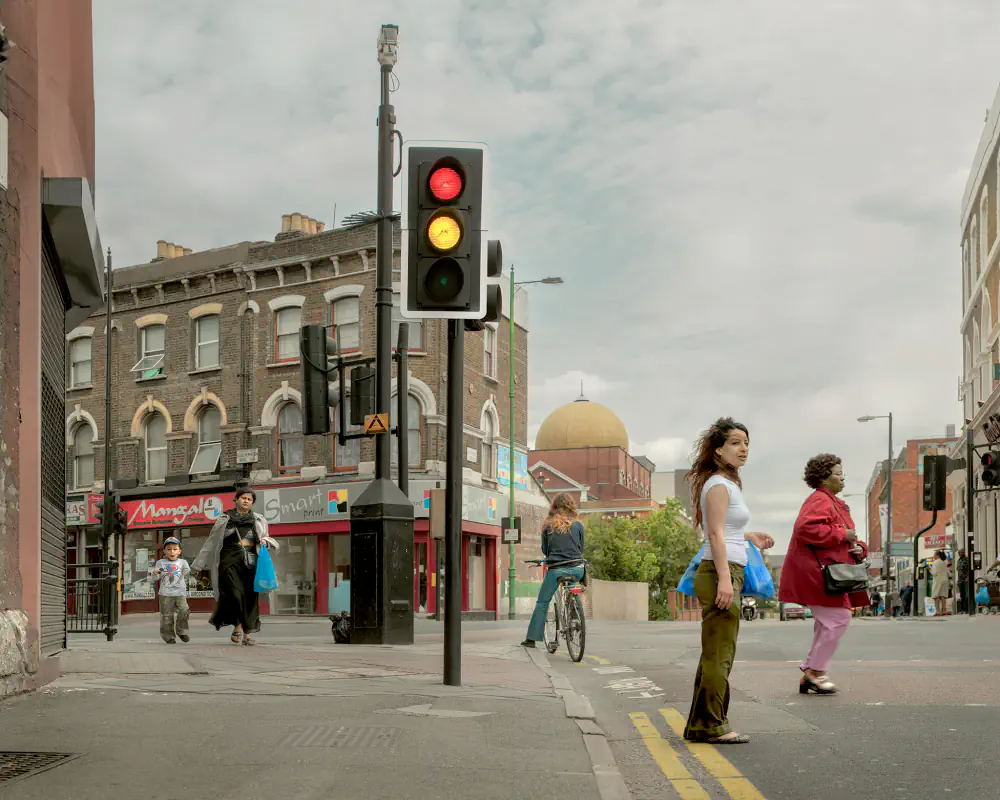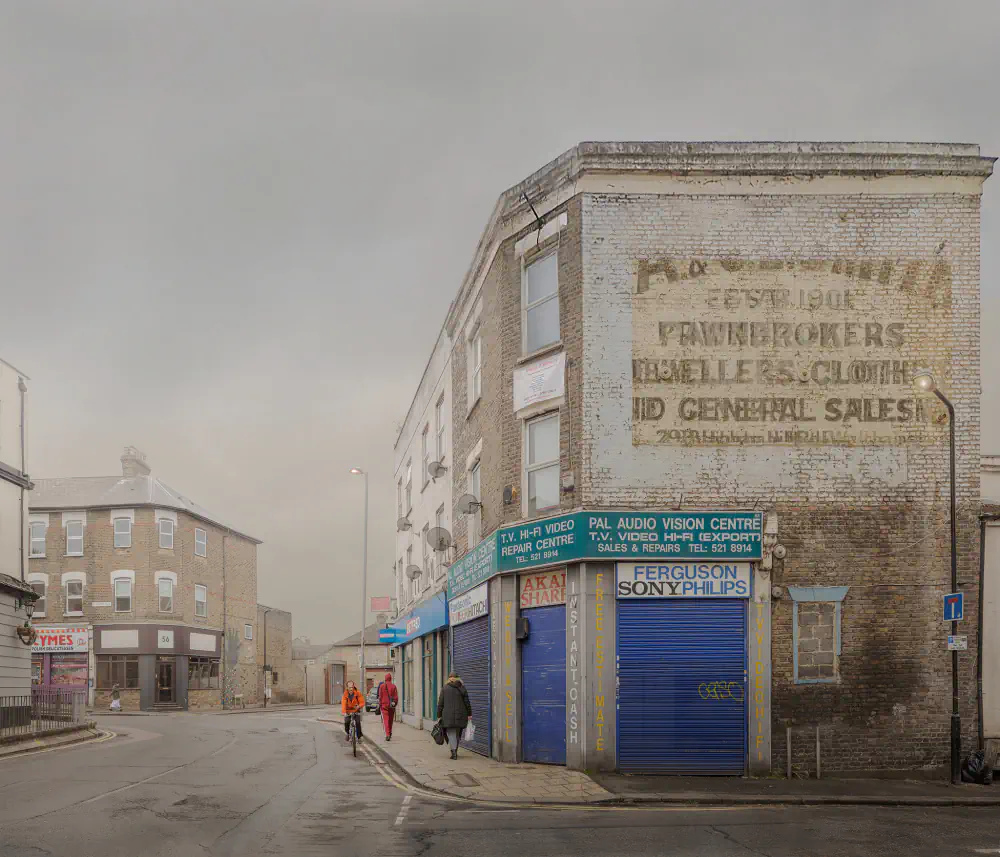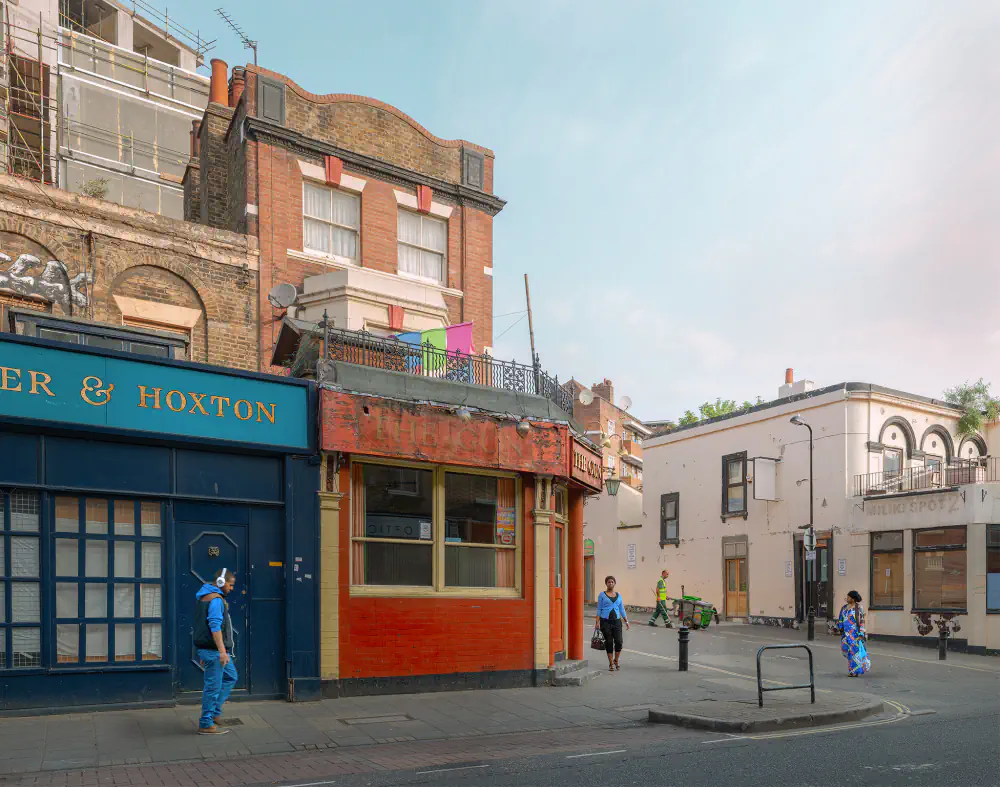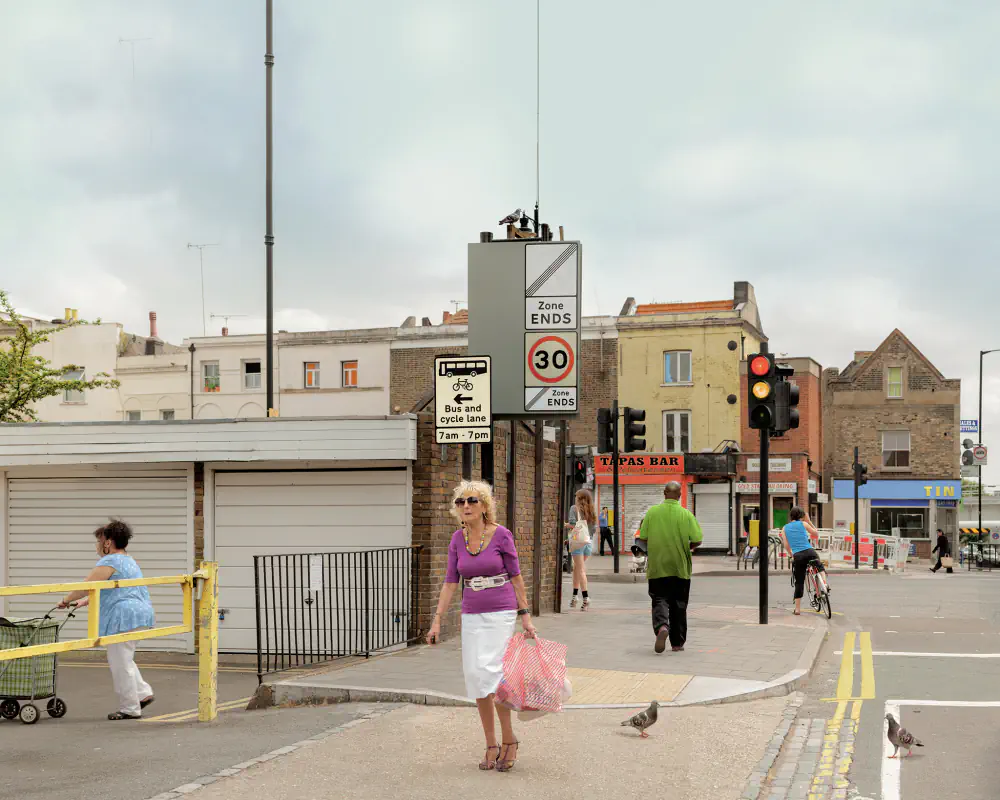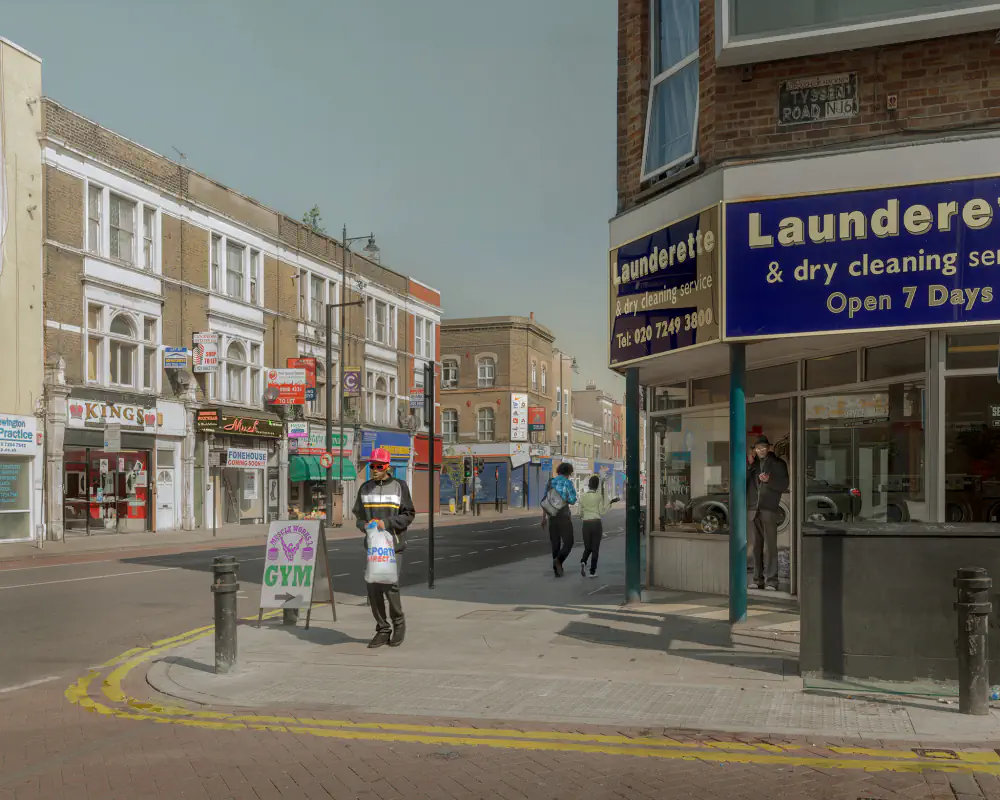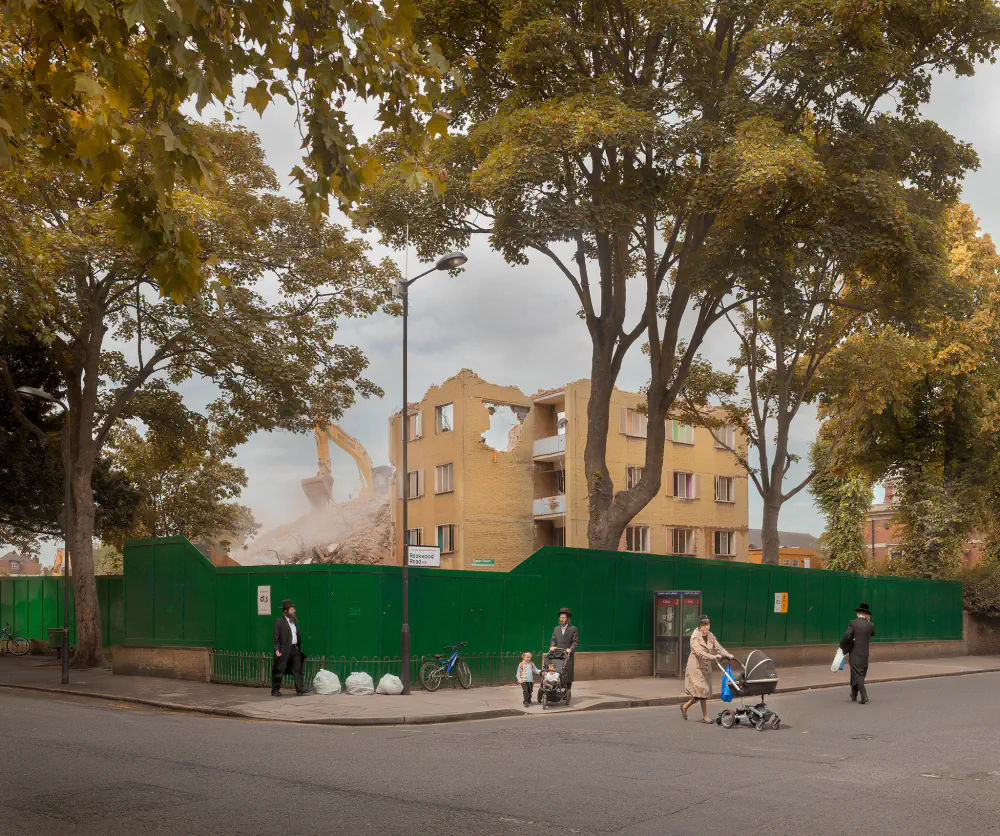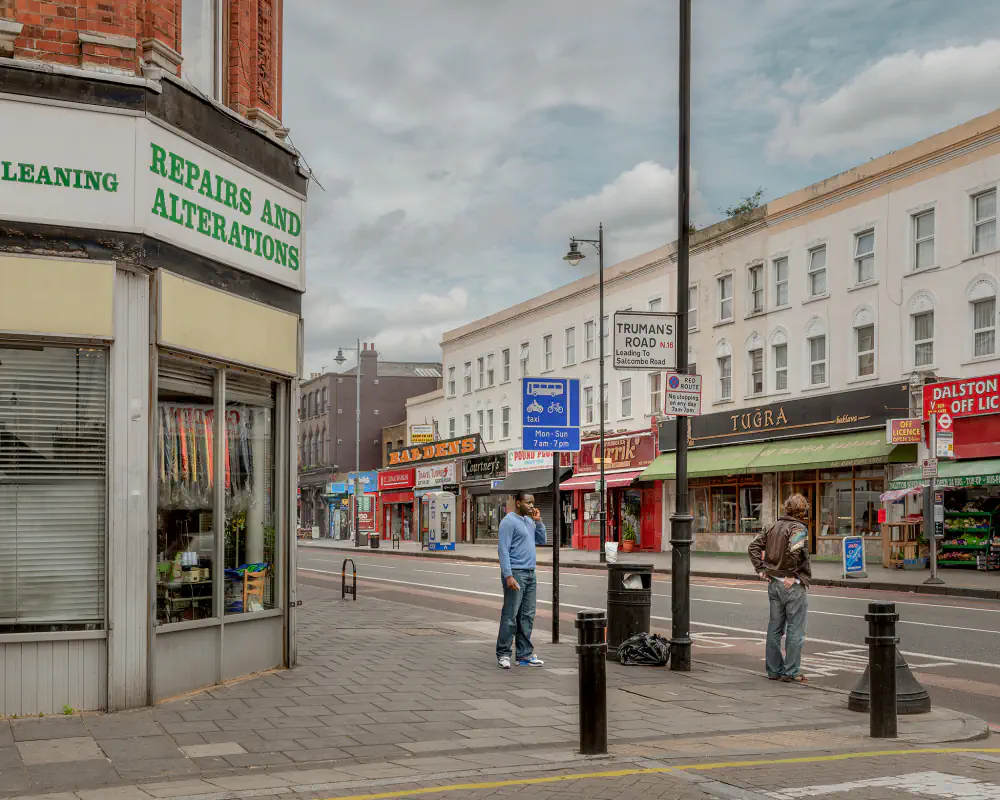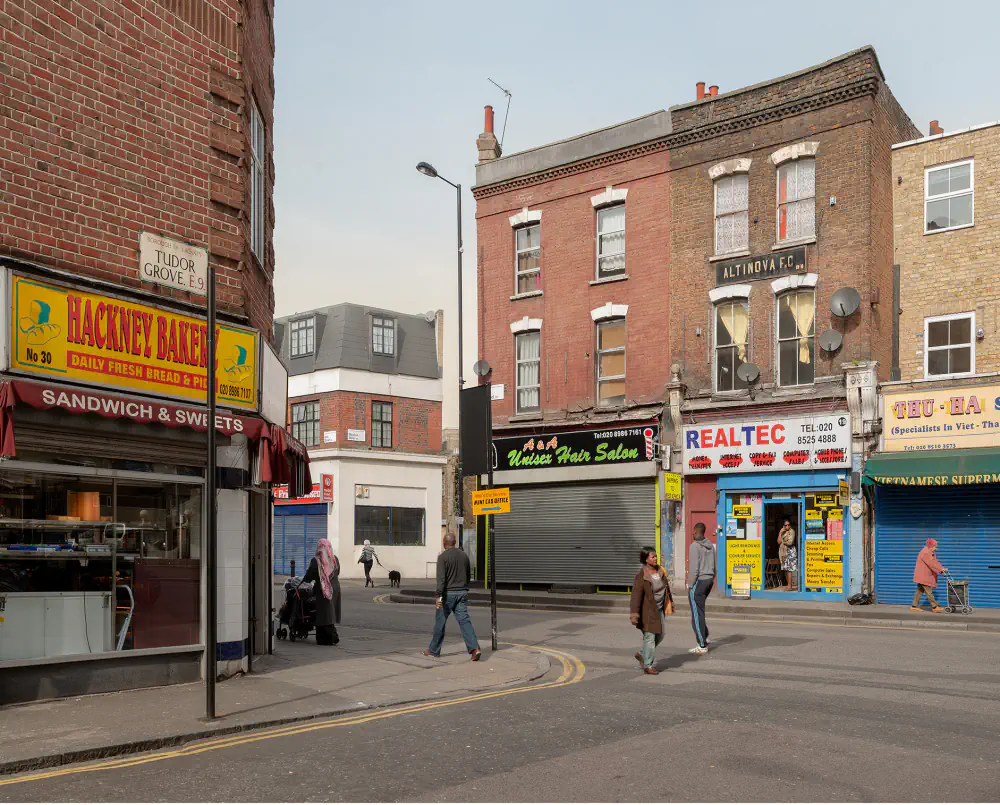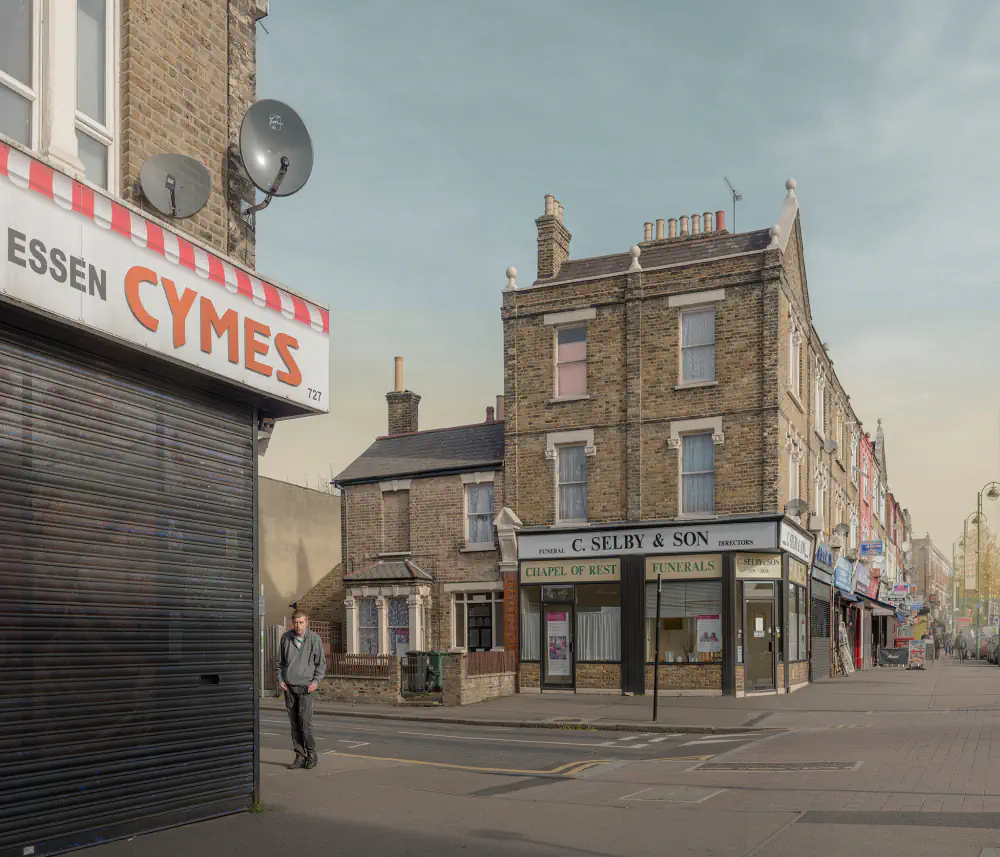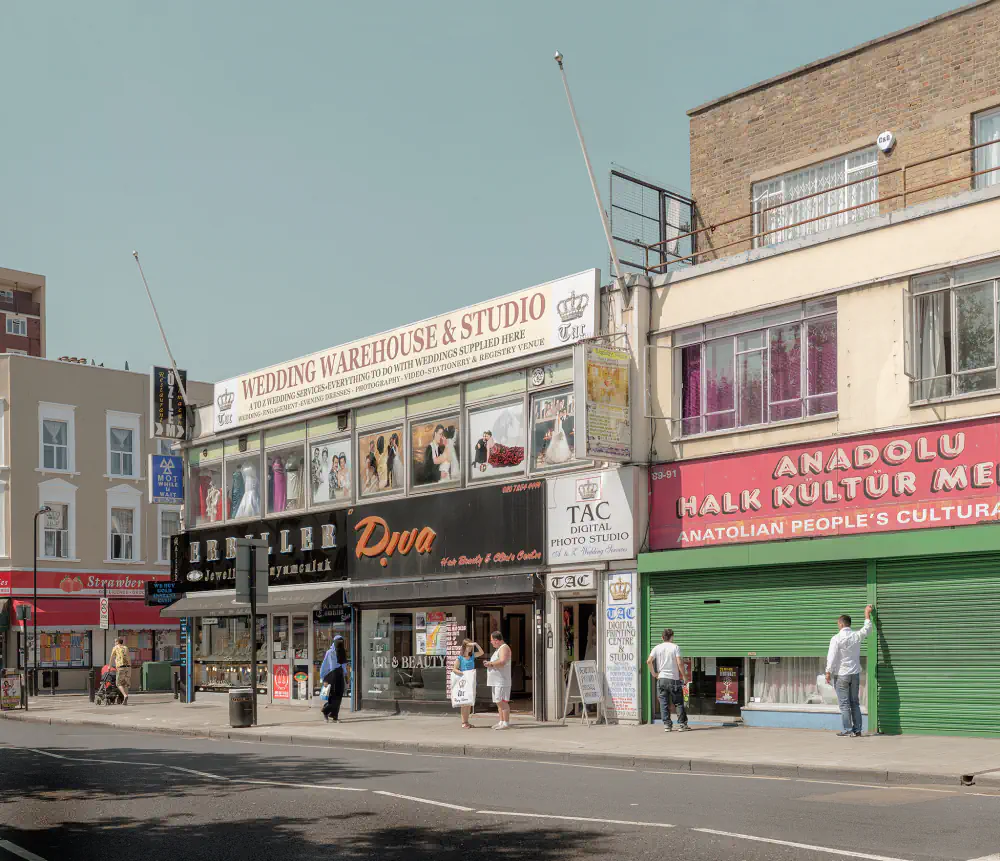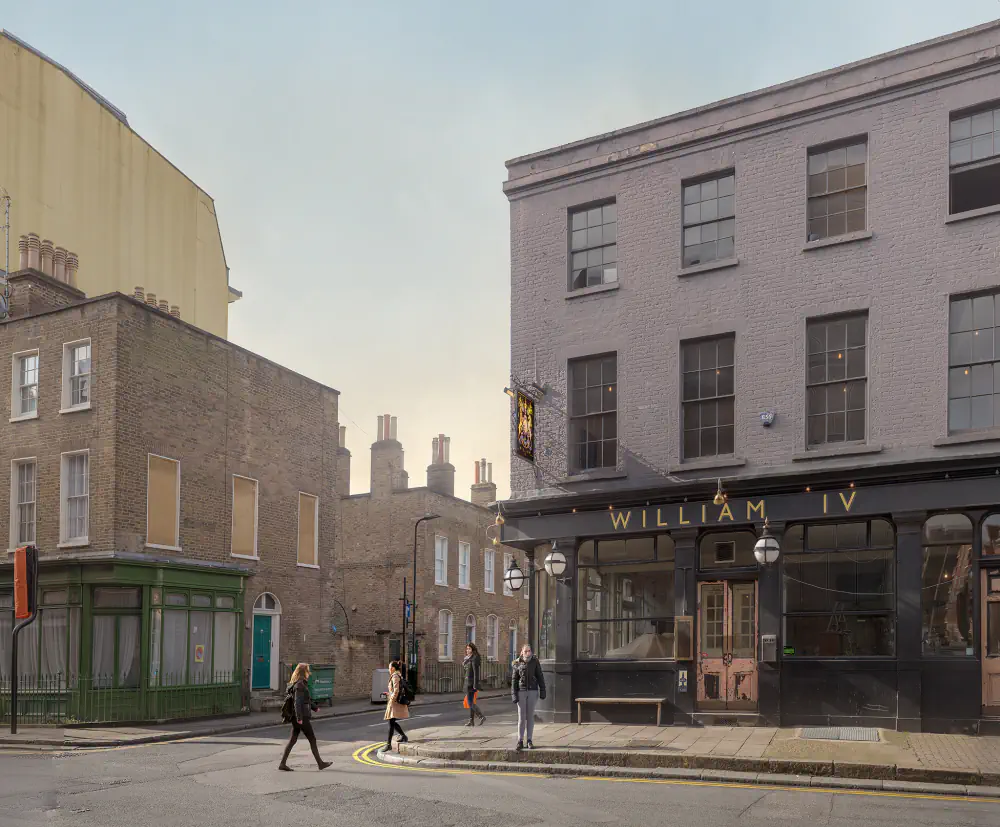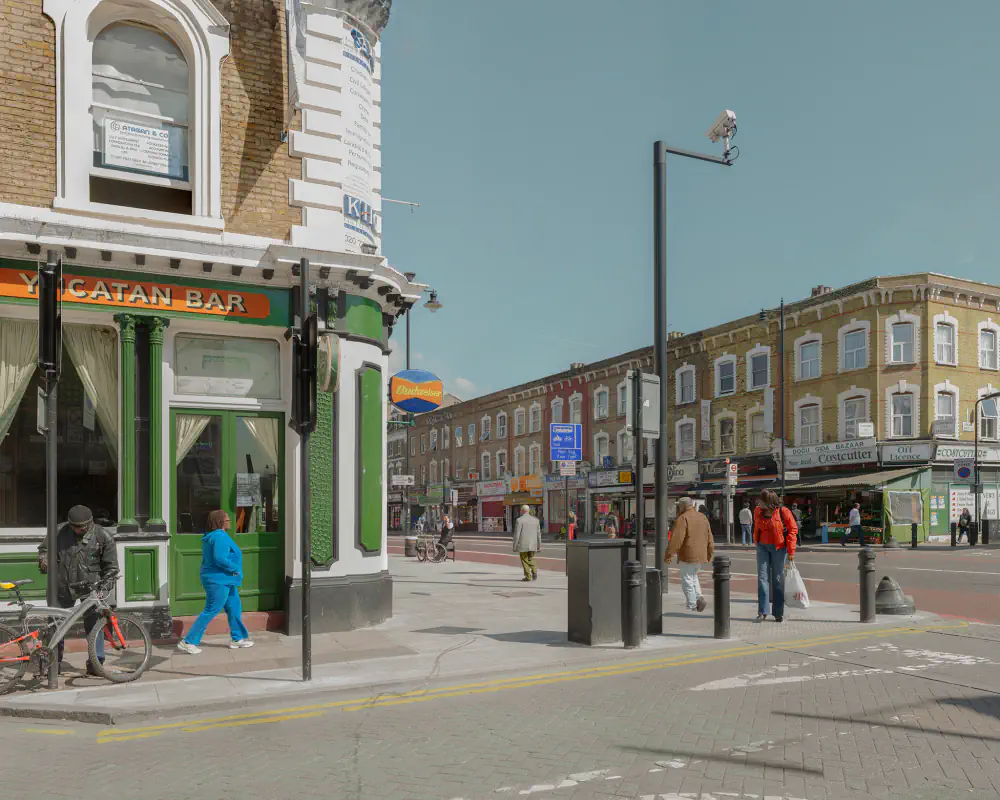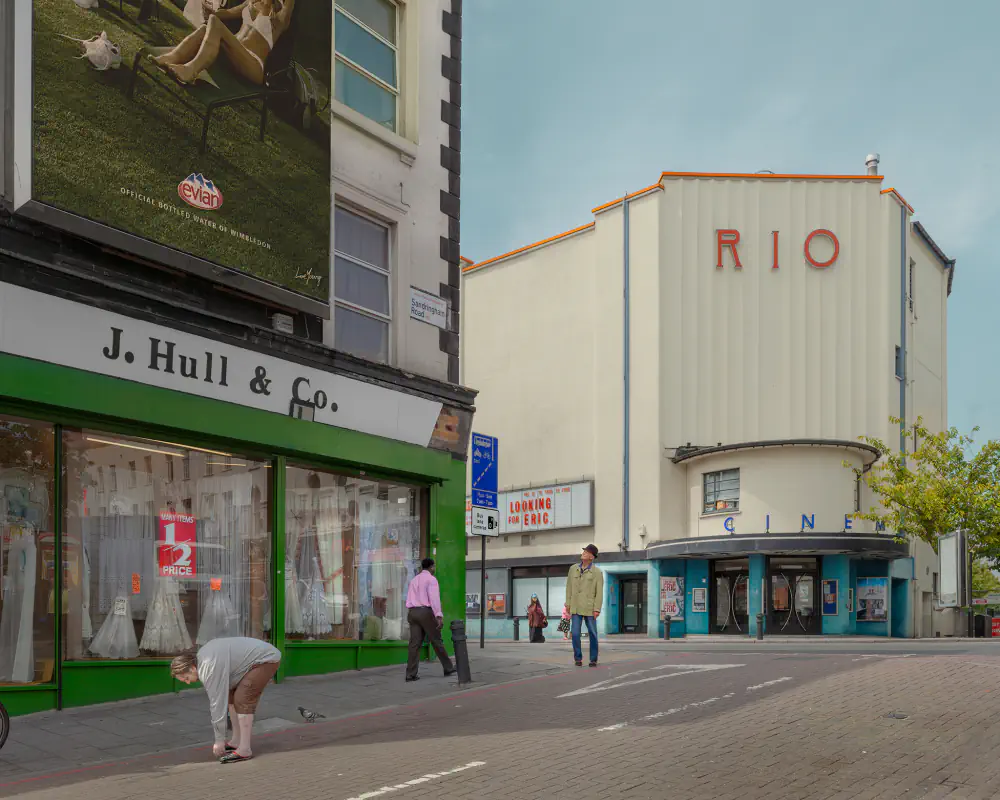
These pictures started life as an experiment designed to convey contemporary East London in a specific mood and atmosphere that reflected my experience of moving through an urban space in the bright light of summer.
I was researching locations for another personal project about my family history, inspired by immigration from Ireland and how newly arrived people from distant lands navigated different parts of the East End, integrating and interacting with one another.
I wanted to include architecture and use it to signify history and mythology, as well as showing how people looked and moved. As the research progressed, I became captivated by the idea that these elements could be combined in a democratic way by photographing each part of the image separately and bringing them together, so that there was no central focus or primary feature, but rather a collection of details that reflected the act of “seeing”.
It was a way of challenging Cartier-Bresson’s dictum of the “decisive moment” and moving towards a method of composition and construction that was more akin to painting or cinema than to a single photograph.
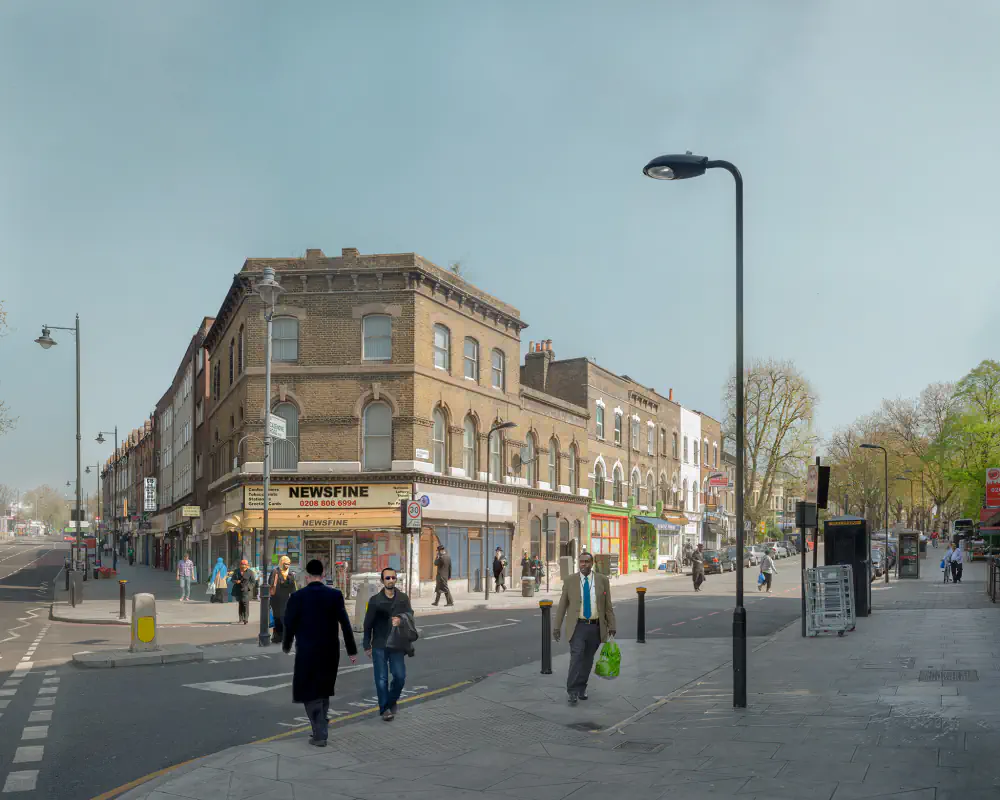
The mood I wanted to reflect was close to a mid-century Kodachrome palette, and I found that digital tools made it possible to achieve that aim without shooting on film. By this time, the Nikon DSLRs I was using offered sufficient resolution, allowing me to move away from the large- and medium-format film cameras I had been using.
This completely changed my approach to documentary photography. I was able to work in a way that suited me in the confined streets of London while remaining mobile and shooting handheld, using a bicycle to get around with just a small camera and one lens.
The title “The Corners” came to me as the project was nearing completion. I noticed that the locations I had chosen featured street intersections, places where people were meeting, crossing roads, negotiating space and walking off into the unknown distance.
When the series was reviewed by Geoff Dyer for The New York Times, he remarked that the images managed to show the past, present and future all at once. The article was entitled “How to Photograph Eternity”, which I thought hit the nail on the head in terms of my intentions.
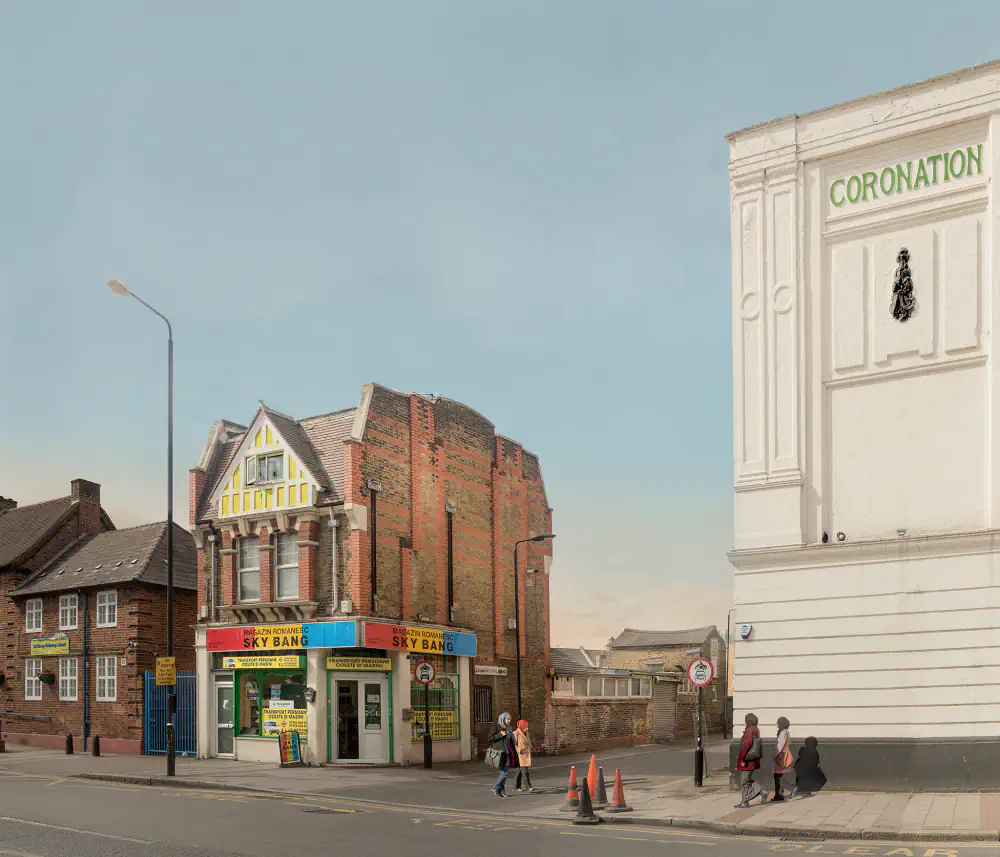
I was also aware that I was creating an archive of images depicting very ordinary places and situations that would show the city in a state of flux. London was changing rapidly from a working-class centre of industry and manufacturing into a regenerating and gentrifying city with a more affluent, leisure-based economy. I wasn’t entirely comfortable with this transformation, while also realising that I was part of the problem rather than part of the solution.
I felt that perhaps I was making photographs for people who hadn’t been born yet, although, in truth, I was working instinctively and trying not to overthink my actions. I think I do my best work when I am in a kind of fugue state, slightly dissociated from any predetermined agenda.
When I am out with a camera, my mind is constantly moving through music, books, films and conversations, momentarily fixating on anything that enters my head.
Photographing in public spaces can be quite antisocial, as if you have nominated yourself as the only person in that place at that moment who is recording that fraction of time for posterity. It’s a privilege and a responsibility that I take seriously, but I try to approach it with the lightest touch I can manage.
The project took around ten years to complete. At the time, I was earning my living as a photographer, working for architects and galleries and undertaking occasional editorial commissions. [Official Website]