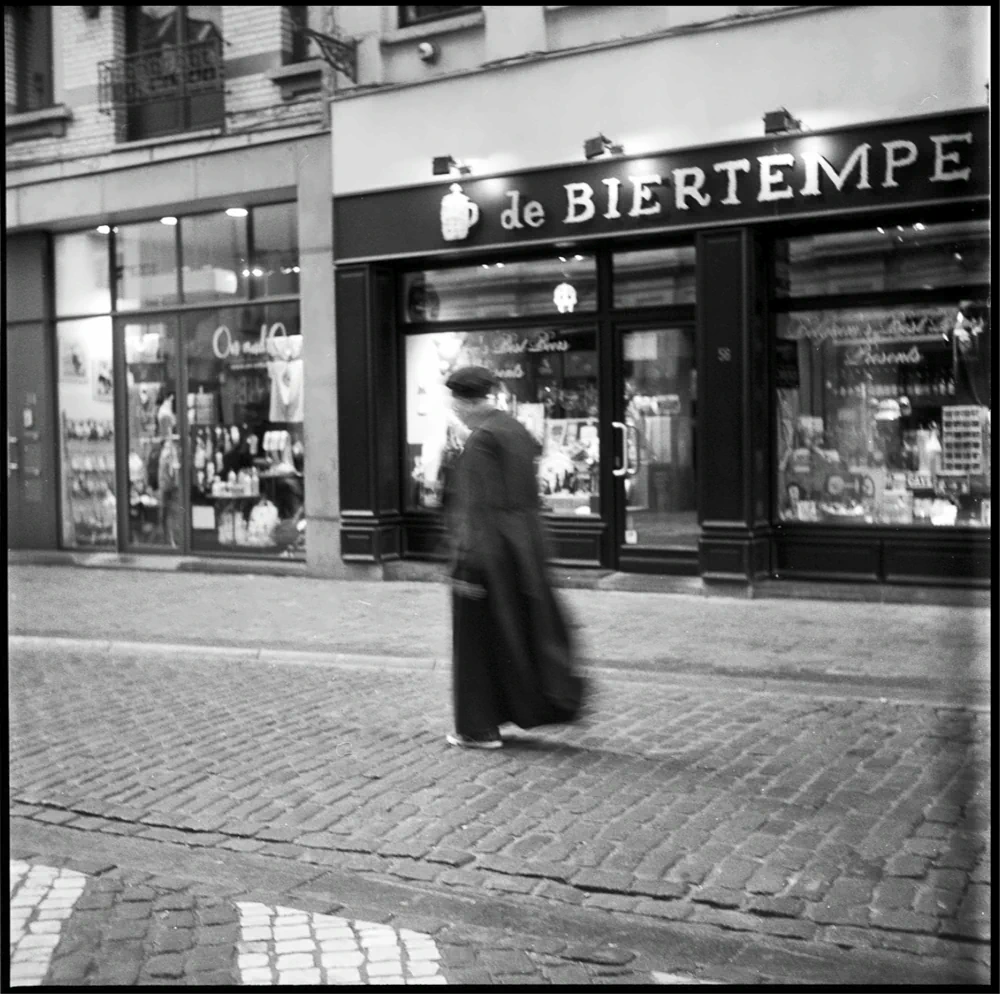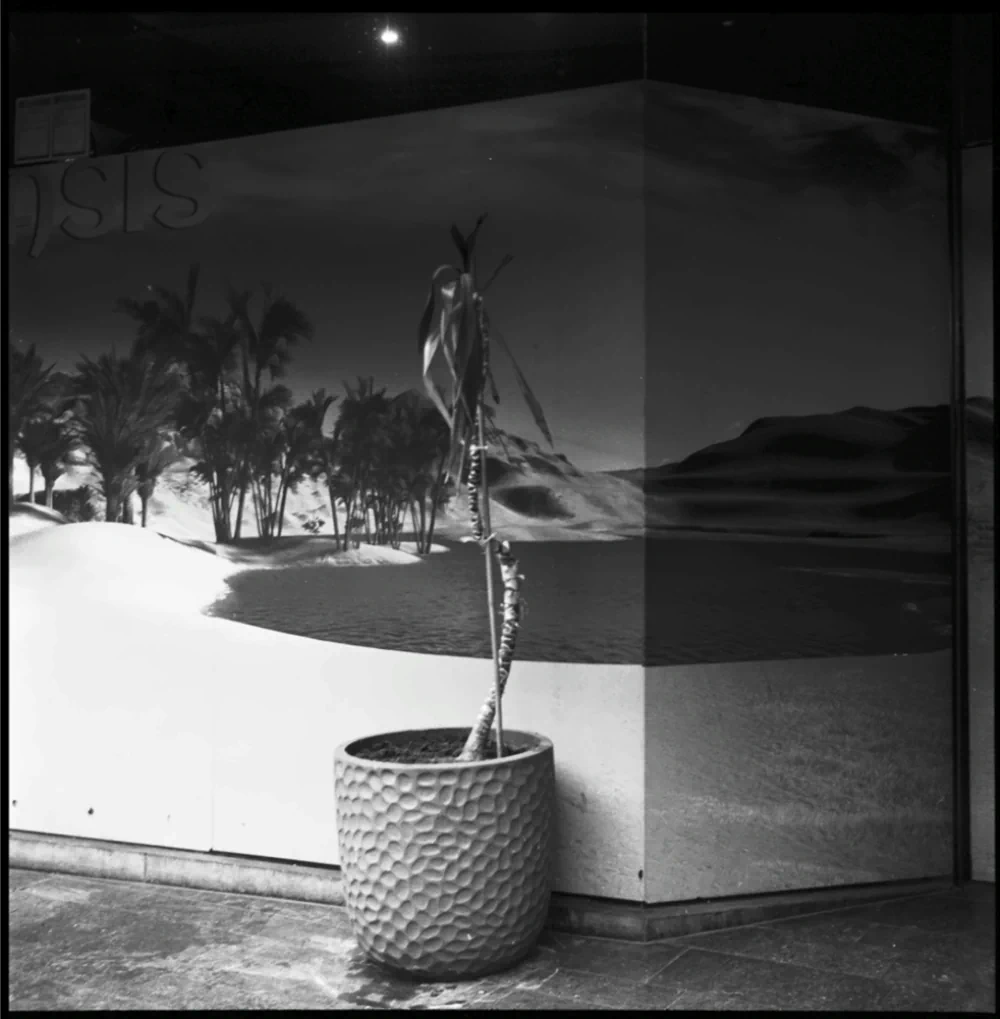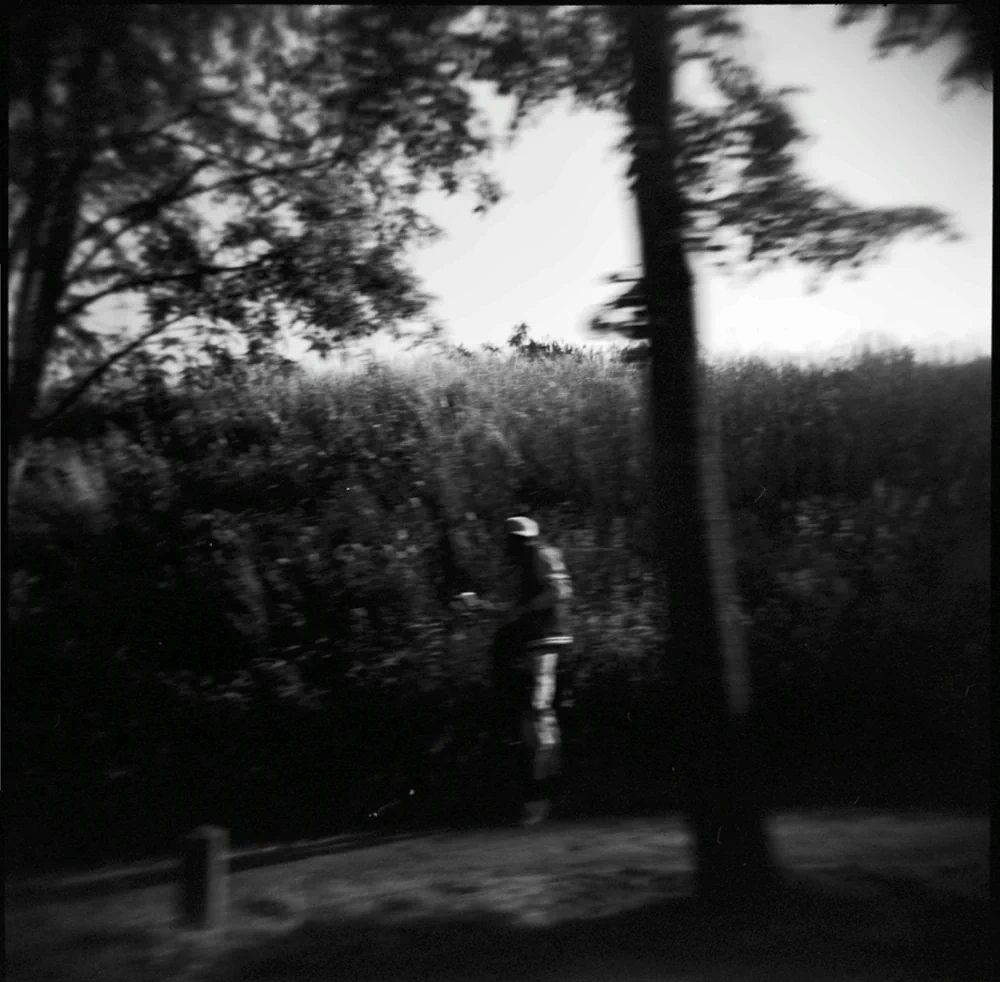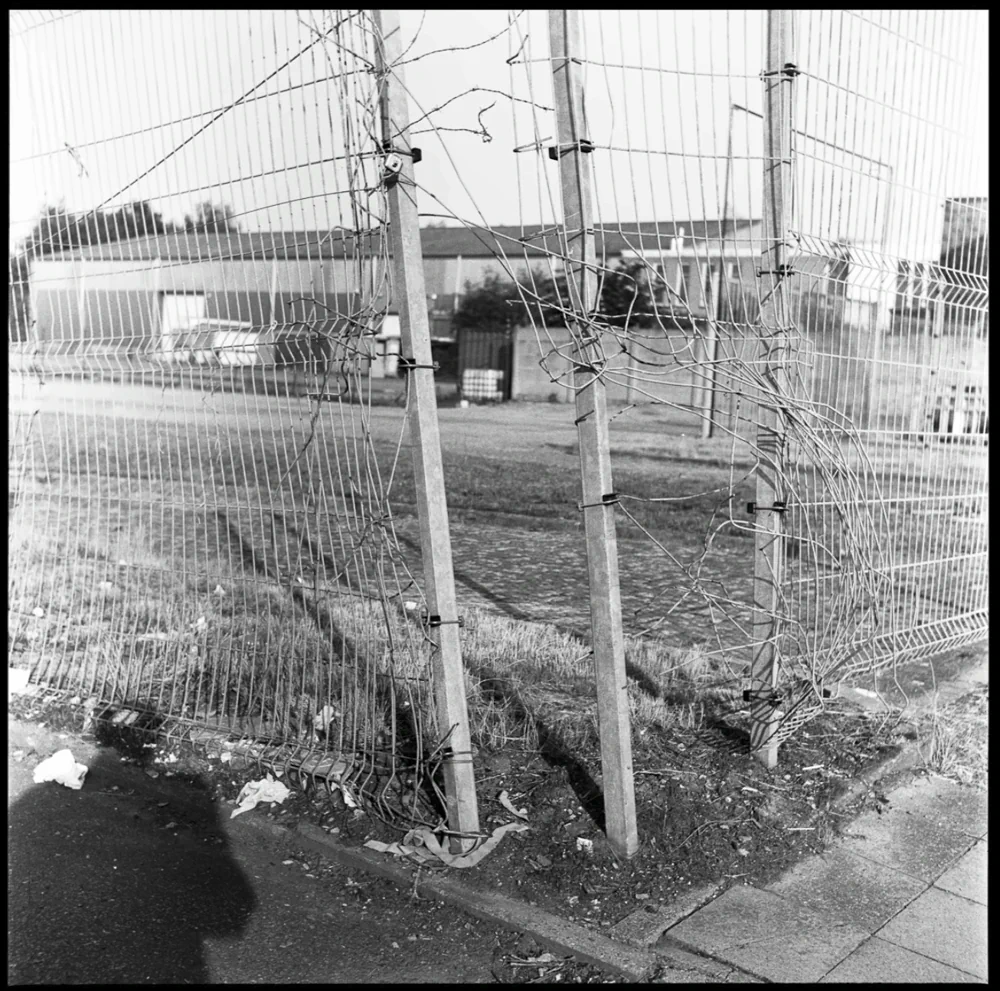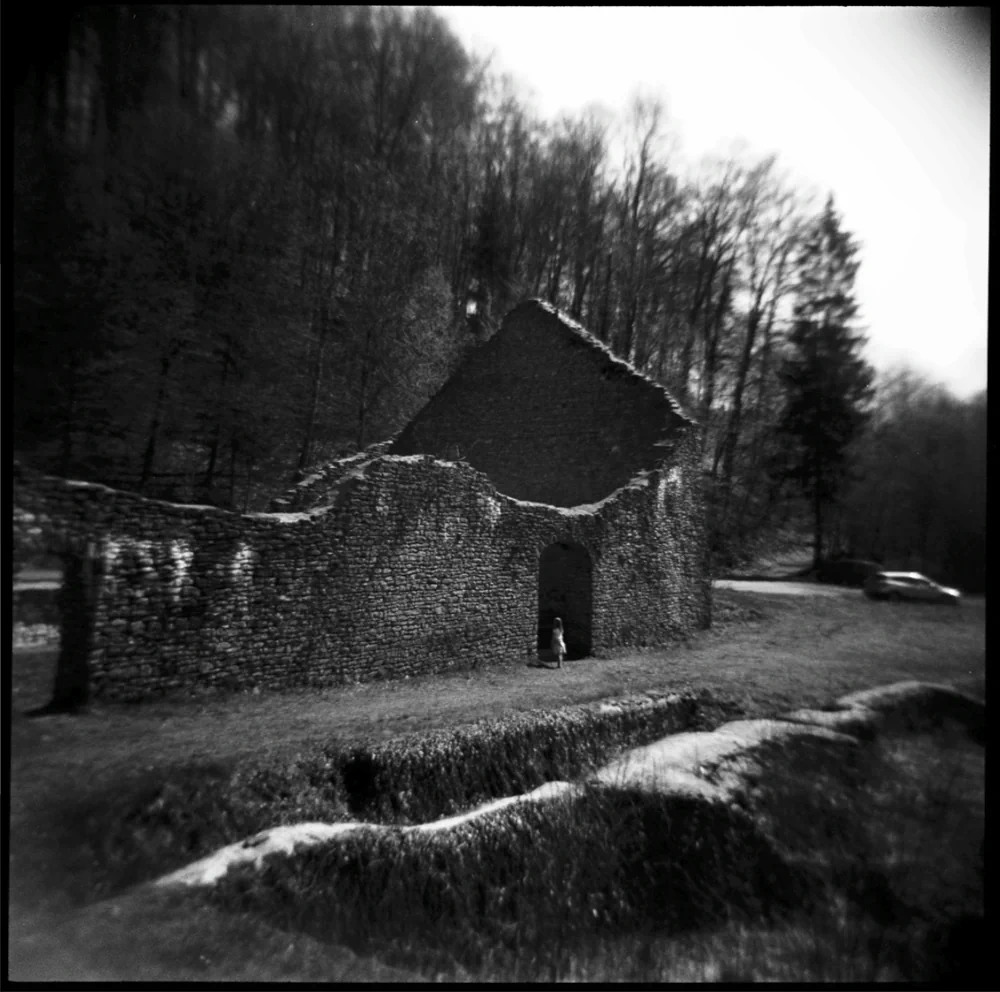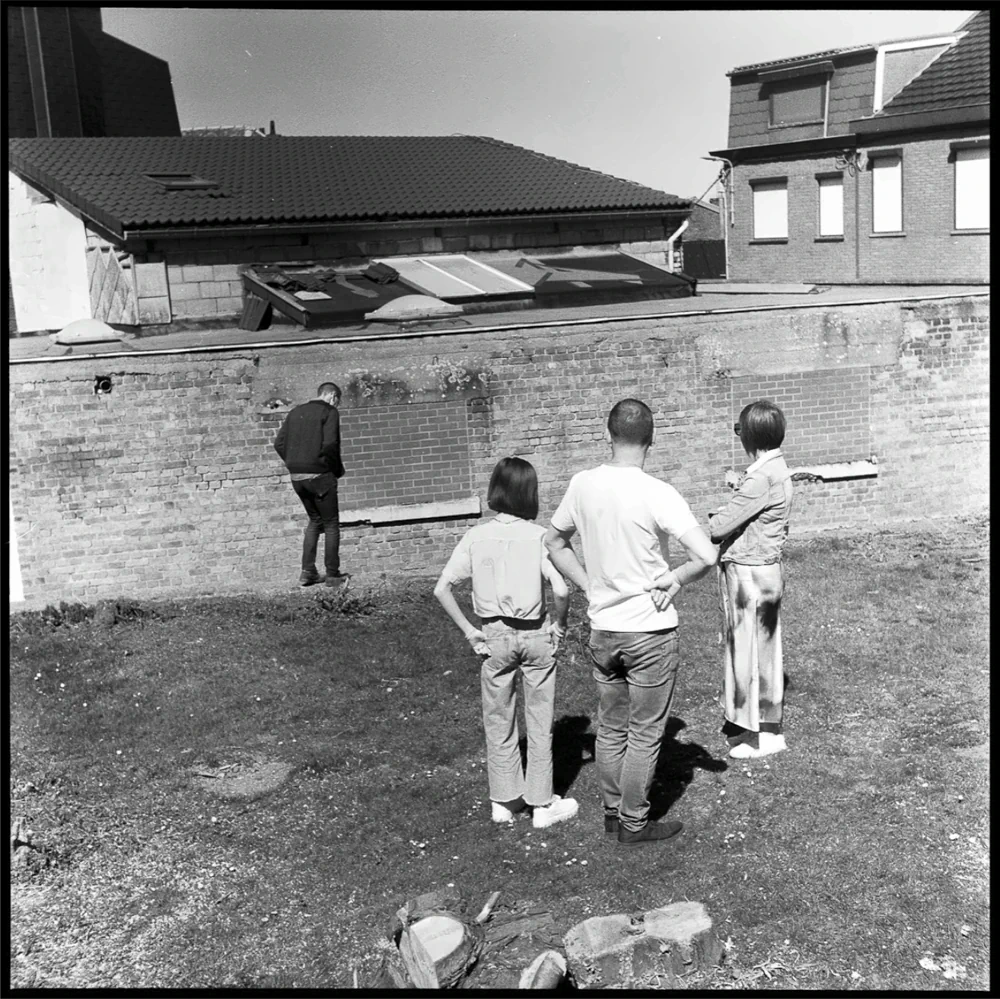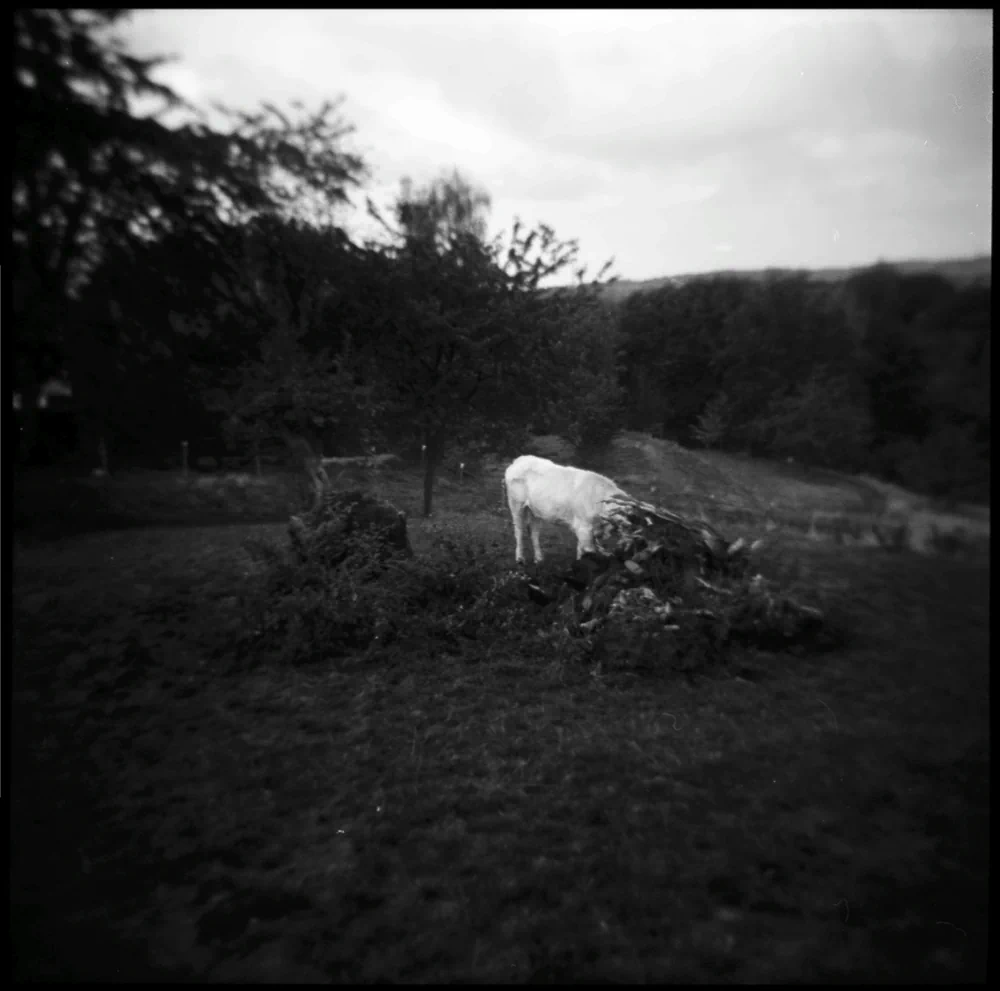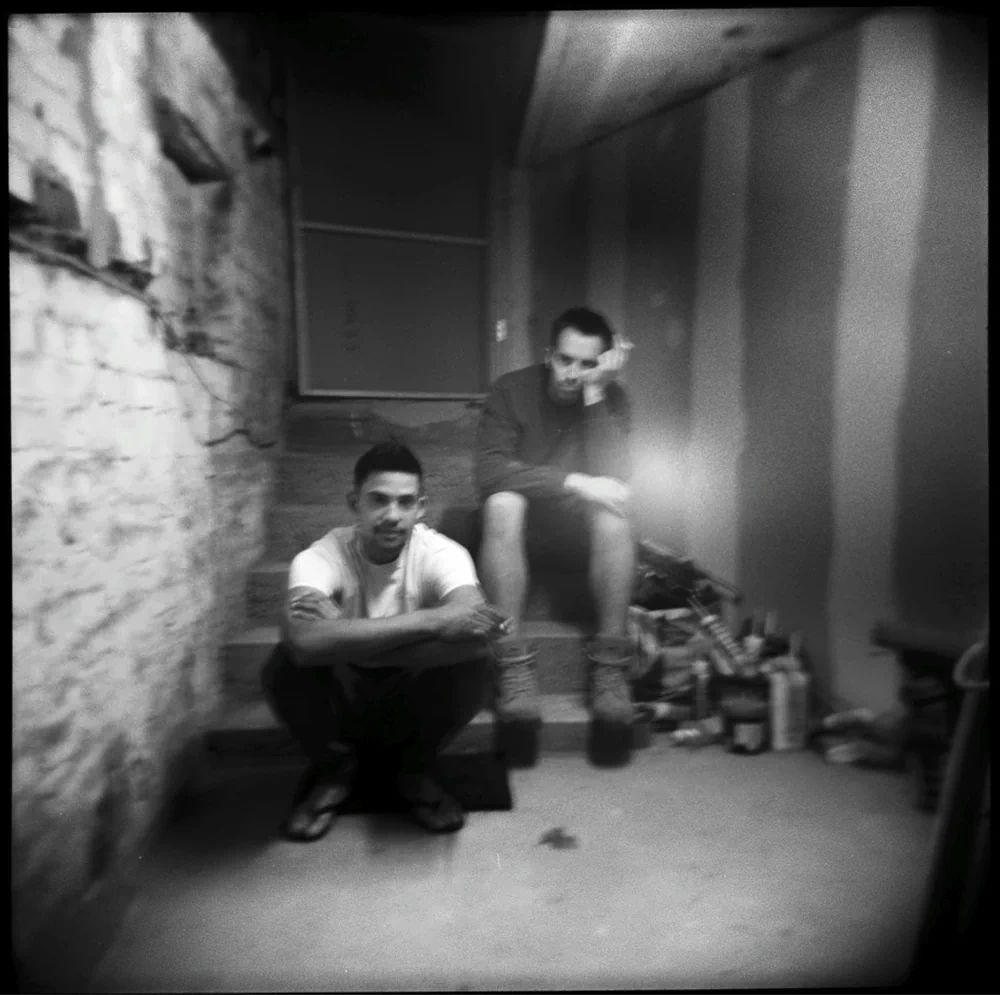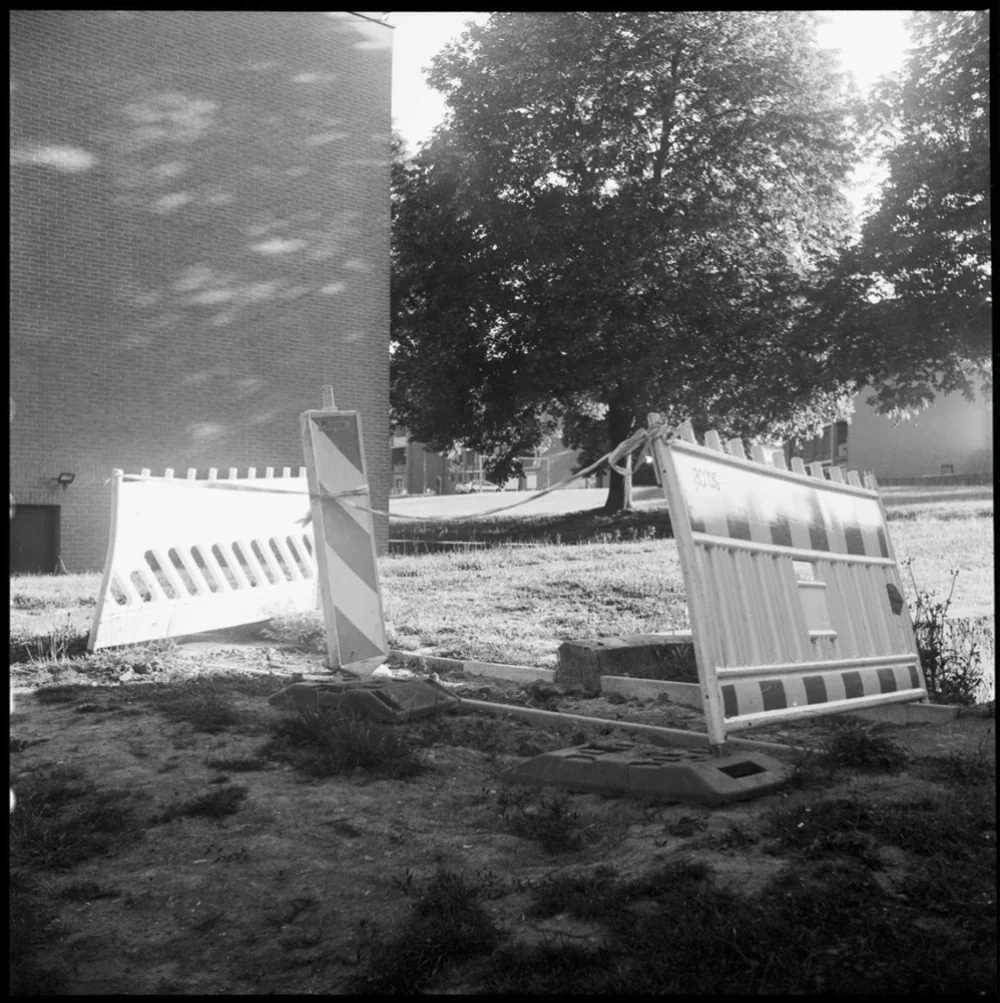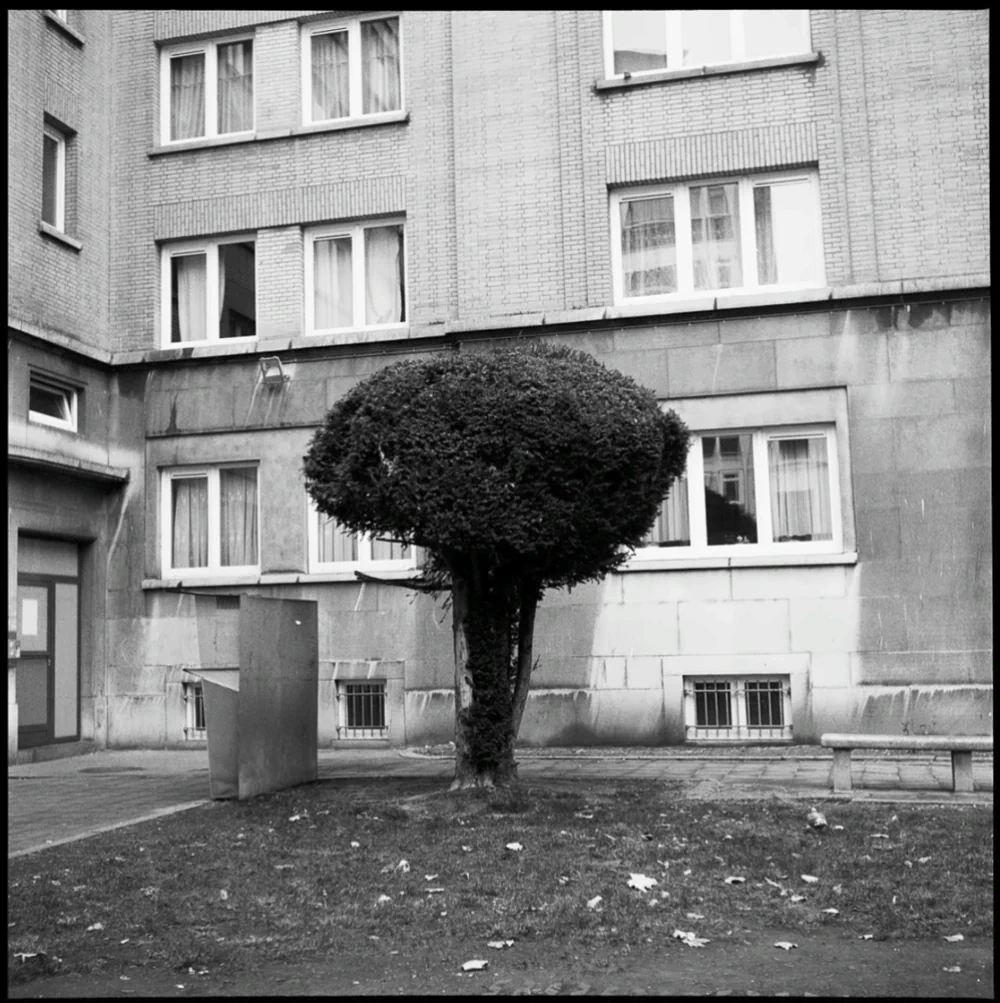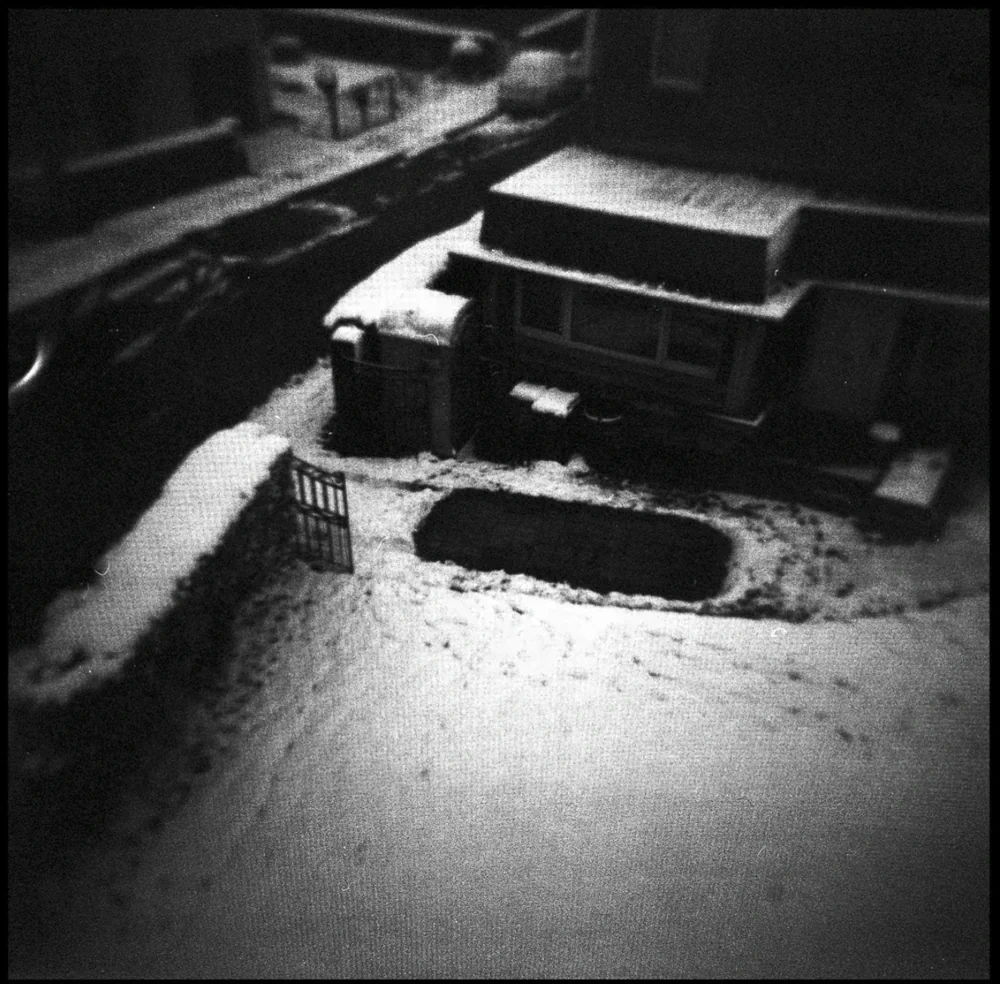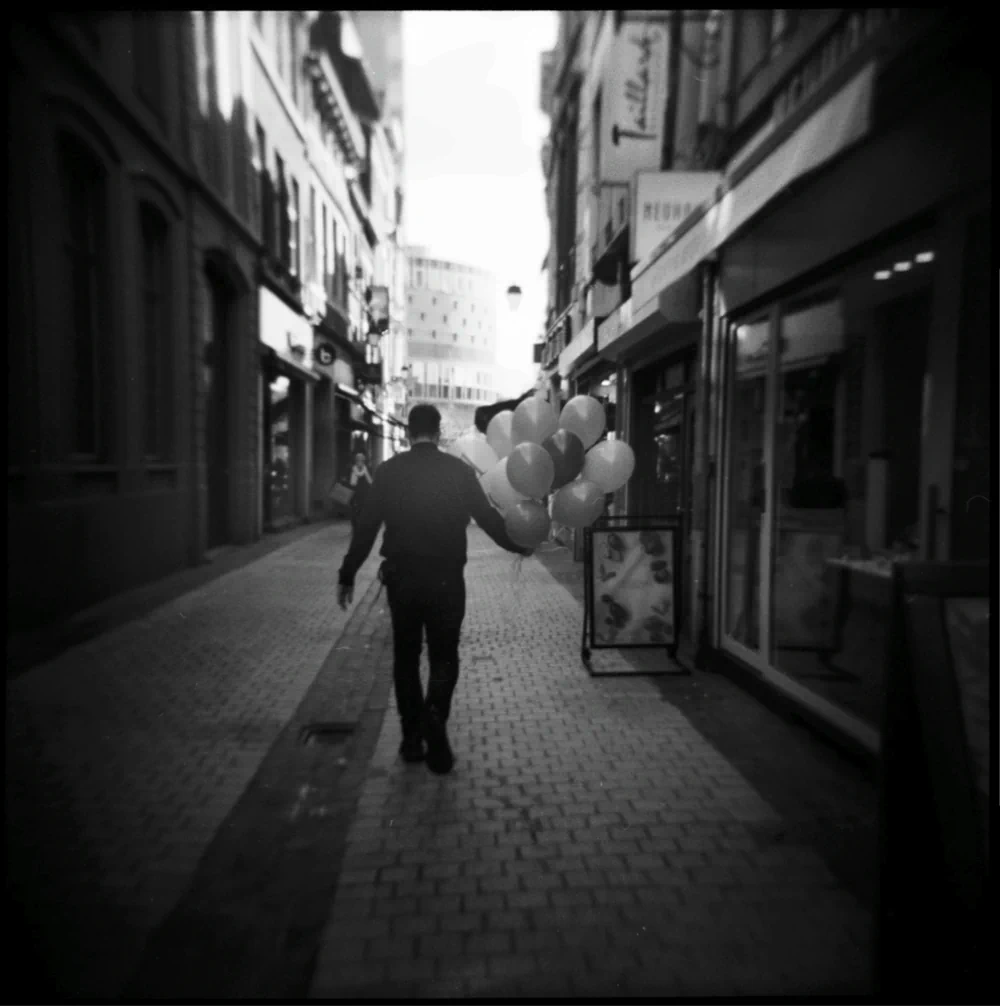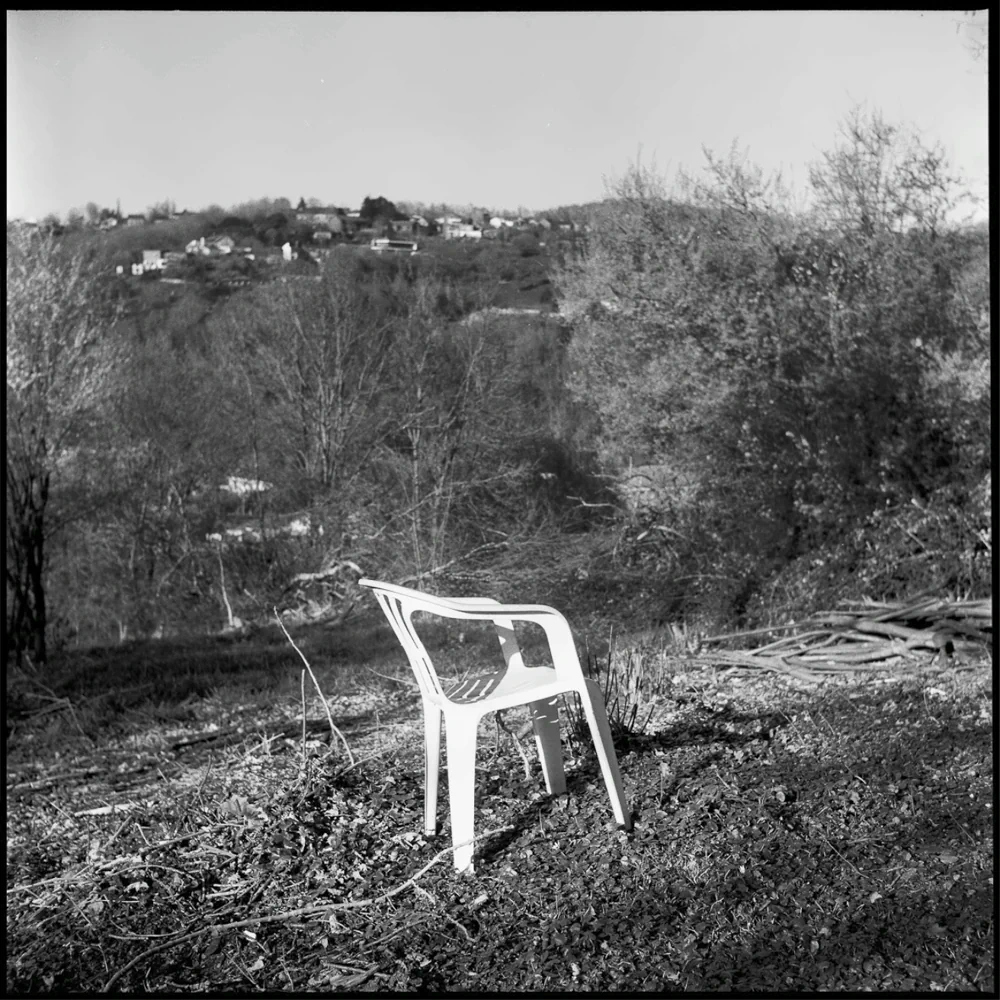
Since De Passage, he has never stopped wandering the streets, photographing people, ruins, and traces.
Intermittently, certainly, but with a continuity that has unfolded over time.
This series was initially conceived as a way of tracing his vision through the collective experience of the COVID-19 pandemic. However, the classification of images and the restriction to a single subject do not correspond to his approach. As in his previous series, such a limitation seems to him to impoverish the gaze and lead to a tautological approach to the subject itself.
He prefers to work through variants and invariants: in a sense, photographing the same thing repeatedly, but in different places, contexts, or on different supports. Rather than imposing a subject upon himself, he chooses to adopt the position of a chronicler or street draughtsman, akin to the Baudelairean flâneur embodied by Constantin Guys in The Painter of Modern Life.
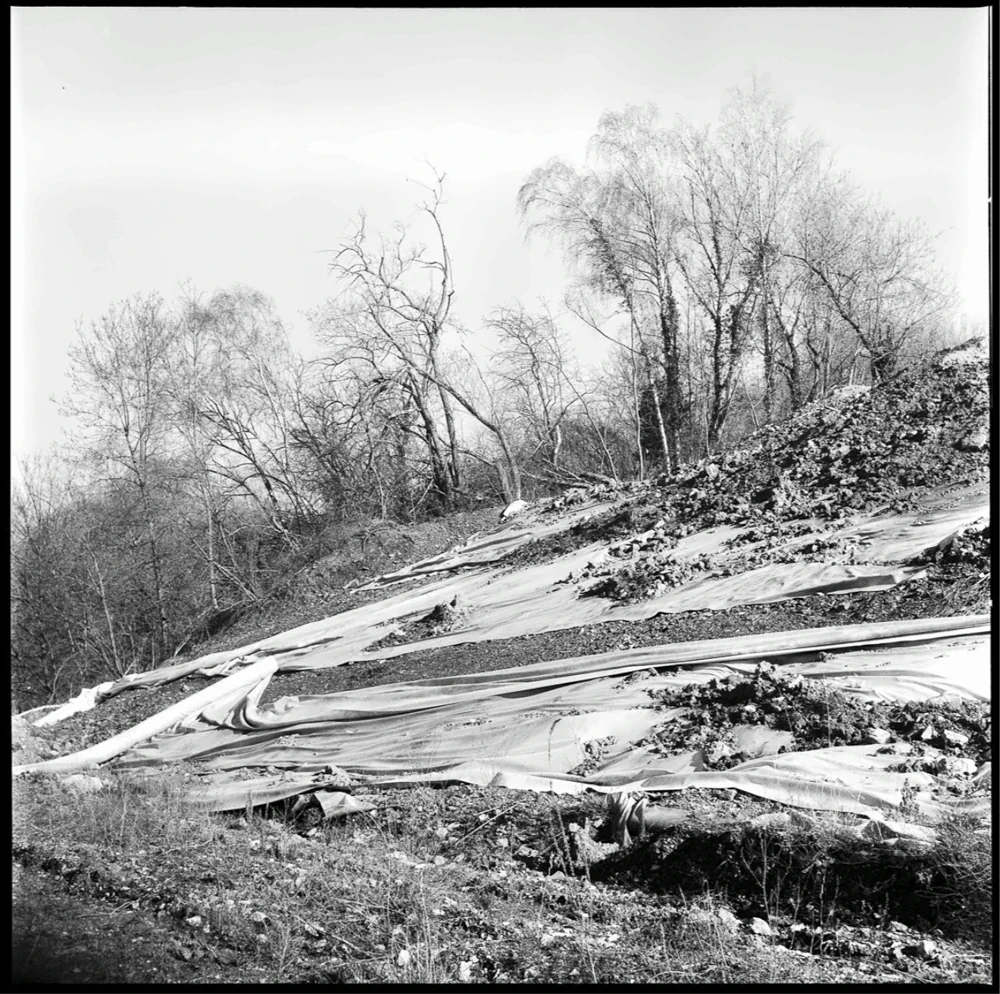
Conceived as a form of diary, his practice consists of wandering through the streets and capturing their traces. In his gaze, these traces are often connected to melancholy and ruin. Yet once photographed, they seem to regain a form of life: revealed through the negative, they return to haunt reality and detach themselves from their original state.
This desire to reveal what escapes the gaze echoes Walter Benjamin’s reflections on the power of photography and cinema to reveal reality. Through a phenomenon of apperception, the image allows us to see what surrounds us, in much the same way that the Freudian slip reveals repressed or unconscious thoughts.
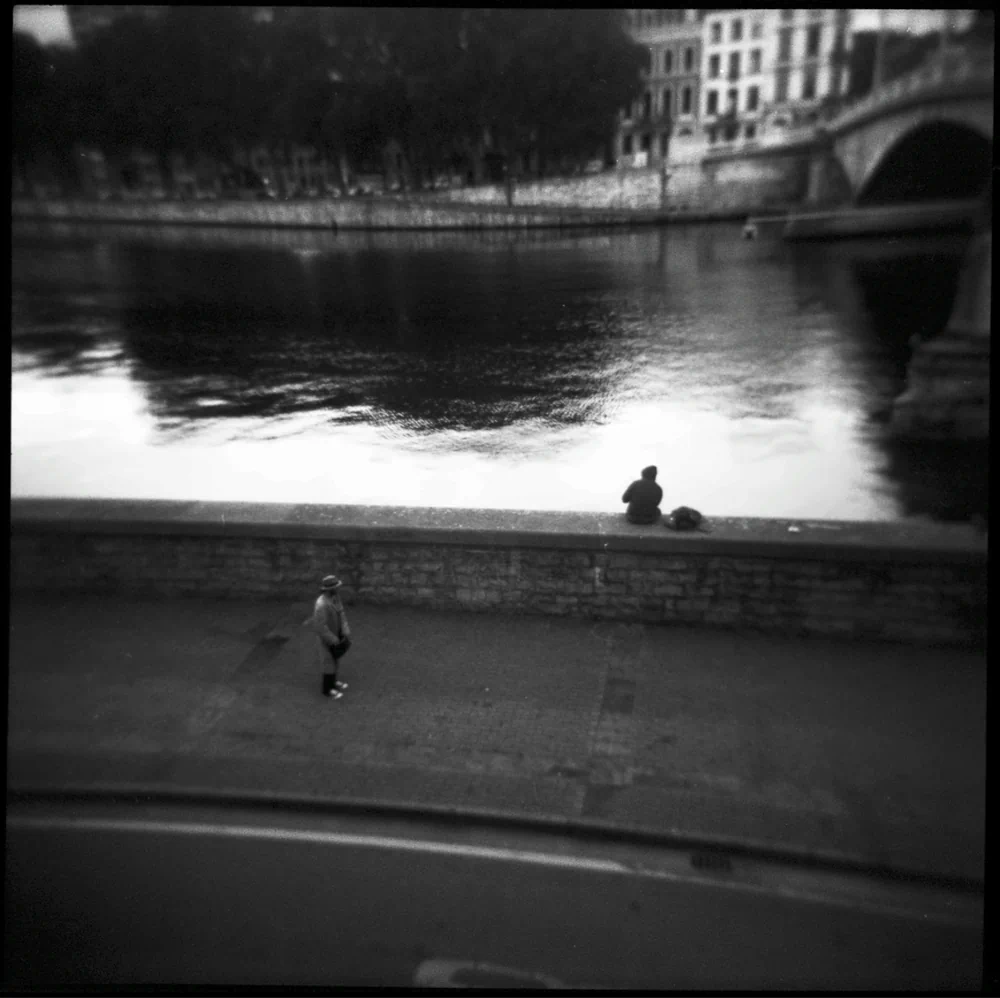
This idea also resonates with macro photography and the cinema of Gustav Deutsch: looking at what we do not see, what we no longer see, or what we have not seen, did not want to see, or did not know how to see.
Traces have fascinated him for a long time because of their fragility. Like butterflies, they experience a period of brilliance and existence before gradually fading into evanescence. Anything that is recorded or created—materially, digitally, or sonically—constitutes a trace in itself. Yet the traces he photographs are more specifically connected to melancholy and disappearance.
From this perspective, photography becomes a last bulwark against death, particularly against a form of spiritual death. André Bazin’s conception of the ontological realism of photography informs this reflection: the photographic image acts as a mould of reality, preserving something of its model and allowing it to save not its body, but its soul.
Some of his images thus seem to depict elements that have already died, yet return to haunt reality as though they were still awaiting salvation. Photography then becomes a way of resisting oblivion. If he repeatedly photographs certain things, it may be precisely because he does not want to forget what drives him and what constitutes his own invariants.
About Robin Nissen
A graduate of ESA Saint-Luc Liège, Robin Nissen is a photographer and artist whose work primarily explores territory, landscape, and the ways in which time transforms places, uses, and memories.
Working mainly with a 4×5-inch large-format camera, he develops long-term projects rooted in an in-depth exploration of the spaces he traverses and documents. His practice combines photography, publishing, and documentary research.
He regularly accompanies his photographic series with handmade books, produced in very small editions and sometimes as unique copies, reflecting a craft-based and sensitive approach to the editorial object.
Alongside his artistic practice, Nissen teaches photography and image-making at ESA Saint-Luc Liège and IFAPME. [Official Website]