

“It is our culture… we do not want it to end, but what can we do? Ninety-five per cent of it is already gone.
We are completing our last orders, and after that we will switch professions,” said Mohammad Irfan Wani, an artisan from Kashmir who adds colourful embroidery to traditional namdas.
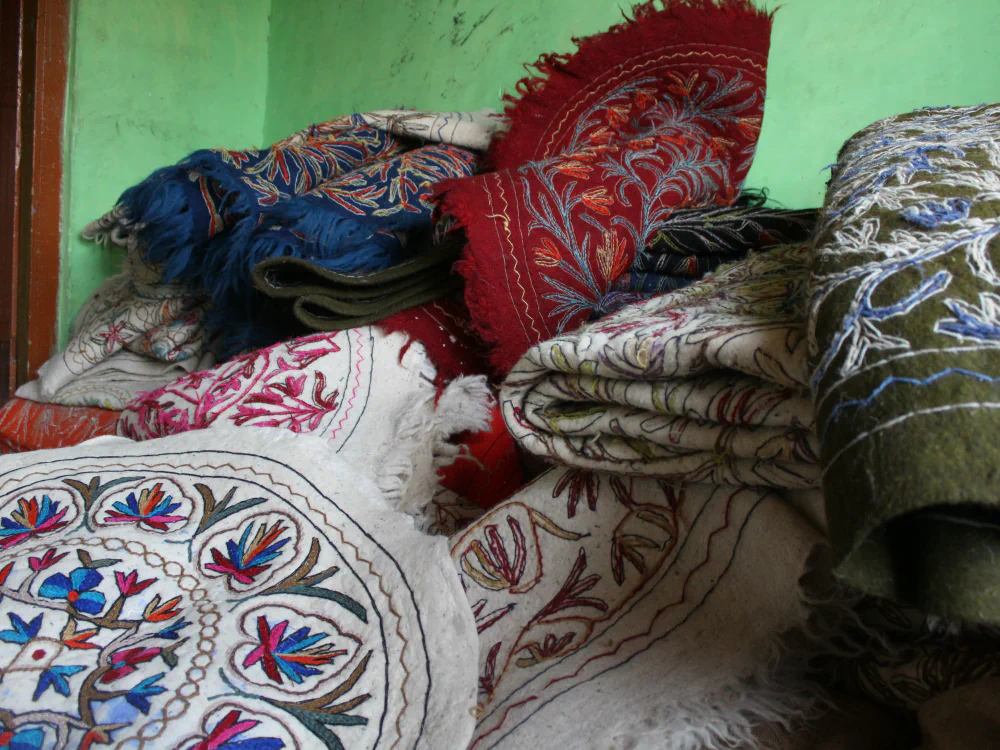
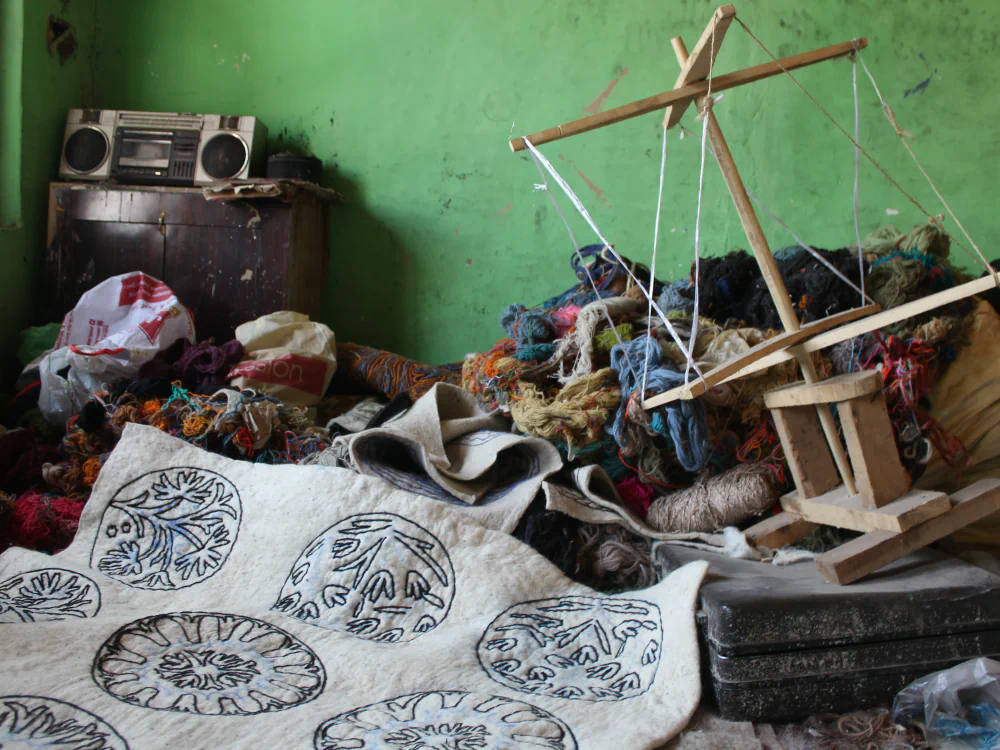
A namda is a handcrafted felted rug made from sheep’s wool through rigorous manual work. An important part of Kashmir’s cultural heritage and once a major contributor to the local economy, the craft now finds itself in jeopardy due to declining demand and rising inflation.
Despite multiple claims of its revival by the Government of India, the reality on the ground is starkly different. Artisans say the craft is slowly nearing its end, and with its disappearance, a part of Kashmir’s cultural heritage will also be lost.
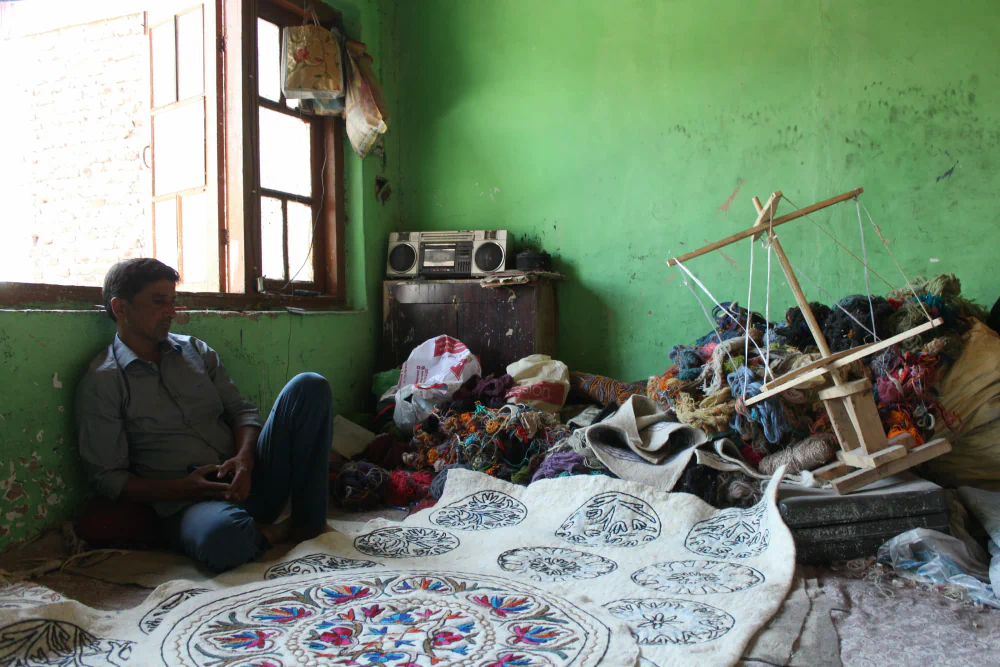
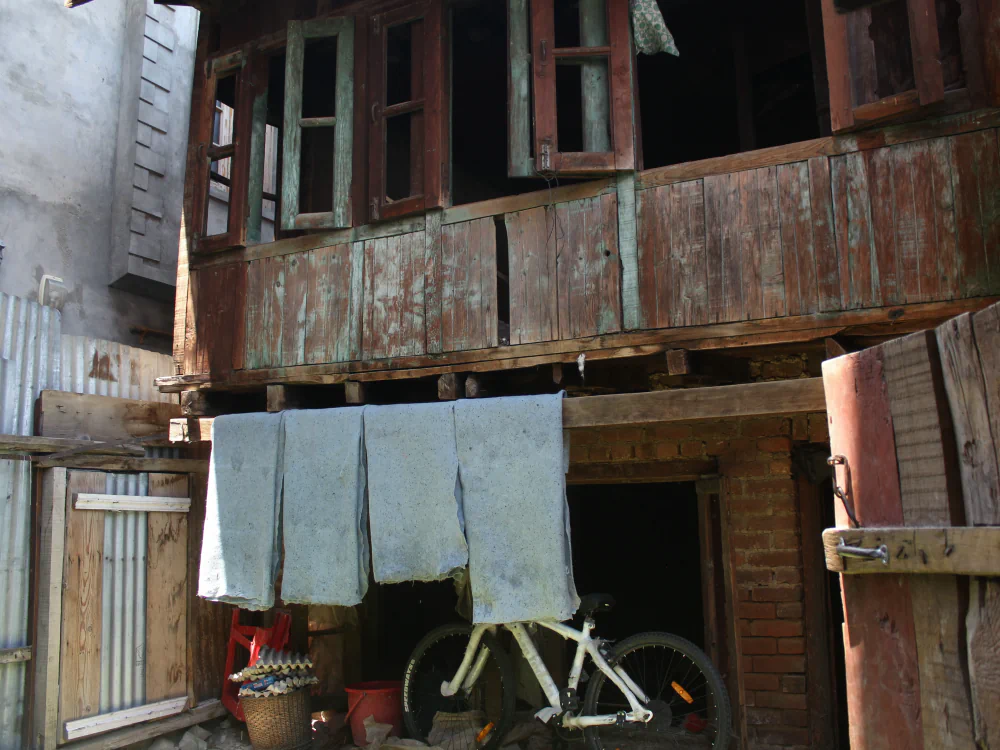
Namda making is a generational craft, and Mohammad Sultan Khan is Kashmir’s oldest namda artisan. His son, Farooq Ahmad Khan, is the last member of their family still involved in the profession. Once operating a three-storey workshop with multiple workers behind their residence, the father-and-son duo now work in a basement with only two employees.
“Earlier, business was really good. Apart from local orders, we received commissions from the USA, Russia, Germany, and other countries. But about 20 years ago, demand collapsed, and once it did, it never recovered,” said Sultan Khan.
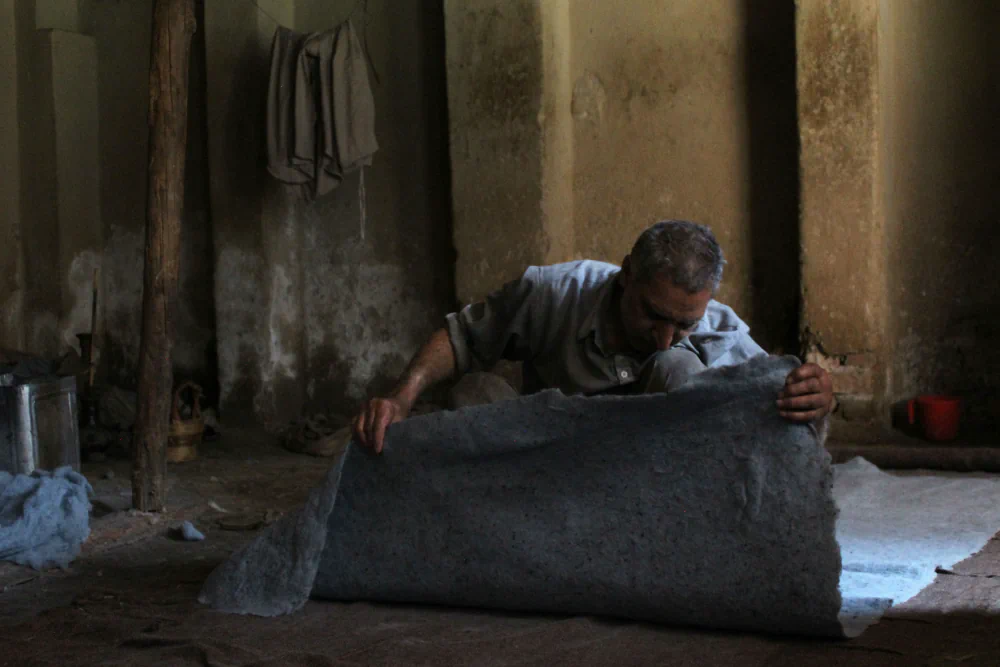
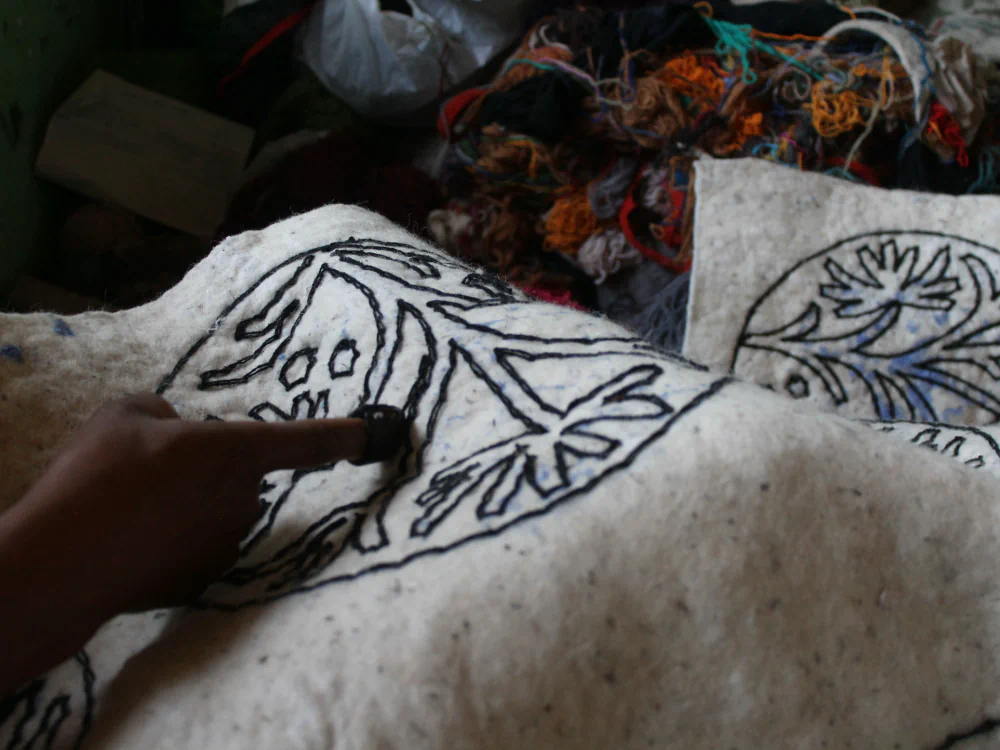
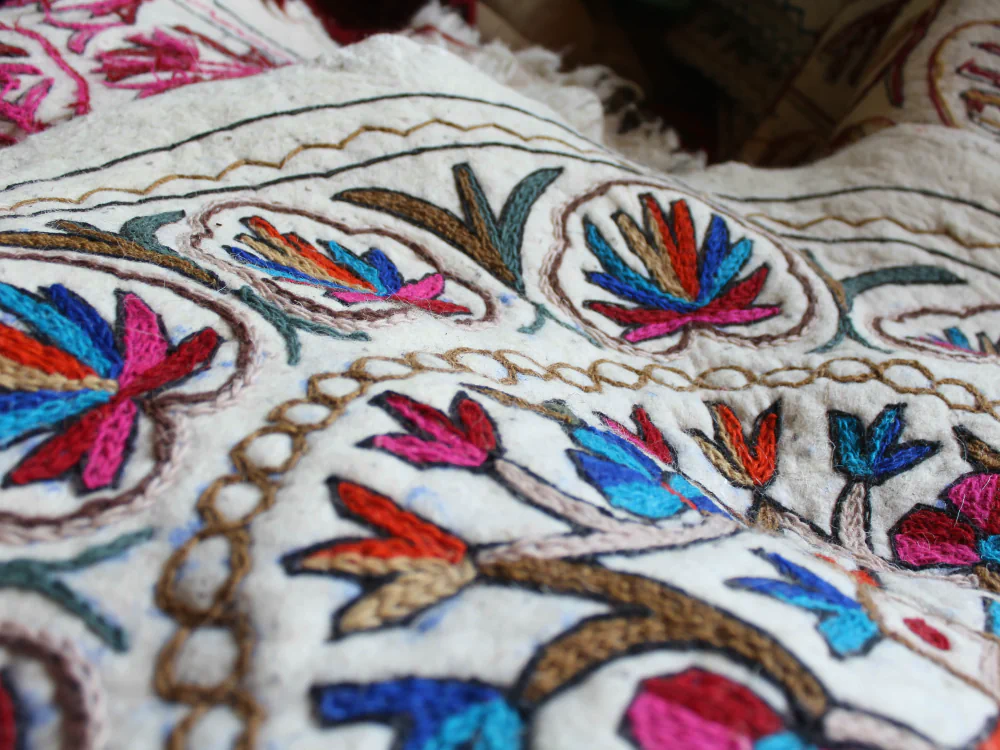
Namda making is a labour-intensive process in which rugs are created not by stitching but by felting wool with soap and water. The finished rug is then passed to another artisan, who embroiders intricate patterns using aari work.
The Process
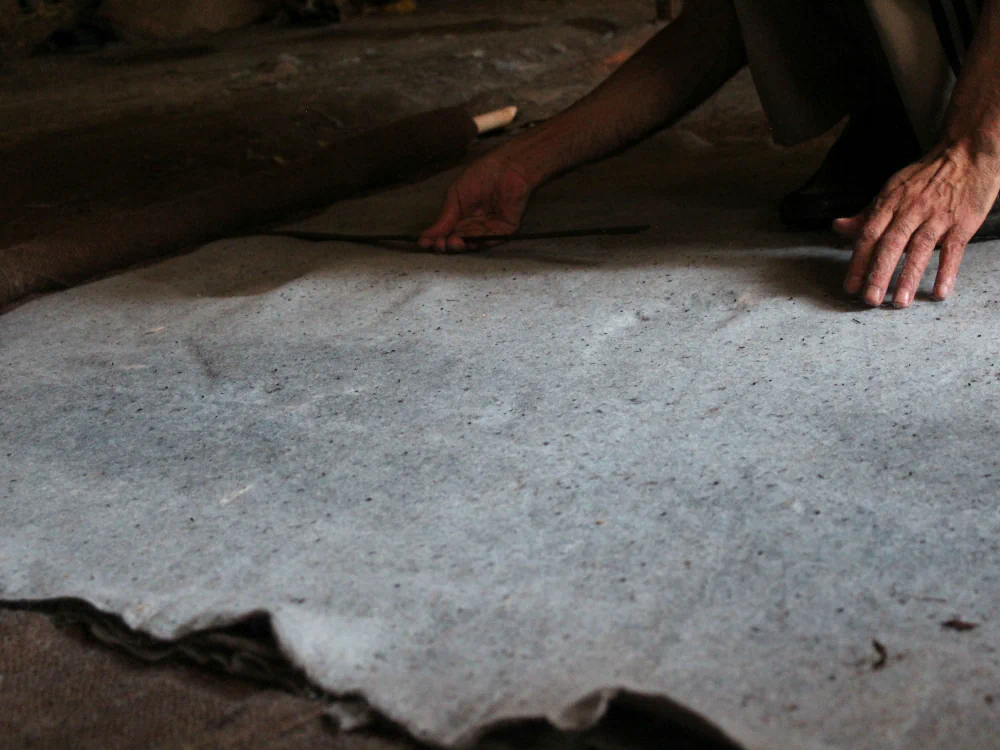
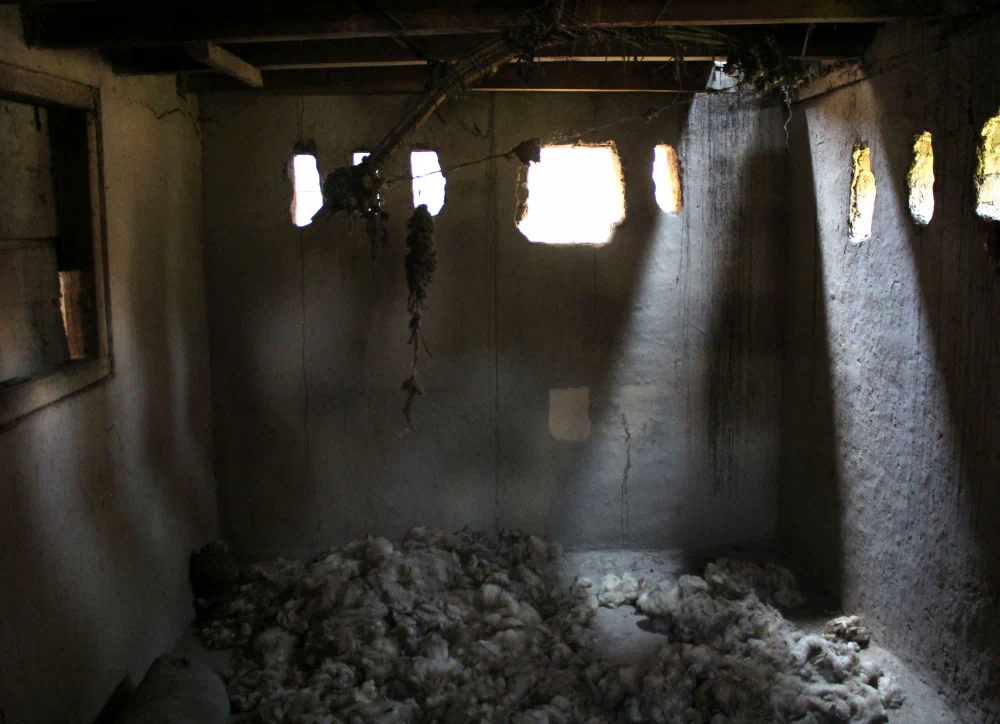
The first step involves weighing the wool, as two kilograms are required for a single namda. Once measured, one layer of wool is spread evenly across a woven sheet called a waghu.
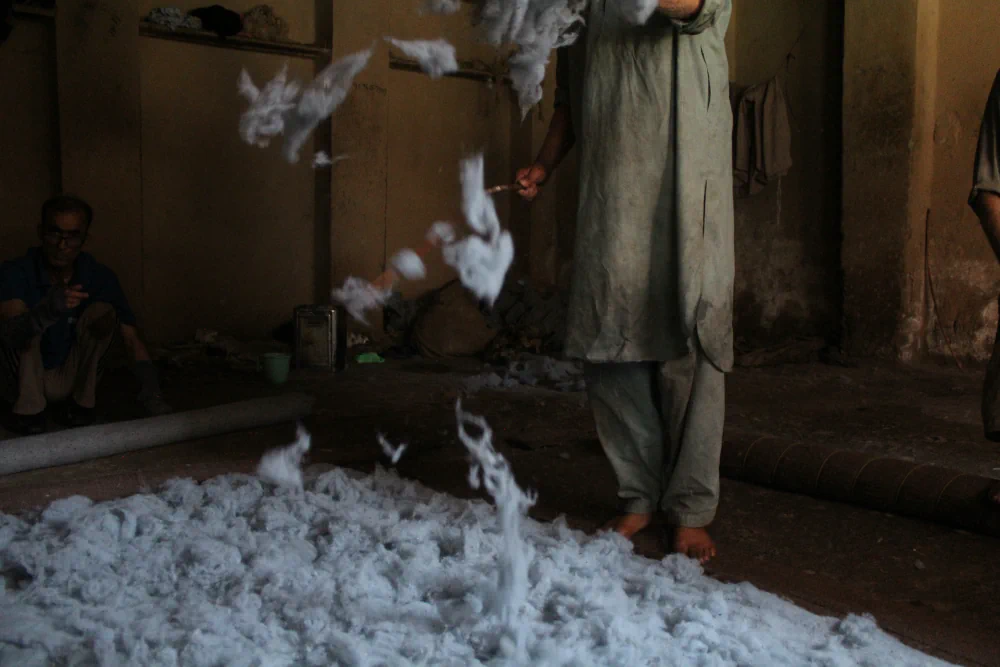
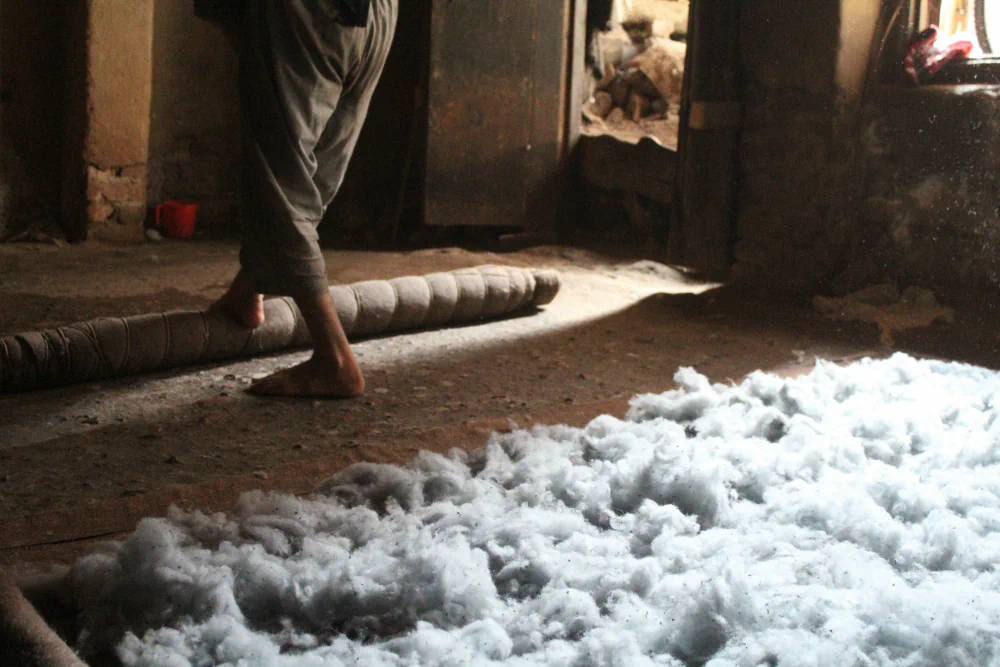
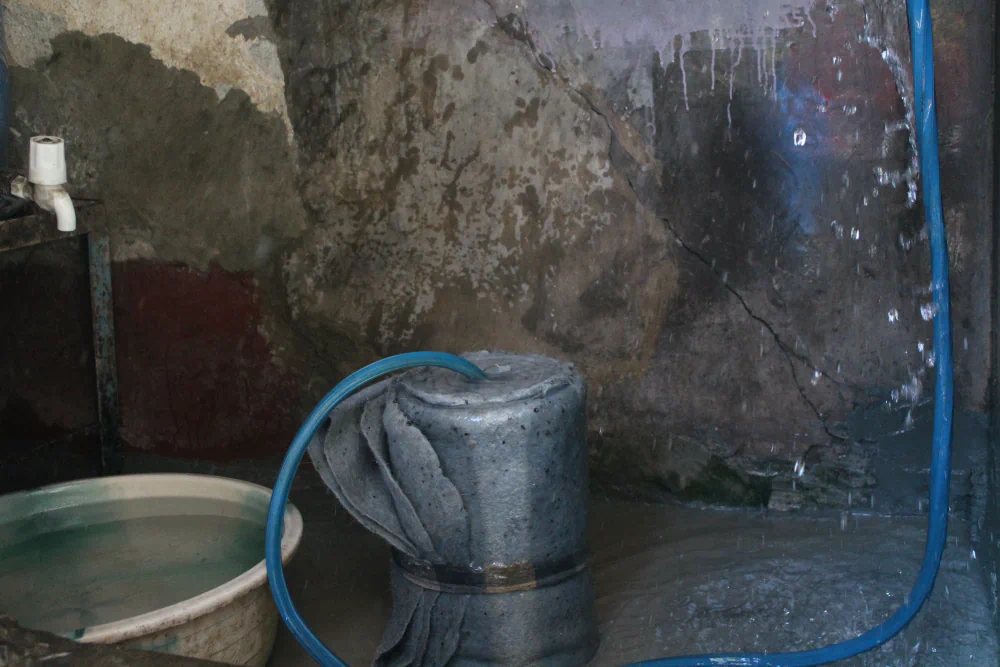
After the first layer has been evenly spread, the felting process begins. Using soapy water, the wool is compressed with a wooden stick and a panja (literally, “claw”). The soap, made from mustard oil, helps densify the wool until it reaches a solid state. Once the first layer has been felted, a second layer of wool is spread over it.
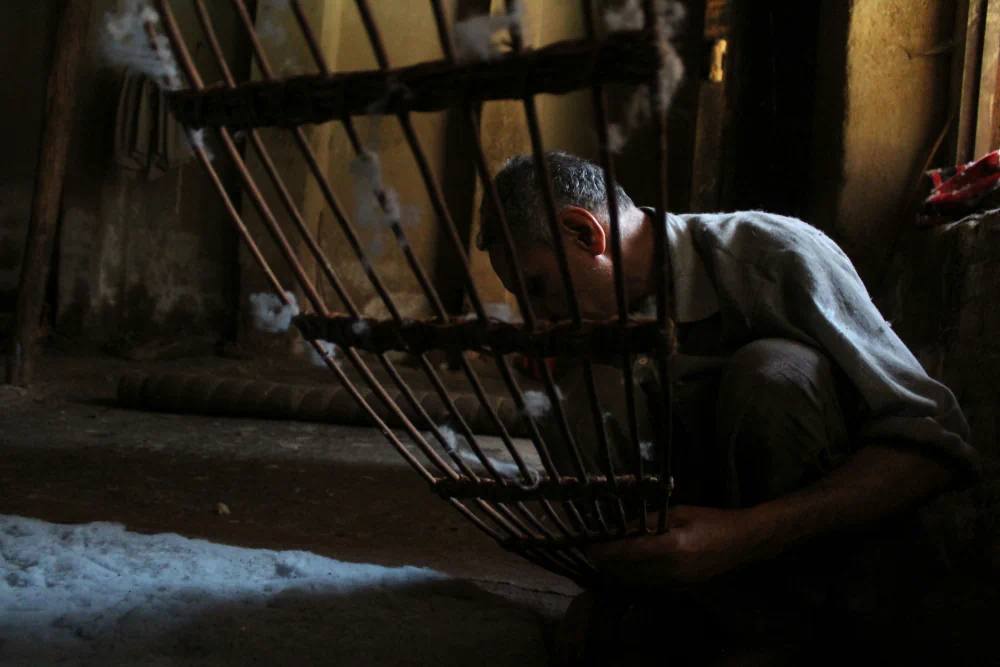
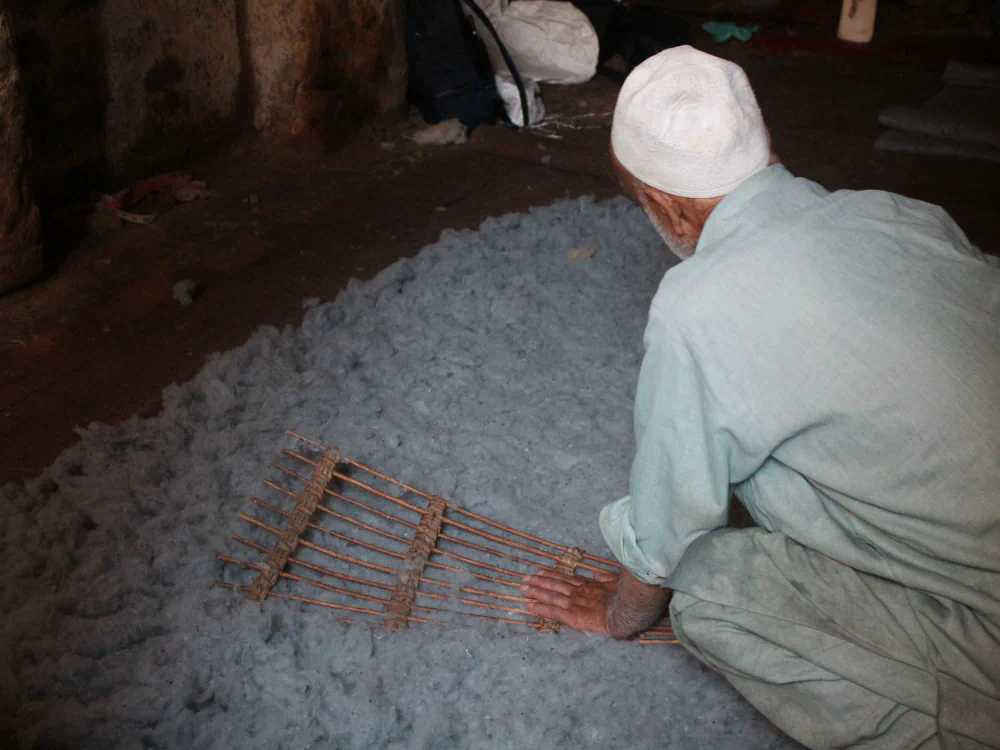
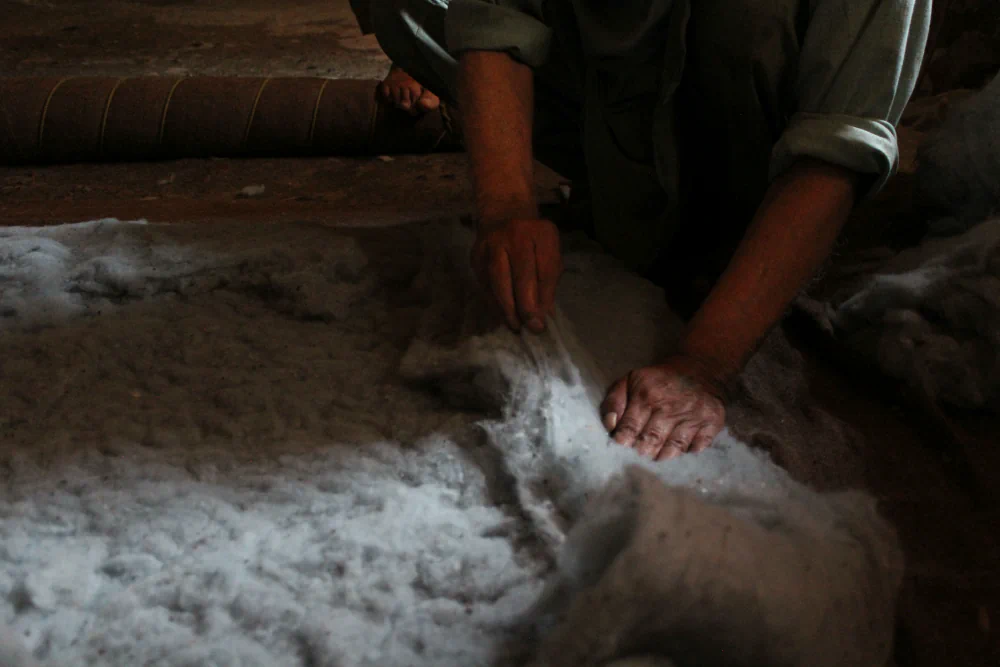
More soapy water is applied before the waghu is rolled tightly to bind the rug together. As the wool is compressed inside the waghu, it gradually takes the shape of a namda.
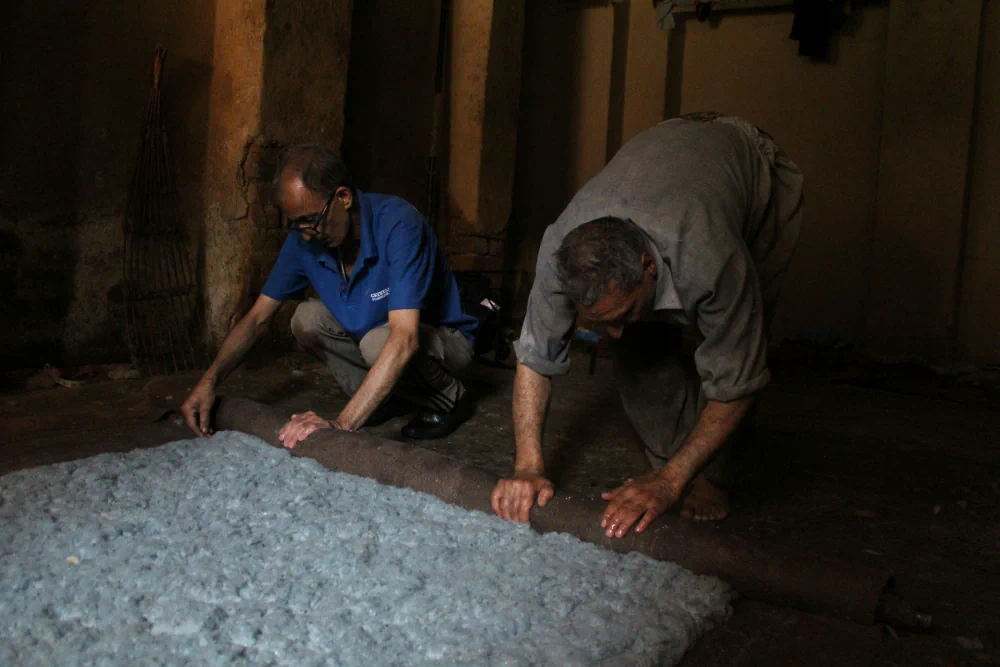
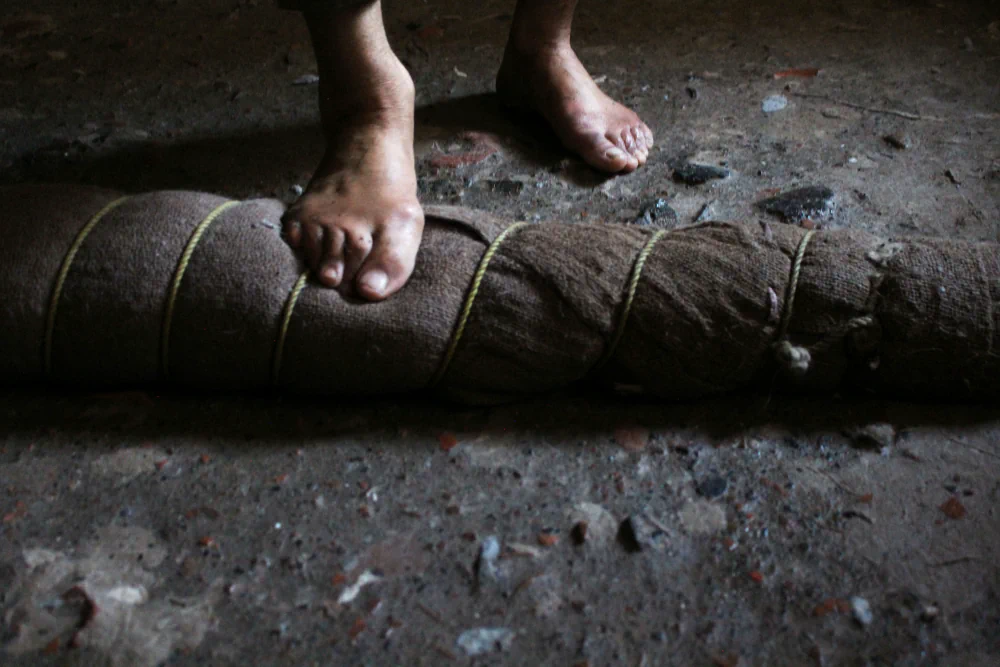
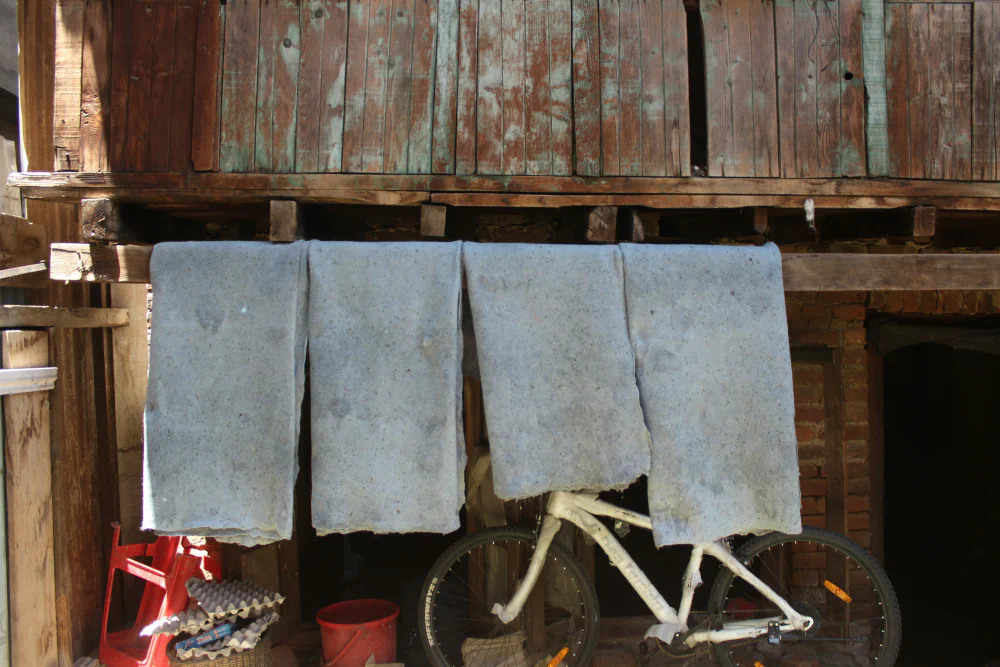
The namda is then layered once again with soap and water and rolled by hand. After rolling, it is washed and left to dry. Once dry, it is measured, trimmed, and levelled according to the required dimensions before being sent to another artisan for aari embroidery.
Aari work is an intricate embroidery technique in which artisans use specialized hooked needles to create decorative patterns on the namda with colourful woollen yarn.
A namda typically takes around three hours to produce, while the embroidery time depends on the size of the rug and the complexity of the design. Today, however, the process often takes longer because of the shortage of skilled artisans.
A Heritage Slipping Through Their Fingers
While the process demands considerable time and effort, the artisans describe a dramatic decline in business and fear the craft may soon disappear.
“Not even ten years from now—in just two or three years, this craft will vanish,” said Farooq Ahmad.
A kilogram of wool once cost Rs. 50; today it costs around Rs. 200. This raises the raw material cost of a single namda to approximately Rs. 400. Sold for an average of Rs. 700–800, profit margins remain extremely small, particularly when middlemen are involved.
Irfan Wani, whose family has practised the craft for generations, represents the last generation still pursuing it. Together with his brother, Mohammad Altaf Wani, he plans to leave the profession because it is no longer financially sustainable.
“We are completing our last orders and do not plan to continue in this field. There is very little profit. In the past, the craft was thriving and created employment for many people. Today, it is extremely difficult to make a living from it,” he said.
The family once employed between 100 and 150 workers. Today, only about five people, including family members, remain involved.
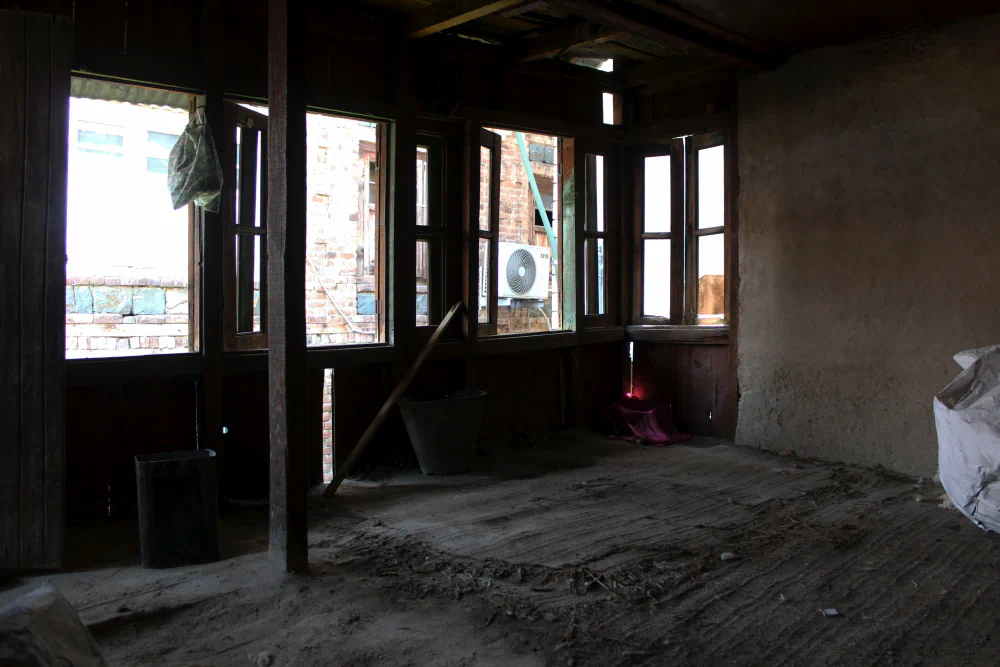
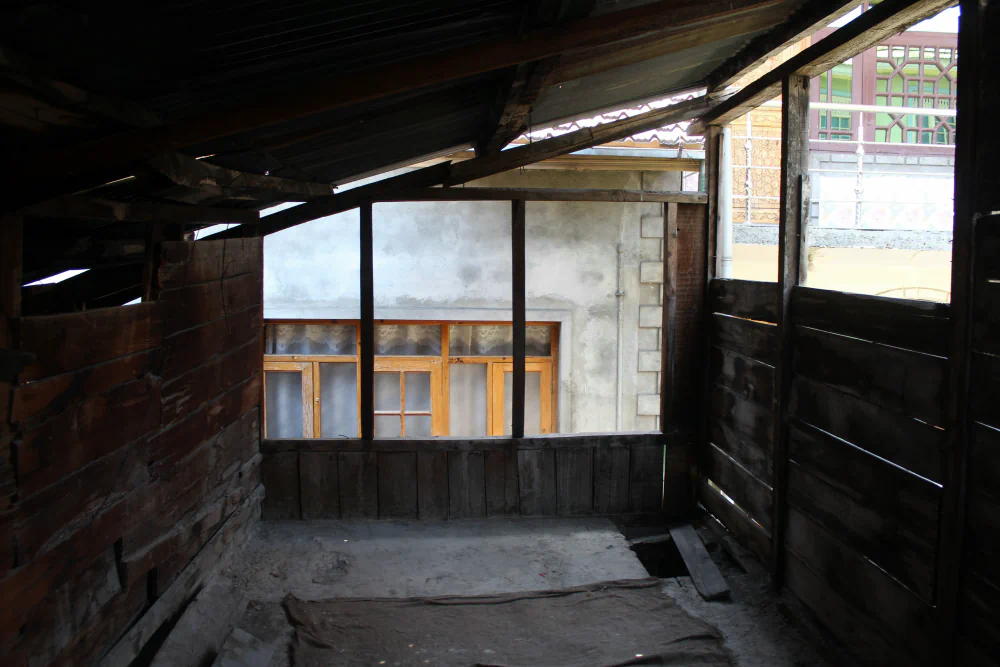
Mohammad Sultan has witnessed a similar decline. After more than 60 years as an artisan, he has experienced both the golden years and the gradual collapse of the trade. His once-busy three-storey workshop, filled with workers—some of whom even lived there—now stands almost empty, occupied only by the sound of the wind and the creaking of old wooden floors.
Government Initiatives vs. Ground Reality
Despite several initiatives announced by the Government of India, the craft remains in jeopardy.
In early 2025, Kashmiri namda received its official Geographical Indication (GI) tag. A GI tag is an intellectual property designation used to identify products originating from a specific geographical area whose qualities are closely linked to that location.
In 2023, under Skill India’s Pilot Project, 2,200 people from the districts of Srinagar, Baramulla, Ganderbal, Bandipora, Budgam, and Anantnag were trained in the art of namda making. Farooq Ahmad was one of the trainers involved in the programme.
“We trained many young people, but most eventually moved on to other crafts. The project did not create long-term employment. Many of those students still contact me looking for work, but the market is simply no longer viable,” he said.
Several artisans also pointed out that the Kashmir Government Arts Emporium offers loans of up to Rs. 100,000 to artisans, but financial assistance is not what they need.
“They offer loans. We don’t need loans. We don’t need money—we need work. We need this craft to continue,” said Altaf Wani. His sentiment was echoed by many others.
The possible extinction of the craft threatens not only artisans’ livelihoods but also Kashmir’s cultural identity.
“This is our culture. We want it to survive. Our family has practised this craft for generations. We do not want it to disappear, but what can we do? We can only hope it comes back to life,” said Irfan Wani.
Because the craft relies entirely on manual labour, it has been particularly affected by technological change.
“Crafts that depend on handwork are disappearing very quickly. Machines were introduced into namda making at one point, but they were not successful. It is simply impossible to achieve the same level of craftsmanship with machines,” said Farooq Ahmad.
If this craft disappears, a vital part of Kashmir’s rich cultural heritage will disappear with it. As things stand today, it may not be long before this living tradition becomes history.
(Shyma Rauf is a freelance journalist and former sub-editor at the Deccan Herald. She is currently pursuing an M.A. in Convergent Journalism at AJK MCRC, Jamia Millia Islamia. Her work has appeared in publications including The Hindu, The Indian Express, and The Times of India*.)*