

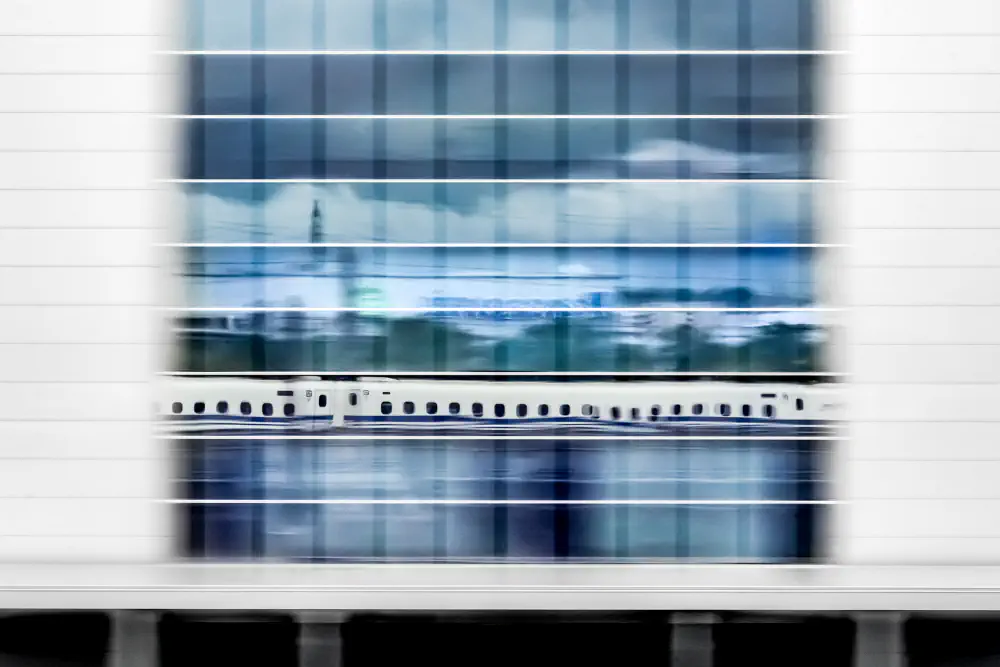
Moments in Transition is a body of work that I began in 2009 on a train ride between Nagoya and Matsumoto, Japan.
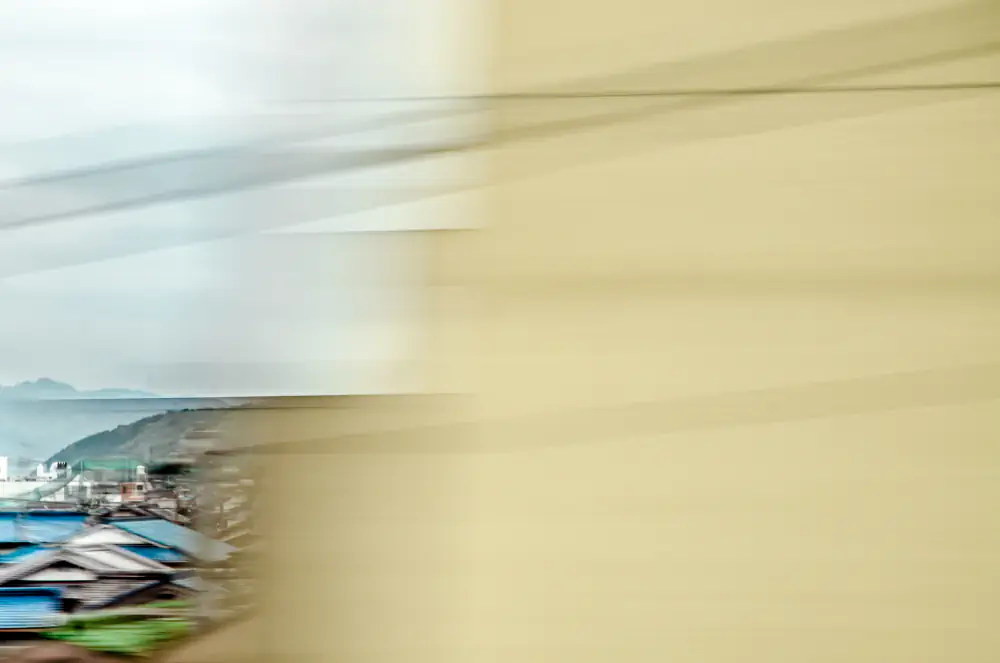
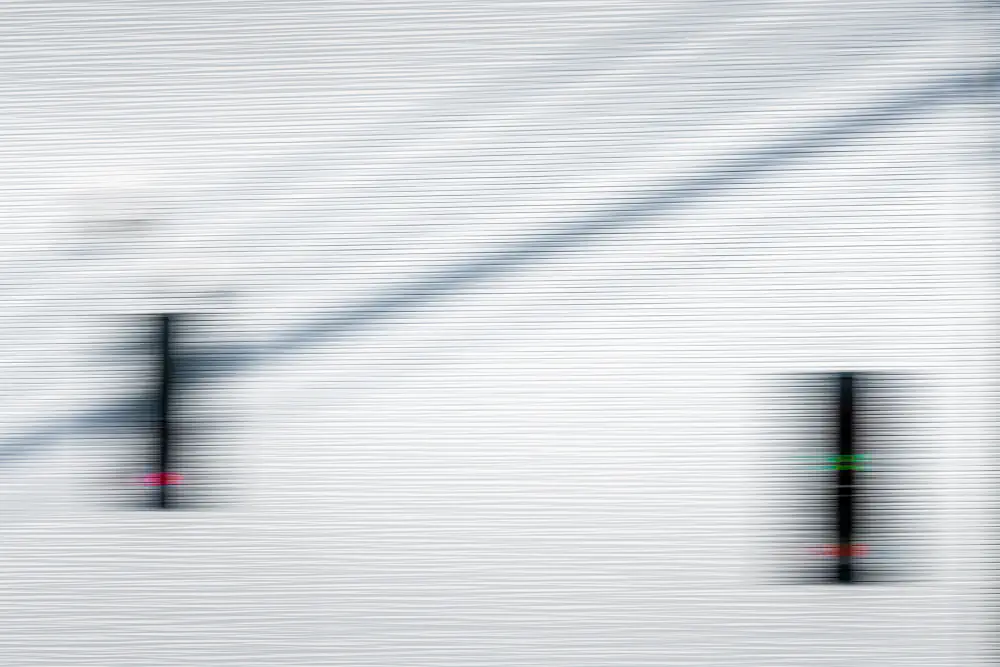
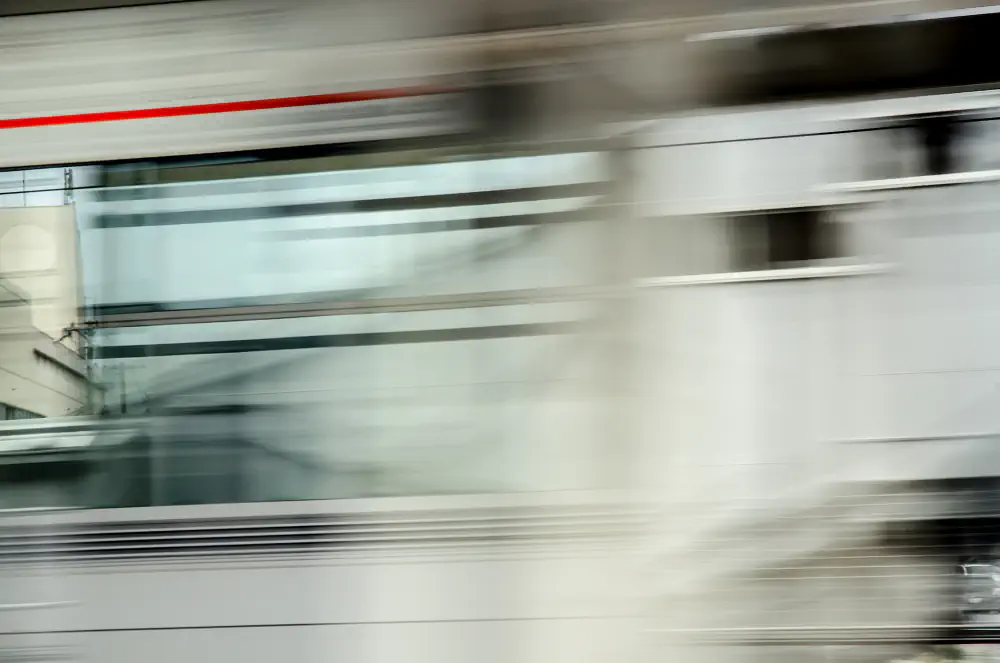
On that day, as the landscape sped by, I made a series of photographs without consciously trying to control or compose them.
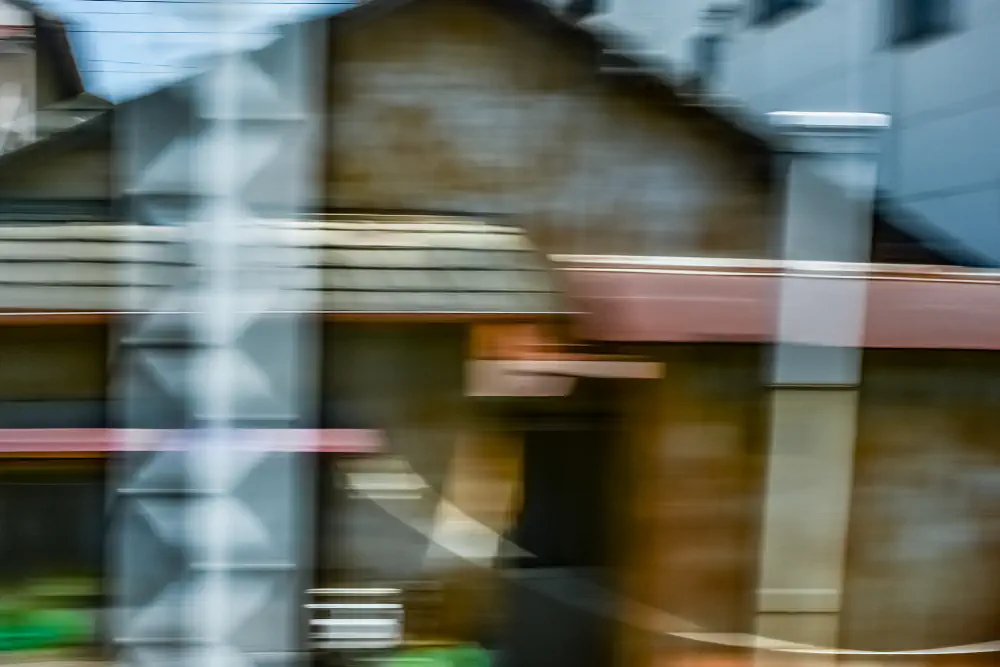
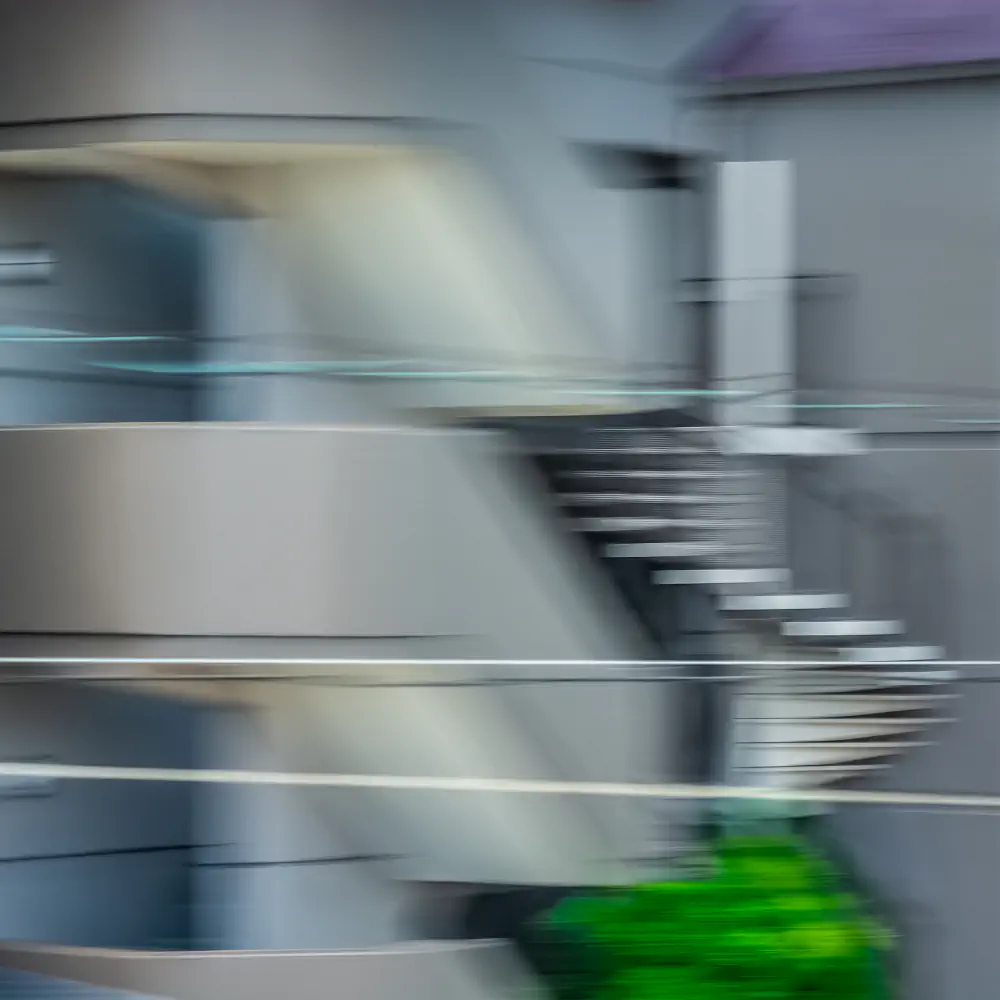
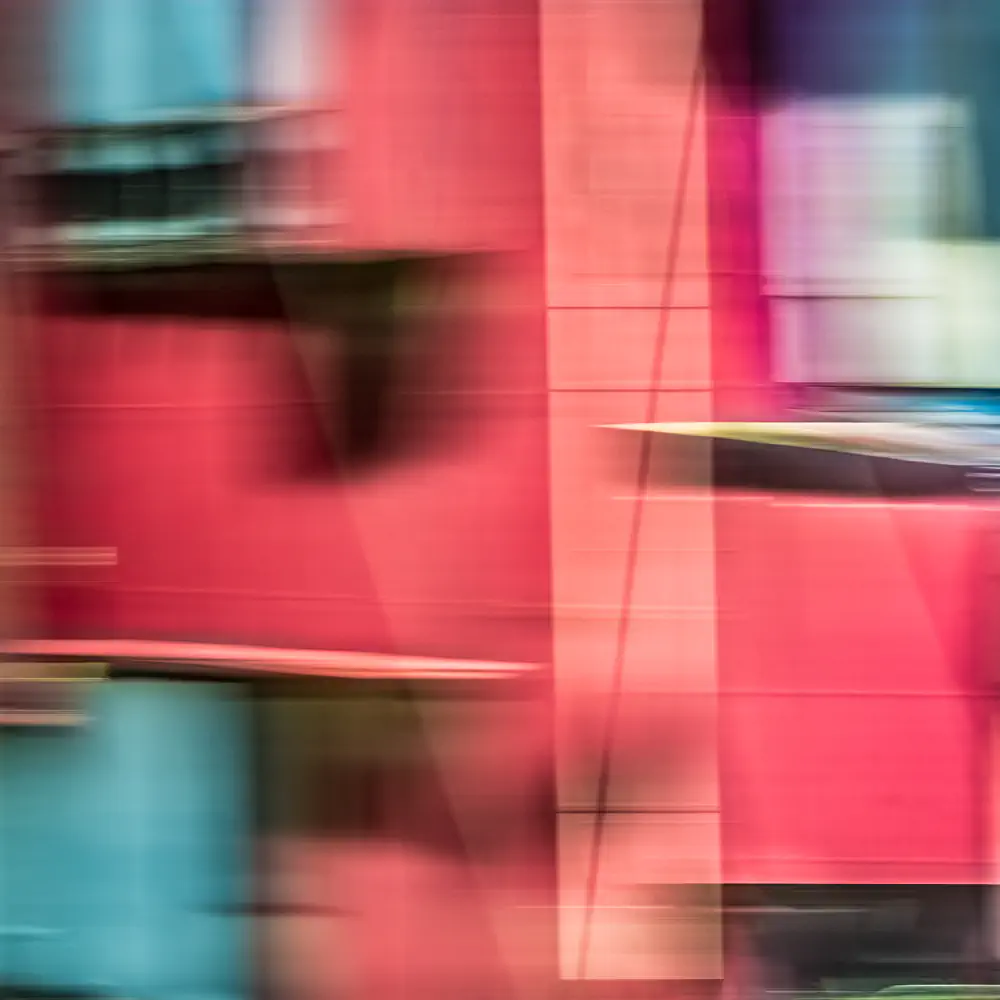
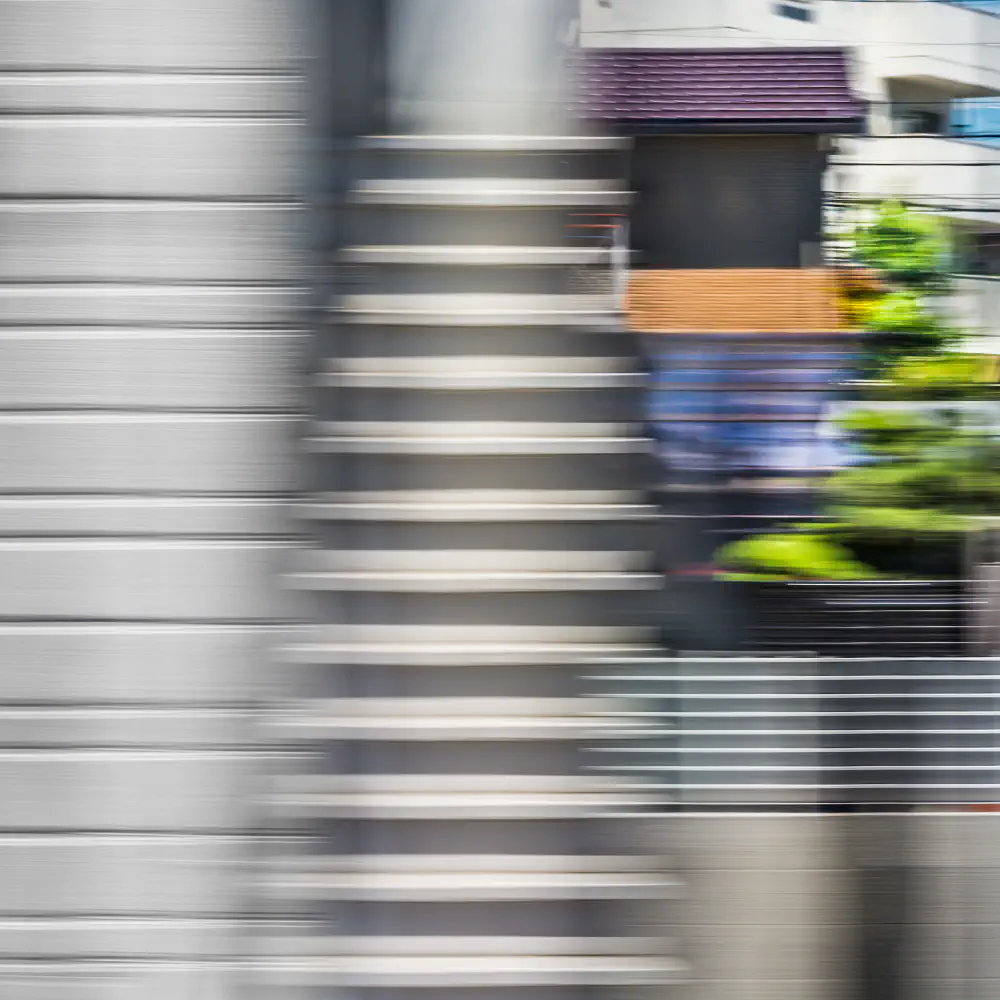
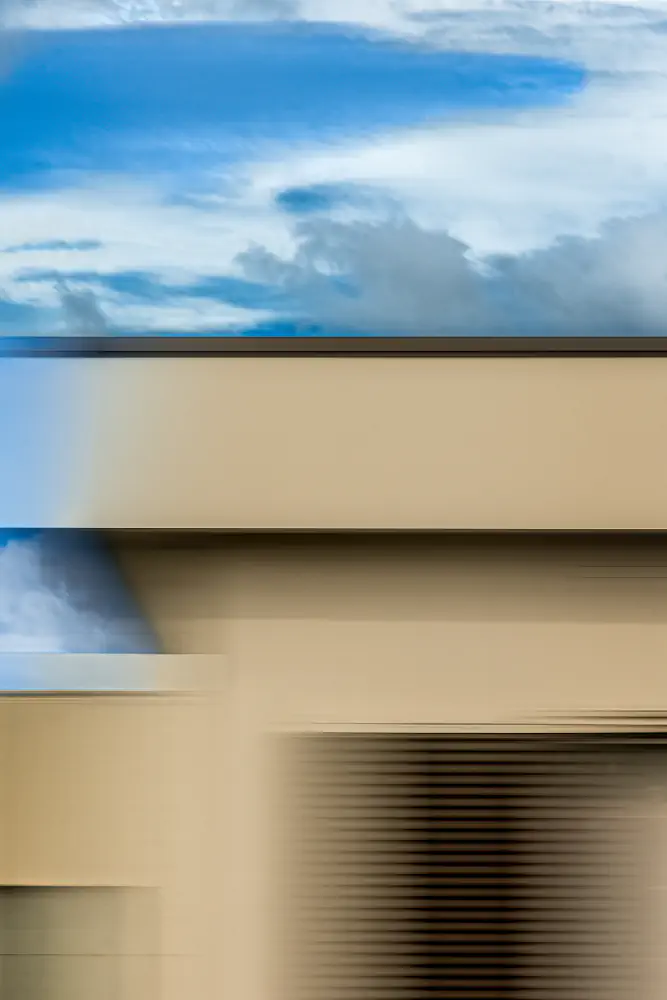
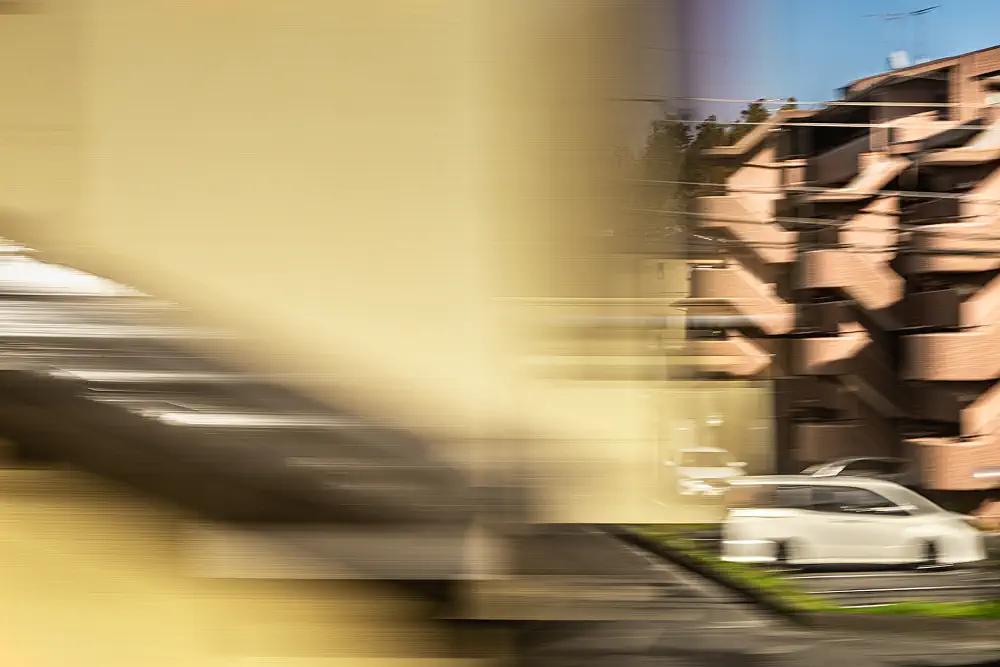
I deliberately used a slow shutter speed, which I knew would result in a blurred image. At the speed at which the landscape was passing, it was impossible to compose the images or know what the resulting photographs would look like. When I was able to examine them, they were blurred through movement, as expected, but there was another unexpected consequence of this effort. Within the images, there was an overlapping of temporal moments inside a single static image. This inspired me to call the series Moments in Transition. The series mainly includes images from multiple trips to Japan, but it also includes work made in Germany and the United States.
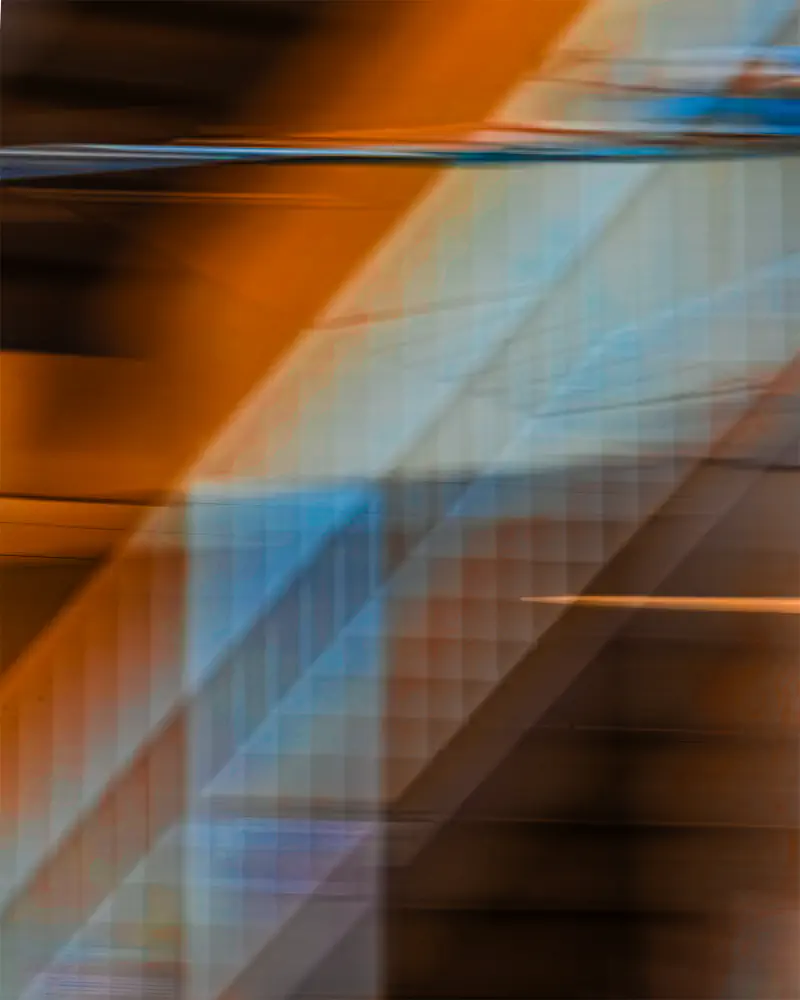
In 2016, I had a solo exhibition featuring some of this work at the College of Idaho. The gallery director, who also taught art history at the college, informed me that he was then lecturing his class on Cubism and that he was requiring his students to visit my exhibition because he felt there was an association between my images and Cubist painting. I had not previously made that connection. This comparison, made seven years after I started the series, was meaningful to me in the context of my understanding of what I had been doing and offered a related way of thinking about my images through Cubism. This association between Cubism and my images led me to do some research on the foundations of Cubism.
*In doing this research, I discovered that photography actually influenced Cubist painting. I found that the two artists best known for Cubist painting, Pablo Picasso and Georges Braque, were both fans of cinema. They were influenced by film’s sense of unrestricted freedom from the constraints of time and space. They recognized film’s capability to capture reality from multiple angles. In Cubist painting, the artists mirrored this idea in a single image by dividing objects into fragmented planes and depicting them from multiple simultaneous perspectives and viewpoints. It was the Cubists’ attempt at a corollary to film, visualizing the passage of time and the experience of movement.
I think discussing my photographic process might be instructive here. What began as a spontaneous exercise, an attempt to break free from my normally controlled manner of photographing, became a new photographic paradigm for me. I learned that there were technical controls that could help produce results within this uncontrolled creative process, such as controlling shutter speed and selecting the focal length of the lens used. Over time, I also realized that the images that resonated most with me were those with structures found in urban settings. The images based on organic forms found in the natural landscape were not as appealing to me. As previously mentioned, the image created when I release the shutter is completely unknown to me, with the landscape speeding past the window. The trains I photograph from, and the speeds at which they travel, vary. The Japanese Shinkansen can reach speeds of up to 320 km/h, but many of the other trains I use move much more slowly. There are many failures with this process, but some of the resulting images feel magical to me. Or perhaps I was simply lucky to have captured them. These images were created in camera, not through software manipulation or by combining multiple images.
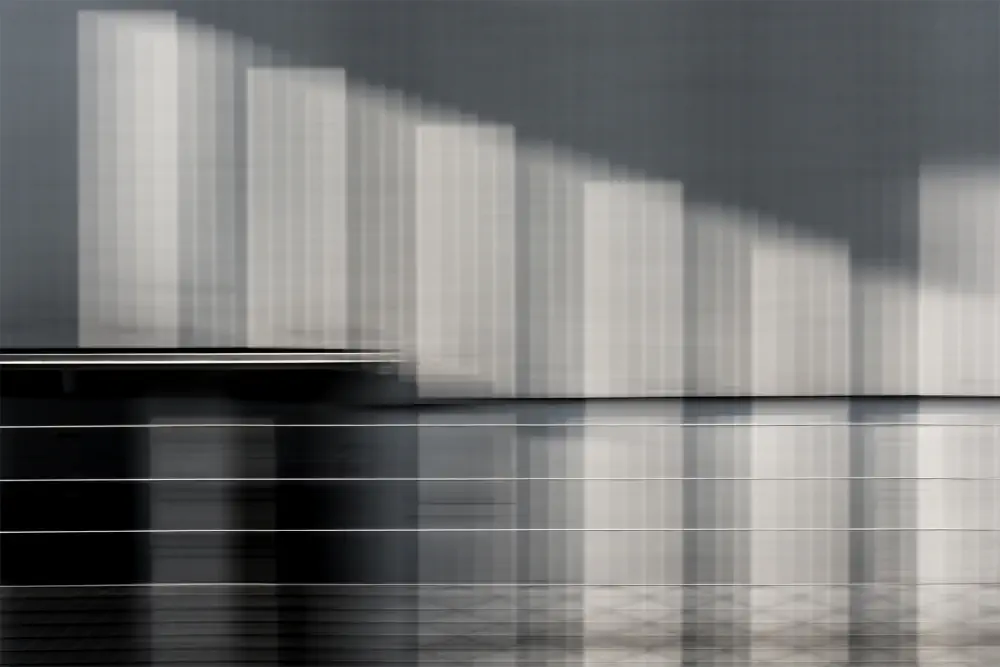
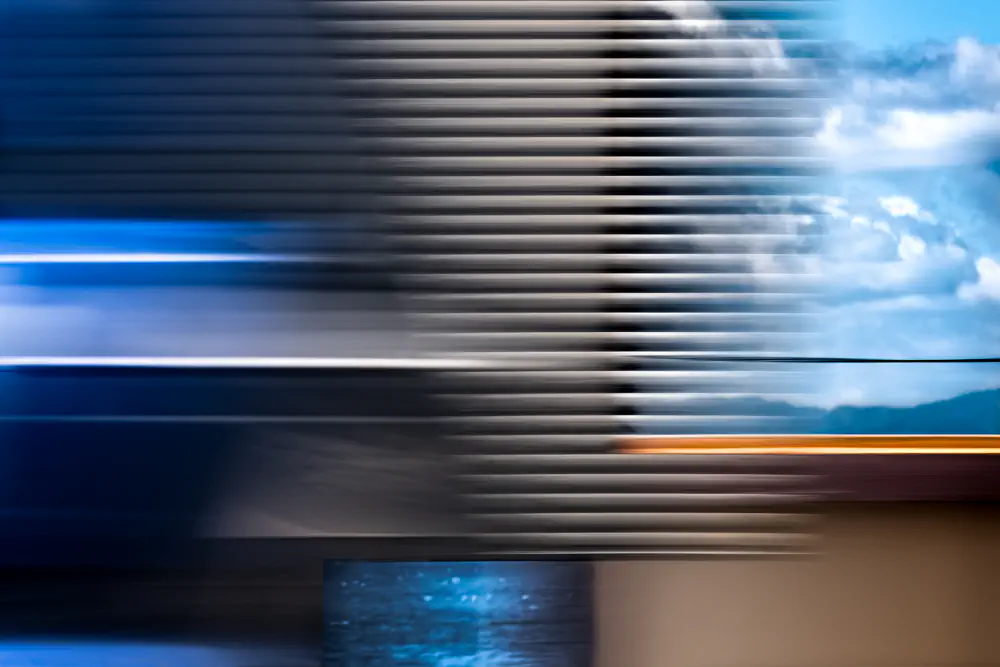
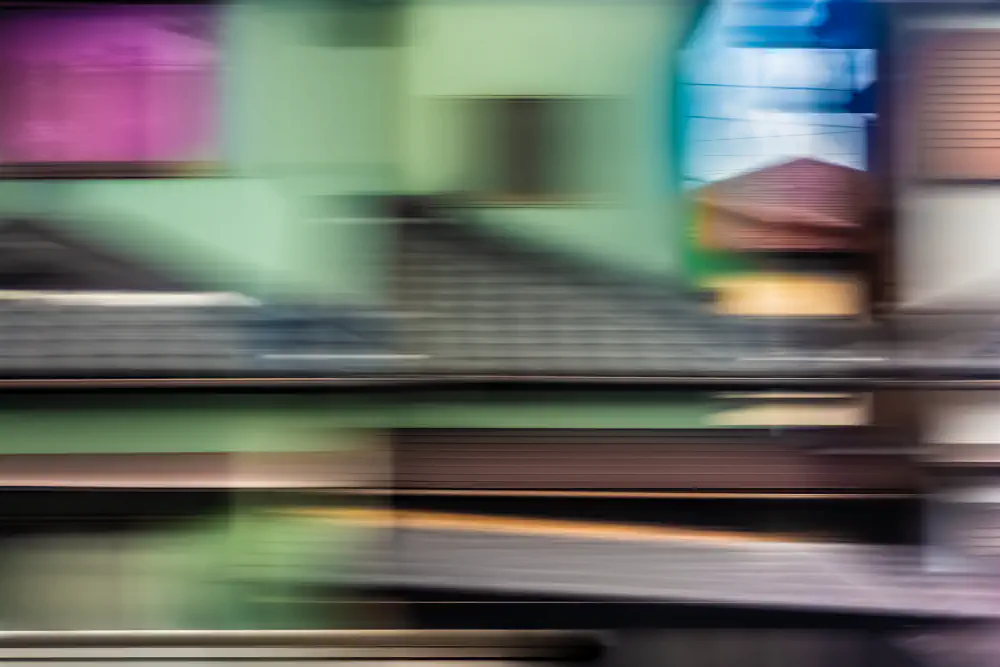
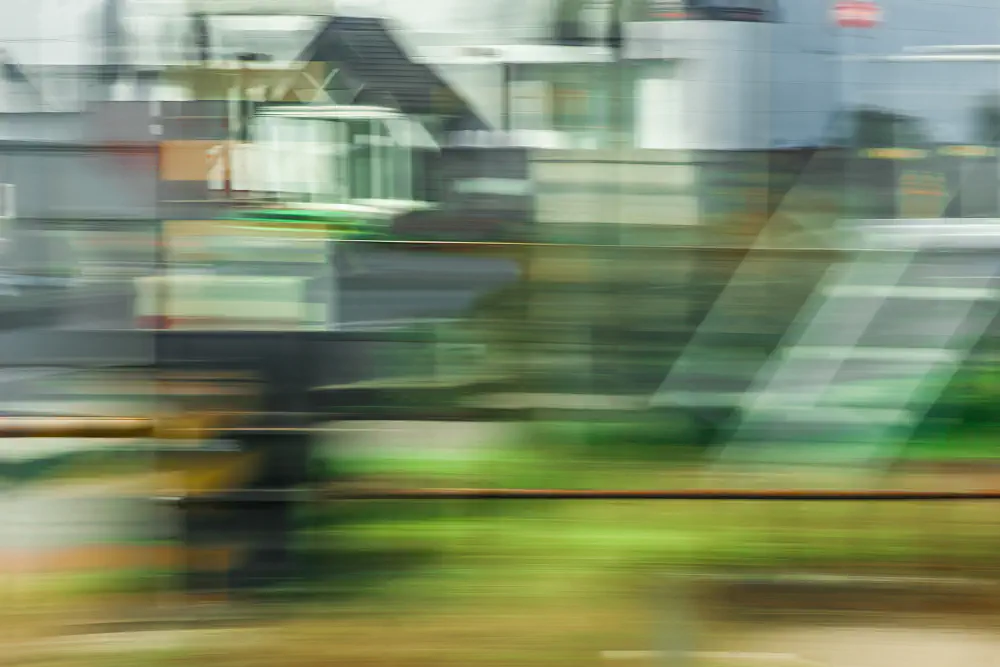
At this point, an analysis of the images that result from using this process should be attempted. As I mentioned earlier, the urban environment has yielded more interesting results for me than the natural landscape. While horizontal elements remain sharply defined in an image, vertical and diagonal elements become blurred. It is these vertical and diagonal elements that most clearly create the imprint of time and space in the images. Quite often, intervals can be seen in the non-horizontal elements, creating steps that give spatial depth to the scene.
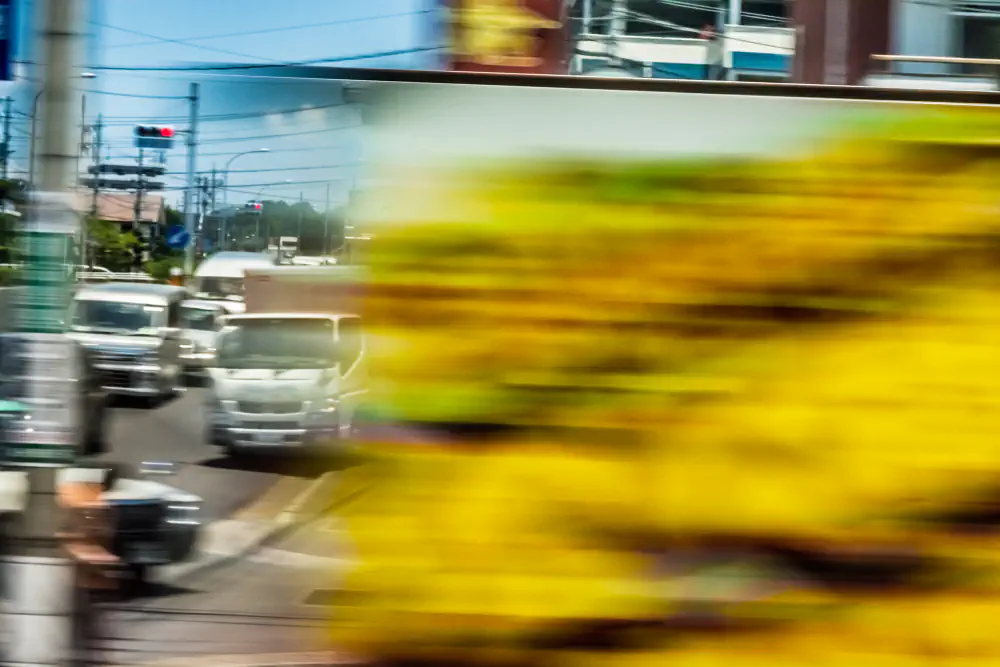
There is also an interesting visual phenomenon that can occur in the photographic process of taking these photographs. The nearby landscape appears blurred, while the distant landscape appears much less so. This is a physics phenomenon related to perception. It has to do with the distance one is traveling and the distance one is from the object being seen. Imagine that there are two objects seen from a train. One object is far away and the other is close. As you travel the same distance, you see a large angle for the closer object and a small angle for the distant object. Therefore, the angle grows more slowly for faraway objects, so it seems that you travel more slowly in relation to them, and they appear less blurred. This creates an interesting contrast between what is blurred and what is sharper, between what is abstract and what is recognizable.
The post-production process begins with eliminating images that are either not interesting or redundant. Editing which images to include in the series is as important as any other part of my process. Many images are eliminated because of the lack of creative and compositional control I have over what is being photographed. After selecting the more interesting images, I adjust the exposure and make other normal workflow adjustments. For the more realistic images, I try to remain faithful to the subject’s color whenever possible. I sometimes crop the images to create a more interesting composition, but quite a few of the final selections remain full frame, as photographed.
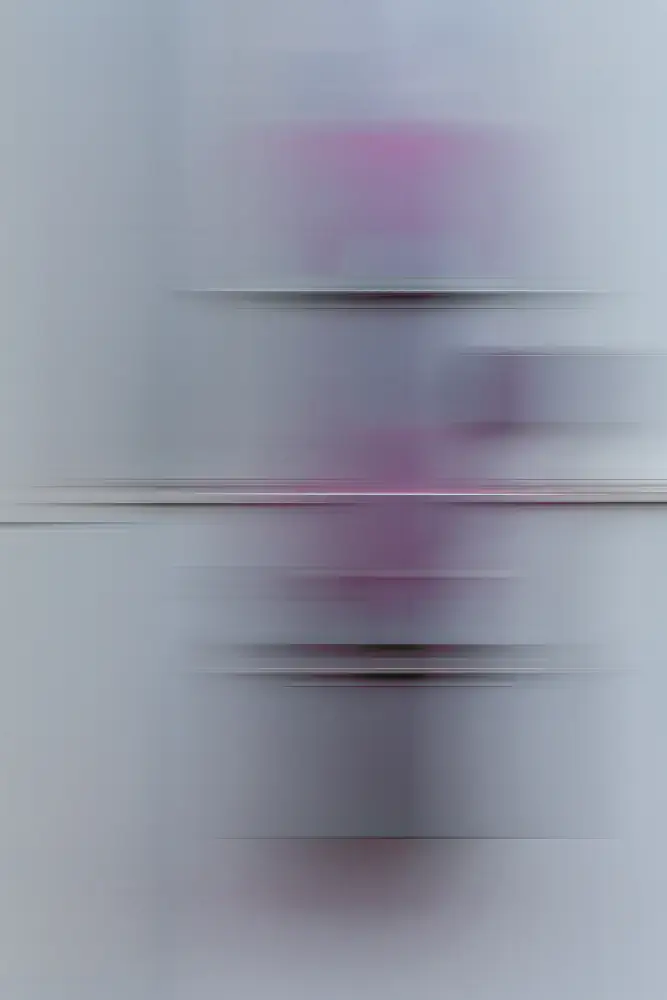
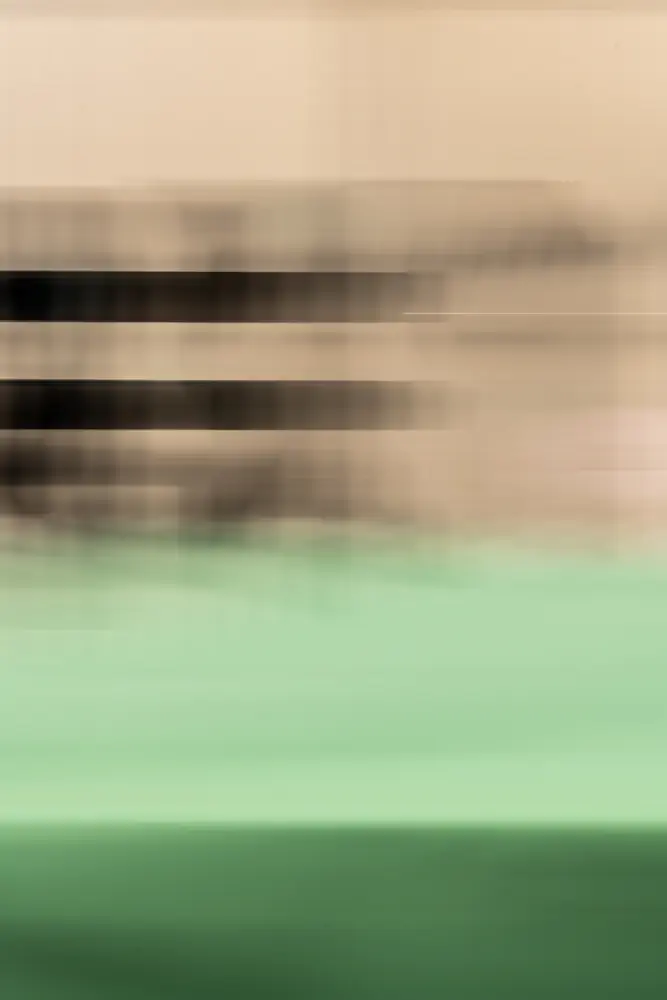
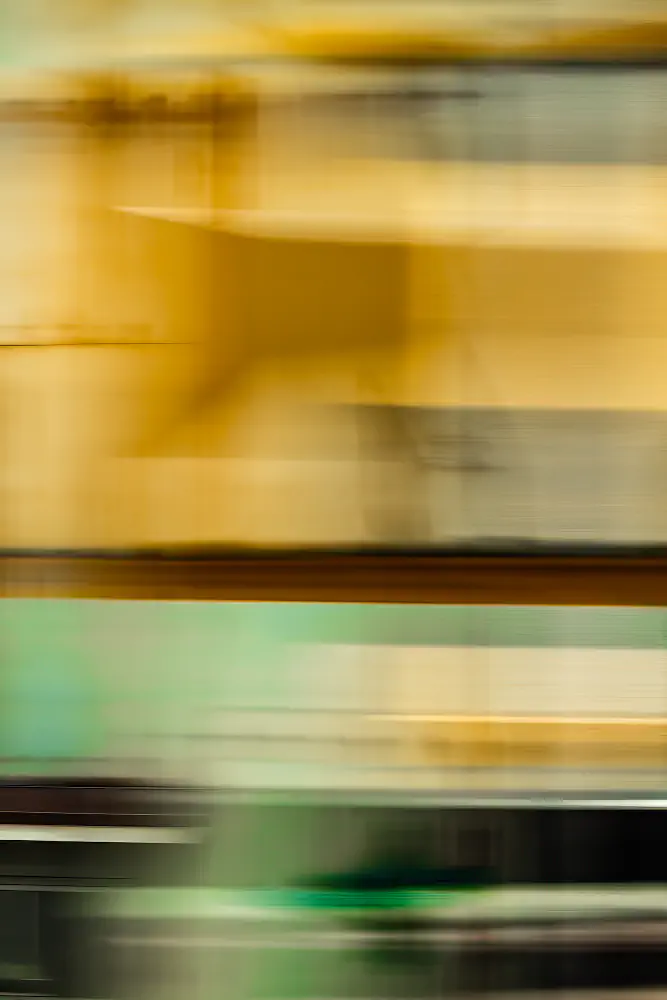
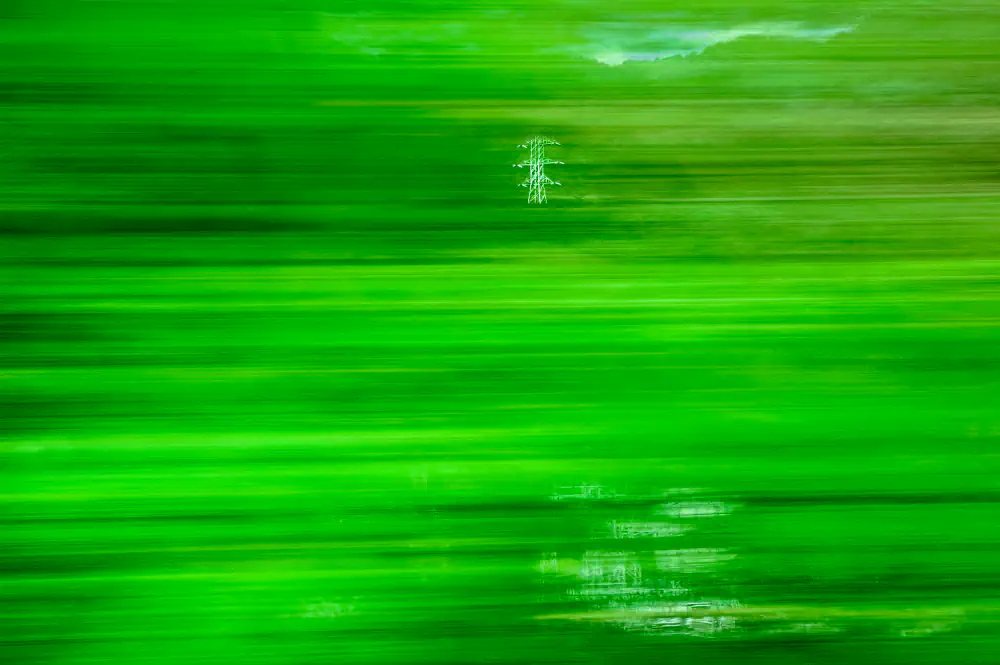
The abstract images have no frame of reference as to their subject. Many train windows in Japan now have a UV tint that affects the color rendering of the photographs. This usually manifests itself by turning the images green. Because of this tinting, and because of the abstracted nature of some of the image content, I have quite a bit of creative freedom when working with color. In the abstract images, the compositions range from predominantly horizontal bands of color to abstract displays of color with spatial depth. The majority of the images, both realistic and abstract, are photographed straight on. Most of the subjects in the landscape are usually parallel to the train rails. Because of this, space can become very flattened, especially in some of the abstract images.
The photographs are not static representations of place. Rather, they are temporal segments, both fleeting and frozen at the same time. Each image captures a multitude of positions, both linear and spatial. The blur became, for me, a kind of unseen temporal reality, one of both clarity and obscurity. These photographs continue to reveal frozen moments in time that transition into multiple dimensions, a kaleidoscope of images in continual transition.
*Paraphrased from the following article:
https://www.touchonian.com/p/cinema-and-cubism
Visual Musicality. Cinema and Cubism, Cecil Touchon. November 20, 2024.
About John M. Francis
John M. Francis grew up in the Midwest and now lives in Boise, Idaho. He studied at the Kansas City Art Institute, where he took his first photography course, sparking a lifelong passion for the medium. After spending two years there, he transferred to the University of Cincinnati. He worked as a graphic designer for many years before returning to school to earn an MS degree in Communication from Florida State University. He has taught photography and graphic design at Boise State University and the College of Idaho.
His work explores the parameters of landscape photography and pushes the boundaries of how it is viewed, not only as a physical space but also as a cultural one. He has exhibited his work throughout the United States, Japan, and Germany. His photography has been published in several magazines and has received several awards. [Official Website]