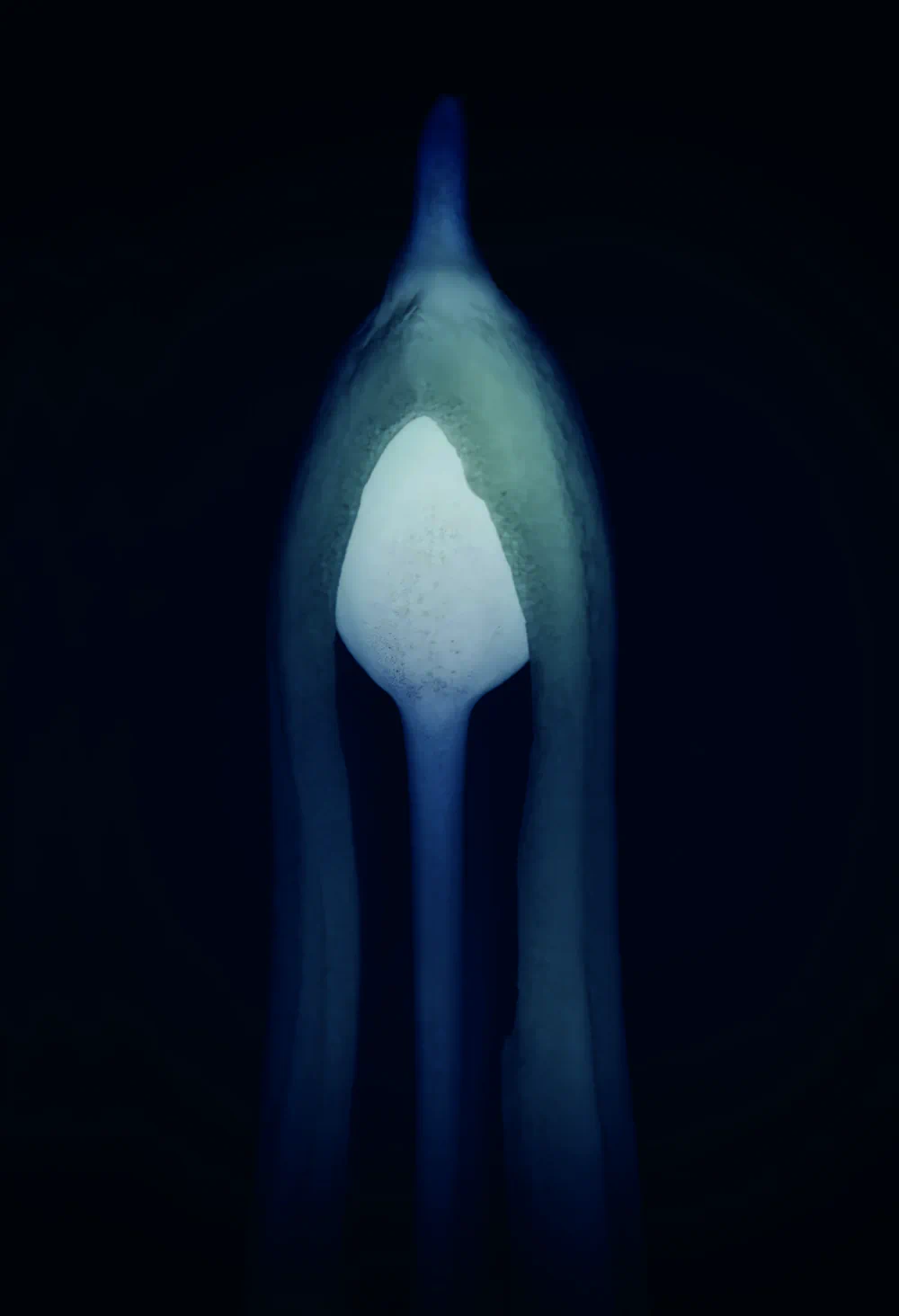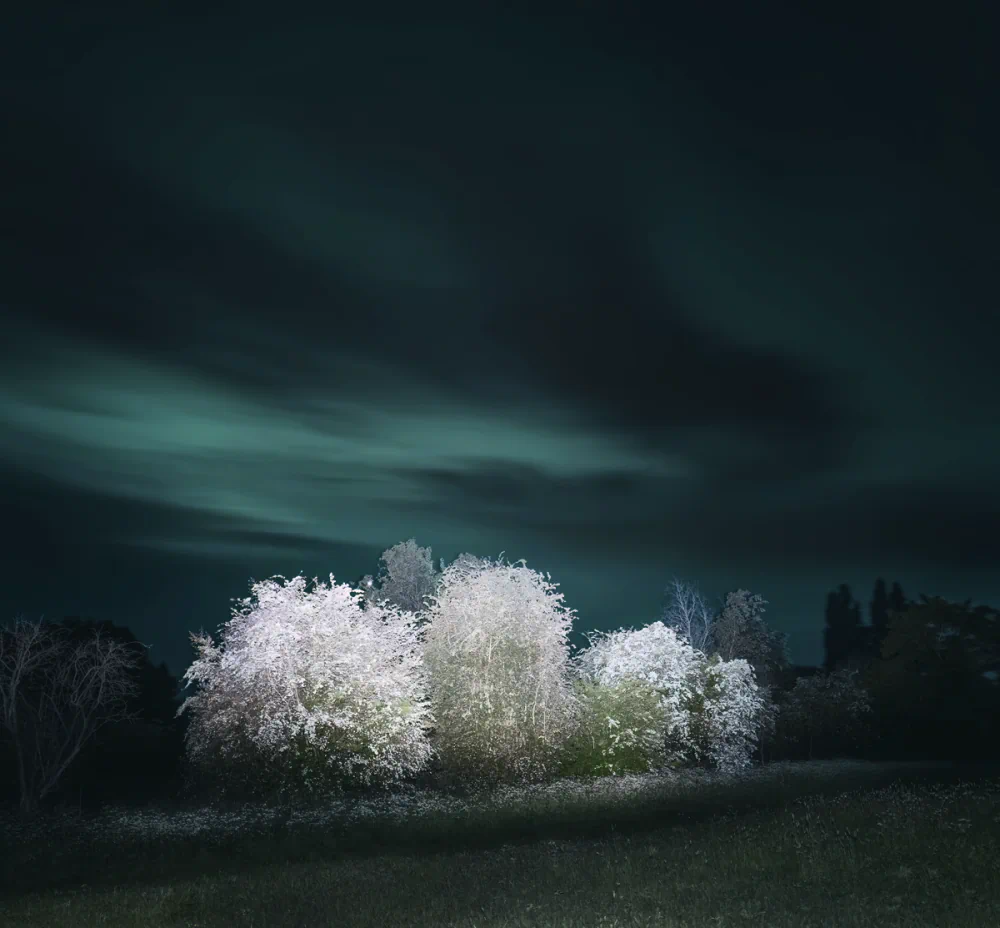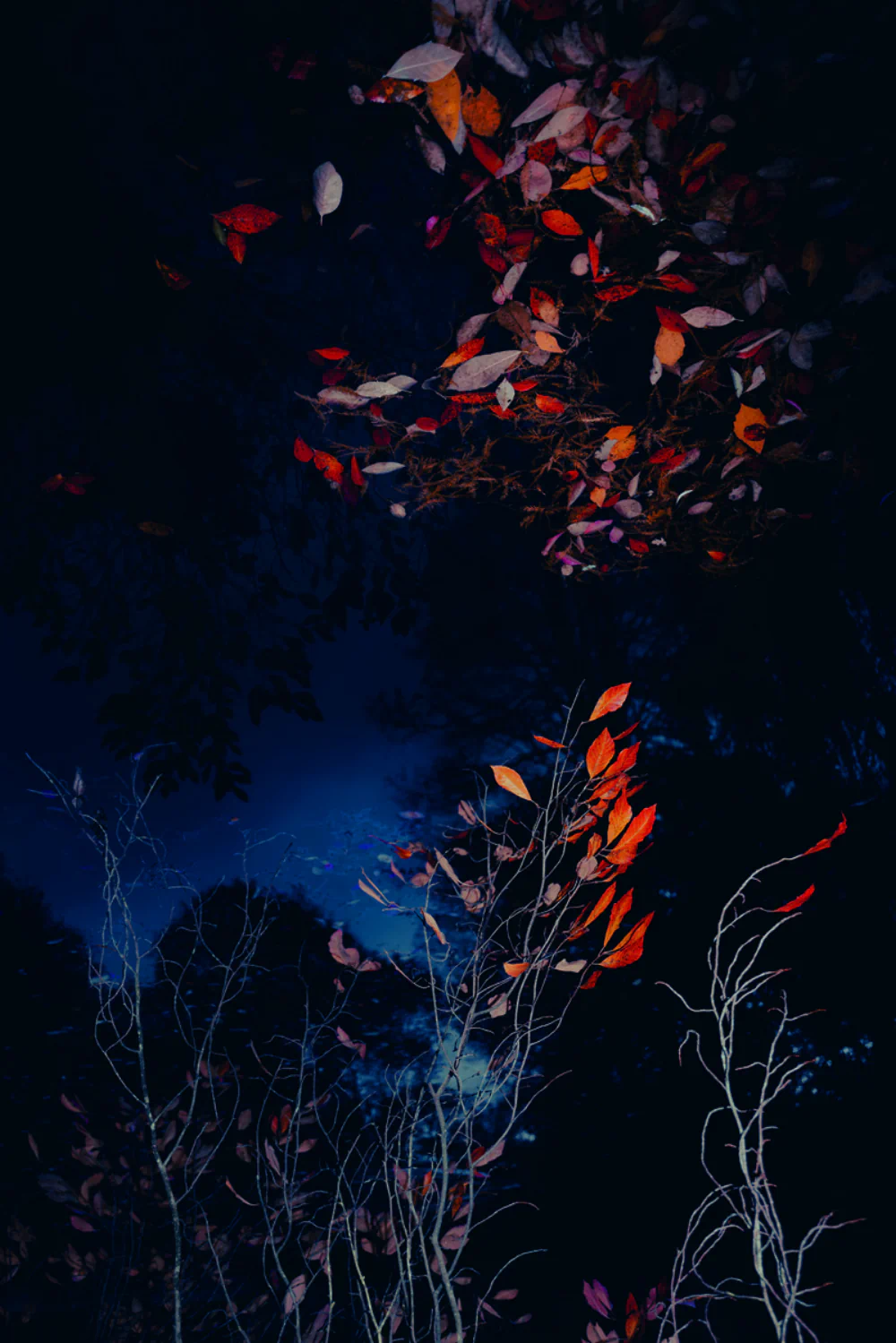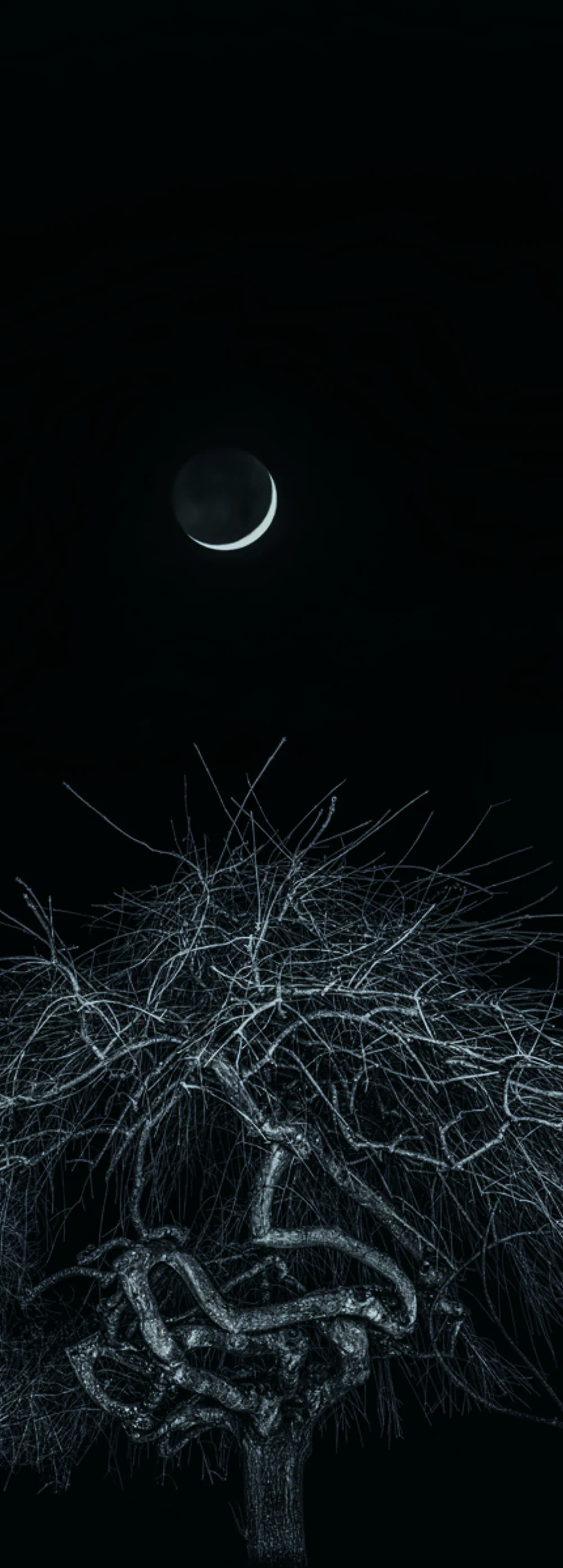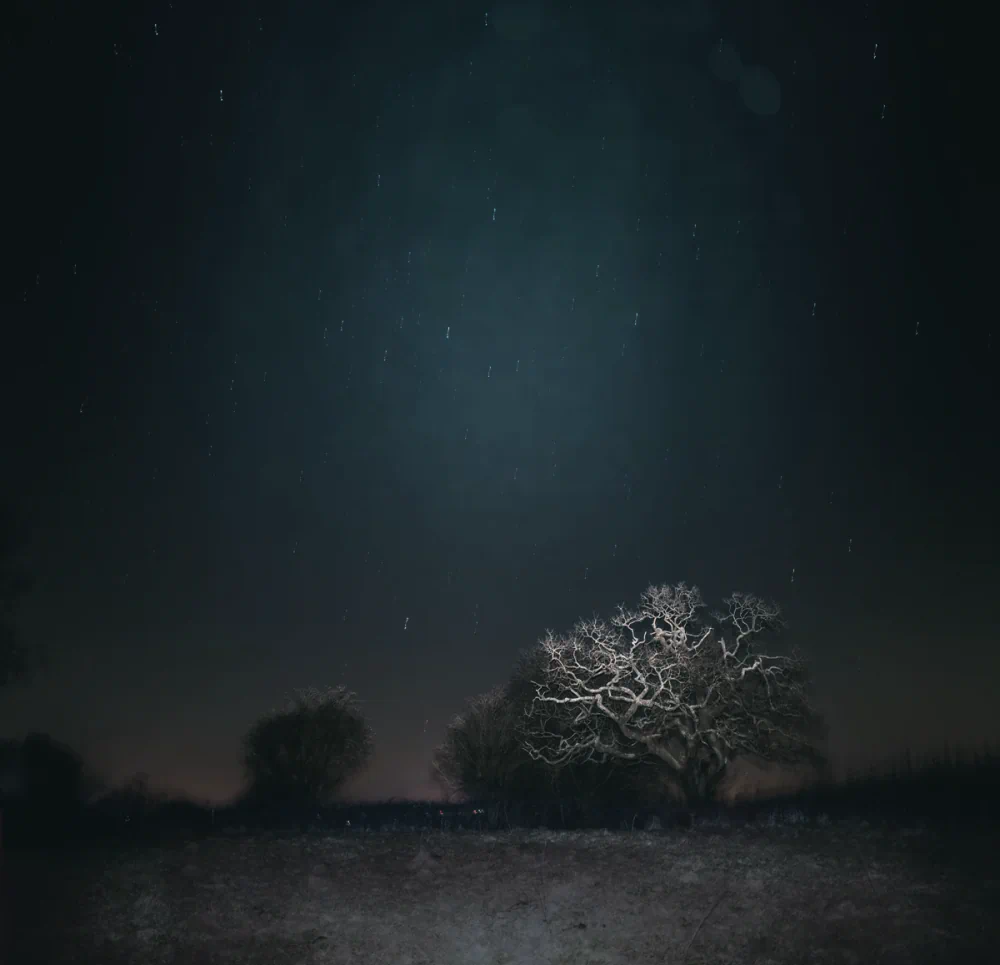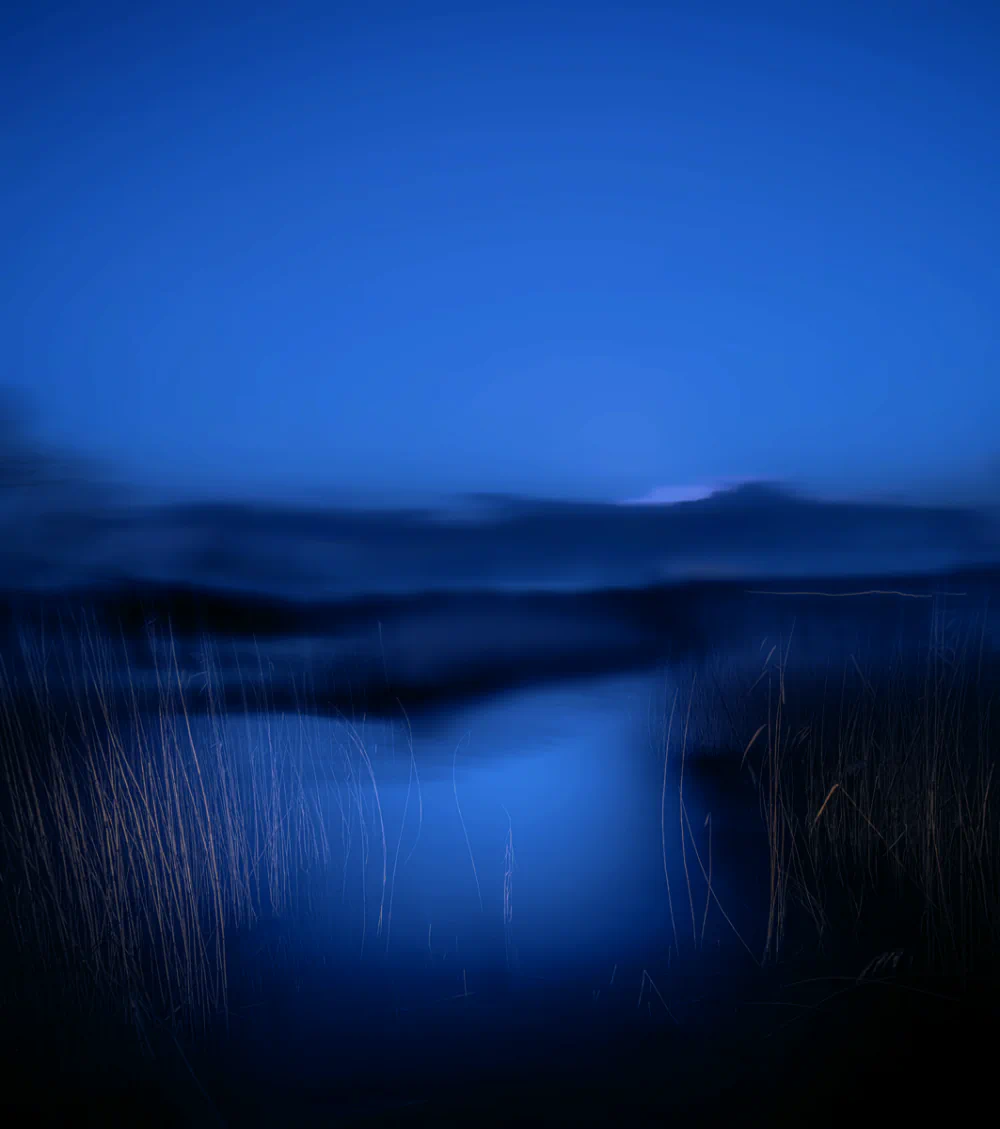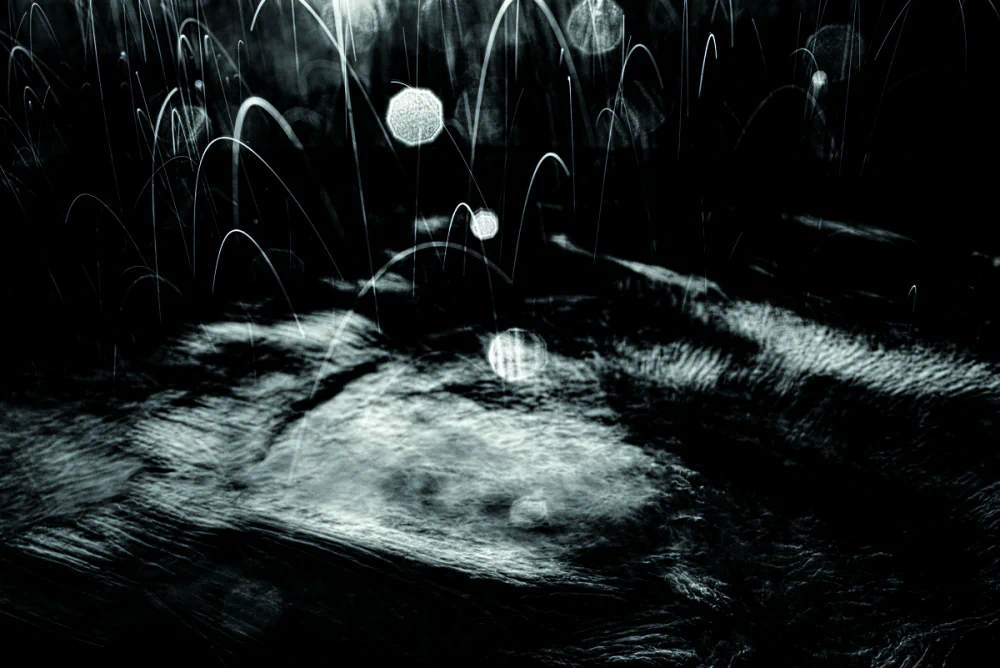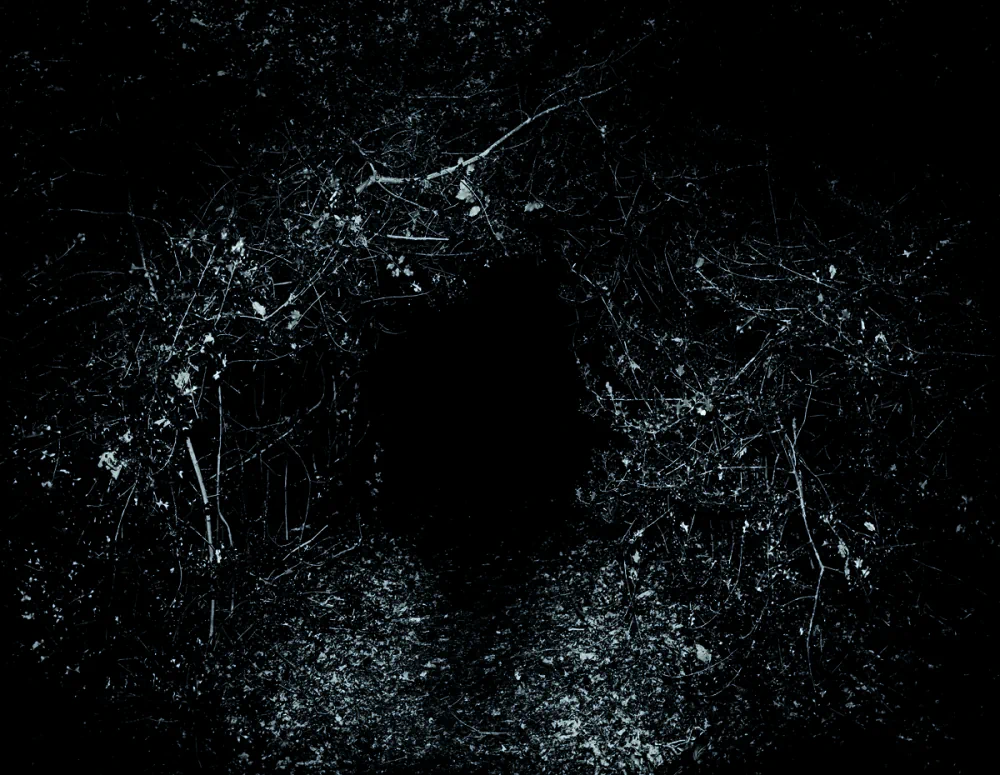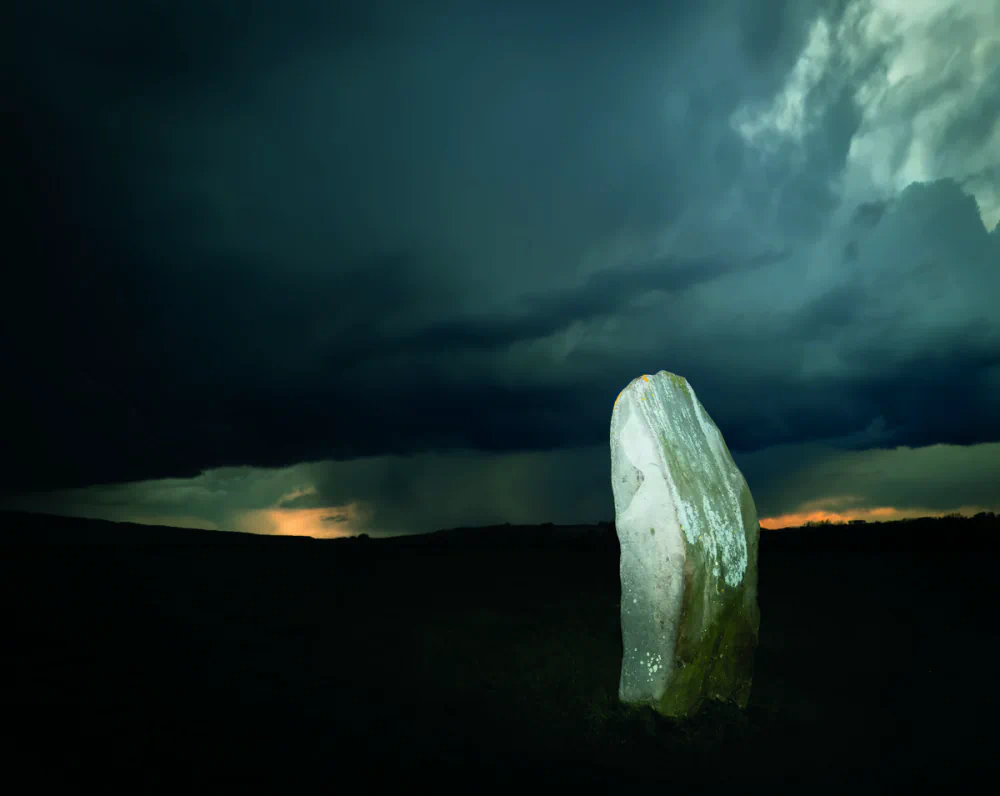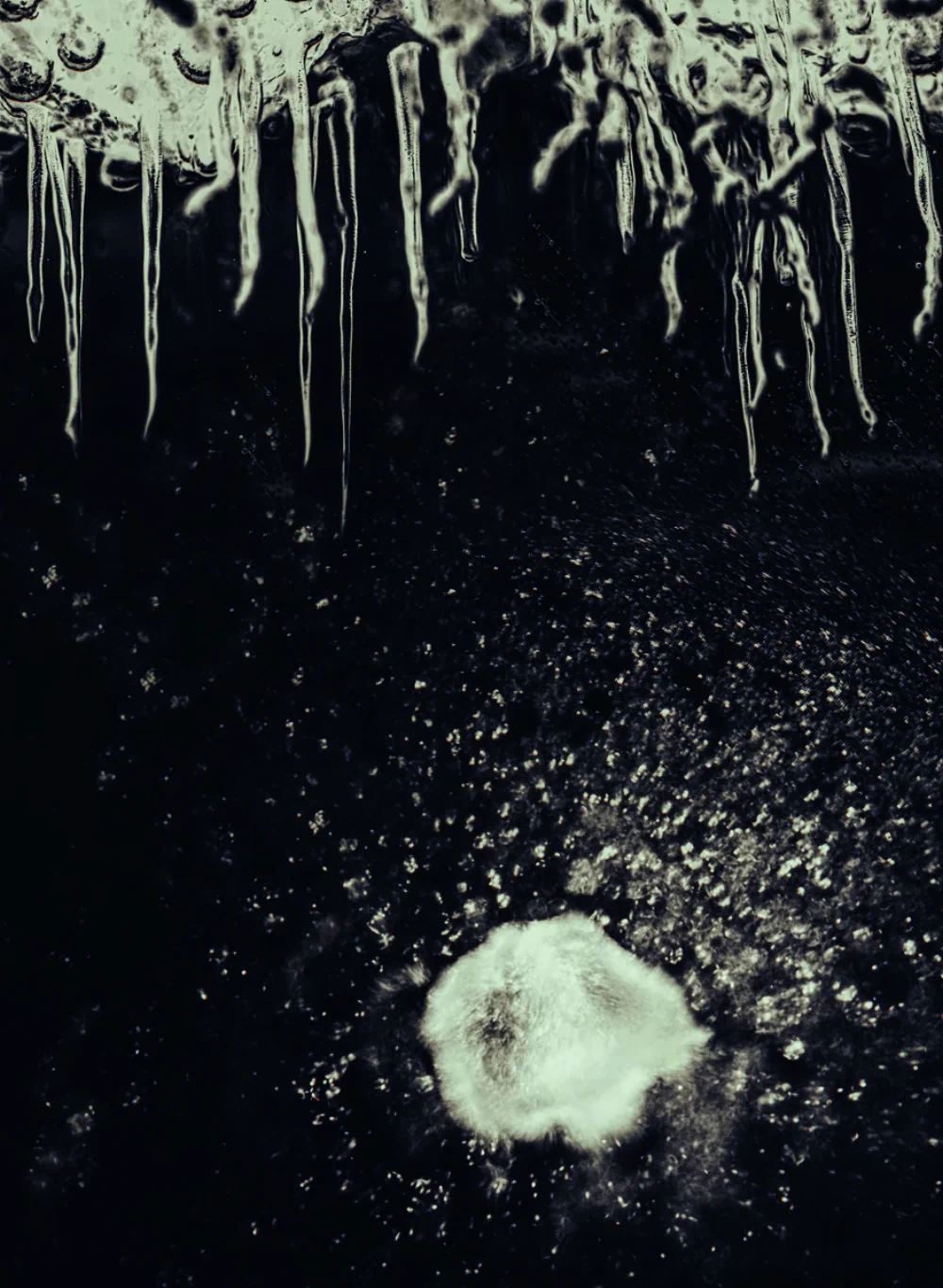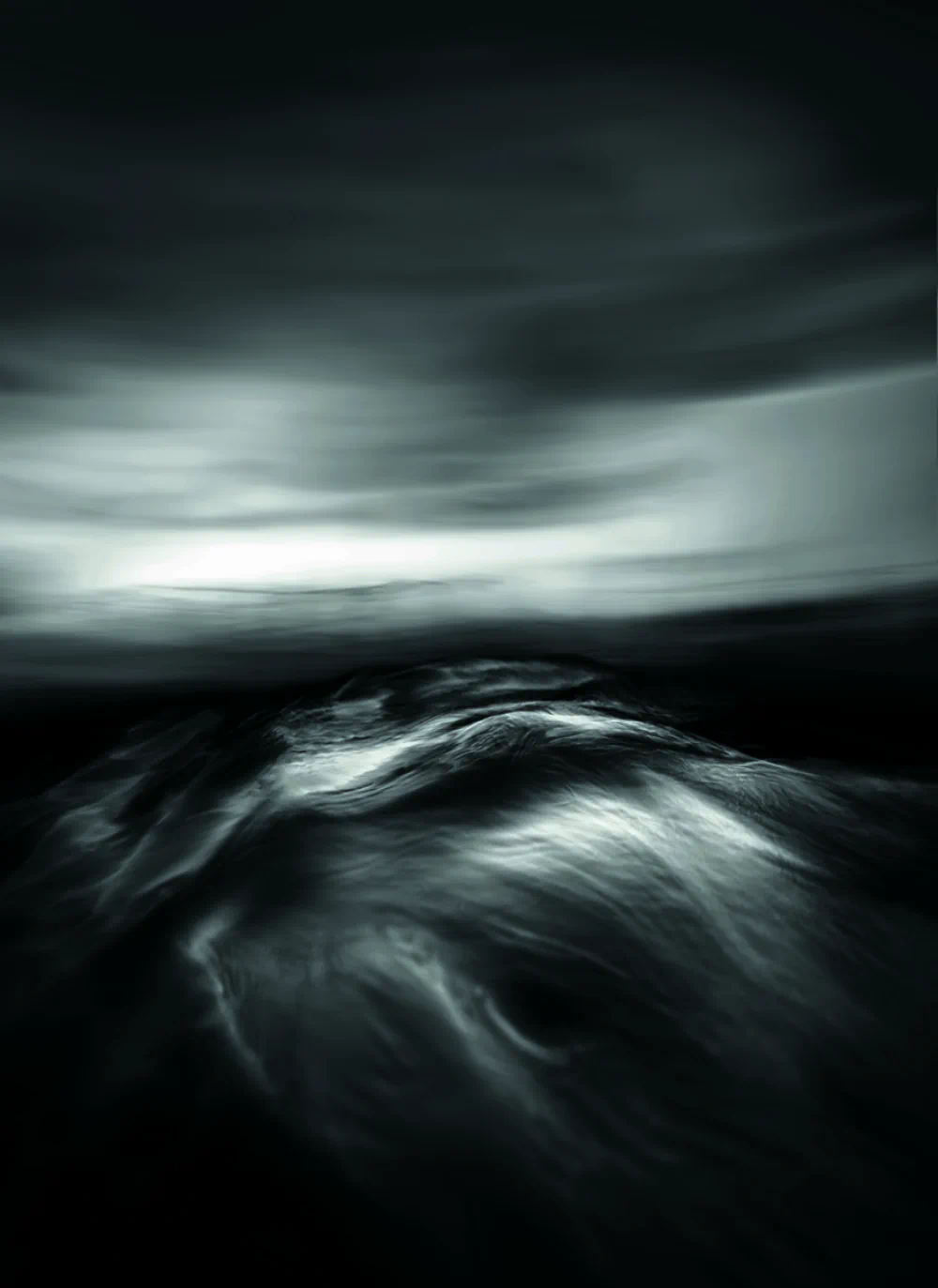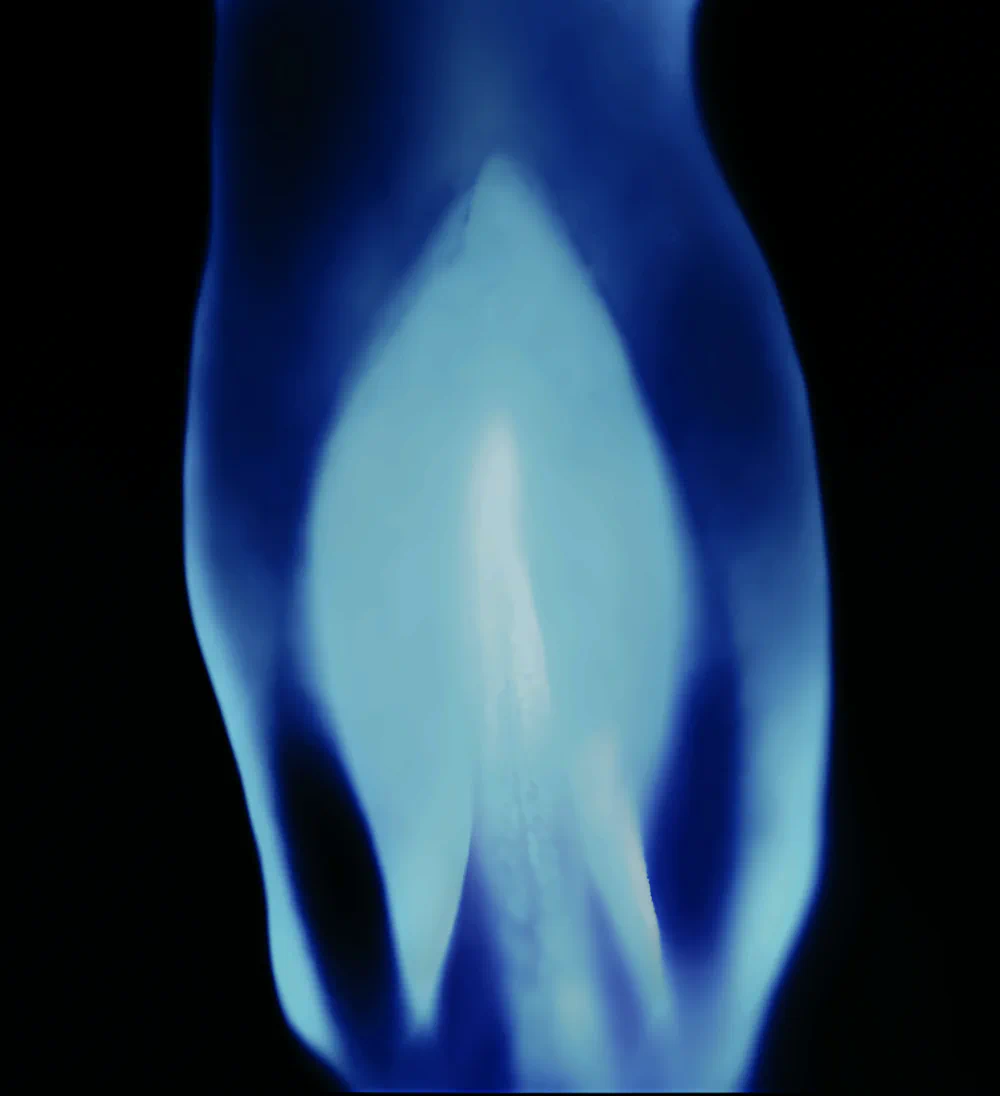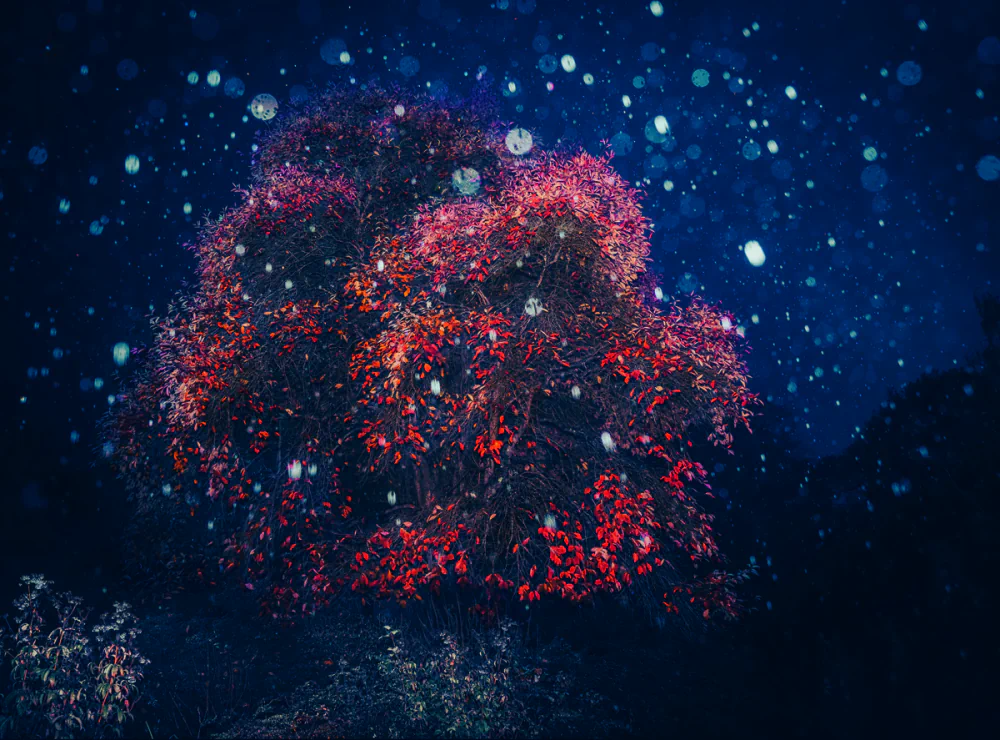
Making the Moon is a photographic and poetic sequence created between 2020 and 2026 in Somerset, Richmond, and the surrounding edges of the natural world.
The work moves through night, weather, water, plants, animals, gardens, fields, and fleeting apparitions, following the places where the visible world begins to loosen and something more interior starts to emerge.
The starting point is the nameless. By this, I mean the dimension where things appear before language fixes them into place. A tree, a body of water, a flower, the moon, or a field at night—each first arrives as a presence before becoming a subject. Photography, for me, begins in that state of not knowing. I am not trying to illustrate an idea, document a place, or impose a narrative. Instead, I am trying to become quiet enough for the world to reveal itself on its own terms.
Much of the work has emerged through walking, waiting, and listening. I follow whatever arrests my attention: a shape in water, a glow in the hedgerow, mist drifting across a field, the strange intelligence of a plant, the interior of a flower, the density of darkness, or the sudden appearance of something that feels like a sign. Sometimes I see the image before I make it. At other times, the photograph reveals itself much later, hidden within the archive, as though it had been waiting for me to become ready to notice it. The process is not linear. It loops, returns, and deepens. In that sense, the work is closely related to dreaming.
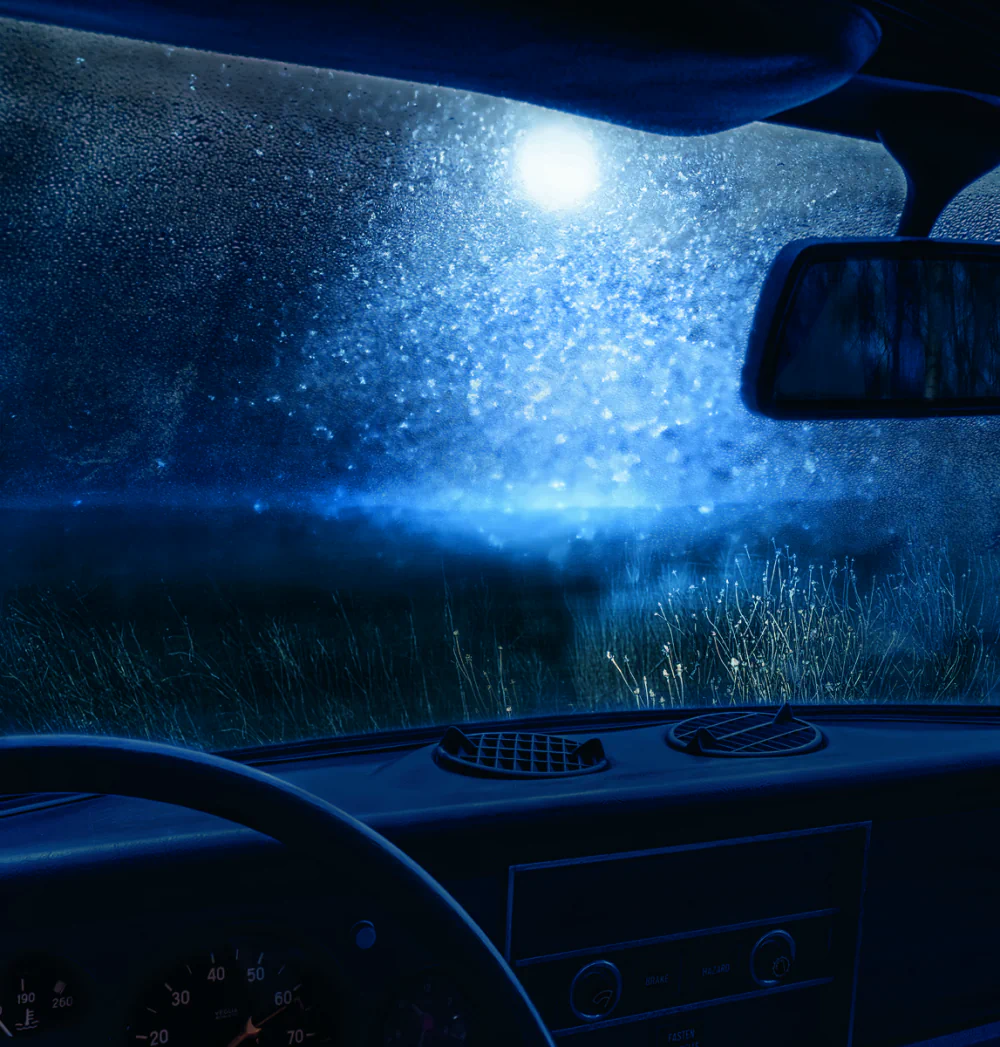
I have always felt that we do not simply look at the world; we encounter it through the unique dream of our own perception. Each of us inhabits a private weather—a continuous stream of memory, sensation, emotion, and attention. The camera becomes a way of tracing that stream. The images in Making the Moon are therefore not only photographs of the external world but also records of an inner encounter, fingerprints of a particular soul moving through its own field of experience.
The natural world is central to the work, but not as scenery. I experience nature as something both outside and within. I am made of the same material as the earth and will one day return to it. This is not an abstract idea but a grounding truth. Trees, fields, birds, water, flowers, and weather are not separate from the human body; they belong to the same unfolding life. When I photograph them, I am not looking at something “other.” I am looking into a shared field of being.
During the years in which this work emerged, the world often felt fractured, anxious, and over-narrated. In response, I found myself increasingly drawn to the physical immediacy of the land—to mud, rain, darkness, birdsong, branches, water, leaves, moonlight, and the shifting atmosphere between night and day. The natural world seemed to offer a different kind of intelligence, one that neither argues nor explains, but simply exists. That simplicity became increasingly important to me.
Darkness is one of the recurring motifs throughout the work. I perceive two kinds of darkness. The first is familiar: the darkness of fear, uncertainty, self-preservation, and the unconscious, where old anxieties and unresolved emotions gather. But there is another darkness as well—a luminous darkness, velvety and still, full of hidden life. This second darkness can only truly be entered after the first has been met with courage and curiosity. Much of Making the Moon unfolds in the passage between these two states.
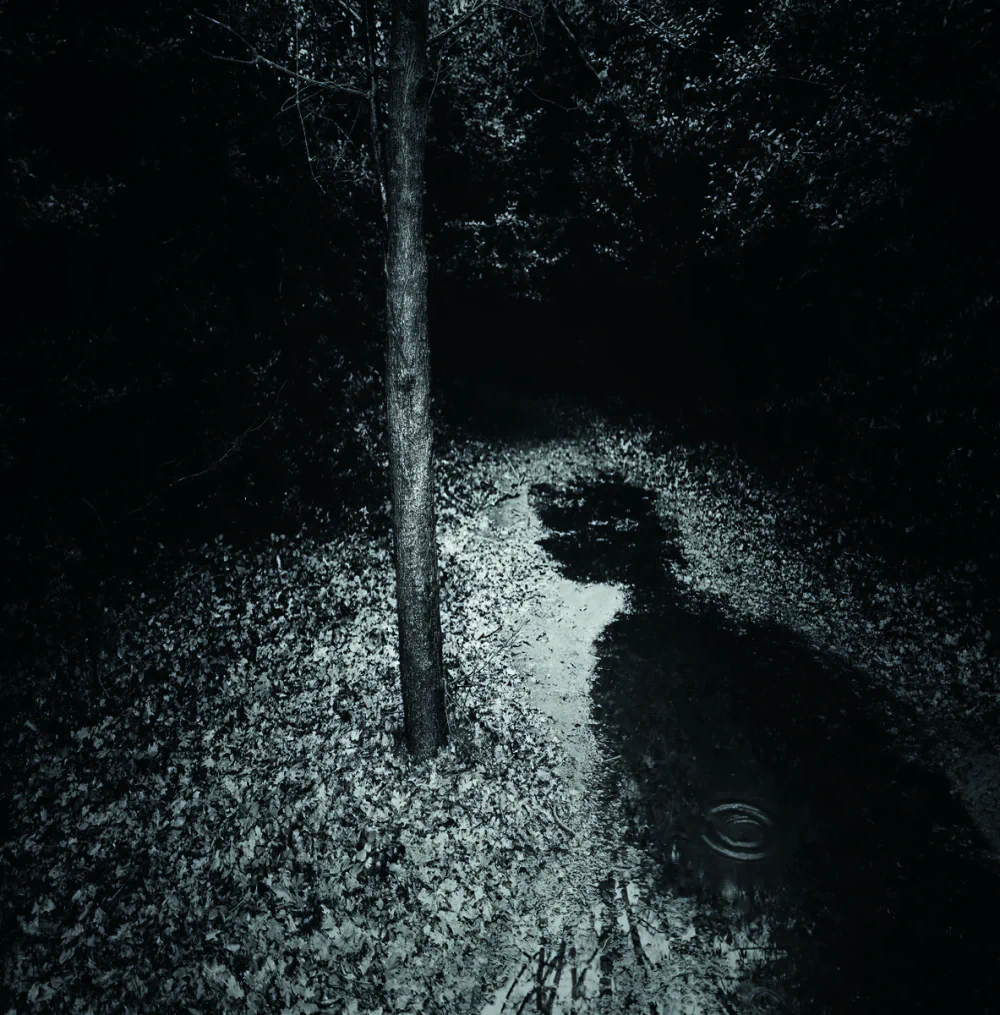
For me, that passage is alchemical. What first appears obscure, threatening, or unknowable may gradually reveal tenderness, beauty, and light. The unknown becomes intimate. The shadow becomes a doorway. This movement from darkness toward illumination is not only the subject of the work but also the deeper trajectory of my life and artistic practice. The photographs are contemplations of that transformation.
The poems accompanying the photographs do not explain the images. Instead, they move alongside them like a second current. Sometimes they open a door into the photograph; at other times they remain separate, carrying their own atmosphere. Together, image and word create a rhythm of approach and withdrawal, where meaning is felt rather than declared.
I am not especially interested in storytelling in the conventional sense. What draws me is the ineffable—the point at which a place, object, or moment begins to carry emotional and spiritual resonance. Like a painter, I seek to distill experience to its essential elements, to what speaks directly to the inner life. A body of water, a flower, a branch, or the moon may become less an object than a threshold.
Ultimately, Making the Moon is a work about attention. It is about standing still long enough for the world to become strange again; about trusting the image before it is understood; about allowing darkness to become luminous; and about discovering, within the ordinary world, small visitations of mystery. I am not trying to explain the world. I am simply trying to stand close enough to it for something unnamed to reveal itself.
About Justin Pumfrey
Justin Pumfrey is a British fine art photographer and poet based between Richmond, Surrey, and Somerset. After many years working as a commercial photographer, he developed a personal practice centered on a contemplative and poetic engagement with the natural world. His work explores landscape, night, weather, plants, and threshold states, often combining photography with short poetic texts.
His current long-term project, Making the Moon, brings together photographs and writings created between 2020 and 2026, forming a sequence that moves through darkness, inner weather, the natural world, and the gradual emergence of light. His work has received recognition in international photography awards and publications, including AOP, D&AD, FAPA, PX3, IPA, and others. [Official Website]