
What the Frame Refused: Family Albums, Flea Markets, and the Photographs No One Is Left to Claim
My grandmother kept her photographs in an enormous chocolate box, shut inside a wardrobe that smelled of caramel and whipped cream whenever it opened. I liked going through it with her during the “controra”, when everyone else slept and it was just the two of us behind the green shutters. I would ask who these people were, and she would tell me, and then tell me more: that one left for America and never wrote again, that one married badly, the woman standing slightly apart hadn’t been invited but came anyway.
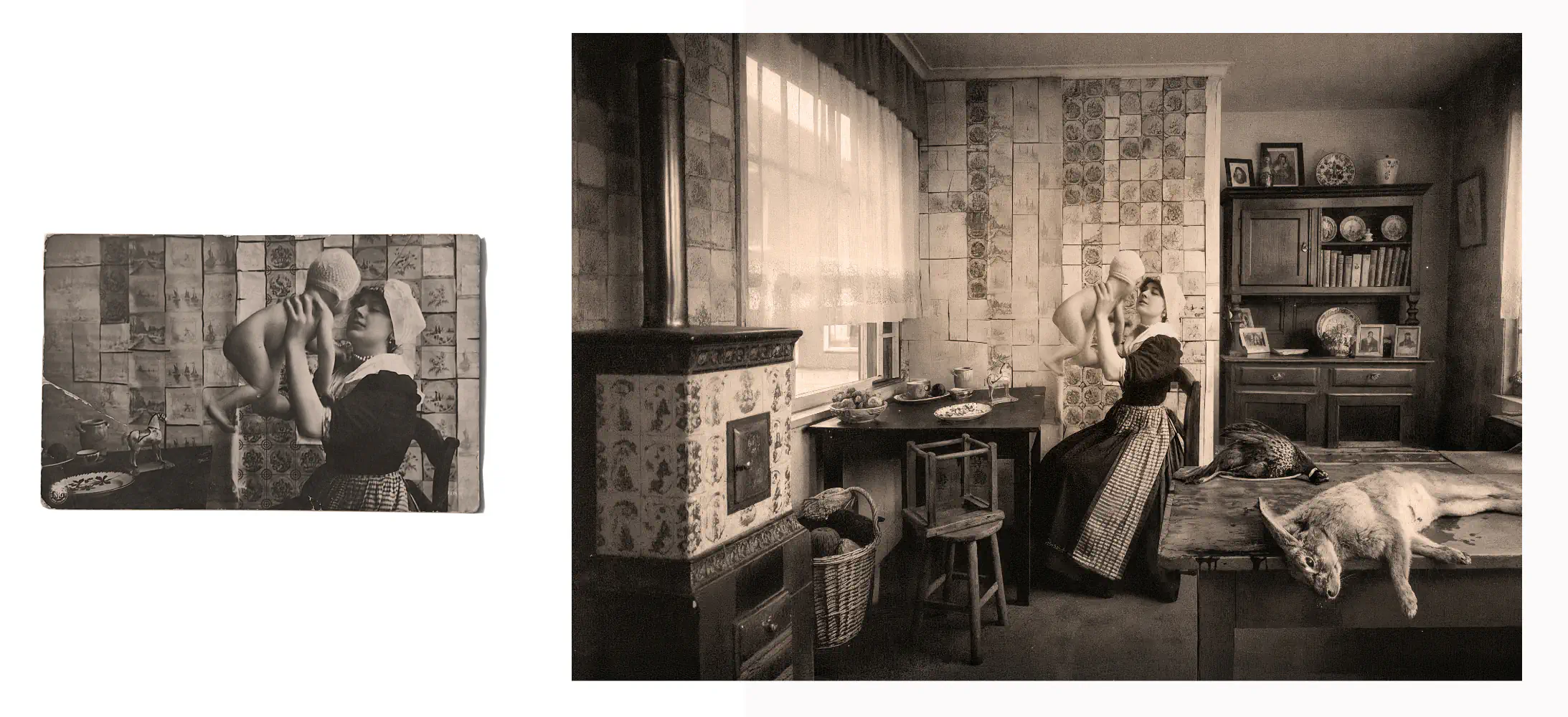
None of it was in the photograph. The image showed a group posing with elegance and contentment; what my grandmother told me was the part left outside. I understood, without having the words for it, that the image was the smaller half of the story.
When the Last Witness Dies
Family photographs come into your hands in one of two ways: someone shows them to you, or someone dies.
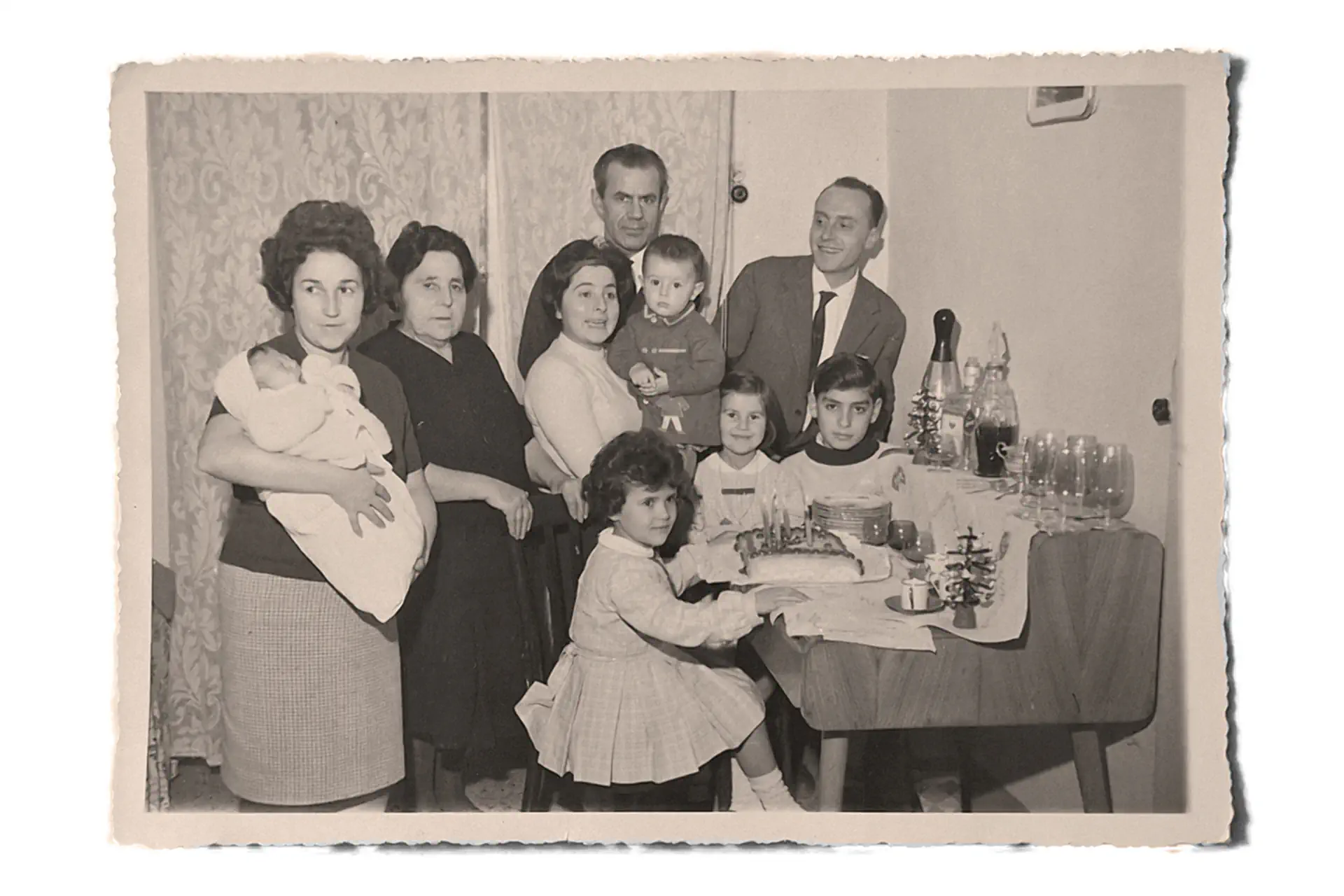
Both happened to me. Emptying the house after my brother-in-law died prematurely, I found in his study photographs of a family I barely knew—people who, without him, had become shouts in an empty room. What struck me was how quickly captions evaporate. One generation gives every name. The next knows half. The third inherits a box of strangers.
There is a moment, in every family, when the last person who could have named those faces dies. After that, the album is still an album, but mute: the same object, an entirely different thing. What remains is not memory—it is evidence of something unrecoverable.
Flea Markets
In 2014, I wrote about Susana Blasco, who cuts up found photographs and builds collages from them, not knowing I was describing what I would spend the next decade doing in my own way. What stayed with me was the permission that work contained: a stranger’s photograph can be material, and intervening is not vandalism.
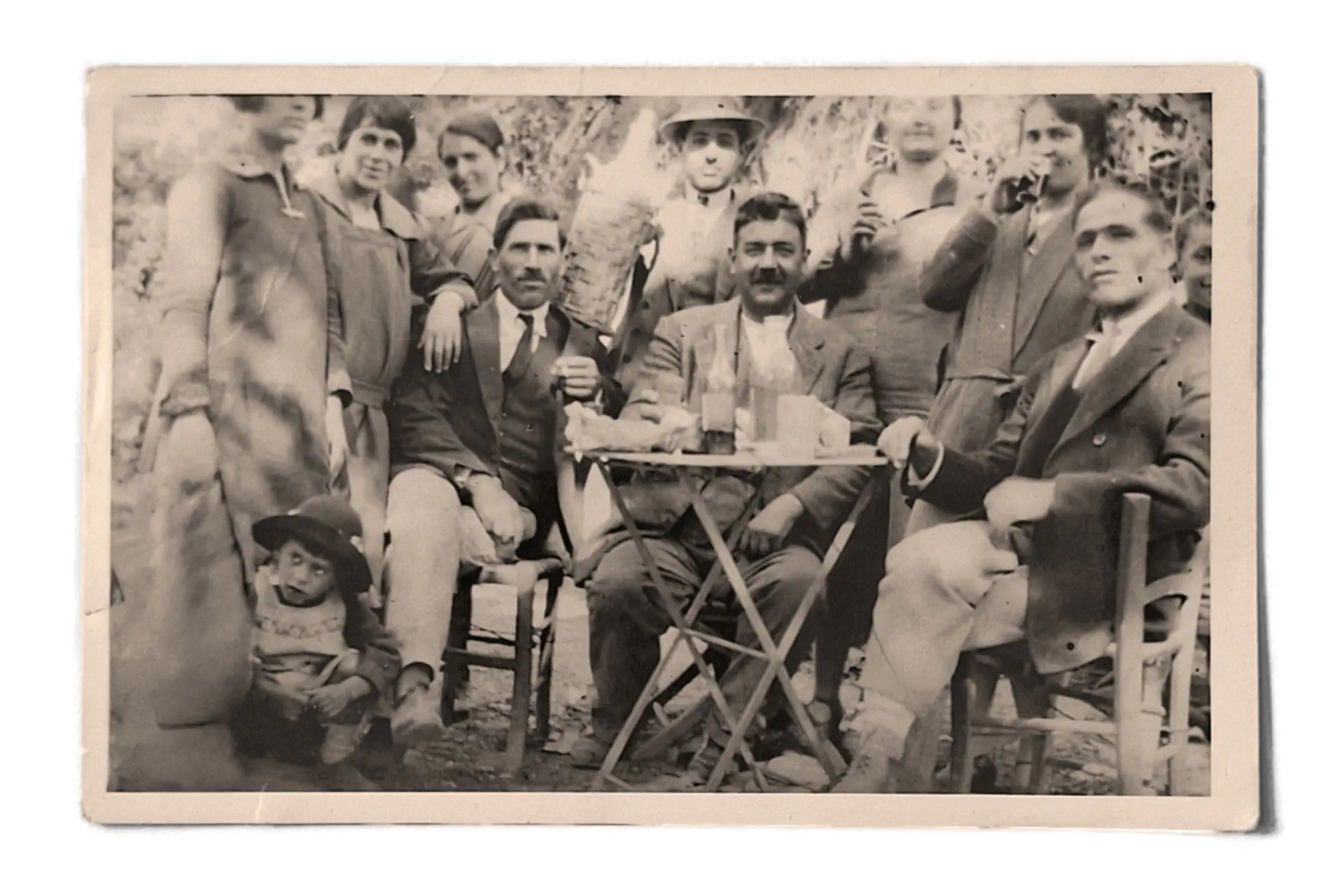
Work has taken me to many cities, and I walk the flea markets on free days. A freezing morning in Cluj-Napoca, with Vasile, who had taken on my strange request to find old photographs: coffee and boiled sausages while I looked through hundreds of lives, some apparent, some hidden.
No one claimed these; no institution wanted them: not rare, not signed, nobody’s. No family kept them because none was left.
There is a name for these images: vernacular photography. Photographs nobody considered photography, made for domestic reasons—weddings, communions, day trips, soldiers posing. The largest body of visual production of the twentieth century, and the worst preserved, because none was meant to outlast the people in it.
I started buying the ones that wouldn’t let me go. The first was in Tallinn: a young woman holding a newborn, naked, just washed. Tenderness—and all of it a shout nobody was there to hear. I decided I would keep those feelings. A hundred more followed. Over five years, across Italy, Spain, Romania, and Estonia, I assembled an archive of people I will never be able to name.
The Question No One Is Left to Answer
With my grandmother’s photographs, I could ask and be answered. With these, there is no one, and that silence sharpened the question underneath from the start.
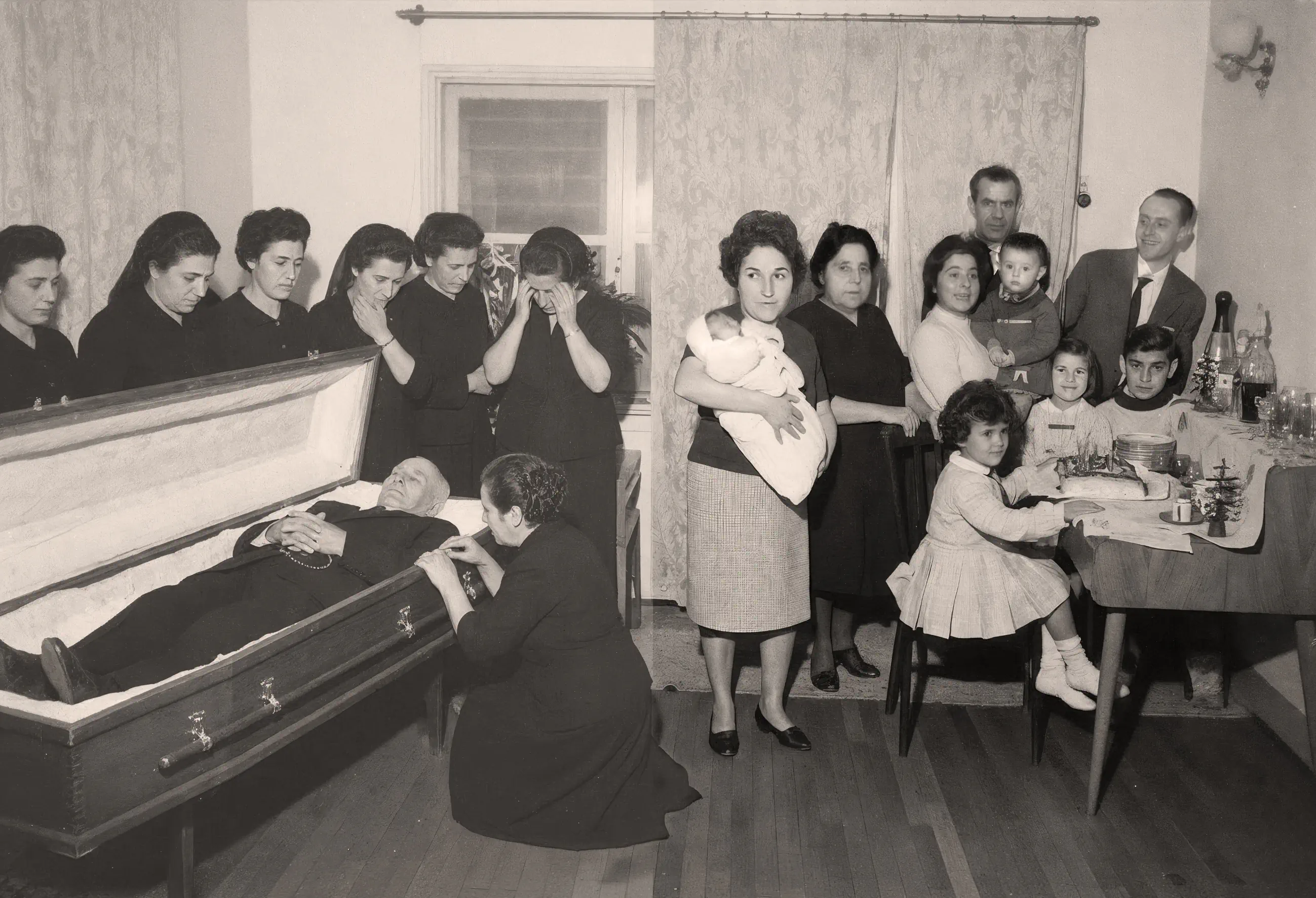
Someone stood there and decided where the edge of that image would fall.
That is what a photographer does—the whole craft: not capturing, but excluding. You raise the camera, draw a border, and what stays outside is silenced forever. The family photograph is our most disciplined version: composed to show cohesion, prosperity, children behaving. A document of order, produced to instruction.
What did they leave out, and why? Perhaps they were doing what we all do—framing a life so it resembles the life we wanted. The photograph does not lie about what it shows: it performs a reduction and presents itself as whole.
Re-including
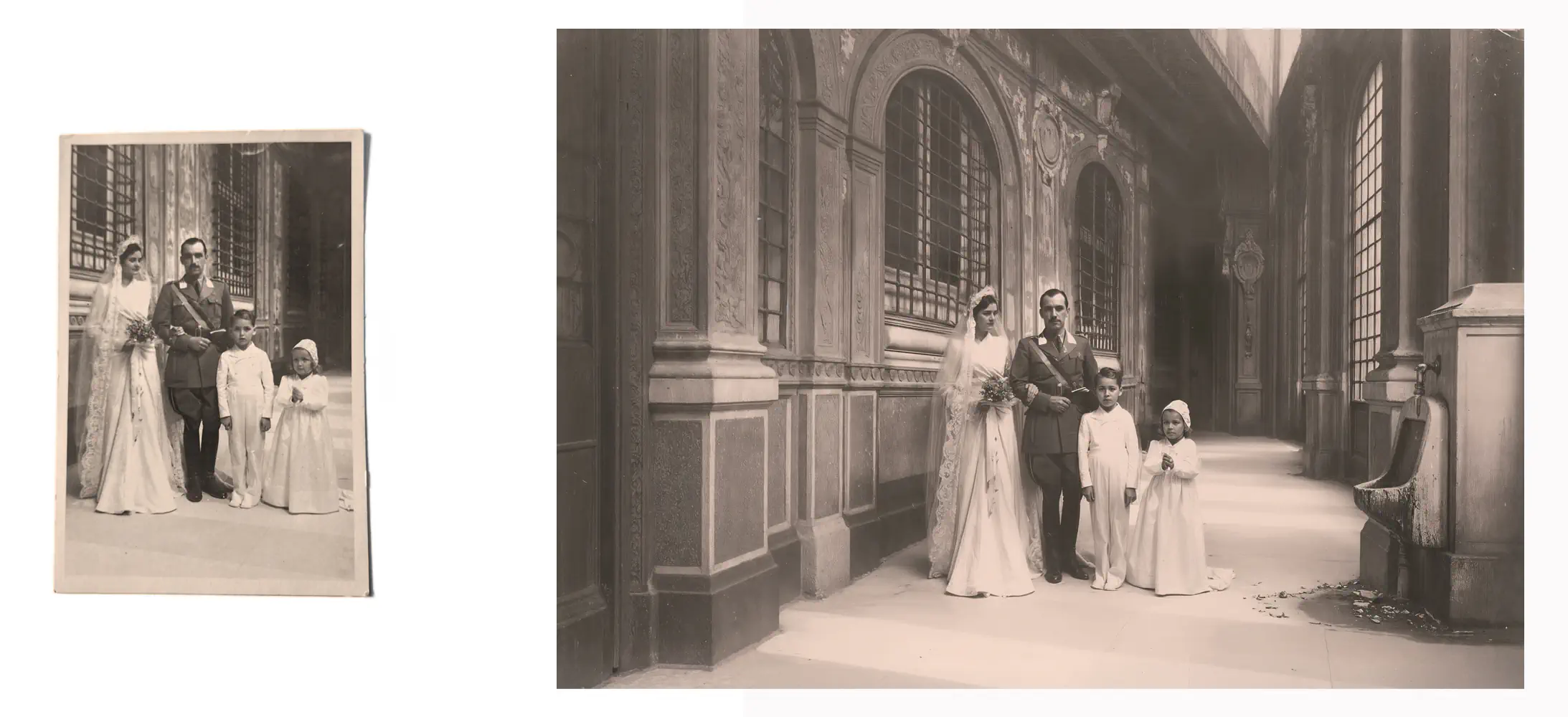
I began reversing that gesture. Each print is scanned at high resolution and returned to storage—not cut, not retouched, not improved. I work on the scan: from there, with generative tools, I extend the image past the border the photographer drew, re-including what the frame refused.
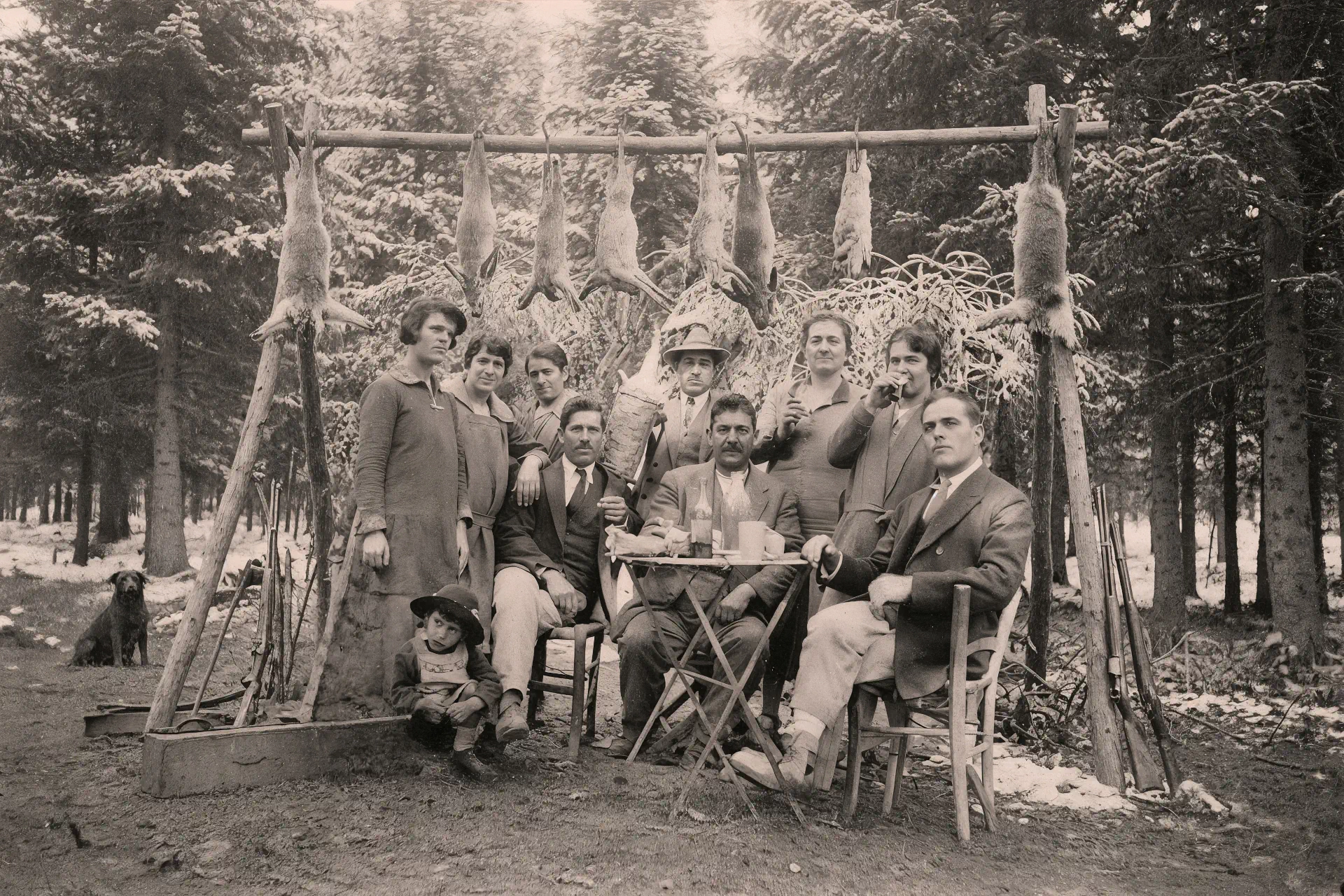
Not what was actually there: I have no way of knowing, and claim none. I put back what the imagination proposes from the visual logic of the original—almost always something that does not belong. The tool is a tool, as a darkroom was: it generates possibilities, and I discard nearly all. The work is not producing an expansion, but recognising the one that does the necessary damage.
The Crack
That is the word I use. A crack: the fracture in an ordered, reassuring surface through which everything it excluded becomes visible again.
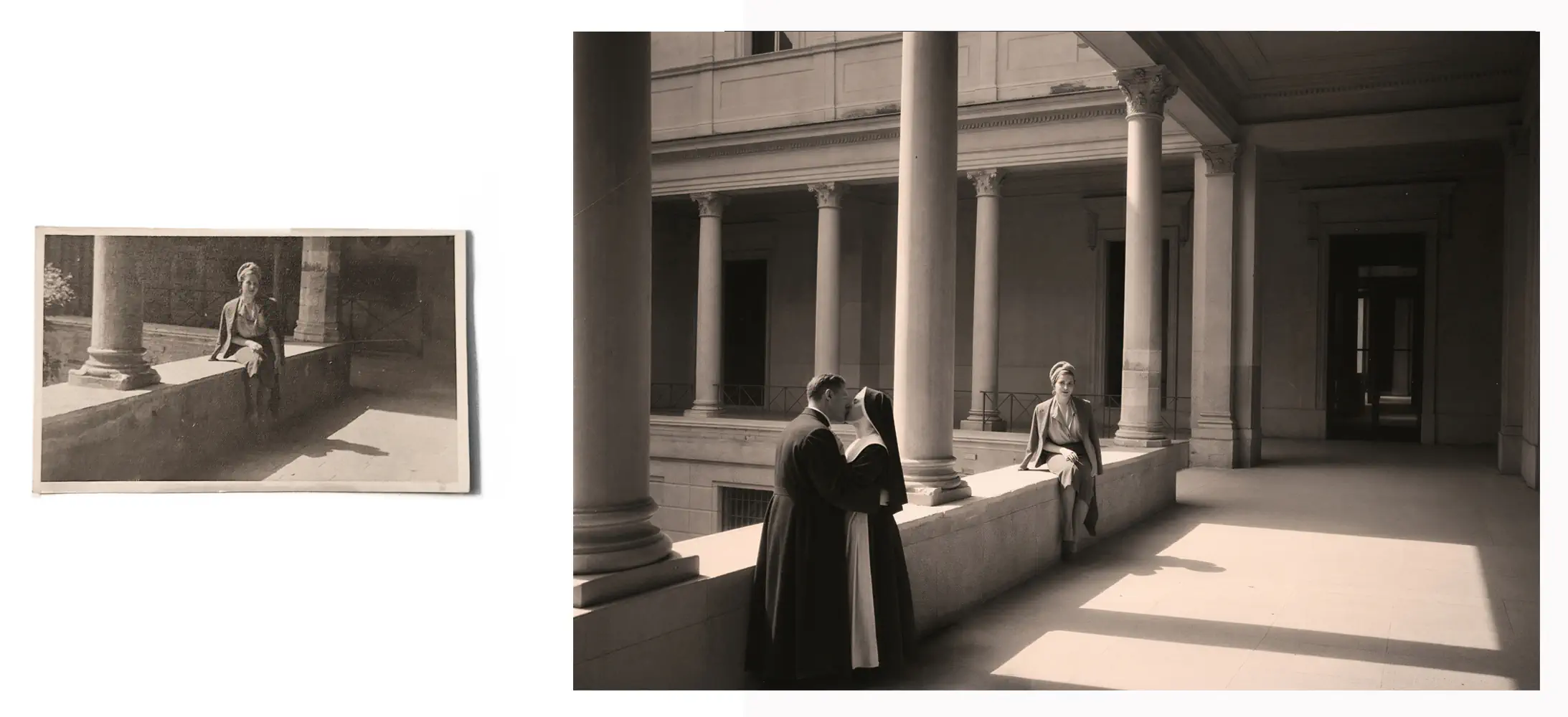
I don’t add the crack—it was already on the other side of the border. My contribution is refusing to hide the join. In every work, the original sits beside its expansion, never merged. Making the seam disappear would be easy, and dishonest: it would ask you to accept an invention as a record.
So the seam stays visible, and you see where the documented ends and the imagined begins. The discomfort isn’t being deceived, but understanding that the reassuring half was always a decision about what deserved to survive.
Attention
The photographs this work starts from were made to be looked at: commissioned, paid for, glued onto a page, brought out when visitors came—objects built to be seen by particular people, in particular rooms, with affection.
Then that looking stopped, thinning slowly the way a conversation thins. And the flea market is where a photograph ends up when nobody looks at it anymore.
What I do is not a rescue. I give back no names, reconstruct no stories, bring nothing home. Nor is it the attention those people wanted: they wanted their own eyes on them, indulgent. I look as a stranger and place beside them something that disturbs.
But it is the only attention left. The alternative is not better attention: it is my grandmother’s chocolate box, shut in the wardrobe since she died.
Then there is the part that doesn’t depend on me. When these images hang on a wall, it will no longer be me looking: it will be whoever walks into the room and grants thirty seconds of mental life to a woman whose name they will never know. Thirty seconds nobody had given her in forty years. The work exists to restart a broken chain of looking.
It is not memory: memory is over, and over for good. It is a second life of being looked at, colder and with no right to anything. It is all that can still be given.
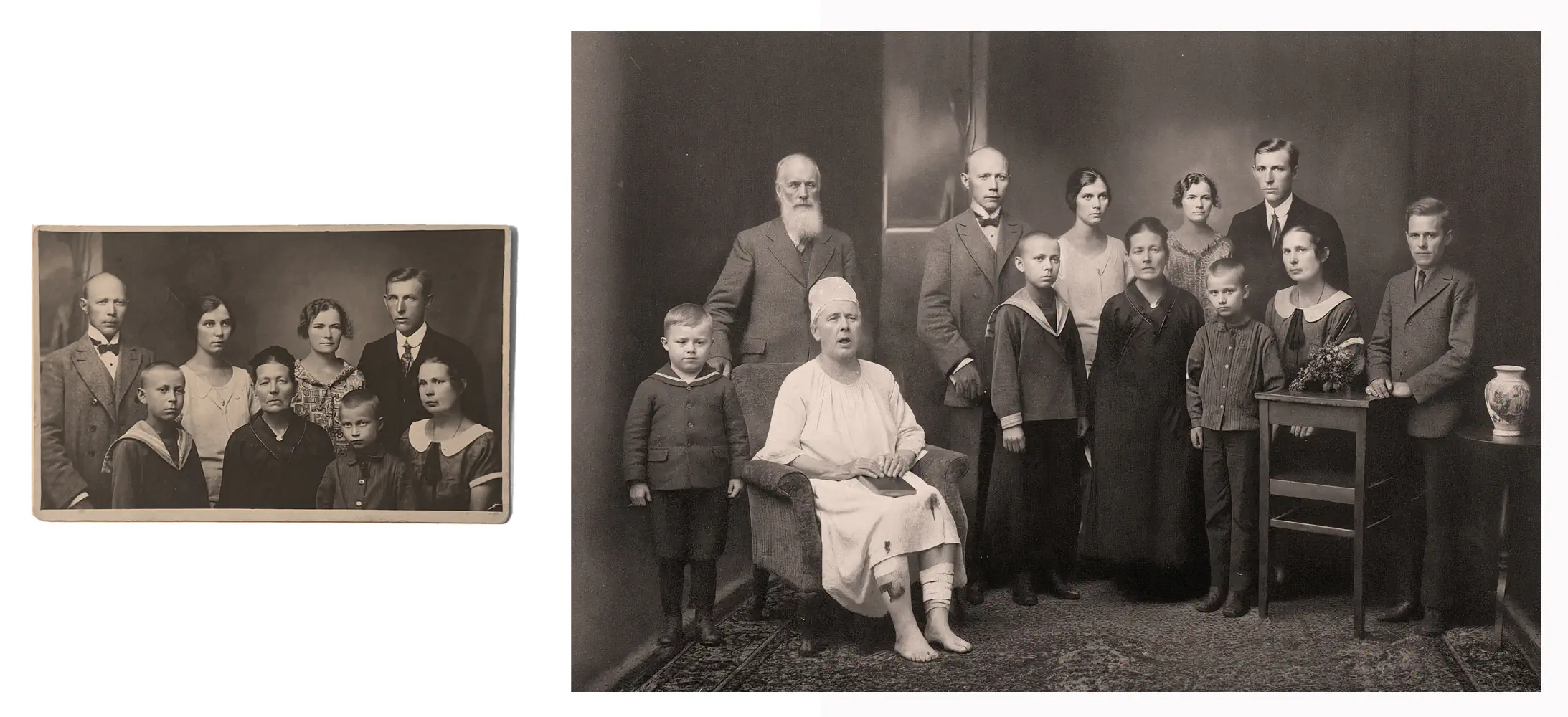
The Imagined Memory comprises 32 works, existing as digital files and a self-published magazine in which each work occupies a double-page spread: the found photograph on one side, its expansion facing it. It has never been produced at exhibition scale or shown publicly. umbramentis.com

Giuseppe Satriani
Giuseppe Satriani is a conceptual photographer and visual artist based in Bilbao, working under the name Umbra Mentis. His practice combines photography and AI not to generate beautiful images, but to introduce into photographs what does not exist or cannot be photographed, recovering what images exclude: disorder, the impossible, and the deliberately suppressed. His work is held in public and private collections, including Tecnalia Foundation, Espacio RAW, Centro de Fotografía Isla de Tenerife and Médecins Sans Frontières in Madrid. He has exhibited in Spain and internationally, and received recognition from MUSE Awards, Fotonostrum and IGPOTY. [Website]