

It is well known that India has played a central role in the cultivation, consumption, and trade of spices for centuries.
But why here? And what happens before a spice reaches the table?
We are in Old Delhi. Long before Khari Baoli became known as Asia’s largest wholesale spice market, this place was marked by a saline-water stepwell, built in the sixteenth century and later absorbed into the expanding city of Shahjahanabad. Its water was not fit for drinking, but it served people, animals, and travellers passing through the city.
Over time, the area evolved along with Delhi itself. Trade grew, merchants settled, and commerce gradually transformed the surrounding streets into one of the most important wholesale centres of the subcontinent. Today, little remains of the original stepwell; its physical presence has disappeared beneath the streets of Old Delhi. Its name, however, has survived.
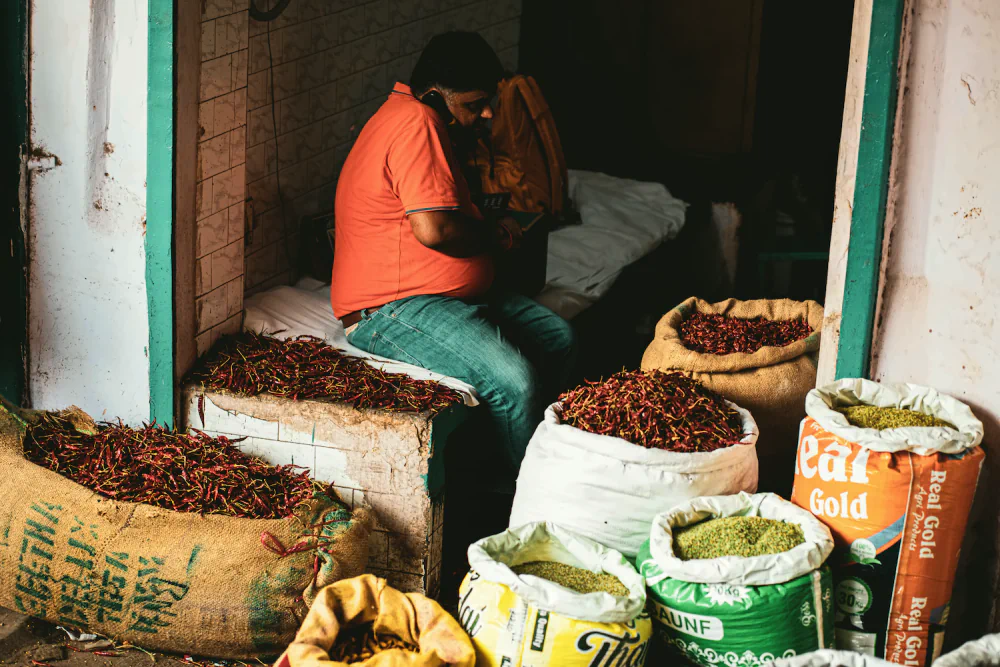
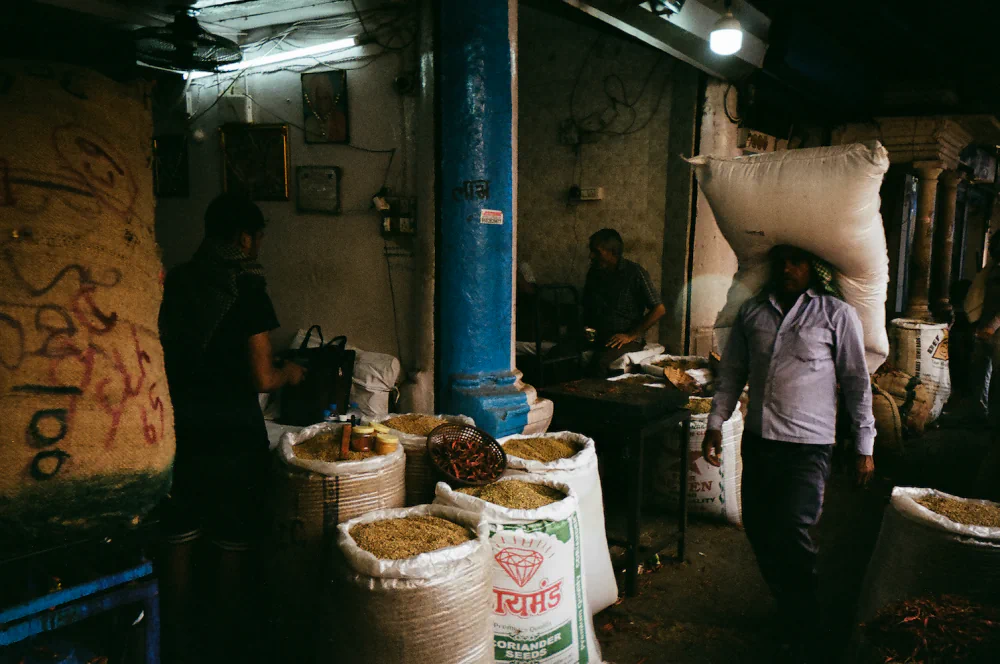
Khari Baoli is now a dense labyrinth of spices, herbs, dried fruits, and food commodities, supplying traders and businesses far beyond the narrow streets in which it operates. To understand Khari Baoli, it is not enough to look at what is being sold; one must experience the environment that makes this trade possible.
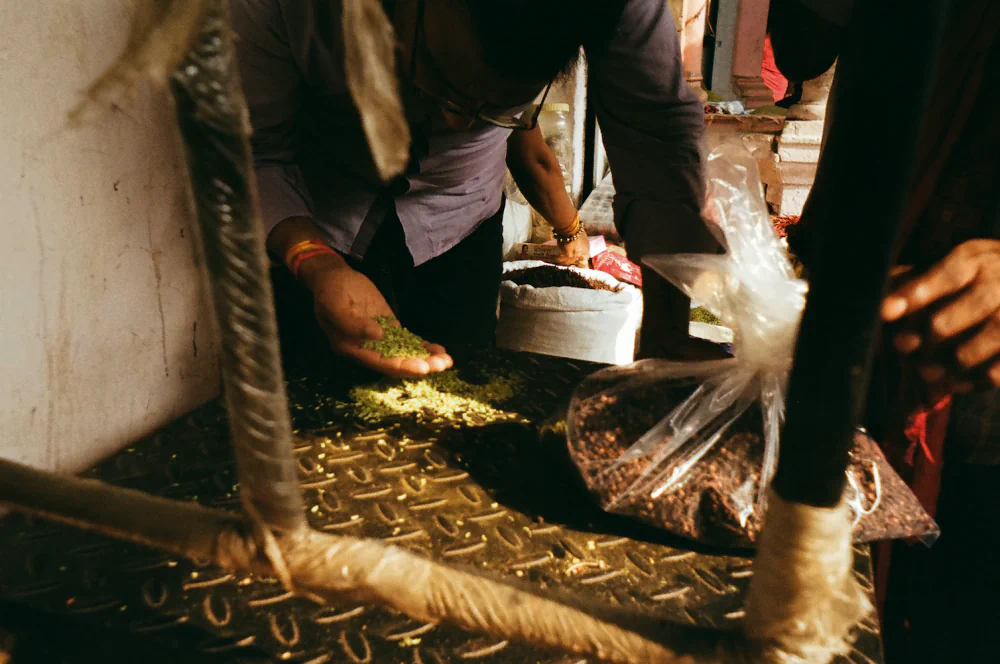
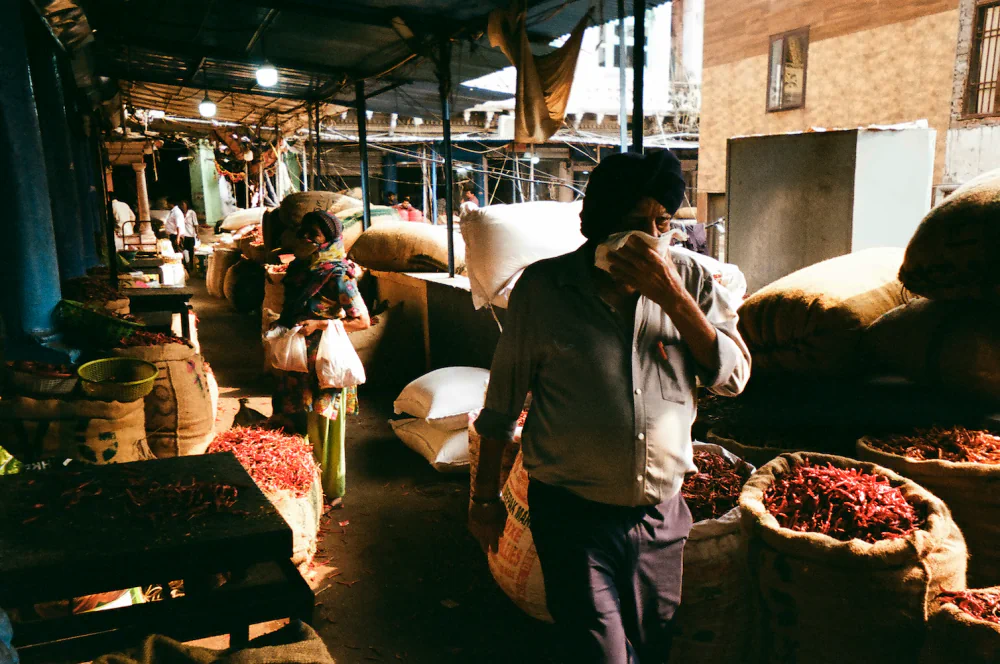
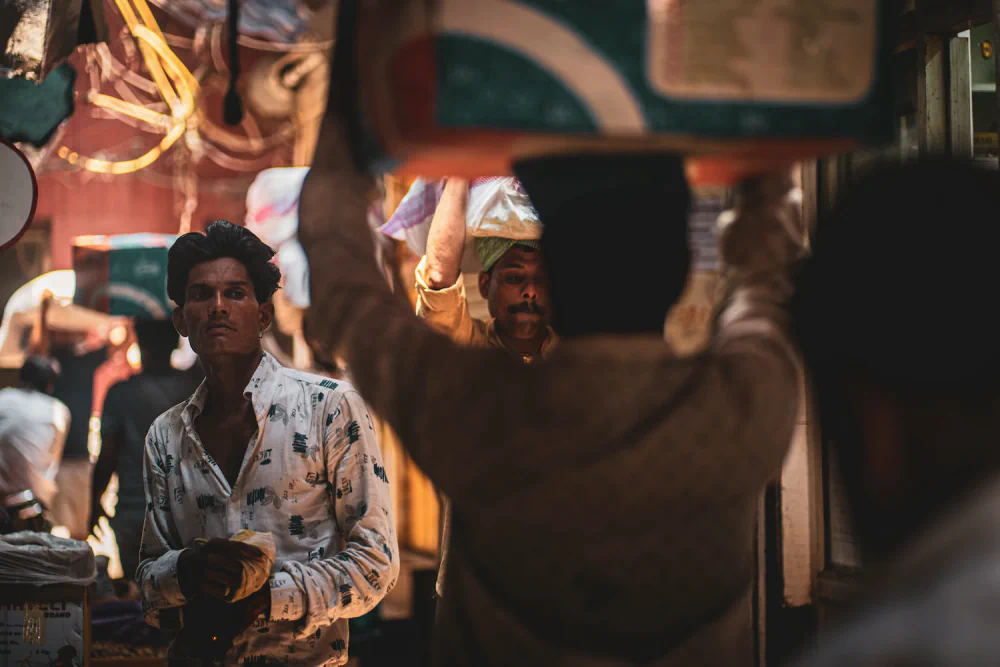
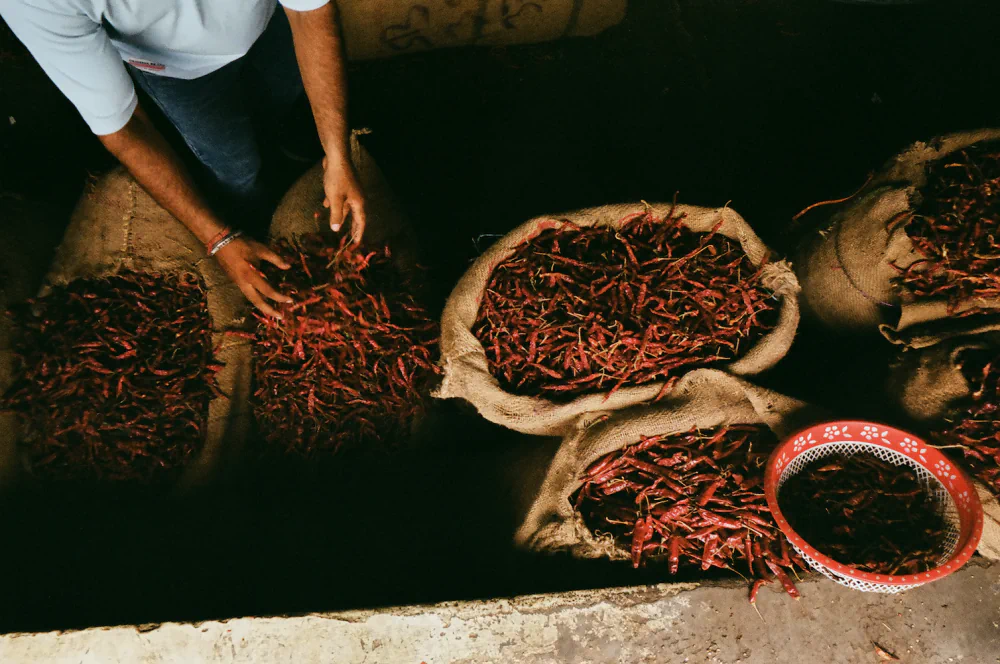
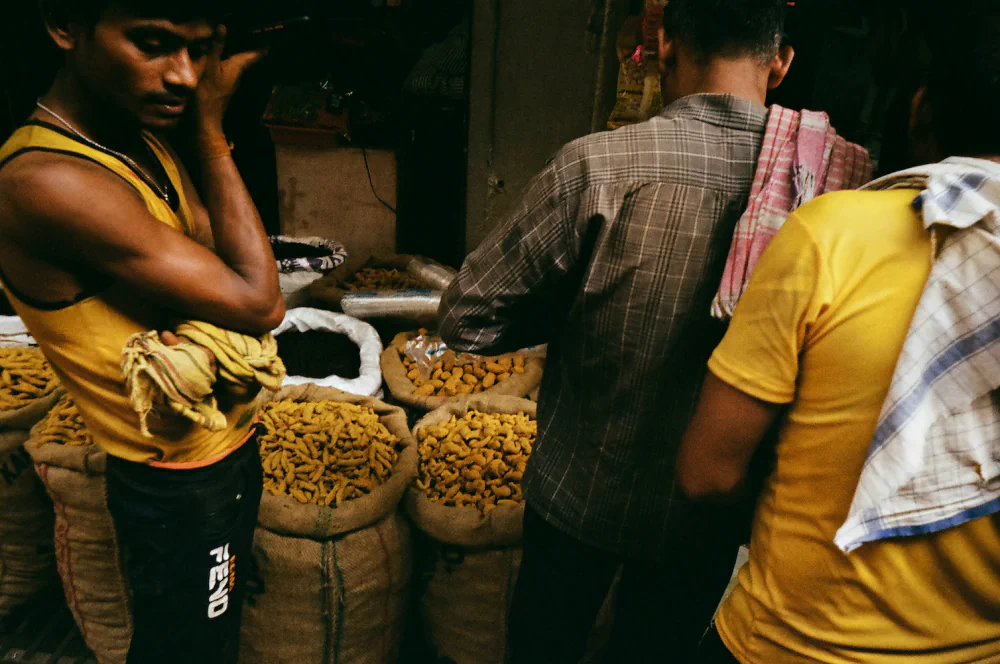
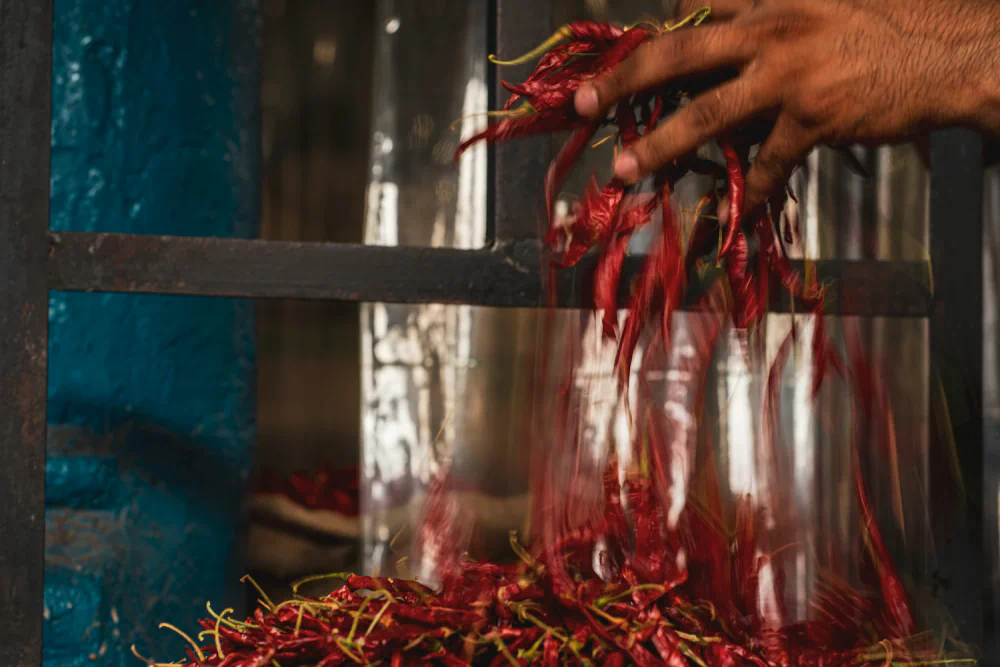
To step into these narrow alleys is to enter a space that instantly overwhelms the senses. The air is thick, heavy, and hot, saturated with the sharp, pungent dust of millions of dried red chillies, turmeric, and raw spices. It stings the eyes and burns the back of the throat. Within minutes, every breath triggers an involuntary cough—a shared, continuous rhythm that echoes through the corridors, uniting workers, traders, and visitors alike.
The atmosphere is claustrophobic and kinetic. The smell of intense heat and dried earth seems to coat the skin, while the shouting of porters warning of incoming loads cuts through the dense, heavy air.
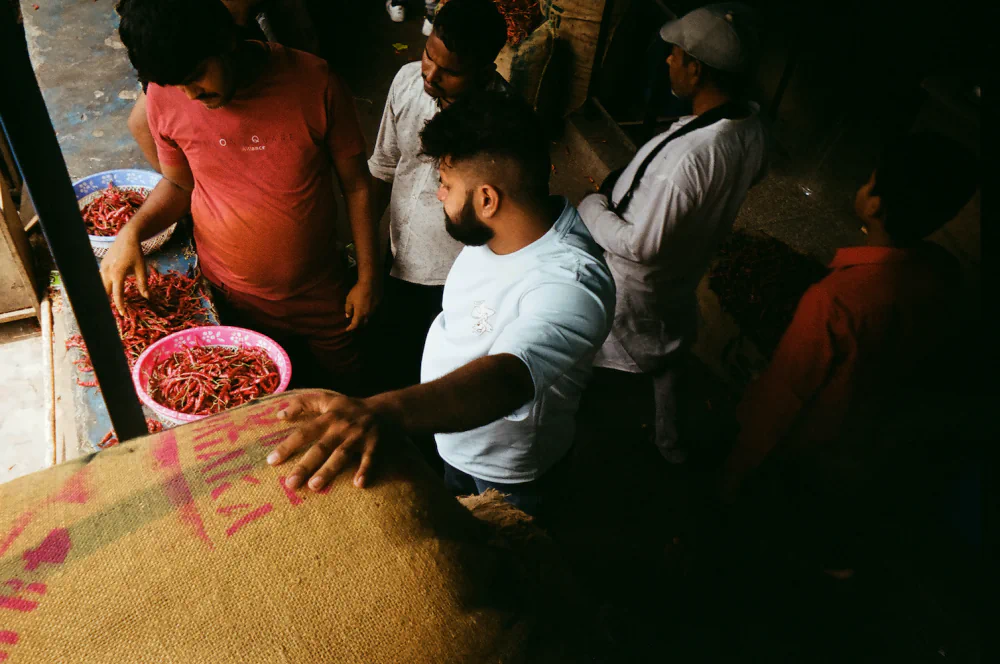
Yet it is precisely within this gruelling environment that business thrives. Major buyers, wholesalers, and restaurant owners come here in person, navigating the heat and airborne spice dust to inspect goods firsthand—touching, smelling, and evaluating their raw quality before making bulk purchases for their businesses.
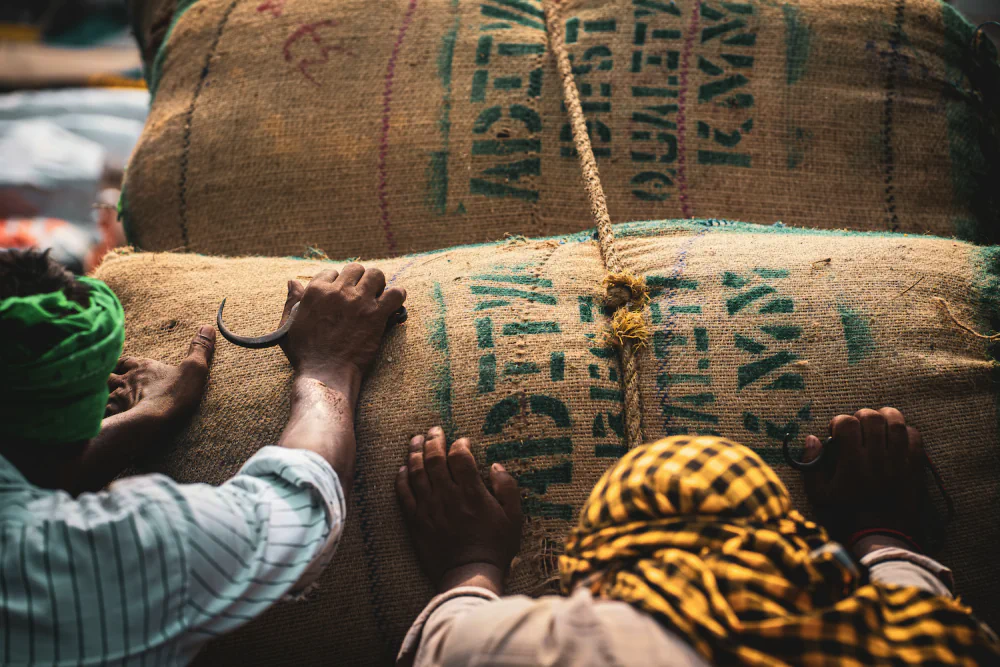
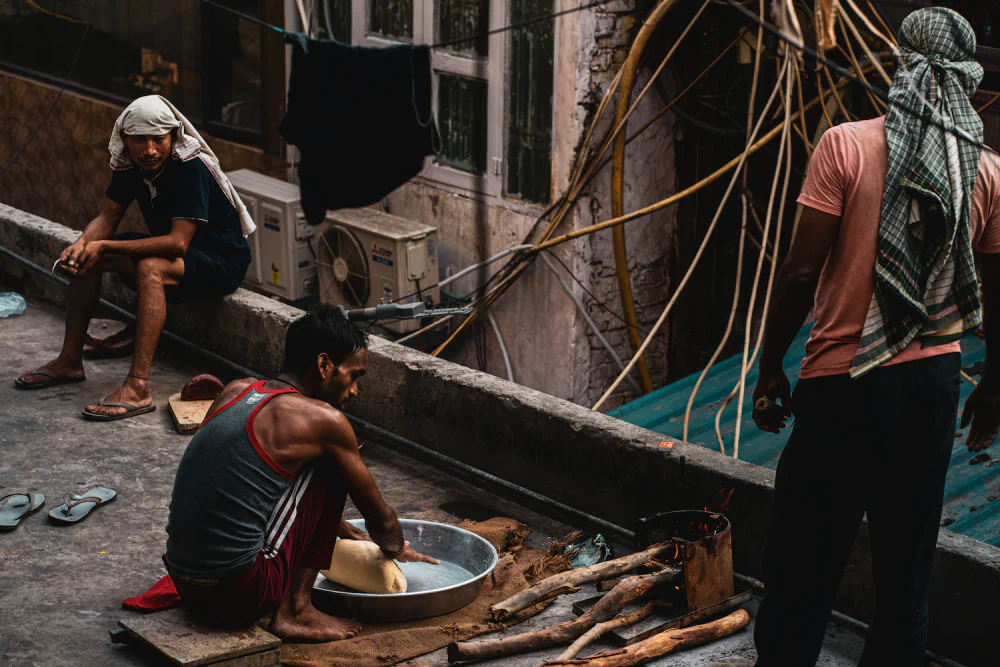
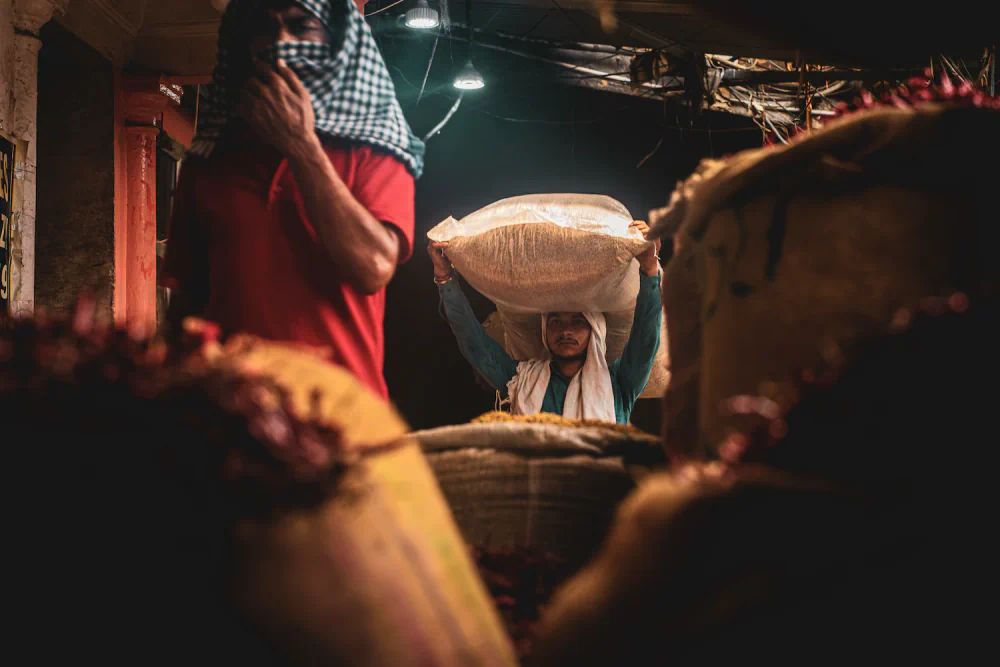
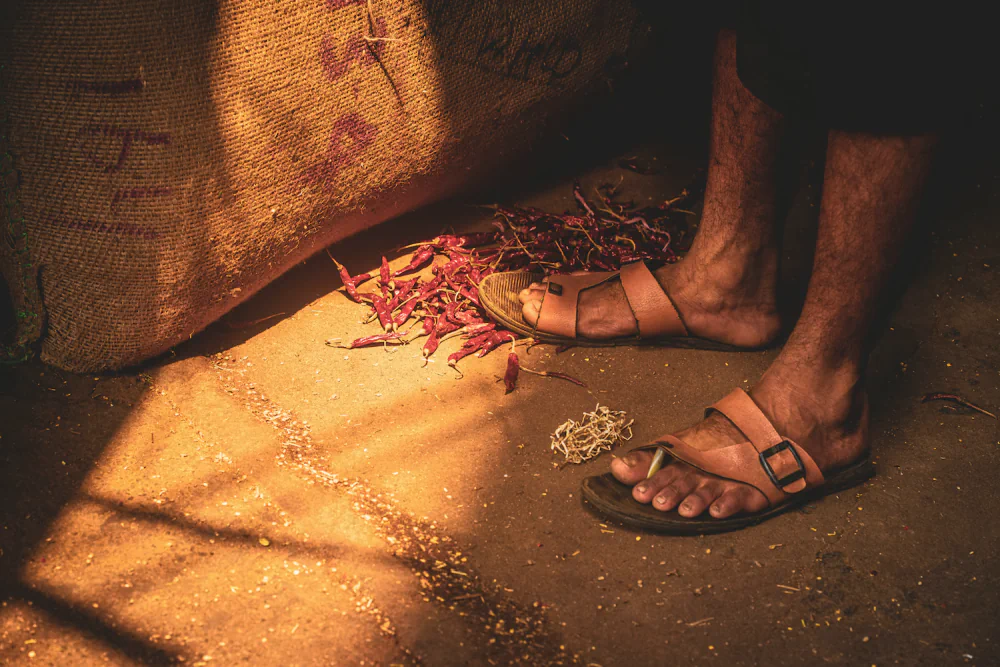
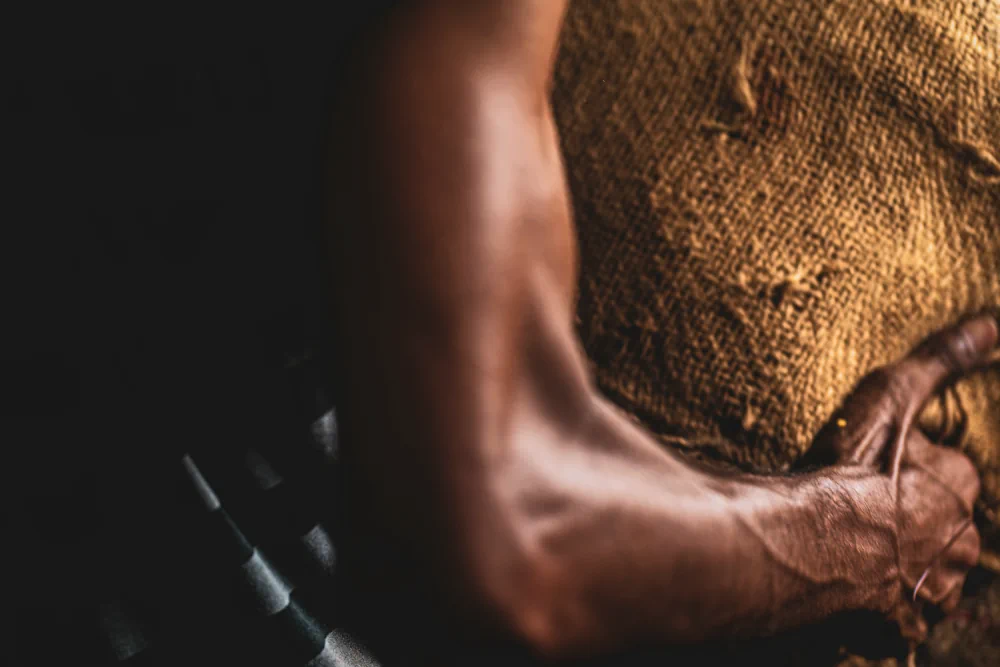
Behind the vibrant pyramids of colour and the sensory romance of Asia’s largest spice market lies a gritty, relentless human machine. Khari Baoli does not run on automation—it runs on human hands, backs, feet, voices, and endurance.
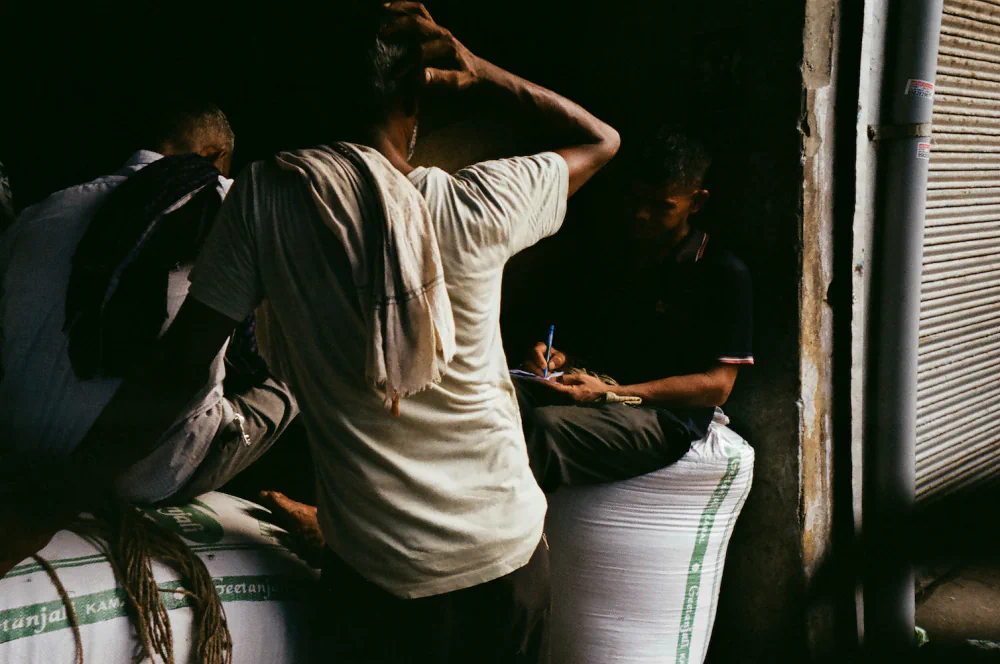
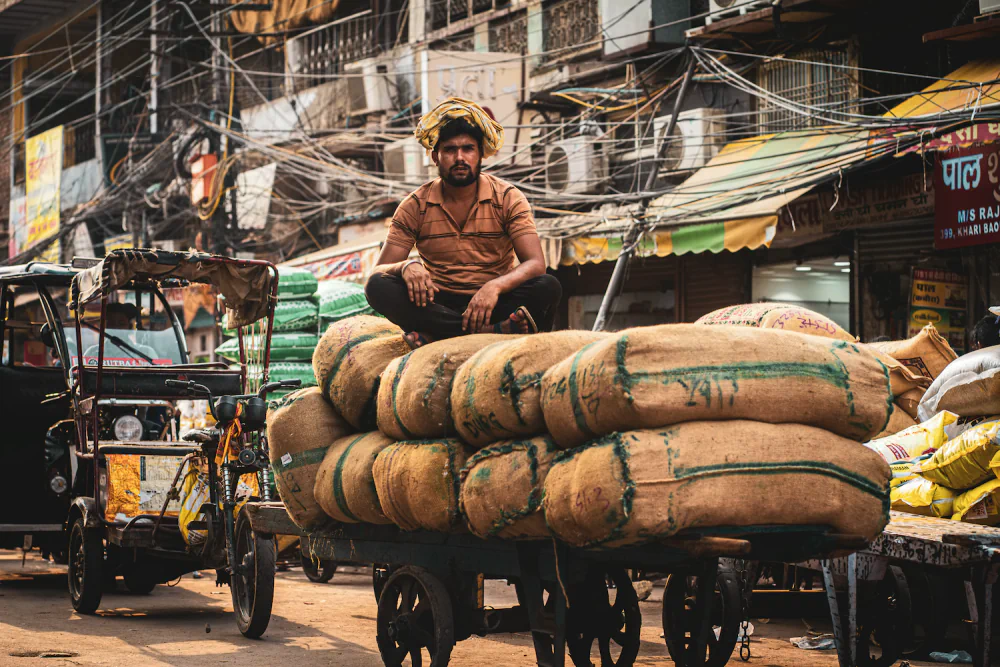
Sacks weighing dozens of kilograms are carried, dragged, lifted, weighed, opened, divided, and loaded again under these punishing conditions. Goods arrive from across India and beyond, passing through countless hands before continuing their journey towards shops, restaurants, homes, and businesses nationwide.
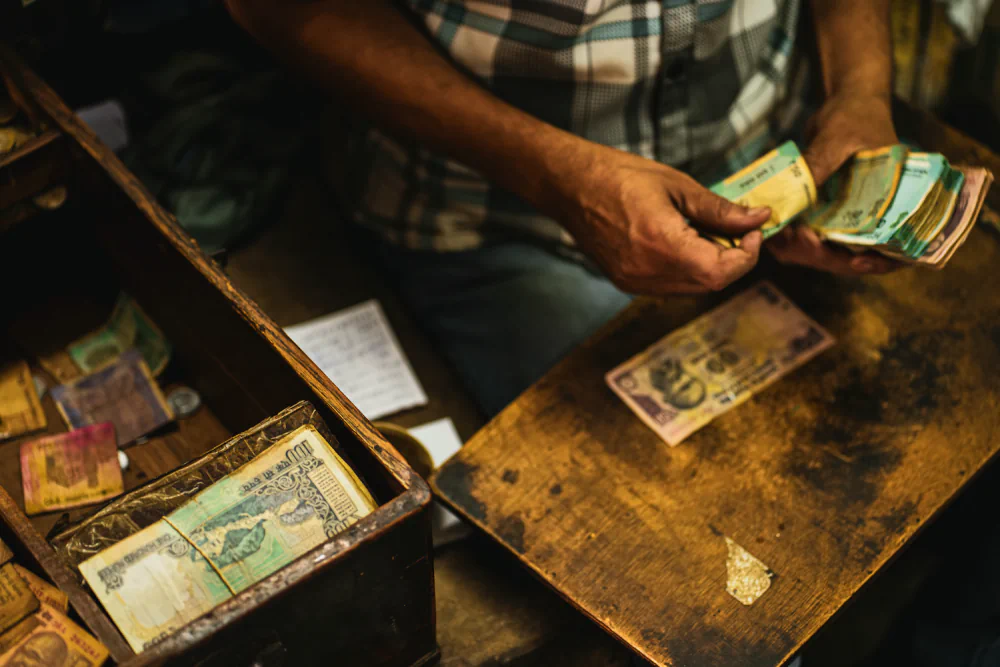
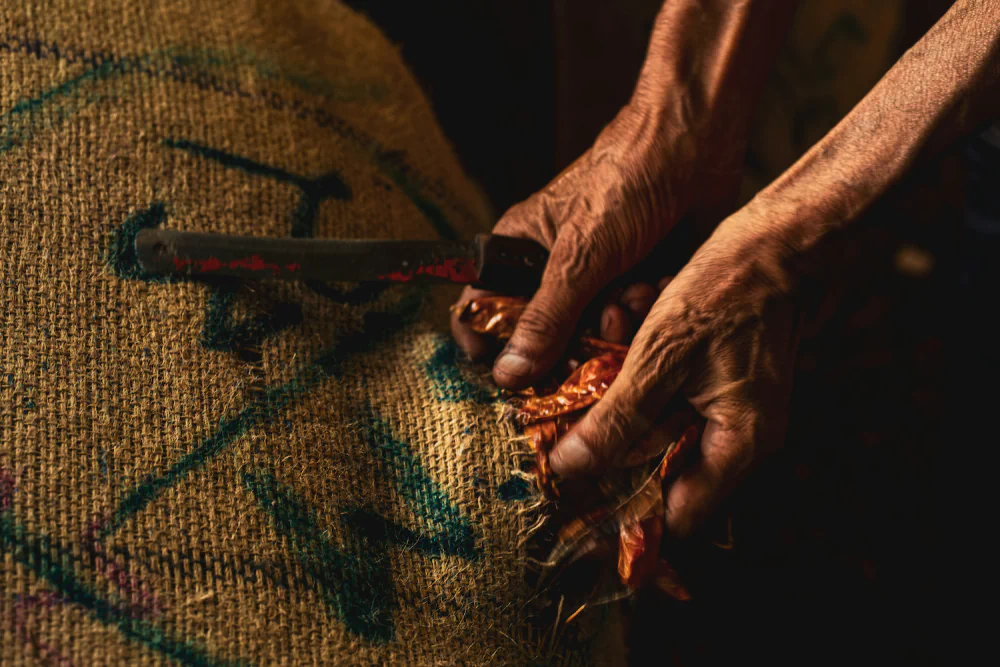
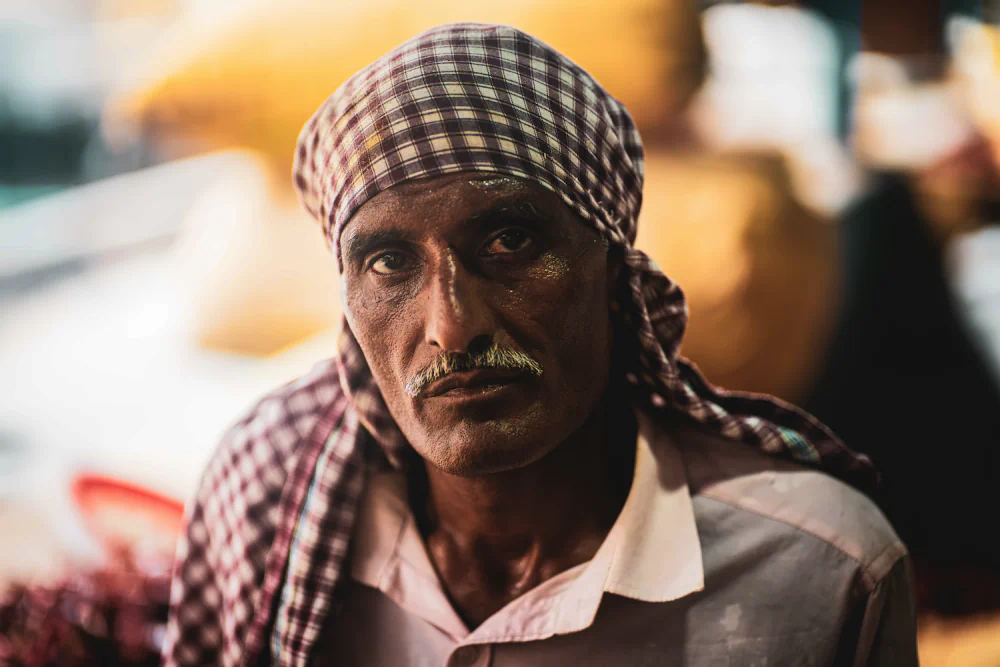
Behind every handful of spice lies this physical reality: economic necessity, physical sacrifice, responsibility, and deep-rooted tradition. For many workers and merchants, Khari Baoli is an inherited way of life—a trade passed down through generations in an environment that demands absolute resilience.
The market may appear theatrical from the outside, with its vivid colours and exotic aromas, but beneath the visual spectacle is a community of people working long hours in harsh conditions, keeping an entire national supply chain moving. This is the side of Khari Baoli that remains largely invisible to the end consumer.
Yet the story of spices does not begin or end with commerce. For centuries, food and health have been closely connected within Indian traditions of knowledge. Ayurveda, one of the oldest medical traditions to emerge from the subcontinent, developed an understanding of food not simply as nourishment, but in relation to the body, the environment, and well-being. Within this tradition, herbs and spices possess qualities extending far beyond flavour.
In this sense, the spice market becomes a meeting point between trade, food, ancient science, and the body—a place where centuries of accumulated knowledge reside inside ordinary bags, sacks, and wooden boxes.
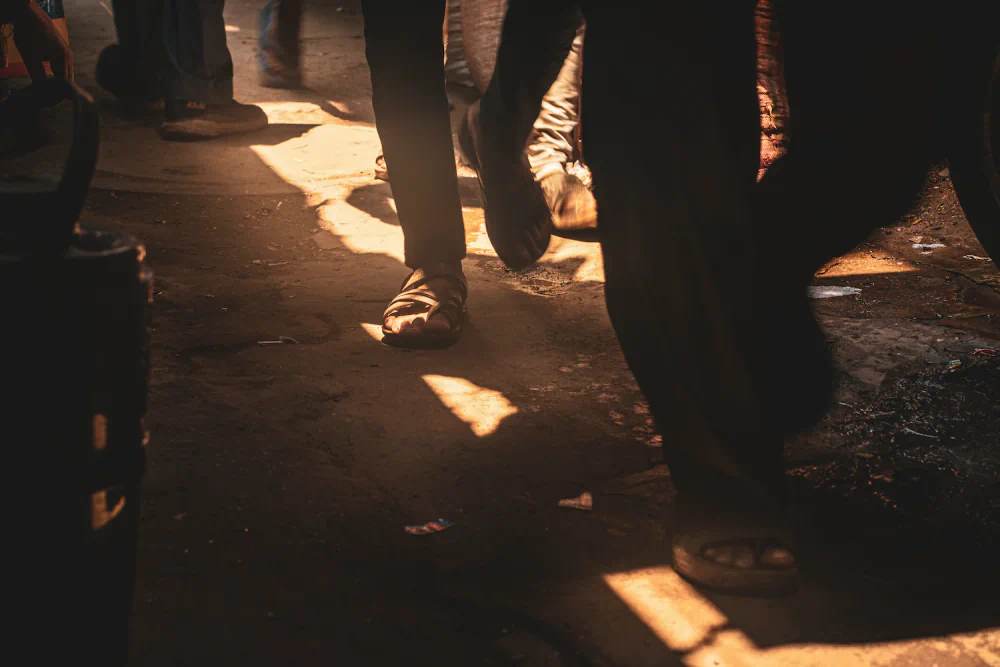
The narrow streets conceal an enormous network where goods arrive from different regions, are exchanged in bulk, and depart for destinations hundreds or thousands of kilometres away. The market therefore exists in two dimensions at once: up close, it is intensely local, human, physical, and chaotic; from a distance, it is part of a much larger commercial system.
A spice may eventually reach a kitchen as a pinch of powder added to a meal, but before that moment, it has travelled through farms, roads, warehouses, and dozens of human hands. The final product is small; the system behind it is not.
Khari Baoli is ultimately a story about what we fail to see: the labour behind consumption, knowledge carried through generations, and commerce built around human relationships. It is about a centuries-old system continuing to operate in a city that is constantly changing.
The question is not simply what will happen to Khari Baoli, but what happens to everything that exists behind it when the world begins to move faster than the people who built it.
About Mattia Mignani
Mattia Mignani (b. 1999, Italy) is a photographer whose practice explores the space between movement and stillness, presence and absence, and what is seen and what remains. His early years photographing watersports trained him to respond instinctively, anticipate movement, read light, and capture fleeting moments before they disappeared.
Over time, his approach shifted. Rather than chasing the moment, he became interested in waiting for it, observing what unfolds quietly and allowing fragments of everyday life to reveal themselves without forcing a narrative.
Working between documentary observation and a more introspective form of image-making, Mignani is drawn to gestures, bodies, traces, light, and moments of ambiguity. His photographs often resist complete explanation; instead, they leave space for uncertainty, inviting viewers to remain with an image rather than immediately resolve it.
Travel has played an important role in this evolution, not simply as a source of subjects, but as a way of confronting different forms of presence and perception. His work increasingly moves away from collecting images of places and toward examining his own relationship with what he encounters.
At the center of his practice is a fundamental transition: from photographing what happens to observing what remains. [Official Website]