For Italian photographer Sonia Fattori, photography has been a means of exploring the relationship between people, places, and memory since childhood.
Having discovered the medium at the age of ten, she has developed a body of work shaped by travel, documentary observation, and an interest in the human experiences that connect different geographical and cultural environments.
Her photographic journey has taken her across Europe, Africa, India, Brazil, Argentina, and Lampedusa, resulting in documentary projects, solo exhibitions, and multivision works. Alongside her artistic practice, Fattori founded Vento di Terre Lontane, an association supporting humanitarian projects in Mali and Burkina Faso. Her publications include the photographic book Uno scoglio chiamato Lampedusa – A Rock Called Lampedusa (2022), which she co-authored, and Franco Maschio, semplicemente artista – Franco Maschio, Simply an Artist (2026), a biographical book dedicated to the artist Franco Maschio.
Her project Common Matter, featured in Issue #38 of Dodho Magazine’s print edition, examines the ancestral connection between human beings and the natural environment. By bringing together portraits made in Rajasthan, India, and landscapes photographed in the province of Salta, Argentina, Fattori establishes visual relationships between human anatomy and natural formations. Skin, stone, bodies, and landscapes become elements of a photographic dialogue about time, identity, belonging, and the consequences of humanity’s relationship with the land.
In this interview, we explore Sonia Fattori’s beginnings in photography, the experiences that have shaped her artistic and documentary practice, and the ideas behind Common Matter. We also discuss the relationship between photography and cultural identity, the significance of working across different geographical contexts, and the role of images in encouraging reflection on our connection with the natural world. (Official Website)(Issue #38)
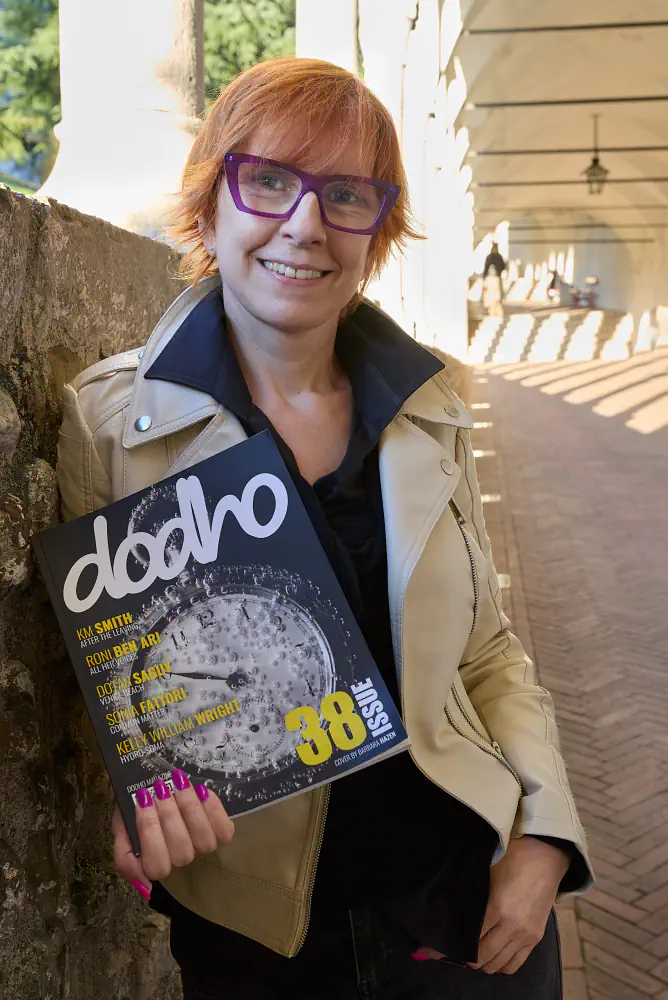
You discovered photography at the age of ten, and it has remained an important part of your life ever since. What first attracted you to the medium, and what do you remember about your earliest experiences with a camera?
I remember that, from the very first time I picked up a camera, it felt like a part of me. It allowed me to capture a moment that would otherwise have passed: an expression, a gesture, something that had caught my attention and that I wanted to preserve. I think this was precisely what fascinated me: being able to rediscover in a photograph what I had seen and felt at that moment.
How did your interest in photography develop over the years, and what experiences or encounters were particularly important in shaping your decision to pursue it as a form of artistic expression?
My passion for photography has always accompanied me on my travels. I took many photographs, trying to bring home the emotions of what I saw. Photography came naturally to me: when faced with the beauty of a moment, I felt the desire to capture it, to preserve it.
During a trip to Mali, however, I felt a different need: to tell the story of what I was experiencing through photographs, so that children, especially my nieces and nephews, could learn about that reality too.
On my return, together with a fellow traveller, I conceived Progetto Mali, with the aim of building wells to bring water to a village. To put the initiative into practice and carry out the work, we founded the association Vento di Terre Lontane.
It was an important turning point in my journey: I began to approach photography with greater awareness, as a form of expression and a way to engage other people.
By sharing images and recounting our travel experiences through the association, we were able to raise the funds to build two wells and a school. Seeing that photographs could contribute to something tangible gave a deeper meaning to my photography.
Travel has played a significant role in your photographic practice. What initially motivated you to explore different countries and cultures through photography, and how has your understanding of the medium evolved through these experiences?
What motivated me was curiosity about places, people and ways of life different from my own. Photography allowed me to bring home what had moved me, but over time it also became a way to get closer to people and better understand the realities of their lives.
From Mali to the refugee camp in Burkina Faso, from Lampedusa to India and Argentina, every journey has been a life experience that has left something within me. The places changed, but so did my way of seeing: through the viewfinder, I learned to look at the world with different eyes, trying to understand the person in front of me before taking a photograph. I also learned to recognise the moments when I should stop. During the commemoration of 3 October in Lampedusa, I chose to turn off my camera and respect the silence of those taking part.
These experiences have enriched me as a person and created deep bonds with places and people, making me feel, in some way, part of those realities. Today, when I look back at a photograph, I rediscover the emotions and encounters that each journey has left me with. This is what I try to convey to those who look at my images.
Your work frequently explores relationships between people, places, and memory. How did these themes become central to your photography, and what continues to interest you about them?
When I think back to a place, I remember the people and the moments we shared first of all. Encounters create a bond with a place and make it part of my life. People and places are essential elements of my photography; the time spent together, gestures of welcome, a handshake are what each image allows me to rediscover.
I am drawn to the way people carry their own history and that of the countries they belong to. It is an ongoing exploration that perhaps finds its fullest expression so far in COMMON MATTER, where the marks on faces and on the surfaces of the earth reveal the meeting point between people, places and time.
Throughout your career, you have developed documentary projects, solo exhibitions, and multivision works in different parts of the world. How does your approach to storytelling change depending on the subject and the format in which you present your photographs?
I have developed several multivision projects and, for years, I also devoted myself to organising events in different locations to introduce audiences to this still little-known form of expression. By bringing together images, music and rhythm, I could share my way of seeing, feeling and photographing with the audience.
In multivision, I guide the viewer through a precise sequence, choosing how long each image is shown, the dissolves and the music. Each photograph enters into a relationship with the one before and the one after it; during the dissolve, their overlap creates a third image, which becomes part of the narrative.
In an exhibition, by contrast, visitors choose their own viewing time and can linger freely over a photograph. In COMMON MATTER, for example, the pairing of images in diptychs invites them to explore the dialogue between a face and a landscape.
You founded Vento di Terre Lontane, an association supporting humanitarian projects in Mali and Burkina Faso. What led you to establish this initiative, and how, if at all, has your involvement in humanitarian work influenced your photographic perspective?
I would say that photography and humanitarian work have influenced—or rather, nourished—each other.
Photography allowed me to tell the story of that experience, raise awareness and involve other people in our projects. In turn, my humanitarian work also broadened my perspective: through the viewfinder, I began to pay closer attention to everyday life, relationships and the gestures of the people I met. Alongside the difficulties, I saw moments of joy and sharing that I wanted to convey.
Getting to know people gave my images greater significance and depth, connected to their stories and the time we spent together.
In 2022, you co-authored Uno scoglio chiamato Lampedusa – A Rock Called Lampedusa. What was your experience working on that publication, and what did the project teach you about constructing a photographic narrative?
I first arrived in Lampedusa in 2015, at a time when it was cold. As soon as I set foot on the island, I felt that this small piece of land made me feel at ease. Since that first trip, I have kept returning, and still go several times a year.
I began by photographing the young people arriving from Africa on boats. Then I started getting to know the fishermen and local people, becoming part of island life. Little by little, I put down roots.
I involved a very dear friend, the journalist Marta Daneluzzi, and brought her to Lampedusa. Over time, I built up a huge photographic archive, and when the time came to create the book Uno scoglio chiamato Lampedusa – A Rock Called Lampedusa, there were many possible narrative approaches.
From the outset, Marta and I decided against focusing on migration, perhaps the main reason the island was known, and chose instead to draw attention to the beauty of its natural environment, the life of its community, its hospitality and solidarity. We chose to open each chapter with a short text followed by photographs without captions, as though the reader were standing before that particular landscape or person.
Sharing this experience allowed us to look at the island with different sensibilities and to convey the beauty of its people and land through different means—words and images—that entered into a dialogue and enriched each other.
Working on the book taught me how much a photographic narrative can grow through time spent in a place, relationships and the exchange of ideas with someone who shares your dream.
Your more recent publication, Franco Maschio, semplicemente artista – Franco Maschio, Simply an Artist (2026), focuses on the life of artist Franco Maschio. How did this collaboration originate, and what challenges did you encounter when approaching a biographical subject?
The book Franco Maschio, semplicemente artista – Franco Maschio, Simply an Artist grew out of my collaboration with the journalist Marta Daneluzzi, with whom I had already created Uno scoglio chiamato Lampedusa – A Rock Called Lampedusa and developed the project DESTINAZIONE INCONTRO. It was through one of the encounters connected with this latter initiative, with the sculptor Franco Maschio, that the proposal to create the book arose.
Through my photographs and Marta’s texts, we told the story of the artist’s life and work. The greatest challenge was photographing the artworks in different settings and lighting conditions, while trying to reproduce their colours, forms and materials faithfully.
I devoted time and attention to each work, seeking the light and viewpoint that would bring out its beauty. I wanted the images to convey the sensitivity and work of the person who had created them too.
Turning to Common Matter, published in Dodho Magazine’s print edition, how did the initial idea for the project emerge? Was there a particular observation, journey, or photographic encounter that inspired you to explore the similarities between human beings and natural landscapes?
The idea for COMMON MATTER came from looking back at photographs from two different journeys. In India, I had focused mainly on the people in the villages of Rajasthan; in Argentina, I had been drawn to the vast landscapes of the province of Salta.
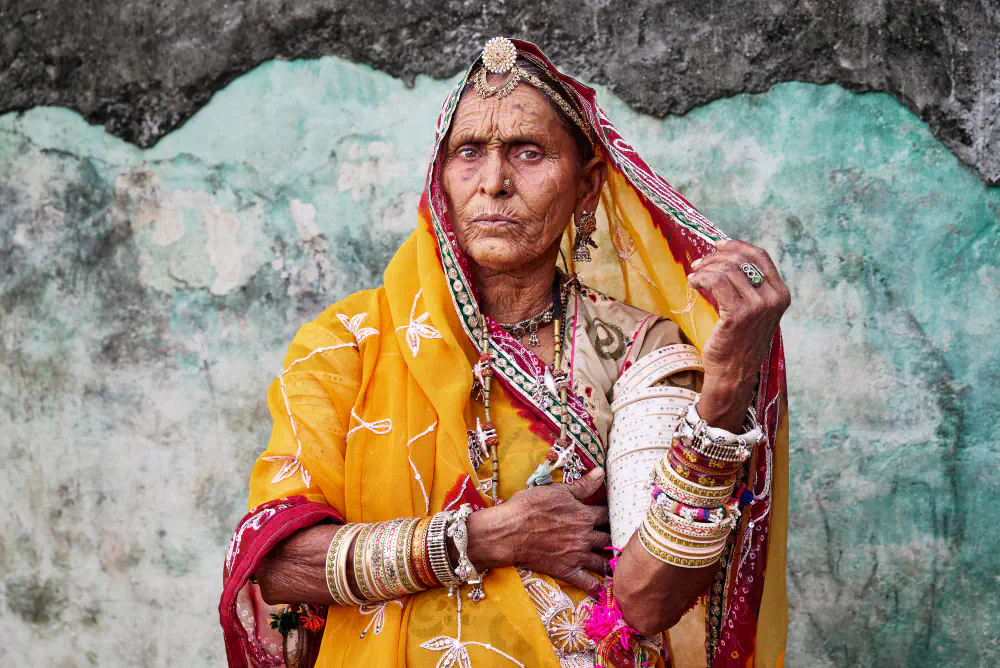
Comparing the images, I recognised similarities between the wrinkles on faces and the layers of rock, between the lines of bodies and the shapes of the earth. I began placing them side by side and realised that each photograph brought something out in the other. The project grew from these initial relationships.
The project brings together portraits from Rajasthan, India, and landscapes from the province of Salta, Argentina. What led you to select these two geographical locations, and at what point did you begin to recognize visual or conceptual connections between them?
What took me to Rajasthan and Argentina was the desire to discover and explore different countries. In India, I was drawn to the people, their everyday lives and the colours of the Holi festival, which I wanted to experience and photograph. In Argentina, I sought the vastness and beauty of the landscapes, places where everyone can find a space of their own.
I had not set out with the intention of bringing these places together in a project. The connections emerged on my return, as I looked back at the photographs. At first, I was struck by similarities in shapes, colours and surfaces. Then I began to reflect on the time that marks faces and shapes the earth. The meaning of COMMON MATTER took shape through that reflection.
In your project statement, you describe similarities between skin marked by the sun, the grooves left by time on faces and stone, the lines of the human body, and the geometry of the landscape. How do you identify and photograph these relationships without reducing either people or landscapes to purely visual forms?
At the moment of taking a photograph, my attention was on the person before me or the landscape around me. I was not looking for a face that resembled a rock: I photographed what moved me and what I wanted to convey.
When constructing the diptychs, I tried to preserve the meaning of each image. A face carries a story, the memory of an encounter; a landscape has a presence of its own, which I experienced before photographing it. The pairing begins with visual similarities, but for me it gains value when it invites us to consider what those surfaces hold and the relationship that connects us to the earth.
The juxtaposition of portraits and landscapes is fundamental to Common Matter. How did you approach the selection and sequencing of the photographs, and what role does the relationship between individual images play in communicating the project’s central idea?
COMMON MATTER began with eight images. I worked on the selection by comparing them and observing how placing them together opened up new ways of interpreting them: each photograph revealed something in the other.
Correspondences in shapes, colours and surfaces were a starting point, but I was also looking for a connection that gave meaning to each pairing.
I later expanded the sequence to eight diptychs and a final image, around themes such as time, continuity, belonging and transformation. Each diptych develops one aspect of the project and contributes to the overall narrative.
To close the series, I chose a single image, The Imprint, in which a human shadow meets the shadows of trees on the same surface.
The relationship between the images is at the heart of COMMON MATTER: the eye moves from the face to the landscape and back again, recognising something more each time. Through this dialogue, I have tried to make the idea of a common matter visible.
You explain that the landscapes were photographed in Salta, where Indigenous communities are working to preserve their identities and their relationship with the land. What did you learn about this relationship during your time in the region, and how did it influence your understanding of the project?
During the journey, I met people from Indigenous communities in Cachi and Salta, in markets, and entered their homes, where I had the opportunity to listen to their music. These moments brought me closer to their everyday lives and cultural expressions. Through research, I learned more about their efforts to preserve their identity and relationship with the land, gaining a better understanding of how closely the defence of their territory is tied to the continuity of their culture. These encounters and further research enriched my understanding of COMMON MATTER: the landscapes I had photographed were also inhabited places, connected to histories and traditions. Their beauty took on a broader meaning for me, along with a greater awareness of how important it is to preserve them.
The human portraits in Common Matter were made in Rajasthan, a region with a rich cultural history. How did you approach photographing the people you encountered there, and what considerations guided your representation of individuals from a cultural context different from your own?
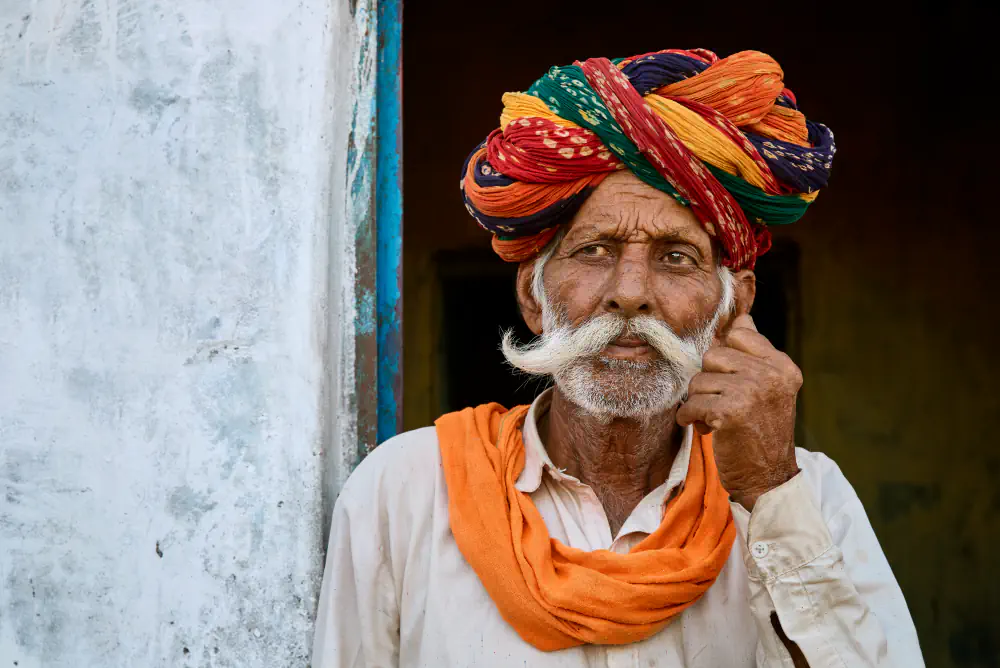
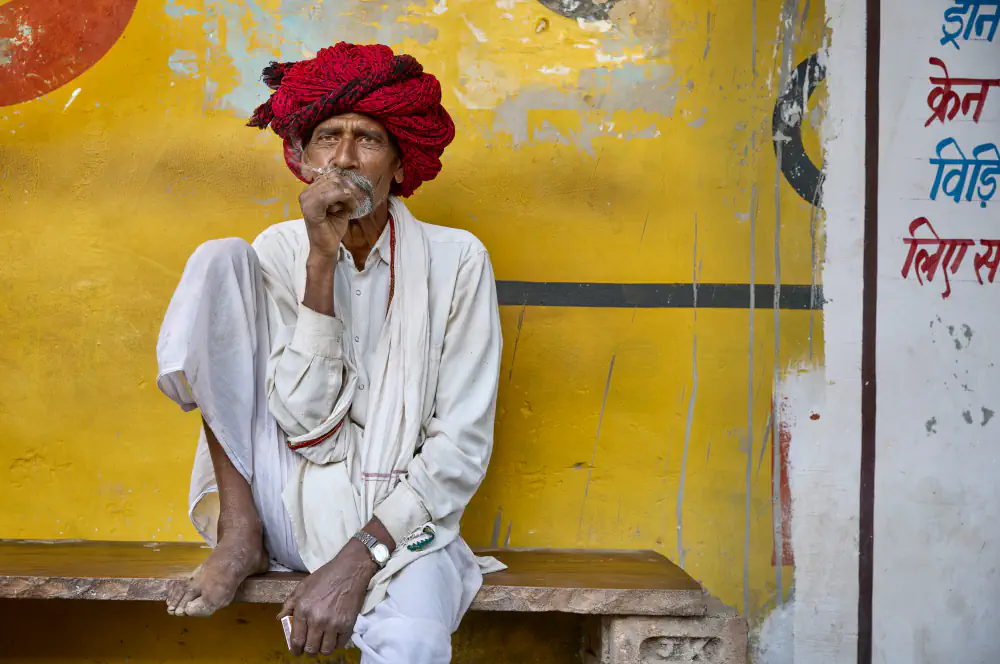
In Rajasthan, I was particularly drawn to the poorer rural villages, where my attention rested on gestures, relationships and moments of village life, especially those involving children.
During the trip, I was accompanied by the photographer Stefano Pensotti, whose extensive knowledge of the area helped facilitate dialogue and encounters with people.
I approach people discreetly and respectfully: I first seek a connection, even through a gesture, without imposing myself with the camera. Although I come from a different cultural background, my starting point remains the person in front of me. I try to leave room for their way of being and what they are experiencing.
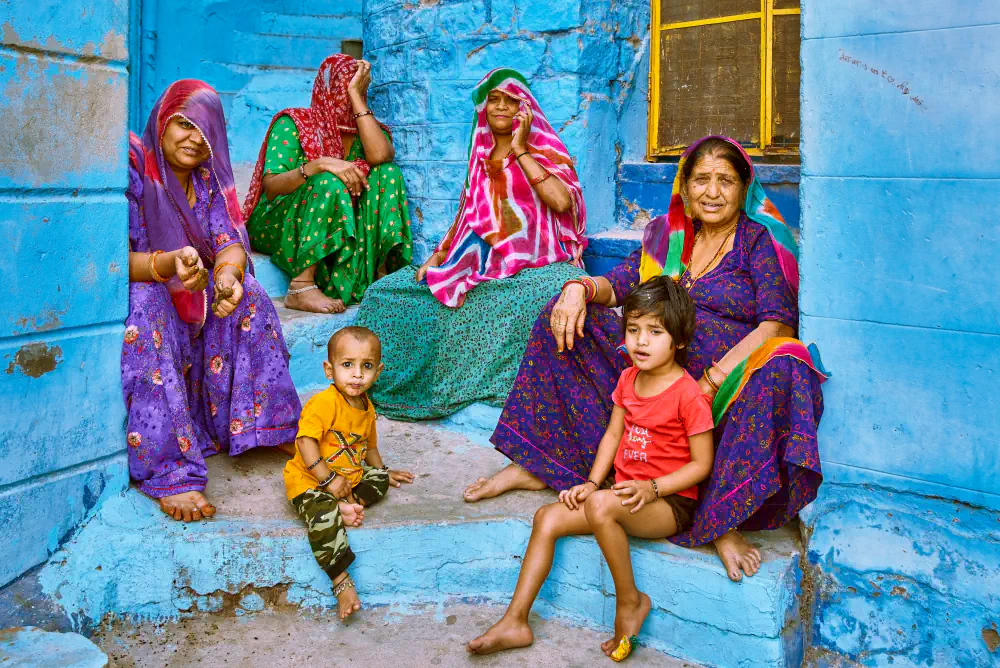
One of the central ideas of Common Matter is that people carry visible traces of the territories they inhabit. Beyond the physical similarities between human bodies and landscapes, what does this idea mean to you in terms of cultural identity, personal history, and belonging?
For me, it means that our relationship with a place is built through the life that unfolds there: work, habits, gestures learned and passed down, relationships with others. Traces of a place can also be found in how people live and in what they choose to preserve of their own history.
I also think of my own experience: there are distant places where I feel I have put down roots, thanks to the people and moments we have shared. A sense of belonging can emerge and grow through these bonds.
In COMMON MATTER, I have tried to express this relationship. Placing a face beside a landscape leads me to reflect on how much the environment enters our lives and helps shape us, while leaving each person with their own identity.
Your project suggests that geographical distance does not necessarily prevent us from recognizing shared experiences and connections. What do you hope viewers discover when they encounter photographs of people and landscapes from such distant parts of the world within the same series?
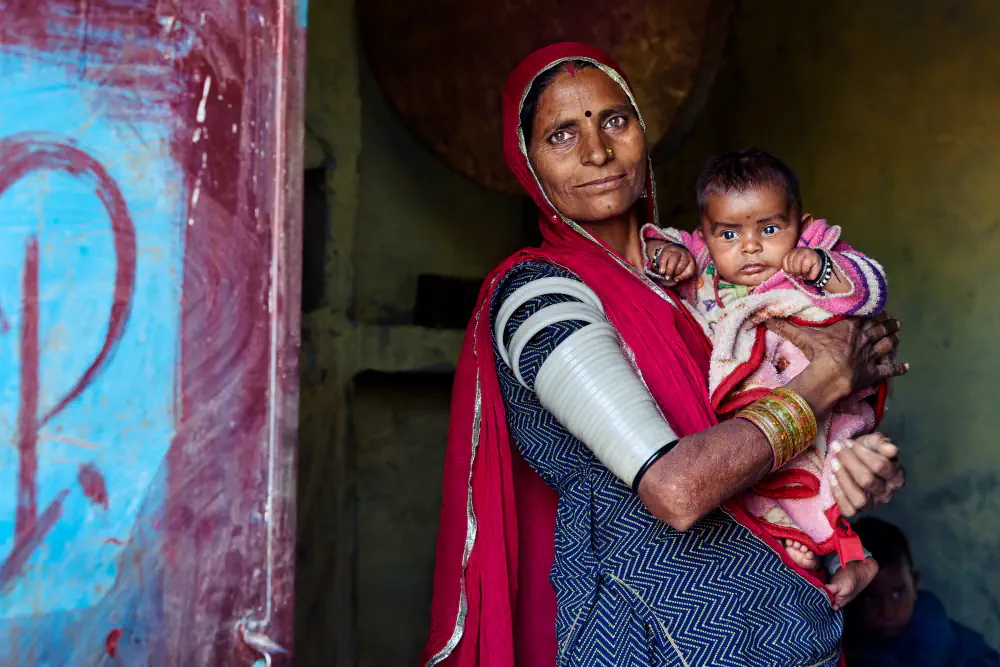
I hope viewers feel a sense of familiarity even when looking at people and landscapes far removed from their own experience. The gesture of holding a child or the marks of time on a face can evoke a personal memory and make us feel close to someone we do not know.
By bringing Rajasthan and Salta together, I would like to invite viewers to recognise a connection that spans distances, without erasing the differences and histories of each place. It is this shared belonging that I try to make visible through the dialogue between the images.
In the accompanying text, you emphasize that human beings are not separate from nature but part of it, and that environmental damage ultimately affects humanity itself. How do you approach this concern through photography, and what do you believe images can contribute to conversations about our relationship with the environment?
In COMMON MATTER, by placing a face beside a landscape, I try to make visible how closely our lives are connected to the earth. Water, soil and natural cycles make our existence possible: damaging them has consequences for us too.
One of the images in the series, taken in Salta, shows a riverbed filled with boulders that shift during floods caused by rainfall. In the villages of Rajasthan, I saw how environmental degradation can affect people’s health and cause illness. These are situations experienced at close quarters, showing how the fate of the earth and that of its inhabitants cannot be separated.
I believe photography can give a face and a form to an issue we often perceive as distant. Through this project, I would like to invite viewers to feel part of the environment and reflect on the responsibility that comes with this connection, including in their everyday actions.
Common Matter draws attention to surfaces, textures, colors, and the visible effects of time. How important are light, composition, and color in your photographic process, and how do these formal decisions help you express the ideas behind the work?
Light, composition and colour guide my photography. Light brings out wrinkles, relief and layers; composition helps me choose what to give greater attention to and how to relate the elements within the frame.
In COMMON MATTER, these choices also matter in the pairing of photographs. A line, a fold or a hue can guide the eye from one photograph to another. Colour contributes to this dialogue through echoes between clothing, skin and the shades of the earth. During the selection process, I sought a balance between these correspondences and the strength of each individual photograph. These choices help make the connection at the heart of the project perceptible, leaving viewers to discover it through their own gaze.
In your statement, you invite viewers to look beyond the photographs and reconsider their relationship with their own everyday surroundings. What kind of reflection would you like Common Matter to encourage, particularly among audiences whose environments are very different from those depicted in the series?
The photographs show distant places, but they can prompt questions that concern us directly: what connects us to the place where we live? How well do we know it, and how much attention do we give it?
I would like the project to encourage people to slow down and look more carefully at the people and environment around them, learning to appreciate and respect them. For me, recognising a connection begins with this attention.
Looking back at your photographic journey, from discovering the medium as a child to developing projects across different continents, how has your understanding of photography changed? And what subjects or questions would you like to explore in your future work?
My experiences have helped me grow and come to know and love the places my journey has taken me to. As a child, photography was above all a desire to capture a moment; over time, it has become a way to get to know people, build relationships with them and create a narrative.
People remain at the centre of my projects. In my future work, I would like to continue exploring the relationship between people and the places they inhabit, devoting time to encounters and the stories that can emerge from them. I want my photographs to preserve a trace of these experiences and create new connections with those who view them.