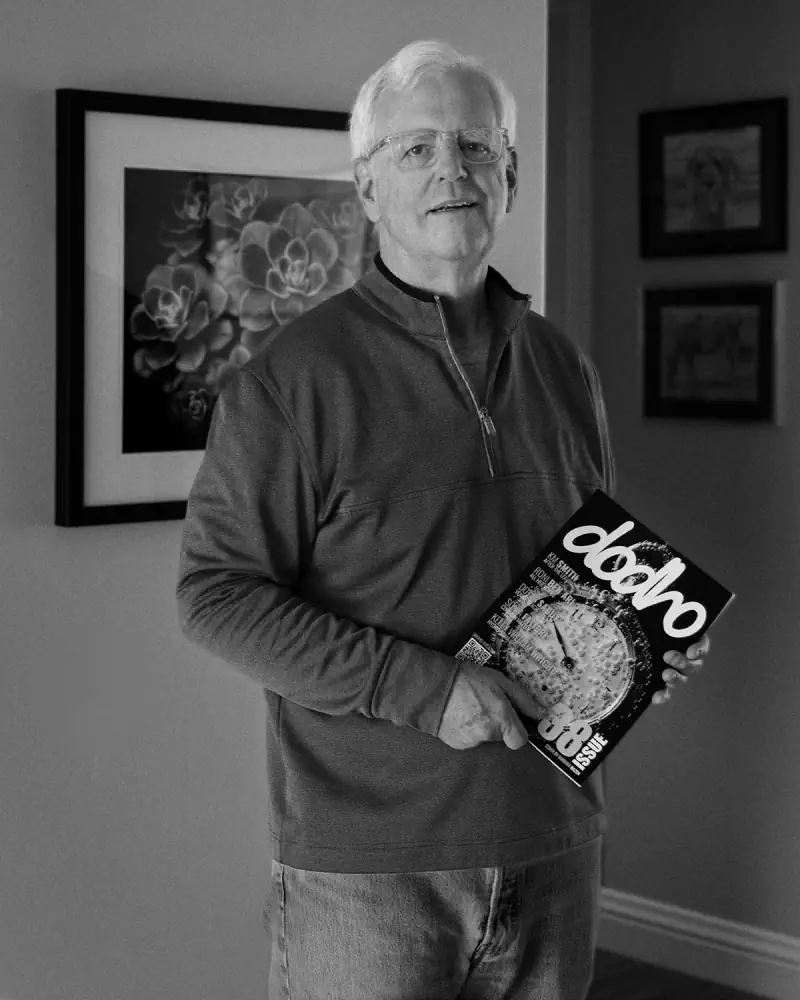
For Southern California-based photographic artist KM Smith, photography offers a way to explore how perception, memory, and personal interpretation shape our experience of place.
His work is characterized by a deliberate approach to composition, color, perspective, and visual structure, bringing together careful observation and an interest in the meanings that landscapes and built environments acquire over time.
Smith’s relationship with photography began in childhood, when he borrowed a 35mm camera and learned darkroom and printing techniques in a community darkroom. After pursuing careers in the music and healthcare industries, he returned to photography and transitioned to digital imaging. His artistic development also included a two-year mentorship with photographic artist Bob Killen, combining the study of art history, the development of thematic projects, critical evaluation, and portfolio reviews with gallery and museum professionals.
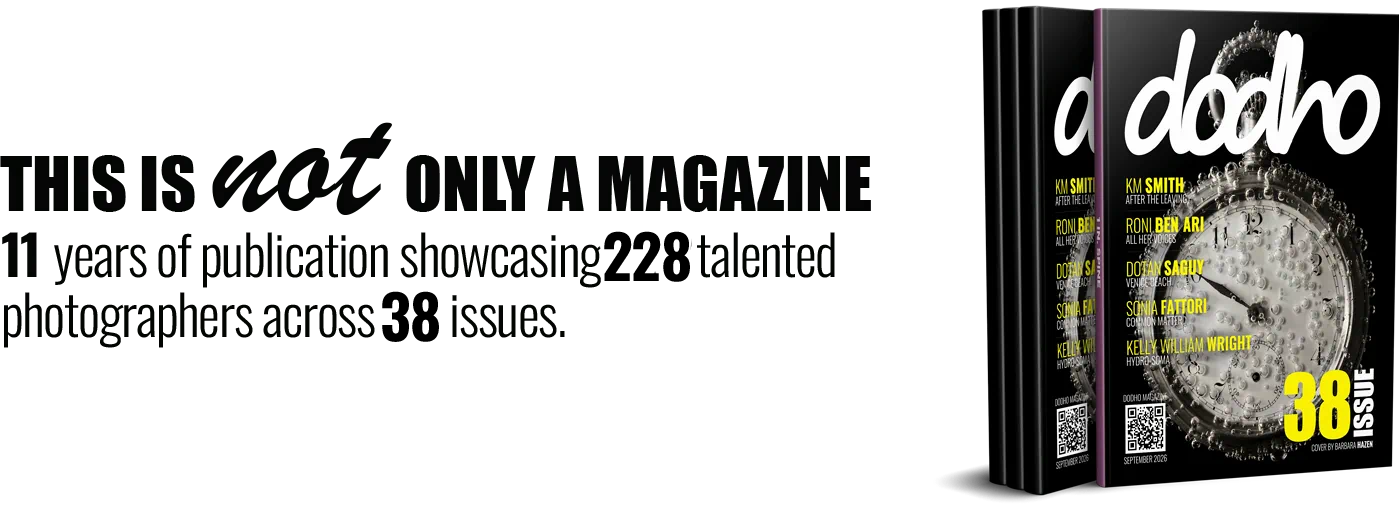
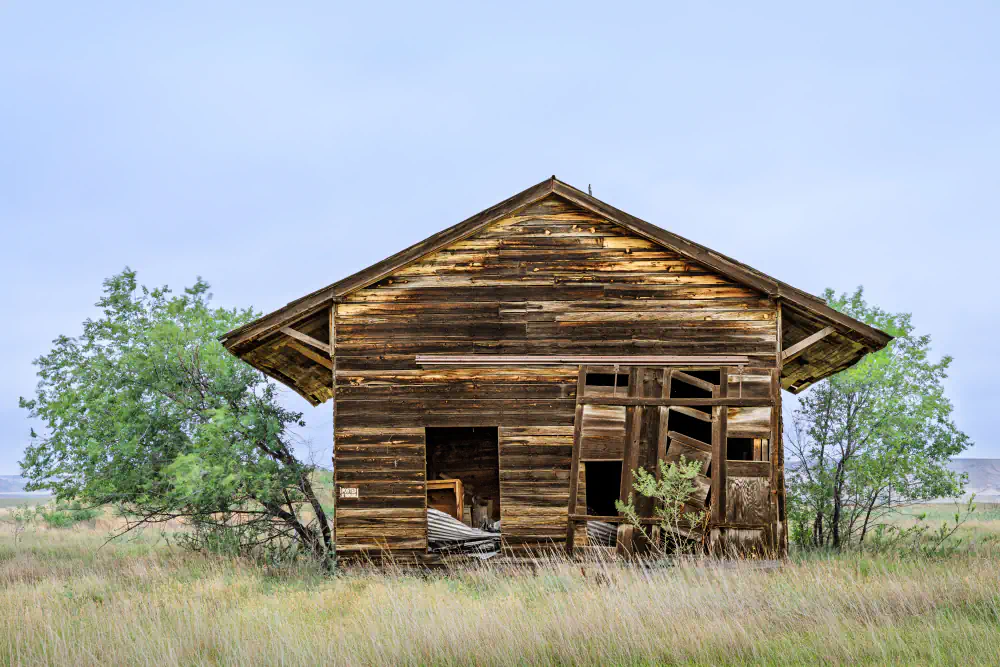
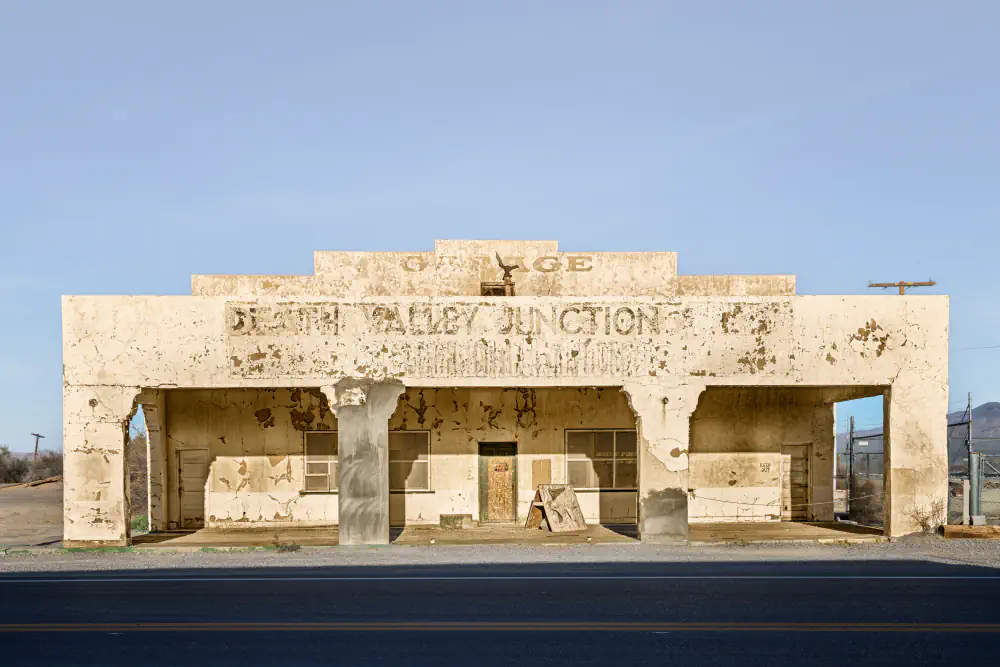
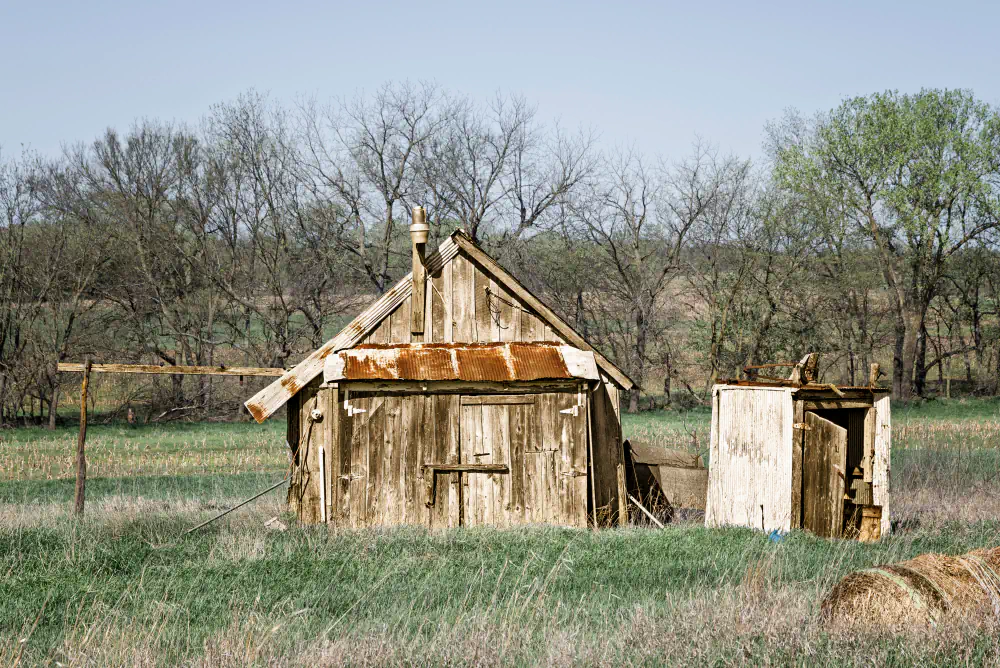
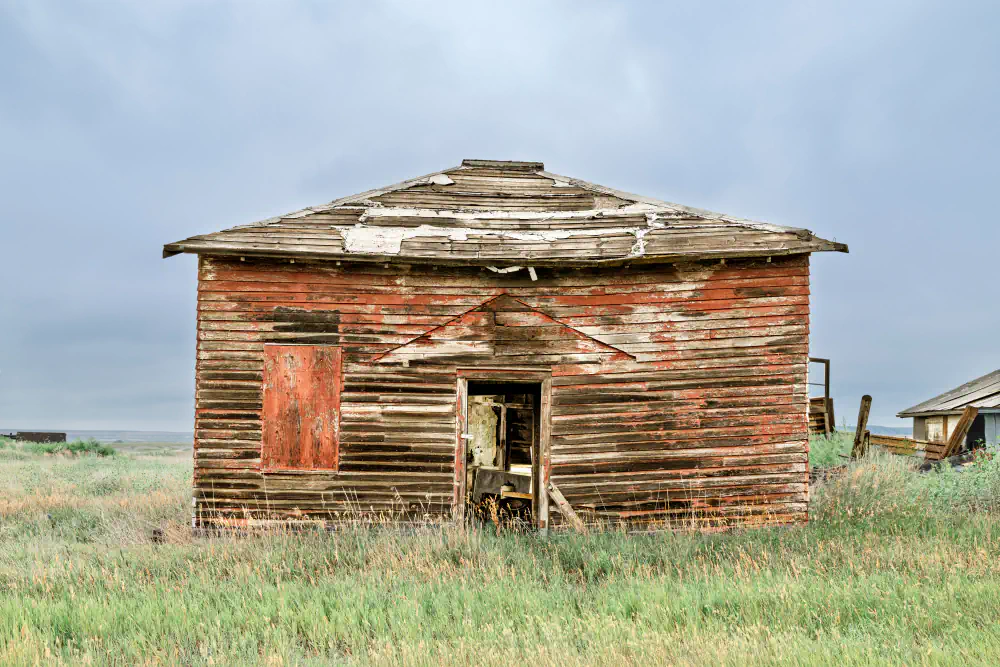
His project After the Leaving, featured in Issue #38 of Dodho Magazine’s print edition, examines the buildings and structures that remain across the American West after the communities that created them have moved on. Through photographs of weathered homes, businesses, and civic buildings, Smith explores a landscape shaped by migration, economic change, and the continuing search for new opportunities.
Rather than presenting these structures simply as symbols of abandonment or decline, After the Leaving considers them traces of human movement and transition. A consistent frontal perspective, carefully controlled color palette, and unified visual approach allow the photographs to function as a record of places where settlement, labor, departure, and renewal have left visible marks on the landscape.
In this interview, we explore KM Smith’s beginnings in photography, his return to artistic practice after working in other industries, and the experiences that have shaped his visual language. We also examine the ideas behind After the Leaving, his approach to photographing architecture and the American West, and the relationship between photography, memory, and the changing meaning of place. (Official Website)(Issue #38)
Your interest in photography began during childhood, when you borrowed a 35mm camera and learned photographic techniques in a community darkroom. What do you remember about those first experiences, and what initially fascinated you about making photographs?
There was something magical about the darkroom. You carefully mixed the chemicals, measured temperatures, watched the clock and… an image appeared. I was fascinated by the whole process. It wasn’t until much later that I began to understand that photography could be more than making pictures; it could be a way of expressing myself.
Learning to develop and print photographs in a darkroom provides a very different introduction to the medium from today’s digital processes. How did that early experience influence the way you understand photographic images and the decisions involved in creating them?
I was never a master of darkroom techniques, but the experience gave me an appreciation for how much control a photographer has over an image. Exposure, dodging and burning, and toning can all change the way a photograph feels and the message it conveys. Those lessons are just as relevant in the digital age. The tools have changed, but the creative decisions haven’t.
Before returning to photography, you pursued careers in the music and healthcare industries. What led you into those fields, and how did photography remain part of your life during those years?
For several years, I worked as a roadie for Elvis Presley, which was obviously a unique life experience but also gave me the chance to continue developing as a photographer.
Later, I returned to school, became a primary care physician and managed health plans, working with poor and underserved populations. There wasn’t much time for photography but those years profoundly influenced how I see the world. I spent a great deal of time with people whose lives and circumstances are often overlooked and that experience has had a strong influence on my artistic choices.
When you eventually returned to photography and transitioned to digital imaging, what motivated that decision? How did you approach rebuilding your photographic practice after spending time working in other professions?
I’m not sure I’d call it “rebuilding” a practice. Until then, photography had been more of a hobby than a vocation, and I hadn’t really considered its potential as an art form.
I simply started taking more photographs. Gradually, I began to recognize the difference between making an attractive picture and deliberately communicating an idea or feeling. That was a turning point: I began moving from documenting what I saw to creating images that expressed how I felt.
You completed a two-year mentorship with photographic artist Bob Killen that included art history, thematic project development, critiques, and portfolio reviews. What were the most important lessons you took from that experience, and how did it influence your approach to creating cohesive bodies of work?
I knew there were significant gaps in my knowledge. I’d never formally studied art and knew very little about the history of photography, so I wanted an academically grounded program.
What attracted me to working with Bob was his belief that an artist needs to decide not only how to make an image, but also why that image should exist. That distinction really resonated with me.
I learned to begin with the idea or feeling I wanted to communicate and then use photography as the means of expressing it. Eventually, I also came to understand that a collection of photographs could tell a much larger story than any individual image.
Your artistic practice explores how perception and memory shape our experience of place. How did these themes become central to your photography, and what interests you about the relationship between a physical location and the meanings we associate with it?
John Berger wrote that looking is a choice — we can’t see something unless we choose to look at it. I believe part of an artist’s role is to draw attention to things that might otherwise go unnoticed and invite people to look more closely.
But our perception of what we see is shaped by our unique experiences and memories — two people look at the same photograph and see very different things. Ultimately, I think the way we respond to an image tells us more about ourselves than it does about the image itself.
Your work places considerable emphasis on composition, color, perspective, and visual structure. How do you approach these elements when photographing, and what role do they play in transforming an observed subject into an image that reflects your personal interpretation?
I always begin with the feeling or idea I want to communicate. Composition, color, perspective, and all the other elements of photography are simply the tools I use to get there. They aren’t the point of the photograph — they serve the larger purpose of the image.
Turning to After the Leaving, published in Dodho Magazine’s print edition, how did the original idea for the project emerge? What first attracted your attention to the buildings and settlements left behind across the American West?
The project developed gradually. I came across the first buildings in a ghost town and something about them just stayed with me.
Initially, I was drawn to their appearance but, eventually, I began looking beyond the obvious signs of abandonment and decay. I started thinking about the people who had come there, built lives and communities, and then, for whatever reason, moved on. The buildings became reminders of those lives and of the journeys they took.
The project examines a region whose history has been shaped by migration and by changing economic activities associated with land, mining, timber, and railroads. How did this historical context influence the development of the series, and what research, if any, forms part of your photographic process?
Although the photographs are rooted in the American West, the project isn’t really about the region’s history. It’s about the much broader experience of migration: people arriving in search of opportunity, settling down and, frequently, moving on.
My background in economics gave me some appreciation of how communities develop and why they sometimes become unsustainable. That understanding certainly influenced how I came to view these buildings—not as isolated remnants of failed enterprises, but as traces of a human journey.
The photographs focus on weathered homes, businesses, and civic structures that remain long after the people who built or occupied them have departed. What draws you to these particular types of buildings, and what do you look for when deciding whether a structure belongs in the project?
What interested me the most wasn’t the physical structures. It was the human presence implied by these places. People came here, worked, raised families, established businesses, and imagined a future. Eventually, for one reason or another, they left.
That’s a universal experience. At some point in our lives, all of us have made a decision to move on — either physically or emotionally. The buildings selected for this series had to connect viewers to that experience and allow them to imagine themselves within the larger story of migration.
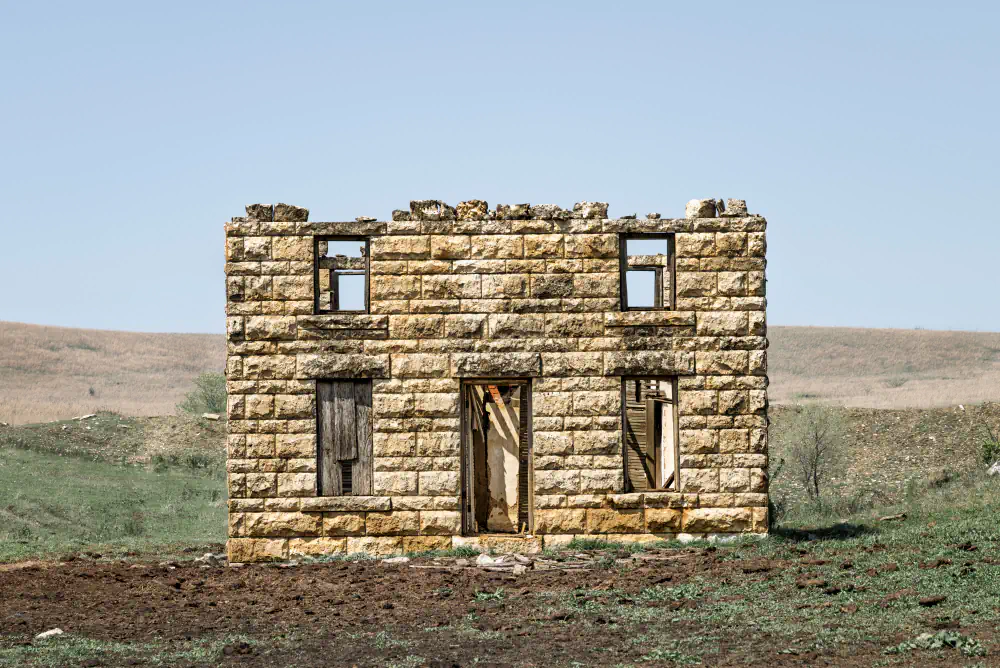
In your project statement, you describe these buildings as traces of movement rather than monuments to failure or decay. Why is this distinction important to you, and how does it influence the way you photograph places that might otherwise be interpreted primarily through their abandonment?
It’s easy to look at these buildings and focus on failure: after all, they’re abandoned and falling apart.
But I found myself asking a different question: What happened next? The people who left were responding to changing circumstances and looking for something better. I wanted the collection to acknowledge that story line rather than simply document what was left behind.
You use a consistent frontal perspective throughout After the Leaving. What led you to adopt this approach, and how does it affect the relationship between the viewer, the photographed structure, and its surrounding landscape?
I wanted to photograph the buildings as a set of portraits, using a frontal, deadpan composition. This typological approach shifts the emphasis away from the individual characteristics of each structure. Rather than focusing on the buildings, I hoped viewers would begin to think about the people who passed through them and the lives that once filled these places.
The series also maintains a unified color palette and visual treatment. How did you establish this consistency, and what considerations guide your decisions about light, color, and composition when working in different locations?
Color was a critical decision. Black and white or sepia seemed too nostalgic to me and reinforced the idea of abandonment and loss.
I chose a subdued color palette that acknowledges the weathering and deterioration of these structures while keeping them firmly grounded in the present. I wanted the images to feel contemporary, not like historical documents or sentimental reminders of another time.
Photographing buildings that have lost their original functions raises questions about what an image can reveal and what remains unknown. How do you approach the relationship between the visible condition of a structure and the human histories associated with it?
I think a compelling photograph often owes as much to what is not shown as to what is.
In each of these images, the connection between a building and its former inhabitants is, at best, subtly implied.
When the photographs are viewed together, however, a more comprehensive picture begins to emerge. We recognize homes, businesses, churches, and civic buildings as parts of a functioning community. The people who once occupied these places become part of the story, even though their individual stories remain unknown.
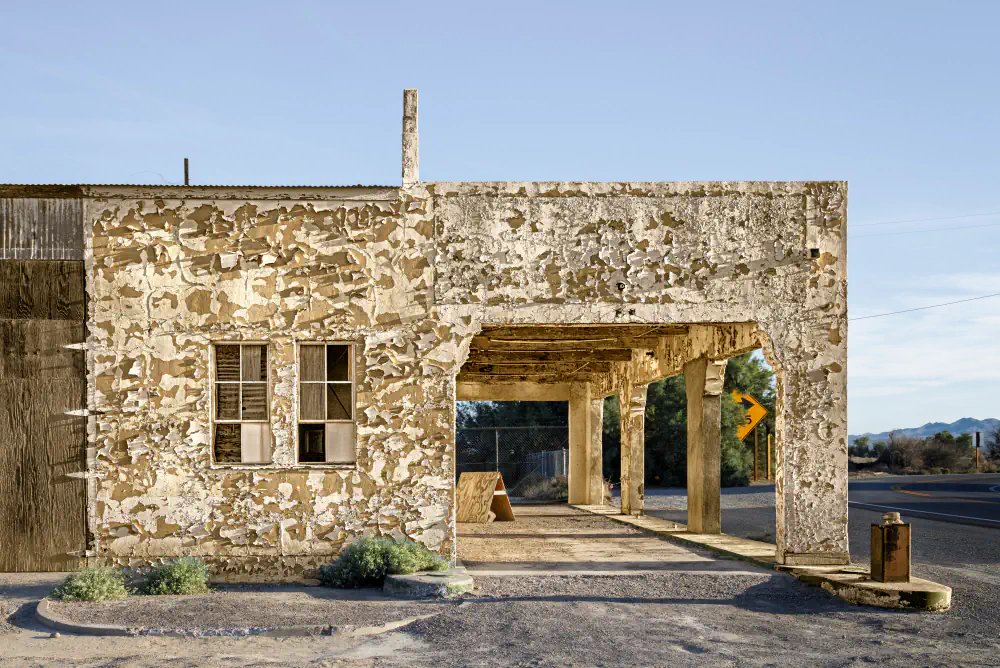
The American West is often represented through expansive landscapes and familiar ideas of exploration and opportunity. Your project focuses instead on the structures left behind after periods of settlement and economic activity. How does After the Leaving relate to your own understanding of the region and its history?
The American West provides the setting, but the underlying theme is much broader. I’m interested in the movement of these settlers: the recurring pattern of people arriving somewhere, putting down roots, living their lives, and eventually moving on.
The buildings are traces of that process. They remain embedded in the landscape long after the people who built and occupied them have departed. Although the photographs are rooted in a specific place and mythology, I hope viewers recognize an experience that is universal.
Your statement describes a recurring cycle of settlement, labor, departure, and renewal. How do you translate a process that unfolds over generations into individual photographs of buildings and places as they exist today?
I don’t think any individual photograph can fully communicate that cycle. It’s the series of images that begins to tell the story.
A home, a barn, a bank, a church, a jail—each represents a different part of a community. When we see them together, we can begin to imagine how those places developed, functioned, and eventually receded. It’s as we move through the collection that the complete story emerges.
Although the photographs depict structures that have endured after their original communities changed or disappeared, the project also considers the belief that new possibilities might exist elsewhere. How do you approach this relationship between loss, movement, and the hope of renewal?
I think the important distinction is between what the camera records and what I want the photographs to communicate. The camera captures abandoned buildings; I see evidence of people who once lived and worked there and then moved on in search of something better.
I didn’t want the work to be about nostalgia or loss. There is a hopeful aspect to the idea that people are willing to leave their lives behind and take a chance on a different future. That’s the part of the story that interests me.
Your work has been presented in juried exhibitions and featured in photography publications, including projects exploring abstraction and the experience of space. How has presenting your photographs to different audiences influenced the way you edit, sequence, or develop new bodies of work?
My primary goal has been to get my work in front of people and see how they respond. I’ve learned a great deal from that process.
Many exhibitions and calls for entry focus on individual photographs, while opportunities to present a complete body of work are less common. One of the things I particularly appreciate about being published in Dodho is its focus on cohesive collections. It allows readers to appreciate individual images while also experiencing the larger narrative that emerges when they are viewed together.
When bringing together the photographs for After the Leaving, how did you approach the selection and sequencing of the images? What makes individual photographs work together as a coherent visual narrative rather than simply as a collection of separate locations?
For me, there’s an important difference between making photographs and curating a collection of images. Each picture needs to work on its own and establish a connection with the viewer. But the series needs to communicate something beyond the individual photographs.
With After the Leaving, I needed to create a sense of community in order to introduce the human aspect of migration. The sequence begins with homes and then expands to the agricultural, commercial, and civic structures that supported the people in those homes. Hopefully, viewers not only see the individual buildings, but also begin to perceive the lives and relationships that once occupied them.
Looking back at your journey from childhood darkroom experiences to your current fine art practice, how has your understanding of photography evolved? And what subjects, places, or ideas would you like to investigate in your future projects?
It’s hard to imagine how far I’ve come from that eight-year-old who was fascinated by watching images appear in the bottom of a developing tray!
The most important lesson has been understanding the difference between making a beautiful picture and creating an image that communicates something deeper. Photography has become much more than a way of recording what I see; it’s a way of exploring ideas and connecting with other people.
I’m still interested in the relationship between people, the places they inhabit and the stories we might otherwise overlook. I suspect that will continue to influence whatever I do next.