Documentary and street photographer Dotan Saguy has devoted a significant part of his career to observing and documenting Venice Beach, a distinctive area of Los Angeles whose identity has undergone considerable transformation in recent years.
His work explores everyday life, the people who inhabit this environment, and the different ways in which a community constructs and reshapes its own identity.
Raised in a working-class suburb of Paris, Saguy emigrated to the United States, where he built a career as a technology entrepreneur before dedicating himself professionally to photography in 2015. Three years later, he published Venice Beach: The Last Days of a Bohemian Paradise (Kehrer Verlag, 2018), a black-and-white photobook documenting the changes taking place in the neighborhood between 2015 and 2017.
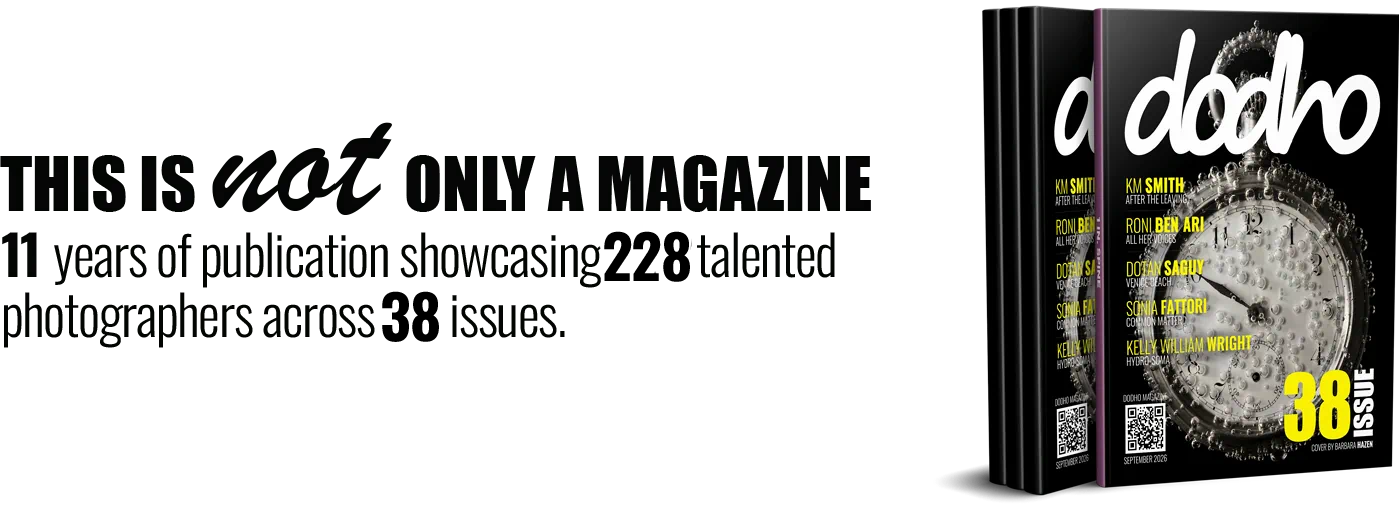
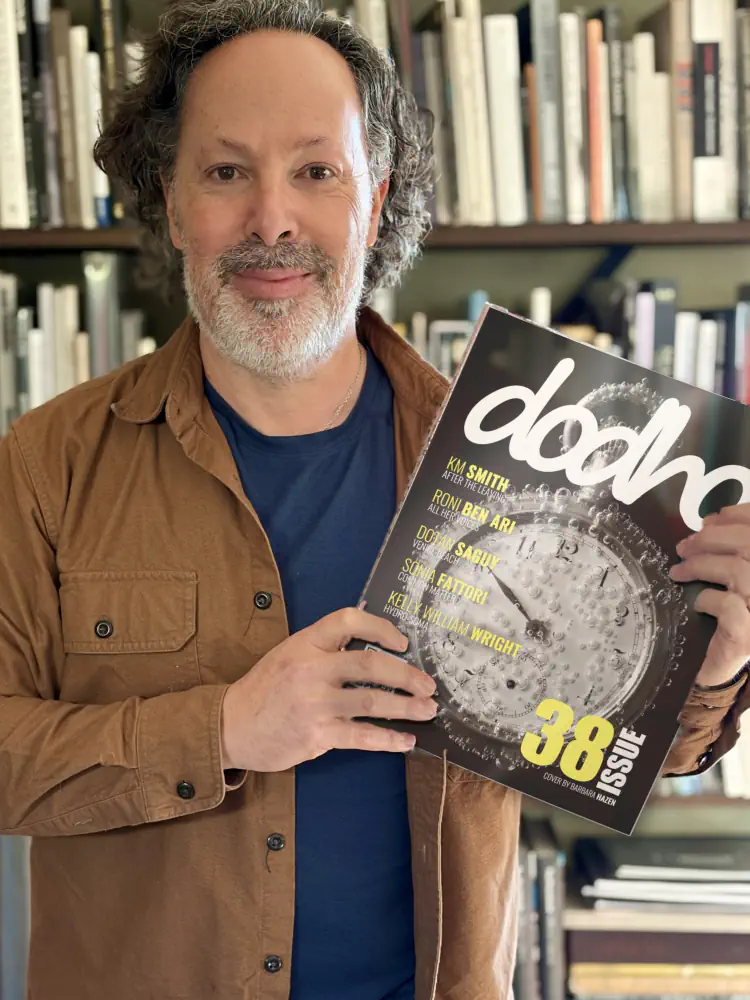
His project Venice Beach: The Color of Enduring Wonder, featured in Issue #38 of Dodho Magazine’s print edition, revisits the same environment from a different perspective. Through color, Saguy turns his attention to individual expressions, everyday activities, and the visual elements that characterize life in Venice Beach. Developed from photographs taken over several years and expanded through a more systematic approach to color photography beginning in 2024, the project is conceived as a companion volume to his first publication.
In this interview, we explore his beginnings as a photographer, his professional transition, his approach to documentary photography, and the evolution of his relationship with Venice Beach, from his early black-and-white images to his current work in color. (Official Website)(Issue #38)
You grew up in a working-class suburb of Paris before emigrating to the United States. What memories do you have of that environment, and how do you think your early experiences influenced the way you observe and photograph people?
I was born on an Israeli kibbutz near the Lebanese border, where I lived until I was four. My family then moved to a working-class suburb of Paris. I learned French quickly and refused to speak Hebrew at home. I just wanted to blend in and be like the other children. I became wary of revealing my roots because of antisemitism, both from native French people and the large Muslim immigrant community. Looking back, that desire to blend in defined much of my French upbringing. I became a chameleon of sorts. And to be a chameleon, you have to observe closely: you become highly attuned to other people, their cultures, and how they interact. As a child I was also an avid sketcher: I would learn to draw cartoon characters by heart and then draw them for my friends at school as a party trick of sorts. I think that habit of observation I acquired early, both by necessity and by passion, helped shape the way I photograph people today.
Before pursuing photography professionally, you built a career as an entrepreneur in the technology industry. How did your interest in photography begin, and what role did it play in your life during those years?
Photography was part of my life almost from the start. On the kibbutz, my father was the resident photographer, and his darkroom was the only one there. After we moved to France, his camera went into the closet while he worked long hours at his blue collar job to support us. He didn’t pick it up again until I was about 20, and his enthusiasm rubbed off on me.
When my wife and I married at 23, our friends grouped together to buy us a Nikon 6006 with a kit lens. I taught myself from French magazines like Chasseur d’Images. My tech career left little free time, so I photographed mostly on vacation, usually landscapes on a tripod. I loved how meditative it was: the slow work of composing, adjusting settings, and waiting for the light. People in motion intimidated me. Then our two kids arrived, and like every new parent, I photographed them constantly, at birthday parties, play dates, everywhere. Without realizing it, I was learning to photograph moving subjects.
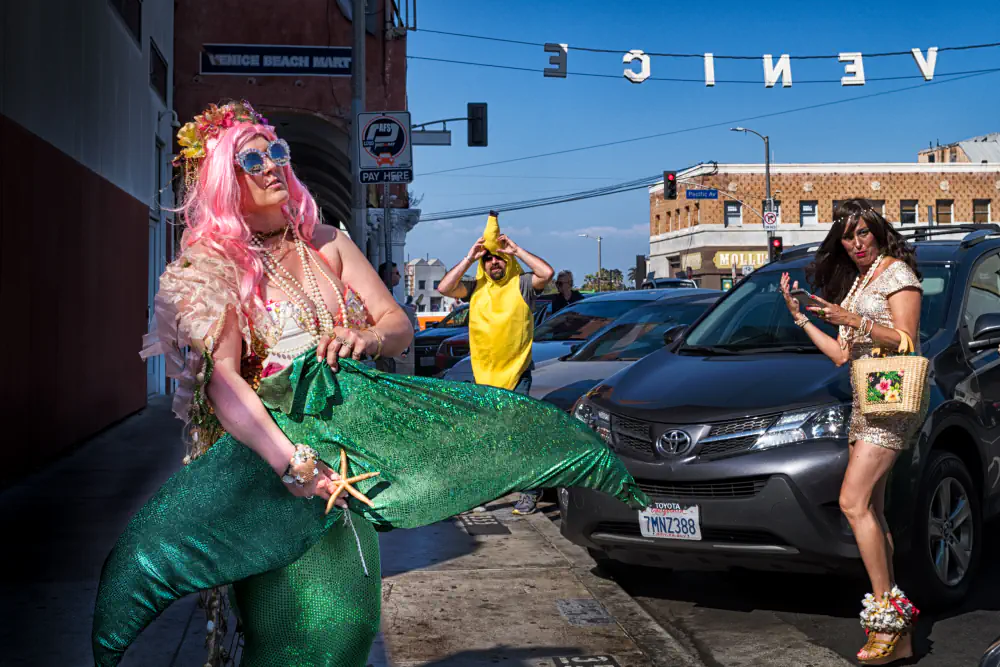
In 2015, you decided to leave your career in technology to dedicate yourself entirely to photography. How did you arrive at that decision, and what challenges did you encounter during your first years as a professional photographer?
In 2010, I read Tim Ferriss’s The 4-Hour Workweek, a blueprint for building a business that nearly runs itself and frees you to pursue less lucrative passions. It gave me a plan. I built a mobile app business specifically to free myself up for photography.
Building the app business was a lot of work at first, but within a few years I managed to achieve my goal. I was finally free to pursue photography seriously! That’s when I realized I needed formal photojournalism training. I went back to school and spent a semester studying photojournalism at Santa Monica College. I shot assignments for the college paper and focused on my first personal street photography project: Venice Beach.
In spring 2015, I sent myself on assignment to Old Havana for a week with a friend from the program. When I returned, ABC News ran the photos as an online slideshow, which they paid me for. I also submitted this work to a National Geographic competition and won first place: an 4-day assignment in South Korea with one of their editors. Meanwhile, my college instructors who were impressed with my work had suggested I apply to two highly competitive pro workshops: the Missouri Photo Workshop and the Eddie Adams Workshop. To my surprise, both accepted me on the first try so that fall, I went to Korea with Nat Geo in September and then to both workshops back to back immediately after. 2015 turned out to be my crash course in becoming a professional photographer. It happened so quickly partly because my successful and mostly outsourced app business let me focus on learning and shooting personal projects I was passionate about, which was a real privilege compared to most people embarking on a professional photography career.
Which photographers, books, or experiences were particularly important during your development, and how did you gradually establish your own visual language?
Henri Cartier-Bresson and Alex Webb are the two who shaped me most. I’ve collected their books for years and pored over them more times than I can count. If I had to pick one book, it would be Webb’s The Suffering of Light. Cartier-Bresson taught me to look for geometry and the decisive moment, and his idea of lining up the head, the eye and the heart stuck with me. I use my own version of this formula by striving to combine a strong design, readable, interpretable information, and some kind of moment or emotion.
As for my own visual language, I don’t think I ever set out to create one. To me, framing a shot is like solving a puzzle. The street is chaos, and my job is to bring some order to it with the few tools I have: where I stand, how I set the camera, and a lot of patience. What I love most is juxtaposing several moments into one frame while keeping each of them clear. I fail at that far more often than I succeed, but when it works, it gives me a lot of satisfaction.
Your career has focused primarily on documentary and street photography. What interests you most about these disciplines, and how do you understand the relationship between the photographer, the people being photographed, and the environment in which you work?
I’m introverted by nature so, for me, photography is my passport into other people’s lives. It gives me an excuse to walk into worlds I’d never otherwise see and to spend real time with people who live very differently from me. I’m especially drawn to people living outside the mainstream. I find them more interesting, and honestly, I identify with them. I don’t think I could do my best work documenting something I don’t love. Projects take time and persistence so I figure I might as well enjoy the ride if I am going to stay the distance!
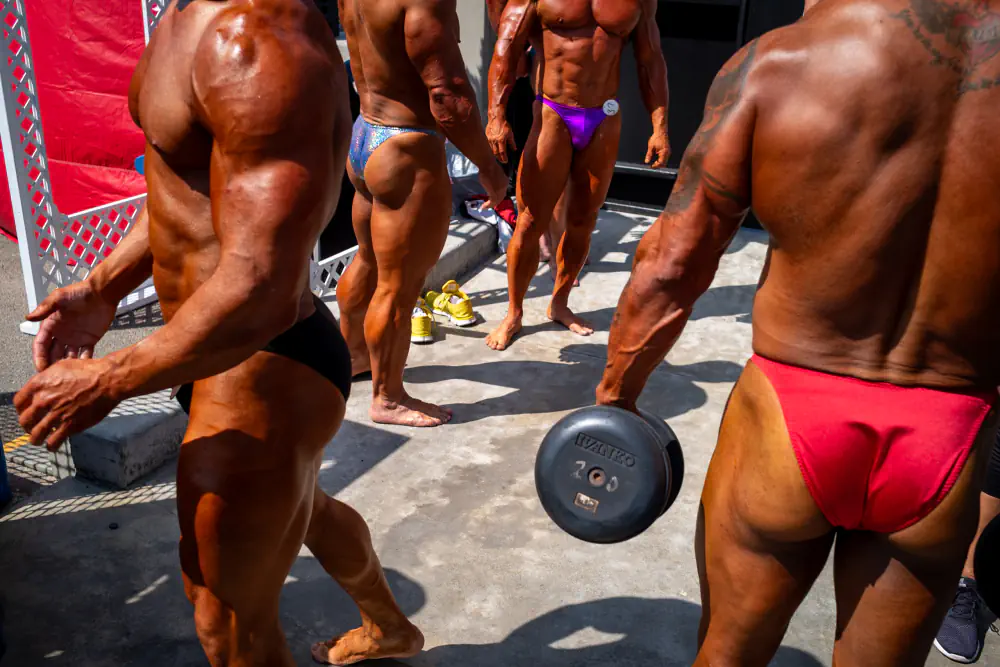
Venice Beach has become one of the central subjects of your photographic work. How did your relationship with this place begin, and what led you to dedicate a long-term project to documenting it?
I’ve been drawn to Venice, as the locals call it, since I moved to Los Angeles from New York in 2003. At first I was intimidated by it: After all It’s had a huge role in shaping pop culture worldwide: This is the place once called the Coney Island of the West: home of the hippie movement, the birthplace of modern skateboarding and the fitness craze, Jim Morrison’s old stomping ground. I also connected with it because it’s the antithesis of other parts of LA: It isn’t glossy and materialistic like Beverly Hills, and it isn’t depressing like parts of downtown. It’s diverse, a bit rebellious, and wonderfully weird.
When I started doing street photography, I wandered all over the city, asking myself every morning where to shoot that day. More often than not, I would end up in Venice. It’s where I was getting my best pictures, and it’s where I felt most at home. All these subcultures share a boardwalk barely two miles long, and somehow they get along. That kind of mix makes people more open and tolerant, so eccentricity isn’t just accepted there, it’s celebrated. To me, that’s what freedom looks like: being yourself in broad daylight without anyone asking you to tone it down. It never really felt like a decision to make it a long-term project. I live only a few miles away, so I kept going back. The busiest stretch is small, so I quickly made friends, and people there are unusually welcoming. Before long, I wasn’t just visiting Venice. I was part of it, and the project grew from there.
Between 2015 and 2017, you photographed Venice Beach during a period of urban and commercial transformation, including Snapchat’s expansion and the displacement of some long-established businesses. What changes did you observe, and how did they influence the development of The Last Days of a Bohemian Paradise?
When I started shooting there, I wasn’t setting out to document change. I just wanted to photograph the characters and the energy of the boardwalk. But change was happening right in front of me, so it found its way into my pictures. Snapchat was spreading across dozens of buildings in the heart of Venice, with very little regard for the community organizations and small businesses it pushed out. Rents were skyrocketing. The young mother on the cover of my book got an eviction notice from a new landlord while I was working on the project. I was there when locals protested outside Snapchat’s headquarters the day the company went public, and when the Venice Beach Freakshow closed its doors for good in April 2017. That was probably the single most symbolic moment I witnessed.
All of this changed the project. What began as a celebration of a quirky place turned into a race to document a way of life before it disappeared. That sense of urgency gave the book its title, and my hope was that it would draw some attention from the public and local officials before it was too late.
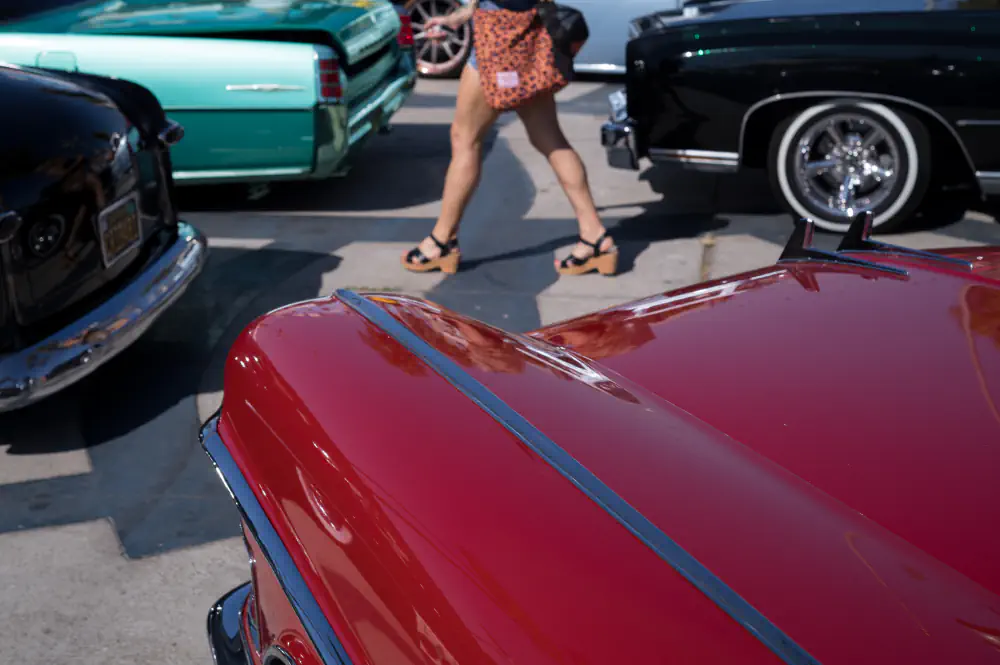
Your first Venice Beach book was photographed in black and white. In the statement accompanying your new project, you explain that this choice reflected both a sense of loss and your intention to create images that did not belong to a specific moment in time. How did you develop that aesthetic approach?
Timelessness was indeed my goal so I committed to black and white from day one by shooting with a Leica M Monochrom, a camera that only captures black and white images. There was no going back and no temptation to “decide in post”. Being deliberate about this choice also forced me to look specifically for scenes that would work best in B&W. The rest of the aesthetic mainly came from both shooting constraints:
I was often going to shoot mid-day in a sunny environment so everything tends to be high contrast. The light at that time of day can be a bit flat so I ended-up often breaking the rules and shooting straight into the sun. It gives the images an edge that suits the boardwalk’s chaotic energy. It is a busy urban environment so I often had to shoot from below to “clean up the background” as photojournalists say. My Leica M could only shoot at 1/4000s and I don’t like to mess with ND filters so I was forced to shoot at around f/5.6 to f/11 in order not to blow the highlights. That meant I quickly had to learn to layer everything neatly in my frame in order to make the images readable. I could go on! So you see: it was all by necessity rather than by some brilliant design. People often think that photographers consciously craft their style but I think it’s almost the opposite: limitations are what craft a style. It’s one of the hardest thing to teach because students don’t want to hear it. They want to be prepared for anything: color, B&W, multiple zoom lenses, etc. It’s counter intuitive to teach that in order to develop a style you must artificially limit yourself by sticking to a single theme, a single lens, B&W OR color, a specific place, etc. In other words, even when developing a signature style, necessity is the mother of invention.
During the years when you worked primarily with a Leica Monochrom, you also occasionally photographed in color. What did you discover through those early experiences, and how did they change your understanding of color’s expressive possibilities?
I can’t claim that I discovered much on that topic at the time. Aside from my brief shoots in Cuba, I was always shooting FOR black and white, regardless of the camera I was using. I don’t think I even looked at the images in color because to me they weren’t meant to be seen that way. I know a lot of people shoot in color and decide later whether to convert to B&W but that’s not how I work. I like to be intentional with it. I shoot different things and photograph differently depending on whether I am shooting for B&W or color.
In 2024, you began photographing Venice Beach entirely in color, after accumulating images over several previous years. What made you realize that those photographs could become an independent project?
I started photographing Venice in color because I wanted a fresh way of looking at the same 2-mile stretch of boardwalk, which I had photographed for a decade by then. Color photography is harder than B&W in a lot of ways, especially in a busy place like Venice so it was an exciting new challenge for me. Once I started making color images I liked, I became curious about which images I might already have in my archive that were “accidentally” shot in color. It turned out there were more than I thought so I folded some of them into the new color project.
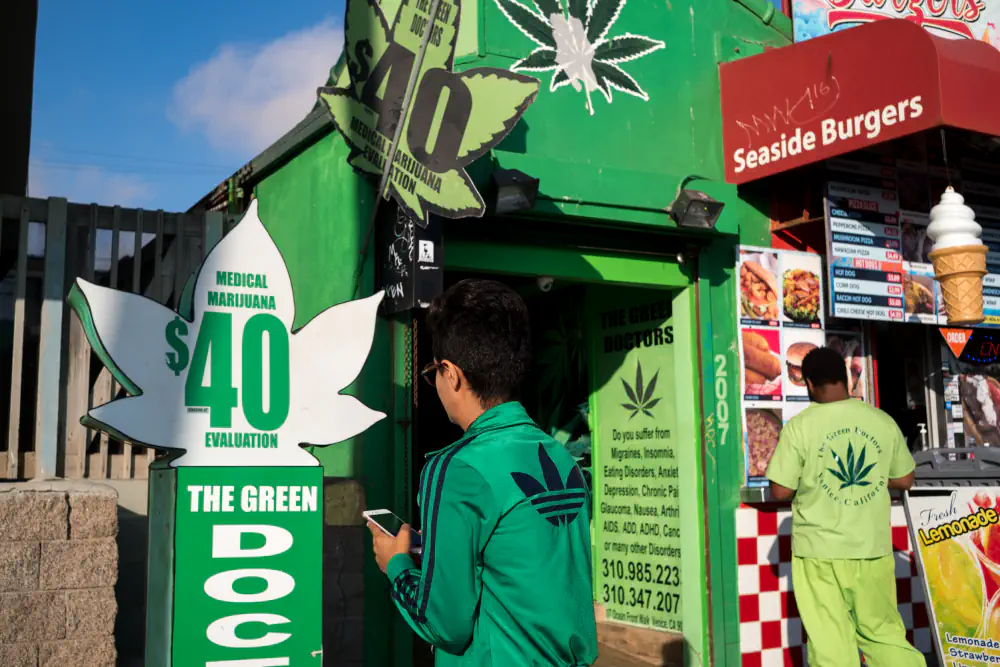
In the project statement published in Dodho Magazine, you explain that you observed further changes in Venice Beach after the pandemic and that the neighborhood recovered some of its former strangeness. How did your perception of the area evolve during that Period?
When I finished my first book, I honestly thought I was documenting the end of something. I was wrong, and I’m happy to admit it. In the years that followed, the corporate presence pulled back and the weird, unpolished Venice I fell in love with came roaring back. At first it was quite chaotic and frankly a bit offputting: The void created by the COVID epidemic had left a lot of homeless encampments all over the boardwalk. It was total anarchy. Maybe that’s what slowed down gentrification. Within a few months the community reclaimed their space and tidied things up a bit as the spirit of Venice slowly came back. Today, the place feels vivid, hopeful and alive rather than under siege. That shift is a big reason I picked the camera back up with fresh eyes, and why this time it had to be in color.
The photographs in this new series depict a wide range of everyday activities, from skateboarding and gatherings on the beach to bodybuilding competitions. What are you looking for when you walk through Venice Beach with your camera, and how do you decide which moments belong in the project?
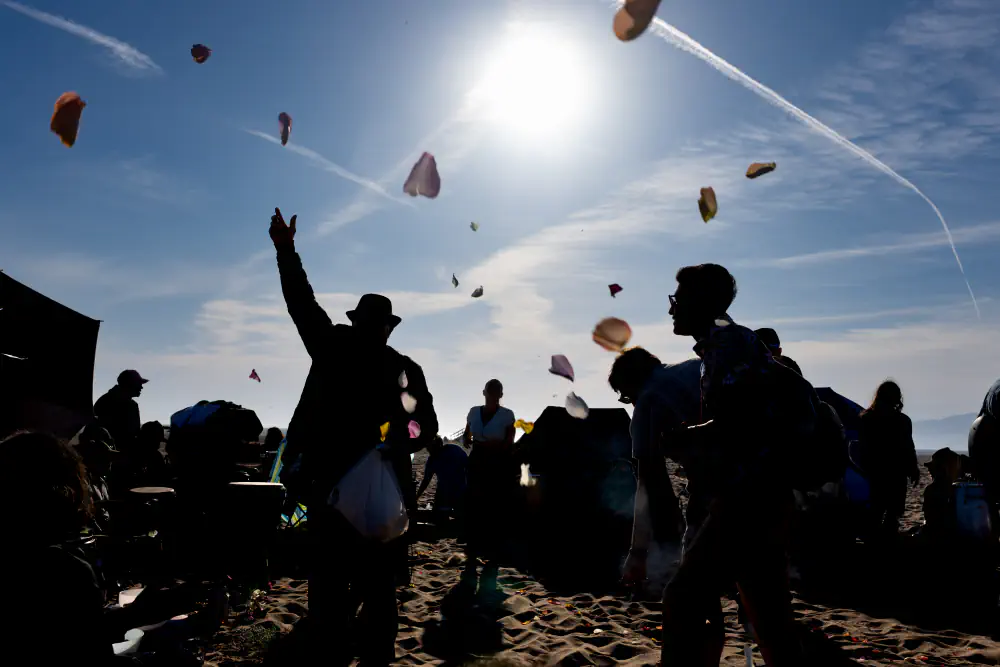
As I mentioned above, I aspire for my street photographs to include thoughtful design, enough information for the viewer to interpret a story, and a moment or emotion. I use an acronym to summarize this methodology when I teach photo workshops: Design, Information, Moment (DIM). This project follows the same methodology but here that first design element is based on color as opposed to black and white. The techniques I use to find subjects are also the same as before: I either find a character and follow them (with consent when it calls for it), find a background and wait for subjects to fall into place, etc. But here my criteria for characters and backgrounds revolve around color design: complementary colors, analogous colors, color repetition, color accents, etc. So in summary, I shoot the same way but what I look for and compose for is deliberately based on color.
In your description of the work, you pay particular attention to older participants in the Muscle Beach bodybuilding competitions. What interested you about these individuals, and what role do their photographs play within the series?
Bodybuilding is all about chasing the perfect body, and the older competitors at Muscle Beach add a fascinating wrinkle to that idea: what do you do when your body can’t be made perfect anymore? Their answer seems to be to keep showing up anyway, hang out with their buddies, and have fun with it. They still oil up, flex, and walk on that stage with as much pride as the twenty-somethings, and I find that incredibly moving. There’s humor in it too, which I love, but never at their expense. In a way, they sum up the whole project. This project is about what has endured, and nothing says “enduring” quite like a 78-year-old flexing in a Speedo in front of a crowd. They remind me that Venice was never about perfection. It’s about passion, and doing your thing in public, as a community and without apology.
After so many years photographing the same environment, how has your way of working in Venice Beach changed? What advantages and difficulties do you encounter when repeatedly returning to places you know well?
The difficulty is to keep seeing it with fresh eyes. I never force it: if I’m not feeling it, I don’t go. Sometimes I skip going to Venice for a few months. I feel like I need to take a break from it, put some distance between me and the boardwalk so I can return excited to shoot there again. Other times I want to go but it must be the boardwalk that is bored with me because there’s nothing interesting happening and the energy just isn’t there. Those times I try to keep low expectations, be present and have a good time just hanging out there.
You have published three monographs with Kehrer Verlag: Venice Beach: The Last Days of a Bohemian Paradise, Nowhere to Go but Everywhere, and DOGTOWN. How important is the photobook to your practice, and how do you approach the process of selecting, editing, and sequencing images?
I love the book form. I see it as the ultimate photographic expression. When it works it becomes greater than the sum of the parts and that’s magical. For the three books you cited I collaborated on editing and sequencing with my friend and colleague Gail Fisher, with whom I now teach photo workshops. Gail spent her career as a Senior Photo Editor at National Geographic and the Los Angeles Times. She is incredible at selecting and sequencing images for impactful storytelling. I’ve learned a lot from her on this topic. We now teach editing and sequencing as part of our photo workshops (storyteller-workshops.com).
Beyond your work in Venice Beach, you are developing projects such as Arrested Decay, focusing on the interiors of Bodie, California, and Erased from the Land, concerning the aftermath of the July 2026 wild horse roundup in the Mono Lake area. How do you choose the subjects you want to document, and what connections do you see between these projects?
I’d like to say I have a secret formula for finding all my projects but I’d be lying. I can however distinguish two categories: On one hand there are situations I fall in love with like Bodie or Venice and on the other hand there are projects that find me like Erased from the Land or Nowhere to Go but Everywhere. In the case of the ghost town of Bodie it was just a feeling I got when I first set foot there as a tourist. It was quite foreign to me photographically because it wasn’t about people or moments: there’s no one there. But I found another storytelling language in the juxtapositions of the dusty decaying interiors and the reflections of the desolate landscape. Finding these juxtapositions became like a game I became addicted to. Erased from the Land found me: my friend Ronda Kauk a Native American from the local Mono Lake tribe, who was trying to prevent a catastrophic wild horse round-up planned by the US Forest Service, asked me to come photograph what was happening. Incidentally I had been wanting to document the wild horses of Mono Lake for some time but never had the opportunity or the access to do it until then. My goal with this project is now to help Ronda’s non-profit, the Indigenous Wild Horse Society, raise awareness for her cause and hopefully prevent future round-ups.
Venice Beach: The Color of Enduring Wonder is conceived as a companion volume to your first book, with publication planned for 2028 to coincide with its tenth anniversary. How are you approaching the editing process, and what relationship would you like to establish between the two works?
I’d like them to almost be mirrors of each other. Of course it’s too early to know exactly what the new book will look like but so far I envision an almost identical format to the first book in terms of dimensions, cover materials, layout, etc. The new book would have a different color linen top on the cover and of course all the content will be in color, including the image on the cover. The goal is to make them work as a pair. The first book sold out very quickly when it came out in 2018 and was then re-printed as a second edition. I was able to save a few of the first edition copies of the first book that will be sold with the new first edition color book into a collector bundle of sorts.
Since you began photographing Venice Beach, both the neighborhood and your own professional career have evolved. What have you learned over these years, and in which direction would you like to take your photographic work in the future?
I will be continuing to photograph Venice for the foreseeable future. There are subcultures within it that fascinate me and that I keep documenting. I’m talking specifically about aspects like the drum circle, the skate park, the body building competitions, the Sunday bike parade. I don’t have any specific plans with these other than continuing to show up once in a while because I enjoy shooting them. I’ve also been spending more time in Paris as of late. I grew up there and am quite attached to the city. No concrete plans on that front either but I will keep shooting there and see what happens!