

Gregor Kallina’s work operates at the intersection of documentary photography and a more reflective, almost poetic approach.
His images do not simply register reality; they explore its underlying tensions, revealing the layers that shape complex social and environmental issues.
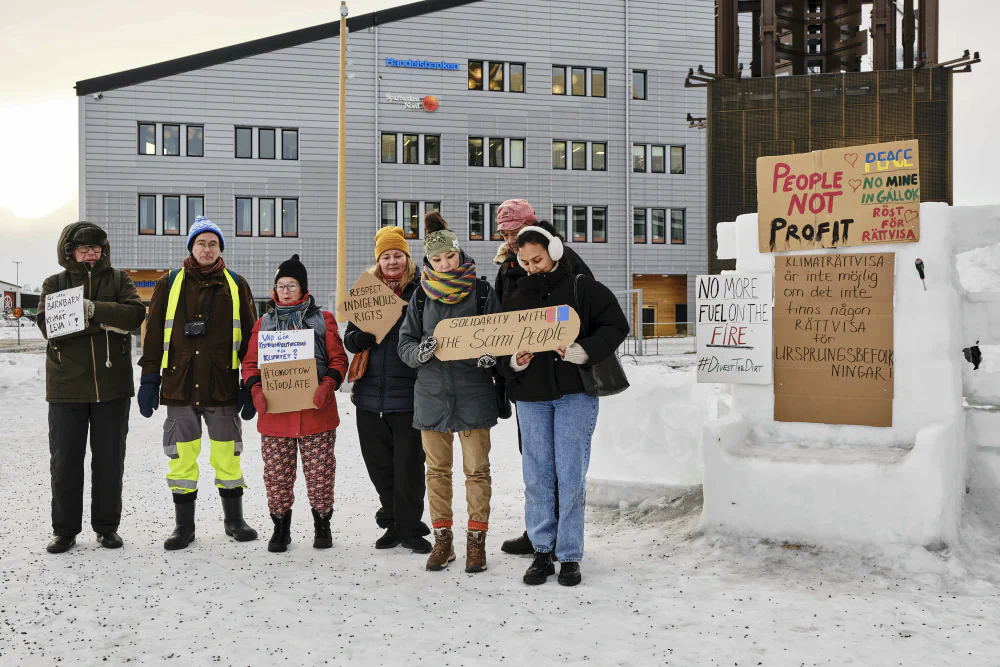
In Scar Place, Kallina turns his attention to northern Sweden, where the growing demand for raw materials driven by Europe’s Green Deal is reshaping both the landscape and the lives of those who inhabit it. The project focuses on the region around Kiruna, where mining expansion and infrastructure development are placing increasing pressure on the Sámi people and their traditional way of life. Through a restrained visual language, the work reflects on the cost of progress and the fragile balance between economic ambition, environmental change, and cultural survival.[Official Website] [Issue #36]
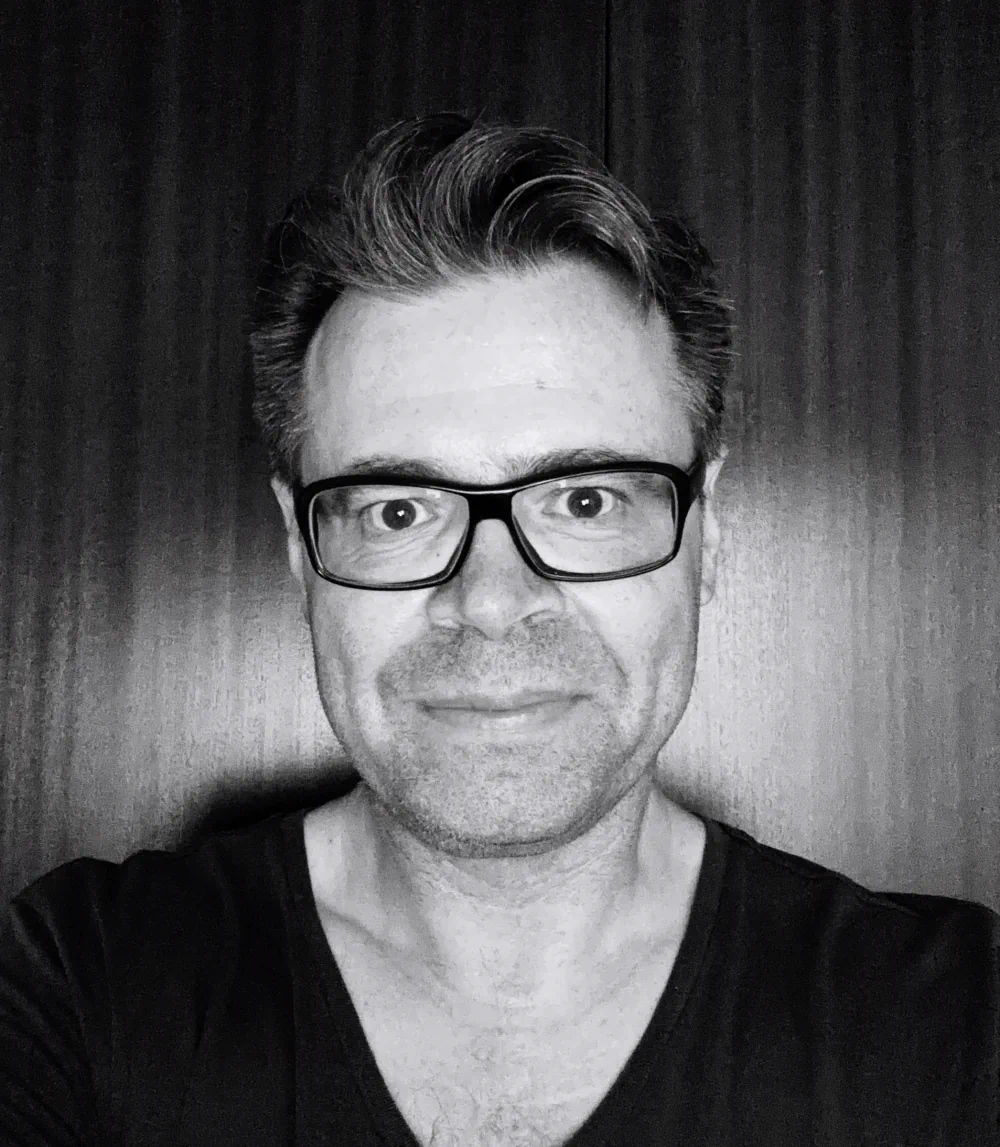
How did your relationship with photography begin, and what led you to move from economics and image sciences into a photographic practice?
My journey into photography was not a linear process, but it has always run parallel to my other activities.
My degree in economics enables me to pay my bills, while my studies in image science—which, incidentally, can only be undertaken in Krems, Austria—help provide my photography with a theoretical framework that assists me in conceptualizing my projects.
Your work combines documentary photography with a more poetic visual language. How do you navigate that balance without losing clarity?
It comes quite naturally to me, and finding a balance isn’t a challenge, nor is it necessary. The visual language is, after all, always an expression of my personal perspective on the subject at hand, and this is how I achieve clarity in my expression. Much greater clarity than if I were to focus solely on conveying the factual level, which, as we know, is impossible in itself.
You are drawn to complex and often abstract subjects. What drives that interest?
I like it when, over the course of a project, observations that initially seem trivial or straightforward suddenly take on a more nuanced character. The project changes, circumstances change, and I change. It’s not just that I learn more about the project in the process, but also quite a lot about myself. That’s probably what interests me most. Complexity brings surprises.
When starting a new project, what comes first for you: the idea, the place, or the people?
It is certainly an idea of the relationship between a place and its people.
In Scar Place, you focus on northern Sweden and the impact of mining and infrastructure. What drew you to this territory in particular?
It all began in 2013, when I first read about Kiruna in an Austrian newspaper—a town that had to be relocated because of an iron ore mine. That’s how my project Iron Heart came about. Scar Place is, so to speak, a spin-off, as it focuses even more on the impact of mining on people in general and on an Indigenous culture, the Sámi. What fascinates me is that it is a manageable microcosm in which, however, a multitude of current challenges unfold at a wide variety of levels.
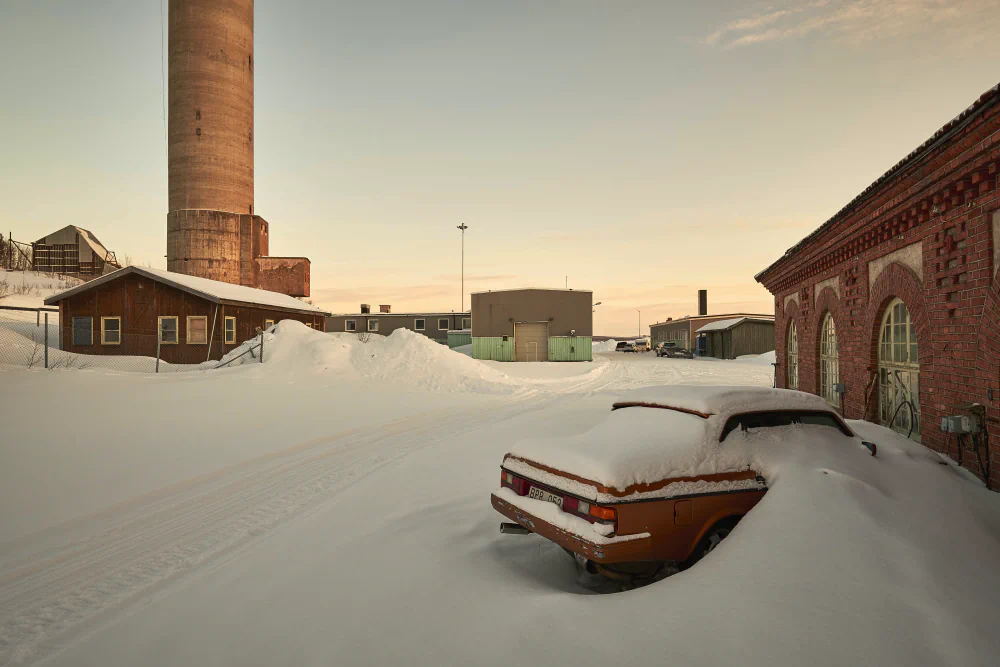
The project is closely linked to Europe’s Green Deal and the demand for critical raw materials. When did you realize this was a story that needed to be told visually?
I saw the contradiction between the claim that the energy transition was “green” and the actual impact of mining in the area.
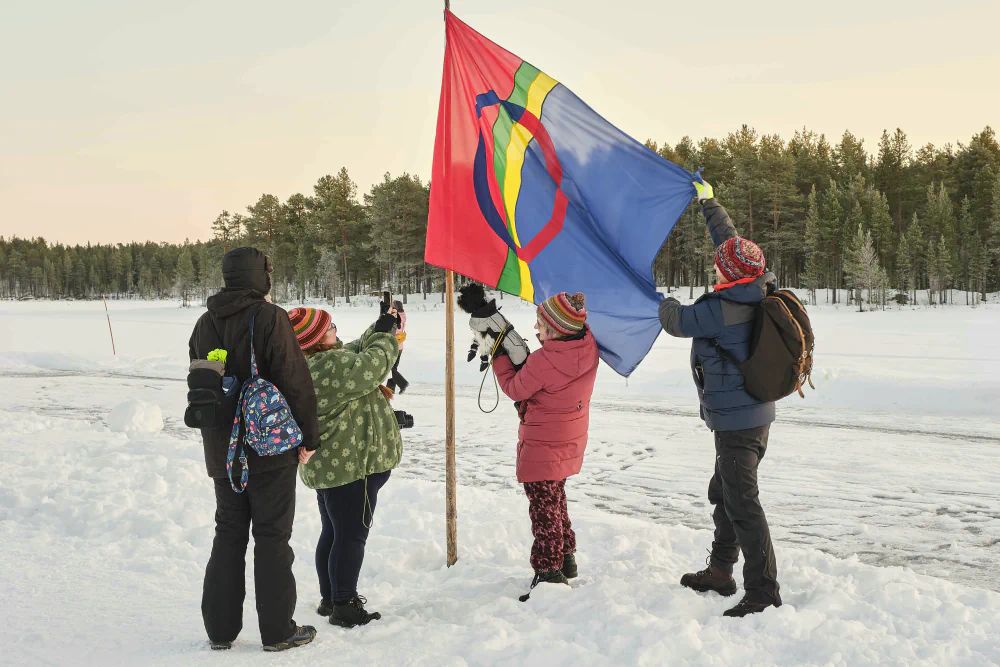
The Sámi community is central to the project. How did you approach photographing a culture under pressure without simplifying it?
That’s a very good question, one I constantly have to answer for myself. Of course, you start out with an opinion and with preconceptions; the only way to do justice to the matter is to give it time and to keep learning new things.
I also didn’t want to focus too much on folklore, because while this is central to the Sámi people’s self-perception, it also conveys a familiar image to the audience that merely reinforces existing views.
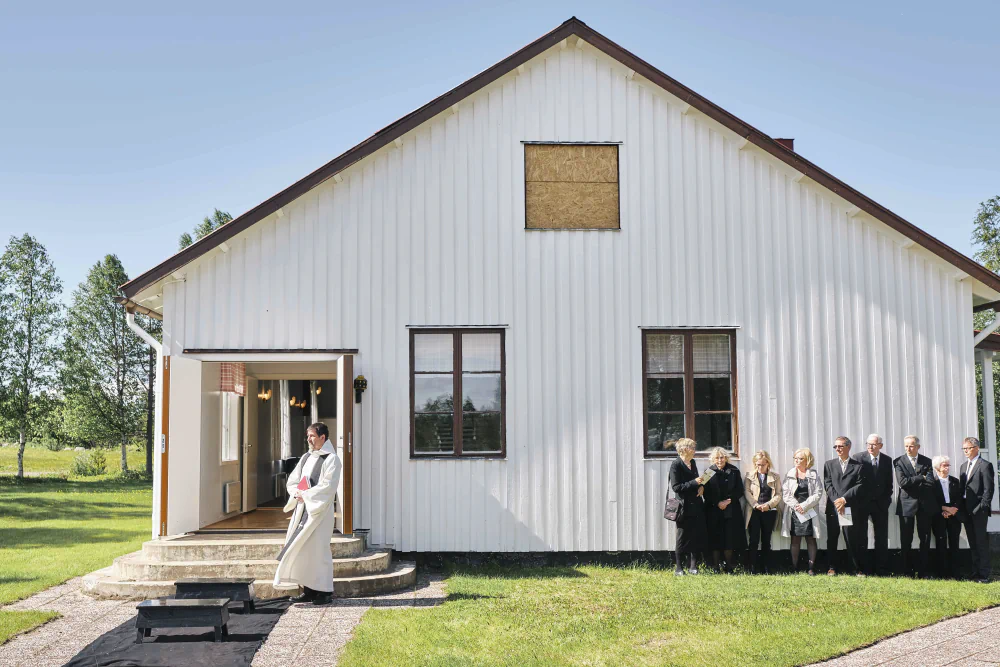
In any case, nothing is black and white; there are differences between the various Sámi communities and, of course, legitimate perspectives held by non-Sámi people. I do not yet feel that I have painted a sufficiently nuanced picture.
Your work exposes the tension between environmental goals and their real consequences. What contradictions became most evident to you while working on this project?
As mentioned above, there is a significant discrepancy between the “green” promise of a clean energy transition and the local conditions created by the activities undertaken to fulfil that promise.
Mining endangers the groundwater; its waste products remain in the landscape; its products are scattered everywhere during transport, endangering both people and animals. The infrastructure required for this cuts through living and cultural spaces; a minority far away (Stockholm) makes political decisions affecting the local people, and so on.
None of this has anything to do with a clean energy transition; it is merely a new paradigm of exploitation. I too experience this conflict and contradiction, for I am flying there by plane, and my camera would not exist without mining.
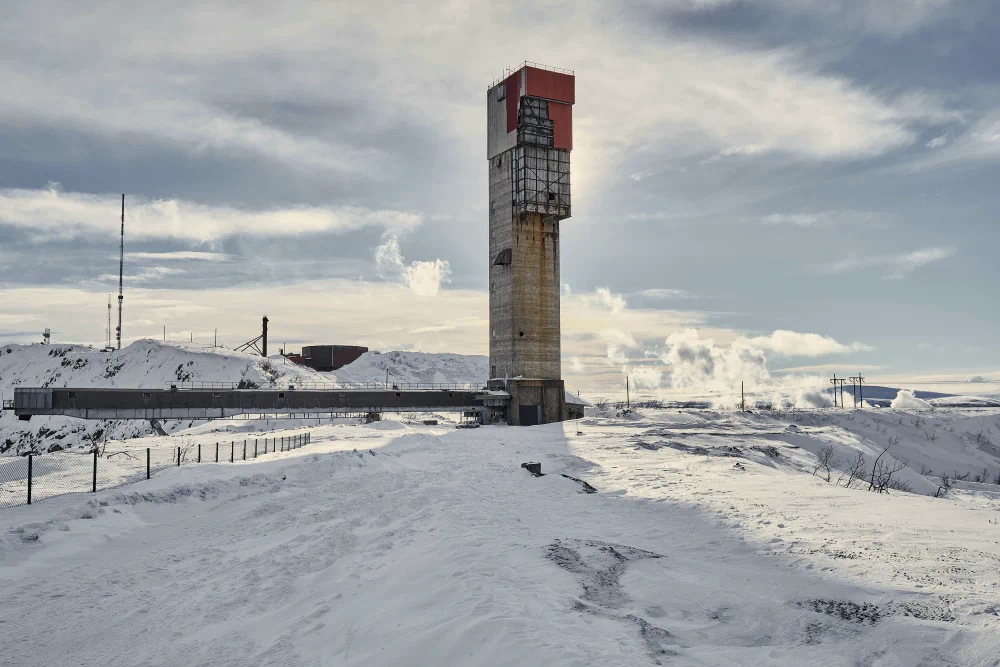
Mines, roads, and wind farms disrupt both natural systems and ways of life. How do you make these invisible pressures visible through images?
I try to give the place a certain sense of menace: the mountain formed solely from the mine’s waste rock; the old tower, which watches over the town from the mountain like the Eye of Sauron; the black snow.
I find depictions of abandoned places, such as an old petrol station, just as effective, as they show that something disruptive has happened here. The same applies, however, to beautiful and intact places, as the threat to these places is always present as an implicit message.
The landscape plays a powerful role in the series. How do you use territory as a narrative tool?
Landscapes—including those in the far north of Sweden—are designed by people. Landscapes, or the way they have been shaped, therefore reveal a great deal about the local people: why they live there, what drives them.
They lay bare the successes, the mistakes, and the conflicts; what was once hoped for, what has become of it, and what might be hoped for in the future. All of this can already be understood from a landscape. Incidentally, I also count architecture as part of the landscape.
The project raises questions about land, ownership, and the idea of the common good. Do you see your work as taking a position, or as opening a space for reflection?
By keeping my visual language minimalist, I avoid appearing biased towards a particular position, even though my viewpoint is clearly evident.
I try instead to convey and illustrate the cost of a “green” promise without discrediting the idea behind it. From my own perspective, I try to open up the various spaces and layers hidden within the project—spaces and layers that I am only gradually discovering.
After Scar Place, what directions are you currently exploring in your work?
I don’t think I’m quite done with Scar Place yet. I’d like to portray more people who are affected by it. Right now, the mines are springing up like mushrooms, so there’s still plenty to do.