Belgian photographer Geert De Taeye creates images that occupy the uncertain territory between reality and fiction.
Combining the visual precision of advertising photography with the atmosphere of cinema and the unexpected associations of surrealism, his work transforms familiar locations into carefully constructed scenes filled with mystery, emotion, and narrative possibilities.
Born in Belgium in 1980 and based in Brussels, De Taeye has developed a photographic practice that encompasses commercial assignments, portraits, landscapes, and personal artistic projects. His career includes collaborations with international brands such as Volkswagen, Toyota, Lexus, and BNP Paribas, alongside exhibitions and photographic distinctions in Europe and the United States. In 2026, he received the title of Belgian Photographer of the Year, recognizing his professional achievements and distinctive artistic approach.
Photography as a Construction of Reality
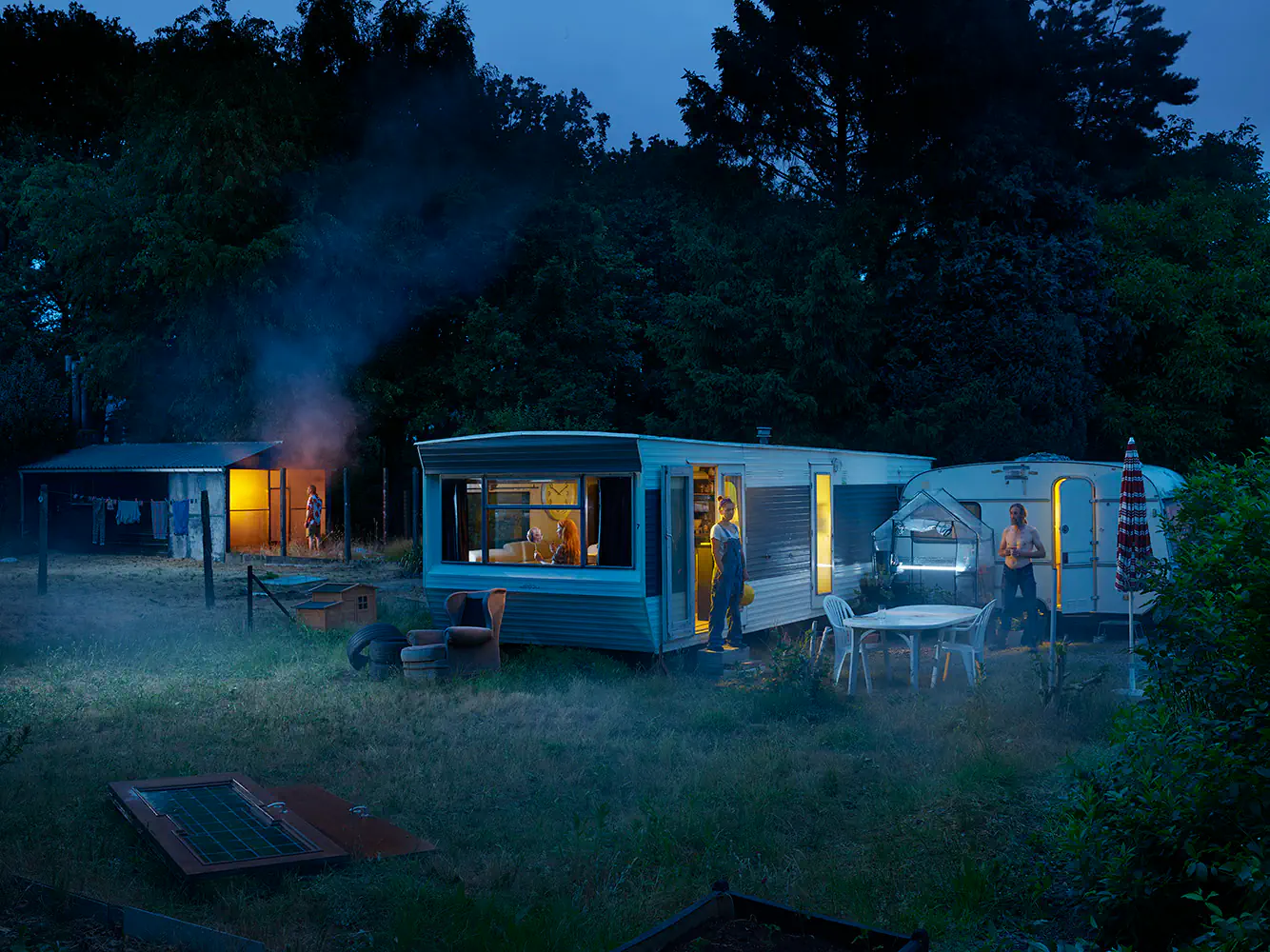
For De Taeye, photography is not simply a means of documenting what exists. His images frequently begin with recognizable environments that are subsequently transformed through lighting, composition, staging, and the introduction of unexpected elements.
This approach developed through his early experience in commercial photography. In an interview with Life Framer, he explained that he initially studied film before discovering a stronger attraction to still photography. He subsequently worked as an assistant to an advertising photographer in Brussels, gaining technical experience before establishing his independent career.
The relationship between commercial assignments and personal expression became an important aspect of his development. While advertising demanded precision and collaboration, his independent projects provided opportunities to explore ideas without the constraints of a commercial brief.
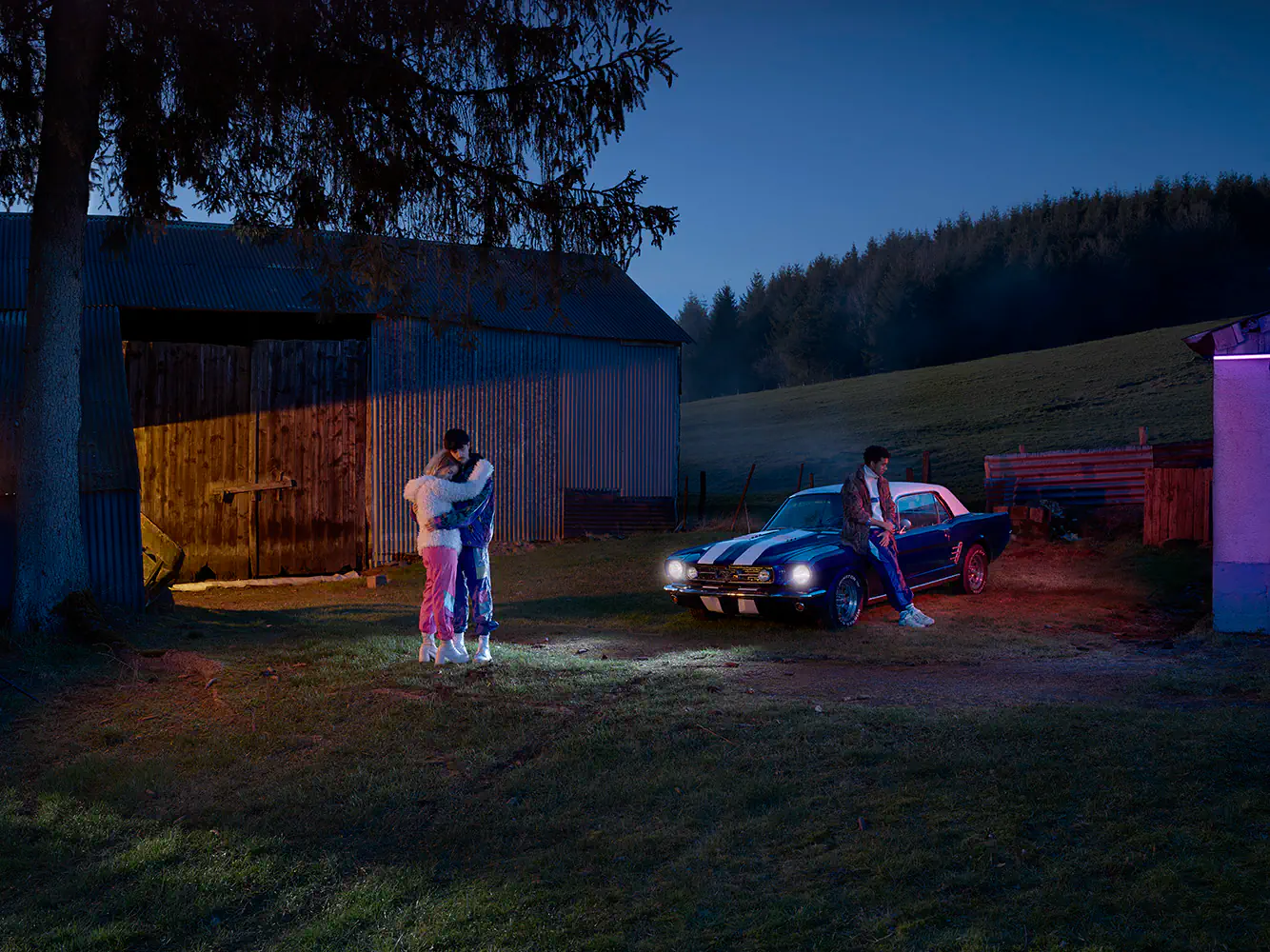
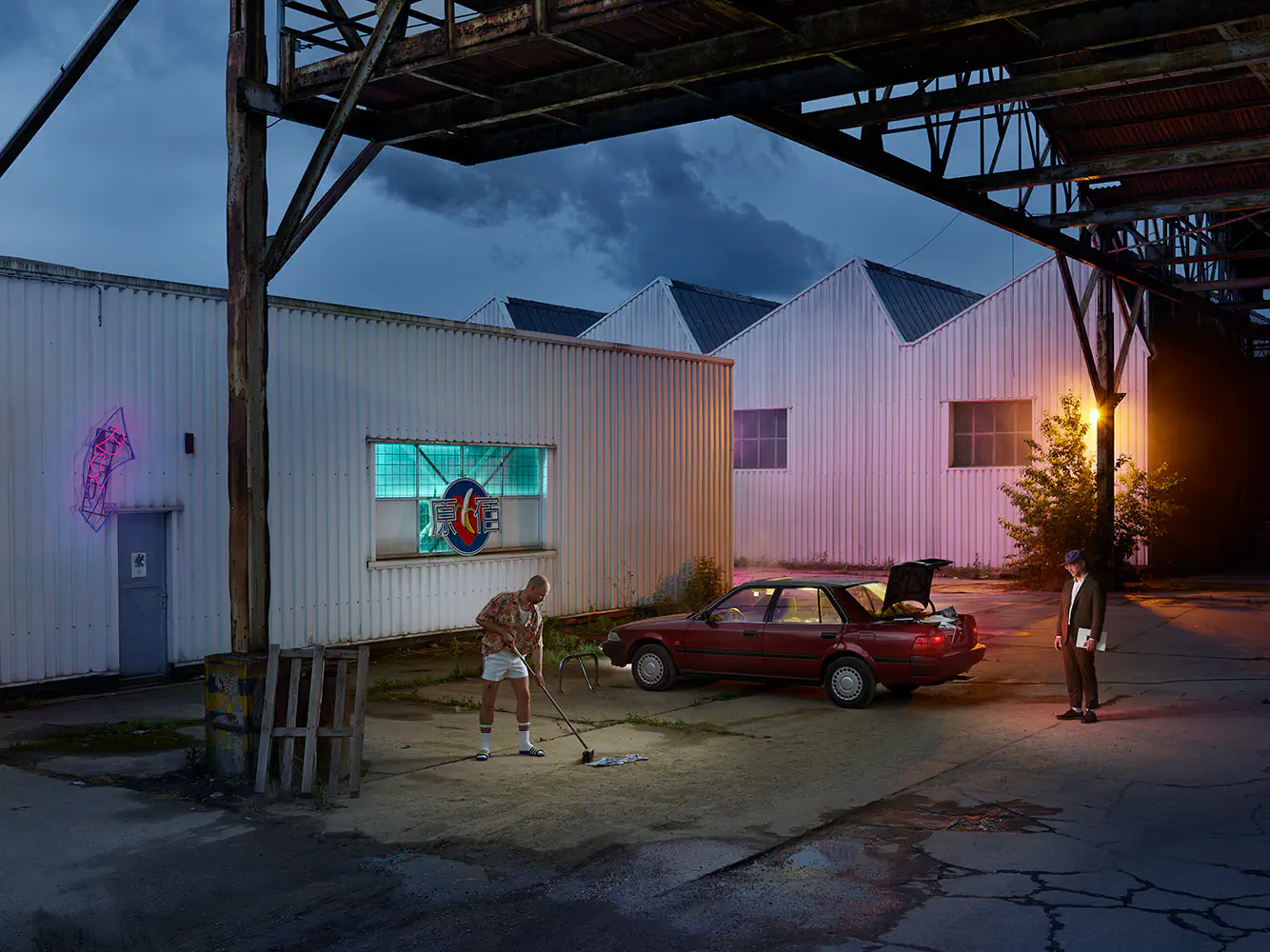
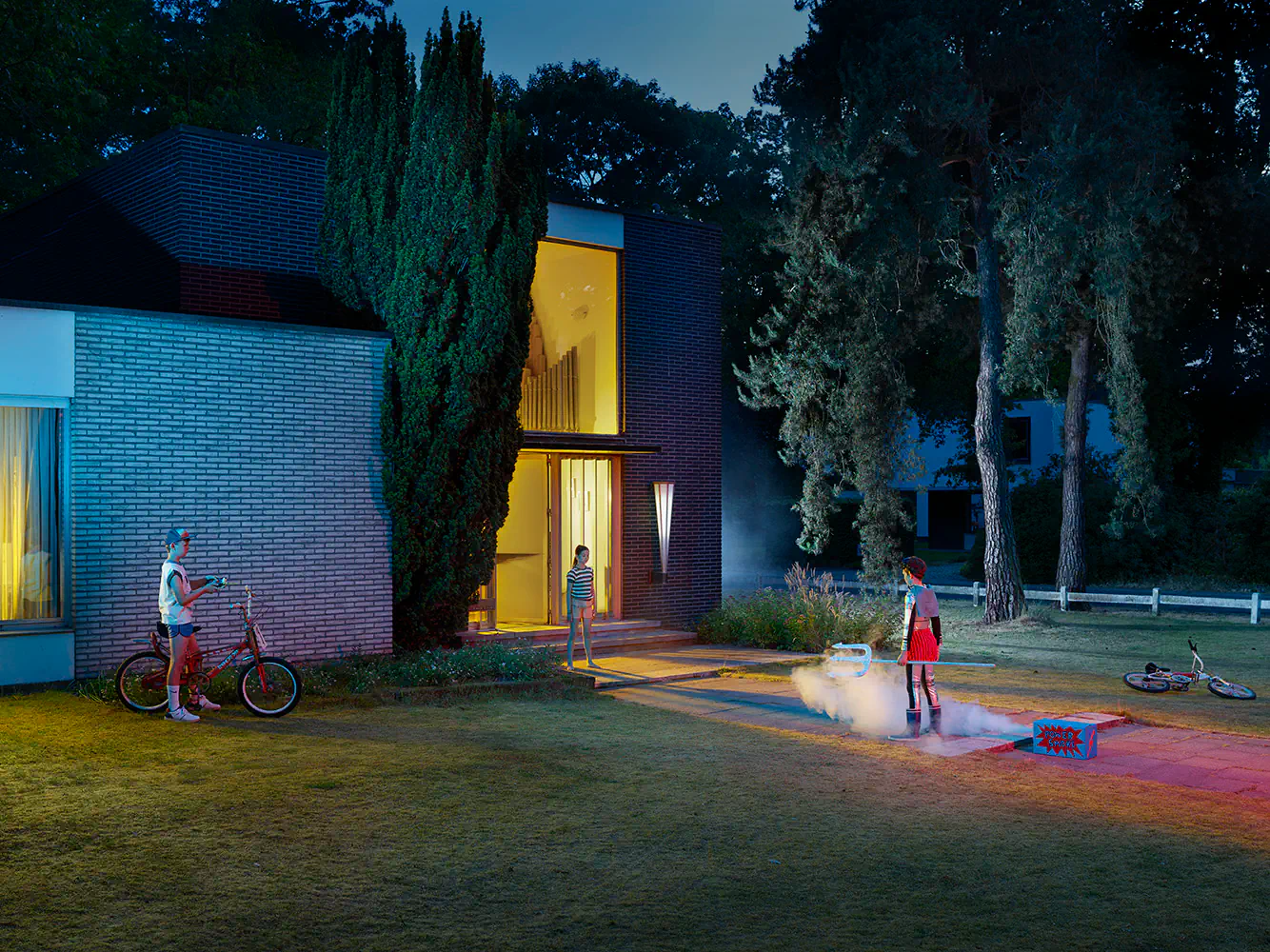
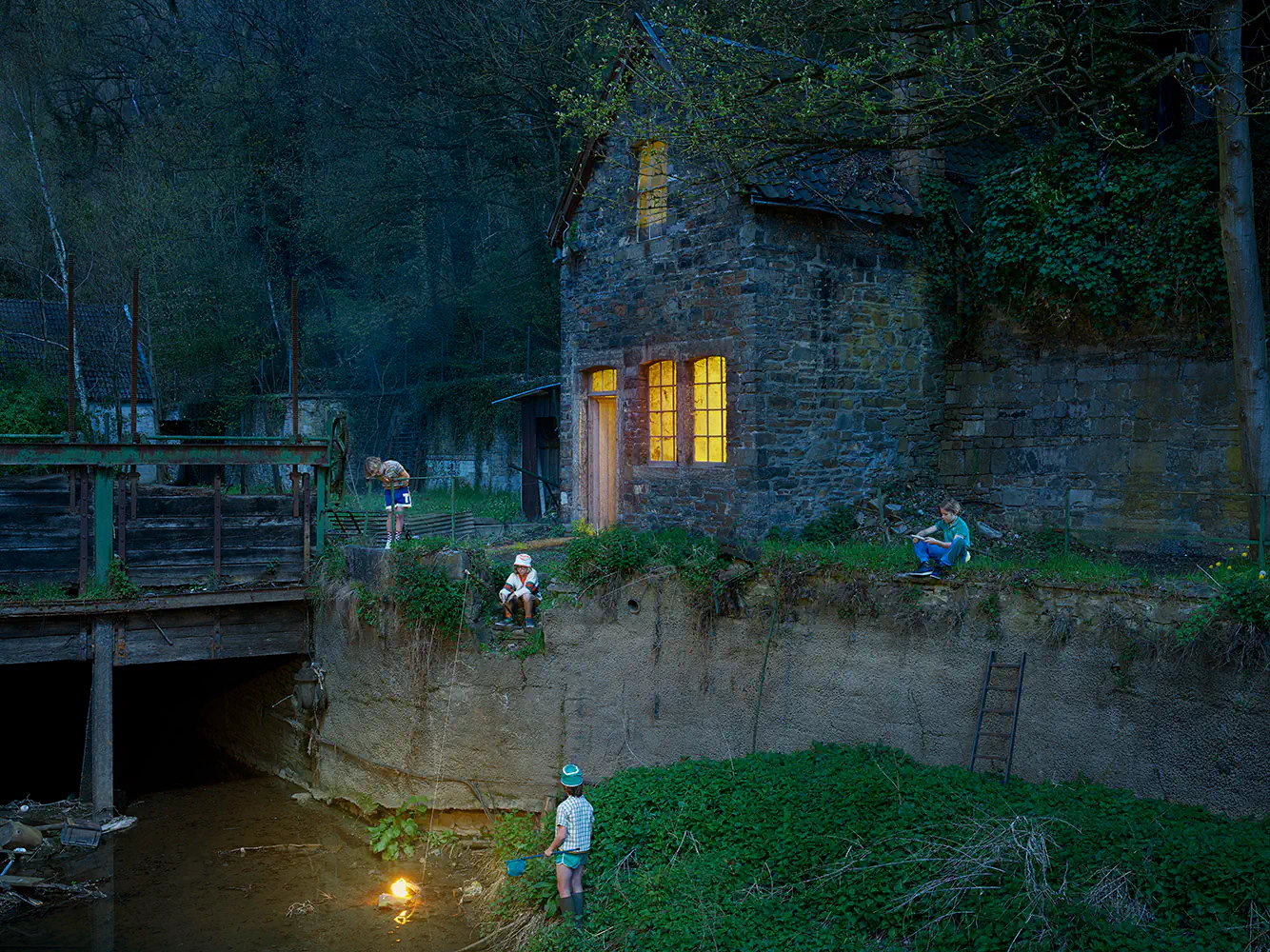
Rather than producing photographs that immediately explain themselves, De Taeye constructs images that invite viewers to imagine the circumstances surrounding a particular moment. His compositions often suggest that something has just happened or is about to occur, leaving the narrative deliberately unresolved.
Light plays a fundamental role in this process. As he explained to Life Framer, locations with a distinctive atmosphere frequently provide the starting point for his photographs. From there, he imagines a story and develops the lighting necessary to establish its emotional character.
The Influence of Cinema and Painting
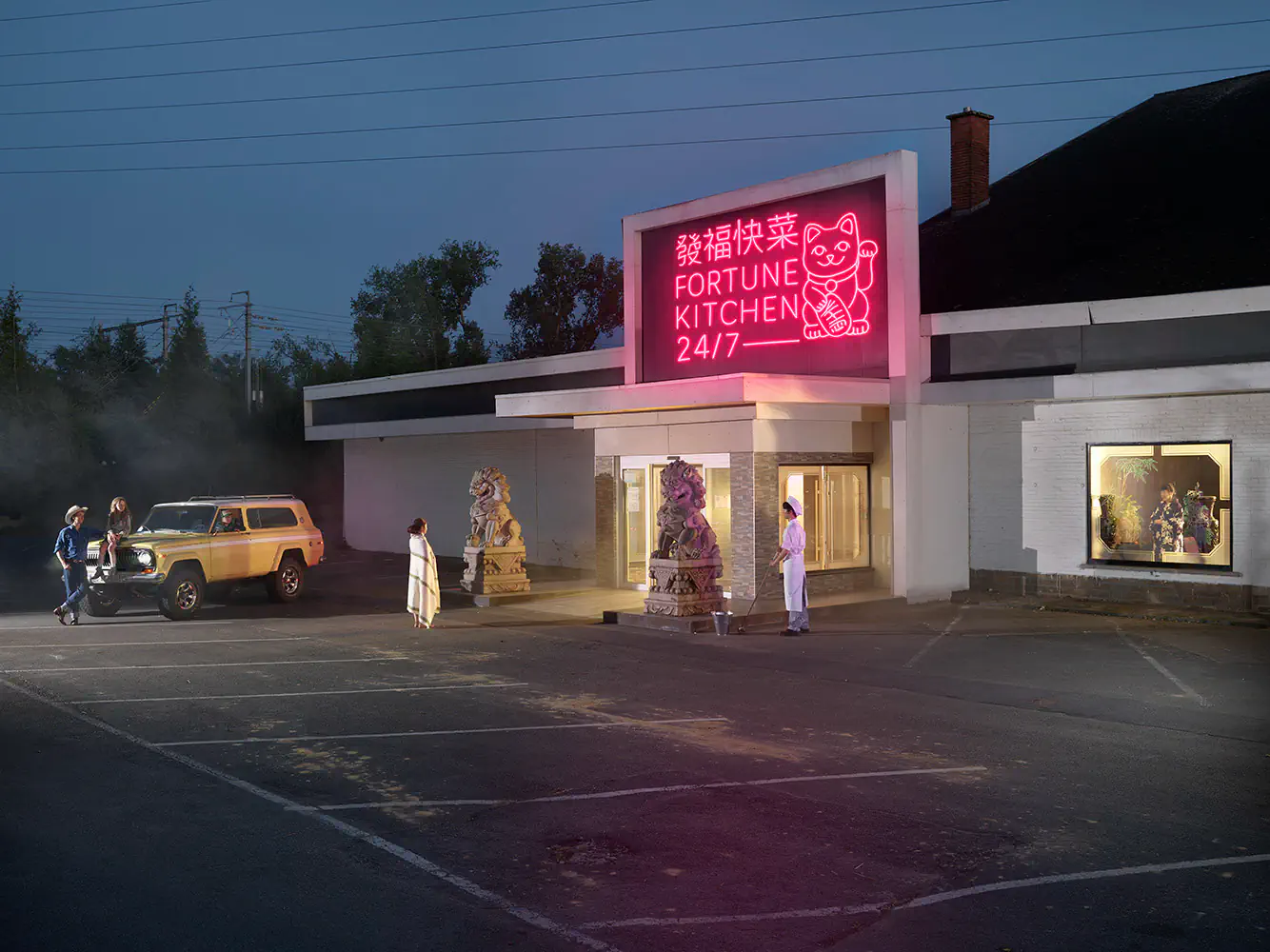
De Taeye’s interest in cinematic imagery is particularly evident in the relationship between characters and their surroundings. Isolated figures, carefully illuminated architecture, and apparently ordinary situations acquire an unusual dramatic presence through the arrangement of visual elements.
One of the photographs he identifies as especially significant is Nighthawks, inspired by the painting of Edward Hopper. In his Life Framer interview, De Taeye described the image as a turning point in discovering his personal photographic style.
The influence of painting also appears in his later projects, where references to classical art coexist with contemporary visual experimentation.
In Ballad from Eden, published on his website in July 2025, De Taeye explicitly identifies Flemish painting, Caravaggio, Edward Hopper, and the films of David Lynch among the inspirations behind the series.
The project begins with photographic still lifes inspired by traditional Flemish interiors. Through subsequent experimentation with artificial intelligence, exotic animals, insects, and plants appear within these domestic environments, gradually disturbing their familiar atmosphere.
The resulting images explore the relationship between nostalgia and unease. What initially appears recognizable becomes increasingly ambiguous as elements of the natural world interrupt the apparent stability of the scene.
The Nearest Truth: Between Observation and Imagination
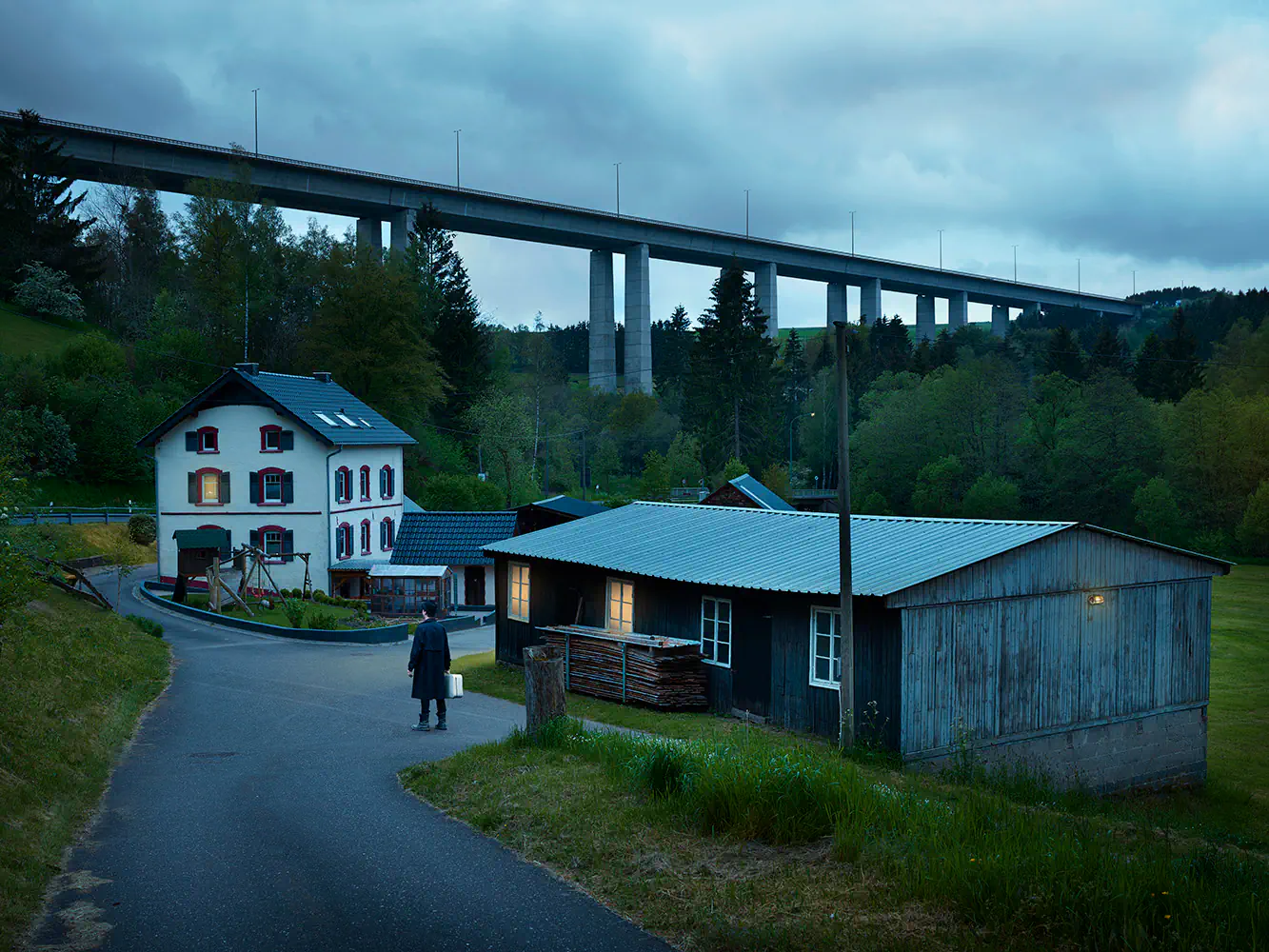
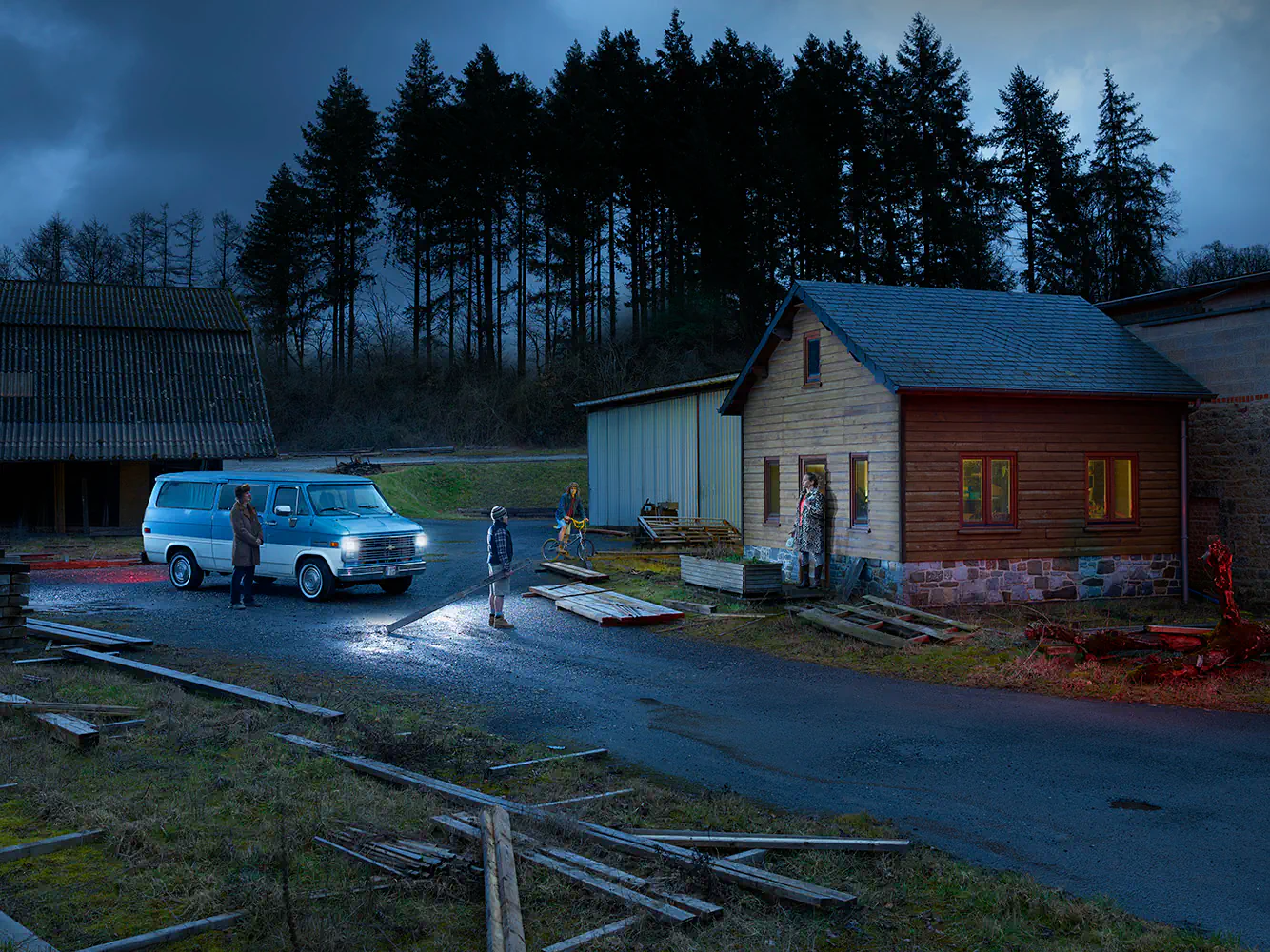
Another important dimension of De Taeye’s practice can be found in The Nearest Truth, an ongoing photographic project built around the relationship between locations and storytelling.
The photographer has described using Google Street View to explore potential settings, searching for architectural forms, wooded landscapes, and unusual structures capable of inspiring a narrative.
These locations become the starting point for images in which the environment is not merely a background but an essential component of the story.
In a September 2025 entry on his official website, De Taeye presented The Homecoming as part of this ongoing series, emphasizing the relationship between location scouting and narrative construction.
The project reflects a recurring characteristic of his photography: the transformation of existing places into fictional possibilities. A location discovered through observation becomes the foundation for a scene shaped by imagination.
This tension between the recognizable and the invented allows his photographs to retain a sense of credibility even when their narratives remain mysterious.
Brussels, Atmosphere and the Emotional Landscape
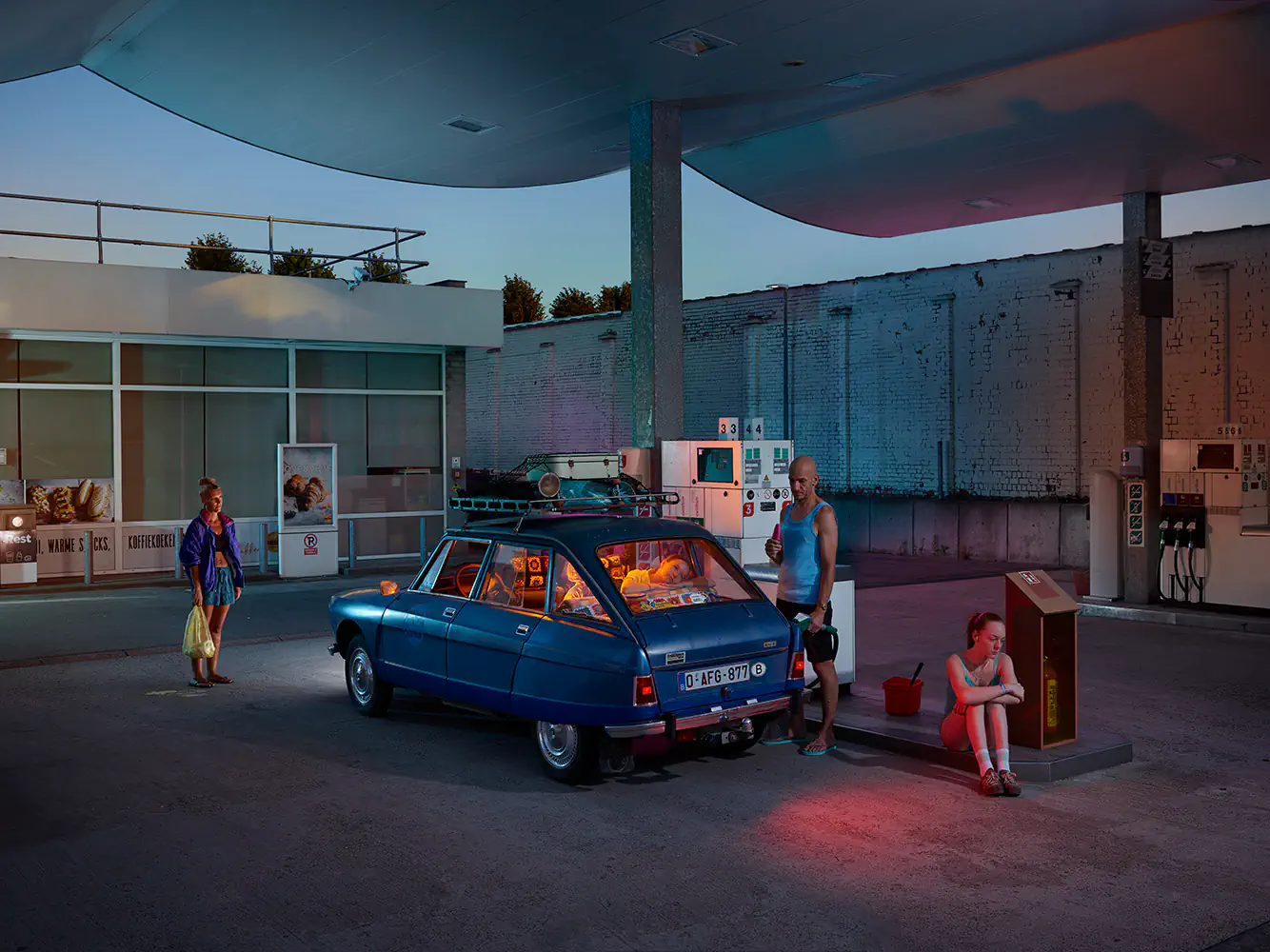
Brussels has provided an important setting for De Taeye’s photographic explorations.
In 2019, he participated in the Framed series published by BRUZZ, creating photographs inspired by the city’s distinctive atmosphere and limited sunlight.
Rather than treating these conditions as an obstacle, De Taeye used them to explore the visual character of Brussels through portraits and urban locations.
His attention to the relationship between light, architecture, and human presence reveals how strongly a particular environment can influence the emotional direction of an image.
This sensitivity extends throughout his personal work, where atmosphere often takes precedence over explicit explanation. The photographs suggest situations without necessarily revealing their causes or consequences, encouraging viewers to construct their own interpretations.
Commercial Photography and Artistic Independence
Alongside his personal projects, De Taeye has maintained an extensive commercial career, collaborating with advertising agencies and international brands.
His professional portfolio includes work associated with Volkswagen, Toyota, Lexus, Channel 4, Harley-Davidson, and numerous other clients.
In January 2026, he documented his experience creating campaign imagery for Aquaventure: Lost World, an attraction at Atlantis in Dubai. For the assignment, he combined warm and cool lighting to emphasize the mysterious atmosphere of the underwater environment.
The project illustrates how his interest in theatrical lighting and visual storytelling can operate within commercial photography.
De Taeye has spoken openly about the relationship between these two areas of his career. In his interview with Life Framer, he described the importance of balancing advertising commissions with personal projects and exhibitions, while continuing to develop an individual photographic language.
Recognition and an Evolving Photographic Practice
Throughout his career, De Taeye’s work has been presented in exhibitions and photographic events internationally.
According to Galerie Goutal, his exhibition history includes presentations in Brussels, London, New York, Brighton, Strasbourg, Paris, and Aix-en-Provence. The gallery also documents distinctions from the International Photography Awards, Photography Master Cup, and Knack Weekend Award.
In 2026, De Taeye received the title of Belgian Photographer of the Year, awarded through a competition organized by beroepsfotografen.be. The selection process involved more than 1,200 submissions and two rounds of professional jury evaluation.
Following this recognition, he presented an exhibition in Mechelen in April 2026, offering an overview of his photographic career. On his official blog, he described the exhibition as an opportunity to share his personal work and reflect on his development as a photographer.
Despite his established career, experimentation remains central to his practice. His projects continue to investigate new ways of constructing images, whether through staged photography, digital manipulation, artificial intelligence, or the relationship between photography and cinematic storytelling.
What connects these different approaches is a consistent interest in the possibilities of the photographic image.
For Geert De Taeye, the camera is not limited to recording appearances. It becomes an instrument for constructing situations, exploring emotions, and transforming recognizable environments into something less certain.
His photographs demonstrate how technical precision and imaginative freedom can coexist, creating images that remain open to interpretation long after the initial encounter. [Official Website]