

Africa has often been photographed through a narrow and repetitive gaze. Many images of the continent have oscillated between exoticism, tragedy, and spectacle, shaped more by external expectations than by lived realities.
Against this visual legacy, certain photographic projects stand out not by claiming neutrality, but by complicating the narrative. These works resist simplification and approach their subjects through time, proximity, and sustained attention rather than explanation.
This selection brings together five photographers whose work engages with African territories and communities beyond inherited clichés. Their projects differ in form, intention, and geography, yet share a common refusal to reduce people and cultures to symbols. Instead, they are grounded in encounter, presence, and prolonged observation.
In Aga Szydlik, photography becomes a way of witnessing historical displacement and its consequences. Forest People – The African Pygmies of Uganda follows the Batwa people after their forced removal from ancestral forests. The work neither romanticizes indigeneity nor aestheticizes loss. It documents a fragile present shaped by political decisions, where identity, land, and survival remain deeply intertwined.
The work of Svetlin Yosifov approaches the Mursi people through immersion rather than distance. Living among the community in Ethiopia’s Omo Valley, his images move beyond surface fascination to engage with the contradictions of a culture negotiating continuity and change. His photographs do not frame the Mursi as relics, but as a living society facing extreme environmental conditions while maintaining its internal structures.
In The Cattle Camps of South Sudan, Trevor Cole documents the Mundari people through atmosphere and ritual. Smoke, dust, light, and movement shape images in which cattle are not merely livestock, but the center of social, economic, and symbolic life. The work avoids dramatization and instead builds a visual rhythm that reflects daily existence, belonging, and wealth within the camps.
Timo Heiny approaches Africa as a space of intuition and human origin rather than a territory to be explained. His work operates in the tension between documentation and personal perception, searching for traces of an elemental relationship between humans and nature. Aware of the historical weight of ethnographic photography, his images function as contemporary documents marked by subjectivity, fragility, and an awareness of cultural vulnerability.
Finally, Ana María Robles focuses on women and ritual in South Sudan, photographing communities rarely represented and even less understood. In South Sudan; Smoker Women, her work centers on female authority, tradition, and everyday life. The women she photographs are not passive subjects, but active protagonists who define their own presence within the image. The camera becomes a space of exchange rather than extraction.
Together, these five photographers propose a way of looking at Africa that is neither heroic nor paternalistic. Their work does not seek to summarize a continent, but to remain with specific places, people, and moments. What emerges is not a unified vision, but a constellation of perspectives that invite viewers to move beyond stereotypes and engage with complexity, dignity, and lived experience.
Below, their individual projects are presented as an invitation to explore these works in depth, one encounter at a time.
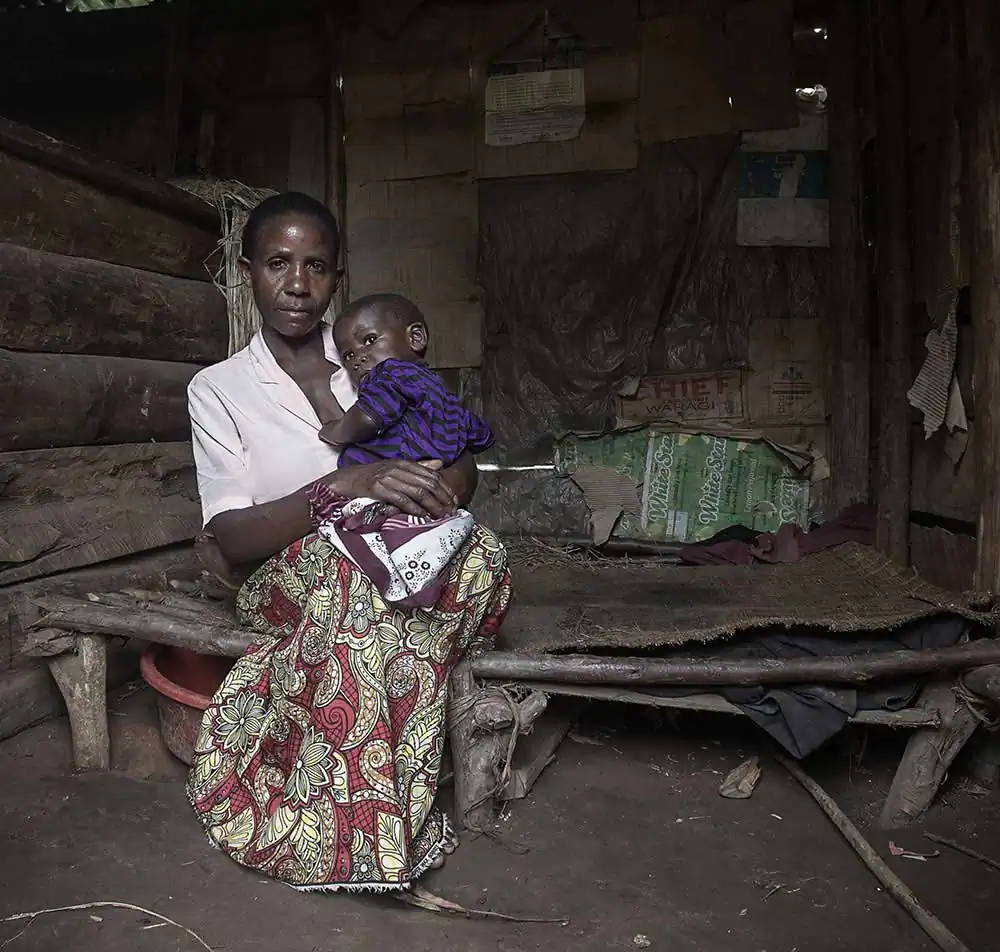
Forest People – The African Pygmies of Uganda by Aga Szydlik
The African Pygmies or Batwa people are indigenous forest-dwelling pygmy people who for centuries lived in the Bwindi and Mgahinga forests. They are one of the oldest people on earth and their genetics are very closely related to Bushmen people, who live in the Southern Africa region. In 1991 Batwa people were displaced from their homes when government classified Bwindi and Mgahinga as National Parks to protect endangered mountain gorillas. After losing access to the forest and the resources used for their economic, social, and cultural sustenance Pygymy people continue to struggle with forging their new way of life. Batwa live outside the forests of Bwindi and Mgahinga in small settlements, either on land that is held in trust for them by non-governmental organizations or as squatters on their neighbours’ land… Read More
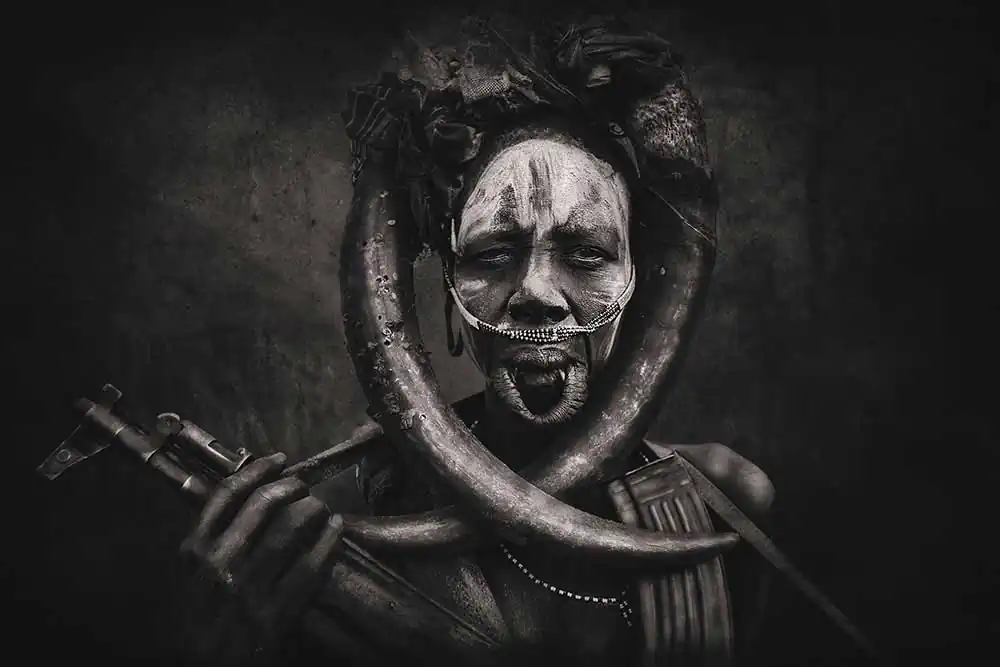
African tribes ; Mursi People by Svetlin Yosifov
The African tribe of Mursi people is isolated in Omo valley – South Ethiopia near the border with Sudan. They are one of the most fascinating tribes in Africa with their lives being a combination of brutal reality and amazing beauty. What was really appealing to me, as a photographer, was to capture and recreate the perplexing nature of their culture and way of life. Suffering from extreme drought in the past few years has made their life cruel and sometimes dangerous, but has not left a single mark on their traditions. Living among them gave the sense of extreme authenticity and in the same time felt like an illusion. Their faces filled my insatiable passion for capturing pure, untouched souls of a culture on the brink of extinction… Read More
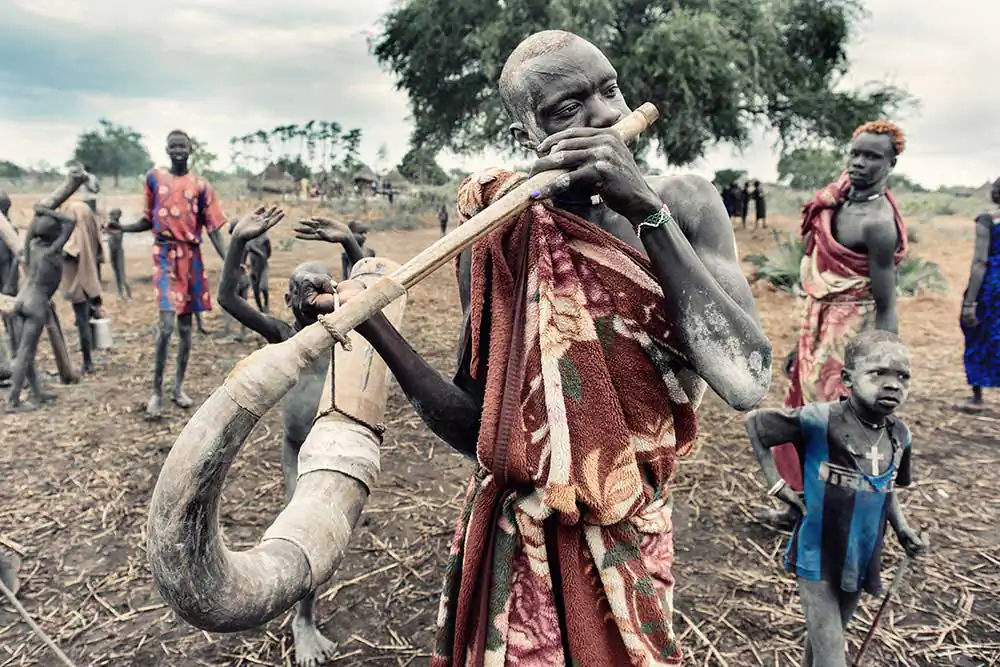
The Cattle Camps of South Sudan by Trevor Cole
The Mundari cattle camp, seldom visited by outsiders, is quite simply incredible. I saw Sebastiao Salgado’s photos of these camps years ago and there was little change that I could see. The Mundari are friendly and enjoy being photographed. The dust and smoke intermingle to create and inimitable atmosphere. We arrived in the late afternoon when the light was soft and warm with long shadows. The tribe has all their wealth in their cattle and there are thousands of them. When the young men of the tribe get married the dowry may be as many as 40 cattle. They cover themselves in the ash from their fires to protect against insects… Read More
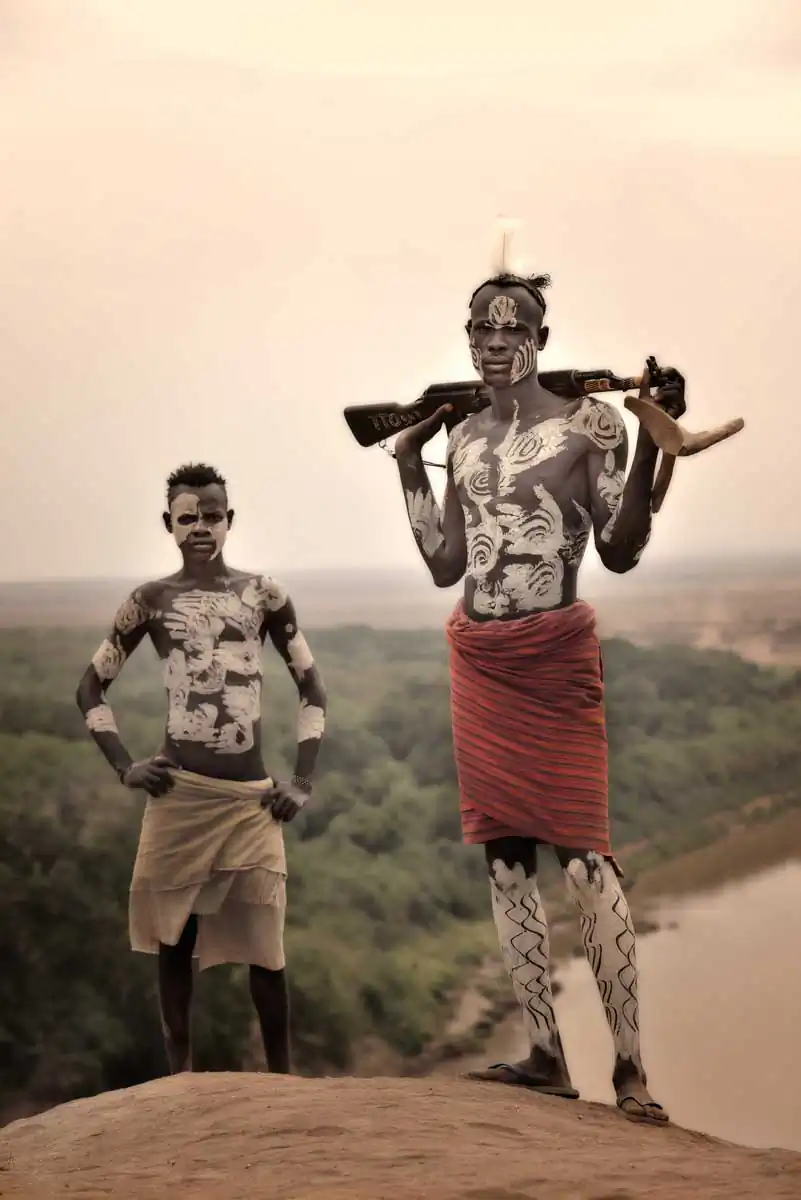
Africa by Timo Heiny
I try to hold tight on my photographs what I felt during my journeys, the intuition of a nativeness. Maybe it is the mystical idea from the beginning of humans, an original relationship between human and nature, what I always searched for and I was attached about. I don’t want to photography only in a documental way, neither an aesthetic orchestration; my photographs should show the fascination for a region which seams to me in opposite to our daily life. As well as it will be a sculptural contemporary document, because many of these cultures will disappear in the turbulences of our time. I was inspired by characters as there are Leni Riefenstahl and more, who saved the memory about the Nuba in Sudan for following generations. Therefore my journeys transfered to a documentation about one of the biggest adventures of our Earth: primitive times as vital present.Our personality changes to a walker between this two sceneries and the old fragile world who always welcome us with the magic and the hospitality of the past… Read More

South Sudan; Smoker women by Ana Maria Robles
I traveled to South Sudan last year to learn about some of the least photographed and least known African cultures. South Sudan is the youngest country in the world. When we arrived at the villages, first the Toposa and then the Didingas, I was fascinated to see that women smoked, both in our reception party and then in an assembly they held. Smoking in this tribes is customary only to women. They allowed me to photograph them and accepted my presence without hesitation. It was very exciting to share their daily life. These women smoke tobacco, an ancient custom that marks their ancestry, identity and tribal pride. Their attitude was strong. Fierce. They were active participants of every ceremony and the Leaders of the communities. Their long pipes are handcrafted carved in wood and decorated with metal sheets and beads… More Info