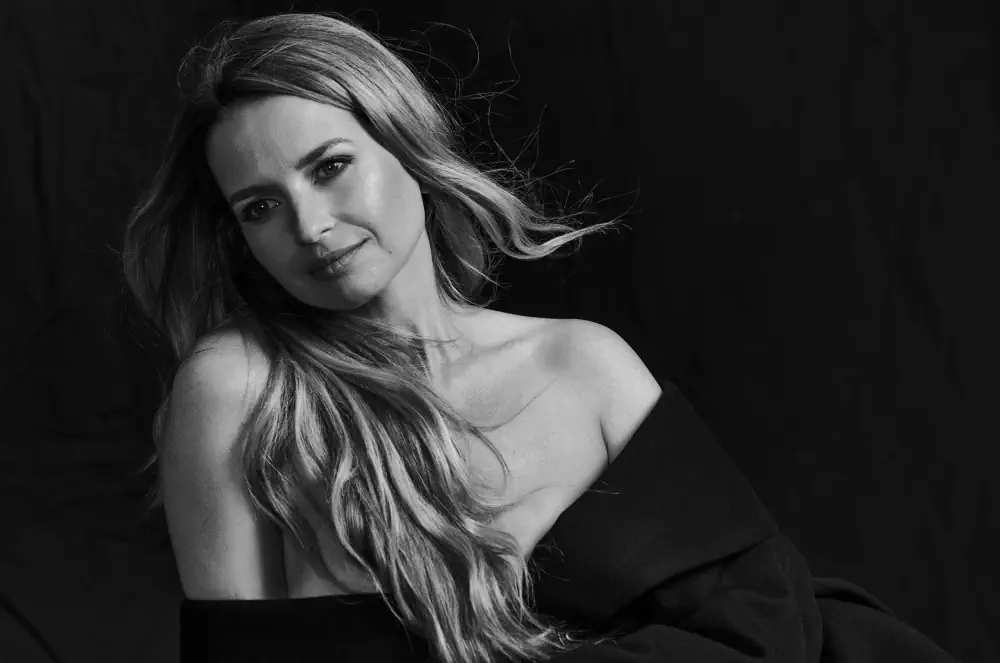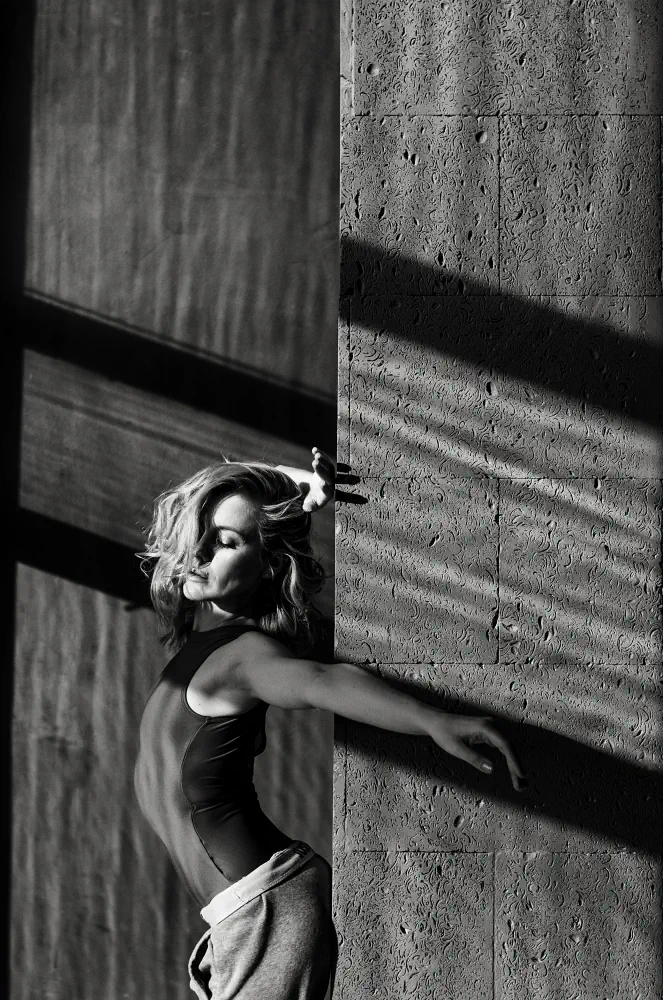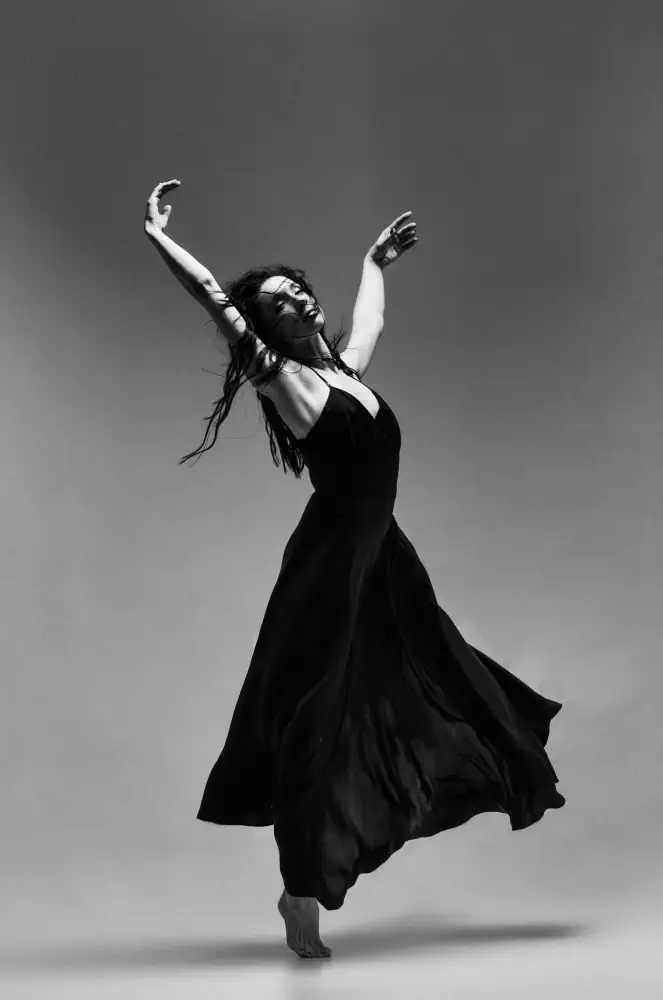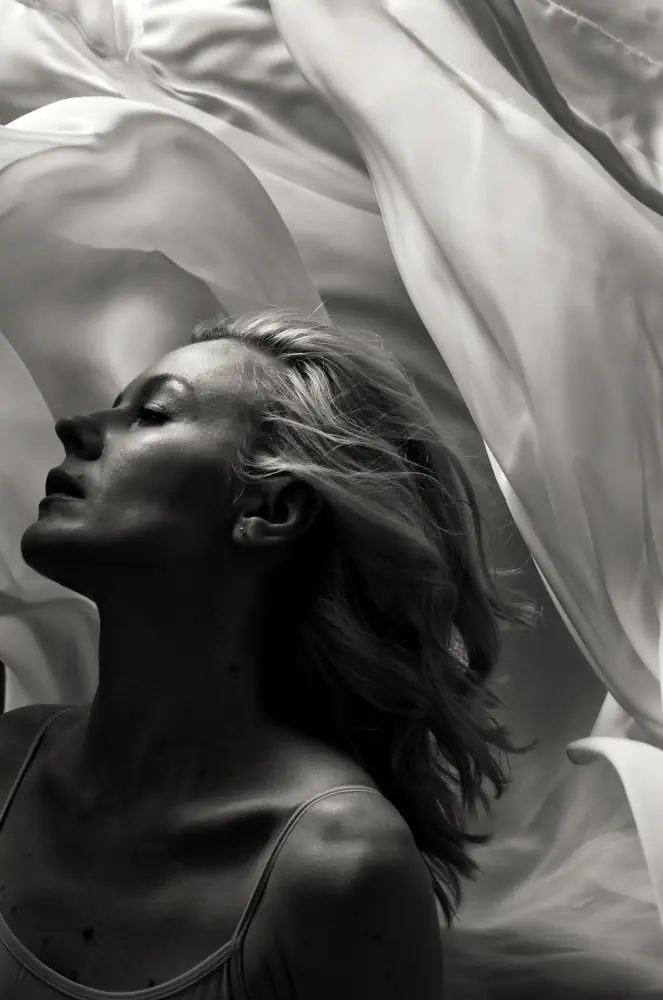

For Elena Dudar, a portrait begins with a conversation.
Before picking up her camera, she wants to understand the woman she will photograph: what has brought her to the studio, what the experience means to her, and what she hopes to express.
That exchange shapes a practice centred on movement, trust, and the particular character of each person.
Dudar worked as a journalist for seven years, primarily in investigative journalism. Although she valued the profession, photography gradually became a personal space in which she could explore a different form of expression. During the financial crisis of 2008–2009, a period of both psychological and financial upheaval, that interest began to take a more definite direction.
A turning point came when she met Igor Kostin, known for his photographs documenting the Chernobyl disaster. He was giving a lecture at the university where she was studying. Dudar showed him her photographs and asked him to take her on as a student.
His initial criticism was uncompromising and left her in tears, but the encounter marked the beginning of a year-long mentorship. Kostin taught her without charge, combining demanding criticism with a generosity she continues to remember with gratitude. That experience helped turn a private creative interest into a sustained photographic practice.
Movement and Trust
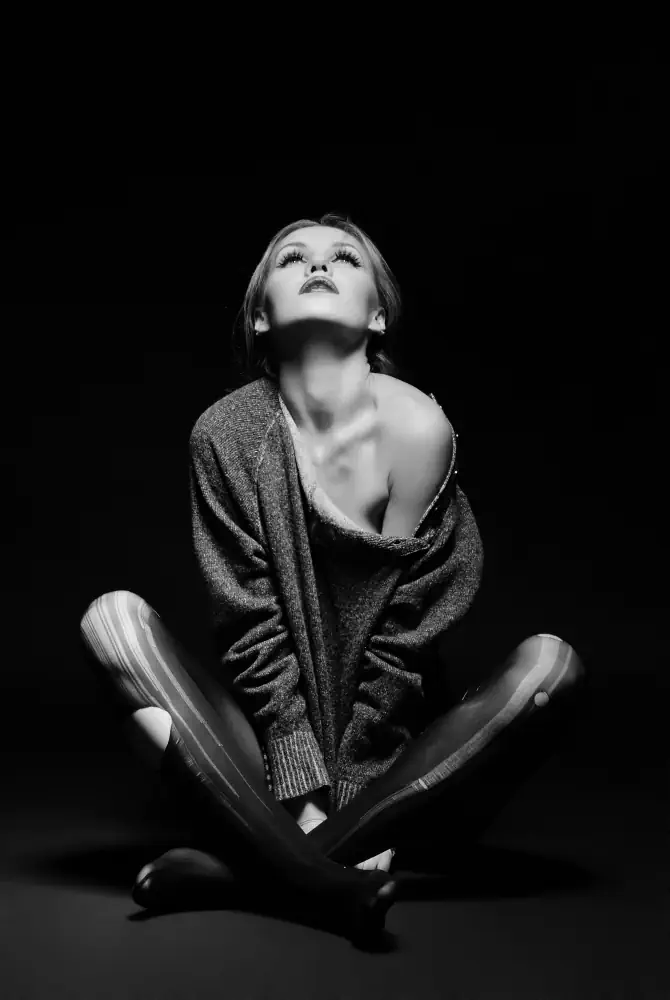
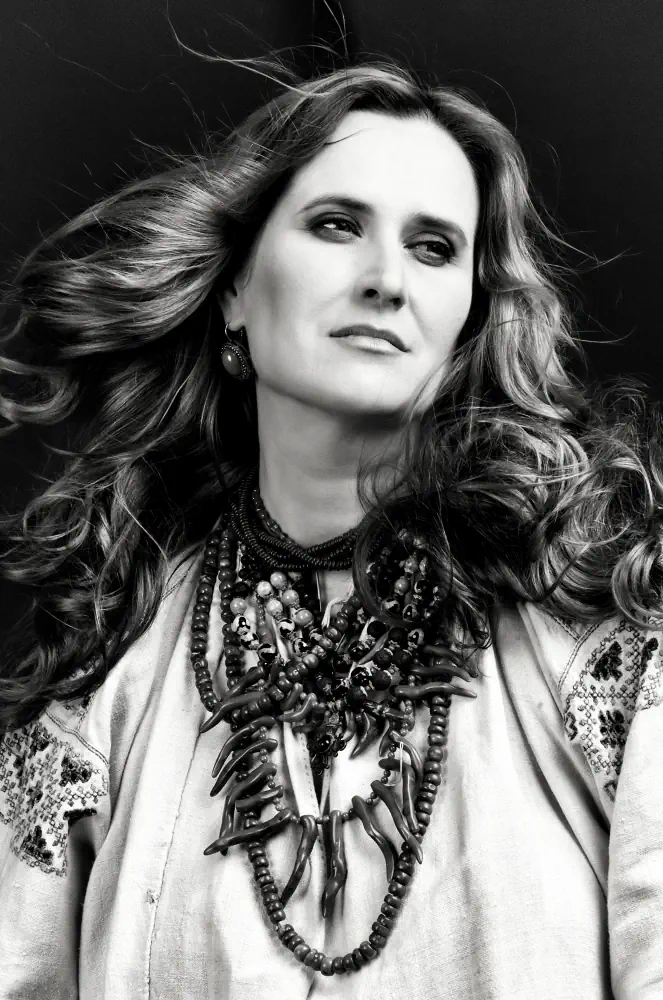
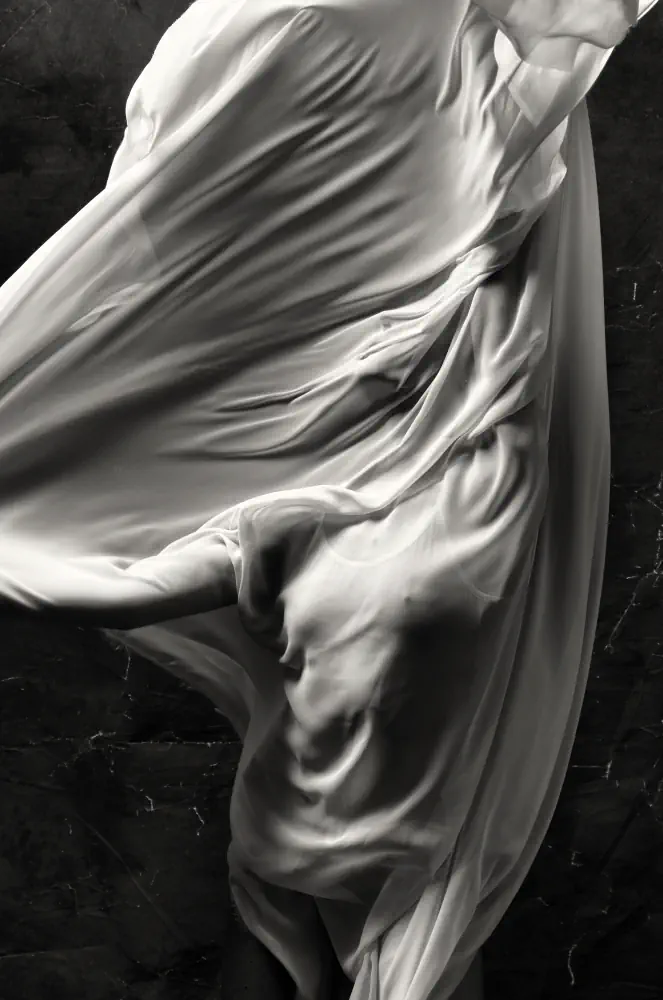
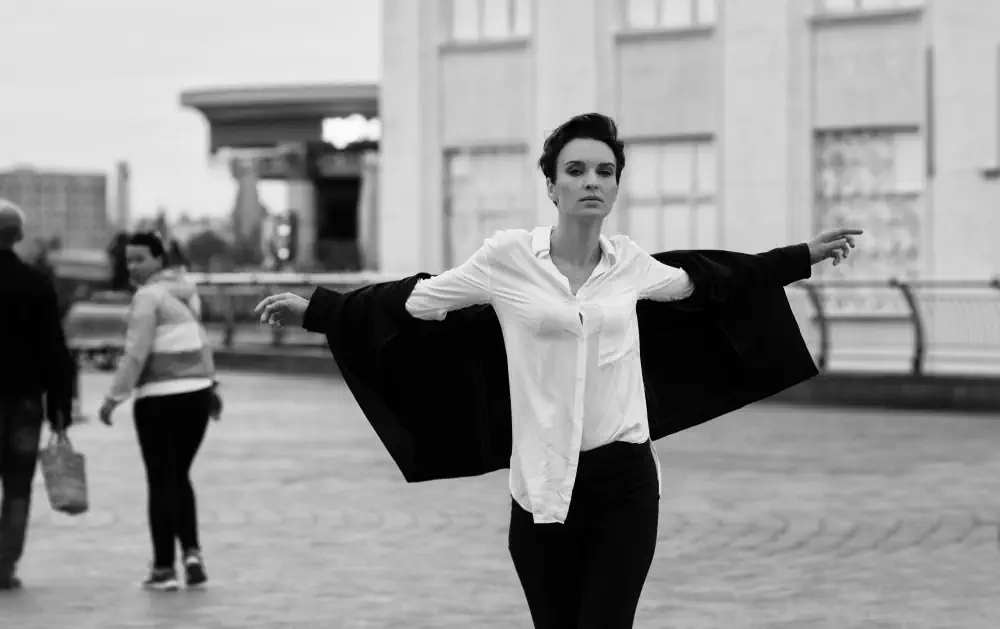
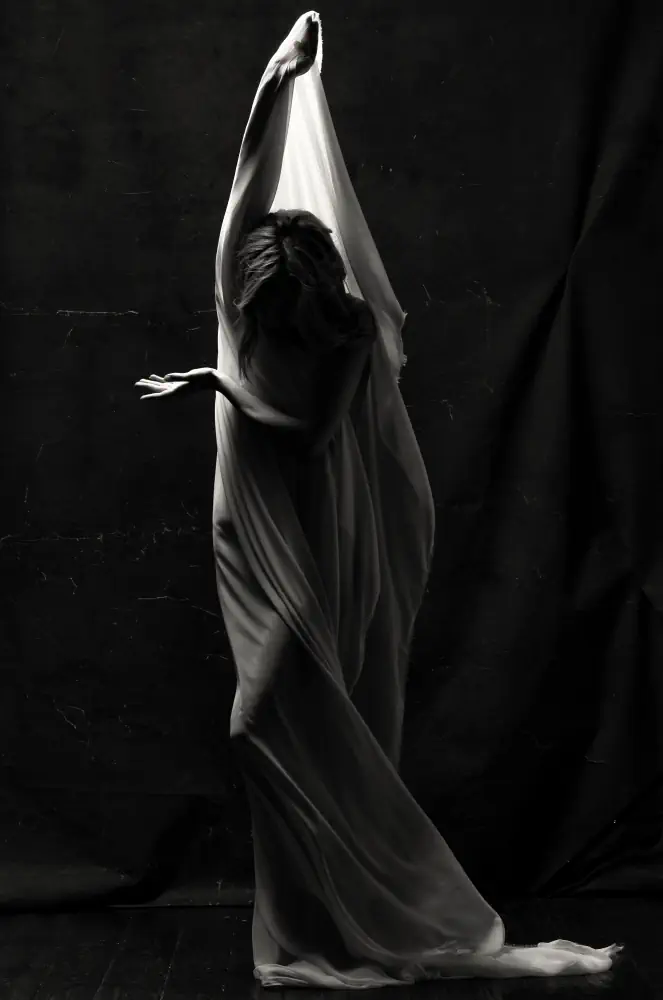
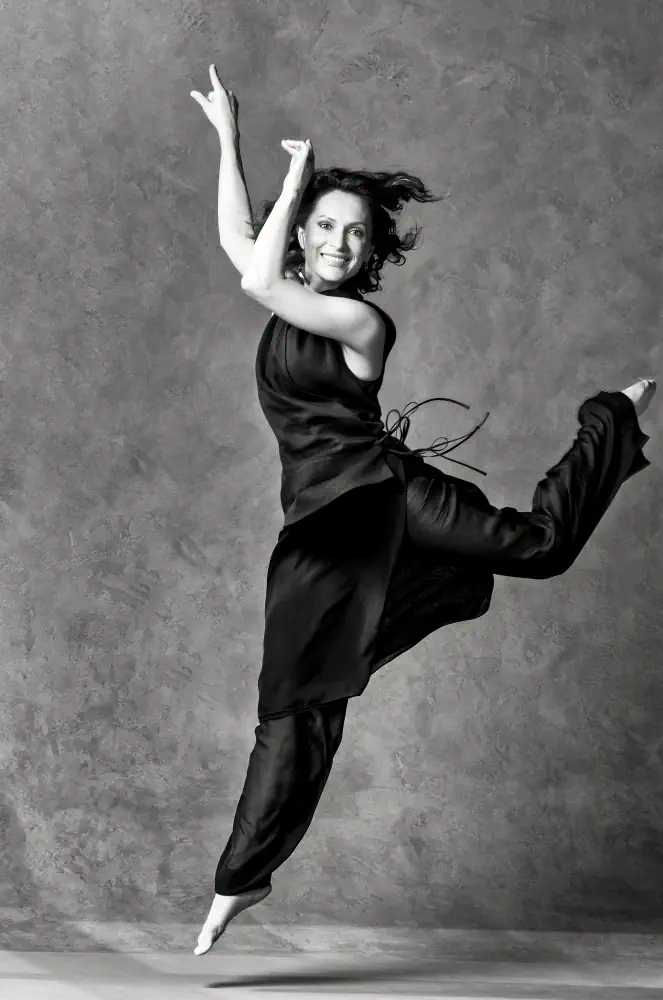
Dudar identifies the French school of photography and the use of movement within the frame as important influences on her approach. During a session, she explains, demonstrates, and guides, encouraging her subjects to move instead of holding a rehearsed pose. She pays attention to the fluidity of the body and the expressions that emerge as someone becomes more comfortable in front of the camera.
For her, a polished image holds little interest if it reveals nothing of the person photographed. Movement offers a way to loosen familiar habits of self-presentation and create room for gestures that feel less prescribed.
The conversation before a session is equally important. Women come to her at different moments in their lives. Some are marking a transition after a divorce; others are reconnecting with their appearance after medical treatment or navigating a period of uncertainty. Understanding those circumstances helps Dudar and her subject establish a shared purpose for the photographs.
Her approach depends on mutual attention and respect. The resulting portrait grows out of that exchange, shaped by both the photographer’s direction and the woman’s willingness to participate in the process.
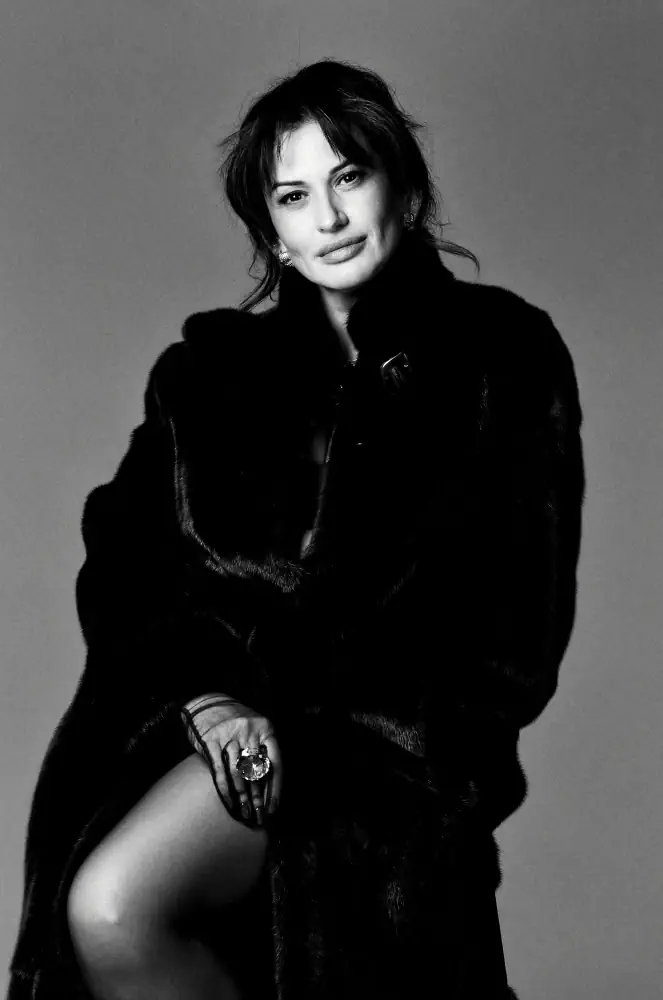
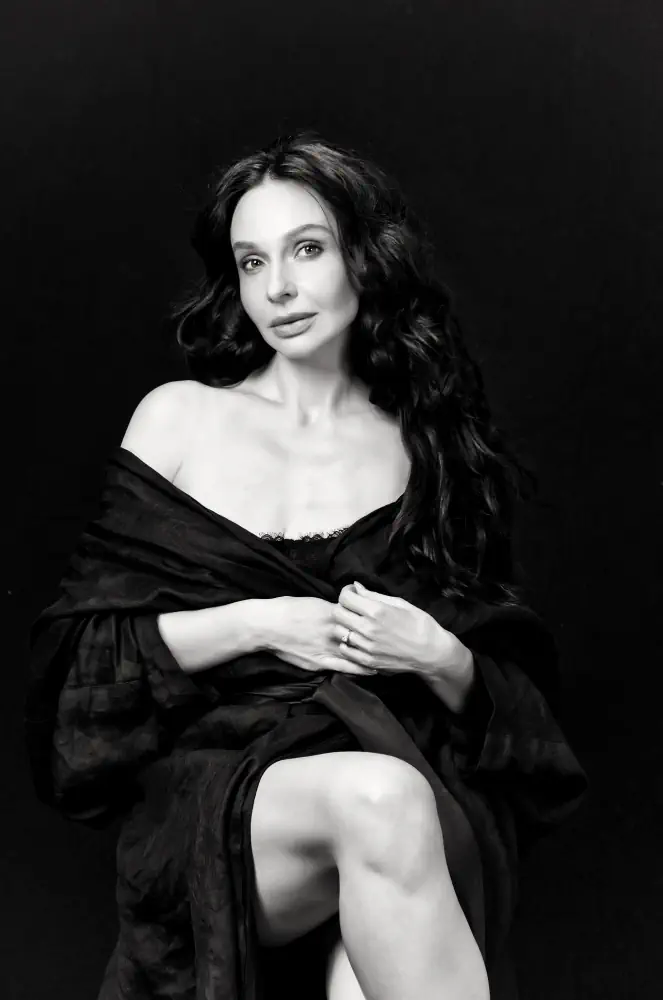
Dudar is particularly drawn to photographing women over 35. She is interested in the ways experience becomes visible through expression, posture, and presence. Personal histories, changes, achievements, and difficulties all inform how someone inhabits the frame.
The Choice of Black and White
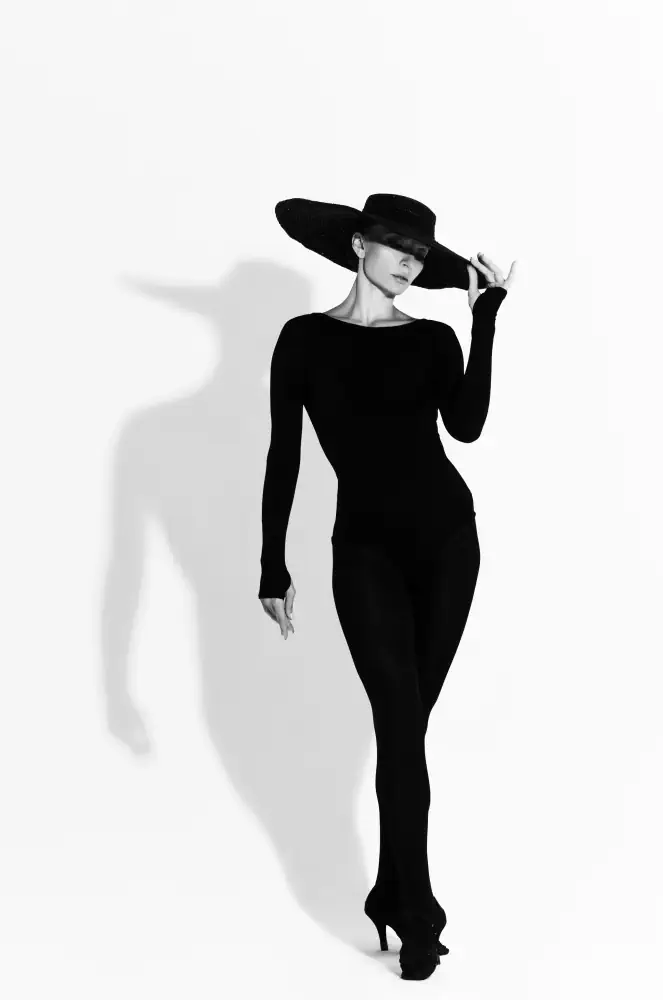
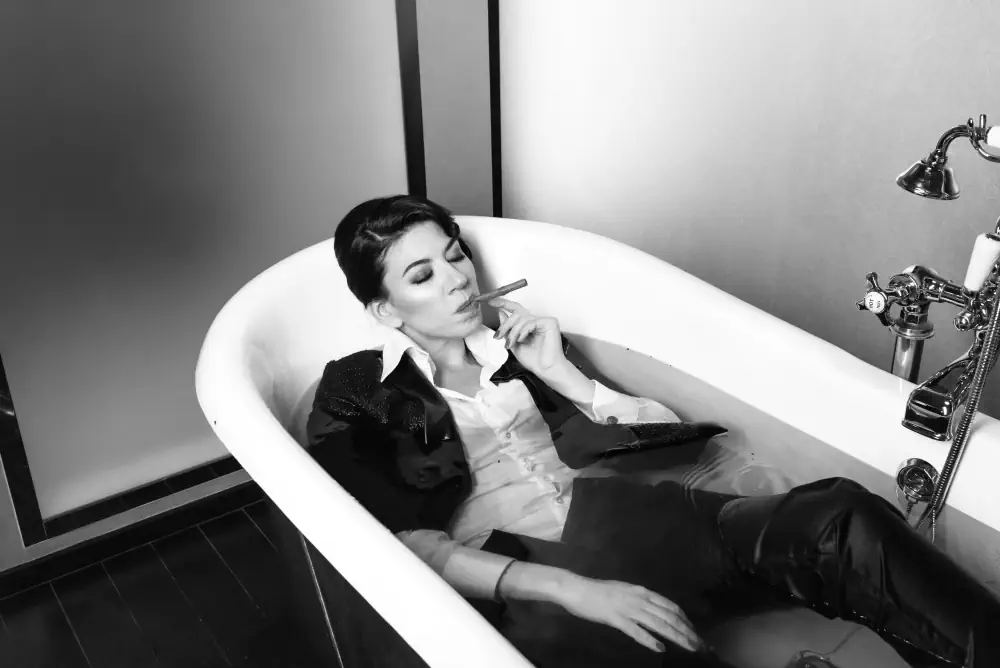
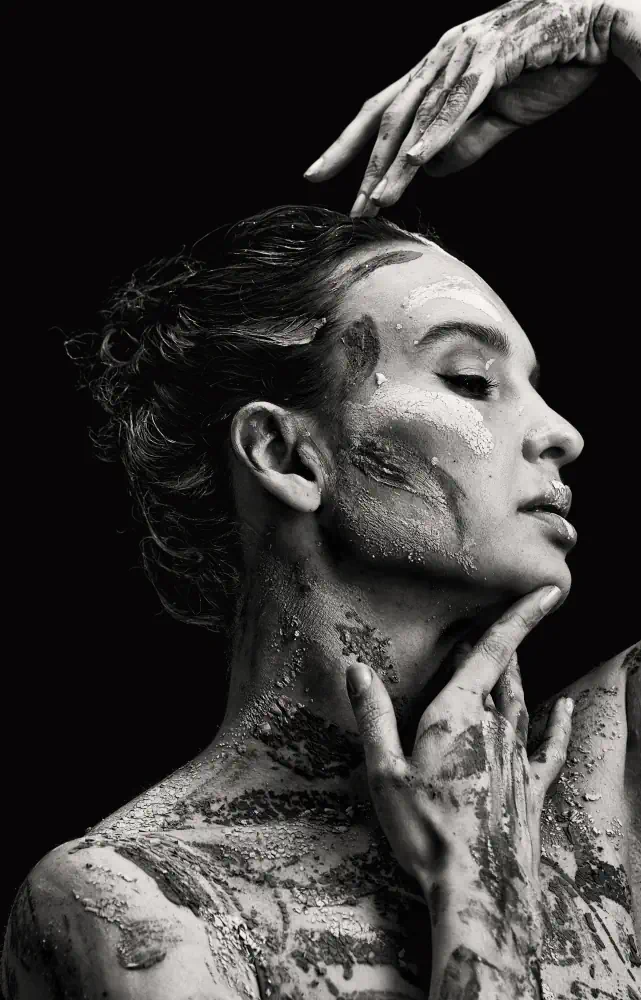
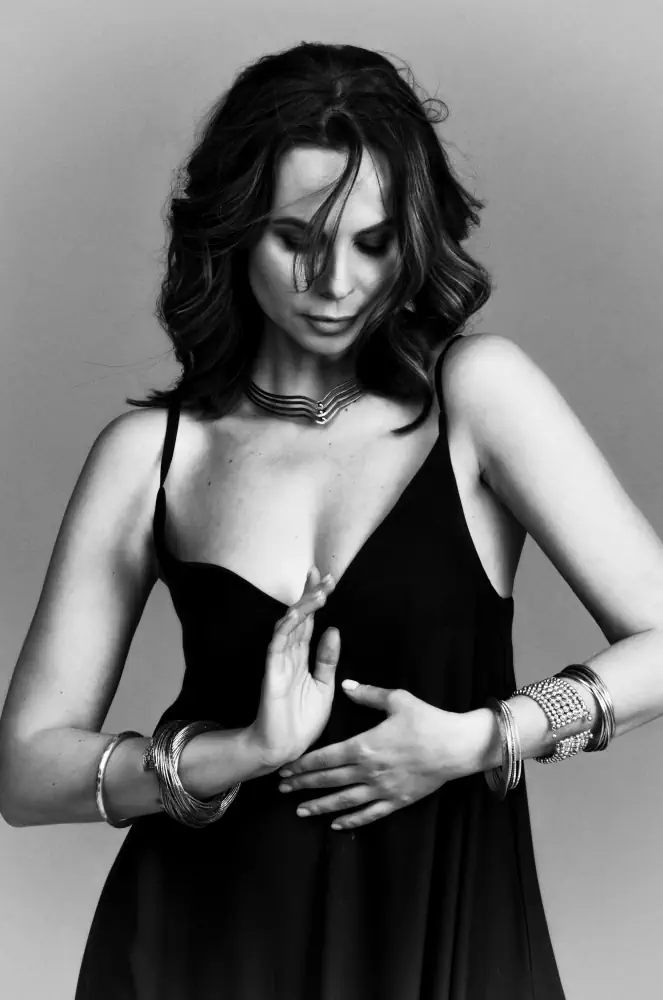
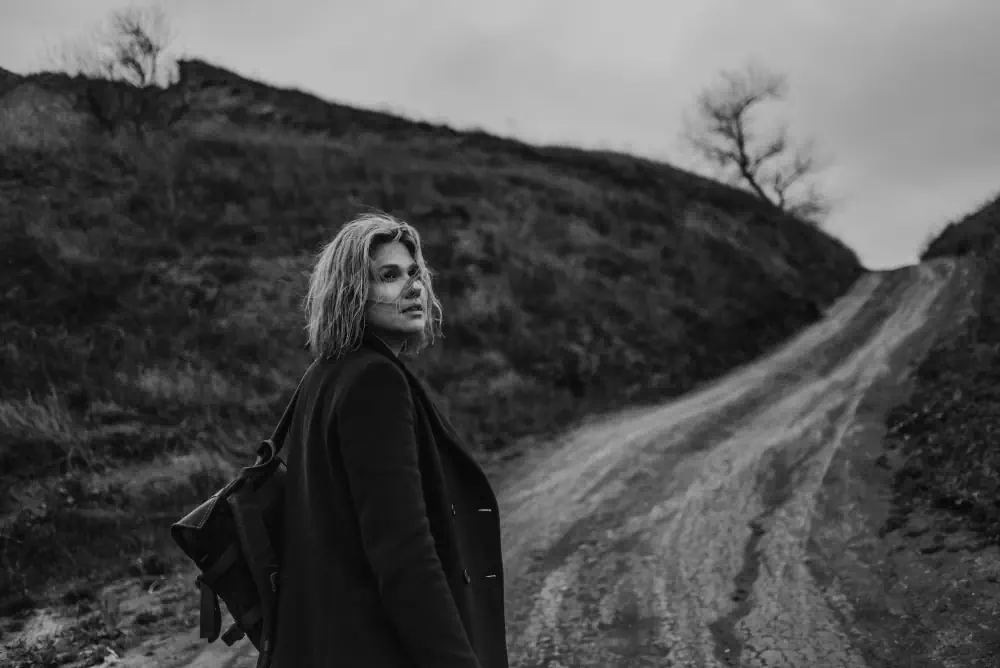
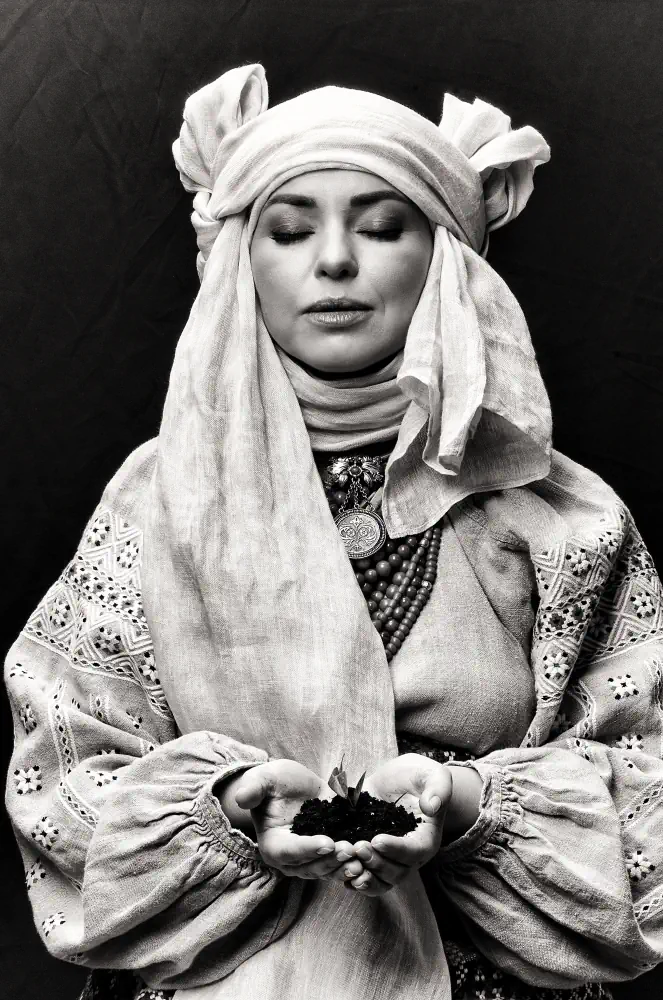
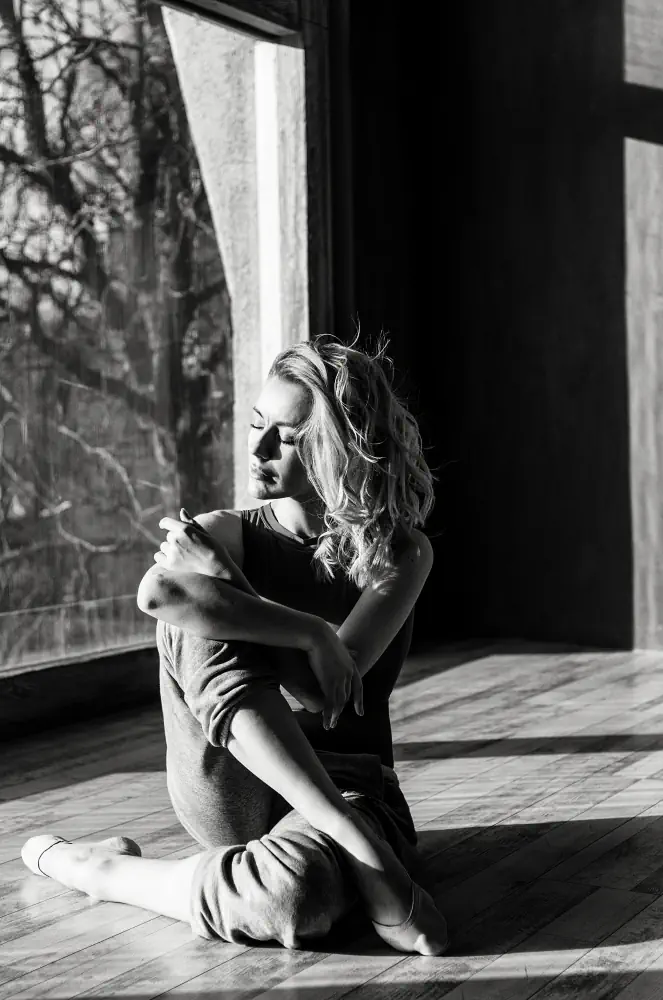
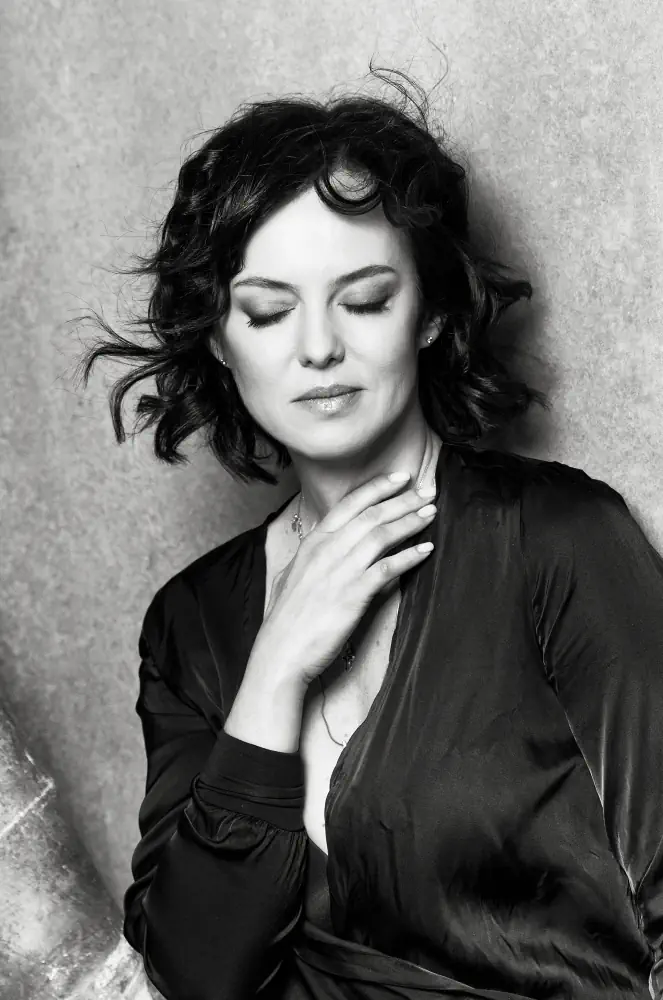
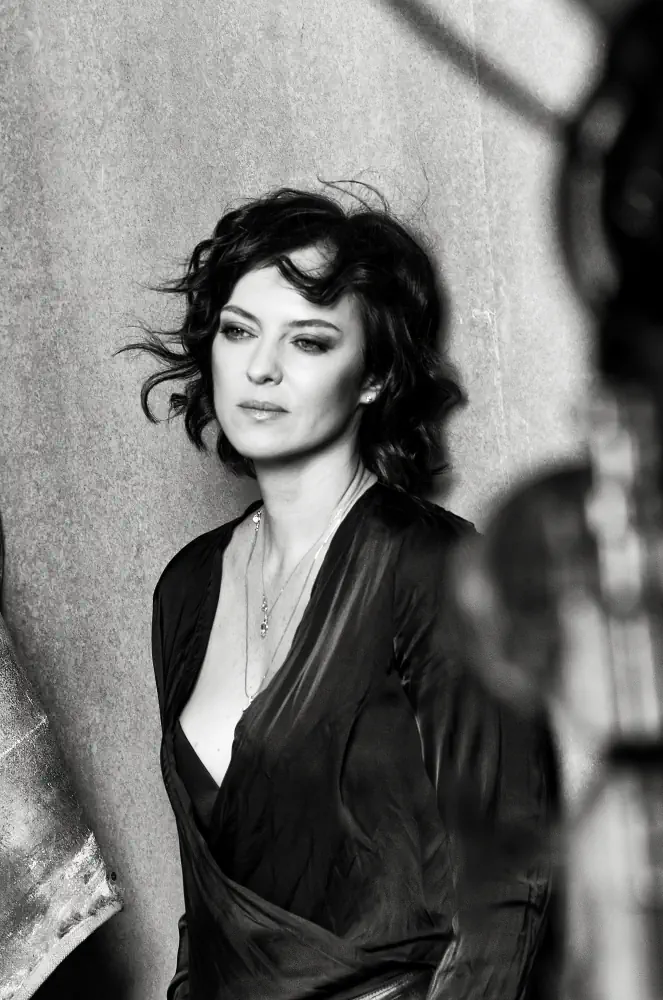
Black and white is central to Dudar’s visual language. She values its ability to direct attention towards expression, gesture, light, and form. Within her practice, removing colour helps simplify the image and concentrate attention on the person.
This preference also demands close attention to the construction of the photograph. She considers how lighting, composition, background details, and clothing work together, looking for elements that support the portrait without competing with its subject.
Her approach to styling follows the same principle. Comfortable, understated clothing allows women to move naturally and helps the photographs retain their relevance beyond a particular fashion moment. A simple T-shirt and jeans can provide all the visual structure she needs.
Dudar’s understanding of beauty accommodates different bodies, ages, and appearances. She is interested in the qualities that distinguish one woman from another and in giving those differences space within the photograph. The aim is to create images in which the subject can recognise herself.
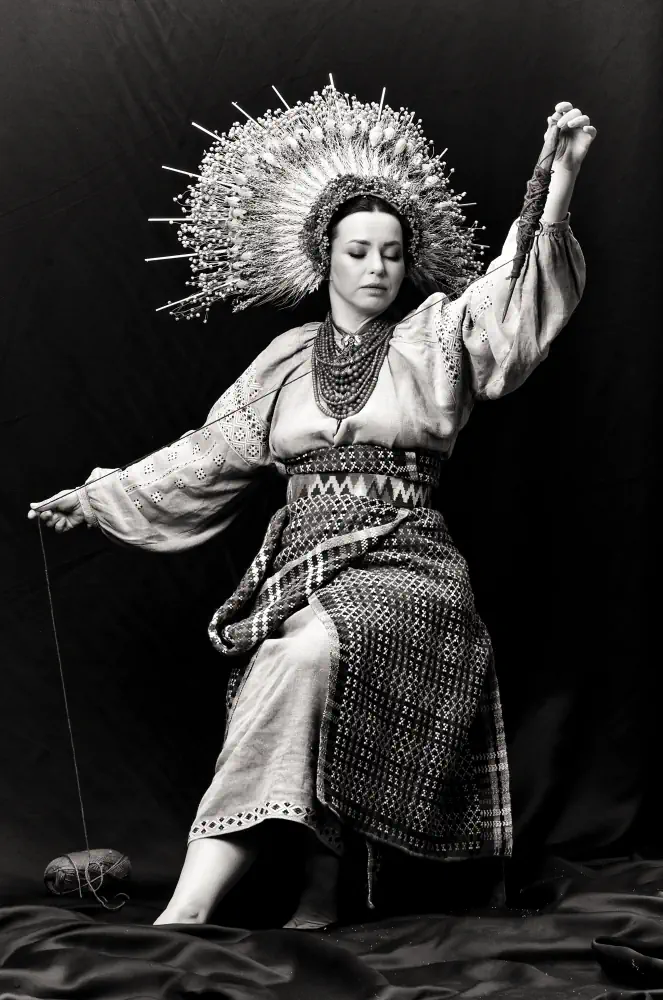
Photographing Women in Ukraine
Living and working in Ukraine during the full-scale war has given this attention to women’s lives particular significance. Dudar describes women who continue to work, create, care for their families, and make plans amid the threat of drones and missiles. Their determination to live fully informs her desire to photograph them.
She is drawn to the coexistence of qualities within a single person: tenderness and resolve, sensuality and restraint, vulnerability and strength. Her portraits seek to accommodate that complexity through close attention to the individual in front of her.
This commitment extends to the finished image. Dudar avoids retouching that reshapes faces or bodies, preserving skin texture and the features that make each person recognisable. Aesthetic care remains important, but it serves the subject’s own appearance.
Across her practice, conversation, movement, and careful observation lead towards the same intention: to create a portrait that preserves something of how a woman looks, how she carries herself, and who she understands herself to be. [Official Website]