

For much of its early history, street photography was closely associated with black and white imagery.
This was partly a technical necessity, as early photographic materials favored monochrome processes, but it also became an aesthetic choice that defined how the genre was understood. Black and white simplified visual information, emphasizing form, contrast, gesture, and structure. By reducing the complexity of the urban environment, it allowed photographers to focus attention on relationships between light, space, and human presence.
Monochrome imagery aligned naturally with modernist sensibilities. The absence of color introduced a sense of abstraction that encouraged viewers to read photographs less as literal descriptions and more as interpretations of reality. Streets appeared as compositions of geometry and movement, where shadows, reflections, and silhouettes carried expressive weight. This visual language shaped the canonical understanding of street photography for decades.
The gradual acceptance of color marked a significant transformation. Advances in film technology made color photography more accessible, while changing cultural attitudes encouraged experimentation beyond established conventions. Some photographers began to recognize that color was not merely an addition to the image, but a fundamental component of how cities are experienced. Urban environments are saturated with signage, advertisements, clothing, and artificial lighting, all of which contribute to their visual identity.
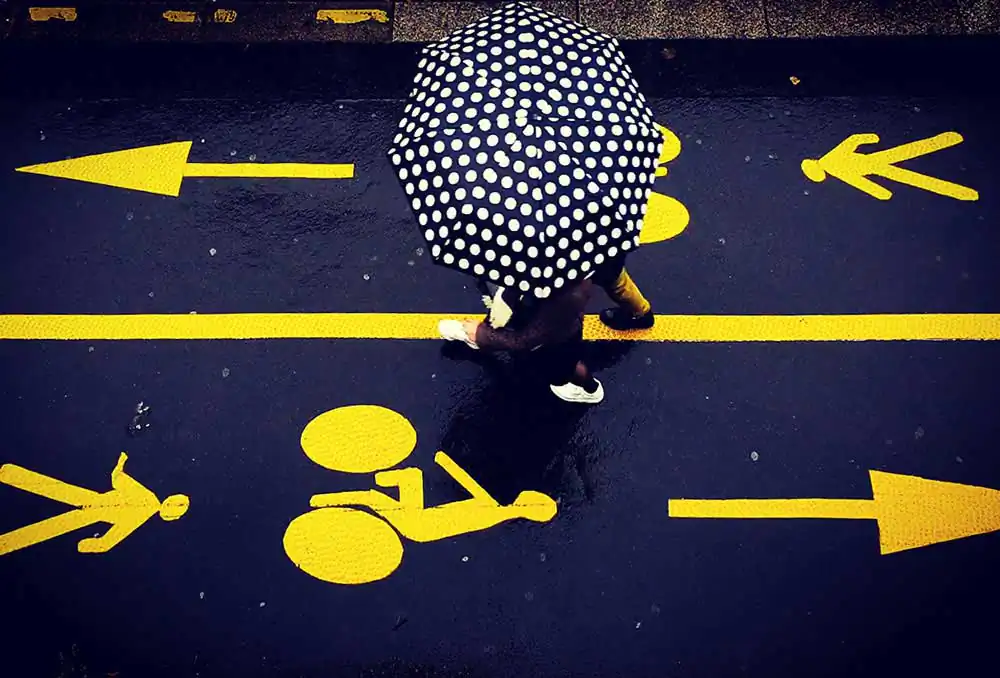
Color introduced new possibilities for describing atmosphere and mood. Instead of relying solely on tonal contrast, photographers could explore chromatic relationships that conveyed temperature, rhythm, or tension. A vivid storefront against a muted street, the repetition of similar hues across different figures, or the artificial glow of nighttime illumination could become central elements of composition. The city, seen in color, appeared less abstract and more immediate, yet also more complex.
This shift did not replace black and white practice but expanded the range of expressive tools available. Many contemporary photographers move fluidly between the two, choosing according to the conceptual needs of a project rather than adhering to tradition. Black and white may suggest distance, timelessness, or structural clarity, while color can evoke specificity, cultural context, and sensory presence.
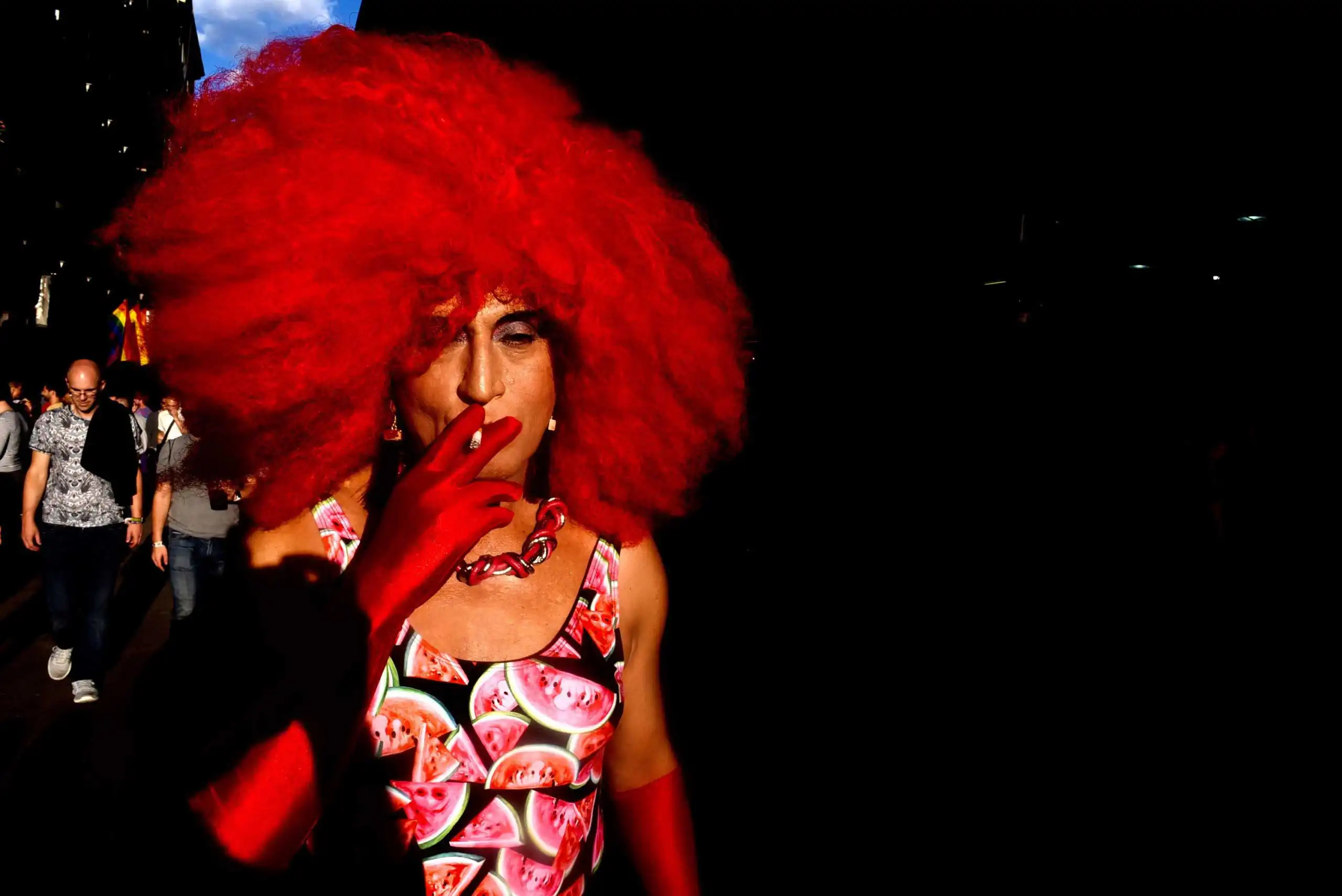
The acceptance of color also paralleled broader changes in visual culture. As mass media, advertising, and digital screens became integral to urban life, color itself became inseparable from the contemporary environment. Street photography responded by incorporating these visual conditions rather than excluding them. Photographs began to reflect not only physical spaces, but also the mediated imagery embedded within them.
Today, debates about whether street photography should be monochrome or color have largely subsided. The question is no longer which approach is correct, but how each contributes to the photographer’s interpretation of the city. Both modes offer distinct ways of engaging with reality, and both continue to evolve alongside technological and cultural shifts.
By embracing color while retaining the legacy of black and white, street photography demonstrates its adaptability as a visual practice. It acknowledges that urban experience cannot be reduced to a single aesthetic language. Instead, it accommodates multiple ways of seeing, each capable of revealing different dimensions of life in public space.