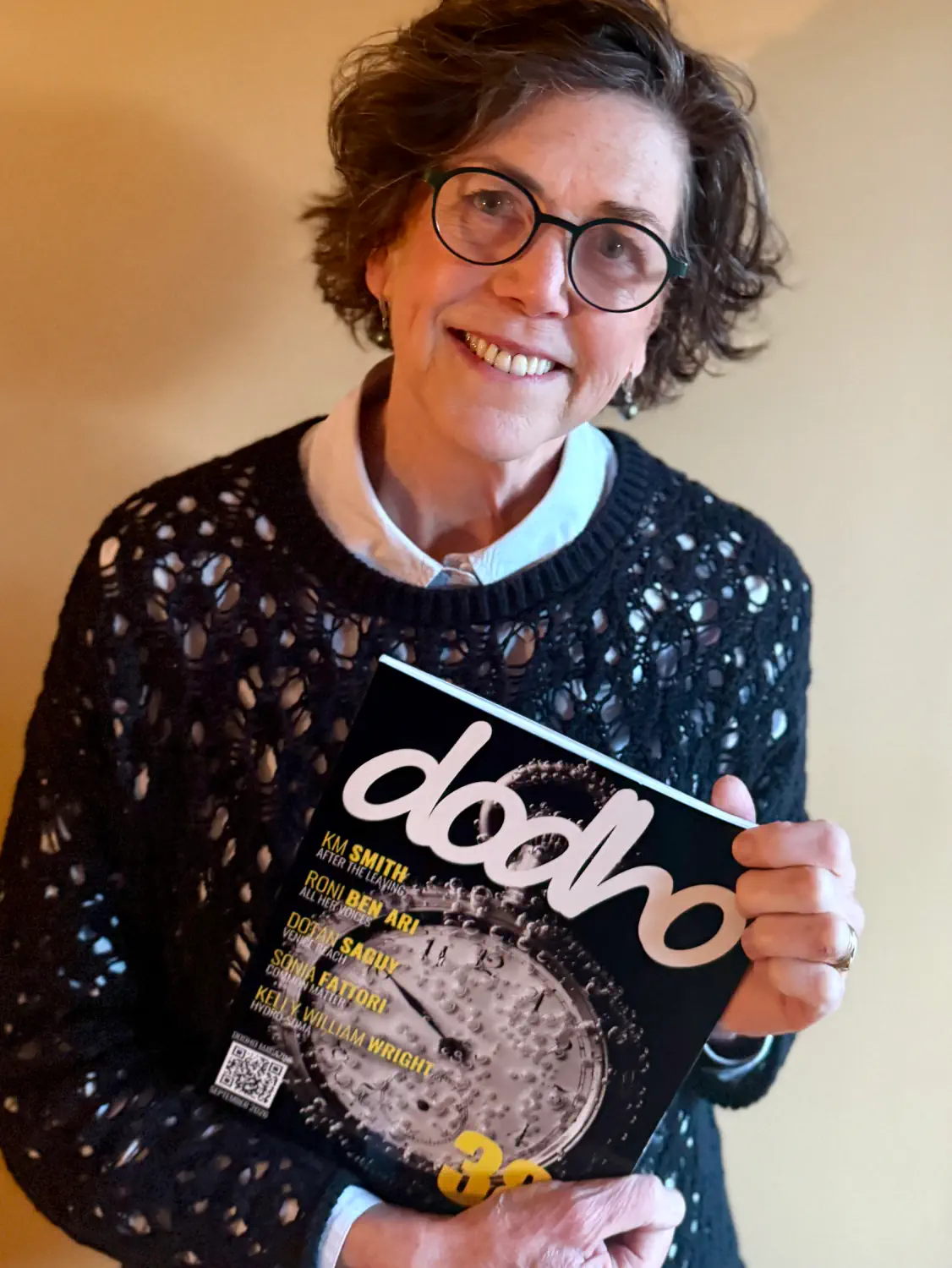
For American photographer Barbara Hazen, photography is a means of exploring memory, personal history, and the emotional significance of objects.
Her artistic practice examines the relationship between the inner self and the family scrapbook, often using alternative photographic processes to give physical form to subjects associated with remembrance, identity, and the passage of time.
After studying at the University of California, Santa Barbara, and attending the California Culinary Academy, Hazen pursued a career as a pastry chef before returning to photography. Her work has since been presented in numerous group exhibitions and photographic publications, with projects exploring subjects ranging from family memories and the domestic environment to impermanence, beauty, and the personal histories contained within everyday objects.
Her photographic practice places particular emphasis on traditional printing techniques, including cyanotype, platinum-palladium, and photogravure. These processes play an important role in projects such as Memory Keepers, Bittersweet, Papyrus, and Time Piece, allowing her to explore the relationship between an image, its material qualities, and the meaning of its subject.
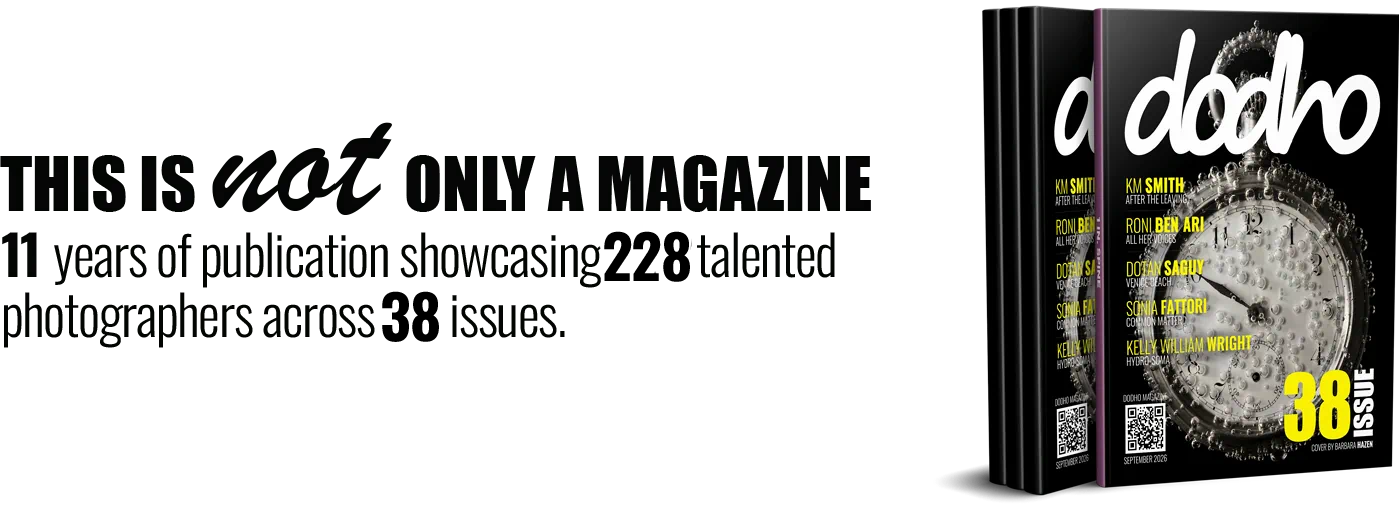
Barbara Hazen’s photograph was selected for the cover of Issue #38 of Dodho Magazine’s print edition, introducing readers to an artistic approach in which careful observation and photographic craftsmanship reveal the visual qualities of familiar objects. Her series Time Piece, dedicated to vintage watches, explores their mechanical beauty, historical significance, and transformation from valued possessions into objects often overlooked or discarded.
In this interview, we speak with Barbara Hazen about her transition from the culinary arts to photography, her interest in memory and personal objects, her dedication to alternative photographic processes, and the ideas behind Time Piece. We also explore how the passage of time, both as a subject and as an element of the photographic process, informs her artistic practice.
Before dedicating yourself to photography, you pursued a career as a pastry chef. How did your interest in photography develop, and what eventually led you to make it a central part of your creative life?
My interest in photography began in my teens, when my eldest brother was attending Brooks Institute. I became his food stylist and sometimes a model while he trained as a photographer. Personally, my photography began as a mother documenting the many everyday joys of my children and family life. It was not until I closed my cookie dough business in 2008 that I decided to put my creative energy into photography. Over the years, I took many classes and workshops to find my voice.
Your background in the culinary arts involved precision, craftsmanship, and close attention to materials. In your artist statement for Papyrus, you draw connections between these skills and your photographic practice. How has your experience as a pastry chef influenced the way you approach photography?
It wasn’t until I started exploring alternative processes in photography that I realized I was using the same skills I had developed as a pastry chef—creativity, innovation, visual awareness, precision, science, passion, and adaptability —and I use them repeatedly. People assumed I would be a ‘food’ photographer when I first began. But except for Papyrus, I have not found anything new to bring to this field.
Memory, family history, and personal objects appear repeatedly throughout your work. How did these themes become central to your artistic practice, and what interests you about the relationship between physical objects and the memories we associate with them? In Memory Keepers, you photograph personal objects associated with memory and the experience of aging. How did this project develop, and what did working with these objects reveal to you about the relationship between photography, remembrance, and personal identity?
As I was developing my interest as a photographer, I took every kind of class or workshop to see if they resonated with me. It wasn’t until my personal life took a turn and I became a caregiver to my brother and sometimes my mother, who both died of dementia within five years of each other, that my focus became personal and my workspace was home. Fearing I might have the same fate; I wanted to document a bit of my life with photographs to tell my story. Collecting antique objects was a hobby my mother and I shared, so it was an obvious choice to use objects I owned or borrowed that held memories of my past. My intent was to create keepsakes for my children with these photographs.
You work with alternative photographic processes, including cyanotype, platinum-palladium, and photogravure. What initially attracted you to these techniques, and what possibilities do they offer that you find particularly meaningful for your work?
My initial introduction to photography and development came before digital cameras were the norm. Eventually, however, I transitioned to a digital camera and initially enjoyed the ease of printing images without a darkroom. But over time, I found I missed the intimate practice of making a handmade print. I first learned platinum Palladium printing and fell in love with the warmth, tonality of the prints. I then explored cyanotype but wasn’t satisfied with the classic Prussian blue or the toning options, until I learned about the duotone process: cyanotype over platinum Palladium. Here I recognized I had creative control over the toning to achieve the steely blue grey in my prints. Learning photogravure was an over-35-year itch. I was invited to Crown Point Press when my stepfather was printing huge artworks, and I was mesmerized by the process and hoped that one day I might learn to do this. I first learned copperplate engraving and more recently switched to polymer photogravure. Inking plates again brings back the hands-on work I love. I often take the same image and experiment with all these printing techniques to decide which I prefer. As I approach a new image or project, I now consider which process, and what size best suits the print.
Your series Bittersweet explores beginnings and endings through flowers and forgotten objects, while Impermanence examines the fragile nature of things we often consider permanent. How do you approach the passage of time as a recurring subject across different projects?
The passage of time is a slippery slope we often think we control but never do. Photography is one way of documenting a particular moment in time that is tangible and will outlive my time on earth. Bittersweet was a project that forced me to reckon with the reality that life goes on without your presence. Flowers became a metaphor for how hard it is to appreciate life’s fleeting nature. Flowers are usually appreciated only in their fresh bloom, then discarded as soon as they lose a petal. Impermanence was an even bigger wake-up call: what we take for granted as stability and permanence- a home, our family, our planet- will all change or perish in time. This project explored the aftermath of a massive fire, where hundreds of lives were irrevocably altered within minutes. In both projects, my aim was to embrace impermanence by documenting what is right before me with my camera, but will never be again.
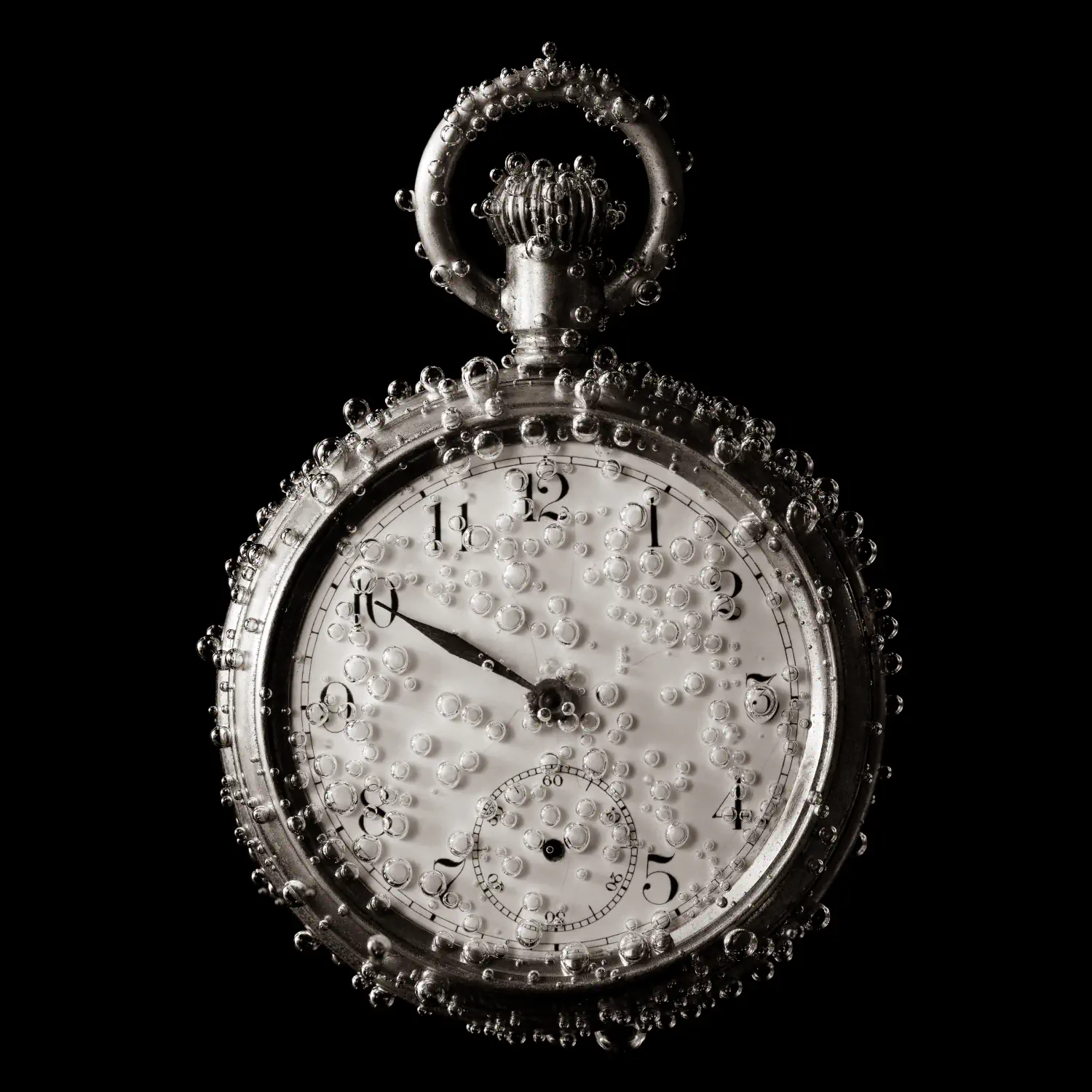
Your photograph was selected for the cover of Issue #38 of Dodho Magazine’s print edition. Could you tell us about the image, how it was created, and what drew you to the particular object and composition?
I credit experimental joy with creating Bubbles, the image selected for the cover of Issue #38. I had a collection of antique watches and was encouraged to go beyond a traditional still-life photograph. Once I realized I could do whatever I wanted, I couldn’t stop thinking of ways to photograph these watches and parts. With Bubbles, I had already noticed how bubbles adhered to glassware, so I put a pocket watch into seltzer water to see what might happen. The watch’s rust and nicks were perfect for catching the bubbles, resulting in my final image.
Your series Time Piece focuses on vintage watches, objects that combine mechanical precision, craftsmanship, and personal or historical significance. What inspired you to begin photographing these watches, and what interested you most about them as photographic subjects? In your statement for Time Piece, you explain that you wanted to restore a sense of beauty to watches found in flea markets, objects that may once have been valued possessions. How do you approach photographing something whose original function and significance have changed over time?
Photographing Time Piece is less a personal story and more a project exploring beauty in discarded objects. I am awed by what ends up in flea markets, and I recognize that many of my own possessions will have the same fate. As I collect or borrow old, discarded objects, I am curious about their history and ownership. Because the watches no longer serve their original purpose or function, I’ve tried to elevate their old, rusted character with renewed beauty and life by photographing them in unique ways. Also, by printing these watches larger than their actual size, they take on a grandeur that would otherwise be lost.
Time Piece is produced using copperplate photogravure. How does this printing process contribute to the visual character of the photographs, and what role do texture, tonal range, and the physical qualities of the finished print play in your artistic intentions?
Photogravure printing, the imprinted paper, the inks, and the textured paper used, such as Hahnemühle Copperplate, lend themselves well to character-rich subjects like the watches in Time Piece. The final intaglio print has a tactile quality reminiscent of the object photographed. Other processes such as a platinum Palladium printing, may have a better tonal range than photogravure, but the paper textures and final print are not the same.
Your projects often transform familiar subjects, such as watches, flowers, household objects, and natural materials, into carefully constructed photographic images. How do you select the objects you want to photograph, and what determines whether a particular subject has the potential to become part of a larger series?
As mentioned, I collect vintage objects because I’m drawn to their aesthetic beauty. I do not always know when or how I will use them in a photograph, or whether they have potential for a series. For example, after giving my mother her last haircut and saving her beautiful locks, the emotional weight of this experience was heavy. To photograph her hair, I took an old scale I’d pulled from storage that seemed like a perfect metaphor for my emotions. It wasn’t until I finished the photograph that I realized the scale was labeled ‘Family Scale,’ and the photograph became even more meaningful than it had been.
Looking back at your transition from the culinary profession to photography and the different projects you have developed since then, how has your understanding of artistic expression evolved? What subjects or photographic processes would you like to explore in your future work?
My creative life as a chef and photographic artist is one and the same, and I work in both virtually every day. Just as I hunt for new and interesting things to cook, I always explore and perfect new photographic skills. In the past few years, monochromatic photogravure has held my attention. This past year, I committed myself to learning multi-plate photogravure, with the desire to introduce color. I am also exploring hand-coloring platinum Palladium prints. As I explore these new techniques, I am working on two different projects that I hope will see some light in the coming year.