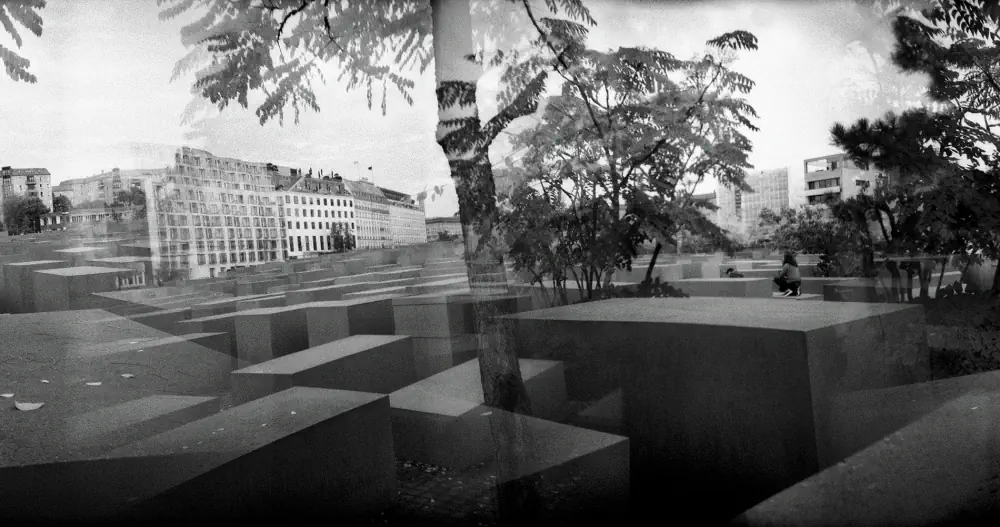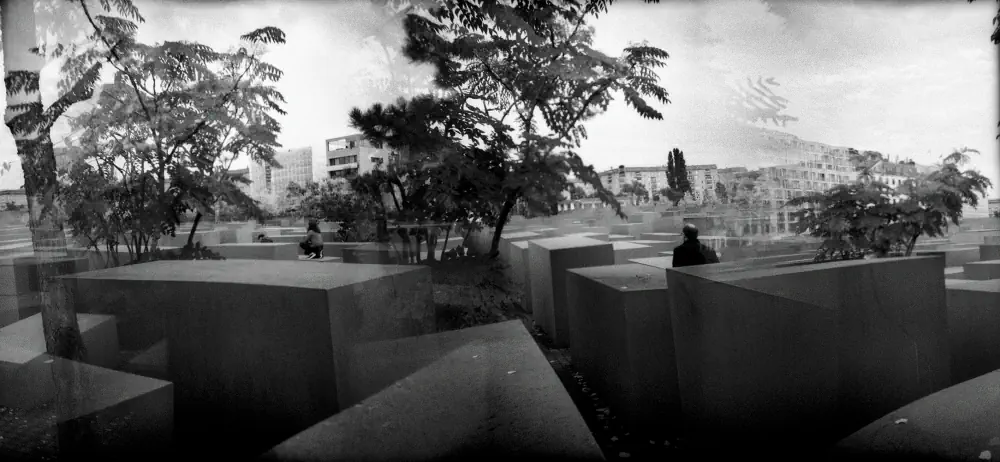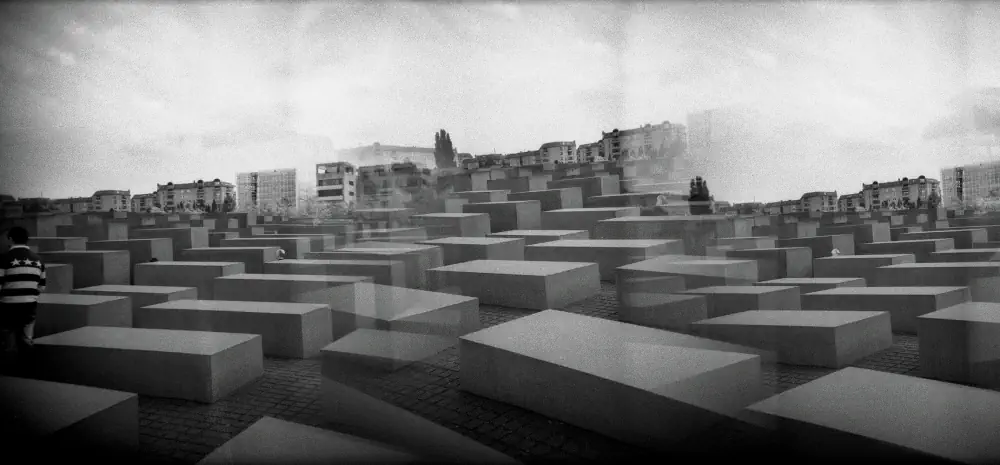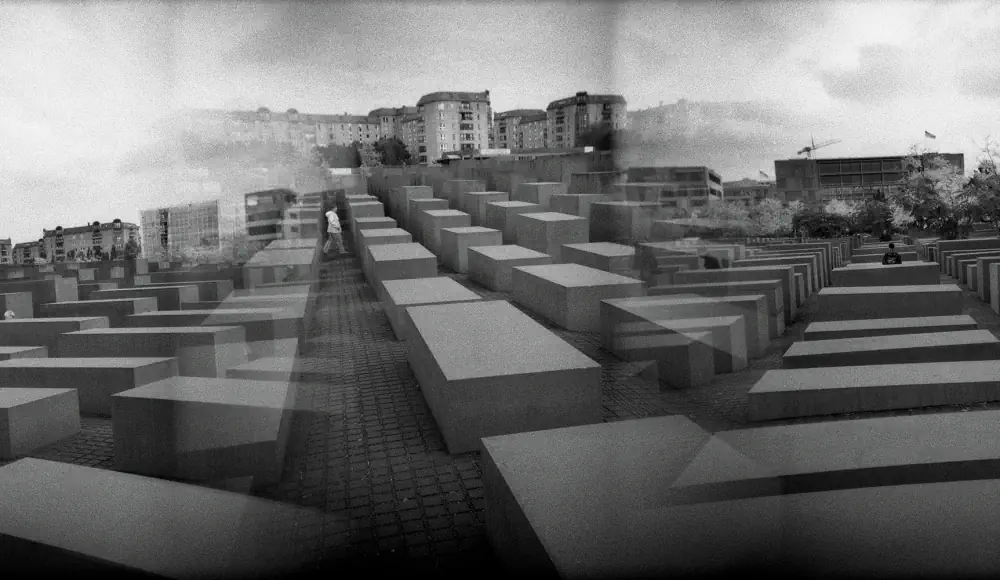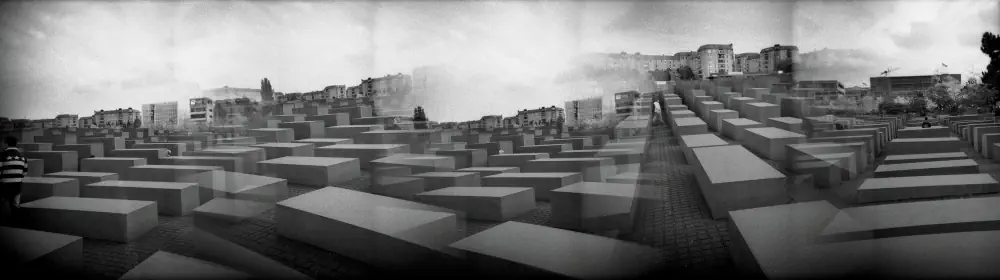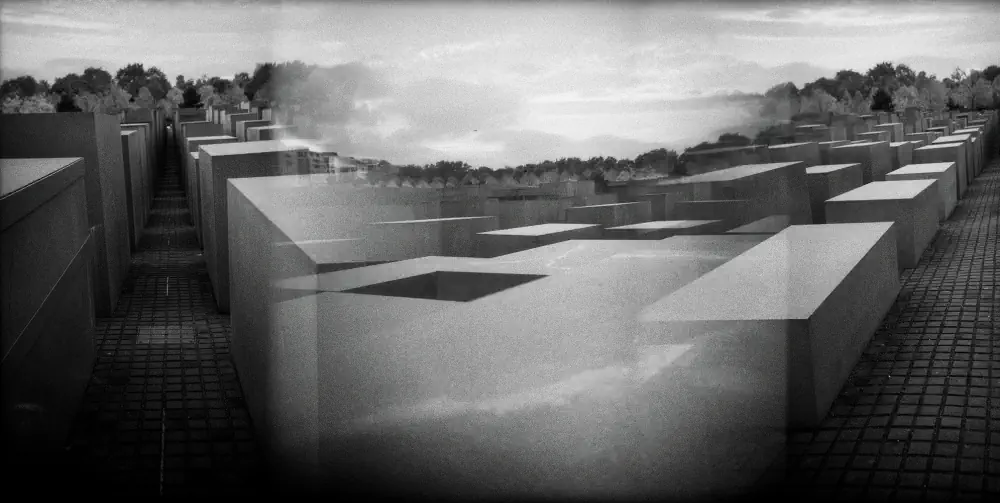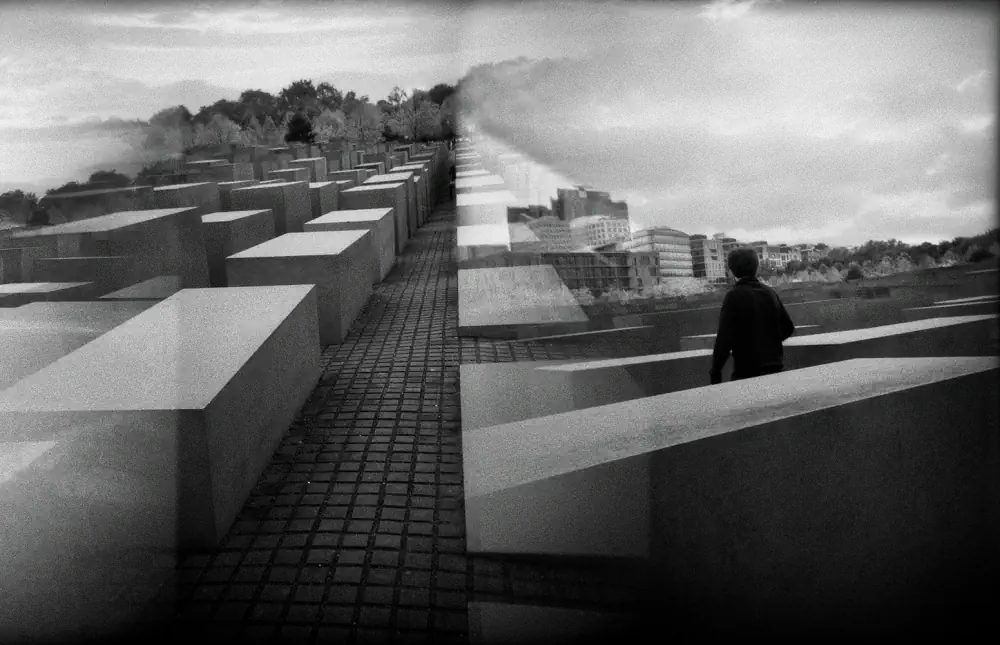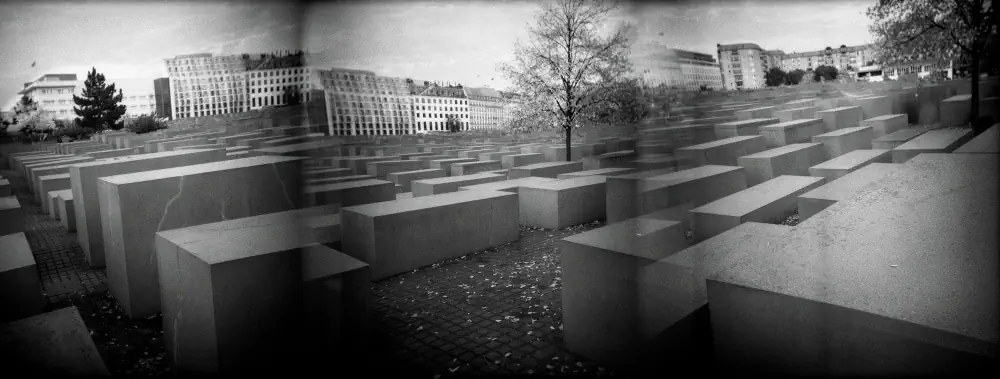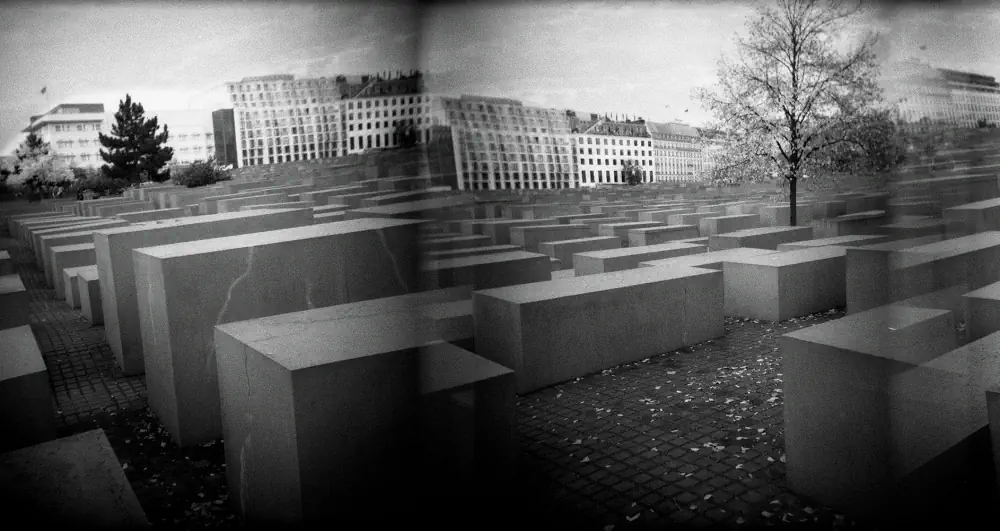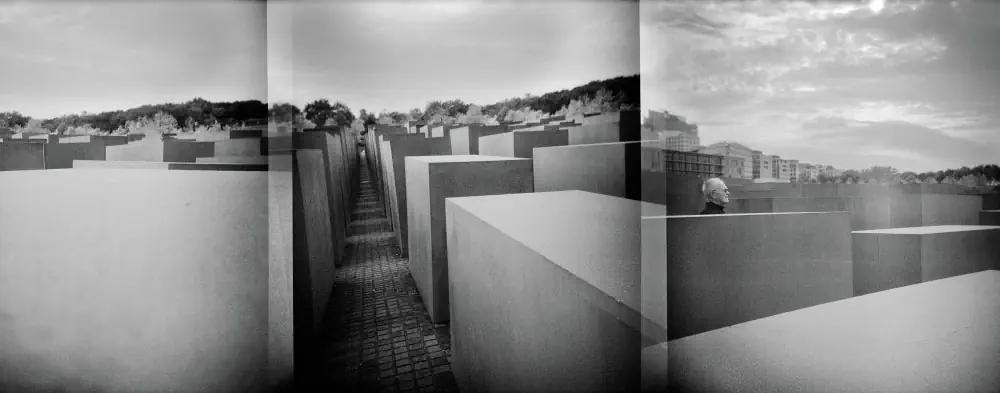

The memorial explores the subjects of memory, remembrance, and the role of monuments in capturing human horrors.
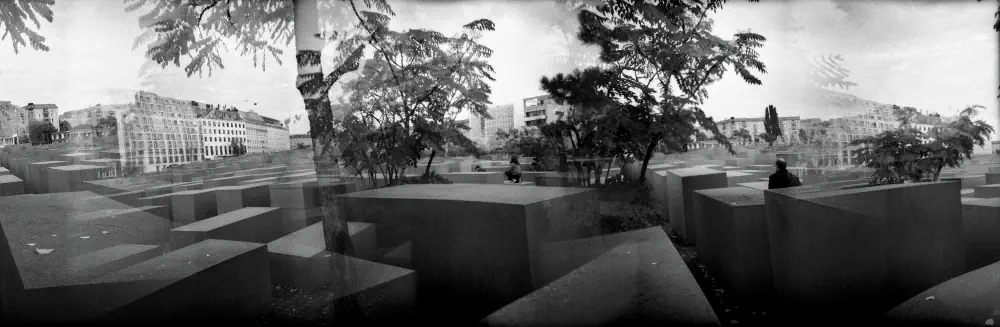
Through continuous, repetitive frames, these images convey the immense loss of life and the scale of the monument itself.
The endless rows of grey concrete stelae are repeated and duplicated, extending into the horizon.
When I came to visit, I did not expect to stay as long as I did or to take so many photographs. I thought it would be a place of commemoration and memory. Instead, I spent hours in this incredible space, mesmerized by the silence and stillness, bearing witness to our history. It was an emotional experience that felt like being confined within a place of mourning.
There is a powerful dynamic that resonates throughout the space, taking us back to remember the past while grounding us in the present. The size of the structures challenges our perceptions and assumptions, creating a powerful connection with our history while bringing us into our present reality.
The monument also reminds us that those same atrocities are among the most devastating consequences of any war, including the many conflicts taking place today. It reminds us that war only destroys. Grief is its only outcome.
I may have interpreted this incredible place through my experience as the daughter of Ukrainian refugees who lived through the war. My father was imprisoned. My mother’s first husband was killed. She went looking for him in a basement containing 600 other bodies and searched through everyone’s clothing. She then went to the newspapers and had everything published to let people know who was there.
About Christine Laptuta
Christine Laptuta studied painting, printmaking, and photography at the École des Beaux-Arts in Paris and earned her BFA from York University in Toronto, Canada.
Early in her career, during the 1970s, she lived in Ottawa, where she maintained a painting studio while also working for the National Film Board of Canada, creating multi-screen slideshows for its gallery. Her photographs were exhibited and published by the Art Gallery of Ontario and the National Film Board of Canada.
In the 1980s, she moved to the United States, where she explored creative applications in business. During the 1990s, she relocated to Los Angeles, working with a Hasselblad camera and focusing on California landscapes. In 2000, she moved to Portland, Oregon, where she established a darkroom dedicated to platinum-palladium printing.
In 2006, she attended a photography workshop in Maine to refine her platinum printing techniques. Due to weather conditions, she was given a basic Holga camera equipped with a manual film advance and a single aperture setting. This unexpected experience transformed her approach to photography, and she continued using the camera for more than 19 years.
She began photographing continuous frames, recording journeys that were neither time-based, linear, nor static. Chance and serendipity play an essential role in her creative process. By fragmenting spaces and disregarding linearity, her constructed images challenge conventional perceptions and perspectives. These visual disjunctions blur the viewer’s assumptions about space, time, and place.
Through the reconstruction of landscapes, Christine seeks to move beyond a singular viewpoint, capturing the feeling of a place rather than merely its physical appearance. Her photographs also reflect her personal memories and imagination, creating an interpretation of the landscape that extends beyond straightforward representation.
Her Holga portfolios explore dualities and opposing forces: the conflicts between humanity and nature, the past and the present, and chaos and beauty. These works emphasize the mystery and ambiguity inherent in the landscape, revealing the constant interplay between beauty and chaos.
Only after developing the 2¼-inch film could she discover what she had captured. This process introduced a new way of working, encouraging openness to chance, serendipity, the passage of time, and the continuity of infinite repetition.
In 2016, Christine returned to Canada, settling in Victoria, British Columbia. An unplanned sabbatical followed, during which her exposed film remained stored in a freezer for five years before she was able to develop it. The negatives were eventually scanned in 2022.
Today, she works exclusively with an iPhone 15 Pro, embracing the creative possibilities of panoramic photography while enjoying a process that no longer requires photographic chemicals. [Official Website]