In May 1989, I travelled to Beijing as a young photojournalist, having recently completed my studies at the London College of Printing.
It was my first major photographic assignment, although nobody had commissioned me to go.
I paid for the trip myself, with a fixed ten-day return ticket to London via Hong Kong. My intention was simply to document the student-led pro-democracy movement taking place in Tiananmen Square and, hopefully, build my photographic portfolio.
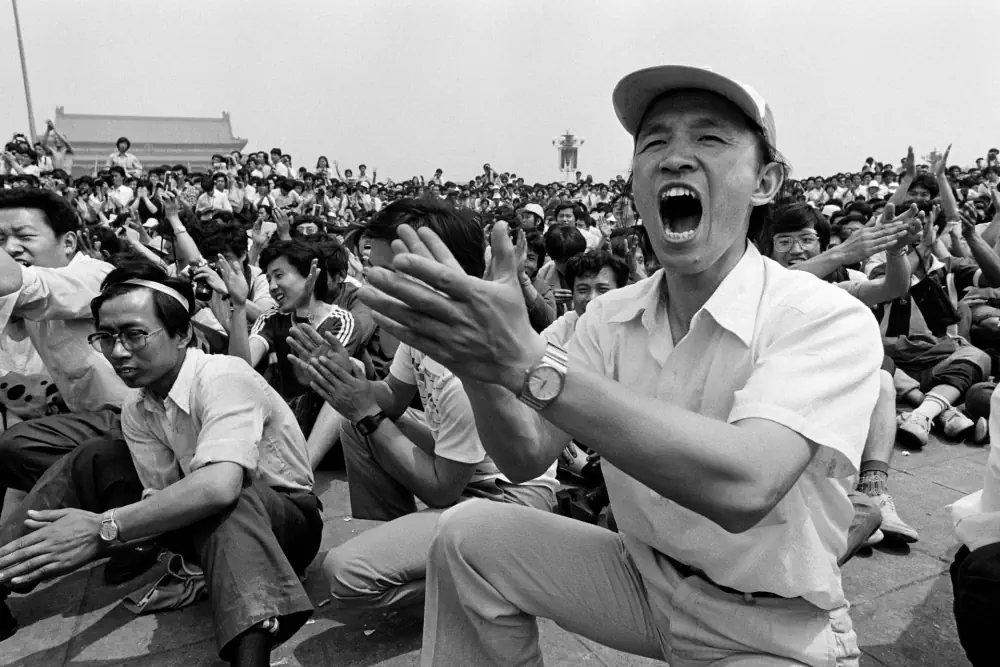
Tiananmen Square, the symbolic heart of China’s communist regime, had become the centre of an extraordinary movement. For weeks, students and intellectuals had gathered there, demanding political reforms, greater freedom and an end to corruption. Thousands of ordinary citizens had joined them in support.
When I arrived, there was little indication of the violence that would follow. If anything, the general feeling was that the protests were losing momentum. Many foreign journalists had already left Beijing, believing the story was coming to an end. Certainly, I had no reason to imagine that I was about to witness one of the most significant and tragic events in modern Chinese history.
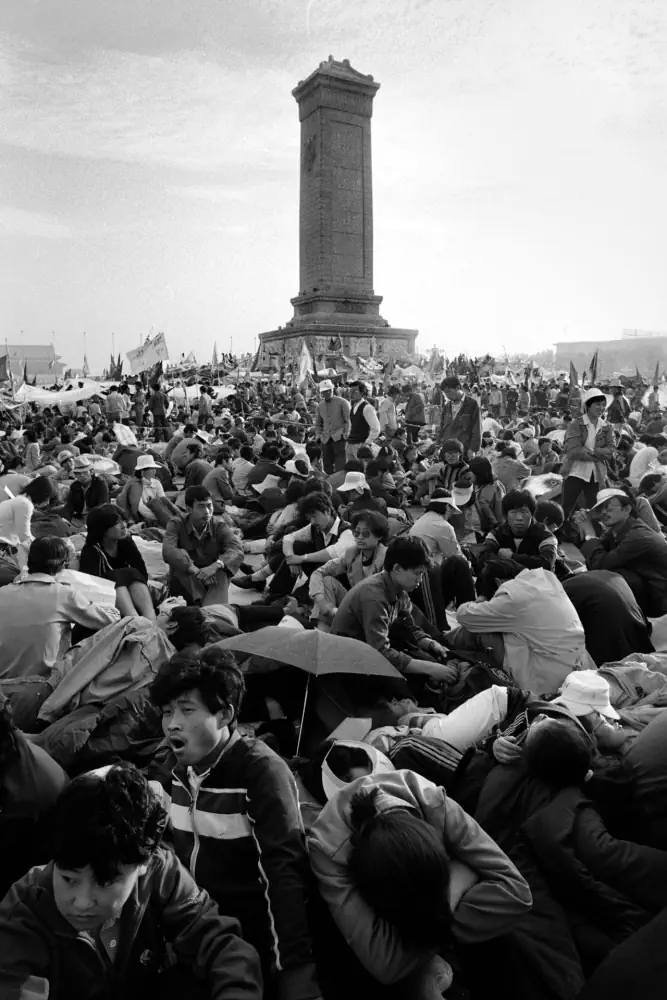
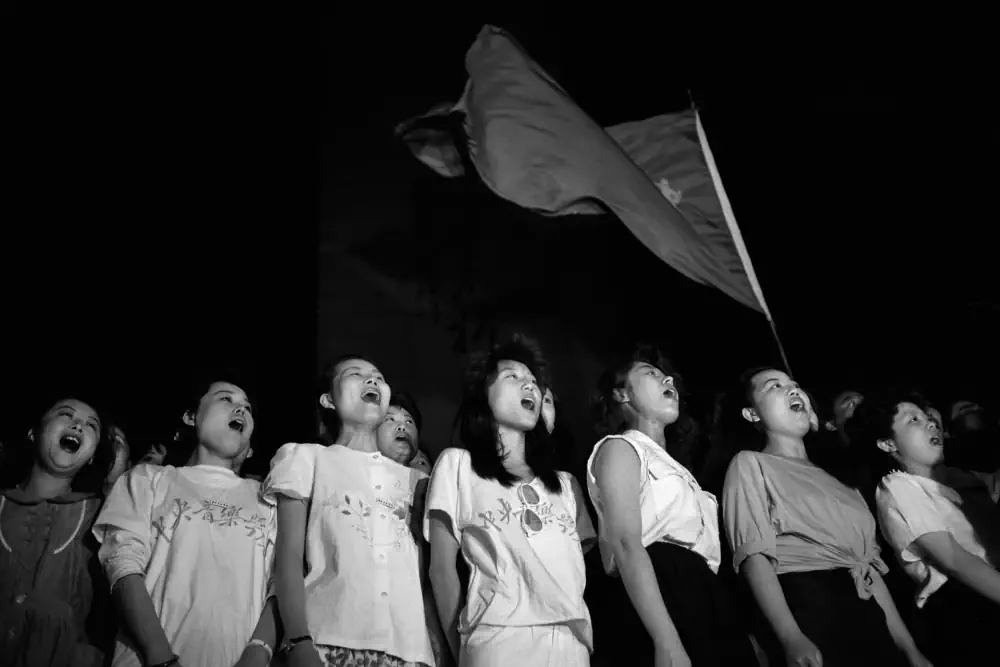
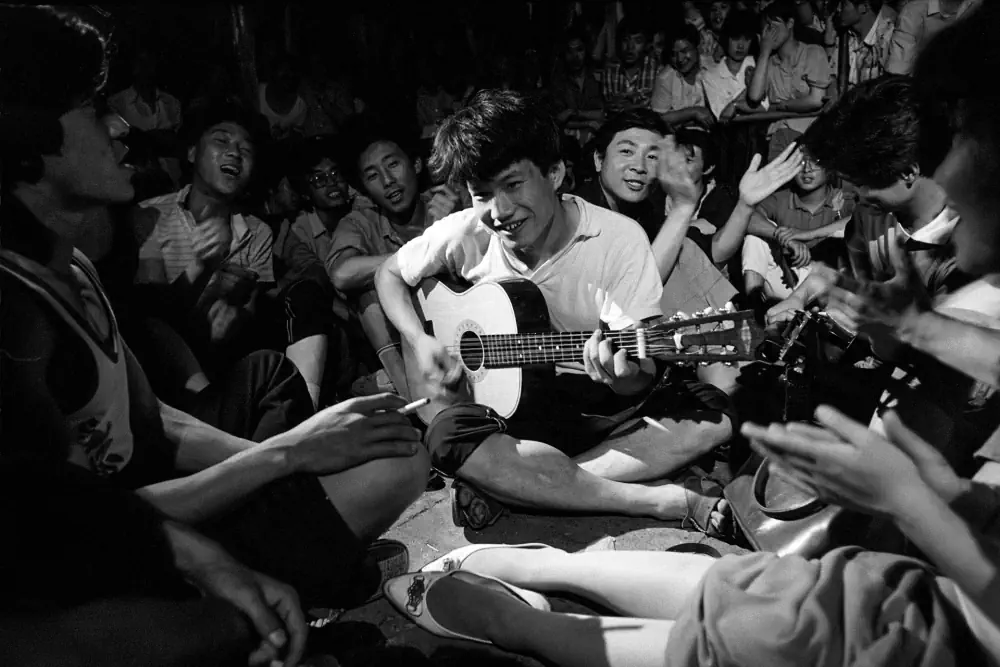
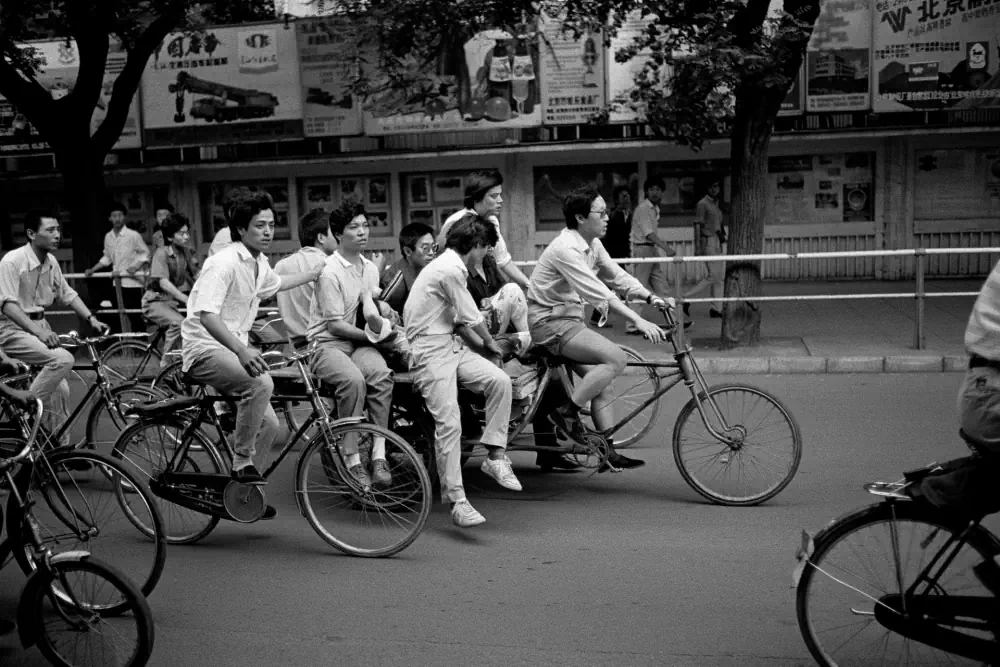
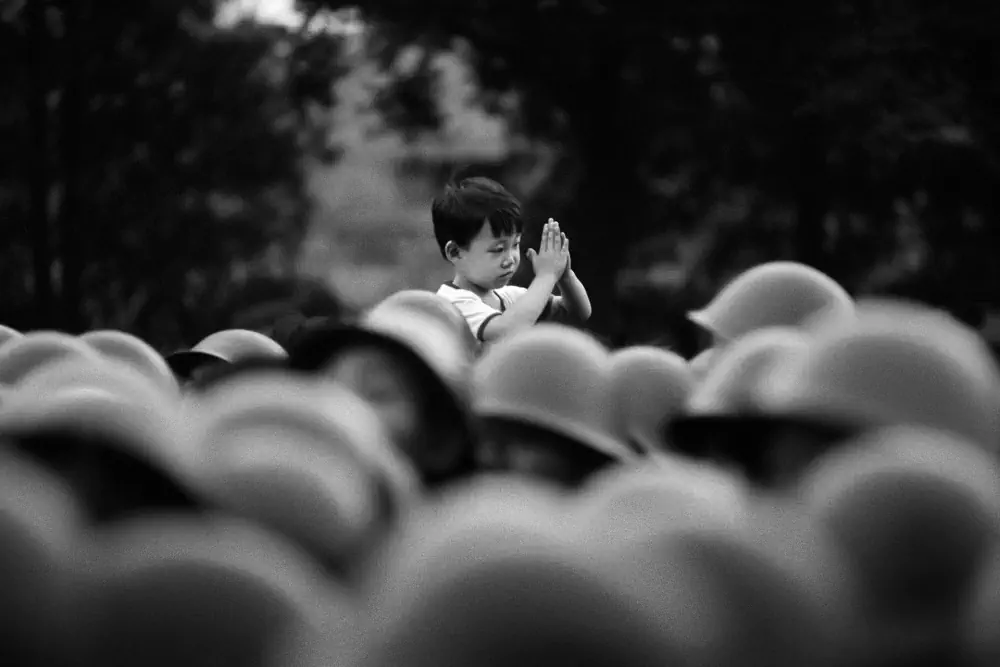
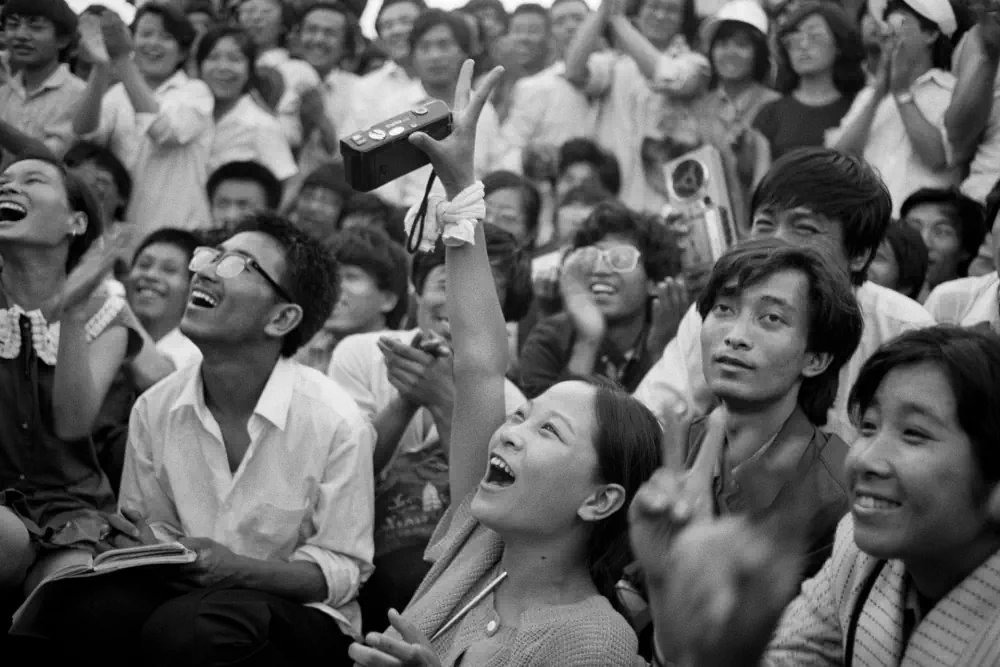
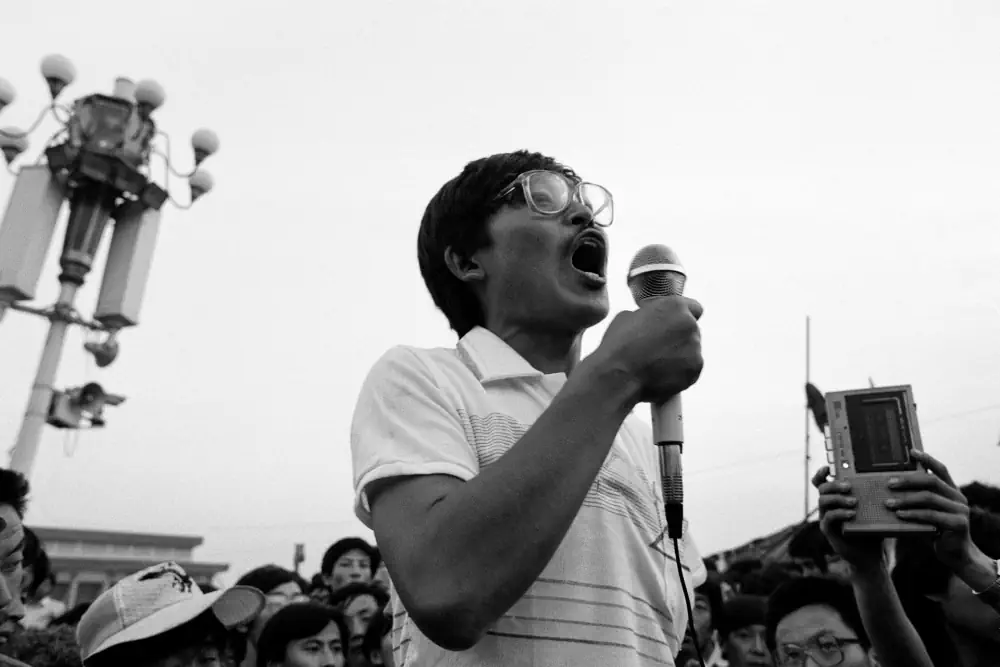
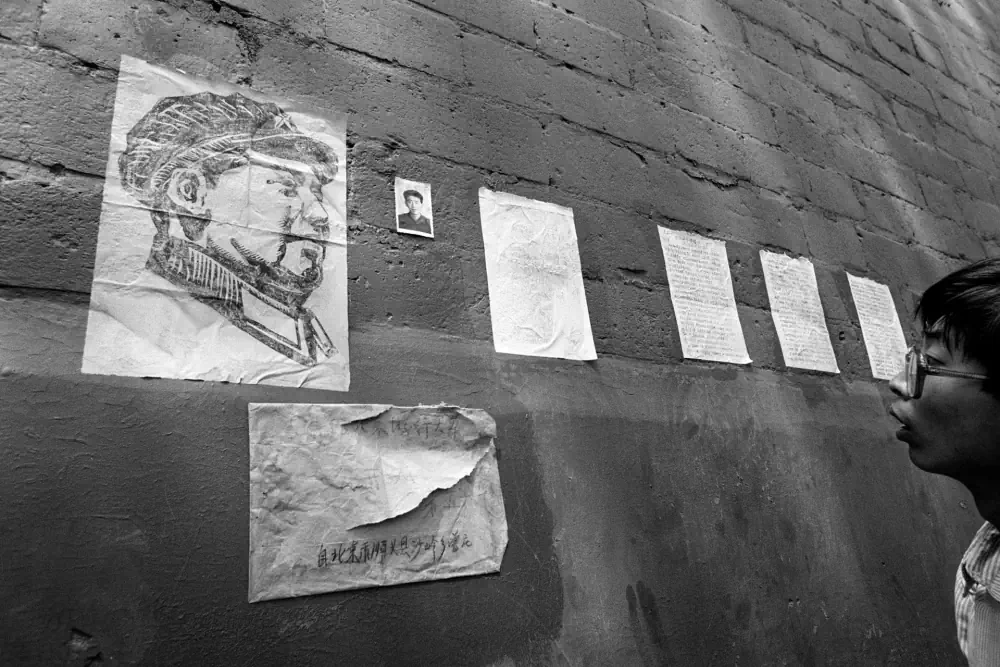
Over the following days, I spent most of my time in and around Tiananmen Square, photographing the students and their daily lives. There were moments of extraordinary optimism and solidarity. Students sang, played guitars, listened to speeches and applauded the unveiling of the Goddess of Democracy, a statue inspired by the Statue of Liberty. Others slept under makeshift tents, exhausted after weeks of demonstrations.
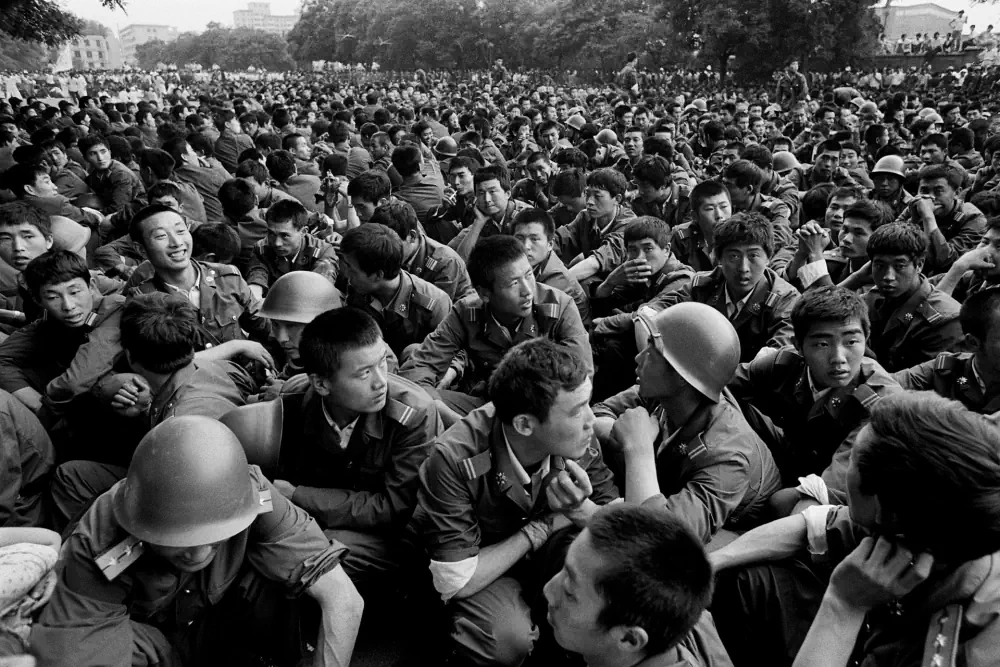
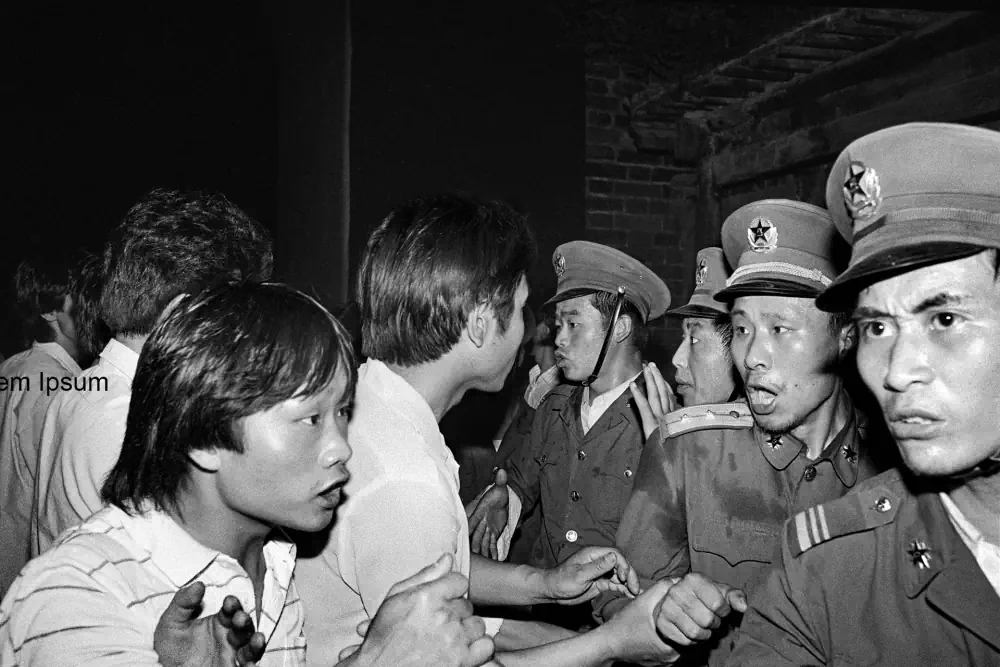
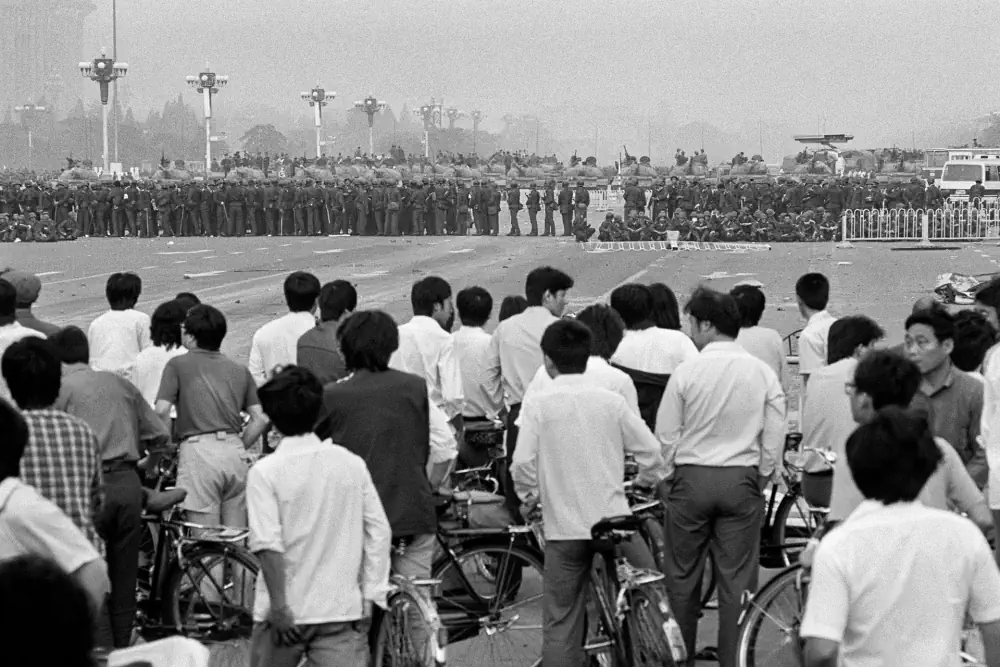
But the atmosphere gradually changed. On 1 and 2 June, soldiers began gathering around the square. Tensions increased as students and ordinary citizens confronted the troops, trying to prevent them from advancing.
By the evening of 3 June, the situation had become extremely dangerous. Chinese troops were moving towards Tiananmen Square, and during the night they began firing on civilians. What had started as a peaceful movement for democracy had turned into a massacre.
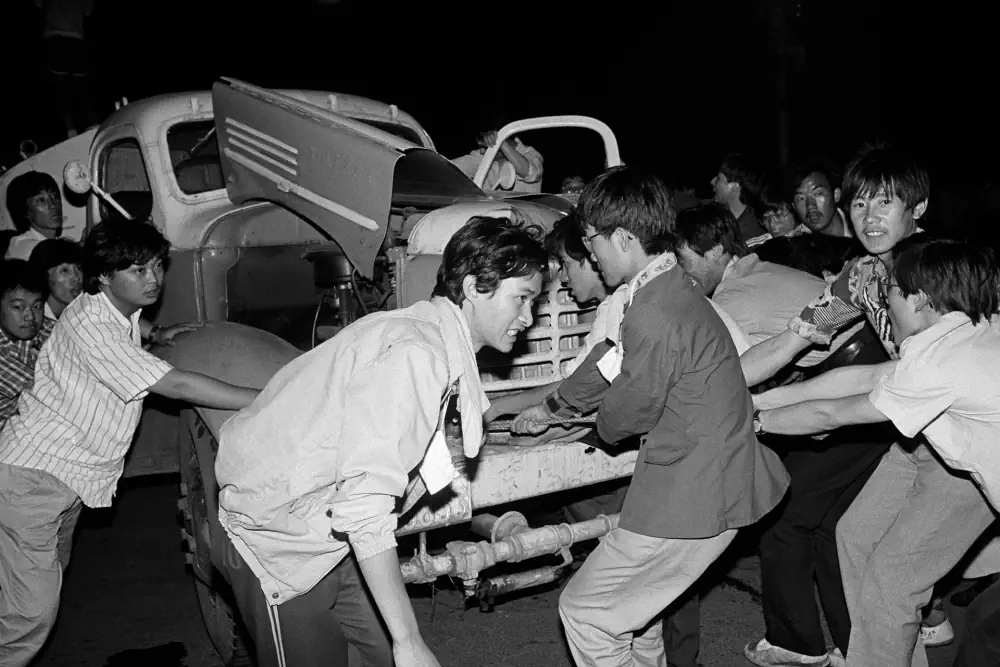
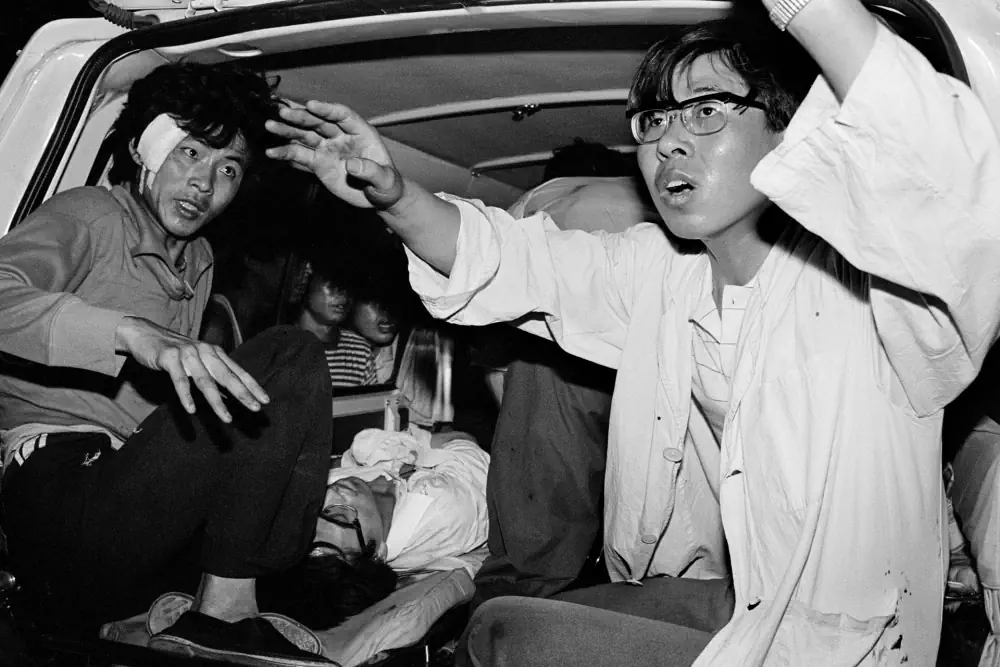
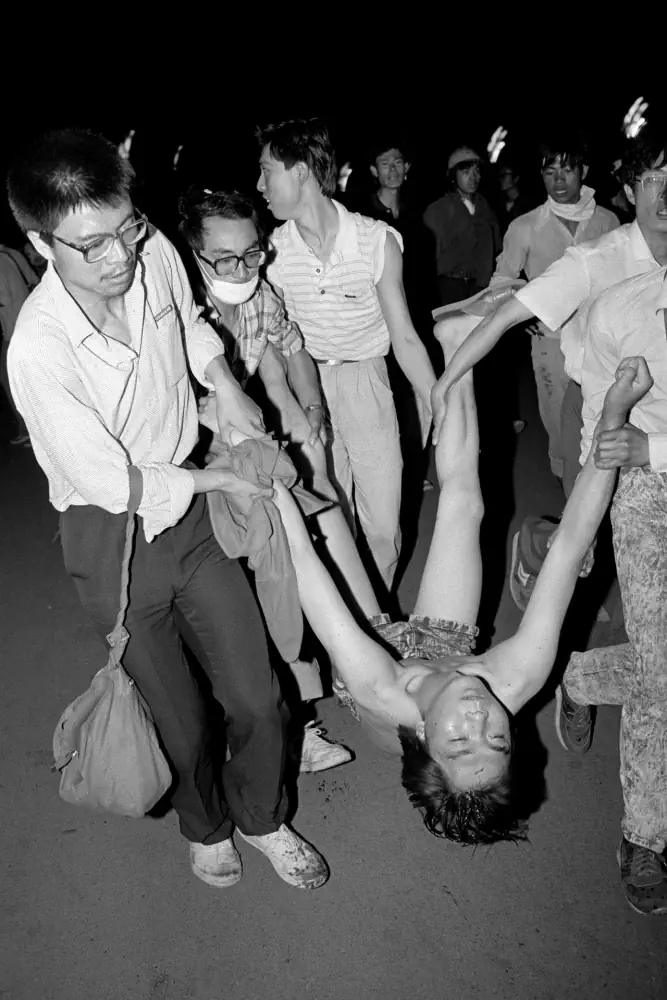
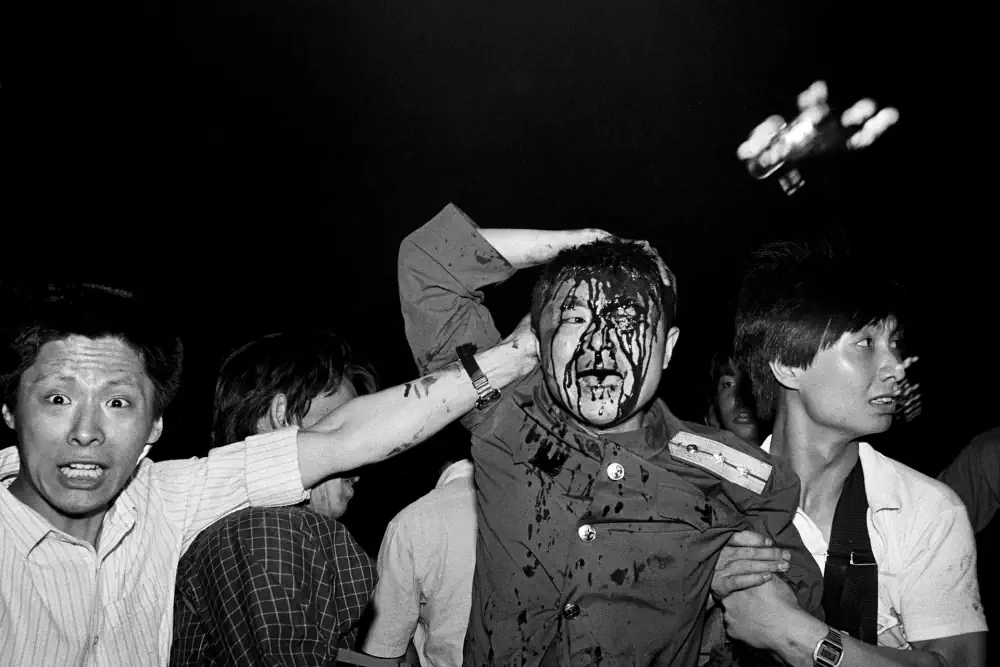
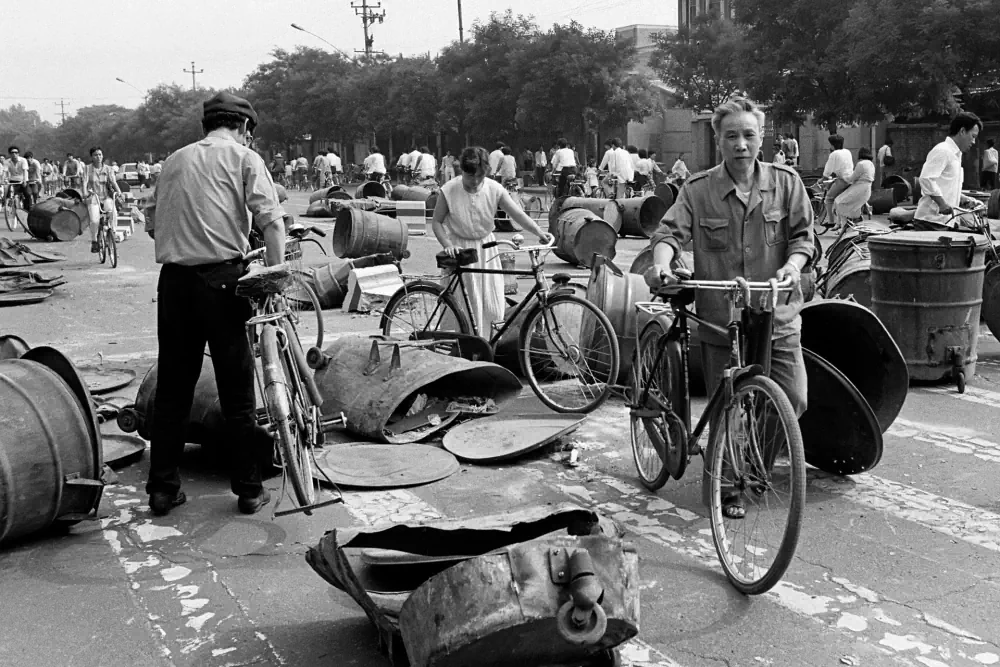
I continued photographing throughout the night, witnessing confrontations between soldiers and protesters, barricades being erected, and wounded people being carried away. I also photographed students helping a badly injured soldier who had been attacked by protesters. It was a night of confusion, fear and terrible violence.
I was increasingly concerned about protecting my photographs. Whenever I felt I had captured something important, I would remove the film from my camera and hide it before loading another roll and continuing to work. I knew that losing those negatives would mean losing the evidence of what I had witnessed.
Eventually, as the situation became too dangerous, I took refuge in a nearby five-star hotel. I remained there until daylight, when I ventured out again.
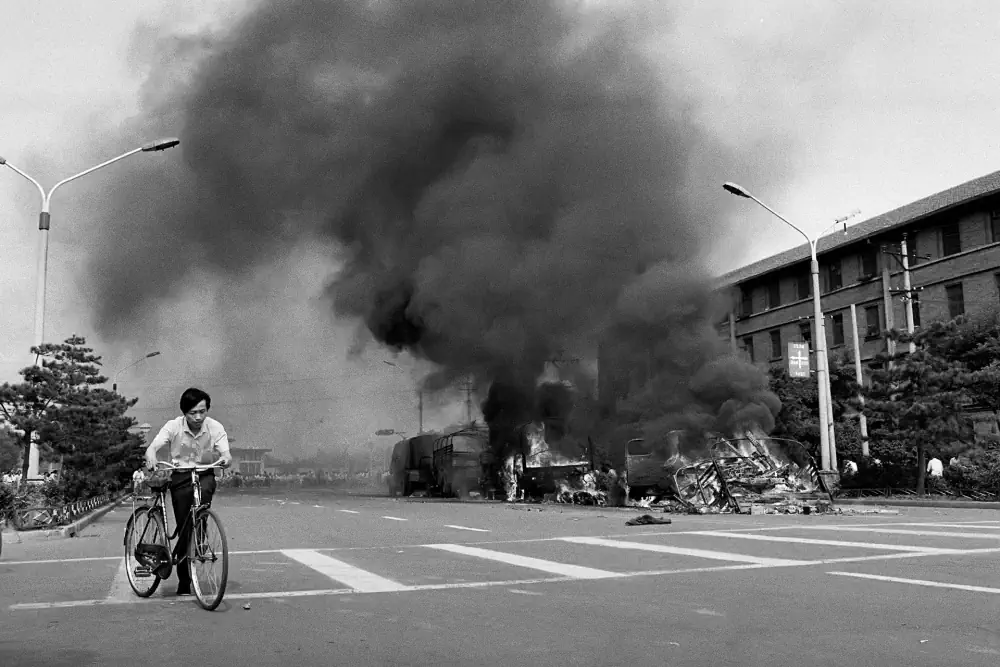
By the morning of 4 June, Tiananmen Square had been completely reoccupied by the Chinese army. Soldiers and tanks controlled the area, while nearby streets were filled with burning vehicles and thick black smoke.
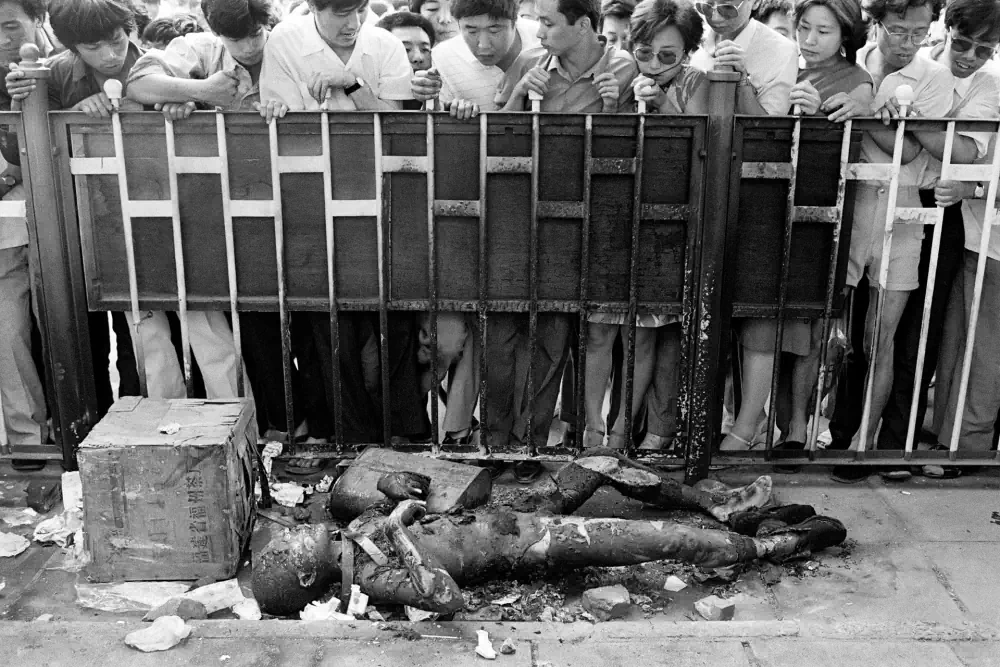
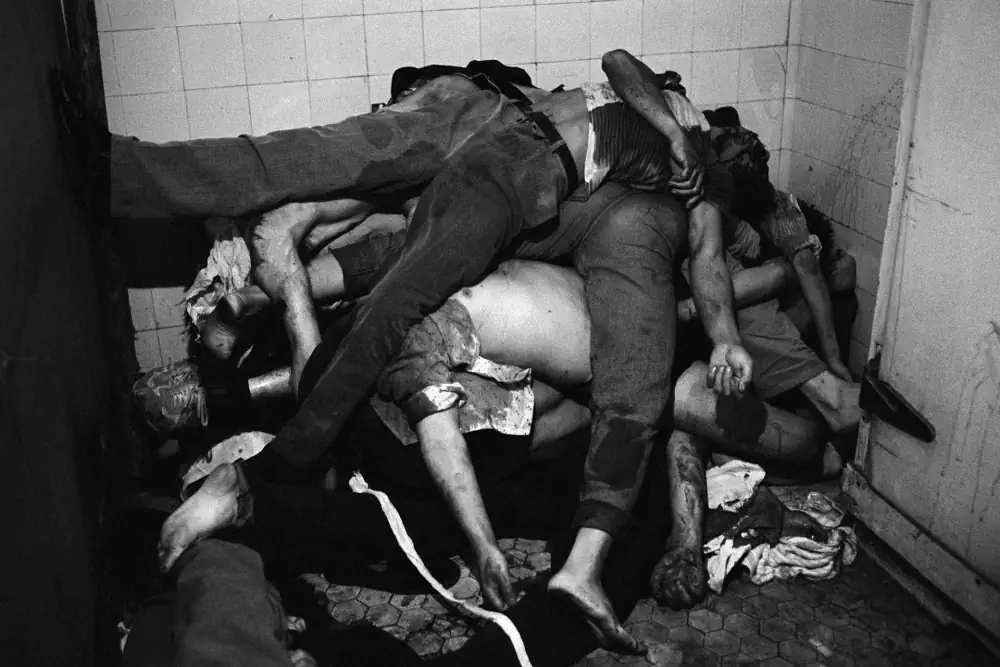
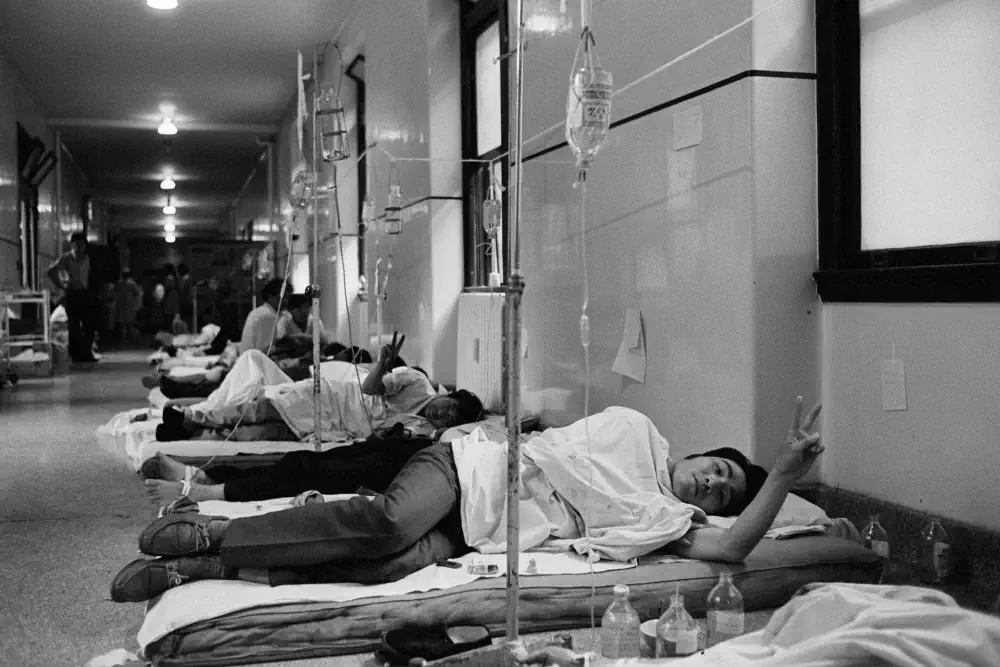
I continued photographing the aftermath, including the injured being taken to hospital and the overcrowded corridors of Capital Hospital, where patients lay on makeshift beds. In one room, the bodies of those killed during the crackdown had been piled together.
By an extraordinary coincidence, 4 June was also the final day of my ten-day return ticket. My flight from Beijing to London, via Hong Kong, was scheduled for approximately five o’clock that afternoon.
This meant that, while most international photographs of the massacre were being transmitted by wire, I was carrying my original exposed films directly back to Europe. They were among the first photographic negatives of the events to reach the West.
I was also carrying films belonging to my friend and fellow photographer Peter Turnley, who had been covering the events on assignment for Life magazine. When I reached London, I handed his films to a courier for delivery.
Despite being completely exhausted and jet-lagged, I went straight to the darkroom at Select Photos, the photographic agency I was working with at the time. We began processing the films and printing as many sets of photographs as possible, distributing them to newspapers and magazines.
The pictures appeared on front pages across the British press, and several were published as exclusives in magazines around the world.
What had begun as a modest, self-financed trip to build my portfolio had unexpectedly become the most important assignment of my early career. The photographs subsequently earned me the title of British Press Photographer of the Year.
Taken over just ten days, these images document the extraordinary contrast between the optimism of the student movement and the brutality of its suppression.
Hundreds, possibly thousands, of people were killed during the military crackdown of 3–4 June 1989, and tens of thousands were arrested across China in the repression that followed.
Looking back, I still find it extraordinary that my fixed return ticket happened to coincide with the day of the massacre. Had I travelled a few days earlier or later, the story of these photographs might have been very different.
For me, these images remain, above all, a testimony to the courage of the people I photographed and to a moment in history that should never be forgotten.
About Dario Mitidieri
Dario Mitidieri is an Italian photographer based in London. For over 30 years, he has been documenting stories of resilience, loss, joy, and the human experience through photography.
He began his career in 1987, working for publications such as The Sunday Telegraph and The Independent. In 1989, he covered the Tiananmen Square protests in Beijing, documenting one of the most brutal crackdowns in modern history. This work earned him the British Press Photographer of the Year award and reinforced his commitment to photojournalism as a means of documenting truth and promoting accountability.
In 1994, he published the book Children of Bombay, the result of a year-long project focusing on the lives of street children in what is now Mumbai. Recognised by Photo magazine as one of the most important photographic works of the decade, it remains a defining moment in his career and a personal reminder of the power of storytelling to inspire change.
That same year, he was embedded with the Williams team at the San Marino Grand Prix in Imola, documenting the Formula 1 race in which Ayrton Senna tragically lost his life. His photographs were later published in the book L’Ultimo Ayrton.
Throughout his career, he has covered major events, including the aftermath of the Kobe earthquake in Japan, the Northern Ireland conflict, the Iraq War, and the devastation caused by the Indian Ocean tsunami in Indonesia.
More recently, his project Lost Family Portraits highlighted the devastating impact of war on families, reaching over 700 million viewers worldwide.
His work has been recognised with prestigious awards, including the W. Eugene Smith Award in Humanistic Photography, the Visa d’Or at the International Festival of Photojournalism in Perpignan, and two World Press Photo Awards. These accolades reinforce his belief in the importance of bringing attention to meaningful stories that are often overlooked.
When he is not working, he is usually planning his next trip or mentoring emerging photographers, helping them develop their own visual voices.
For him, photography is more than a profession; it is an essential part of his identity. It is a way to connect with people and share their stories with the world. [Official Website]