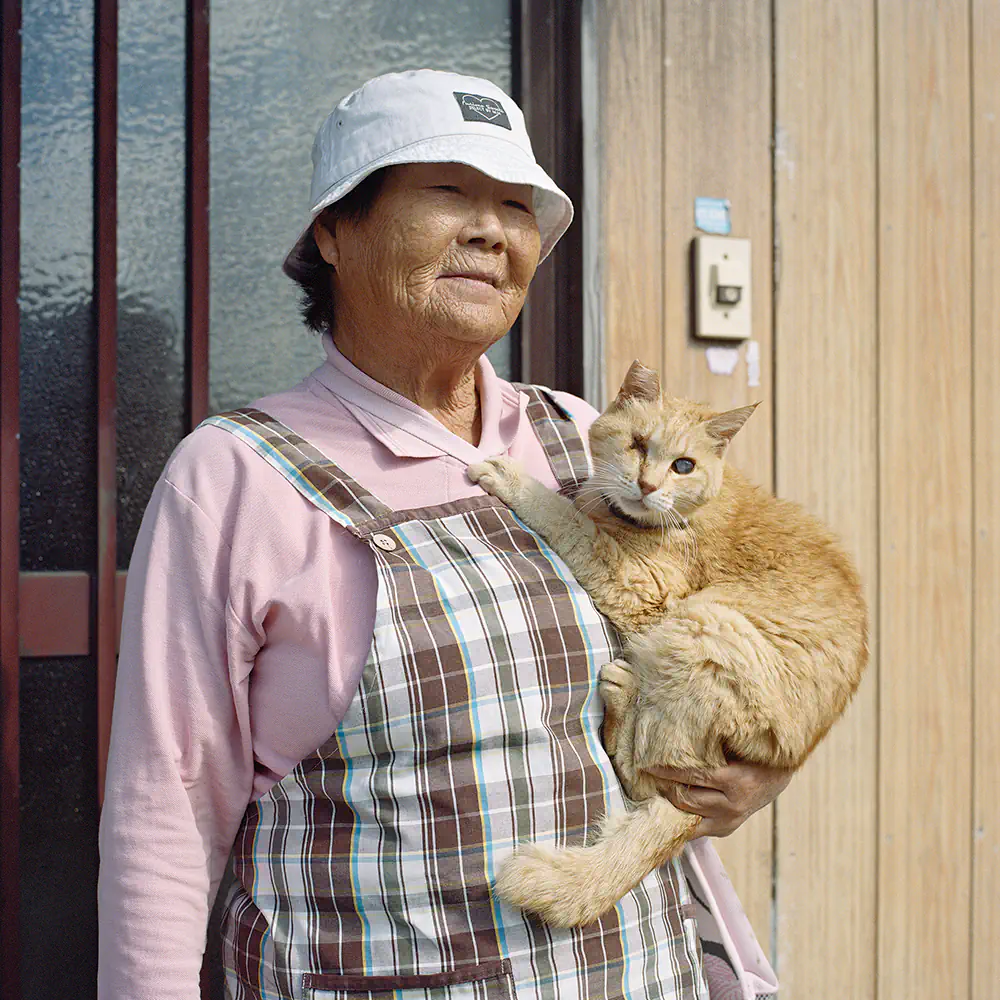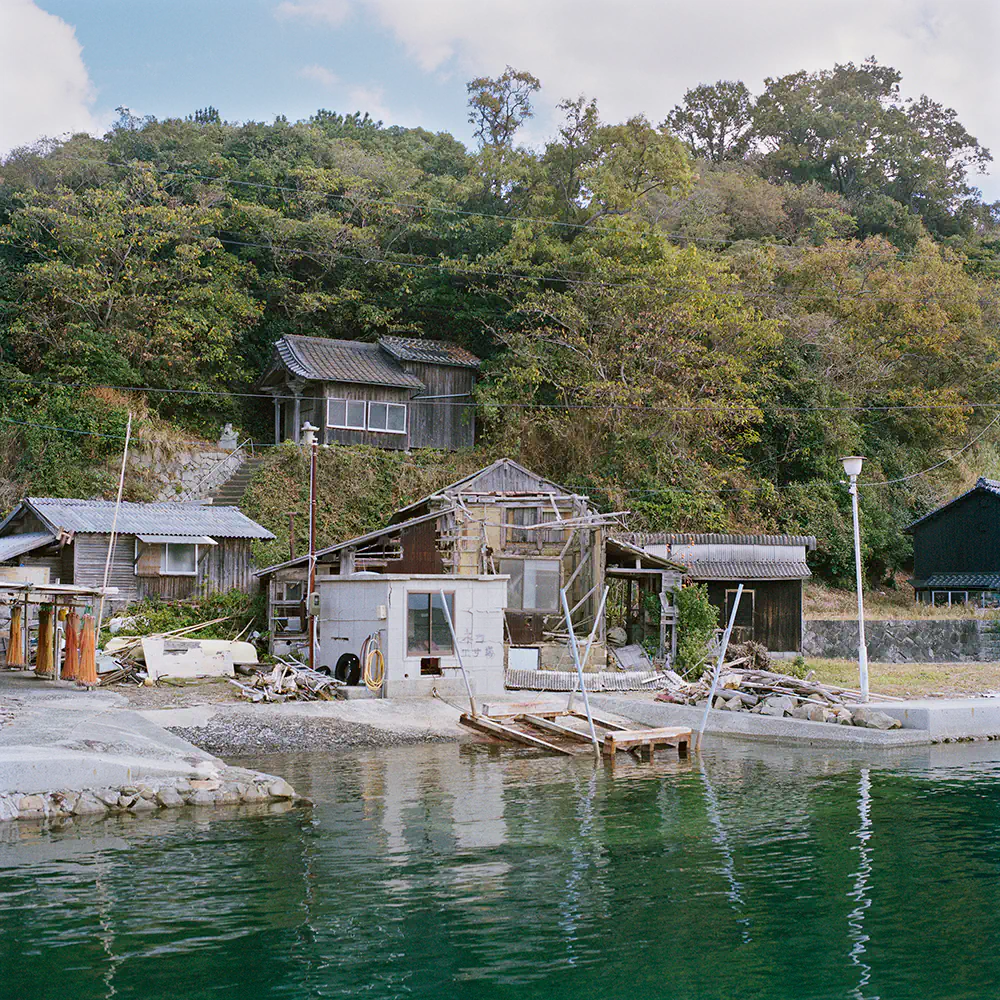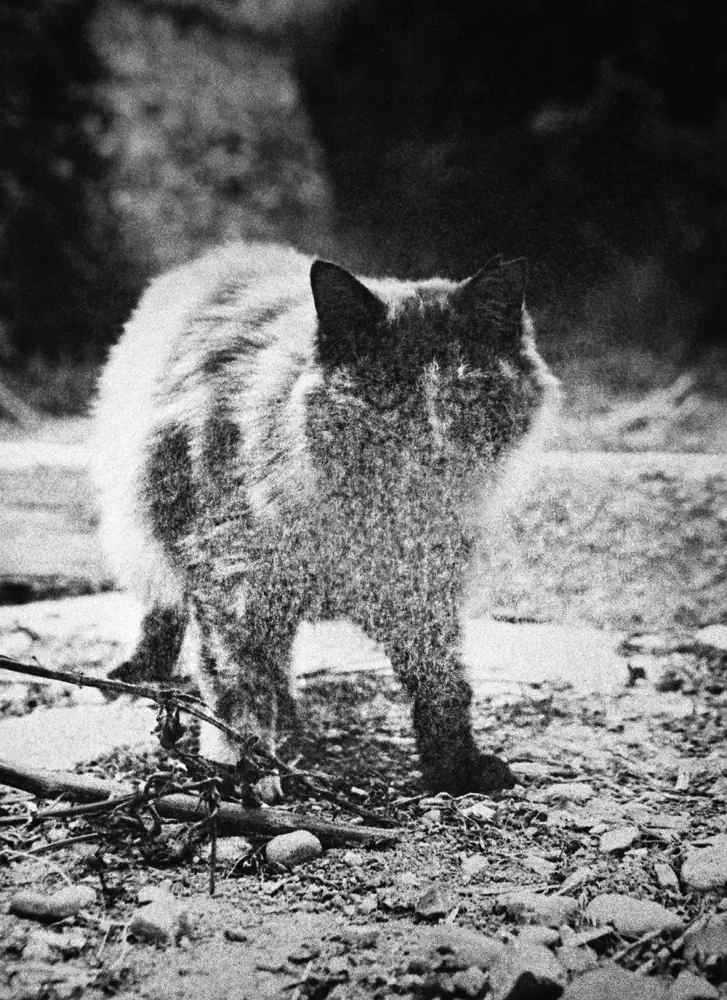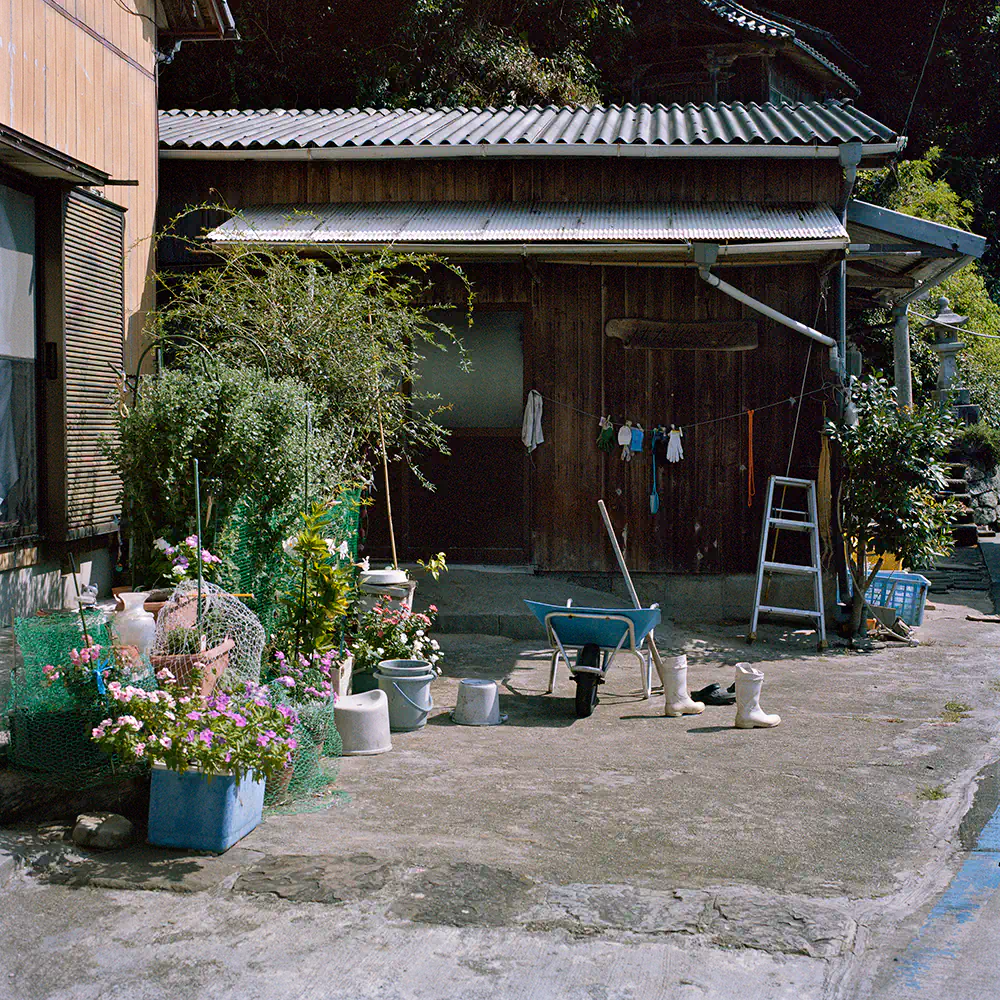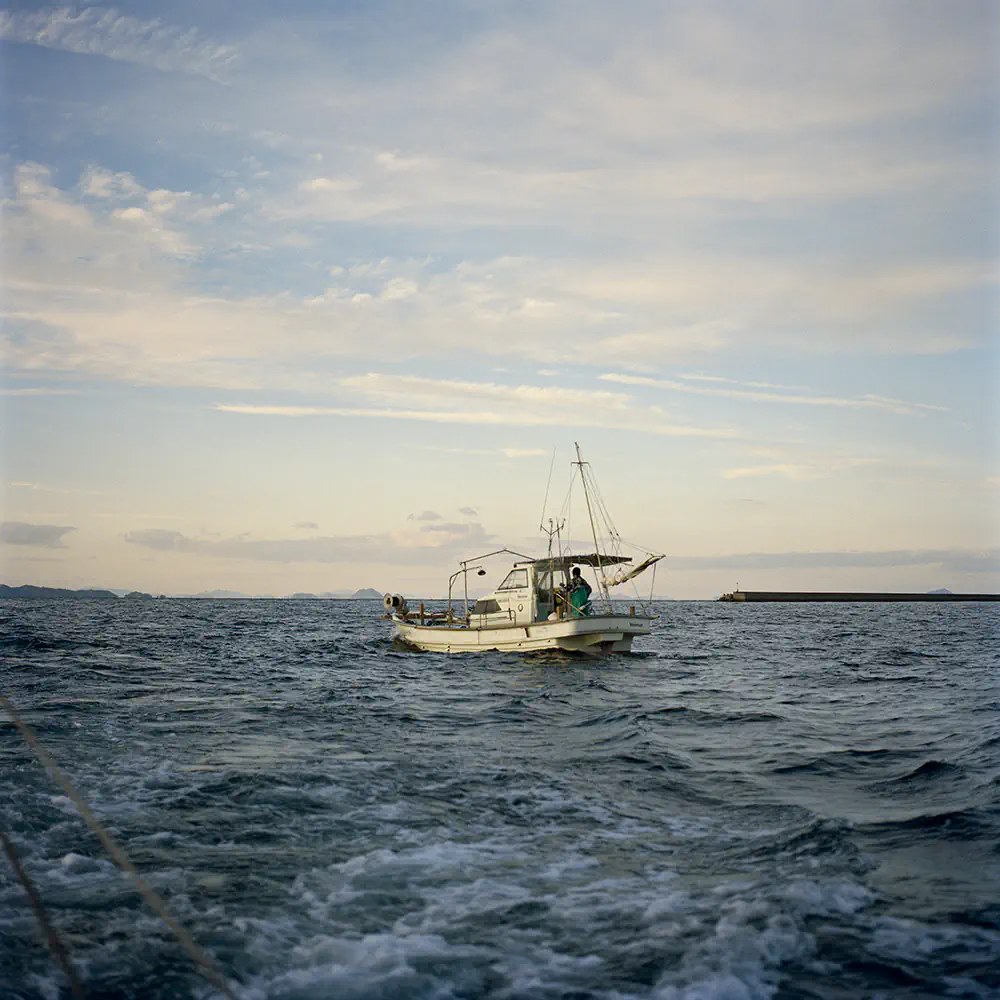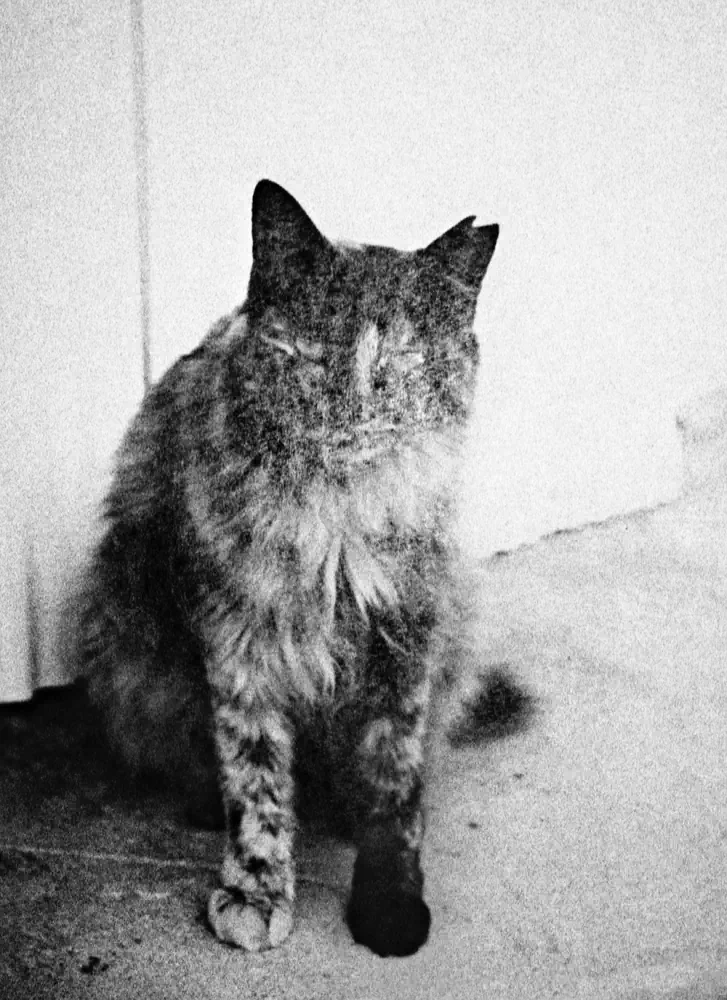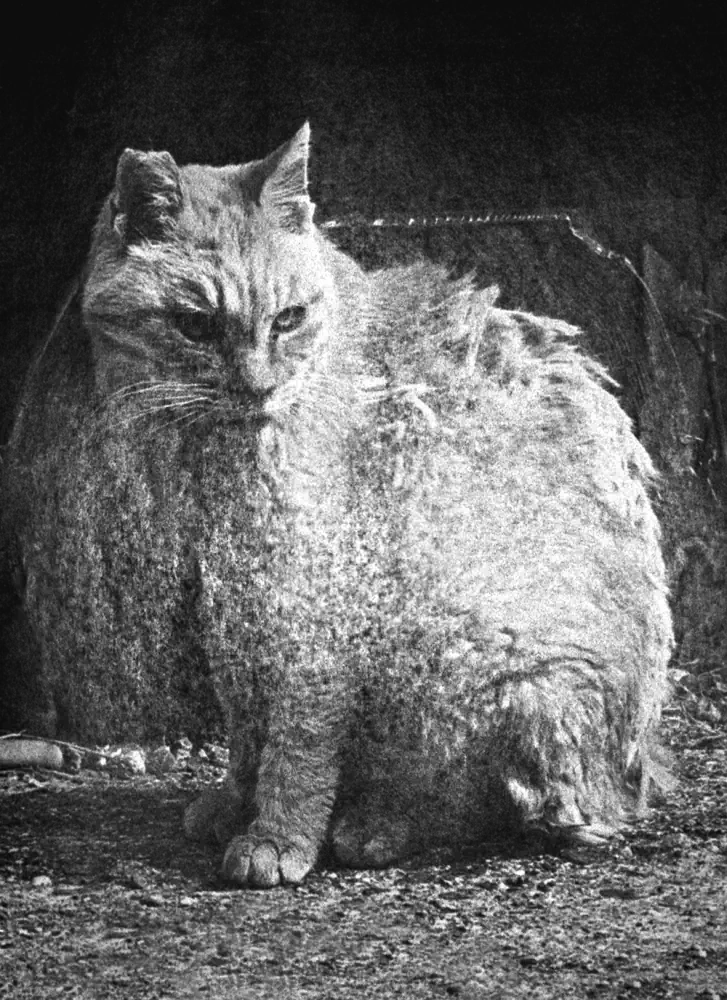


CAT ISLAND BLUES is a project that explores the urgent issue of demographic decline in Japan through the singular yet emblematic story of Aoshima — the “blue island” — a small fishing island off the coast of Ehime Prefecture, more widely known as “Cat Island.”
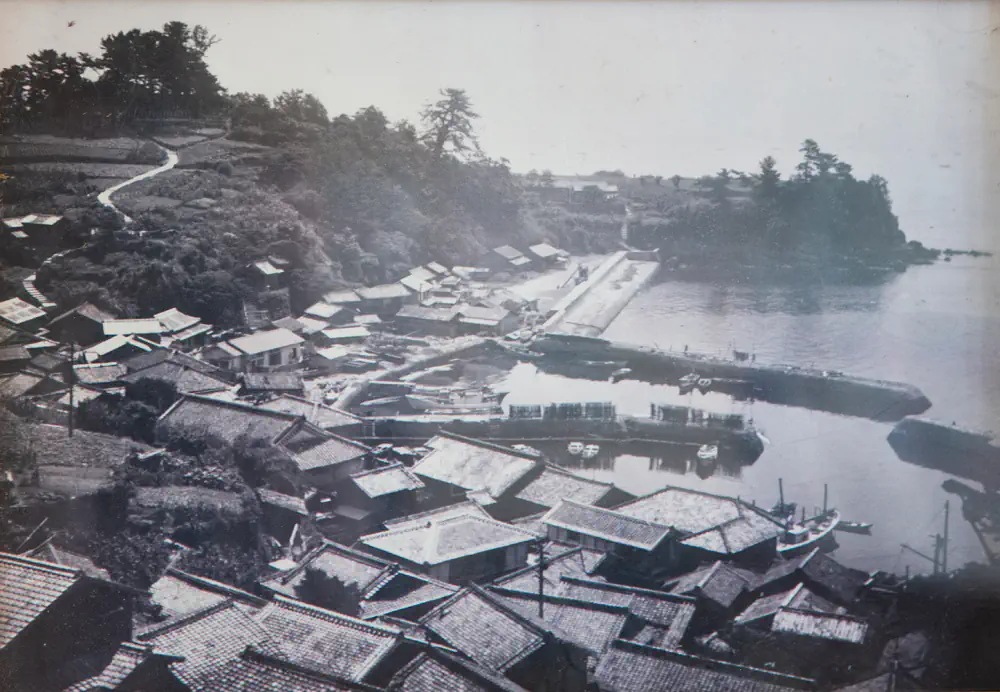
At the beginning of the 17th century, Aoshima had no permanent residents and was used solely as pasture for horses. In 1639, sixteen families from the Ako region settled there, drawn by the abundance of marine resources. The island gradually developed around fishing and reached its peak population in 1945, with 889 residents living on less than one square kilometer. Aoshima was then overcrowded — so much so that some young people reportedly slept on boats.
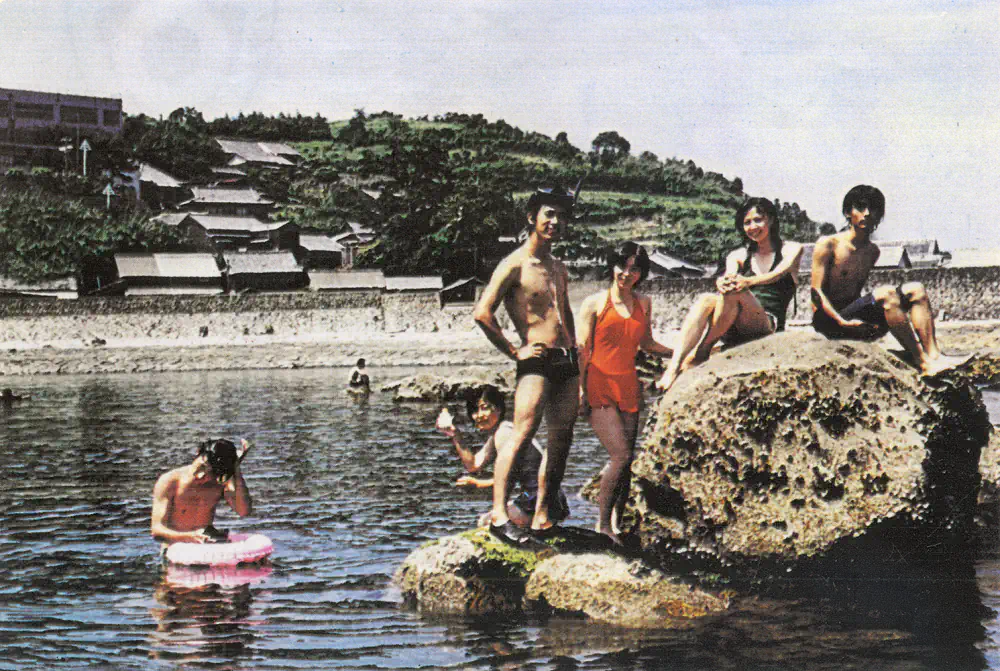
To protect their fishing nets from rodents, fishermen introduced a few cats, whose numbers slowly increased and stabilized over time. At the time, the island also had a vibrant cultural life, and its Bon Odori festival was renowned throughout the region.
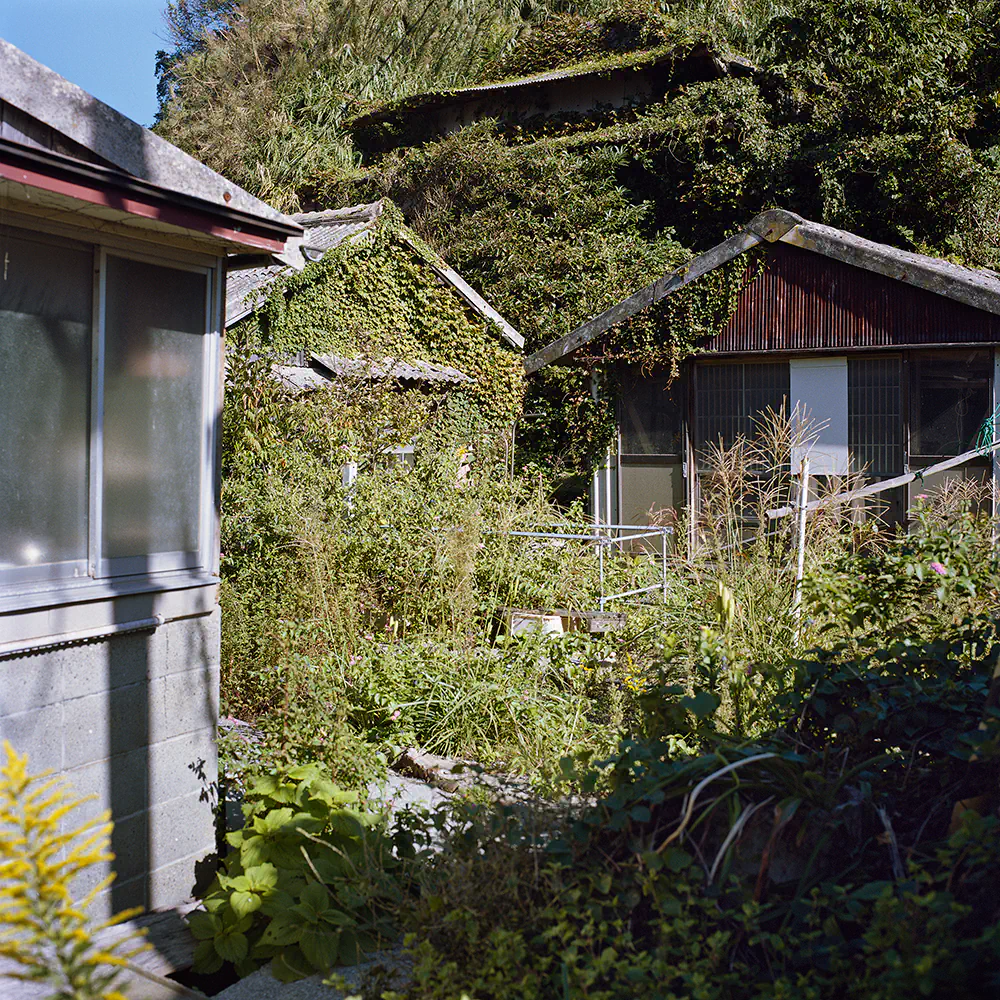
During the second half of the 20th century, however, a combination of overfishing, an aging population, rural exodus, and harsh living conditions led to a gradual population decline. By 2013, only around fifteen residents remained, surrounded by nearly a hundred cats.
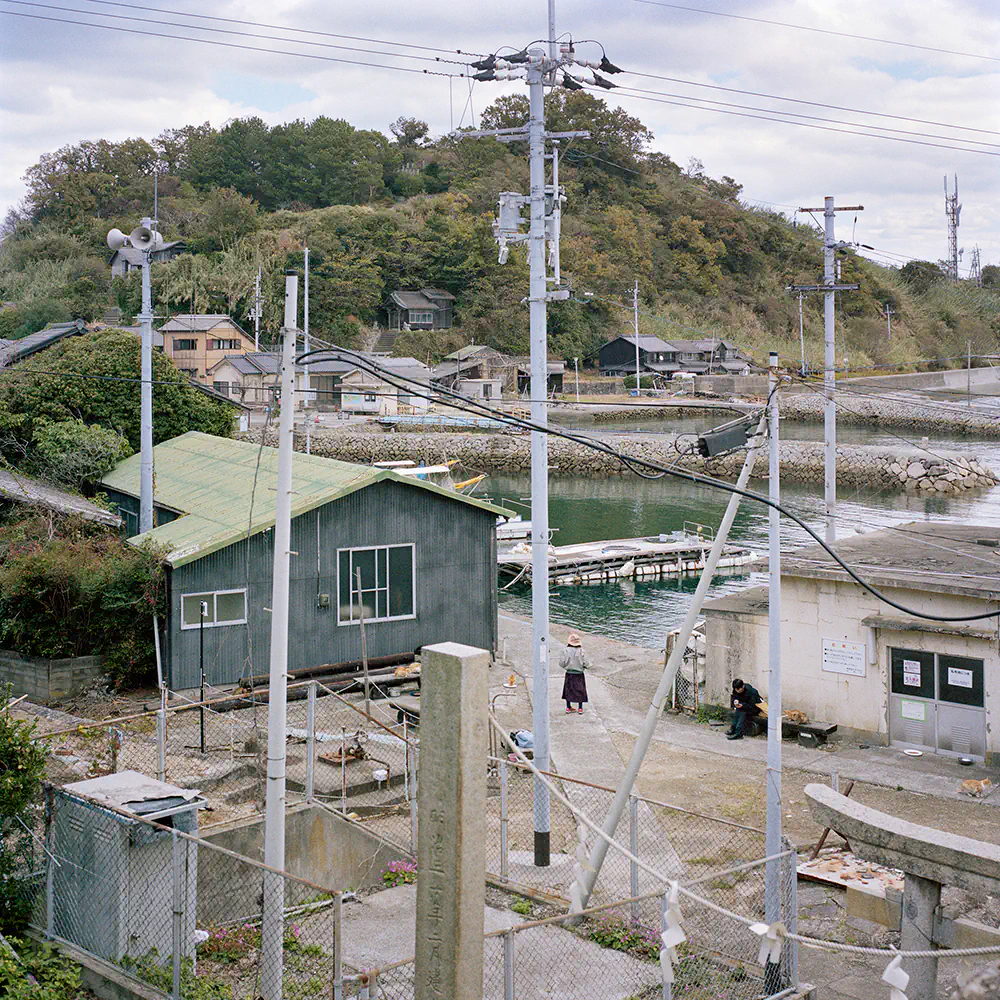
An unexpected event soon changed the course of the island’s history. A famous wildlife photographer featured Aoshima in a television documentary, which was later picked up by numerous other media outlets. Images of the island’s cats quickly went viral, attracting a sudden influx of tourists. But Aoshima was unprepared. It had no shops, restaurants, accommodation, potable water, or waste collection services.
This unexpected increase in visitors disrupted the island’s fragile balance and disturbed the daily lives of its last residents. The cats — overfed by tourists eager to capture the perfect photograph — began to multiply rapidly. In response, and due to growing concerns about inbreeding and the aging human population, animal welfare organizations and local authorities launched a complete sterilization campaign in 2018. All the cats were sterilized in just two days. Since then, no new kittens have been born on Aoshima.
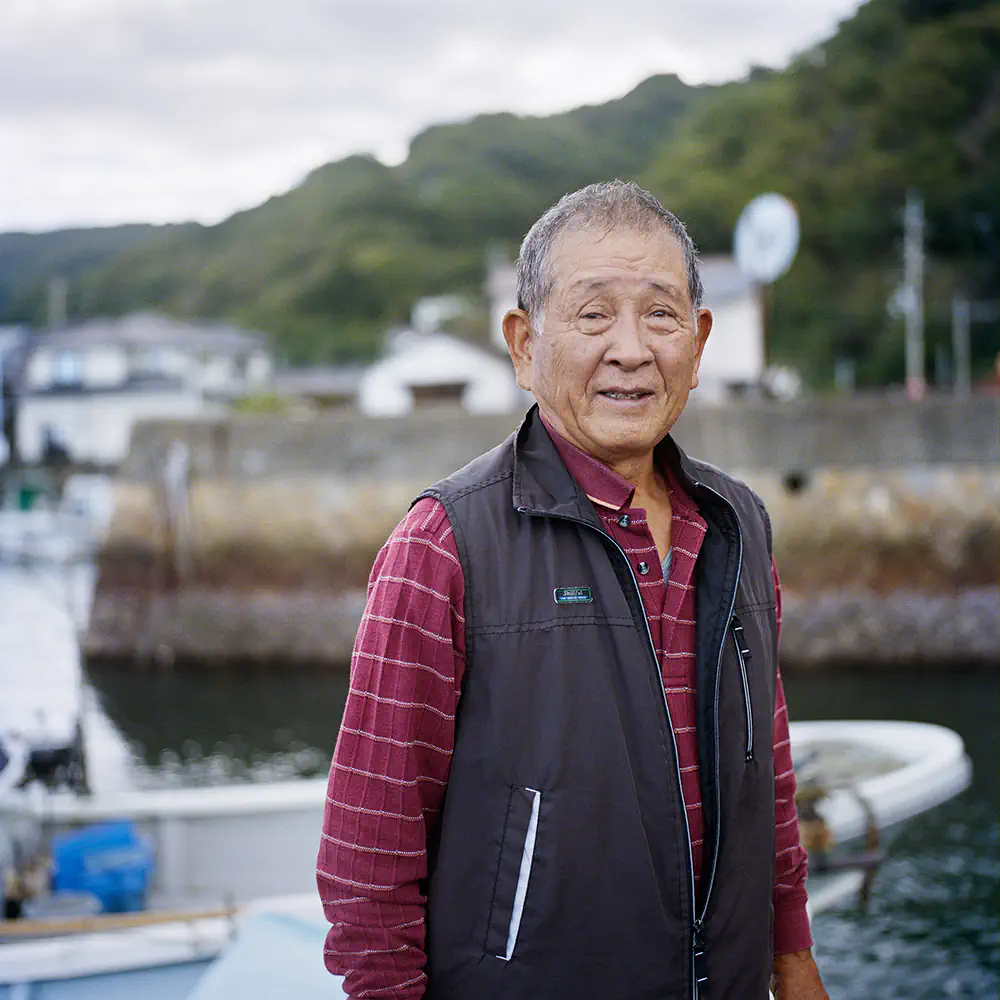
Today, only three elderly residents remain. The last few visitors are welcomed by a dwindling population of aging, almost ghostlike cats. In the near future, when the last cats are gone and the remaining residents decide to leave, the ferry service will cease. The island will once again become uninhabited.
CAT ISLAND BLUES seeks, first and foremost, to preserve the memory of this place before it disappears.
Beyond the major social and demographic shifts currently reshaping Japan — and likely to affect many contemporary societies in the near future — CAT ISLAND BLUES also addresses several other important contemporary issues: the erosion of cultural traditions, the excesses of overtourism and its environmental impact, end-of-life care and the question of personal autonomy in later-life decisions, animal welfare, and the ways in which humans share the world with other species.
The project uses the case of Aoshima as a lens through which to examine how localized situations can reveal broader structural dynamics at play in contemporary societies.
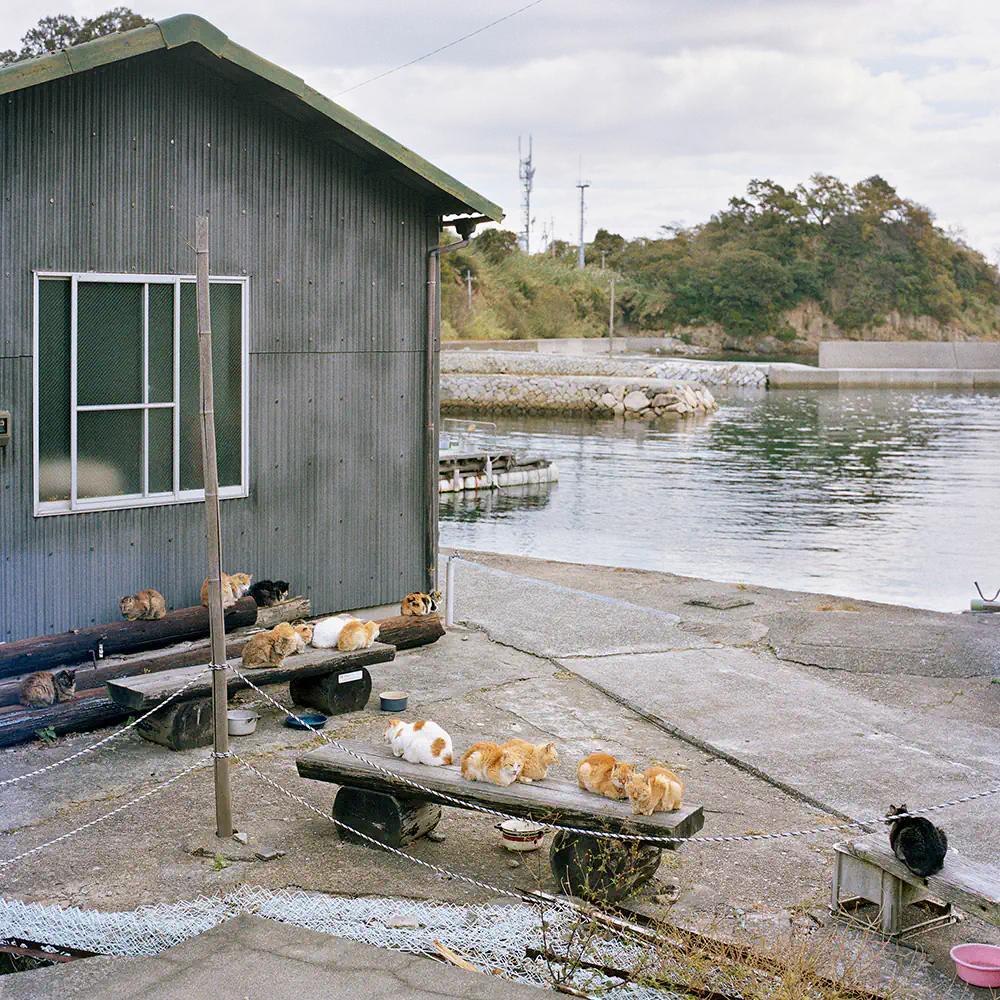
About Katherine Longly
Katherine Longly is a Belgian visual artist whose work combines photography, visual arts, and anthropology to explore contemporary social issues through a documentary and narrative approach. Driven by curiosity and grounded in dialogue and human encounters, she develops long-term projects that explore the stories shaping contemporary society and reveal the complexity of human experience.
She constructs her narratives by adopting the role of a collector. In addition to taking photographs, she gathers images, testimonies, objects, recordings, press clippings, and archival documents, all of which become materials that she later organizes into layered forms of storytelling.
Longly regularly participates in artistic residencies across Europe and Asia, particularly in Japan, where she spends two months each year. She has published three books: To Tell My Real Intentions, I Want to Eat Only Haze Like a Hermit (2018), Hernie & Plume (2020), and Just My Luck (2023, with Cécile Hupin).
Her fourth book, Cat Island Blues, will be published in 2027 by BLOW UP PRESS. Her work has received several awards and is regularly exhibited in Belgium and internationally. [Official Website]