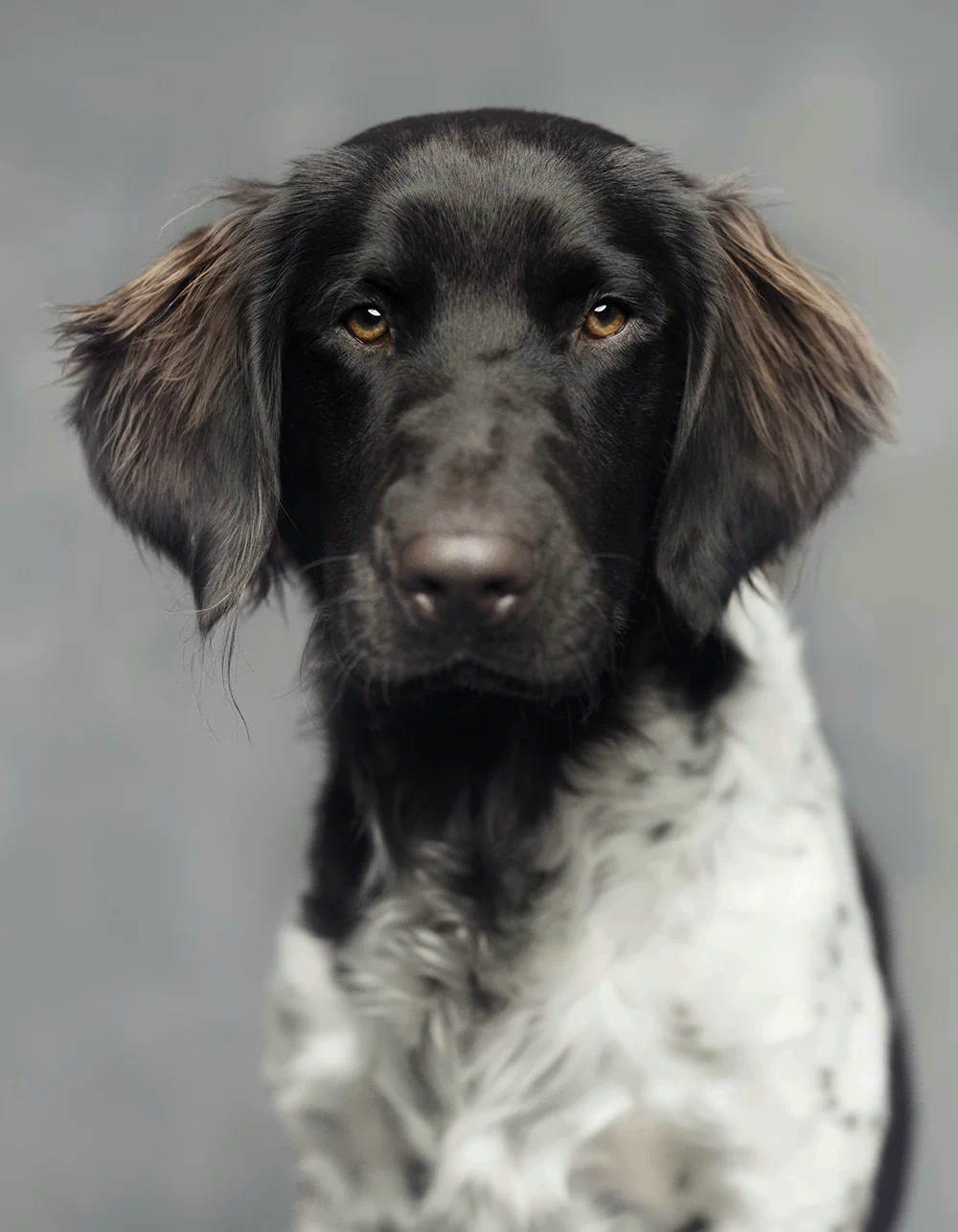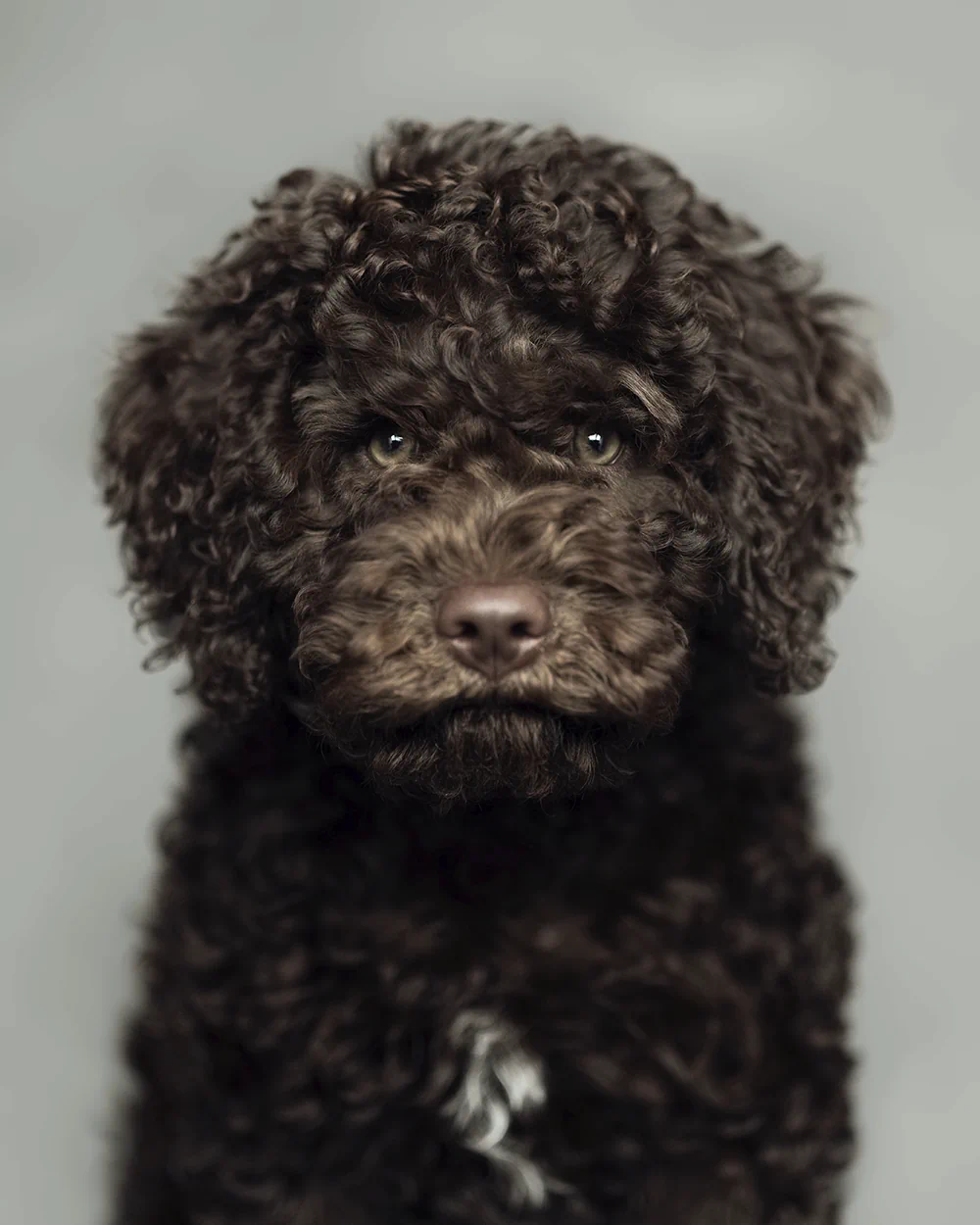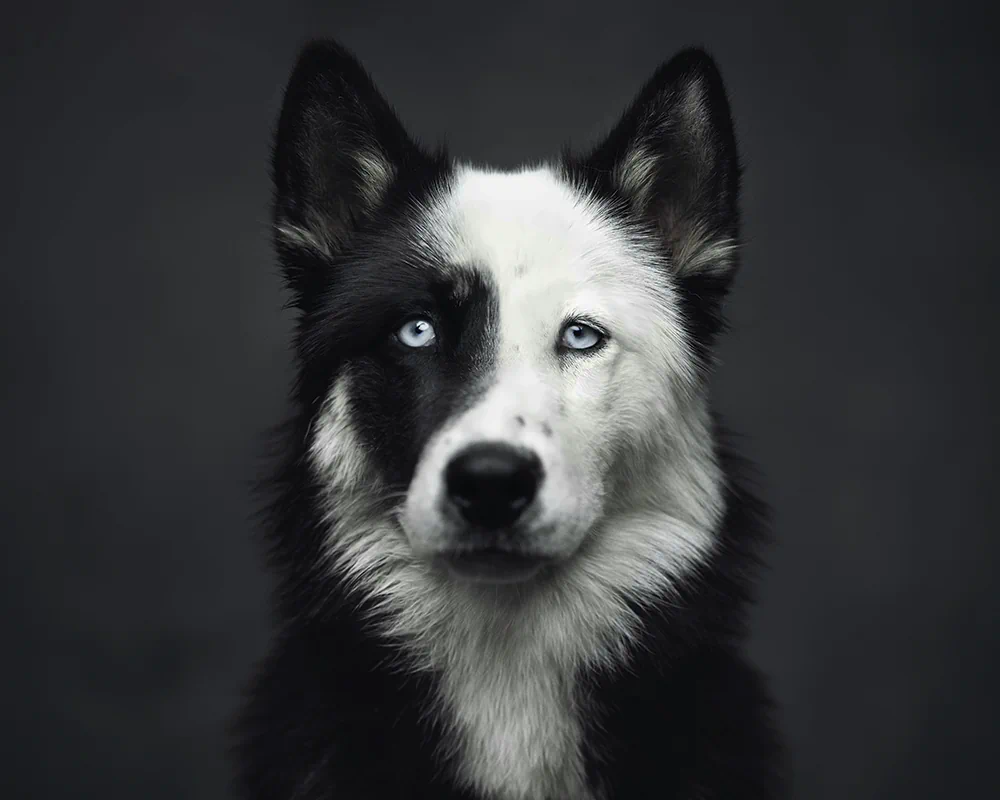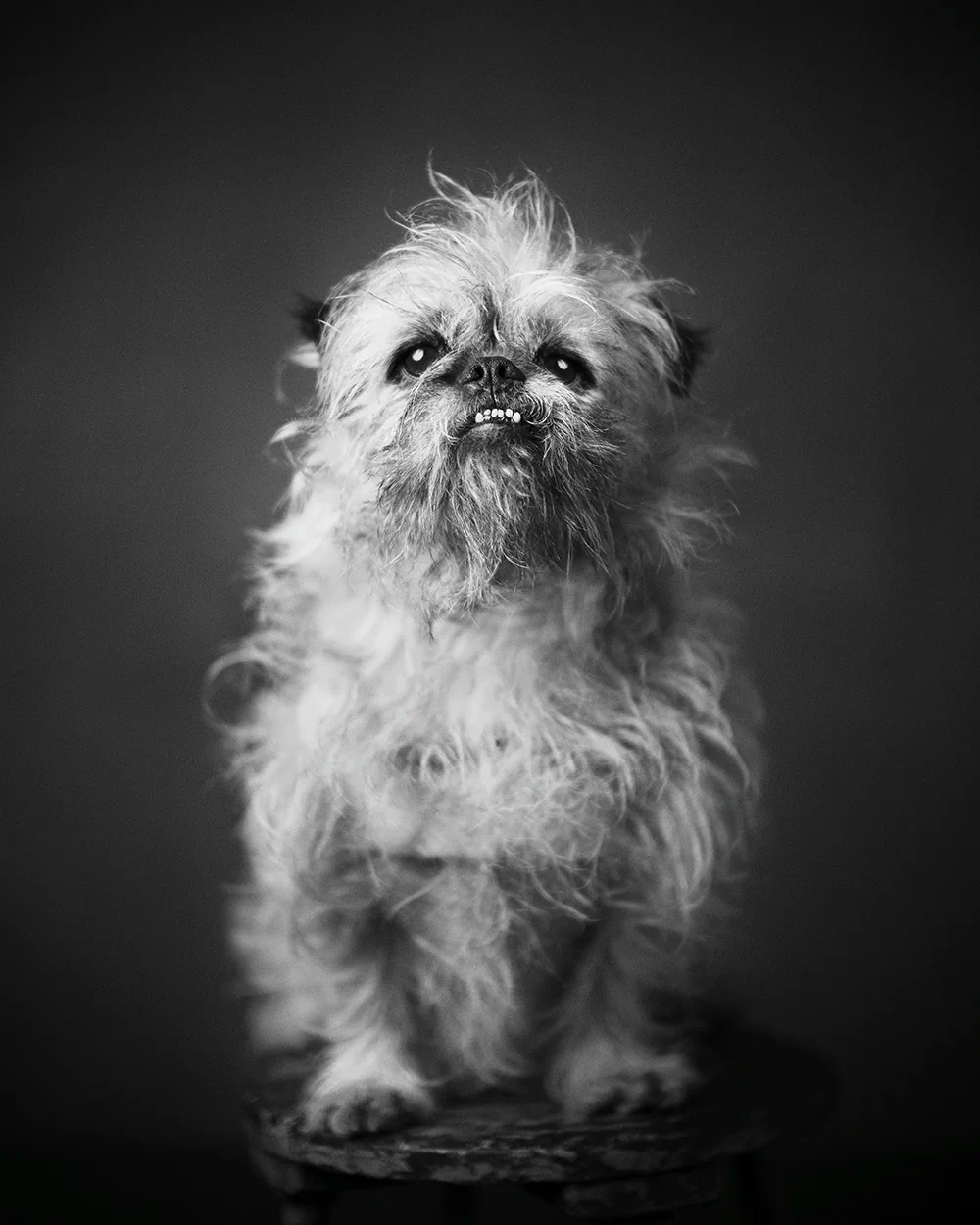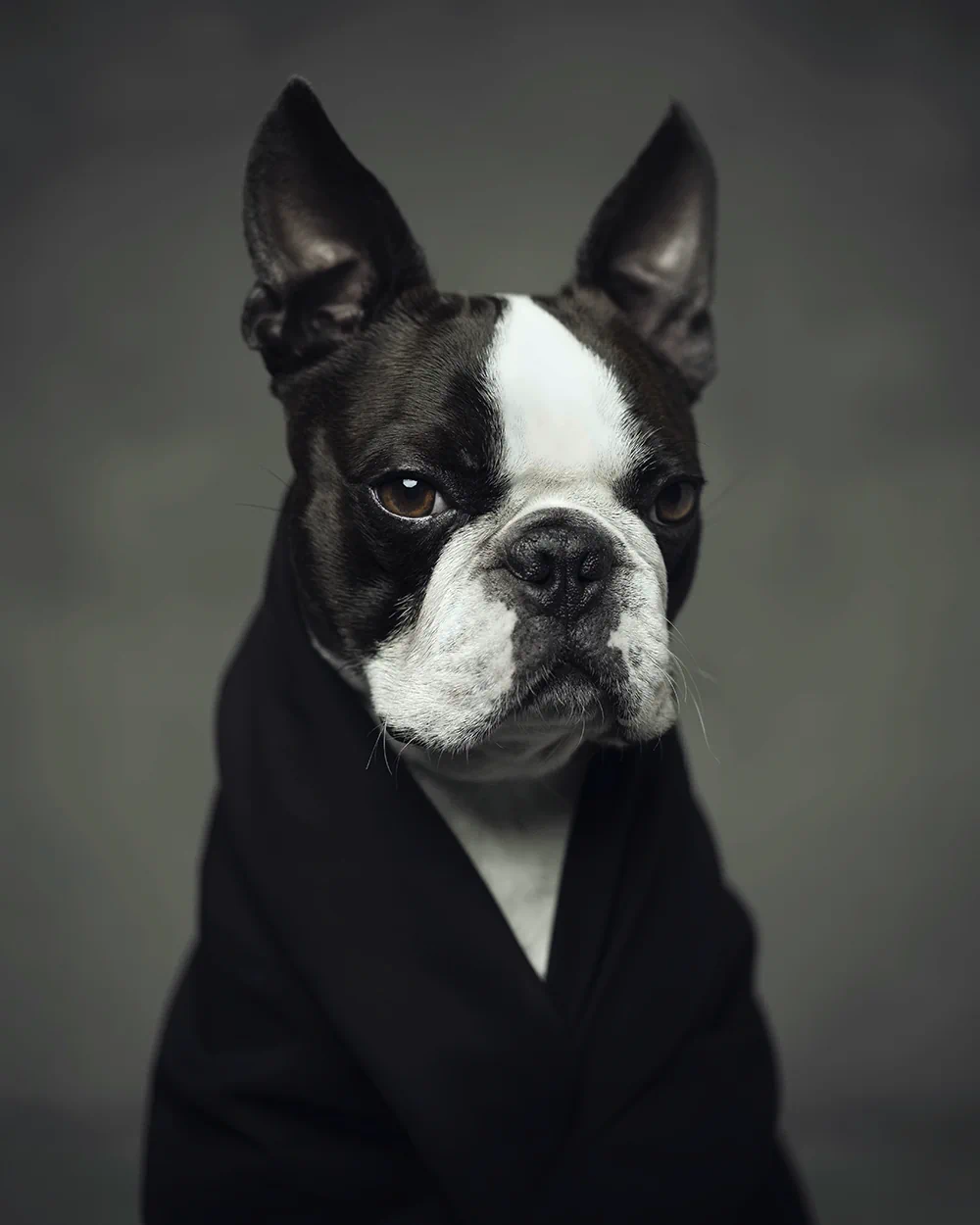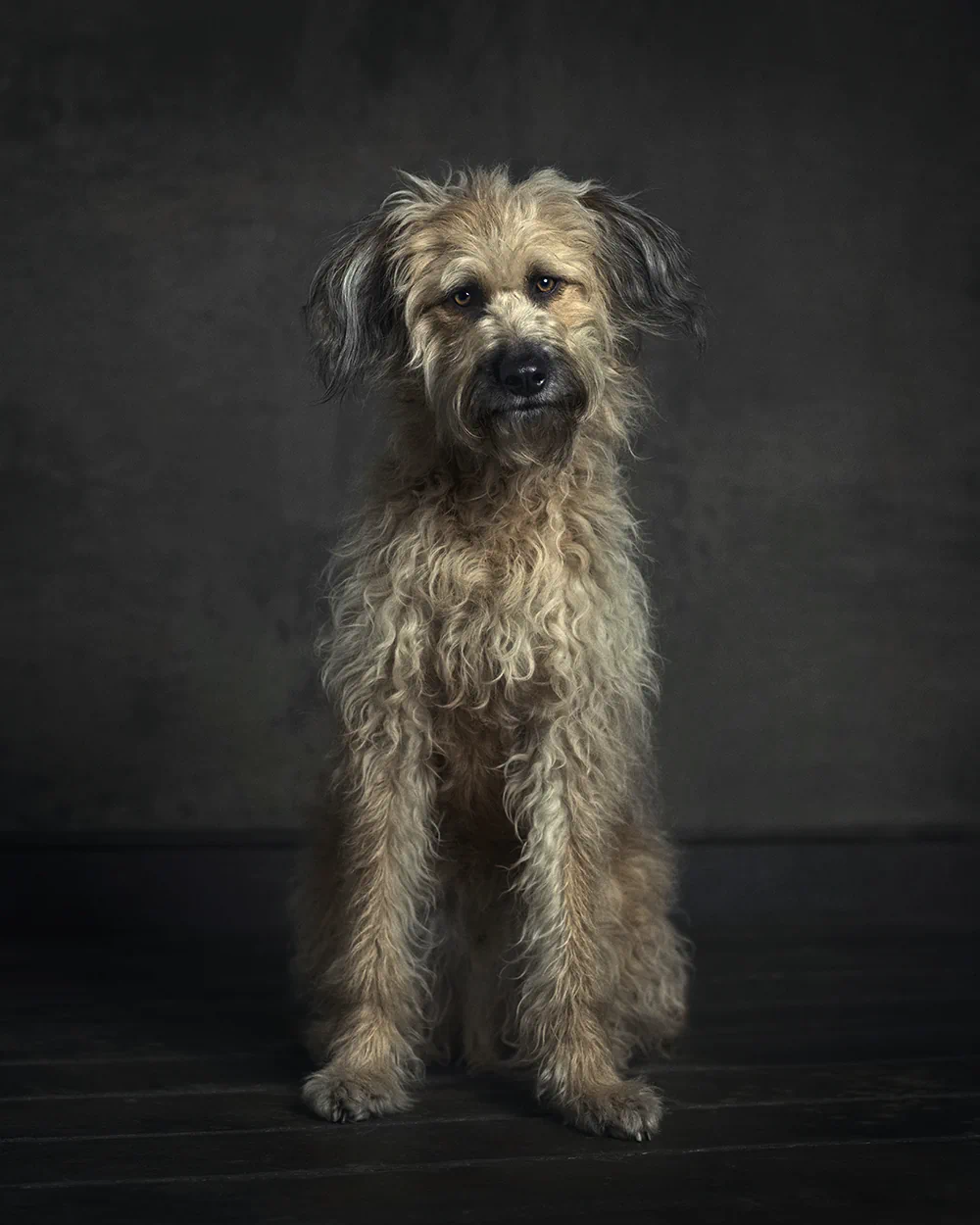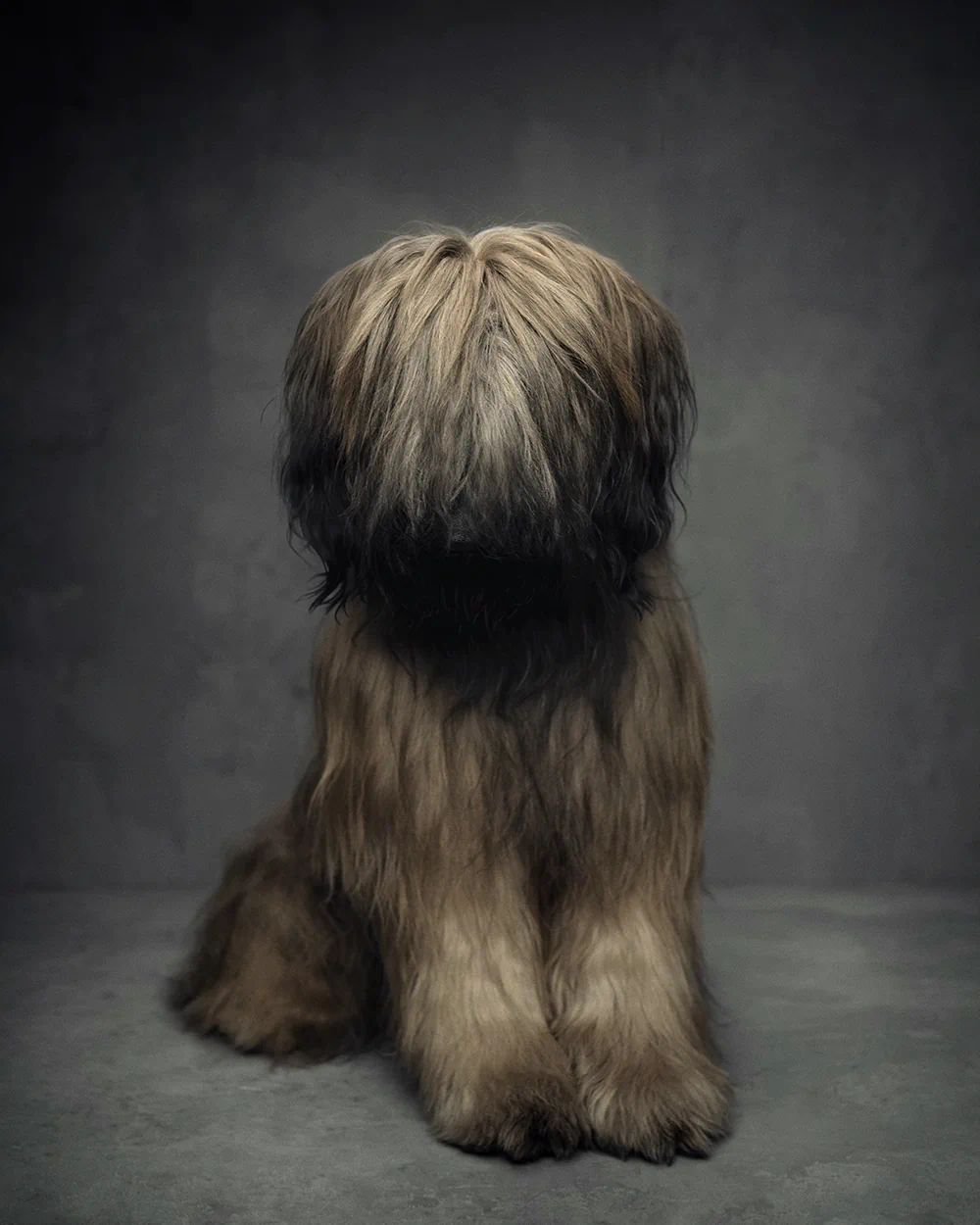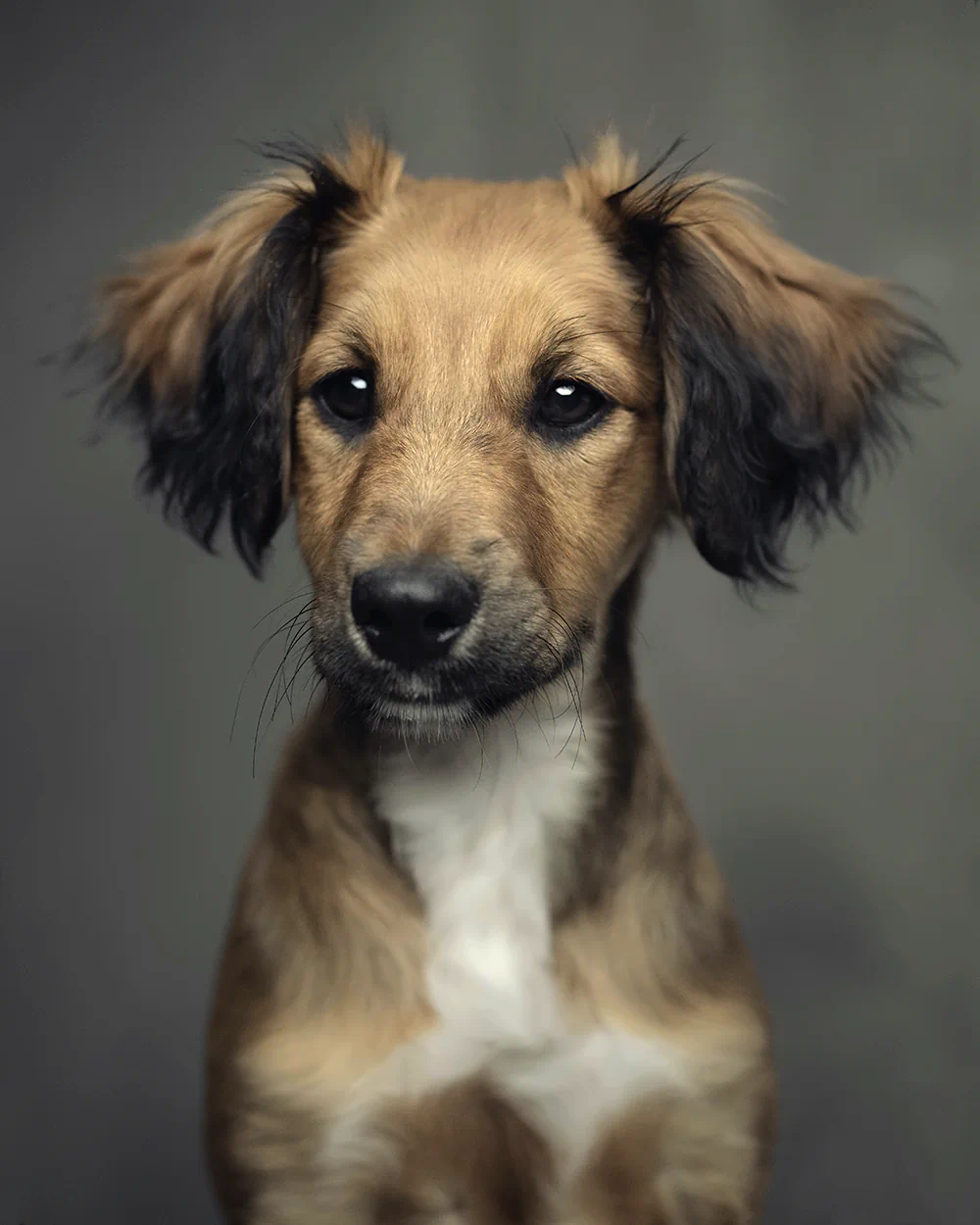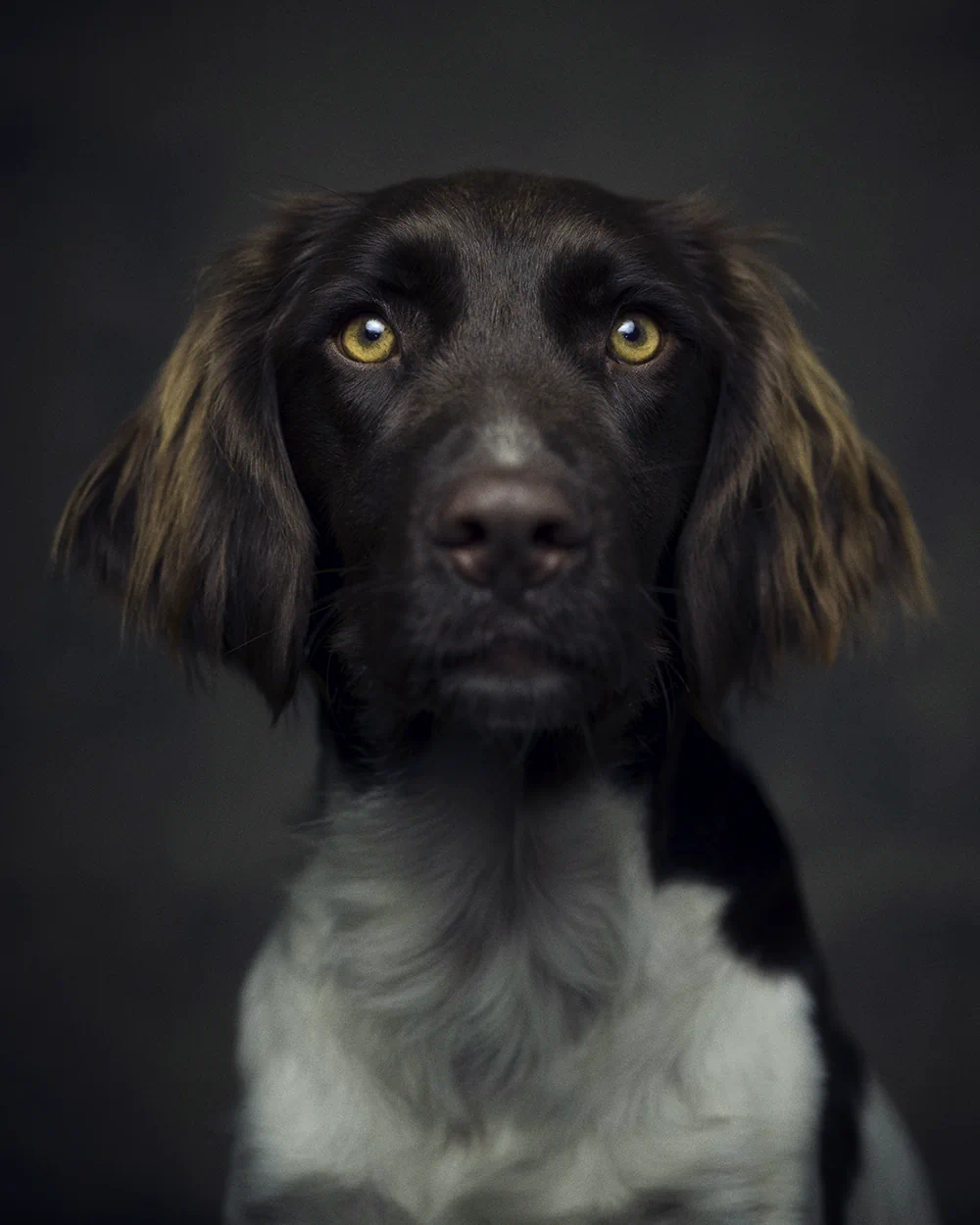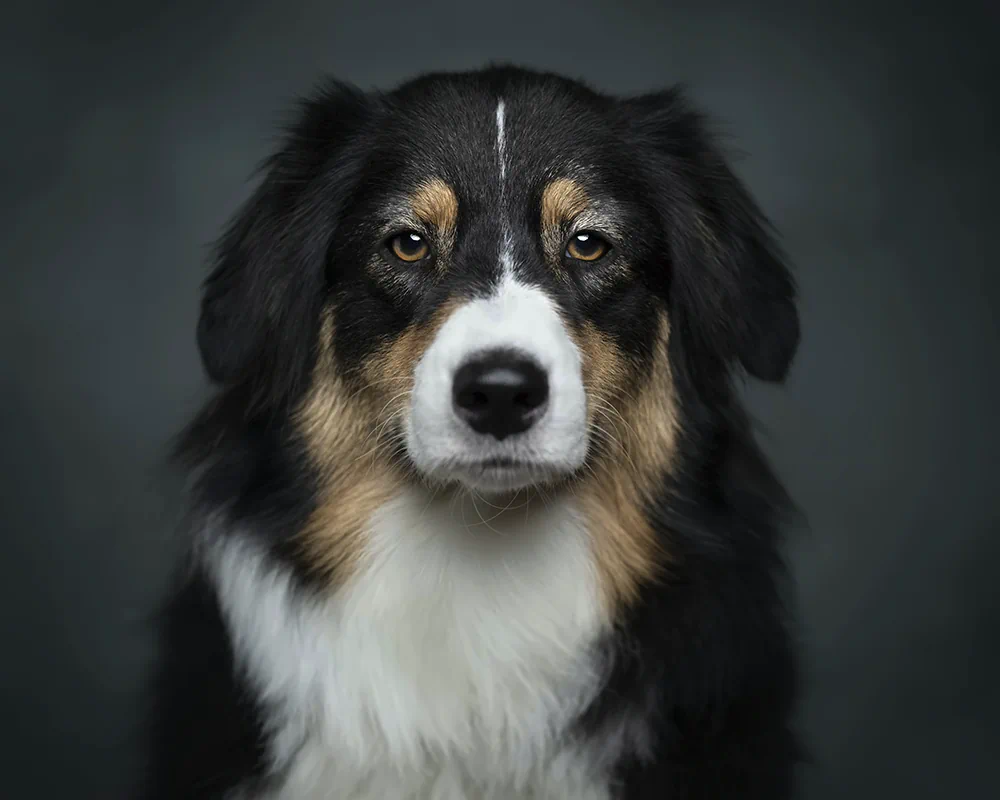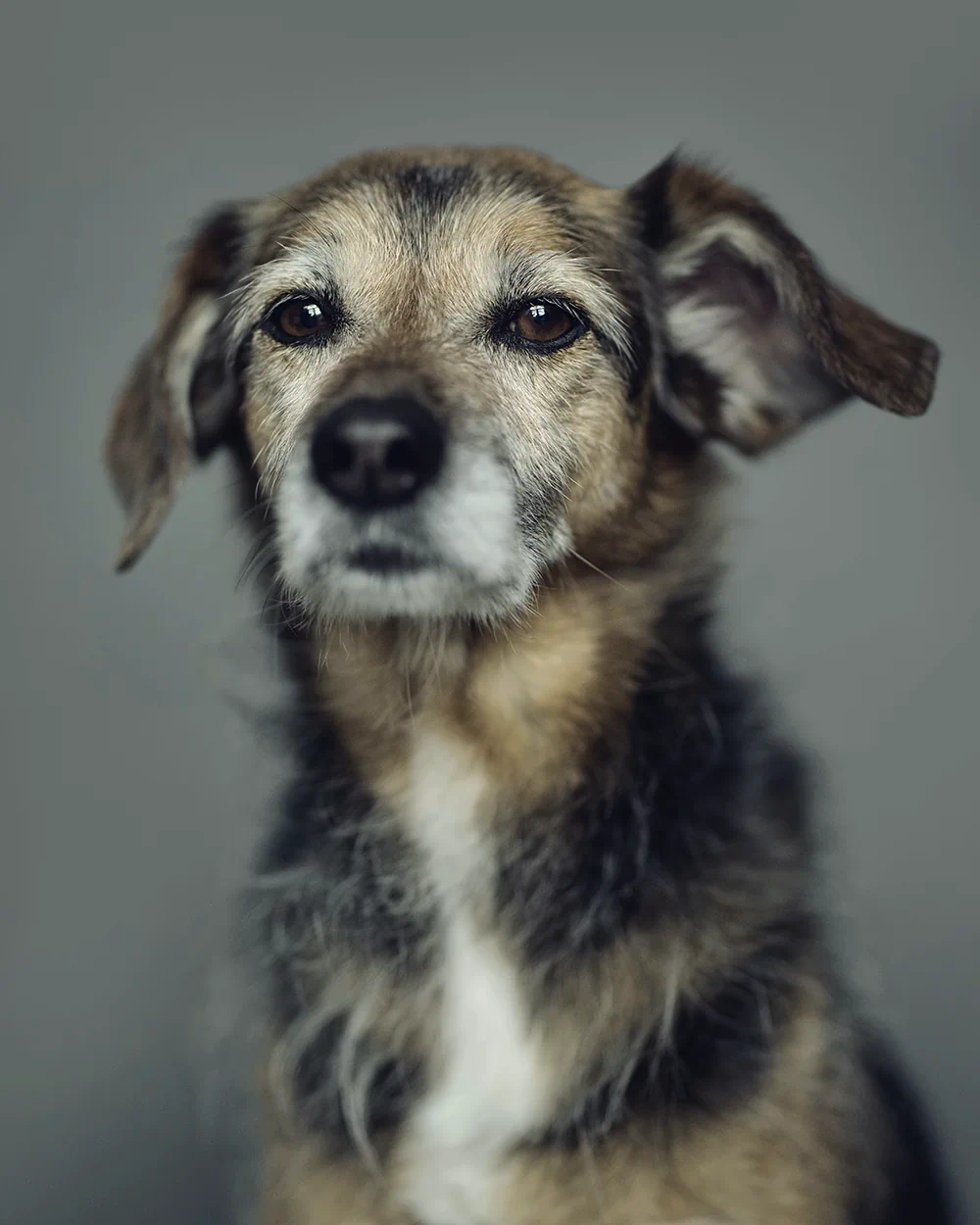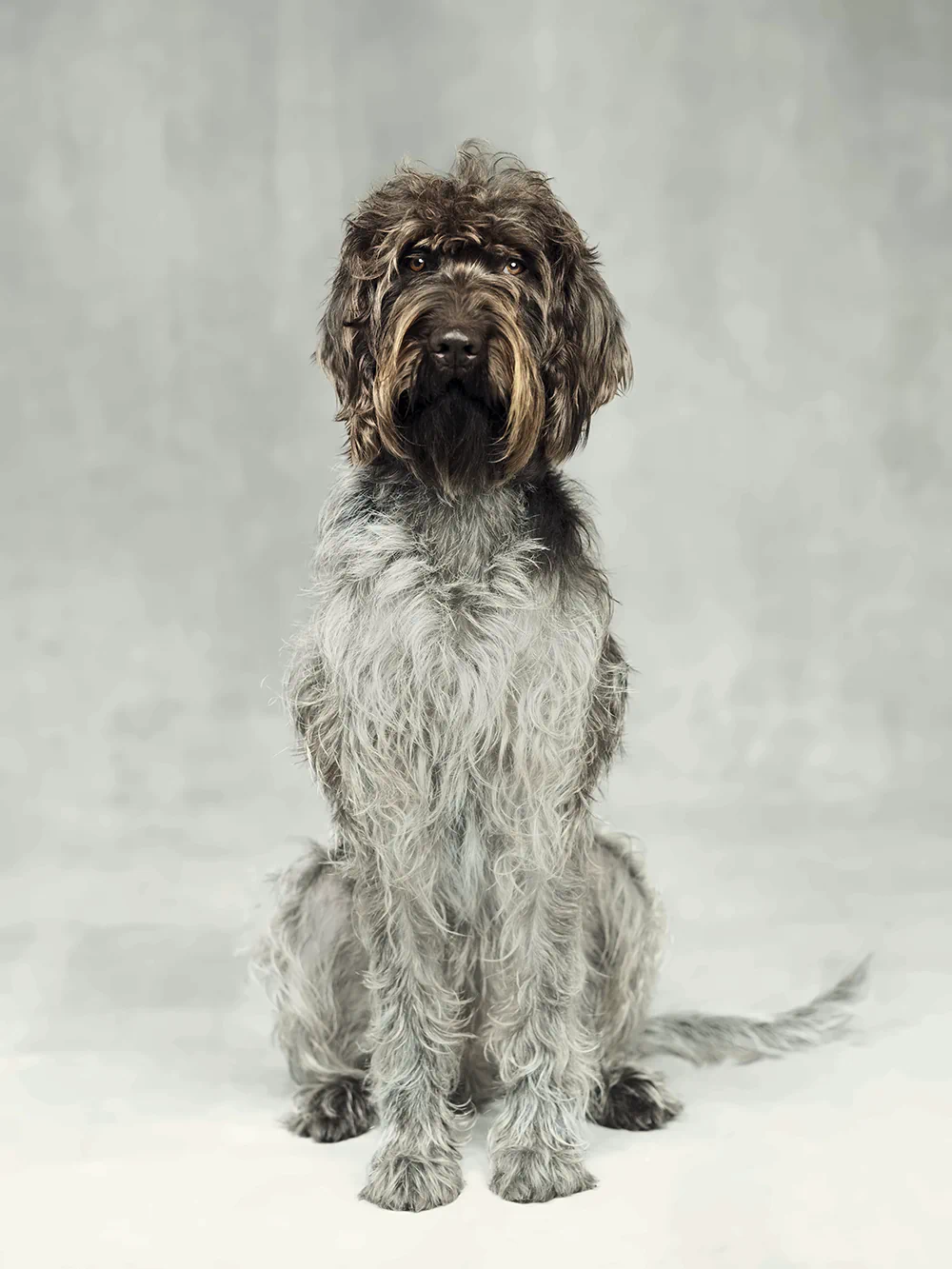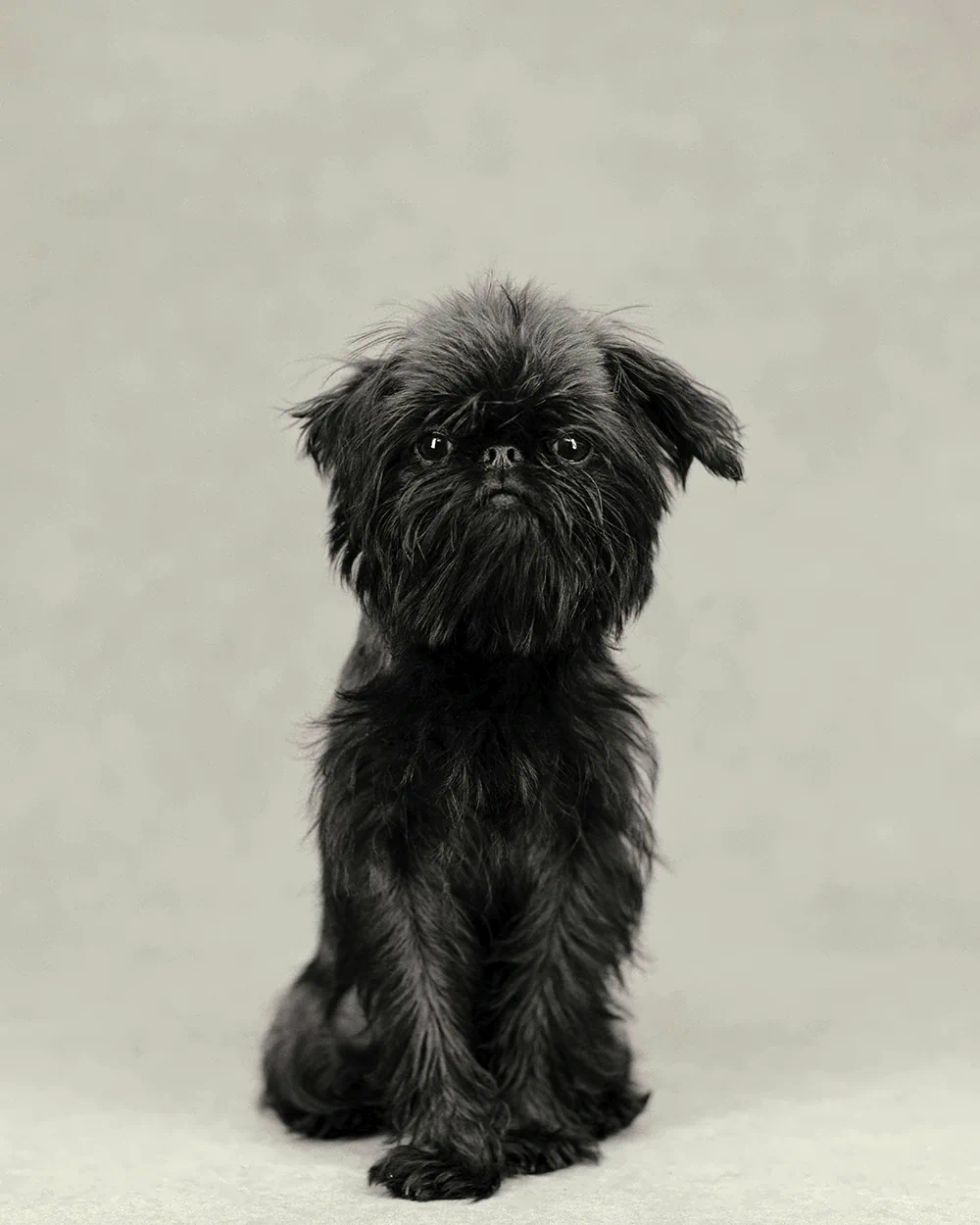
I photograph animals the way portraits of people are made.
A quiet studio, a single subject, and a long wait for the moment when the performance stops and someone looks back.
How the pictures are made is my concern. What they say is the point.
The series began with a cat. Dwiezel lost an eye to illness when I was a child and carried it without complaint, without the self-pity a human might have brought to it. Photographing her, I understood that I was not photographing an animal. I was photographing someone.
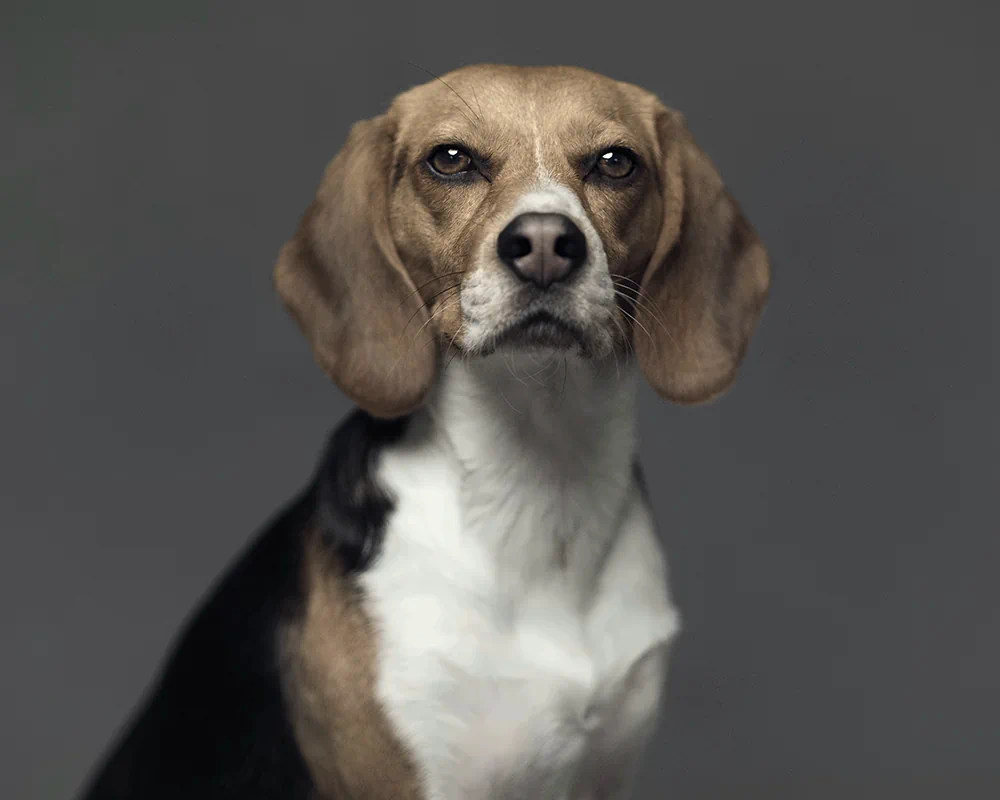
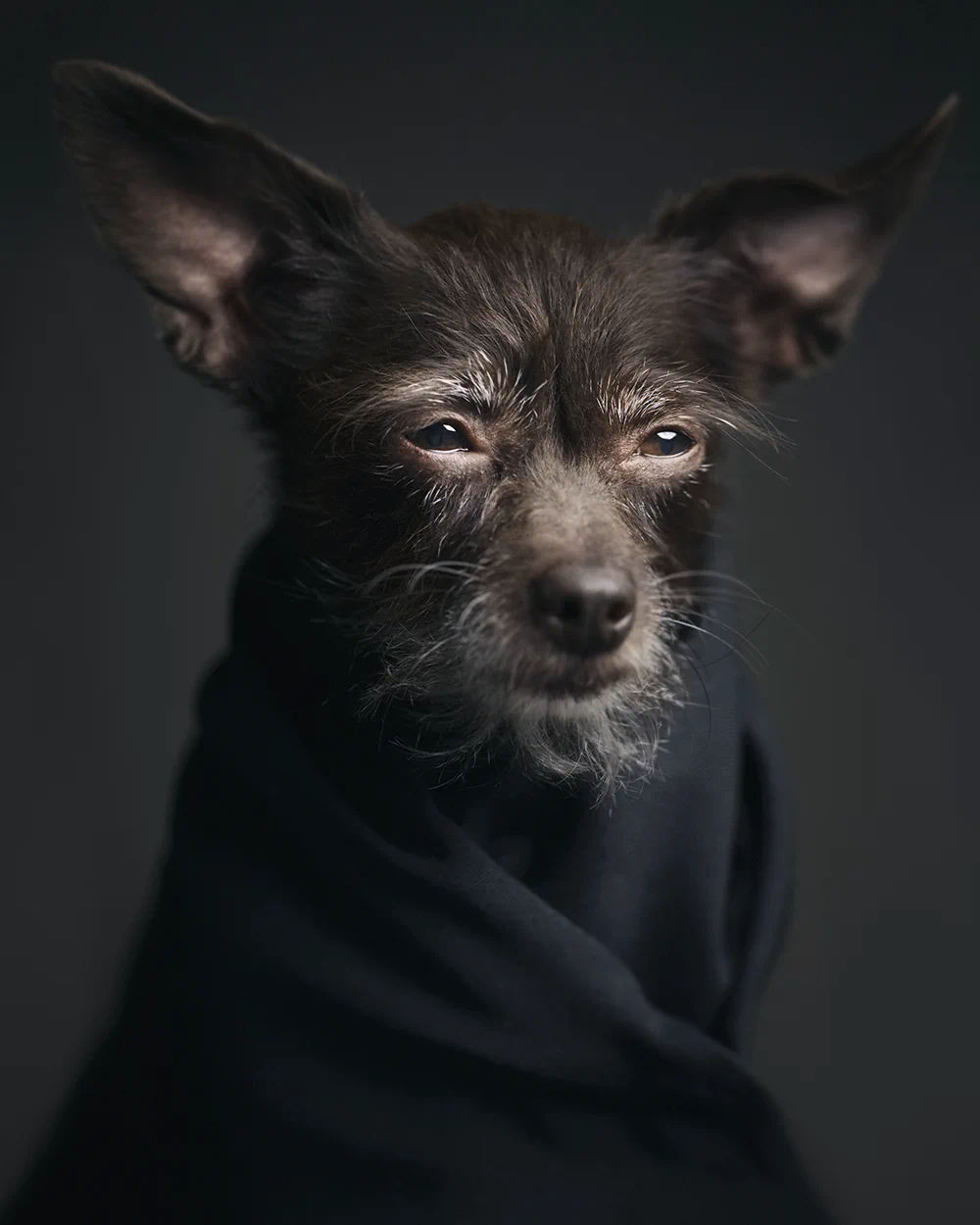
That is the premise of The Dogs, and of everything that has followed. Each animal is an individual with a history, a temperament, and a way of holding a room. The work is to wait until that surfaces and to keep everything else out of the frame. No props, no context, no owner. Just the animal, lit the way a person would be lit and seen the way a person expects to be seen.
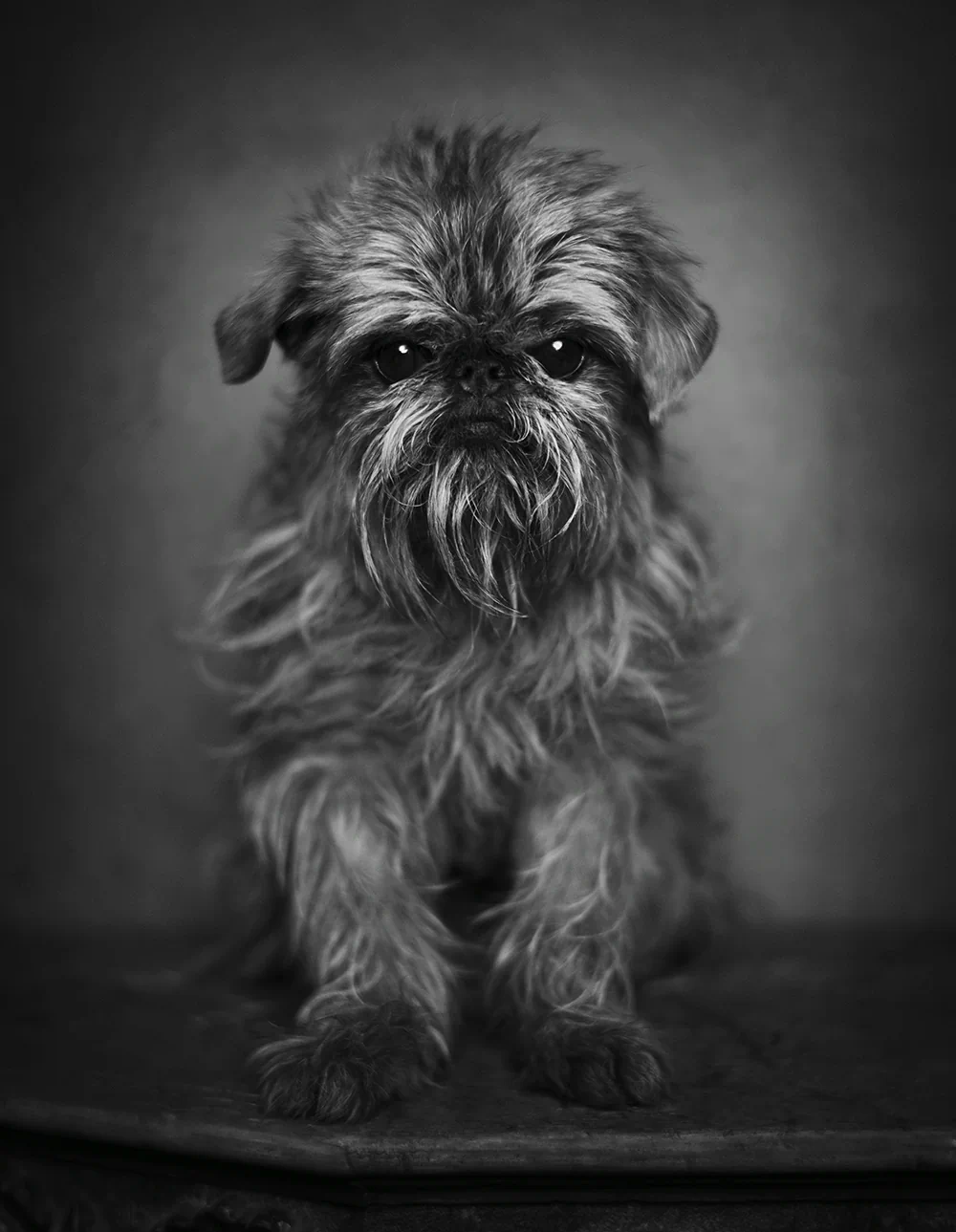
I learned portraiture in my father’s studio. Marc Lagrange documented female beauty, and I stood beside him long enough to understand that a portrait is not taken but granted. What happens between me and the animal stays between us. The picture is the only part I can share.
The dogs were the beginning. Between Us takes the method to creatures that have no reason to sit for anyone. Created in collaboration with Pairi Daiza, a zoo deeply committed to conservation, the series includes a vulture, an ape, an owl. Each meets the lens on its own terms, and none of them owes me anything. Sometimes the whole portrait is an ape’s hand resting in mine.
A wild animal is not a different category of portrait. There is no different category. The title carries the thesis: not them, not us, but what passes between us.
In 2023, I took the argument public. On World Animal Day, more than a hundred dogs were photographed on the steps of the Royal Museum of Fine Arts Antwerp, their owners hidden beneath velvet matching the colour of the museum’s ornaments. The result is a single monumental print, measuring 150 by 220 centimetres, in which the only human faces are those carved into the building.
For one afternoon, the museum belonged to the animals, and not one of them knew it. That is precisely the point. Dignity does not require the subject’s understanding. It requires ours.
The portraits lend my voice to those who have none. Animals cannot object to what we take from them, so the pictures object on their behalf.
Never Enough is that objection made solid. It began as photography, but greed needed volume, so I stepped beyond my own boundaries, put down the camera, and learned to cast: soft white forms that swell against the frames meant to contain them and spill beyond their edges—an appetite that does not fit.
The portraits are what we say we love. Never Enough is what we do anyway.
An animal takes what it needs and stops. We are the only species that cannot, and every animal I photograph pays for it.
About Vincent Lagrange
Vincent Lagrange (b. 1988) is a Belgian artist based in Antwerp, working across photography and sculpture. He grew up in the studio of his father, photographer Marc Lagrange, and redirected the portraiture he learned there toward animals: first dogs, then the wild residents of Pairi Daiza.
His animal portraits have been collected in two teNeues monographs, The Dogs and Between Us. His work appeared on the cover of National Geographic in 2022 and has been shown at art fairs around the world, from PAN Amsterdam to Art Miami.
In 2023, Lagrange staged a participatory work on the steps of the Royal Museum of Fine Arts Antwerp. In 2024, his image of a snowy owl was installed across 270 m² above the centre of Antwerp.
His current work is sculptural. Never Enough began as photography and evolved into a series of cast reliefs: pale, flesh-soft volumes in mineral composite that bulge against the walnut frames designed to contain them and spill beyond their edges. Nothing fits, and that is the subject.
Each piece is a portrait of human hunger, of the desire that never stops at enough, and of what that desire costs the animals in his photographs. The series pushed Lagrange beyond his own boundaries as well, moving him out of photography and into sculpture.
He works from his own studio, where his studio assistant is a Brussels Griffon named Ray. He still prefers working with animals, but the world is pushing against the frame. [Official Website]