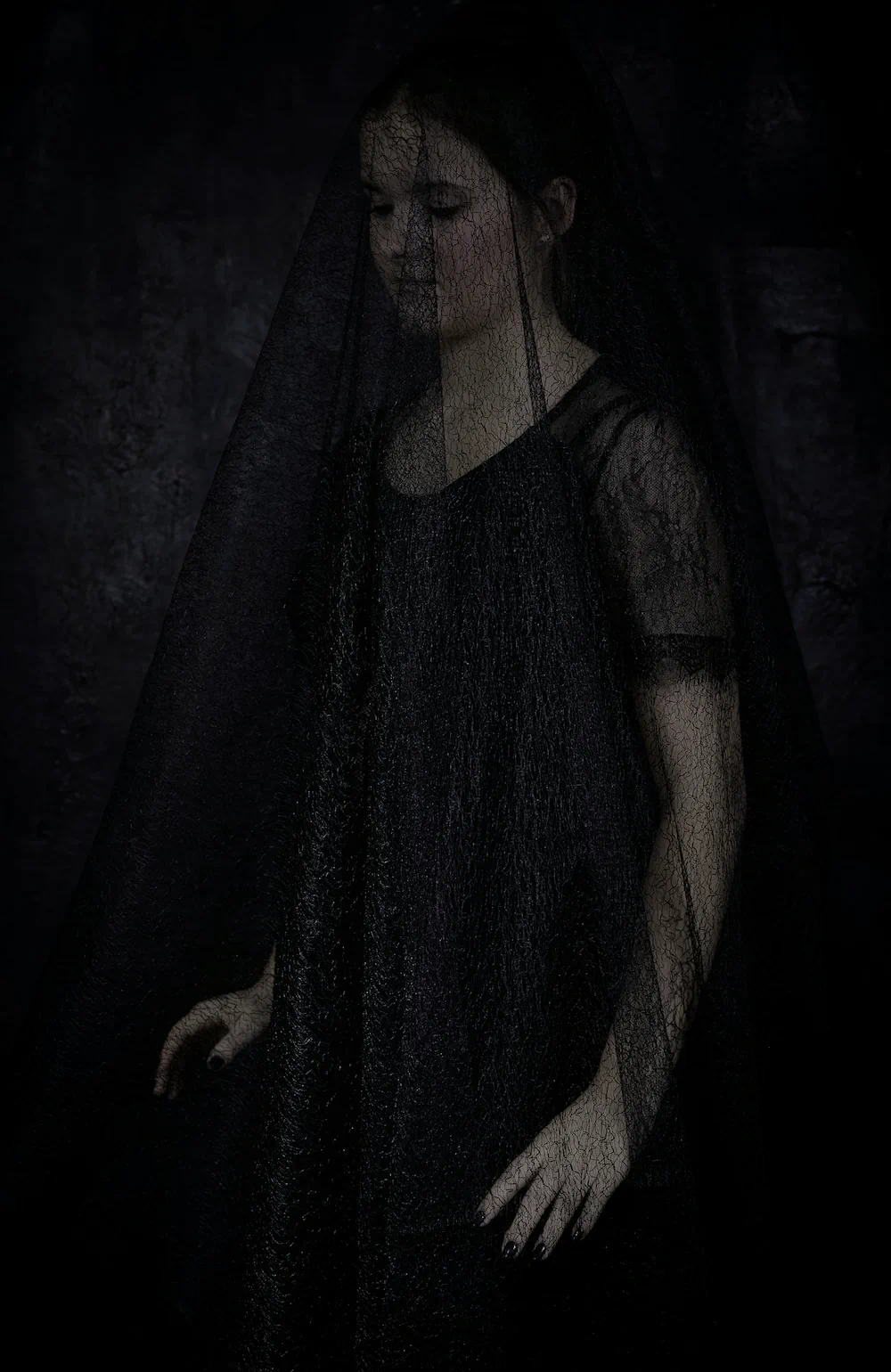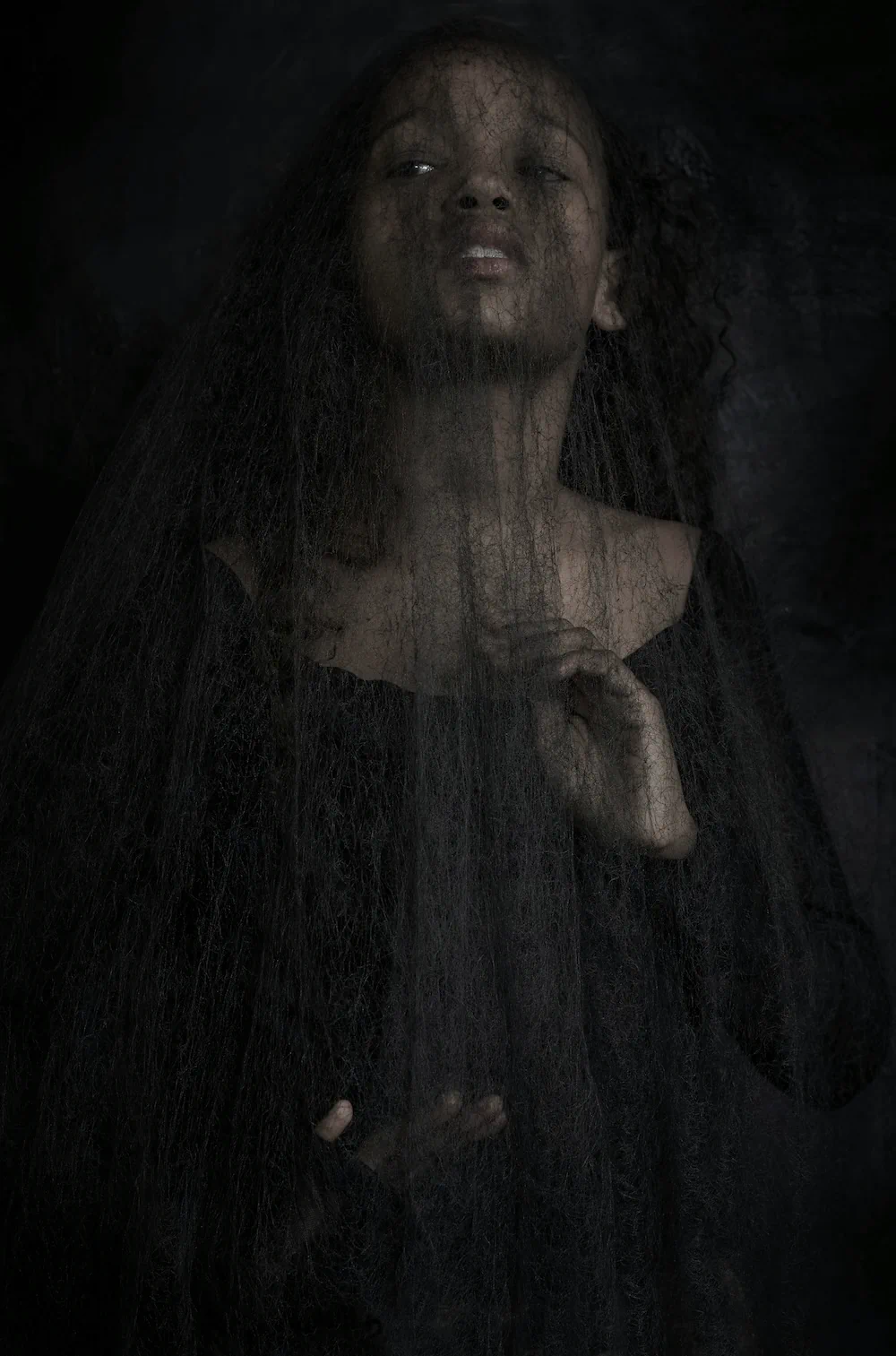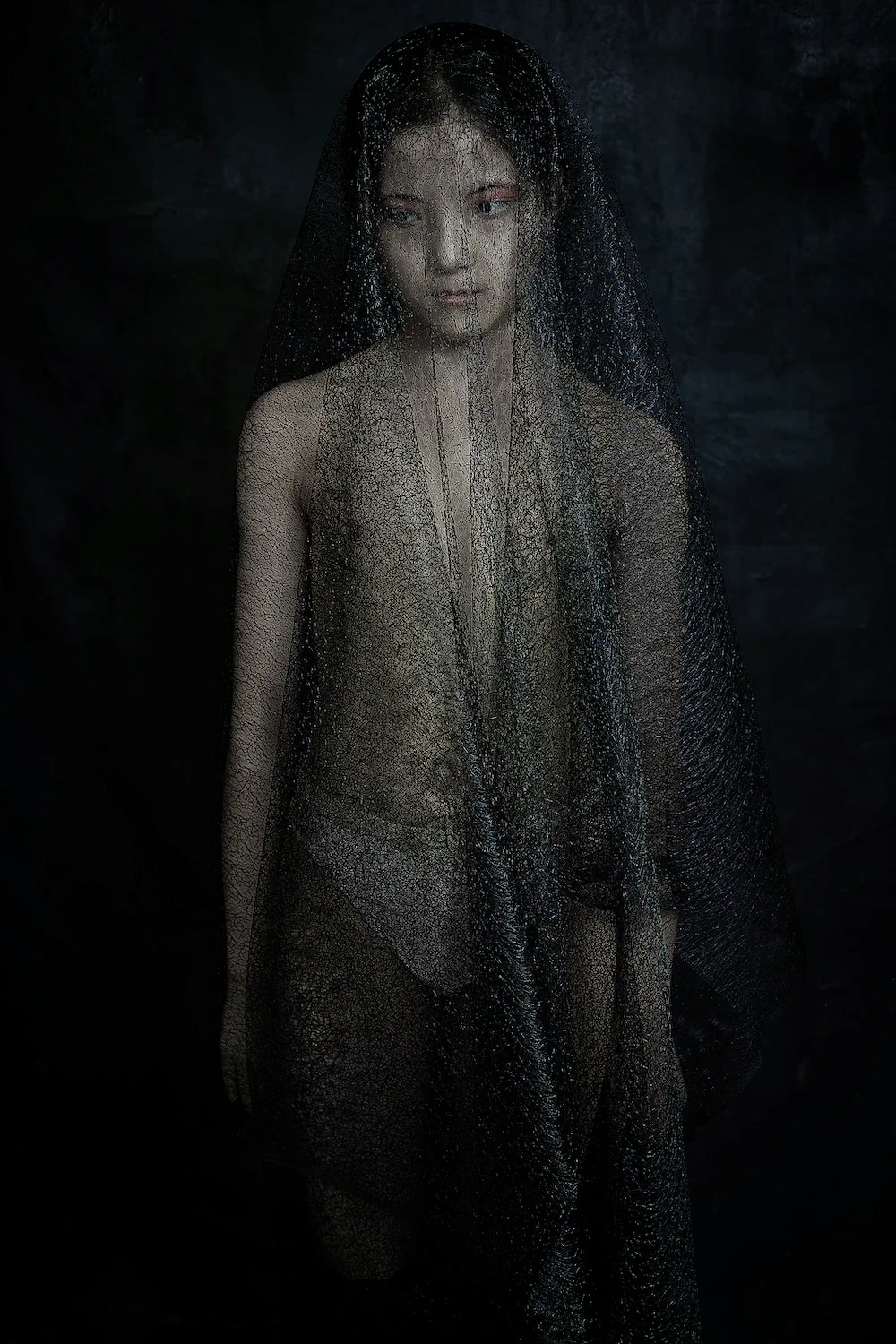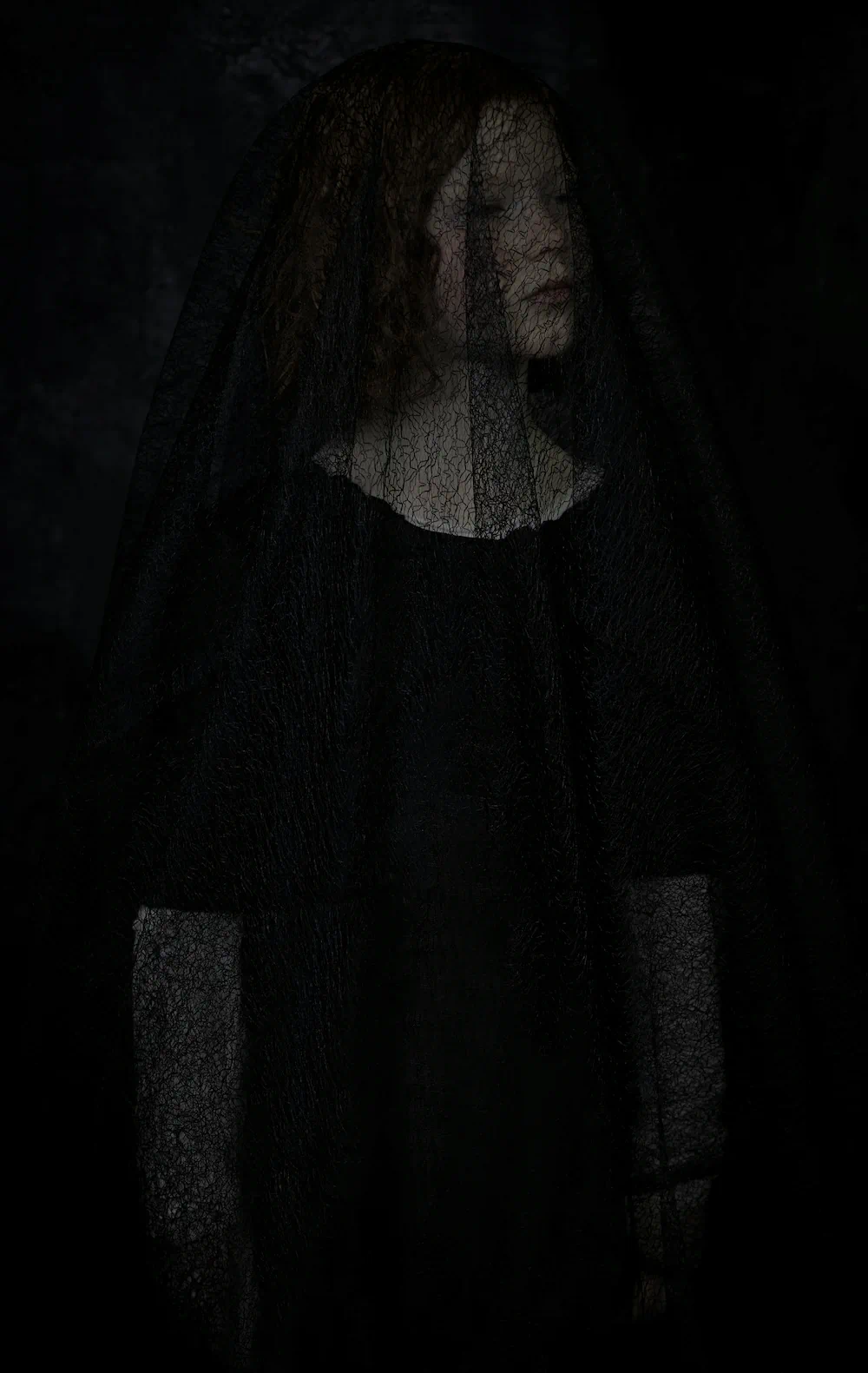


SOLACE is a photographic series about vulnerability, proximity, and the ambiguous human need for consolation.
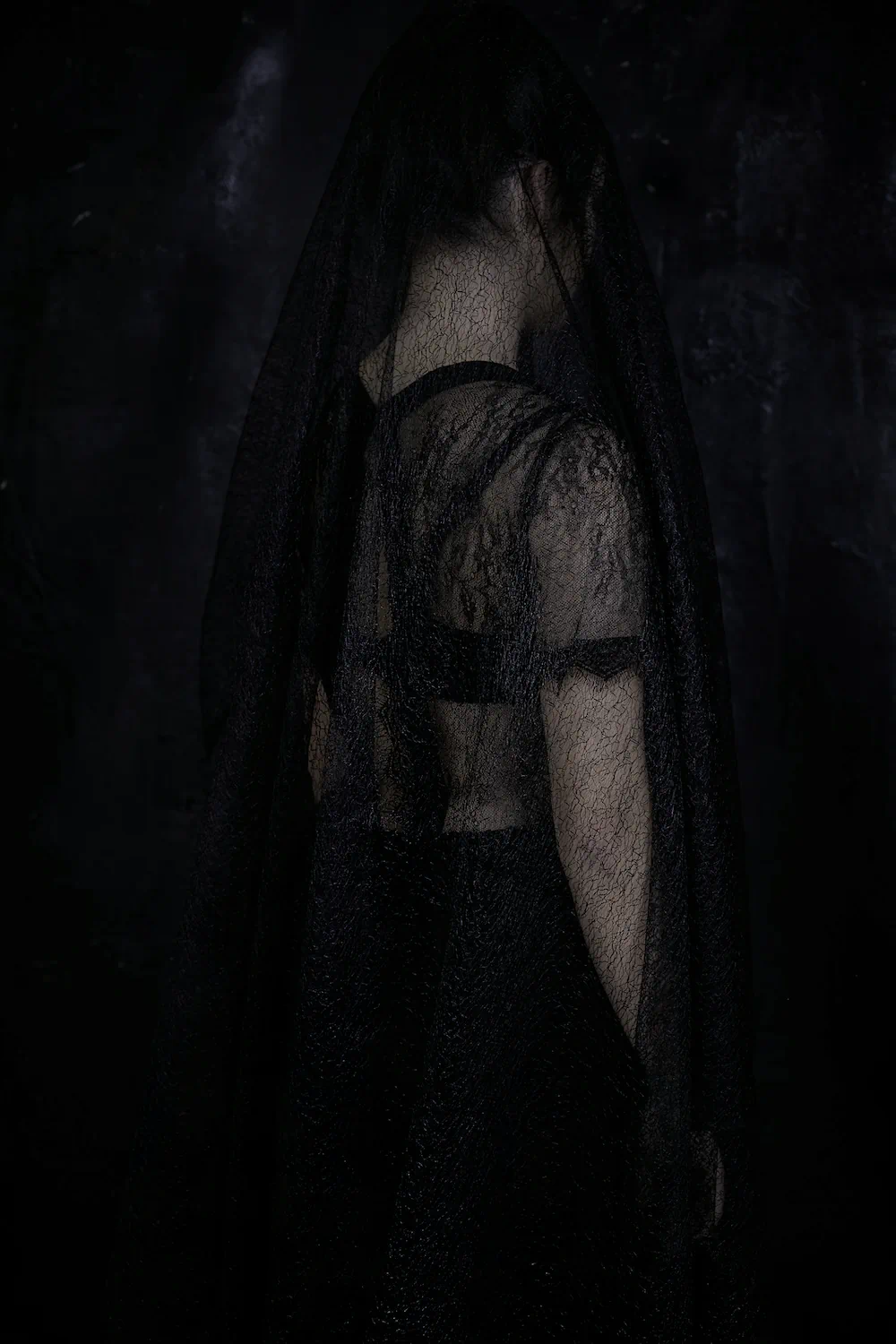
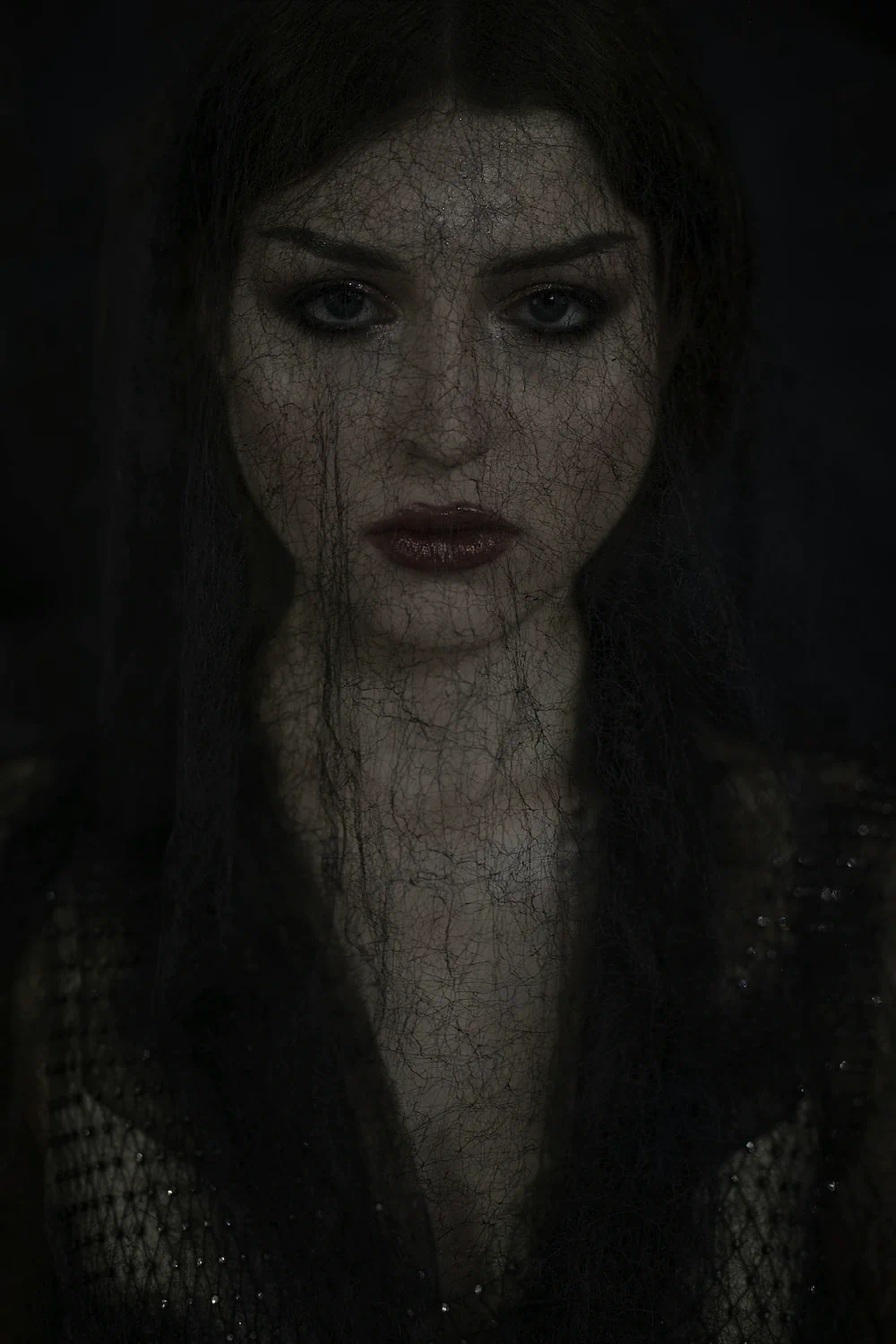
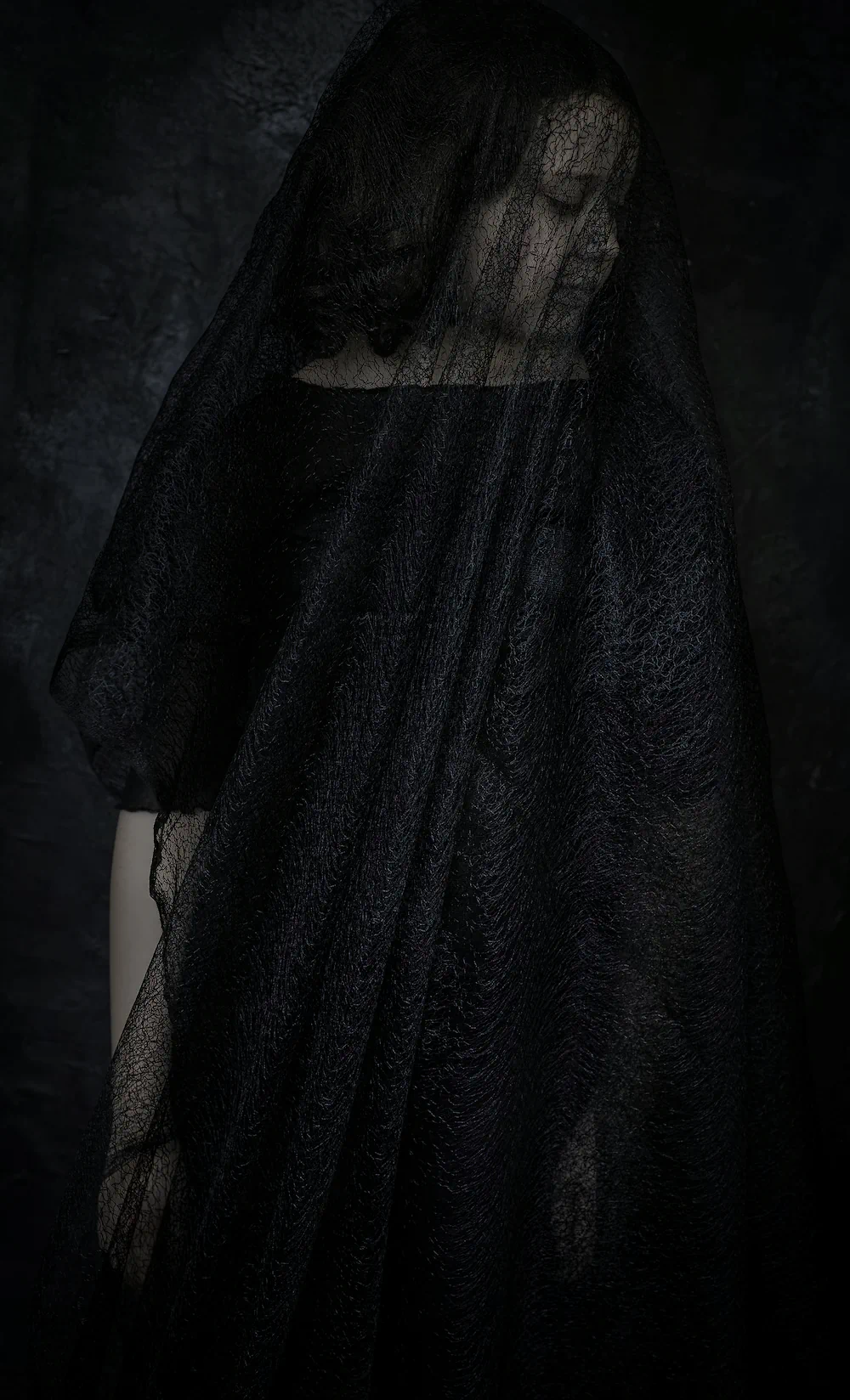
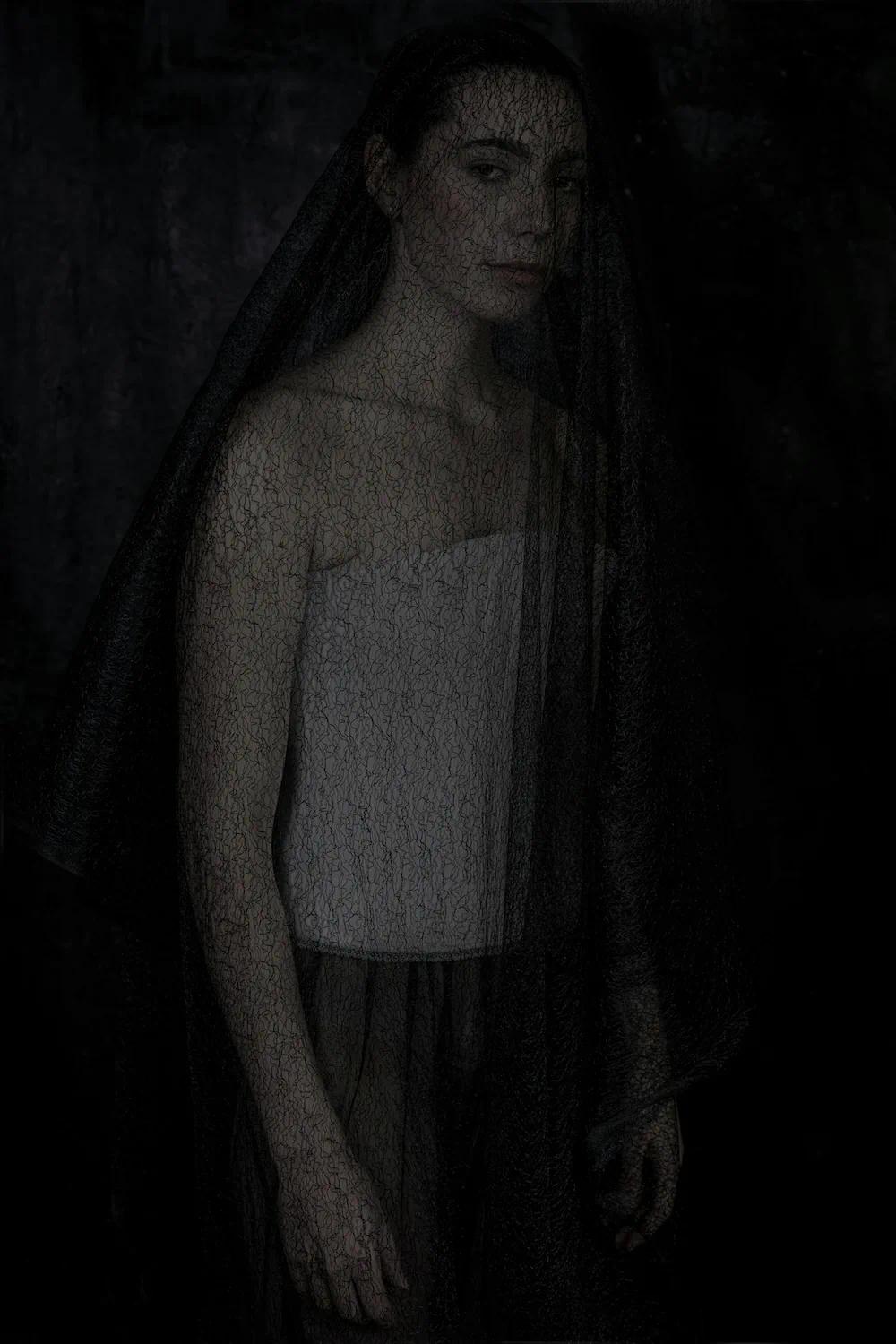
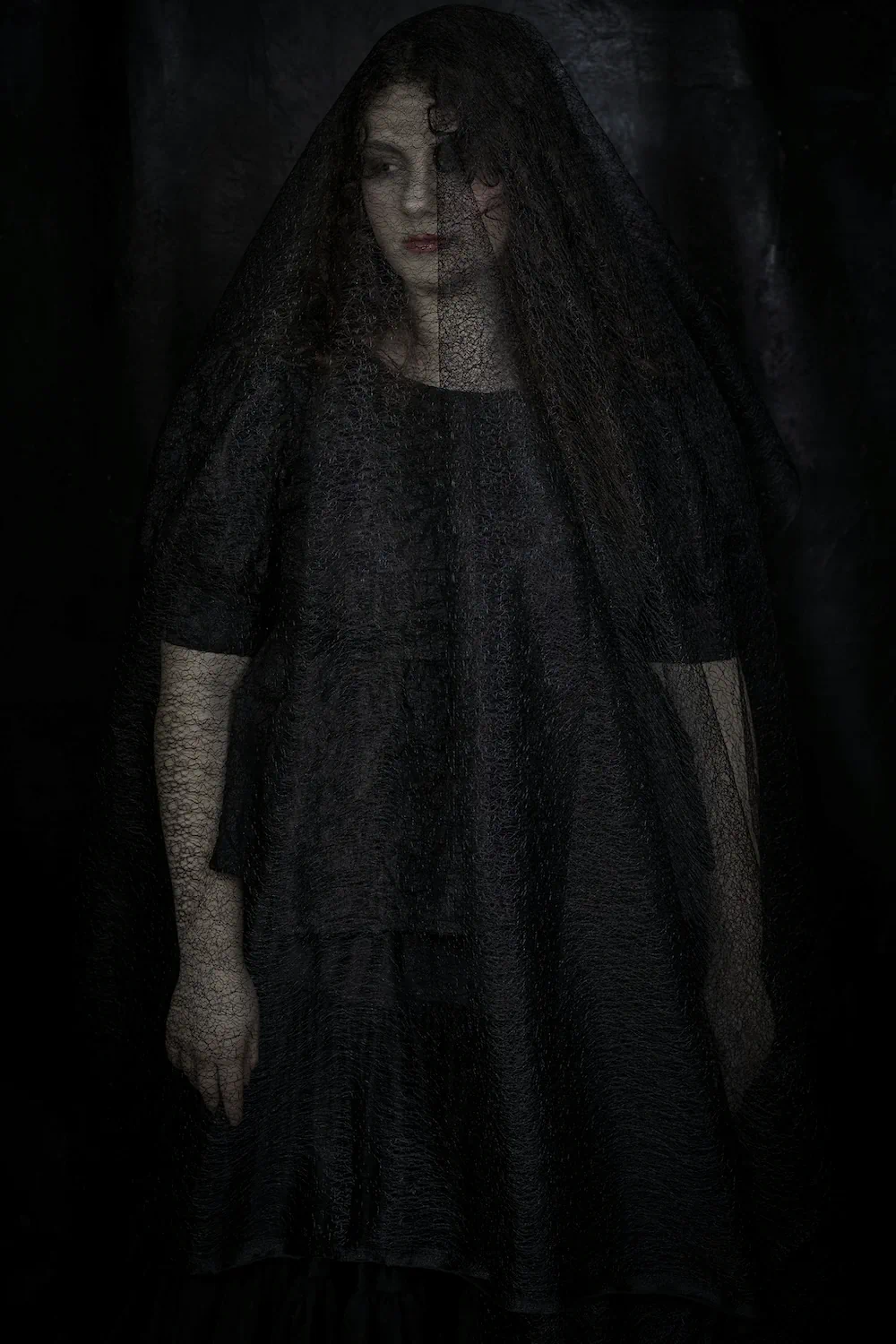
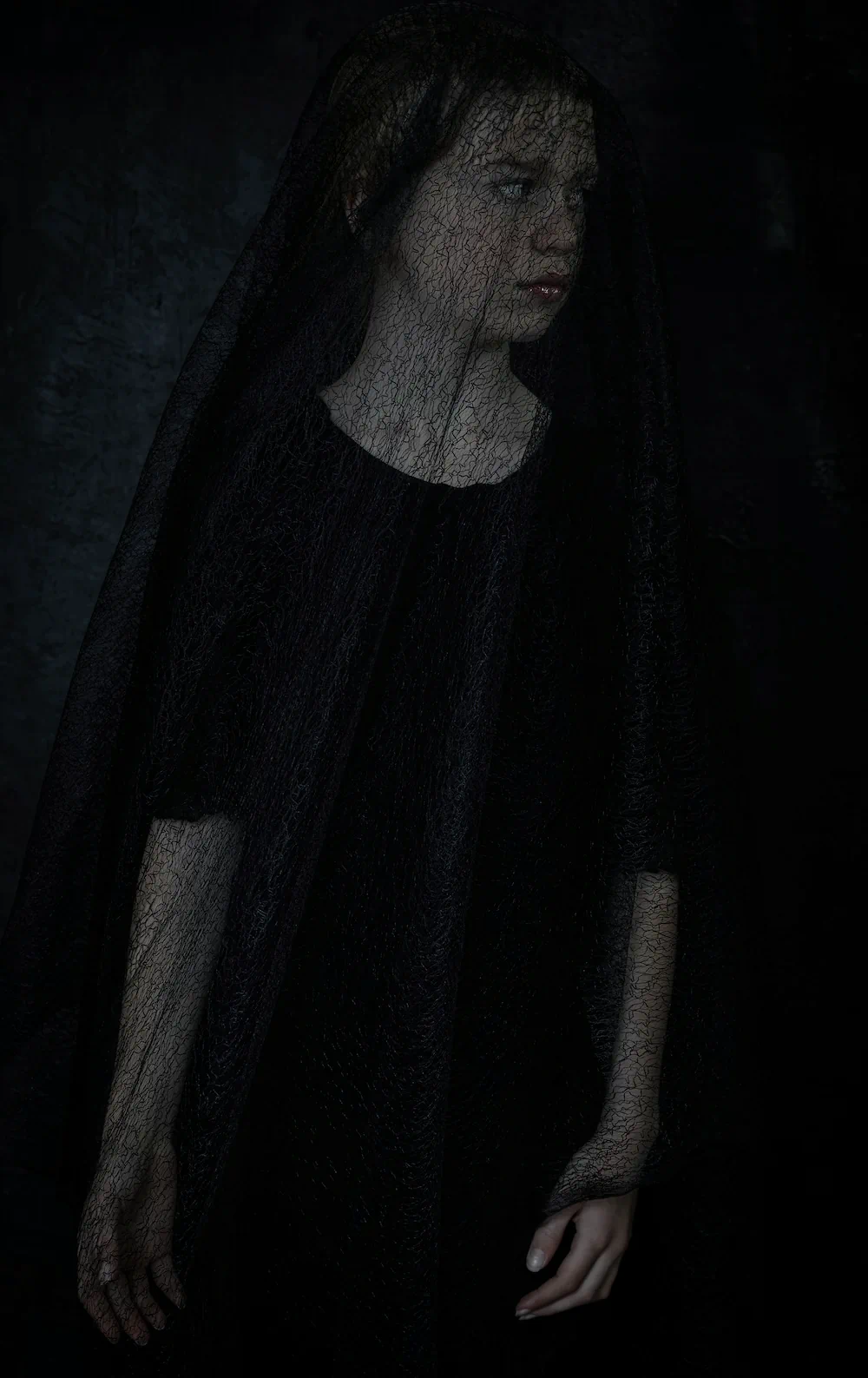
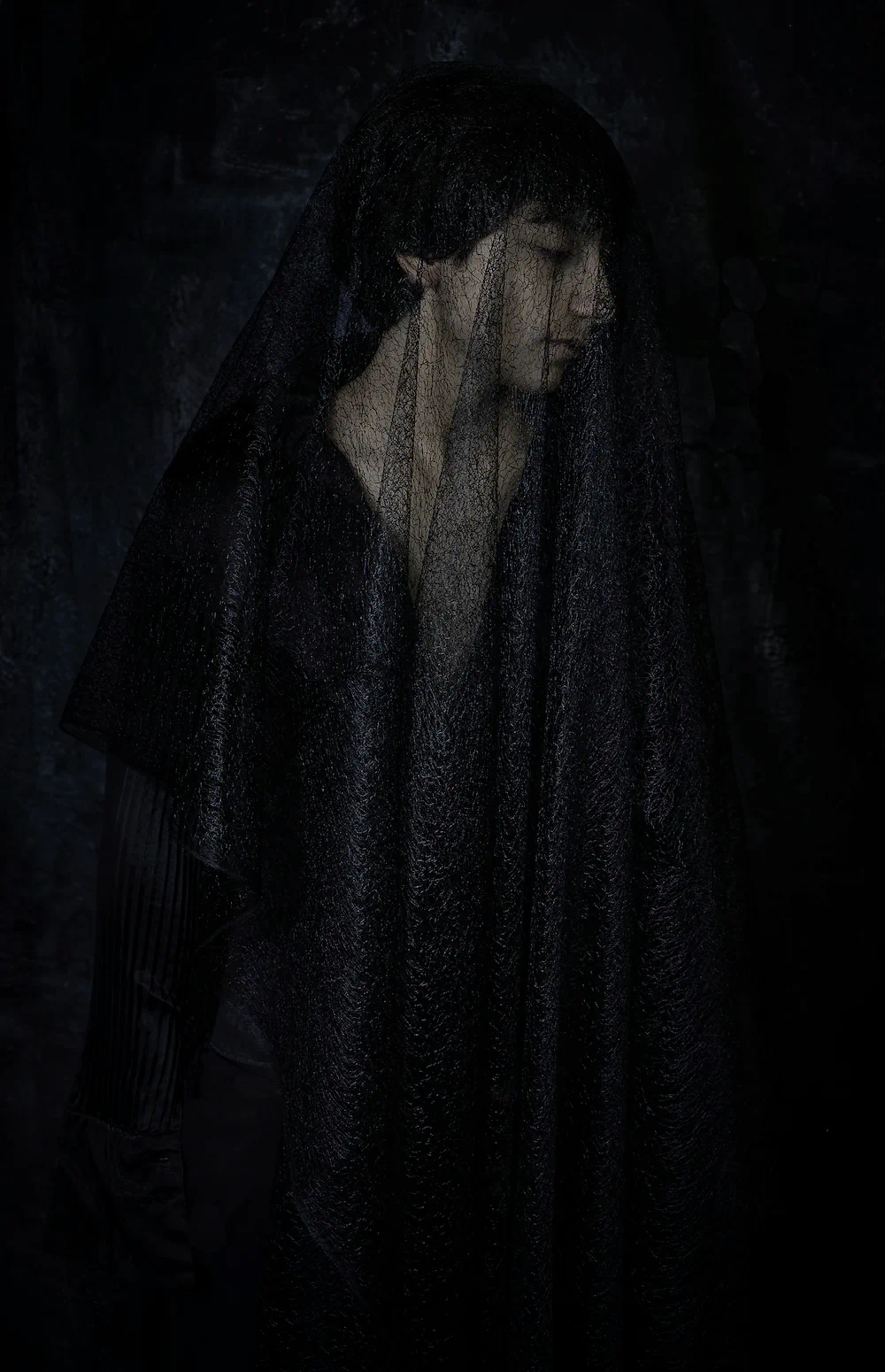
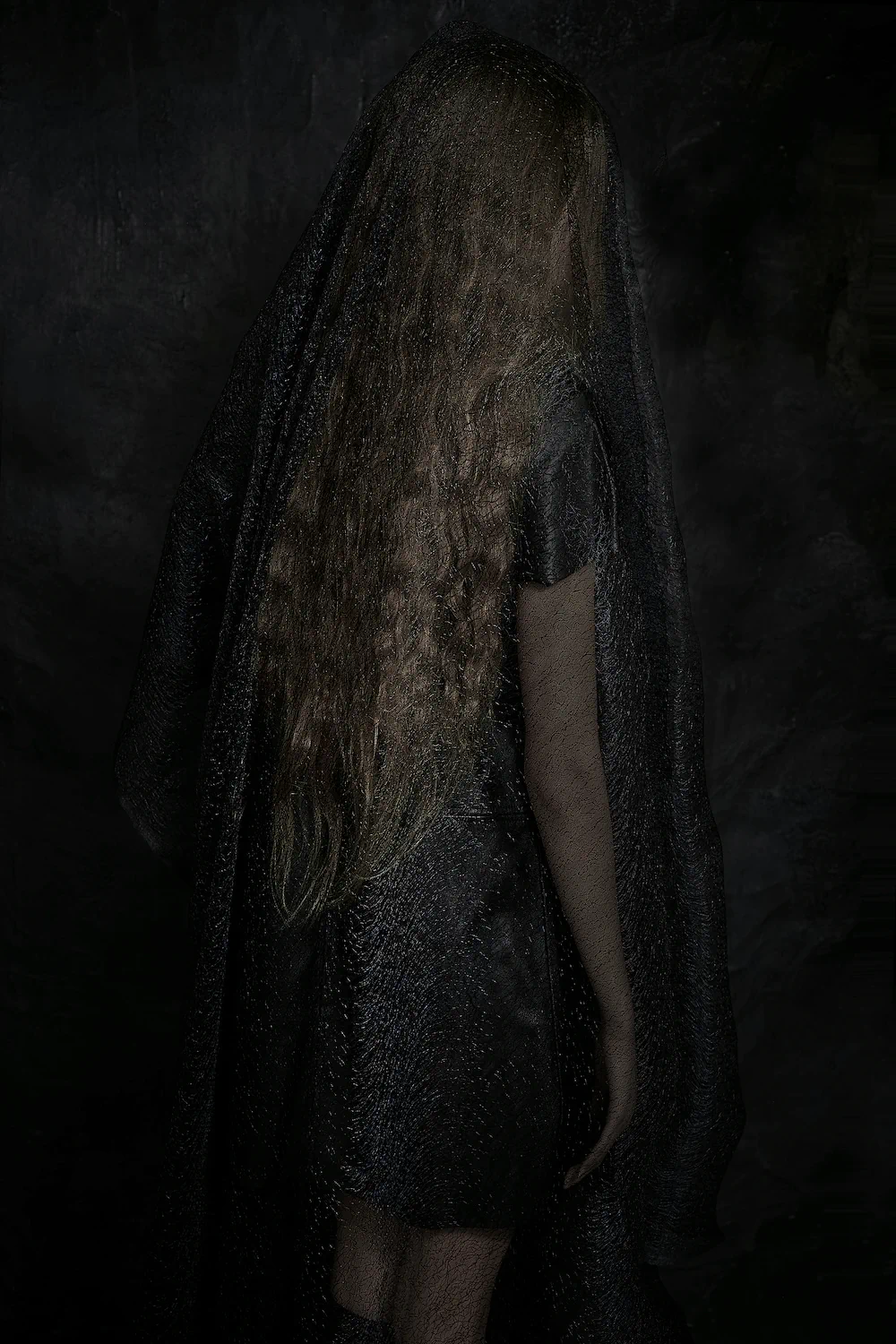
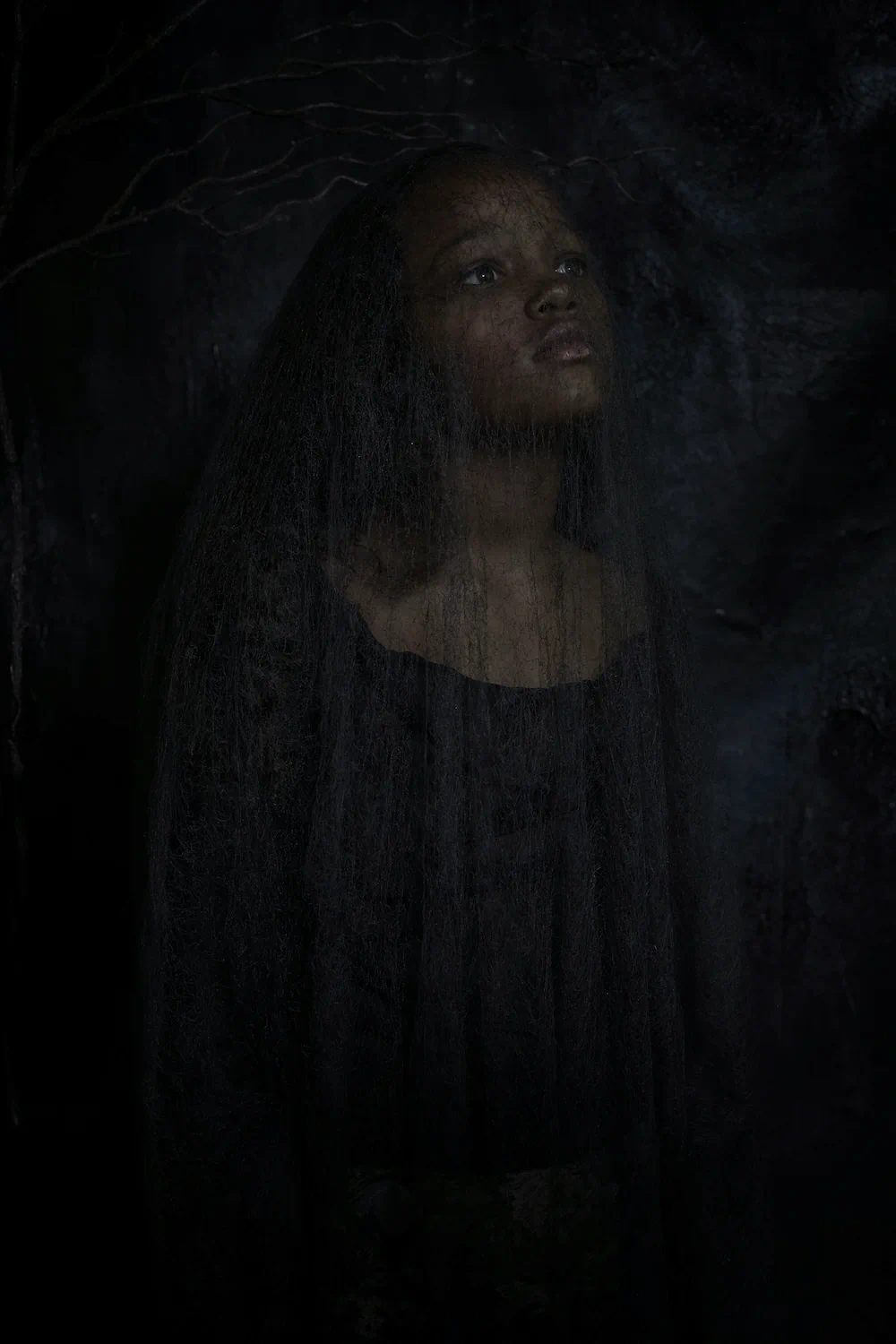
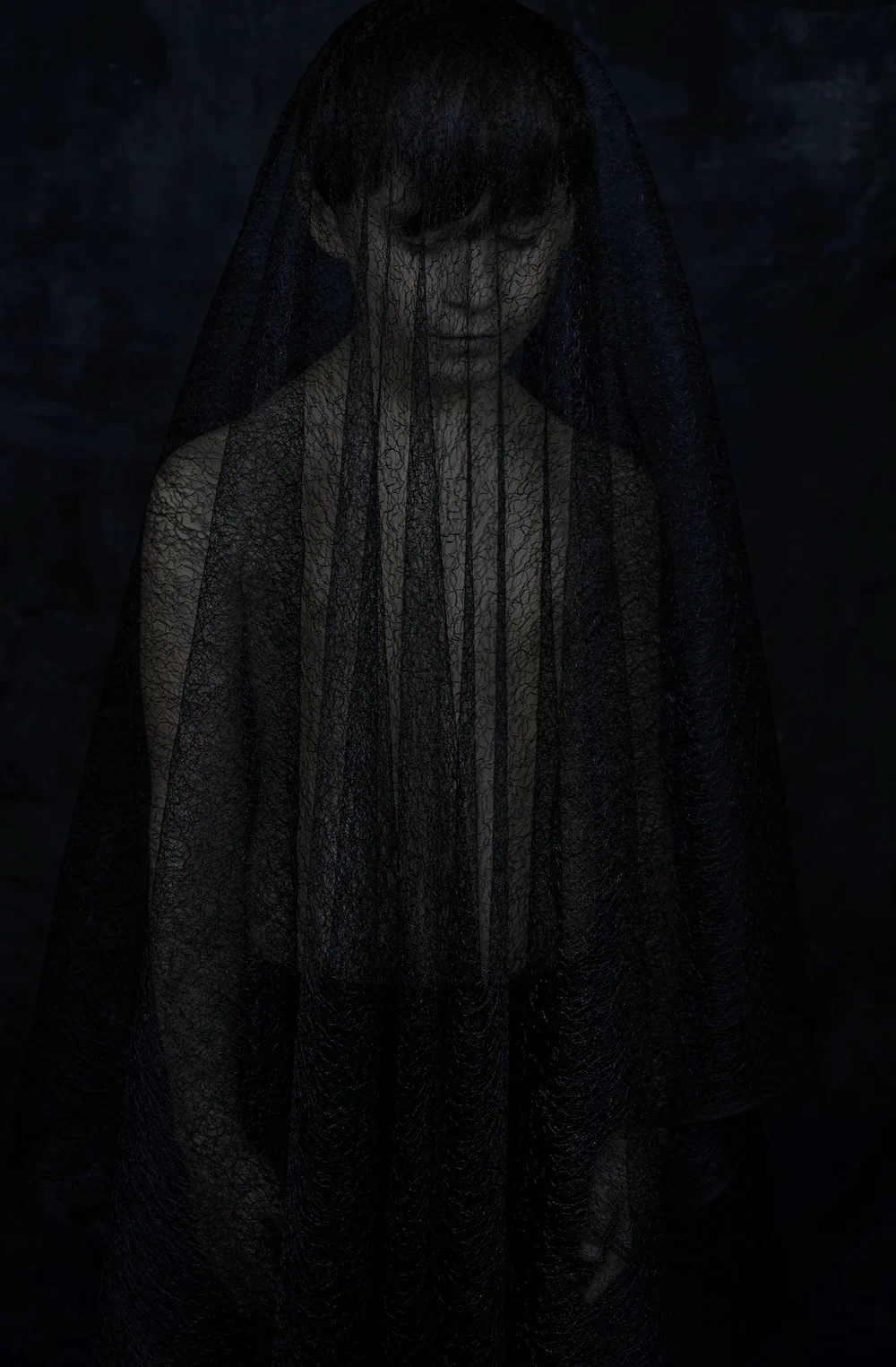
The figures appear behind or beneath a translucent black veil.
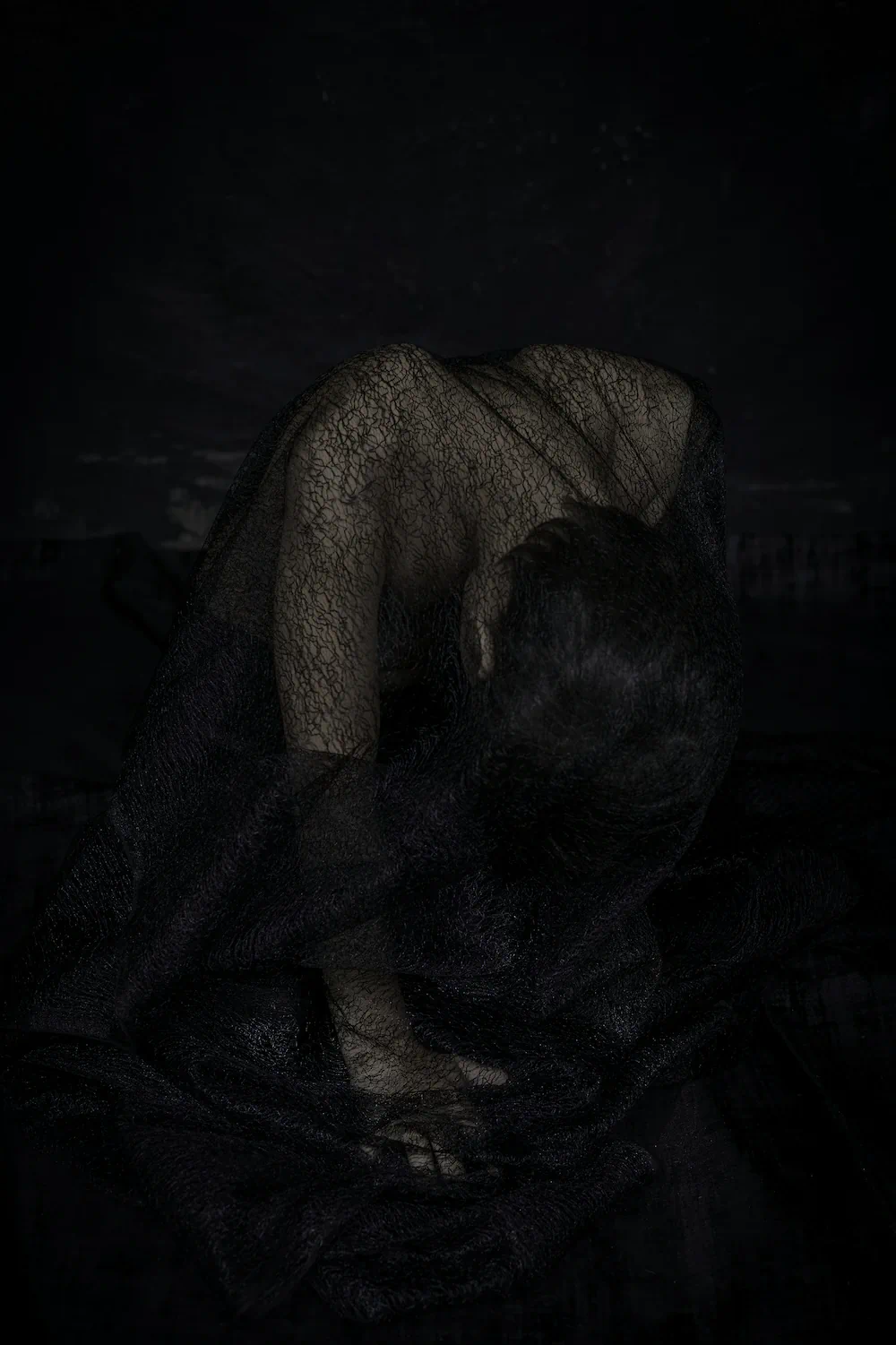
At times they emerge clearly; at others, their bodies seem to recede into the material surrounding them. The veil conceals, but never completely. It creates a threshold between the body and the viewer, between what can be approached and what remains inaccessible.
The series grew from Vandendriessche’s fascination with the human body as something both physical and elusive. A body can be intensely present and, at the same time, seem to withdraw. Through the fabric, faces become less distinct, skin acquires another texture, and contours begin to dissolve. She is interested precisely in that moment: when a body ceases to be merely a body and begins to merge with material, shadow, and space.
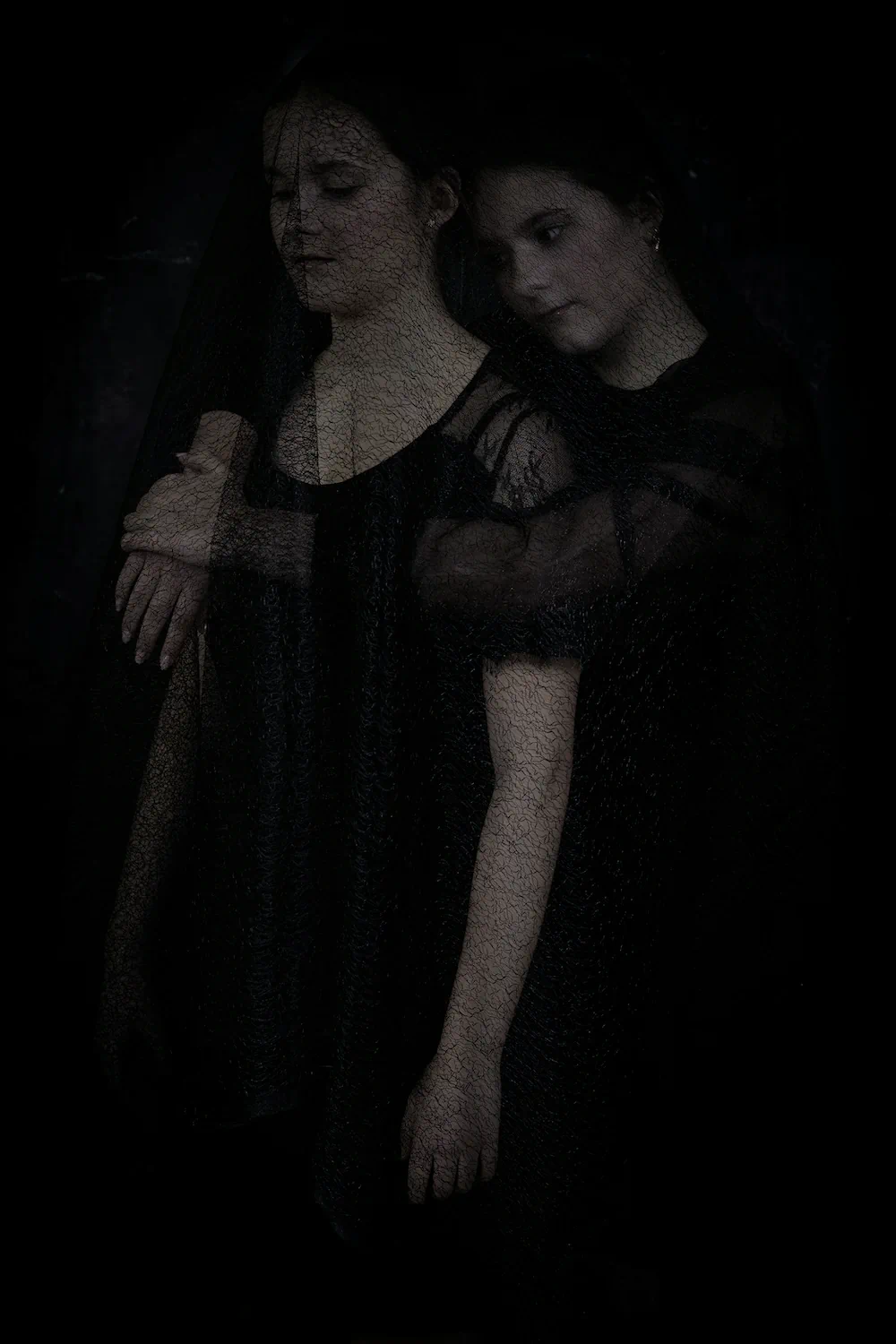
The black textile is therefore more than a visual motif. It functions almost as a second skin or membrane. It connects the different figures while simultaneously isolating them. Sometimes it resembles a veil associated with mourning; elsewhere, it becomes protective, intimate, or almost sheltering. The same material can suggest separation and closeness, restraint and tenderness. Vandendriessche seeks to preserve this ambiguity rather than reduce it to a single symbolic meaning.
The title SOLACE refers to consolation, but not necessarily to comfort in its reassuring sense. Consolation can exist without taking pain away. It can be found in the presence of another person, in a gesture, in stillness, or simply in the acknowledgment of vulnerability. Several photographs show solitary figures, while others bring bodies together. A hand, an inclination of the head, or the weight of one body against another becomes significant. These gestures are restrained; they do not tell a complete story. What happened before or what will happen afterward remains unknown.
Vandendriessche’s background in theatre and scenography inevitably influences the way she constructs photographs. She works with staging, bodies, gesture, costume, light, and material, but she is not interested in creating theatrical narratives within the image. On the contrary, she seeks to remove narrative information until what remains is a concentrated physical and emotional presence. The figures are not characters in a story. They inhabit a suspended moment.
This suspension is essential to her work. She is drawn to images in which time seems to slow down and in which the boundary between portrait, tableau, and sculpture becomes unstable. The body can become a shape; fabric can become an environment; darkness can acquire a material presence. The human figure remains recognizable, yet is never entirely available to the viewer.
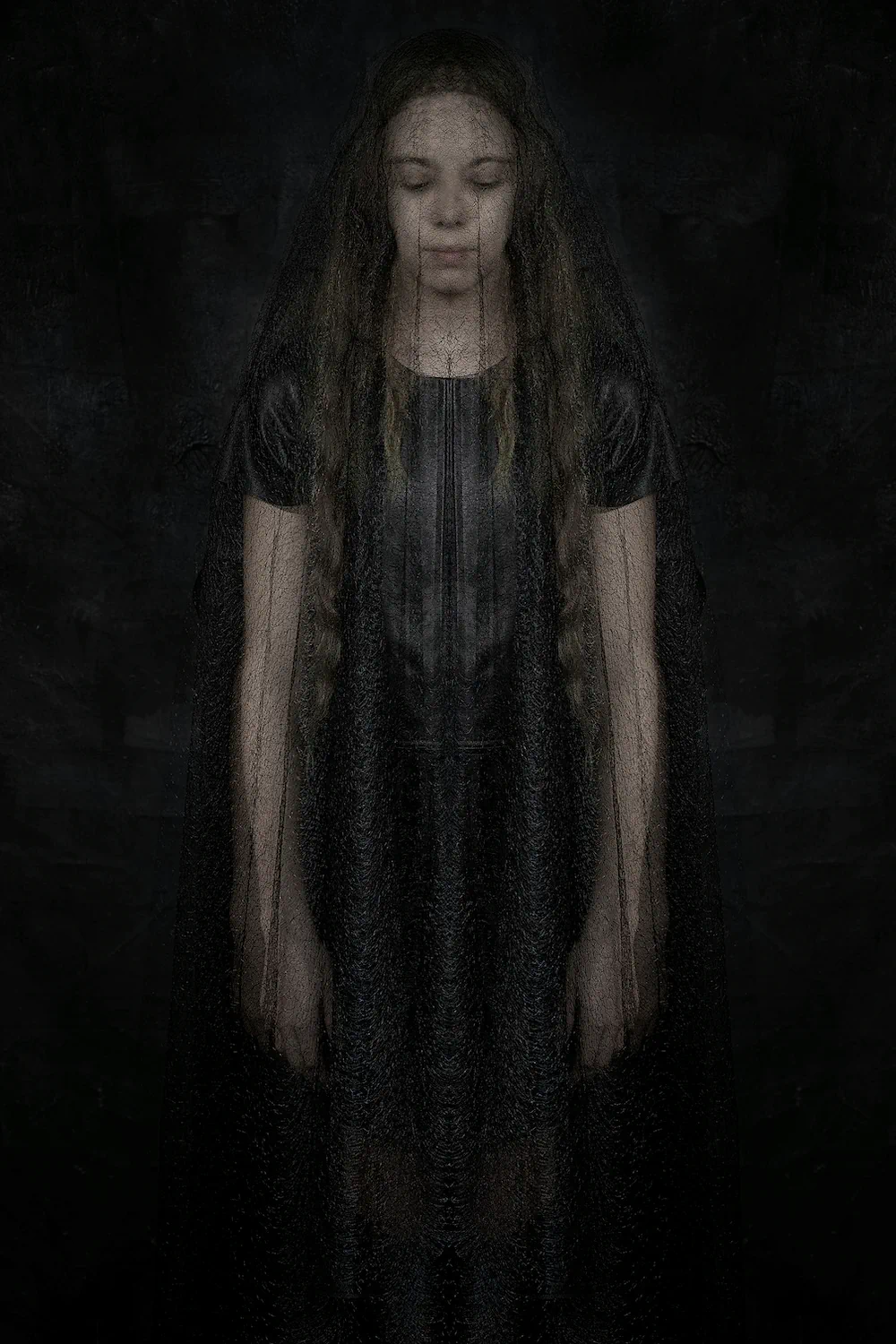
There are echoes of mourning and ritual in SOLACE, as well as references to historical representations of veiled and draped bodies. These associations are present without being literal. Vandendriessche is interested in the visual memory carried by certain gestures and materials: how a covered head, a lowered gaze, an extended hand, or two bodies leaning into one another can feel strangely familiar without belonging to one specific narrative or tradition.
Ultimately, SOLACE inhabits the space between exposure and concealment. The veil prevents viewers from seeing the figures completely, but perhaps this obstruction encourages more attentive looking. What remains partially hidden asks for another kind of gaze—one that does not seek to possess or fully understand the person represented.
For Vandendriessche, this is where solace may begin: not in resolution, but in the possibility of remaining close to what cannot entirely be reached.