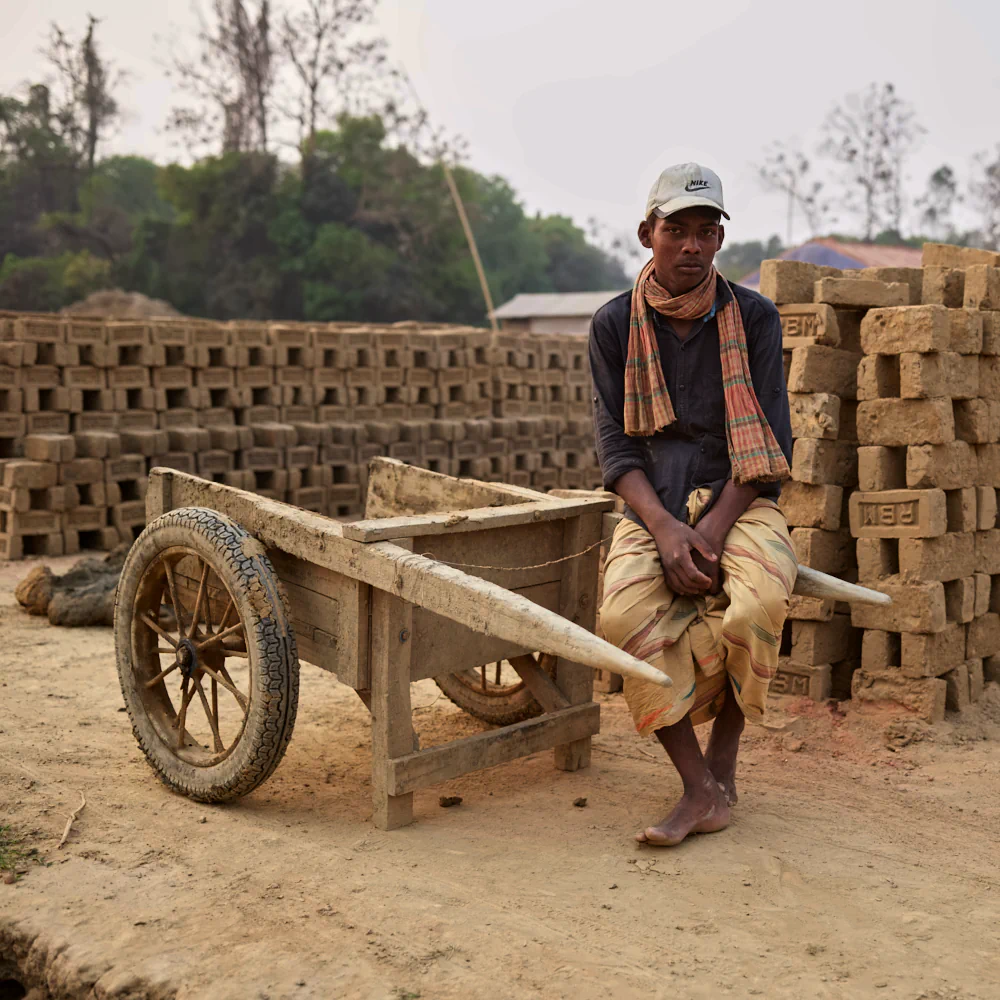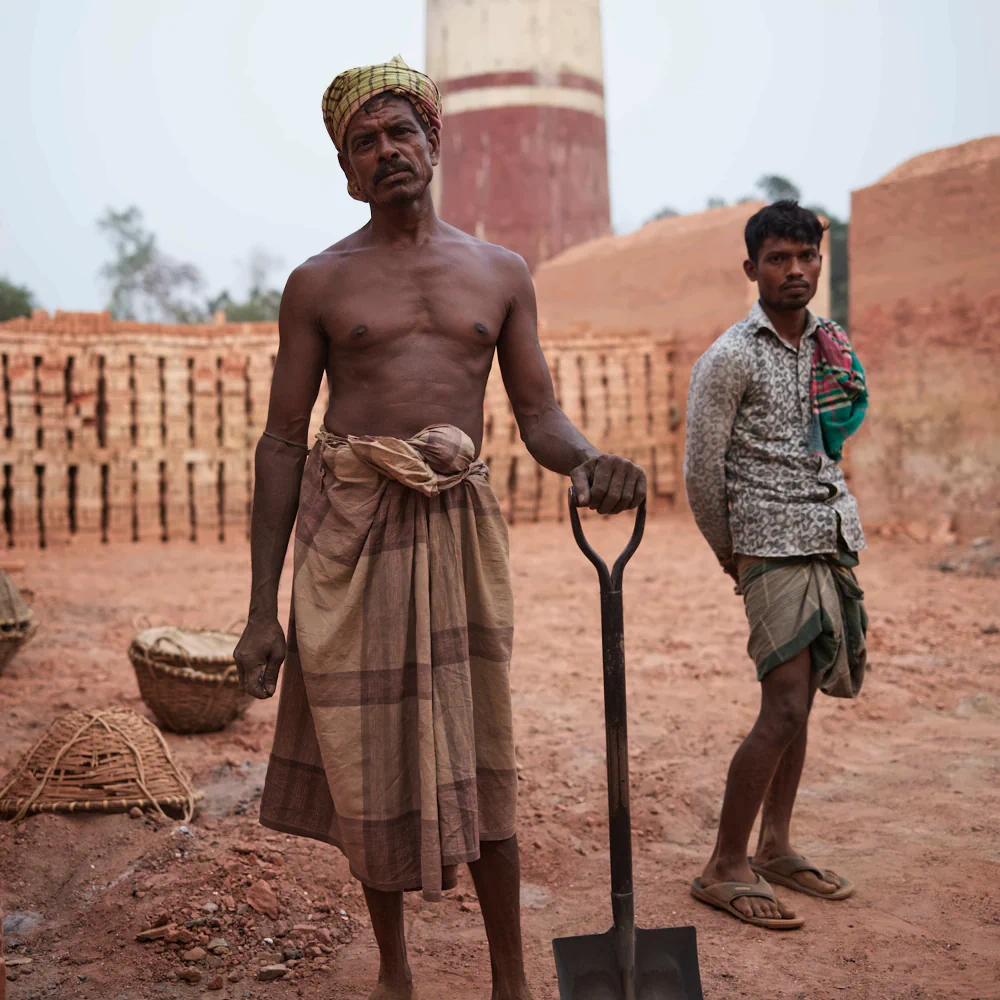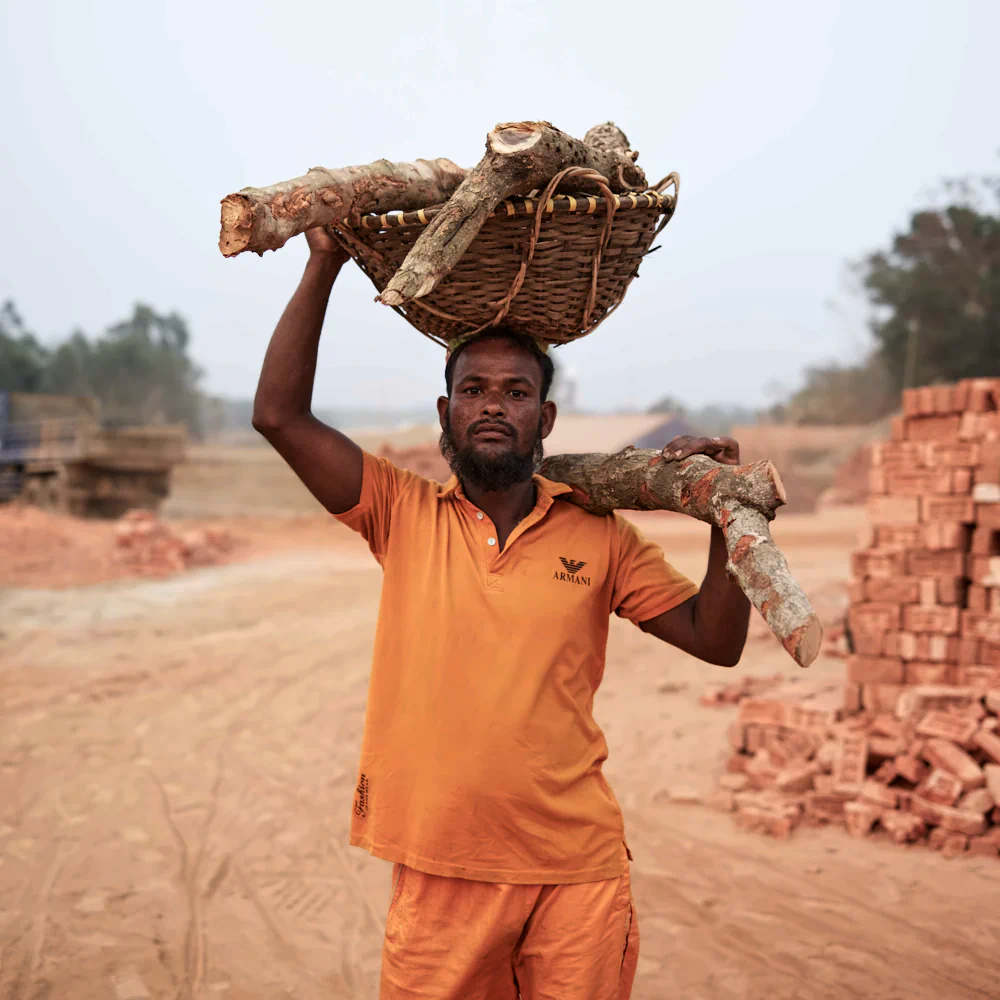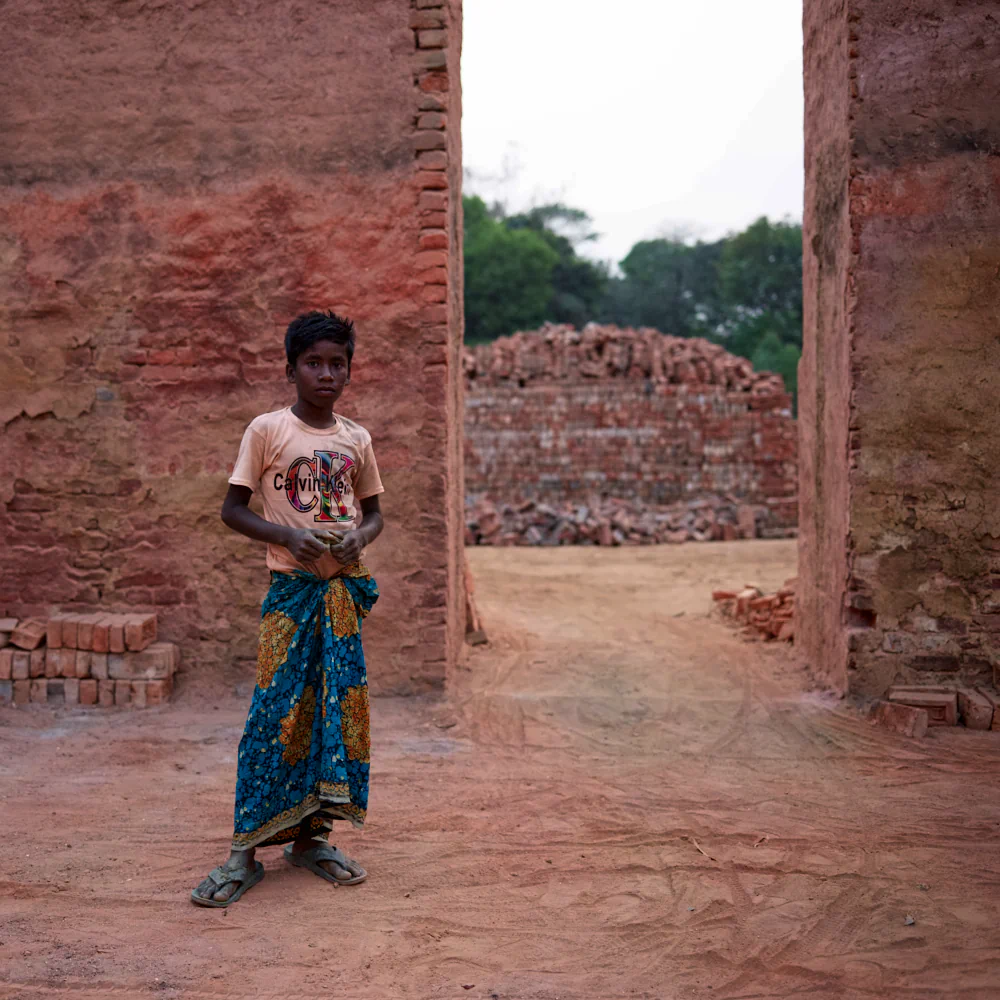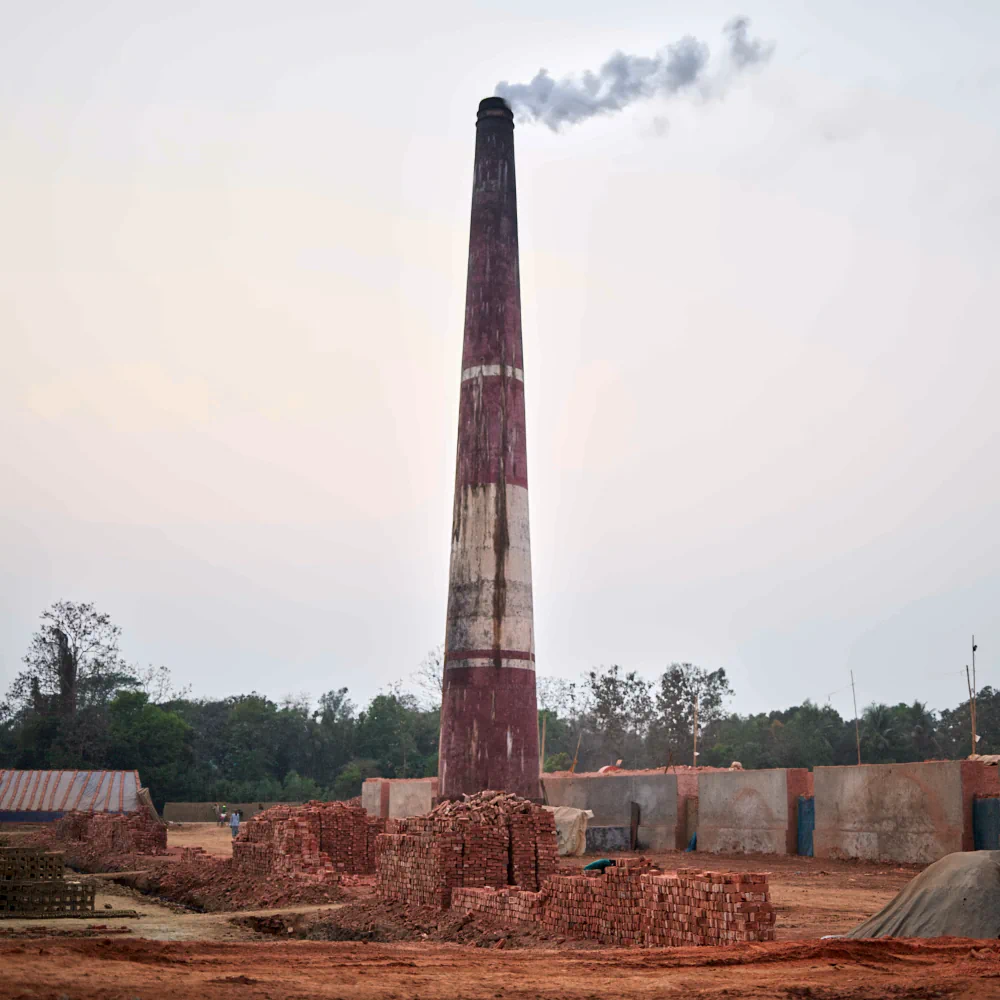
Every winter, as the monsoon recedes from the lowlands of Bangladesh, the brick kilns begin to burn.
Across the country, more than 7,000 active kilns employ over one million people, turning earth into the material for roads, houses, and a rapidly expanding urban landscape.
A 2018 national inventory counted 7,902 kilns and estimated annual production at around 31 billion bricks. Most of the workforce is seasonal, working for roughly four to five months of the year.
BRICK SEASON enters that world through the people who make the bricks.
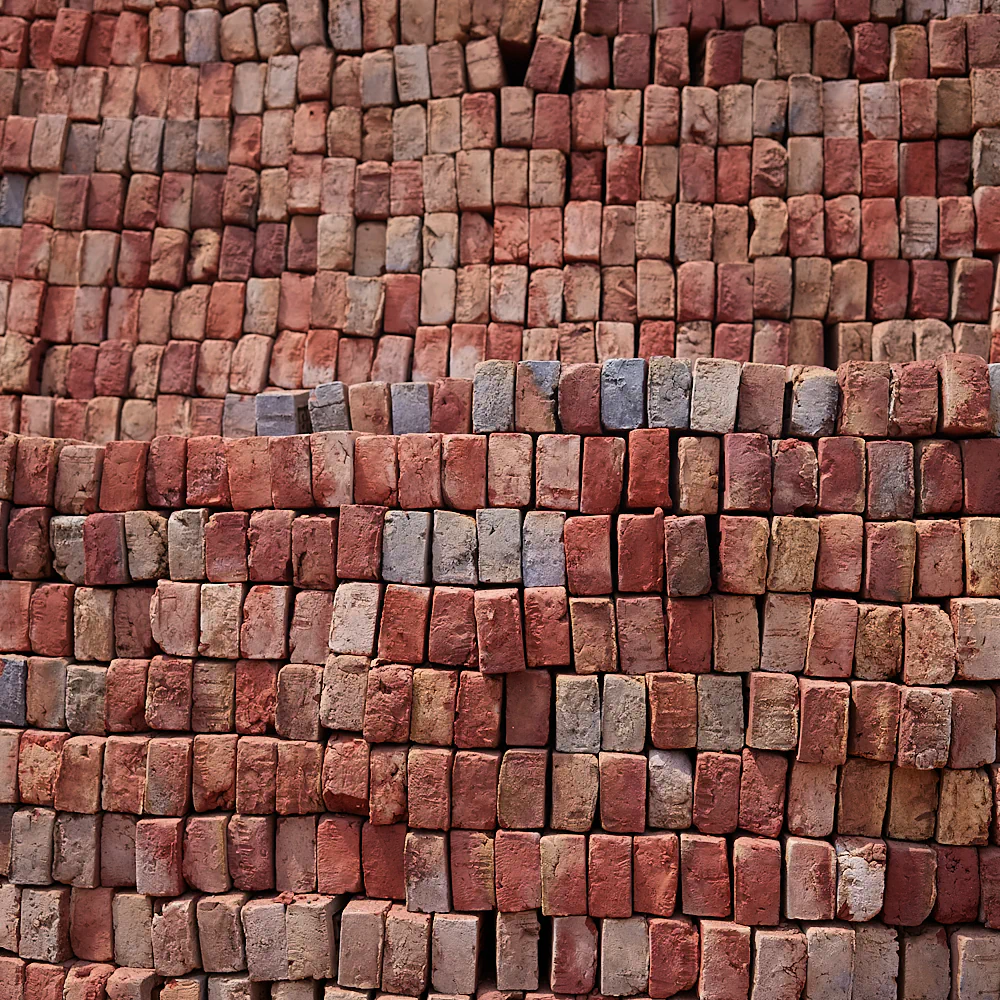
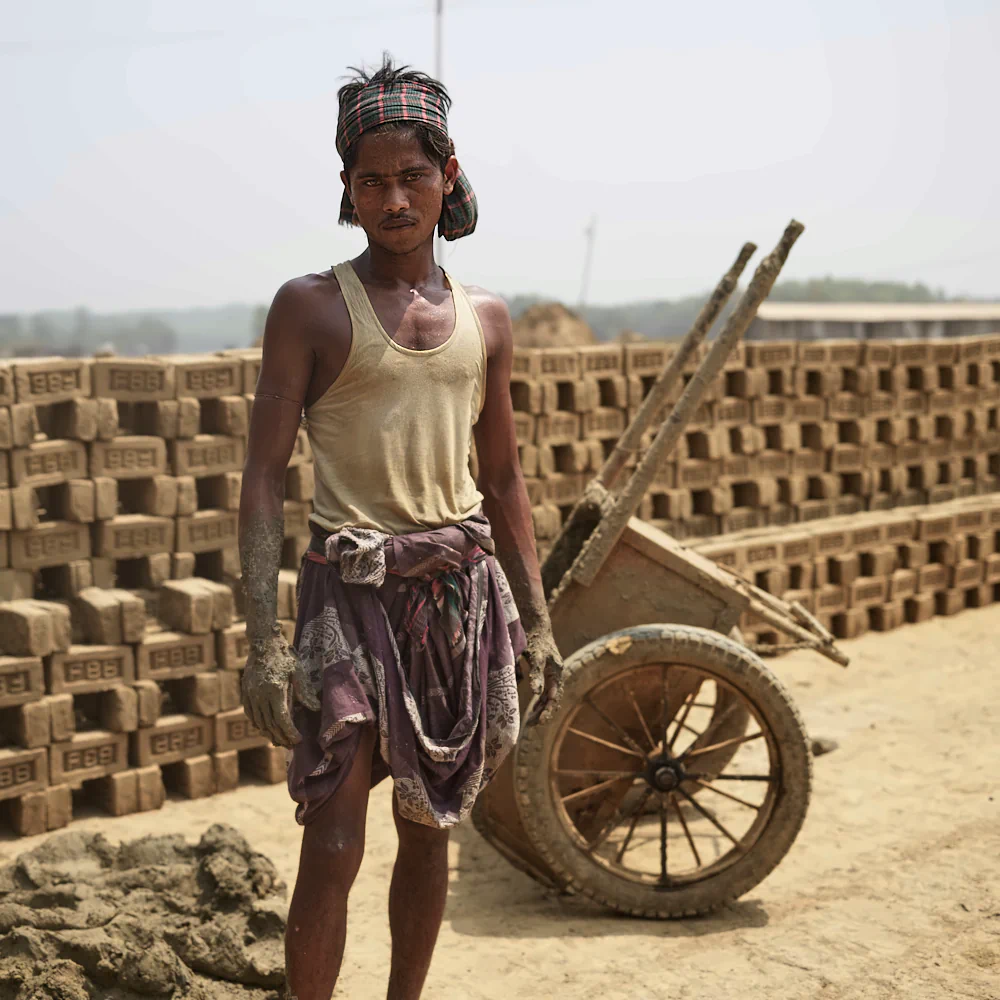
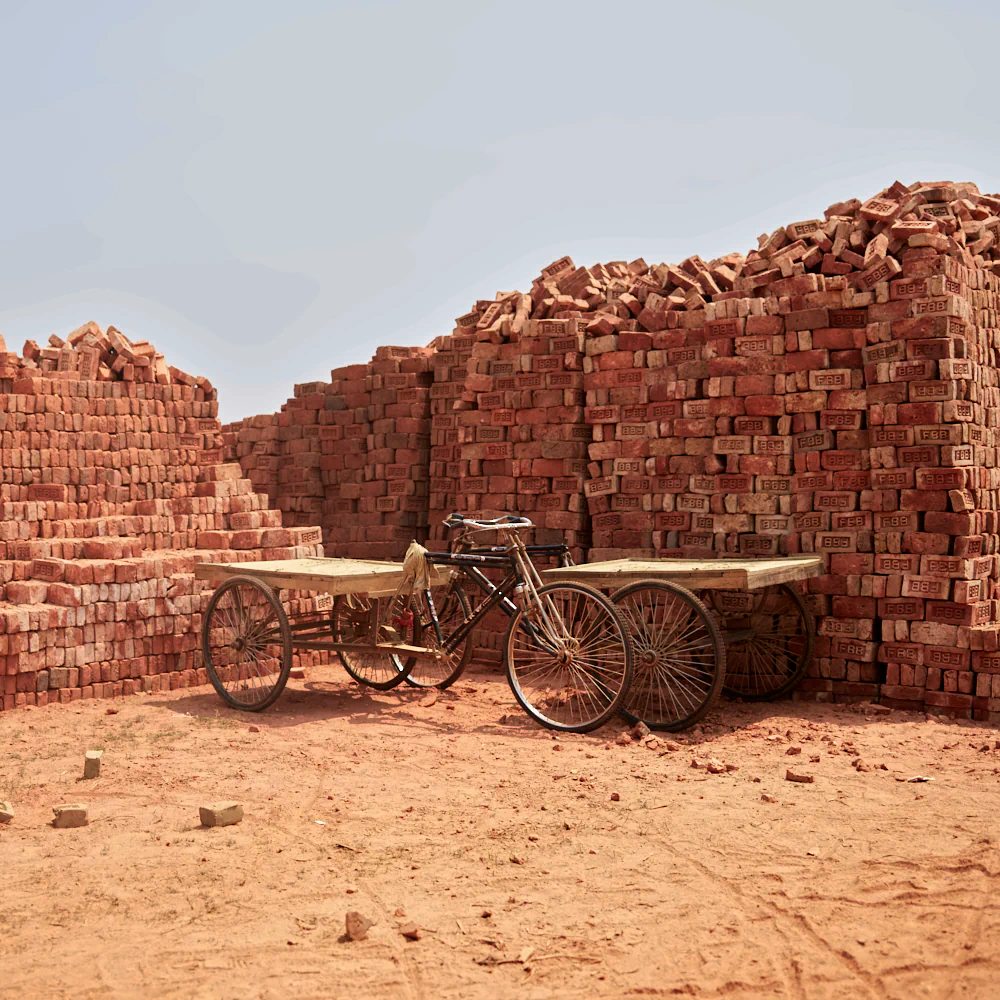
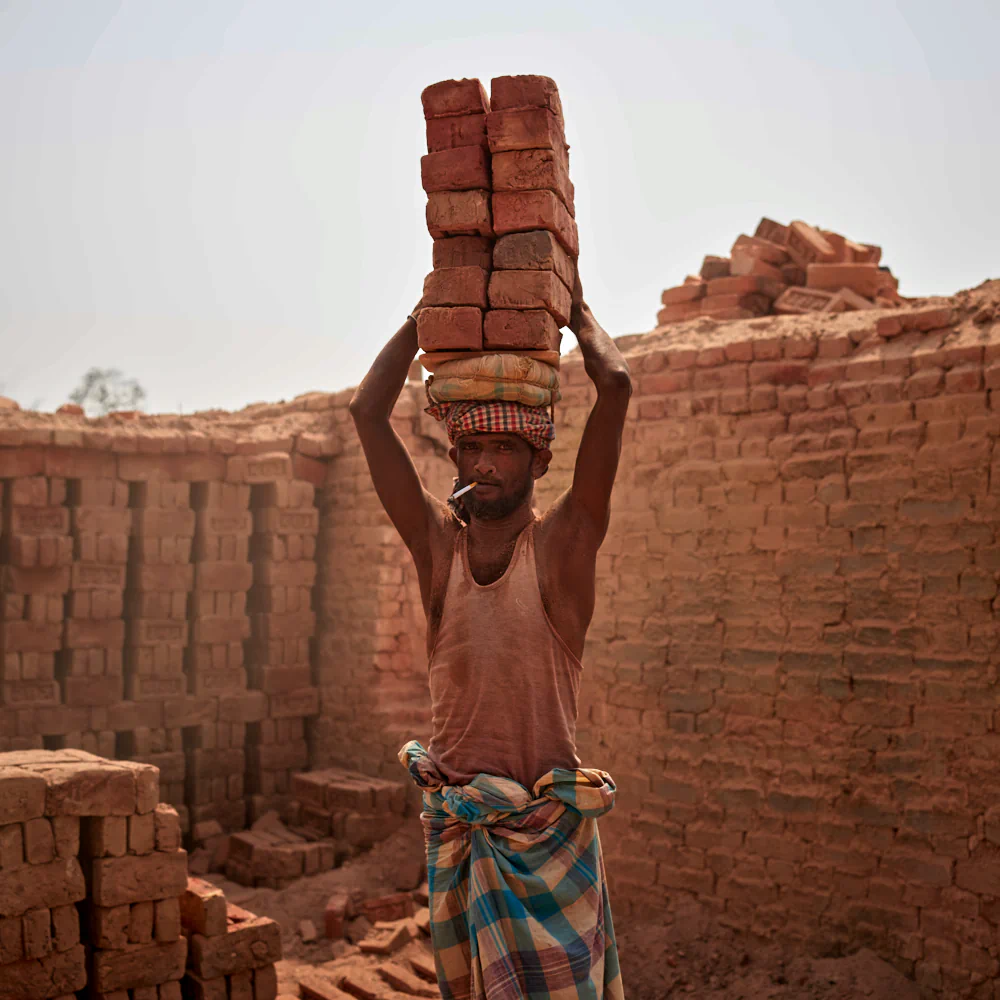
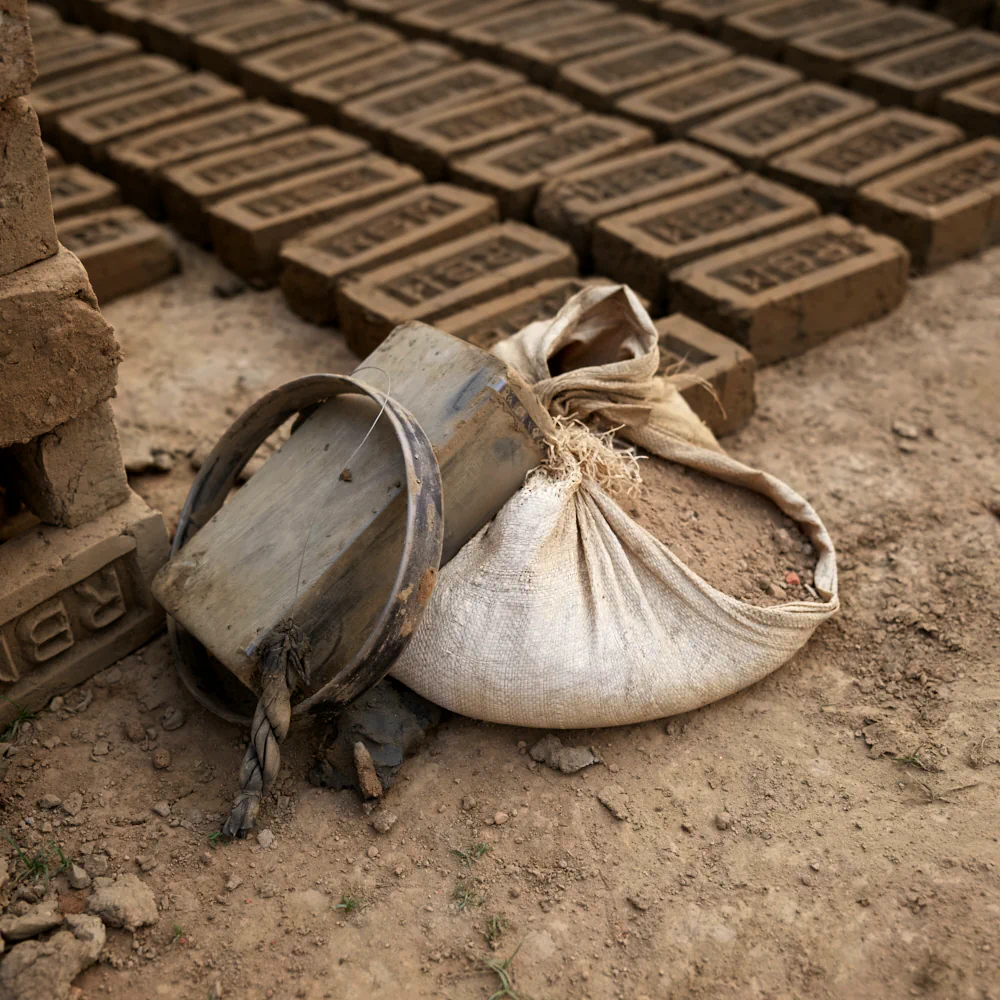
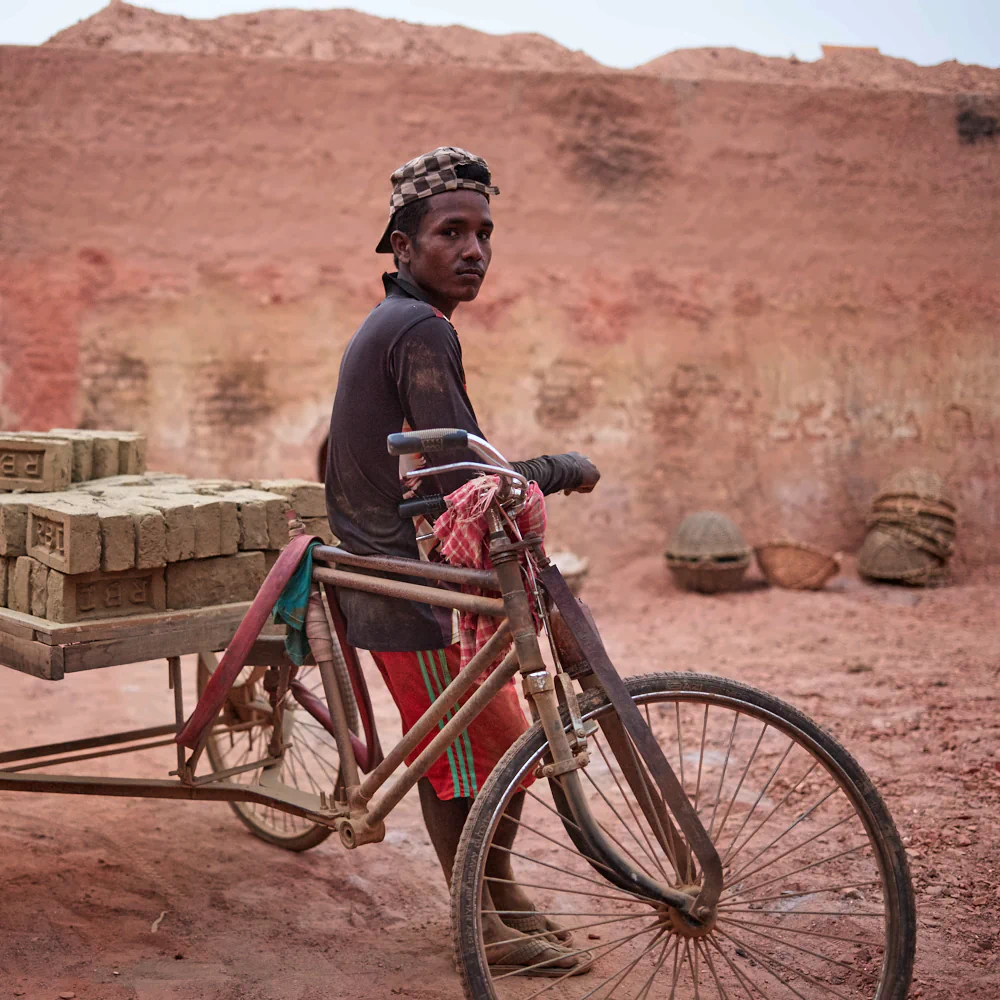
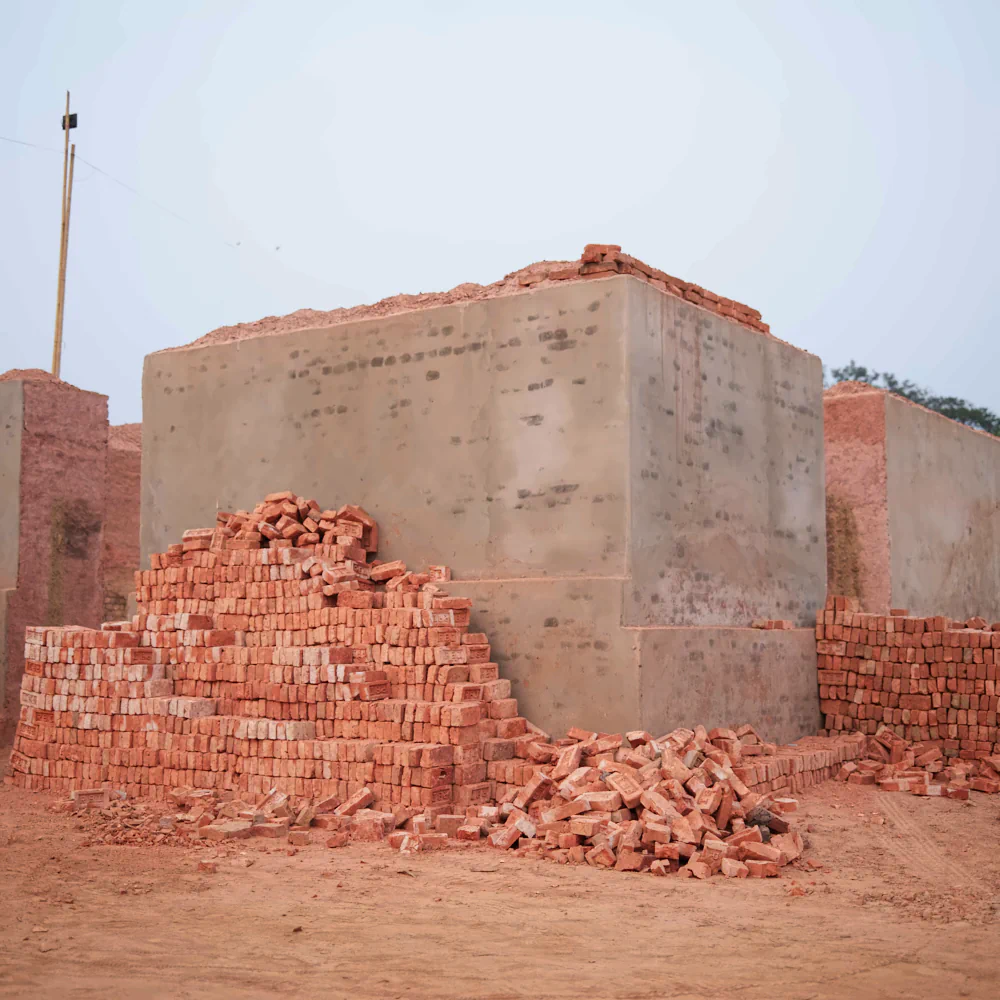
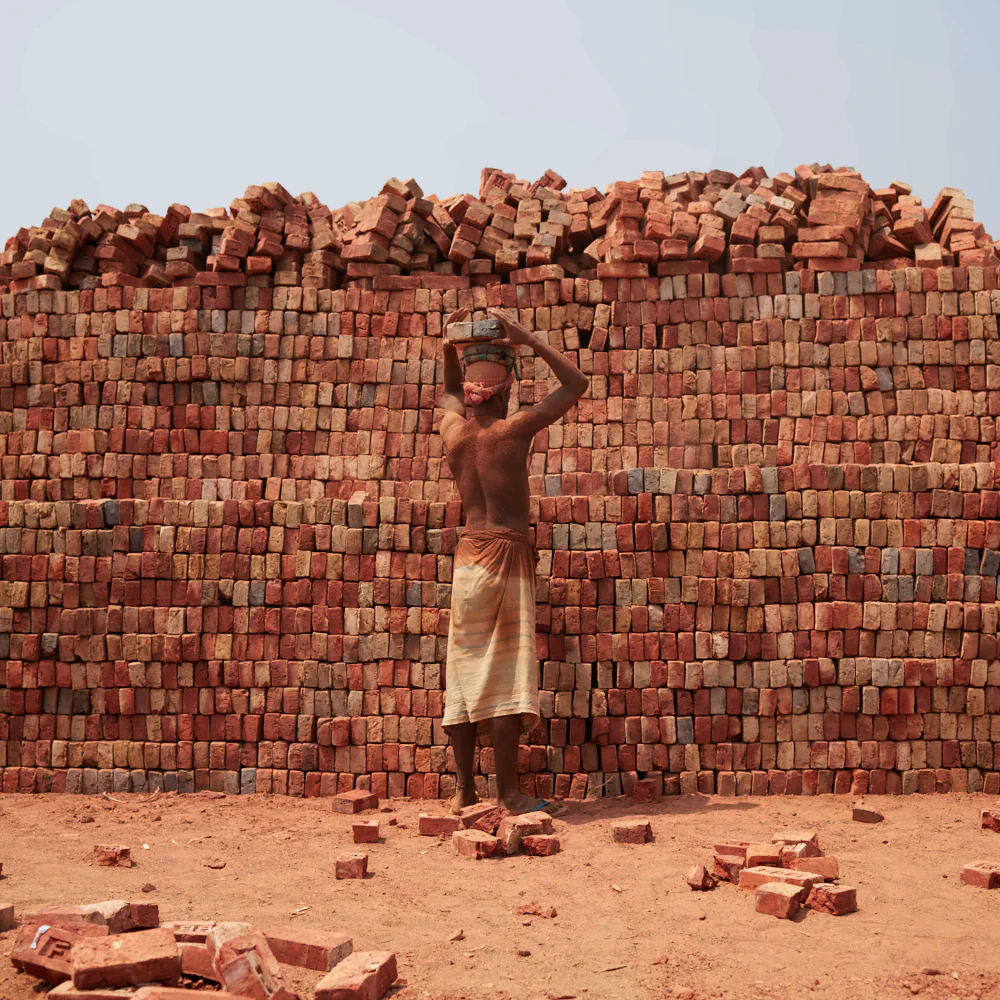
The work begins with earth. Clay is dug, mixed, and pressed into wooden moulds, each brick formed by hand before being carried away to dry. Once the bricks have hardened, workers stack them into immense geometric walls around the kiln. Coal fires transform the raw earth into the red-orange blocks that will eventually disappear into Bangladesh’s cities.
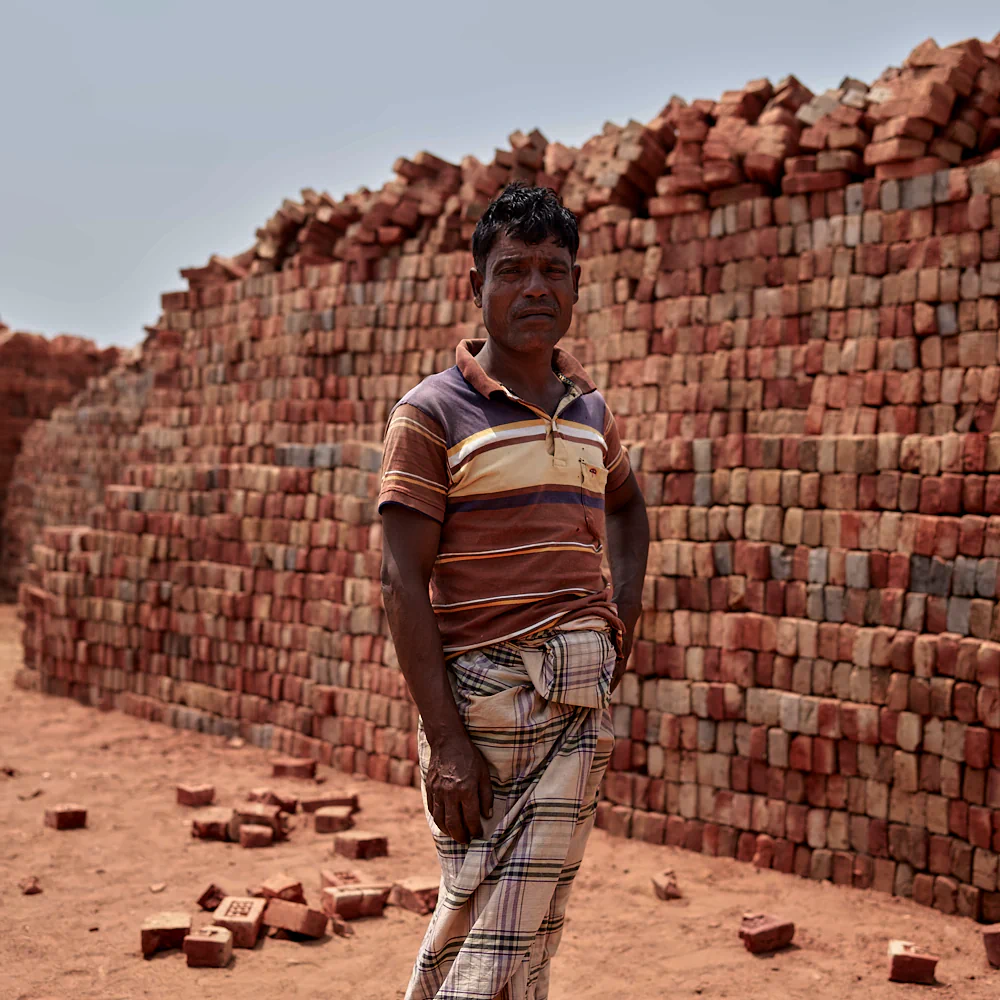
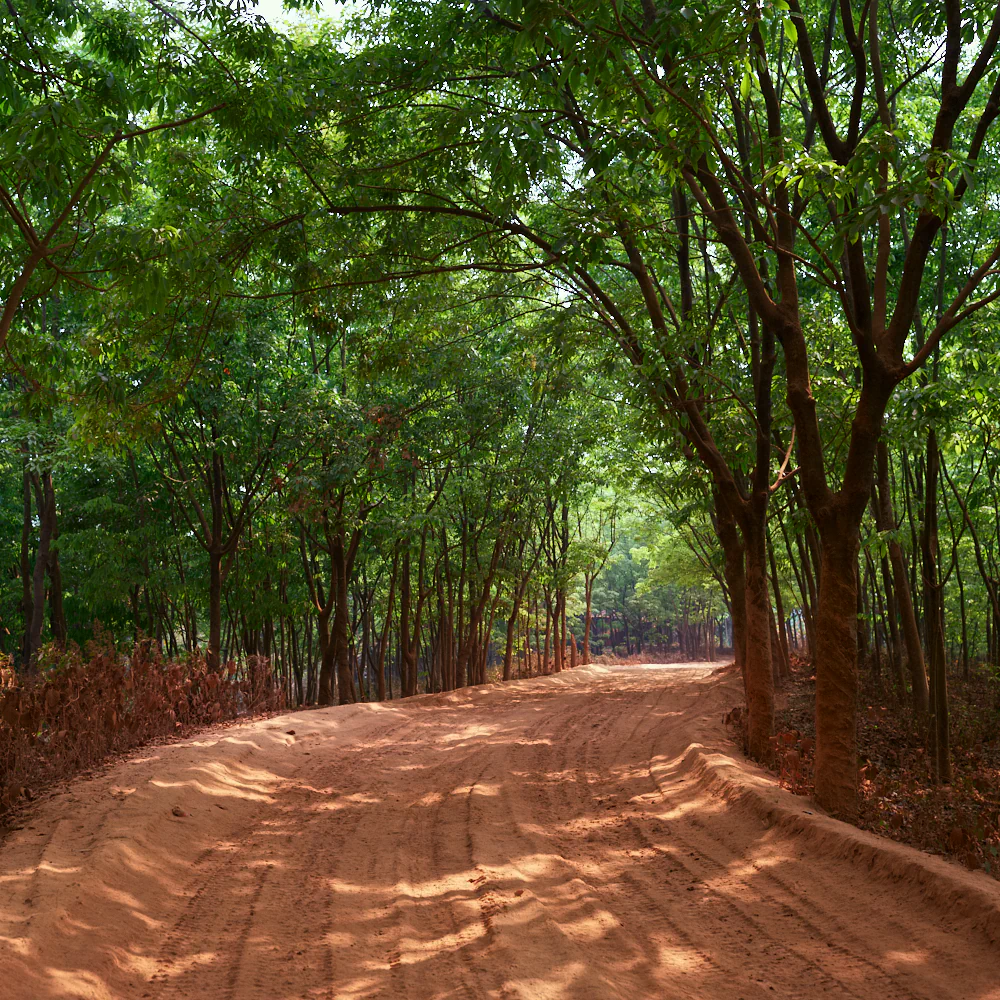
The process is repetitive, physical, and relentless. The landscape itself becomes an extension of the labour: enormous brick stacks rise from flat agricultural land, smoke hangs above the kilns, and workers move continuously between earth, fire, and finished brick.
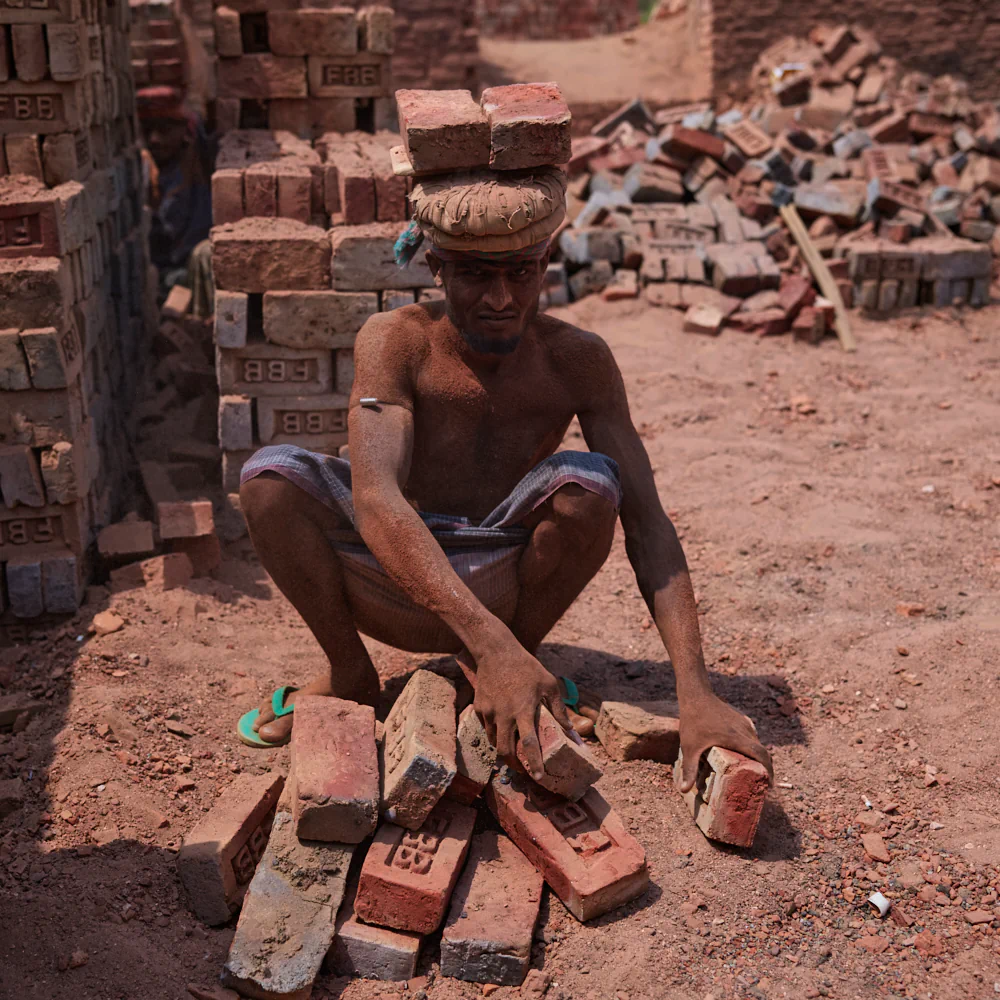
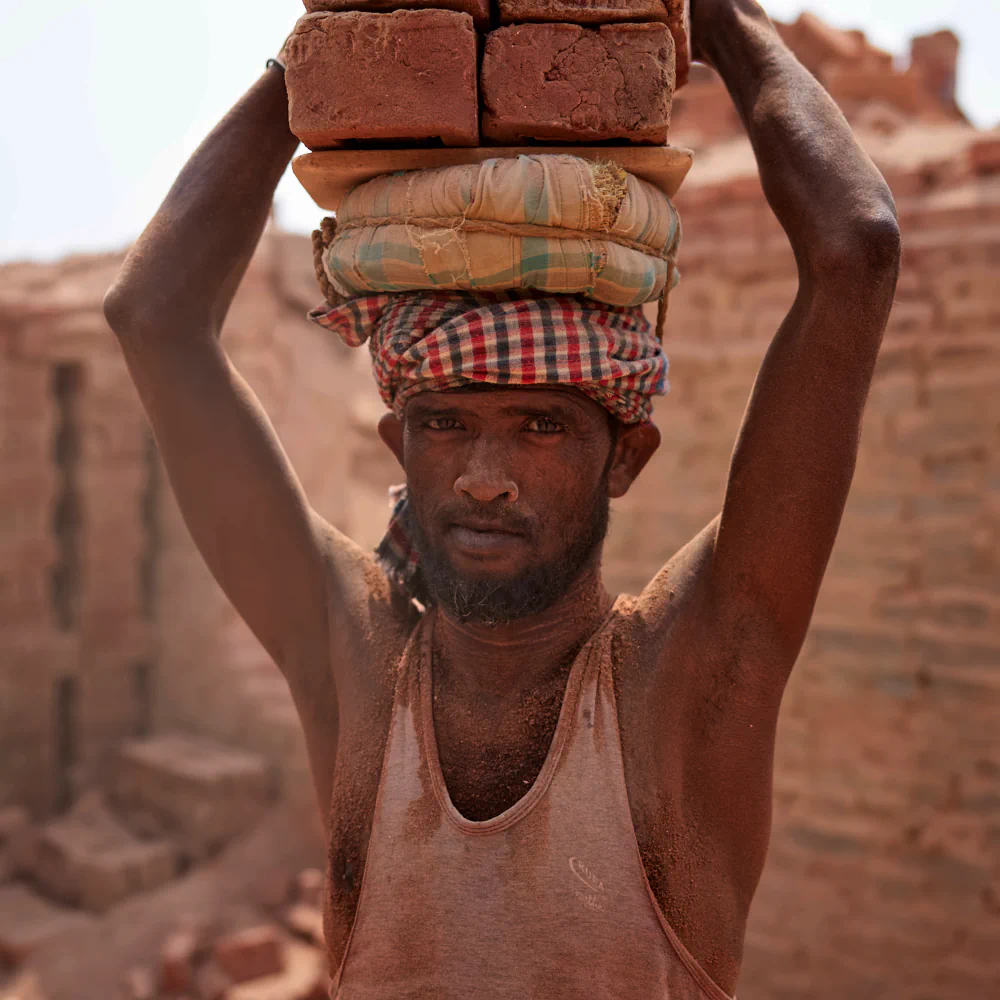
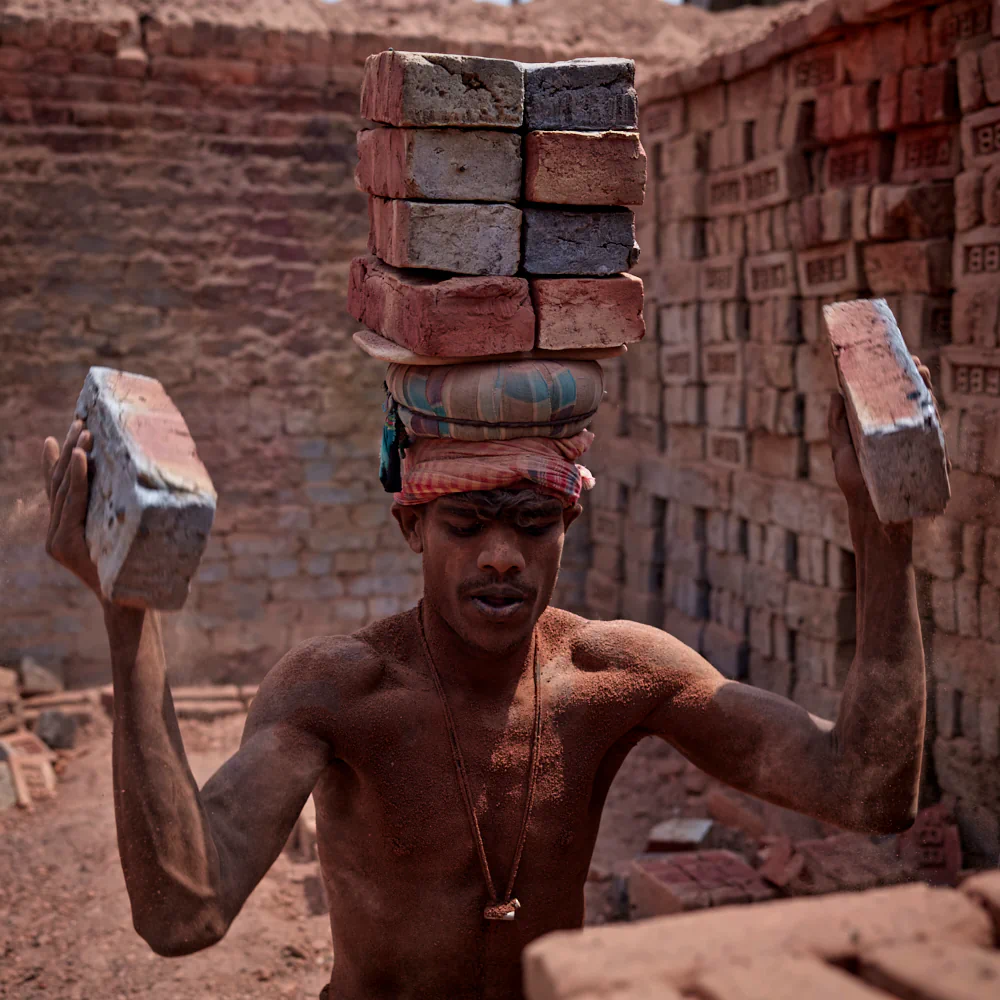
BRICK SEASON moves between these industrial landscapes and intimate portraits, looking closely at the people whose bodies make the industry possible. Hands stained with clay. Feet darkened by dust. Faces emerging from smoke. Workers resting beside temporary homes after a day spent carrying and stacking bricks. The intention is not to photograph poverty as spectacle, but to examine the complicated relationship between work, necessity, and survival.
The brick industry is inseparable from Bangladesh’s development. Yet its environmental and human costs are difficult to separate from the material itself. Research published in World Development found that people living downwind of kilns experienced substantially higher exposure to fine particulate matter during the production season. At monitoring sites within two kilometres downwind, PM2.5 was measured at an additional 72.3 micrograms per cubic metre, while respiratory problems were more common among exposed adults.
The scale of the emissions is equally striking. Research into the Greater Dhaka region estimated that approximately 1,000 kilns produced 3.5 billion bricks annually, generating around 23,300 tonnes of PM2.5, 15,500 tonnes of sulphur dioxide, 6,000 tonnes of black carbon, and 1.8 million tonnes of carbon dioxide.
But the kiln is more than an environmental statistic.
It is a workplace, a temporary home, and, for many seasonal labourers, a source of essential income. Its workers exist at the intersection of Bangladesh’s economic growth and its hidden costs. The same bricks that form new buildings and expanding cities are produced by people whose own lives can remain precarious.
There is also change on the horizon. A 2025 randomized trial involving 276 zigzag kilns found that improved operating practices reduced energy consumption by 10.5% and cut annual emissions by approximately 171 tonnes of CO2 and 0.45 tonnes of PM2.5 per kiln, demonstrating that cleaner production is possible without necessarily abandoning the industry.
These photographs stay with the workers through this tension: between progress and exploitation, construction and destruction, income and health.
The brick is an object of permanence. The people who make it are often living season to season.
This project asks us to look at the hands behind the walls—and to consider what, and who, is buried within the foundations of development.
About Sebastian Sardi
Sebastian Sardi was born in 1983 in Stockholm, Sweden. At the age of 22, he began taking classes in analogue photography at the People’s University in Stockholm. In 2009, he moved to Denmark to study photography at Fatamorgana, the Danish School of Art Photography. In 2011, he received a Bachelor’s degree in Art History and Visual Studies.
He published his first photobook, A Cirkusz, in 2012. In 2019, his second book, Black Diamond, was published by Kehrer Verlag.
Today, Sebastian Sardi lives and works in Malmö and Copenhagen. [Official Website]