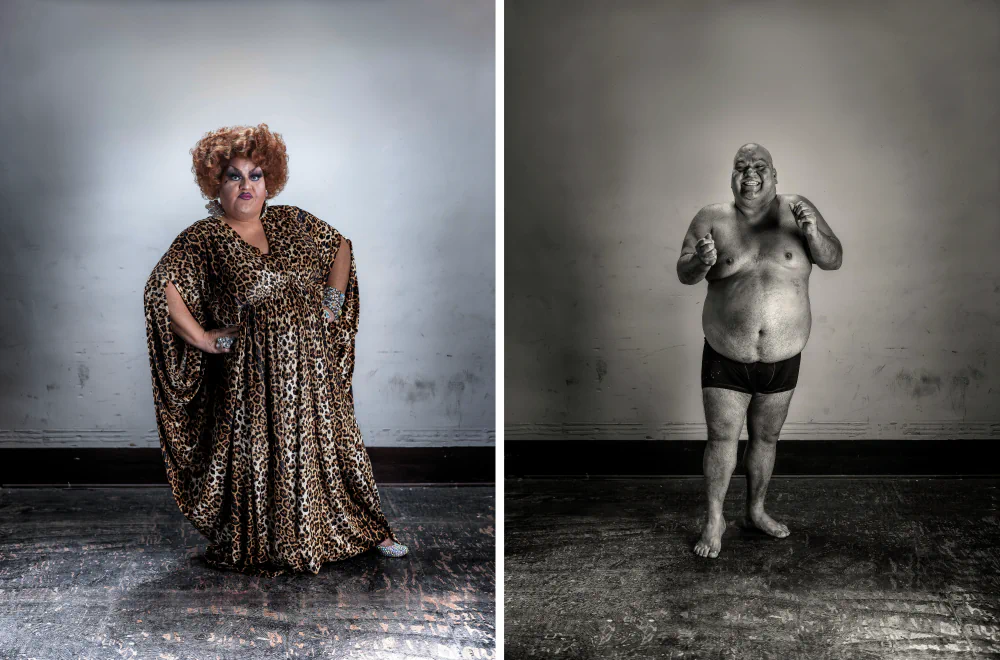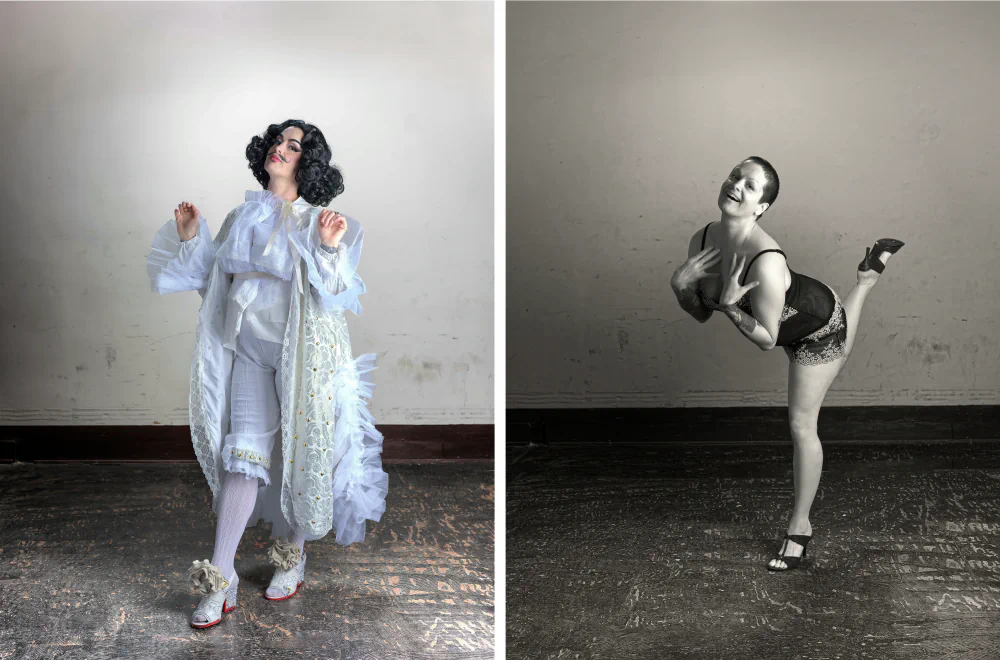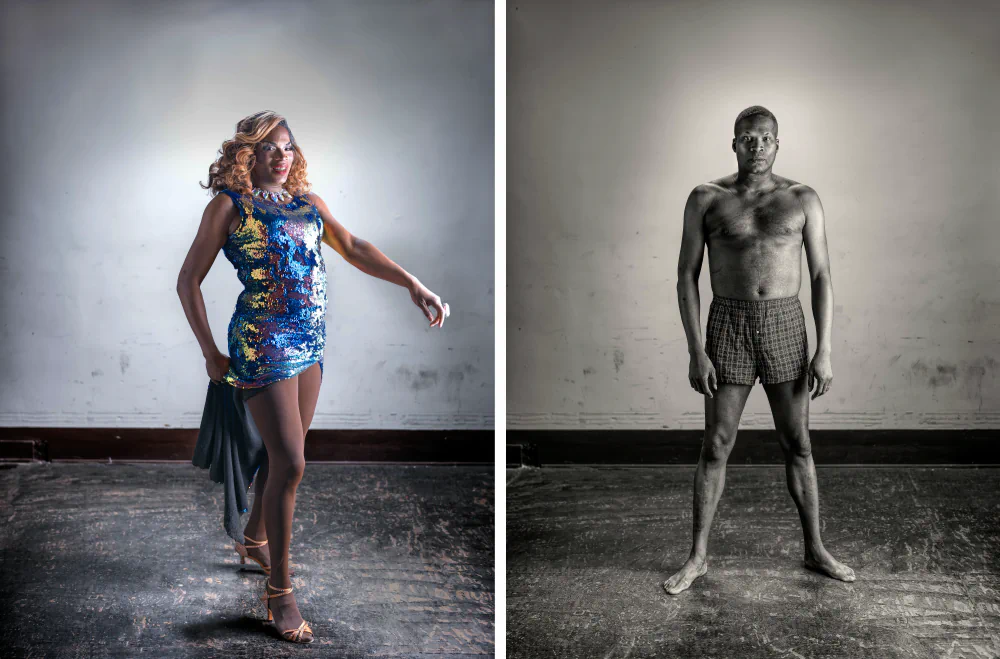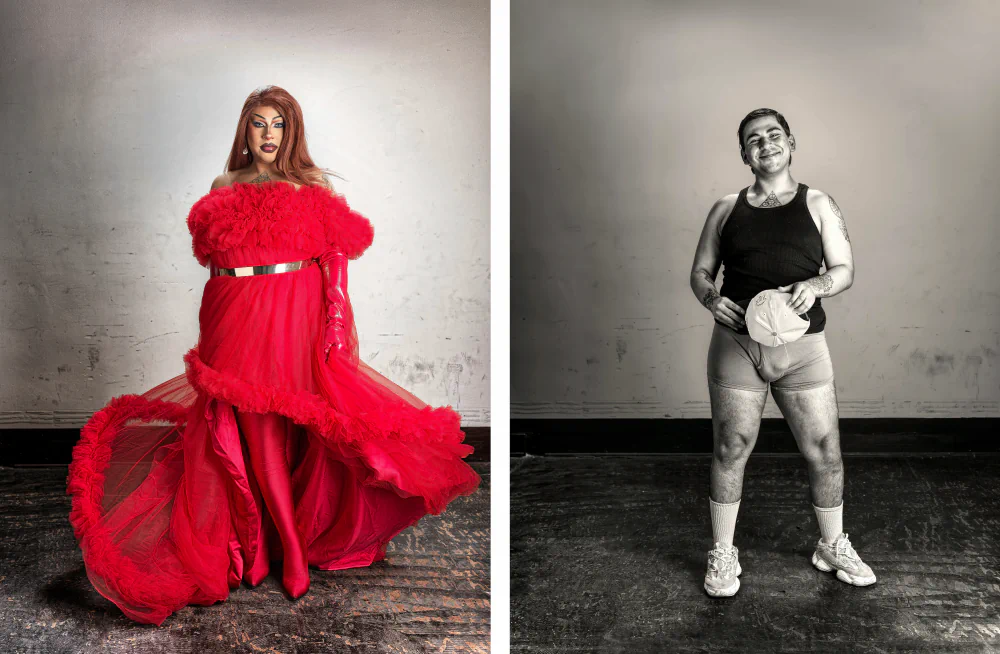

Drag / Strip is kabuki—without a Japanese passport.
The comparison is theatrical, not cultural: both employ spectacular costumes, stylized performance, gender transformation, and the deliberate construction of persona.
But while kabuki is revered as cultural heritage, drag in America is often marginalized, misunderstood, dismissed as spectacle alone, or even condemned as perverse.
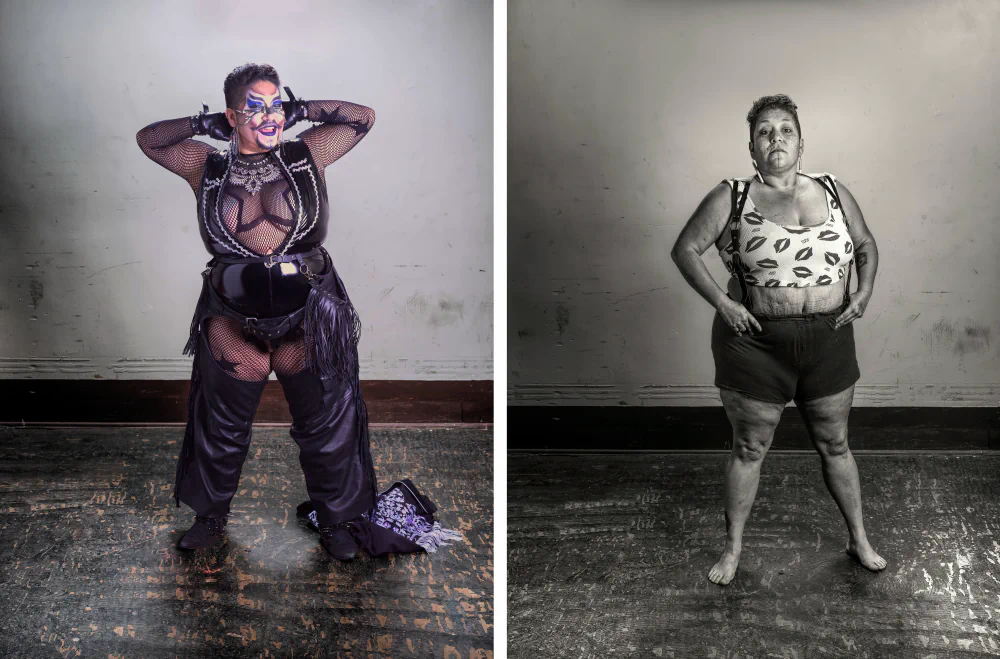
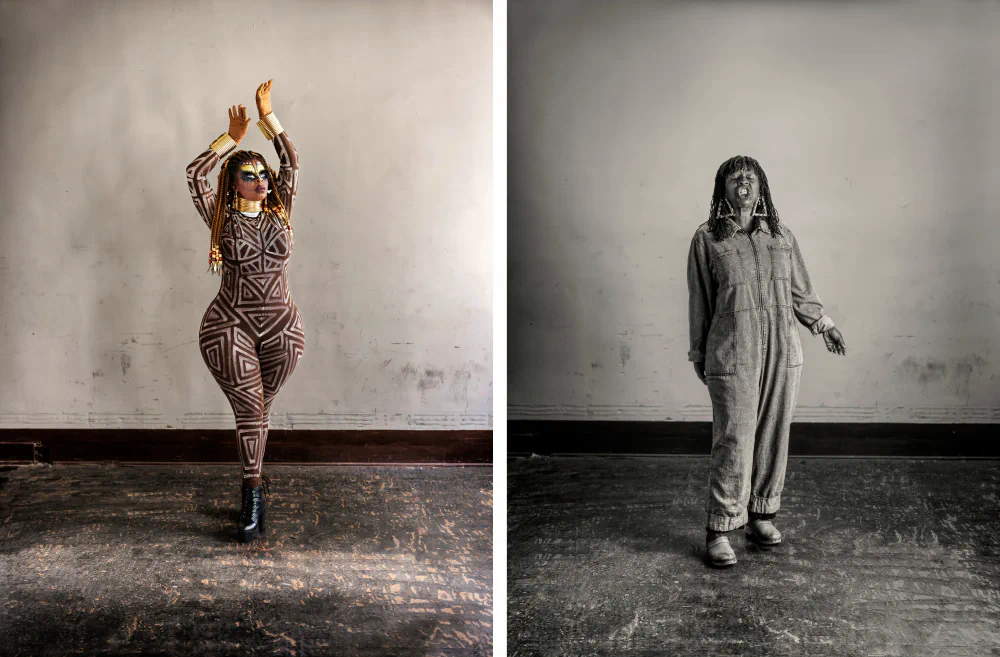
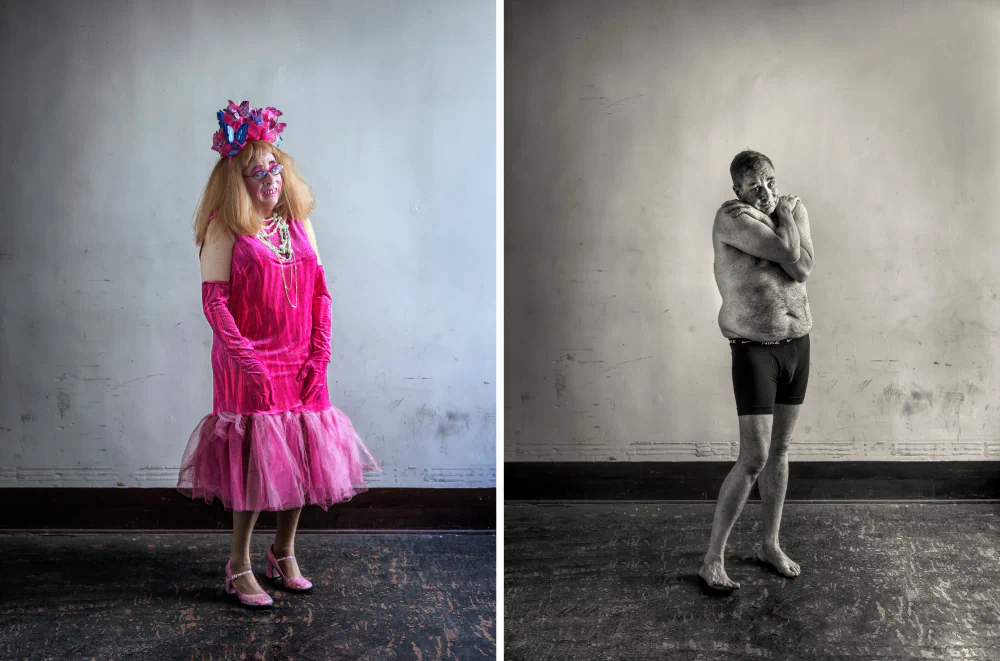
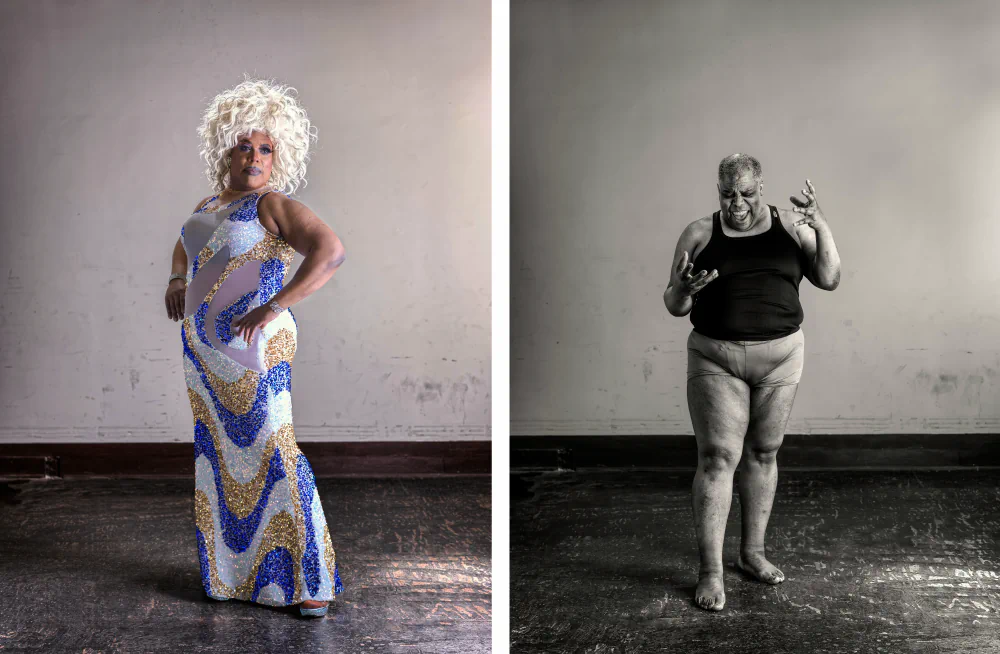
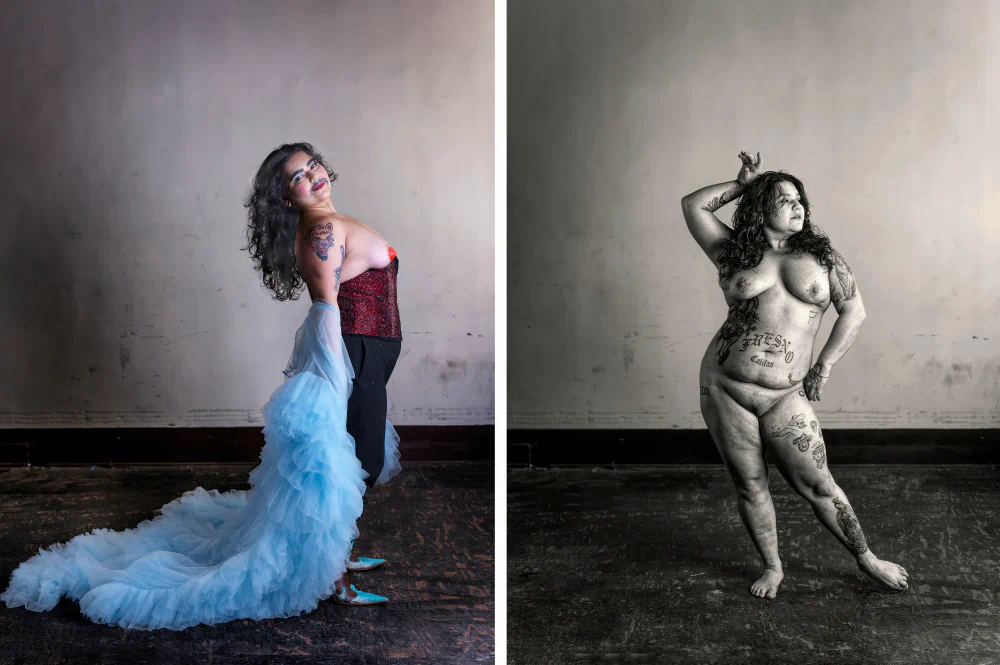
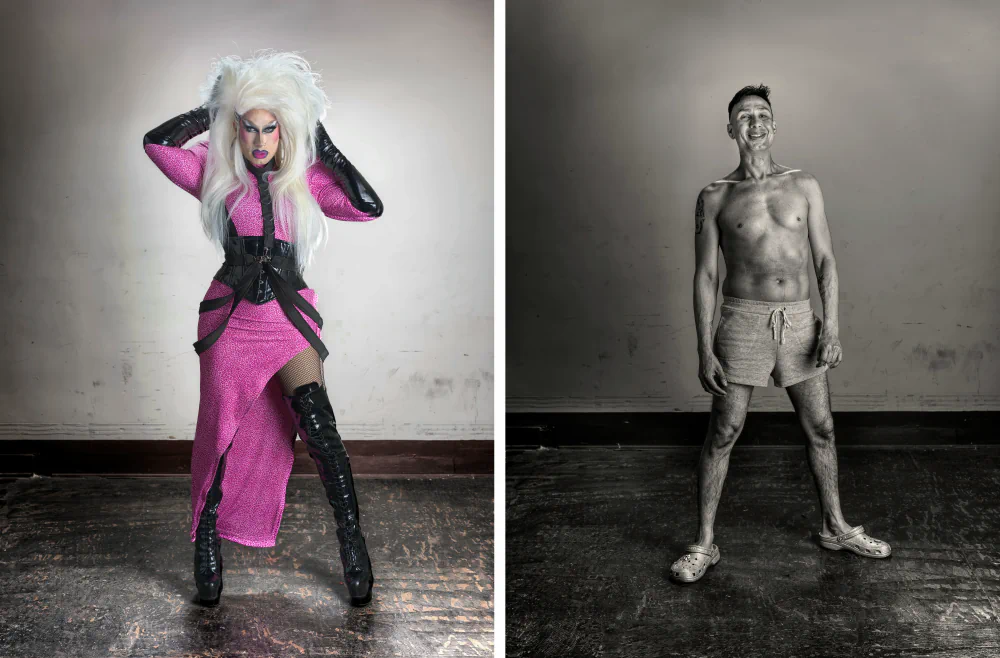
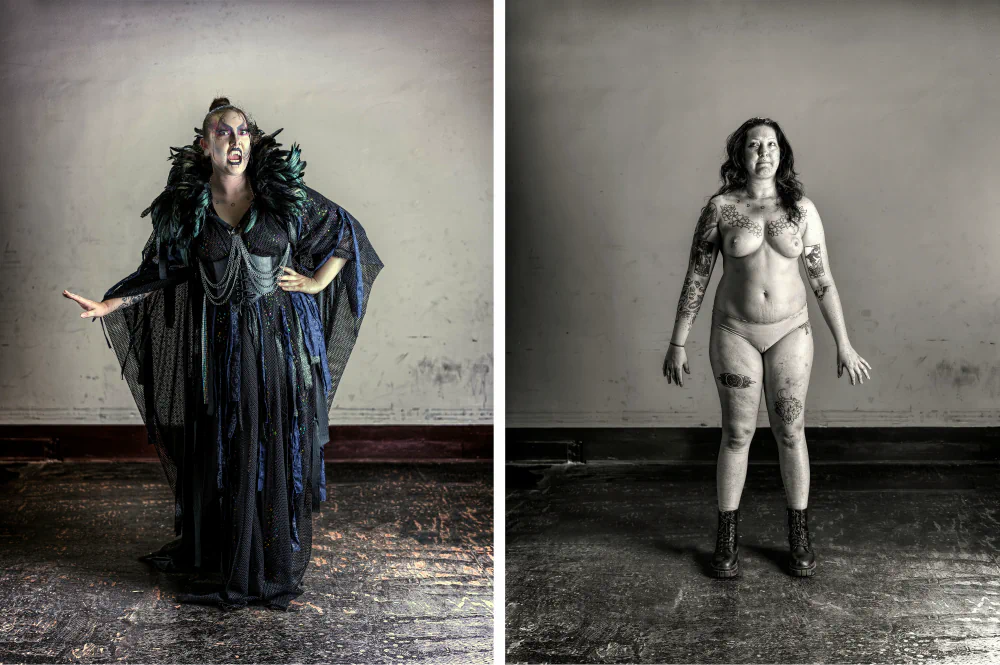
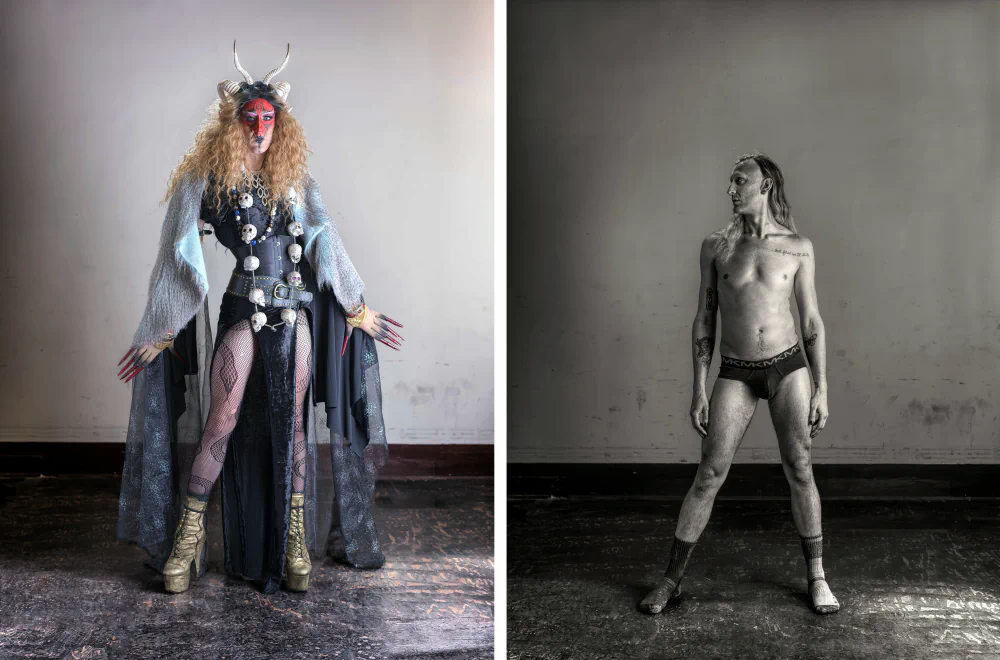
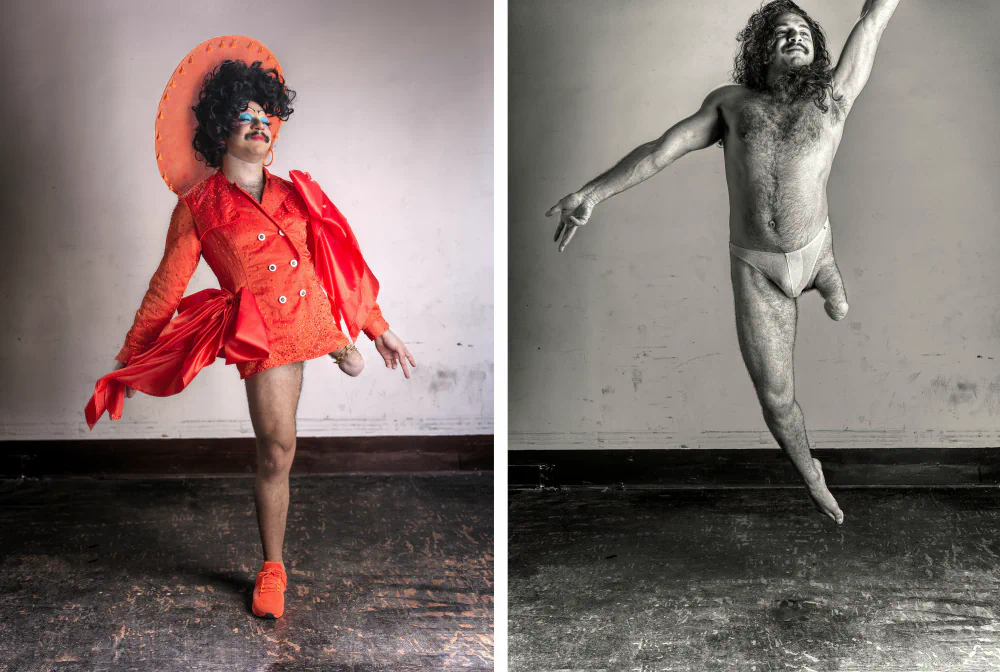
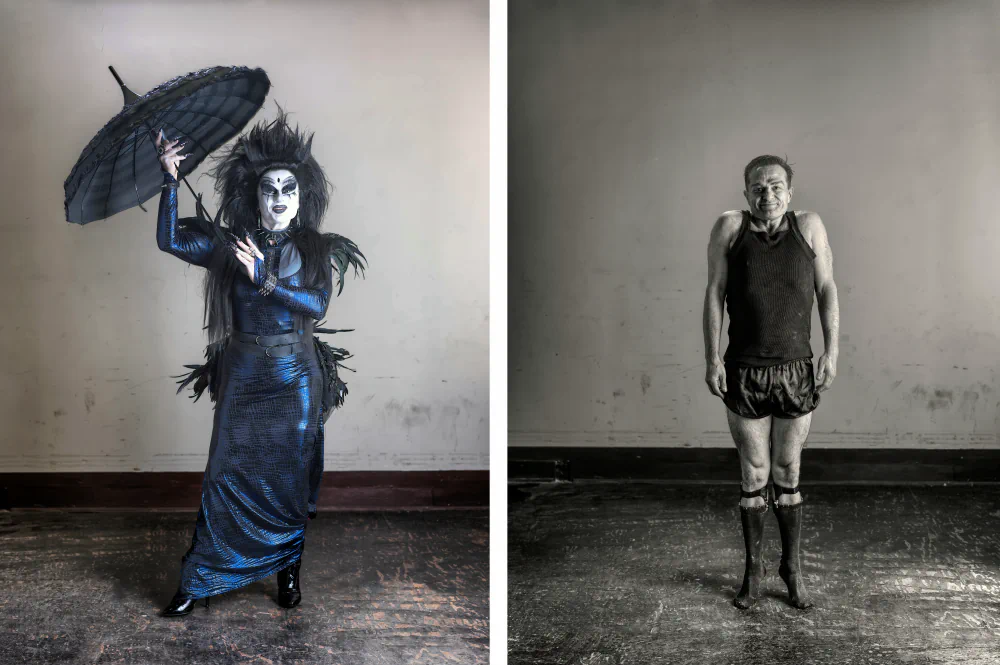
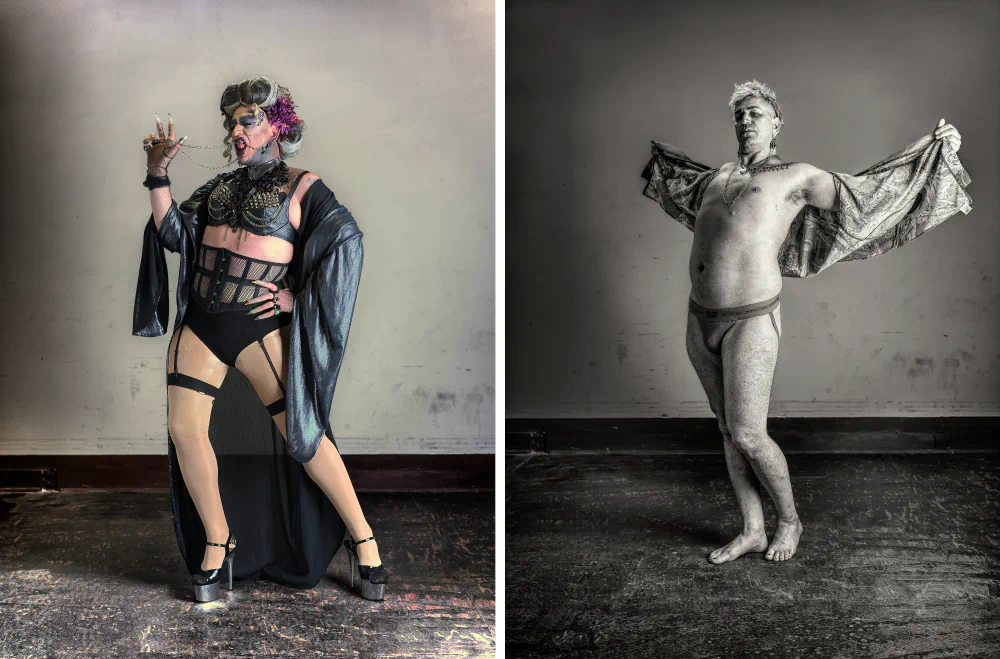
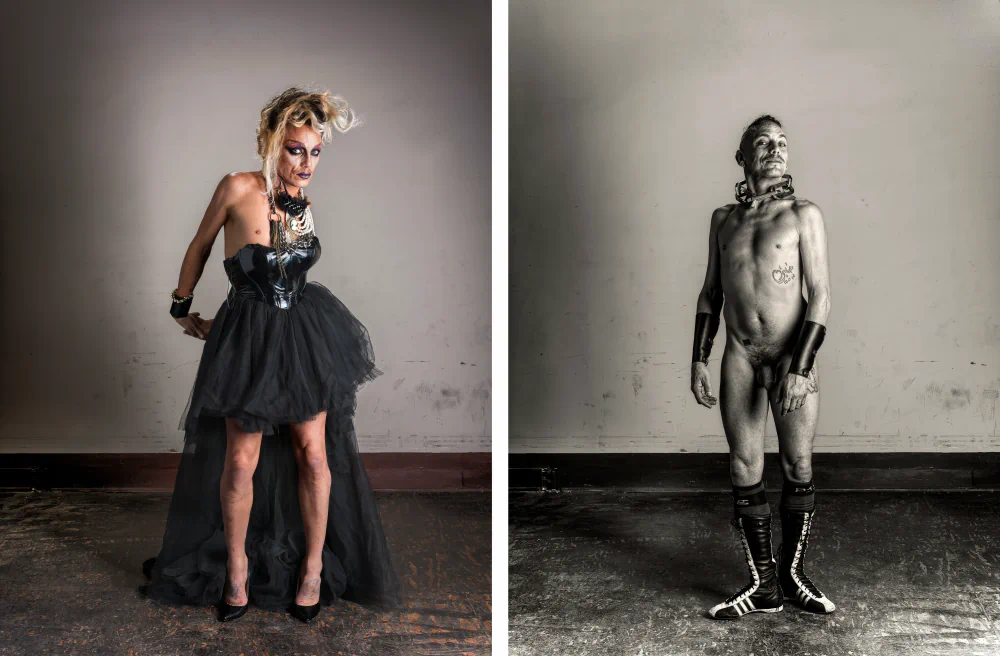
Drag / Strip asks viewers to look at the spectacle—and then to look again at the people who create it.
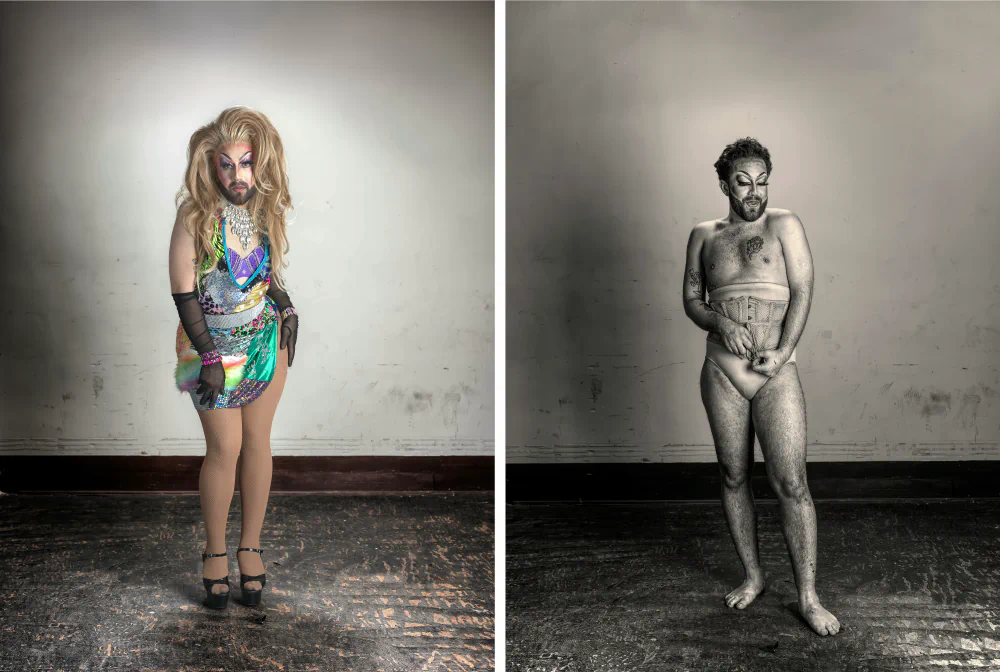
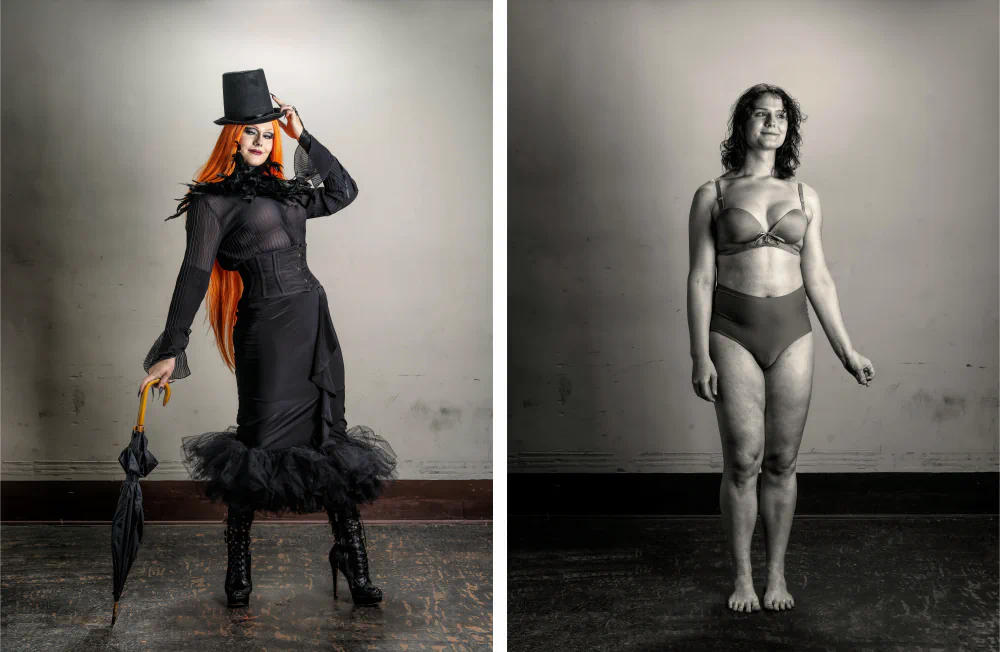
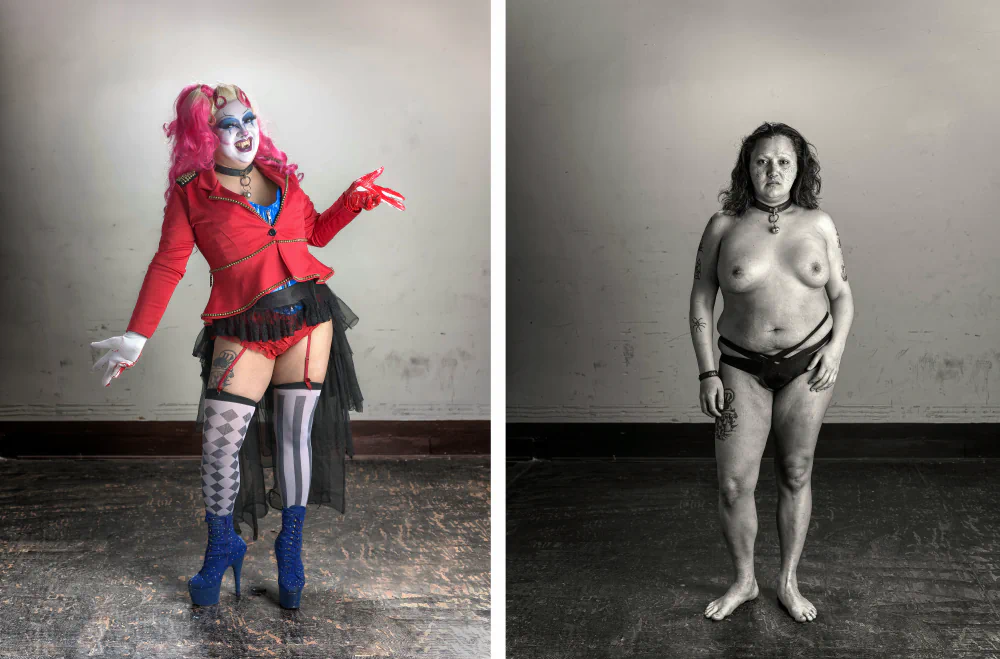
This portfolio presents diptychs—each print pairing a color portrait of a drag performer in full regalia with a black-and-white portrait that reveals the same person, literally stripped of disguise—no burlesque. The effect is not a before-and-after comparison, but a dialogue between artifice and authenticity, mask and mirror, caricature and character.
The color photographs embrace the theatricality of drag—its excess, its satire, and its celebration of transformation—while the reductive drama of black-and-white seeks to portray the human being who inhabits the performance beneath the mask of costume.
That is not to suggest that one portrait is false and the other true. The mask is itself expressive; artifice can reveal as surely as it conceals.
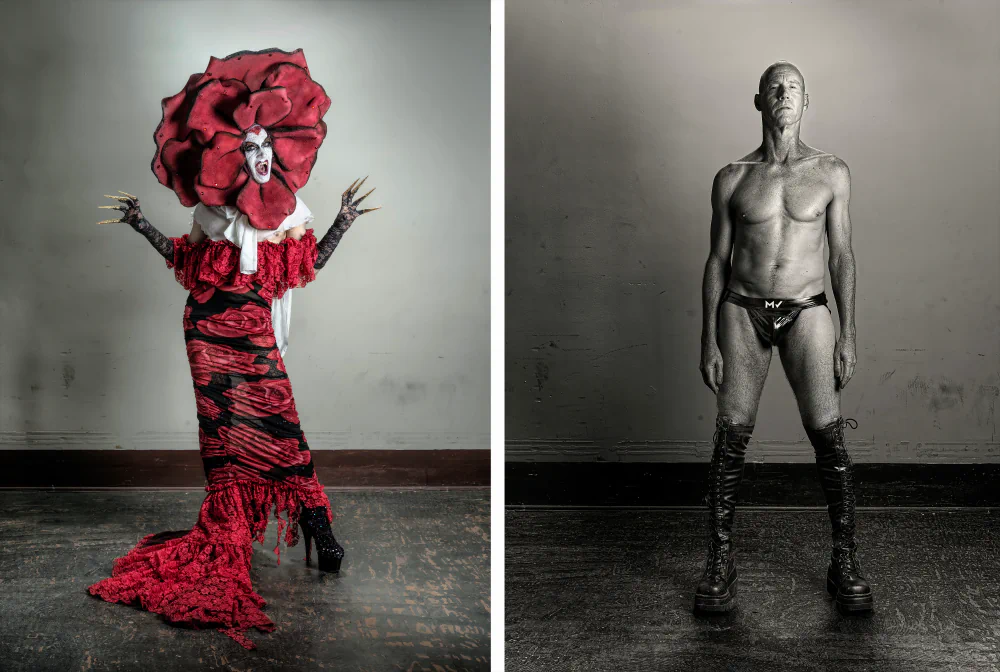
There is an ancient resonance in the word person itself: in Latin, persona could mean an actor’s mask or dramatic role. The mask, then, need not stand in opposition to the person; it is another way in which the person becomes visible.
Each sitter was photographed with full awareness of the camera, yet not as they might pose for a live audience. Zimberoff has long believed that portraiture is a negotiation. It is neither simply a matter of recording people as they choose to present themselves nor of directing them to become something the photographer contrives. A portrait is a shared construction between photographer and subject.
That exchange becomes especially intriguing when the subject is someone practiced in the deliberate performance of identity. Zimberoff’s interest was not in exposing some supposedly “real” person hidden behind drag, nor simply in recording the drag persona as spectacle. He wanted the photographs on either side of each diptych to remain portraits in their own right—to allow the mask its theatrical truth while giving equal attention to the individual who wears it.
Taken together, the diptychs ask viewers to consider how much appearance can reveal and how much it can conceal. The sequins, wigs, makeup, satire, and spectacle are part of the person portrayed, but they are not the whole person. Nor is the unadorned face the whole person.
In each diptych, the tension between two representations of the same person—between performance and presence—is where Drag / Strip resides.
About Tom Zimberoff
Tom Zimberoff is a photographer whose career bridges classic photojournalism and portraiture. He came of age professionally during the golden era of print magazines, shooting for dozens of publications—most notably TIME—and covering breaking stories and people in the news around the world while represented by the Sygma Photo Agency.
He began with a clarinet rather than a camera, studying orchestral music on scholarship at the University of Southern California. Photography eventually captured his attention completely and became the defining pursuit of his professional life.
His introduction to portraiture was improbable enough to become a kind of origin story. The first time he looked through a viewfinder with the serious intention of creating a portrait, John Lennon was posing for him. The resulting photograph became Zimberoff’s first magazine cover when he was just twenty-one years old. His second portrait subject was Groucho Marx. Zimberoff has often reflected on the unlikely pairing of Lennon and Marx, whose names evoke both historical resonance and an accidental play on words. That remarkable beginning set the tone for a career shaped by the intersections of art, history, and serendipity.
Magazine assignments soon took Zimberoff around the world, placing him close to public figures, unfolding events, and people whose lives might otherwise never have intersected with his own. The camera became both his reason for being there and the means of preserving each encounter. Over time, those assignments accumulated into a photographic record not only of the people and events before his lens, but also of a particular era in American magazine journalism.
Portraiture remained central to his work. Whether photographing celebrated figures or anonymous subjects, Zimberoff approaches a portrait as an encounter rather than an extraction. He believes portraits are made, not taken, and regards each one as the still life of a human being. His work is grounded in the exchange between photographer and subject and in the conviction that a successful portrait must reveal an individual rather than merely use that person to illustrate an idea.
After a twenty-year hiatus from photography, Zimberoff returned to the medium with a renewed focus on portraiture, including subjects whose work, identities, or circumstances place them outside conventional expectations. The continuity between his earlier magazine work and his contemporary portraits lies less in subject matter than in a persistent curiosity about character: who someone is, how that person chooses to be seen, and what can emerge during the concentrated encounter of a portrait sitting.
In 2016, Zimberoff’s career archive of film was accessioned by the Dolph Briscoe Center for American History at the University of Texas at Austin, placing decades of his magazine and photojournalistic work within a permanent historical collection.
He is also the author of A Photographic Memory, a memoir about a photographer’s life inside the world of print magazines. The book pairs photographs with stories of the encounters that produced them—not simply as illustrations and captions, but as parallel narratives exploring memory, chance, history, and the peculiar privilege of spending a life looking through a viewfinder.
For Zimberoff, his photographs are inseparable from his own identity: he created them, but they also helped shape the person and photographer he became. [Official Website]