

Responding to intersecting environmental and human contexts, Steve is constantly expanding his long-term projects.
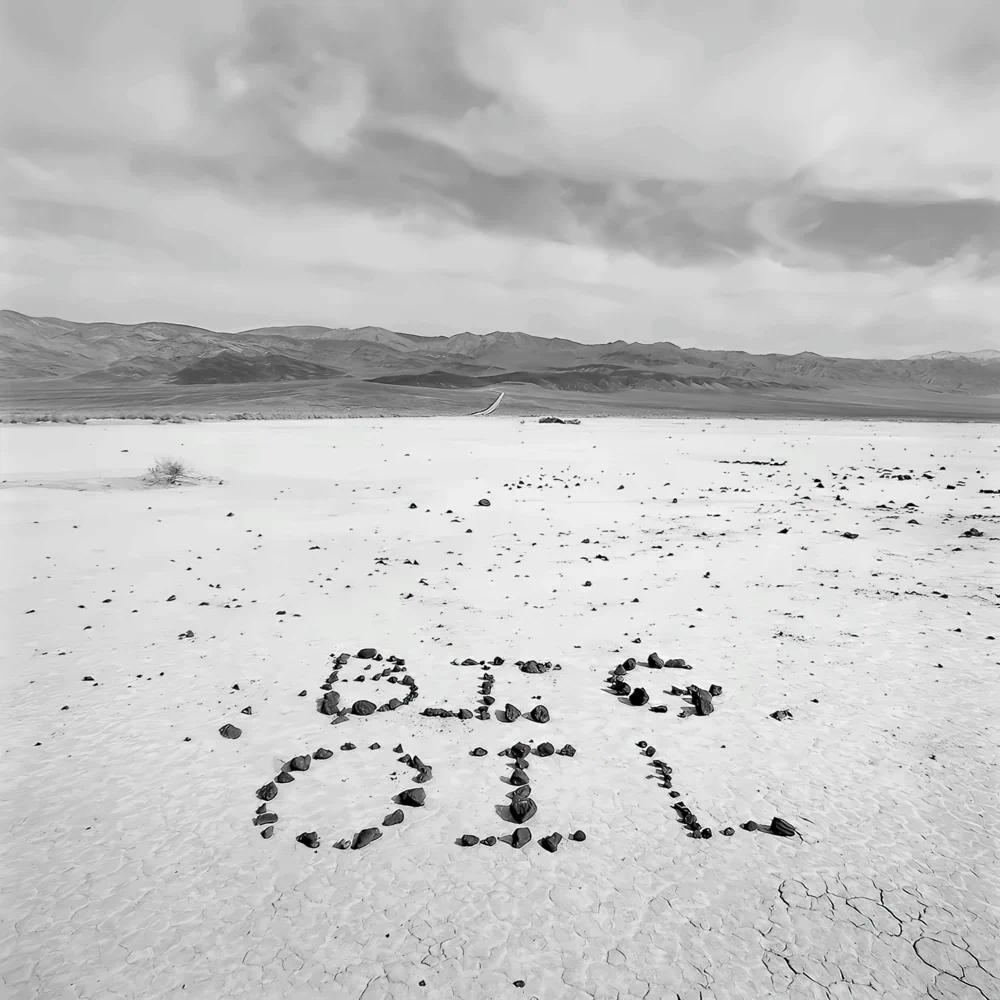
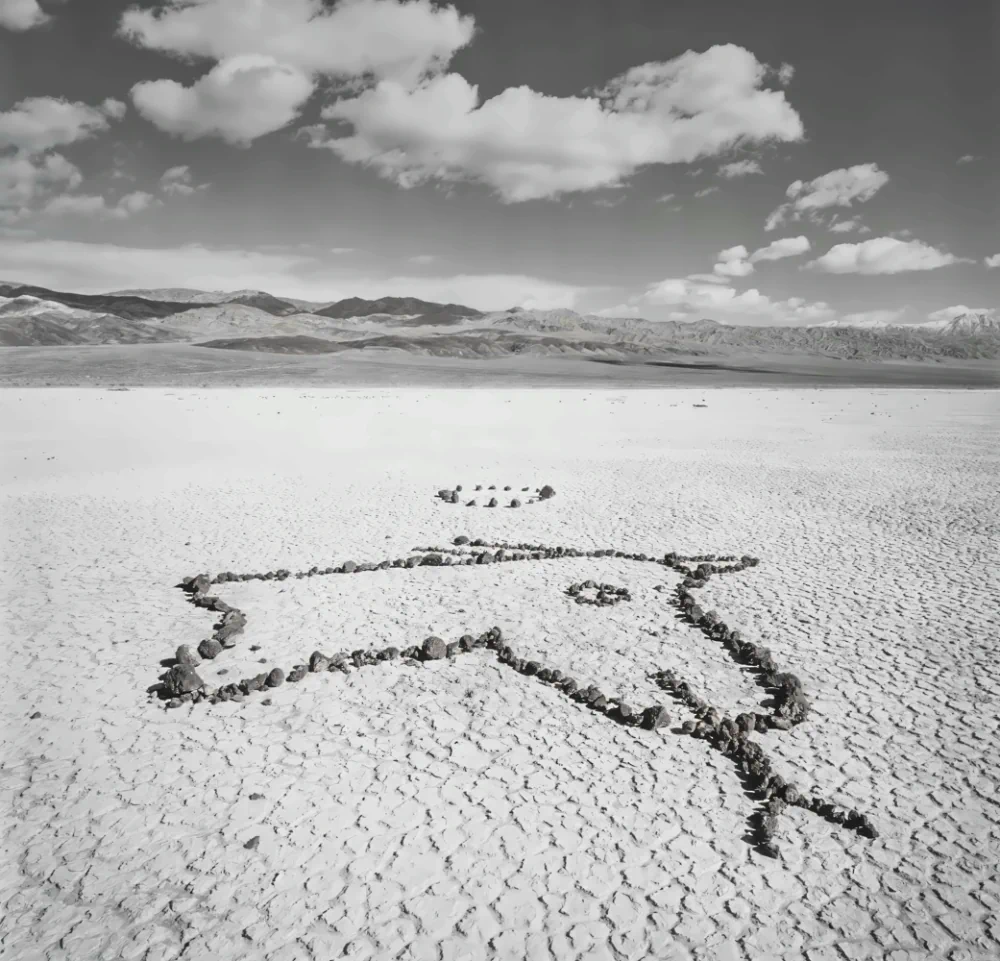
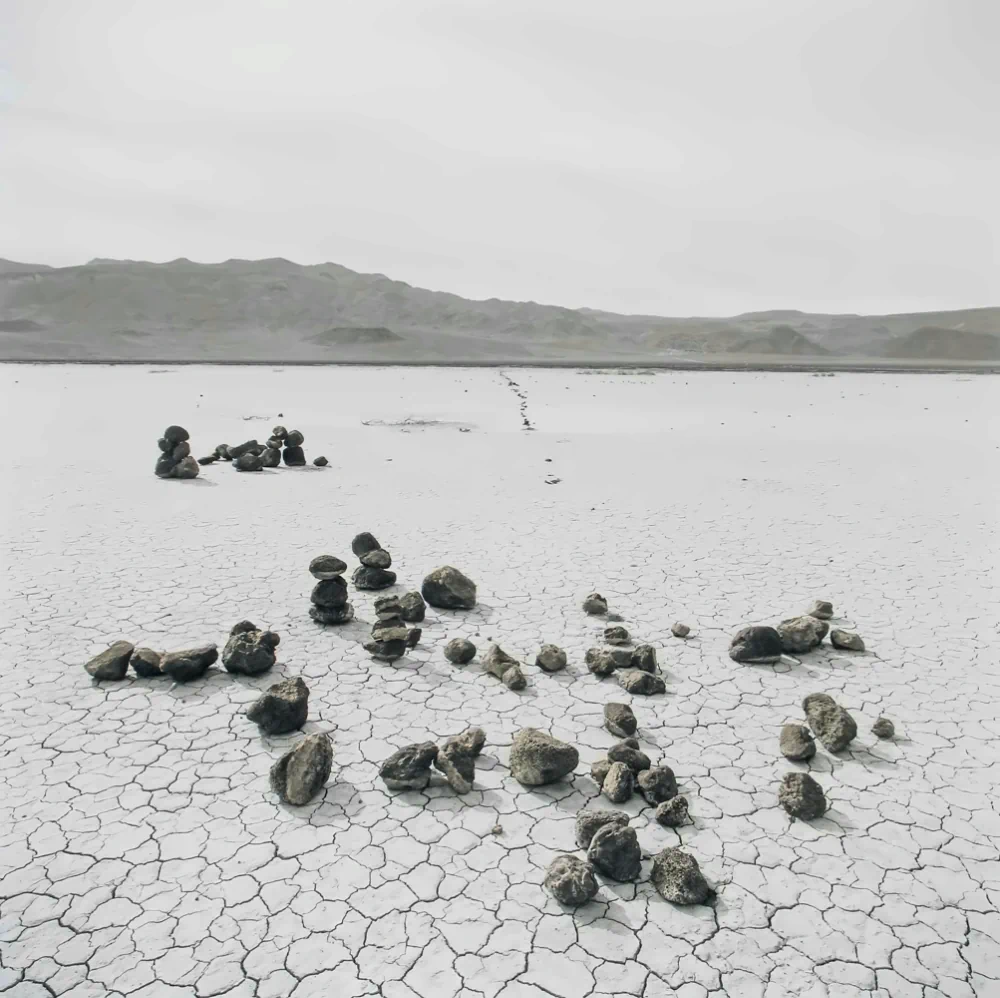
Drawn to historical and contemporary human impact and relationships with the natural environment, his extensive series, The Human Landscape, highlights evidence of people—their marks, constructions, destruction, attempts to control nature, and nature’s reclamation.
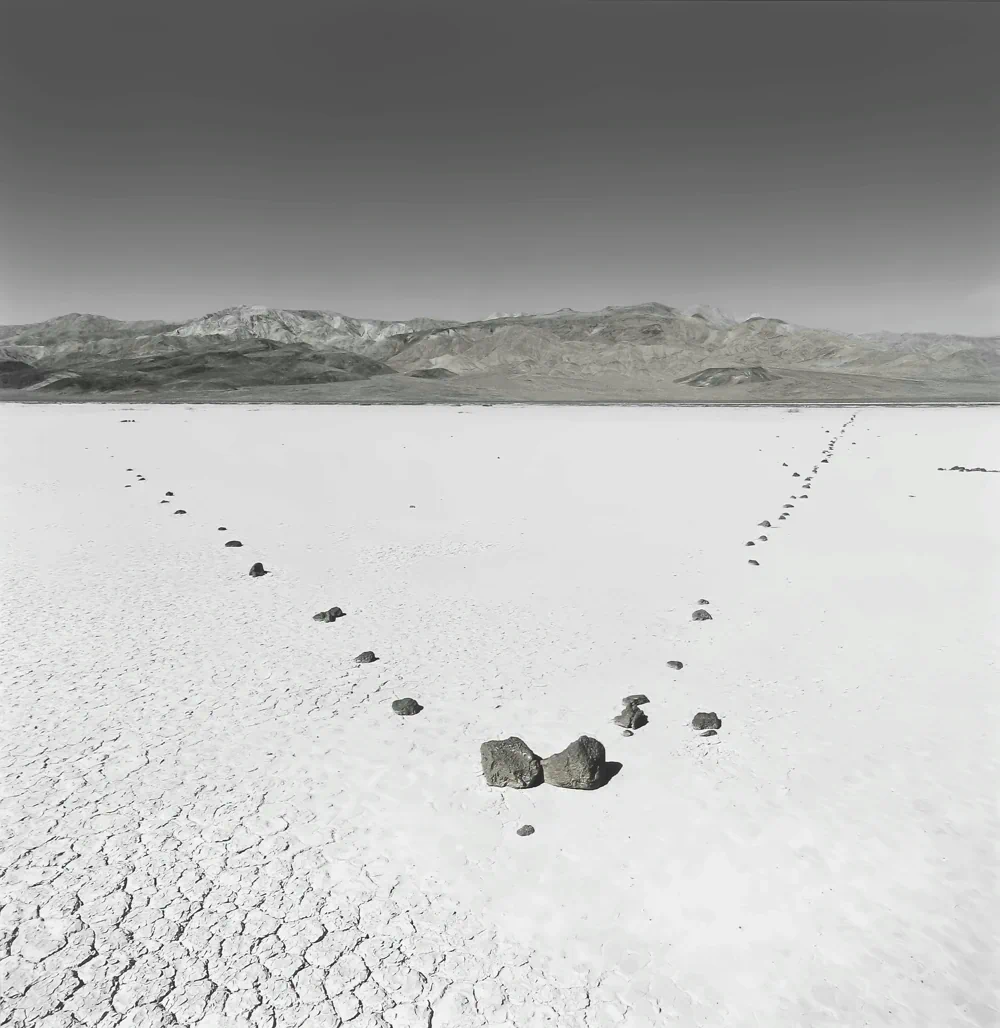
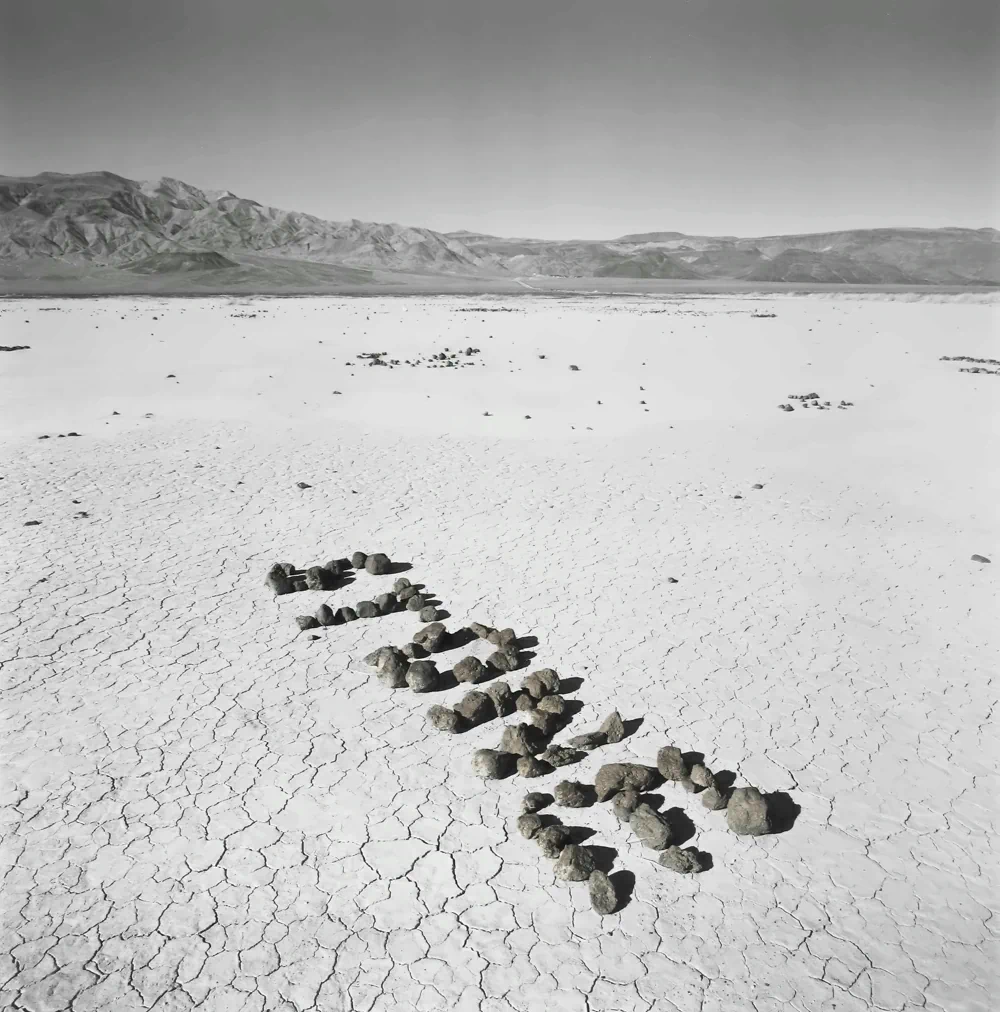
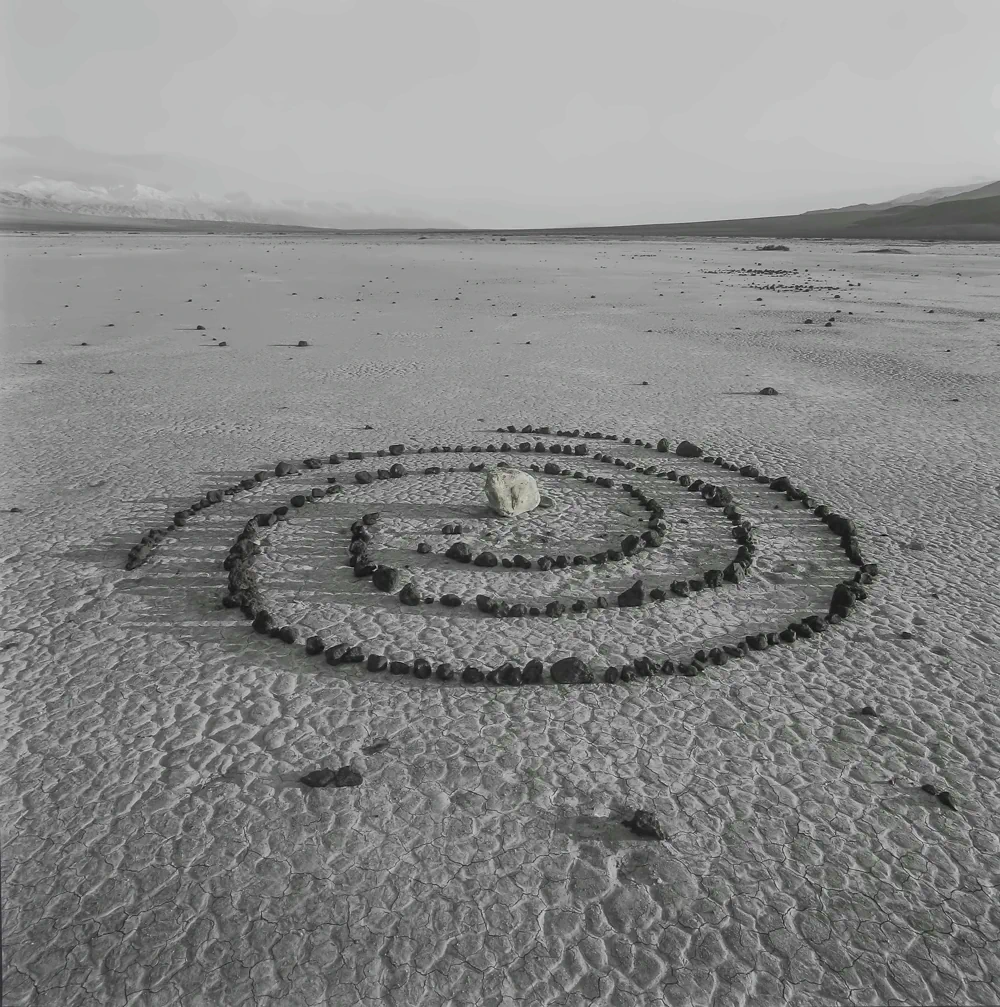
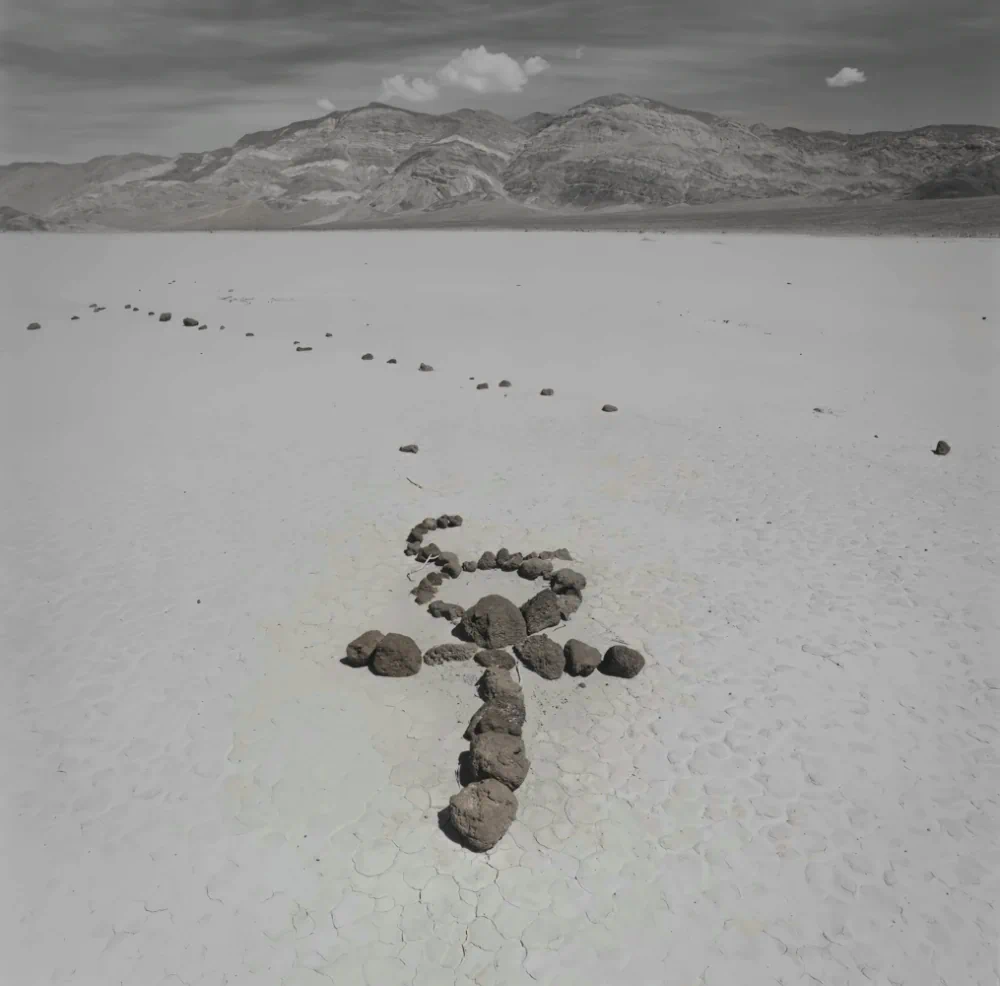
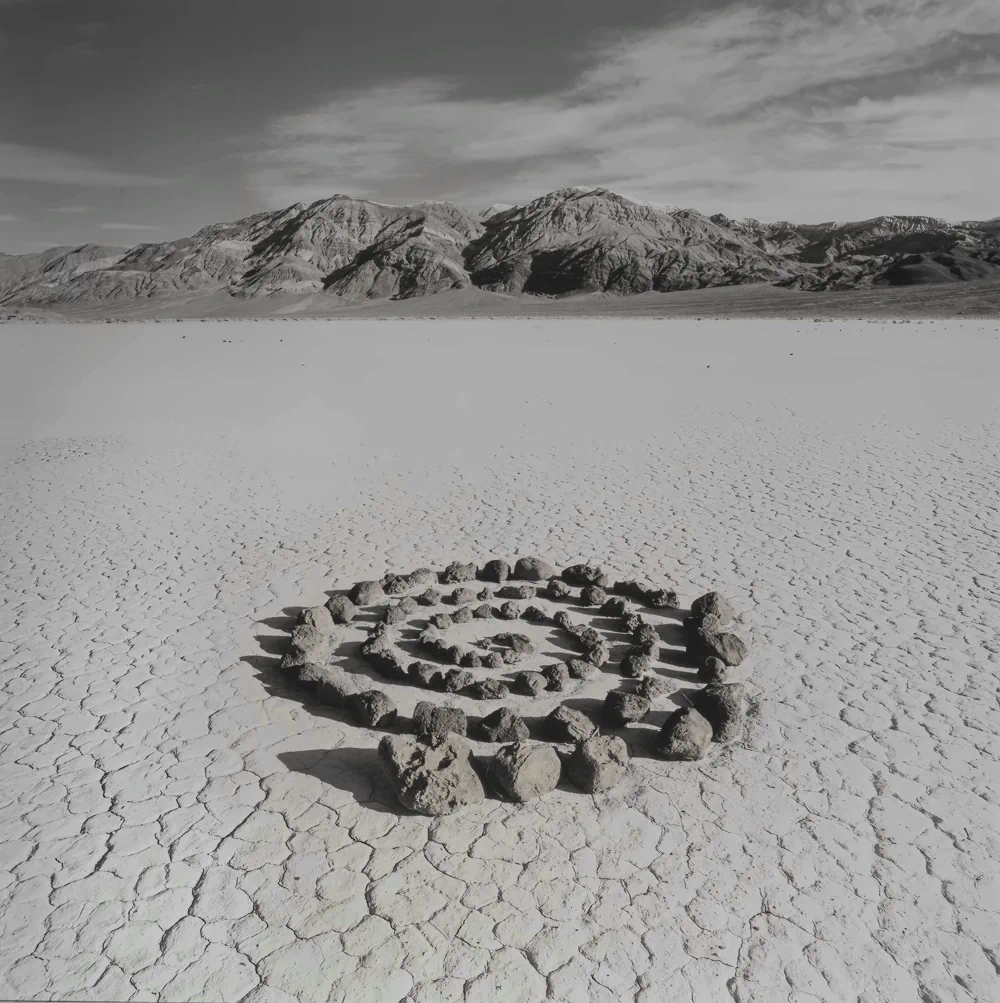
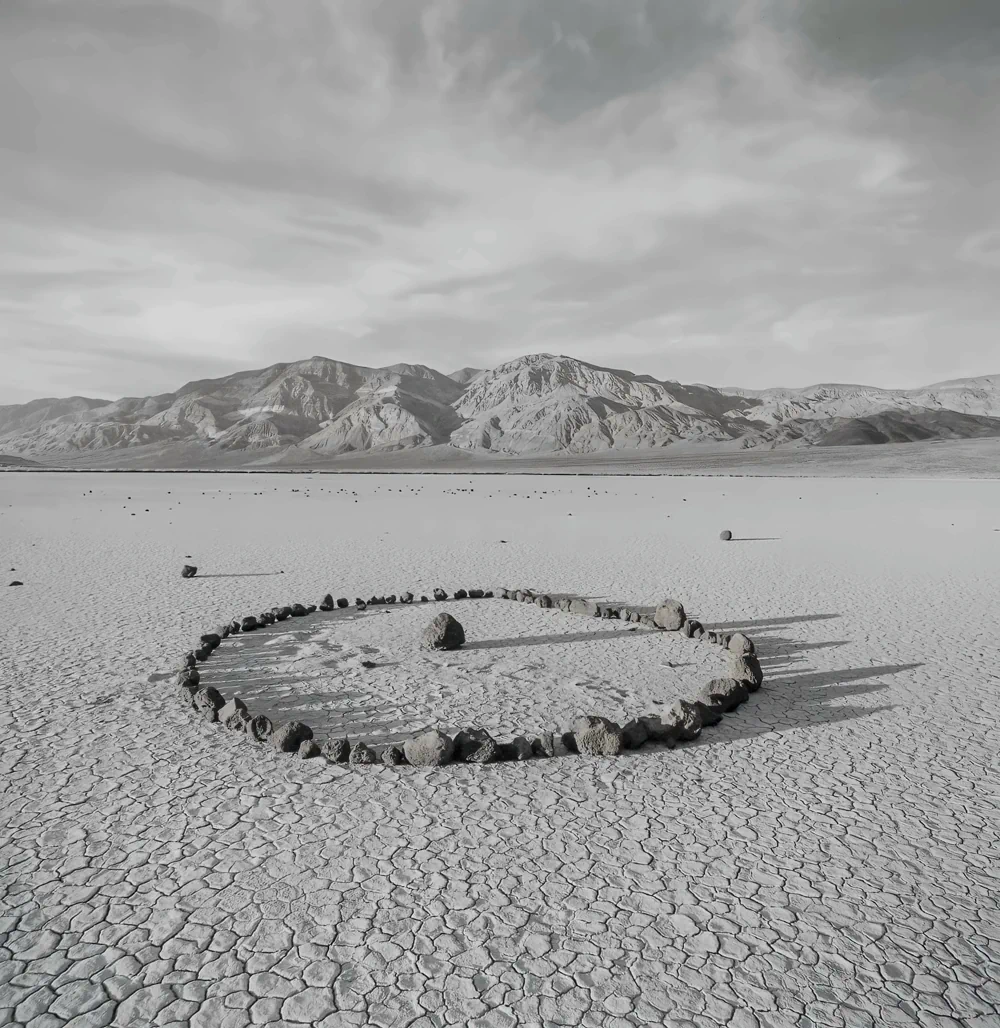
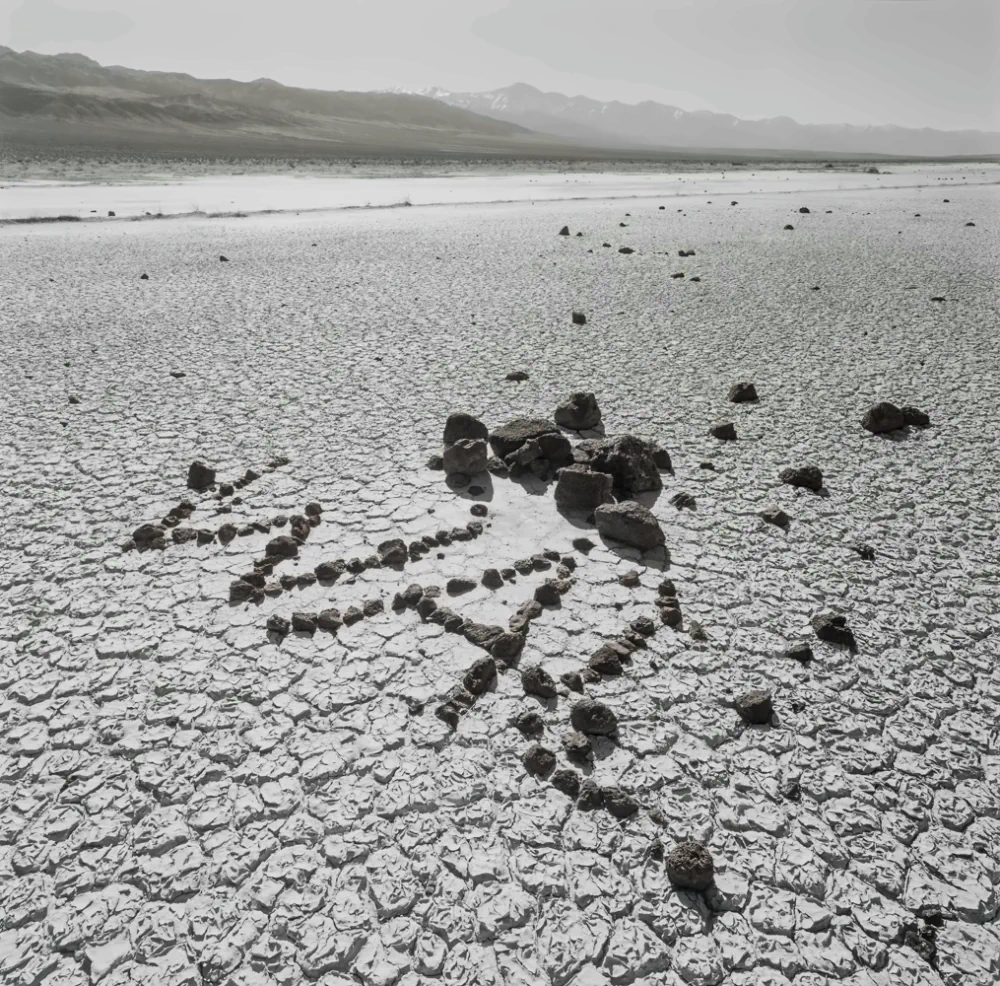
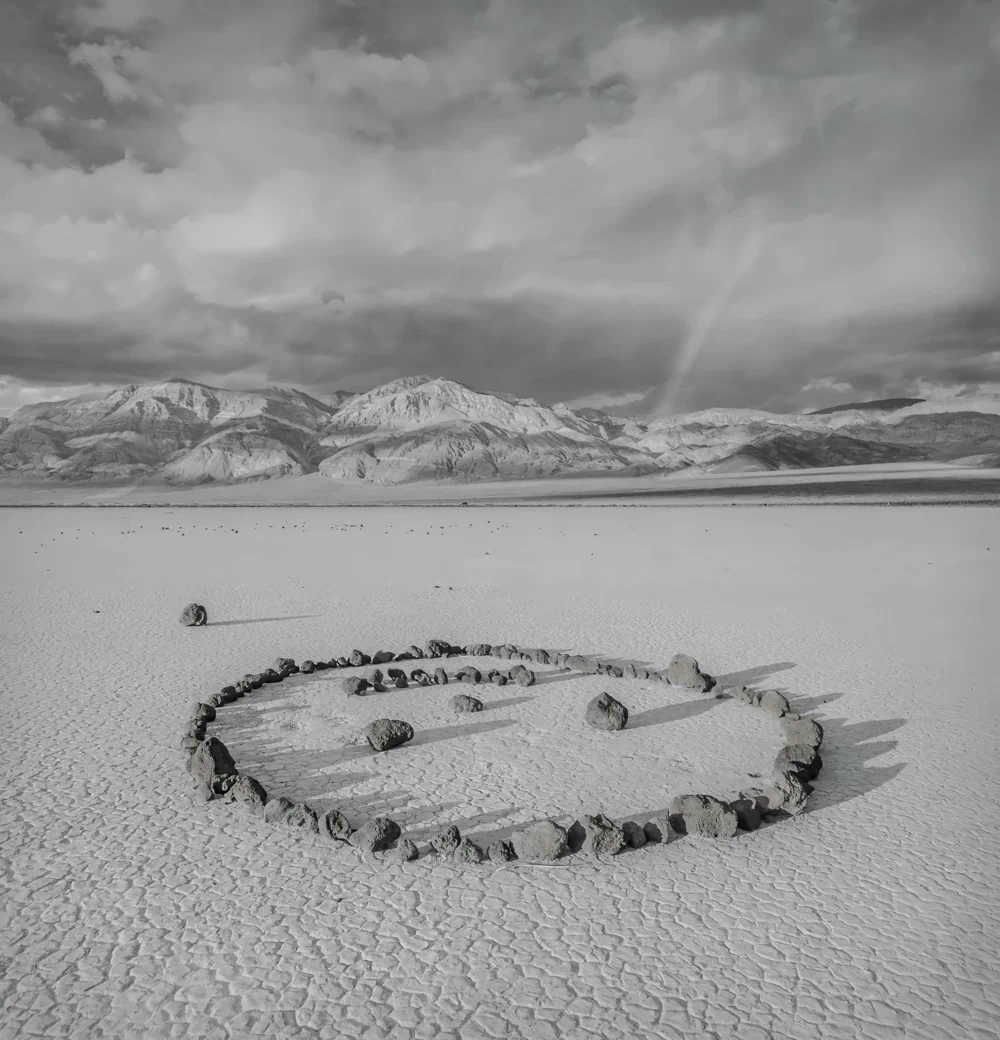
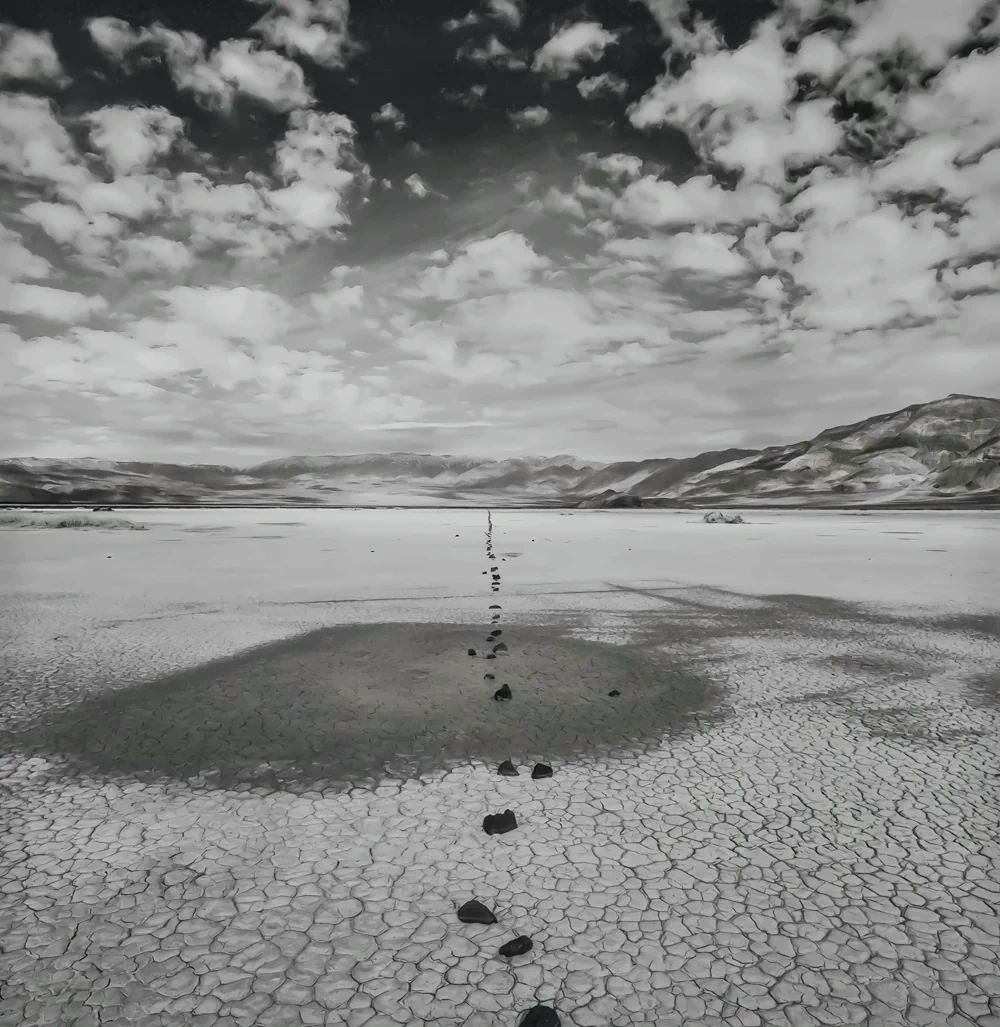
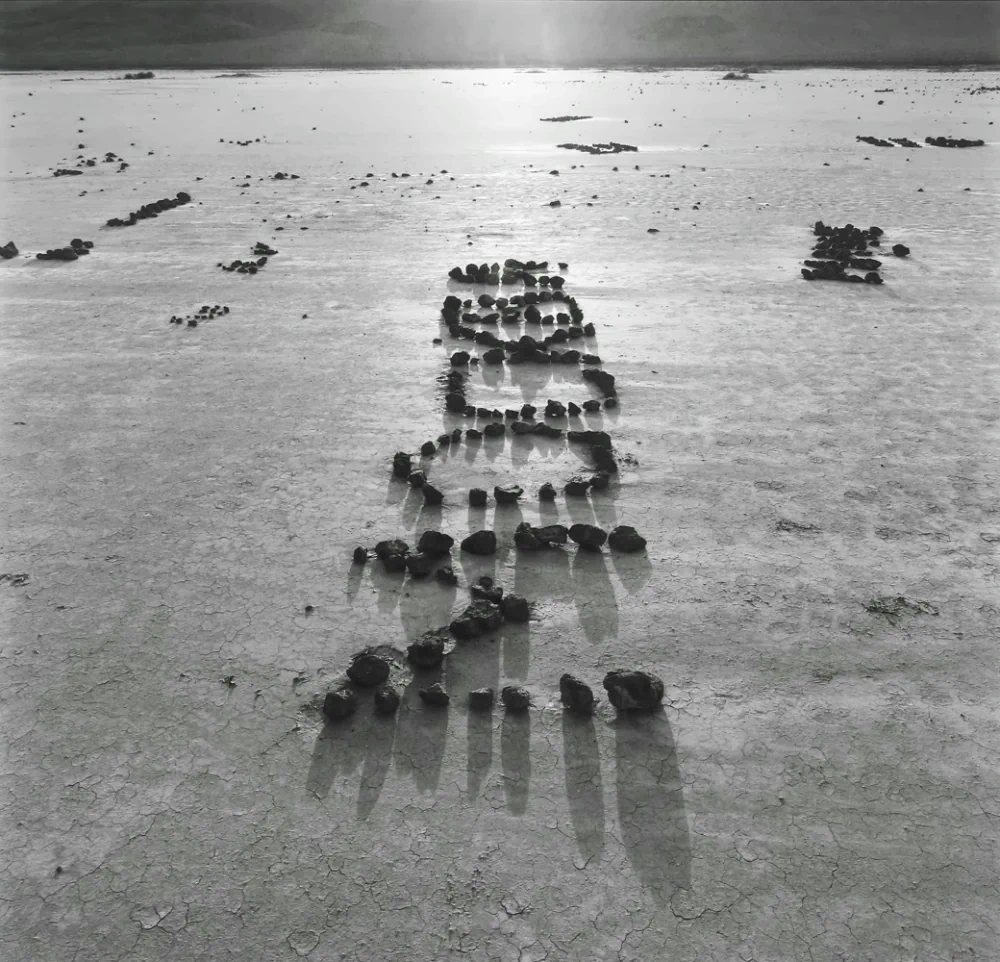
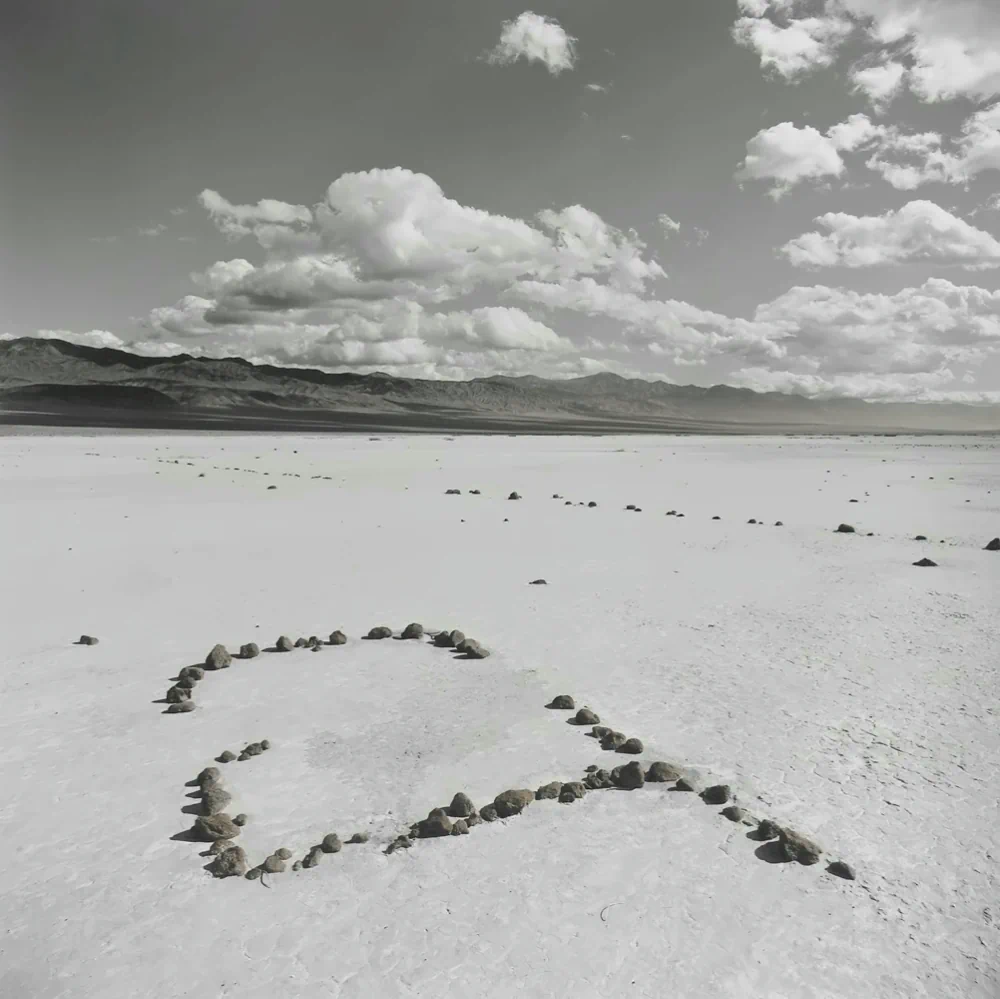
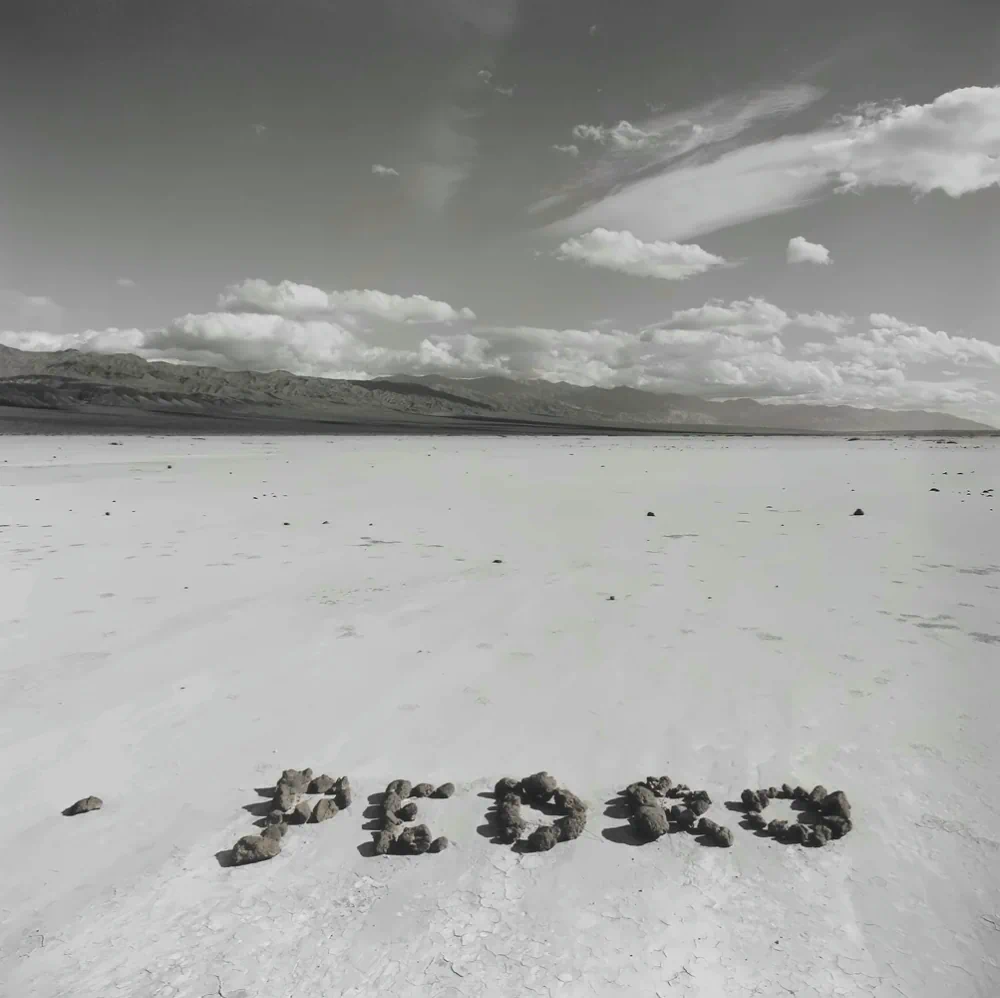
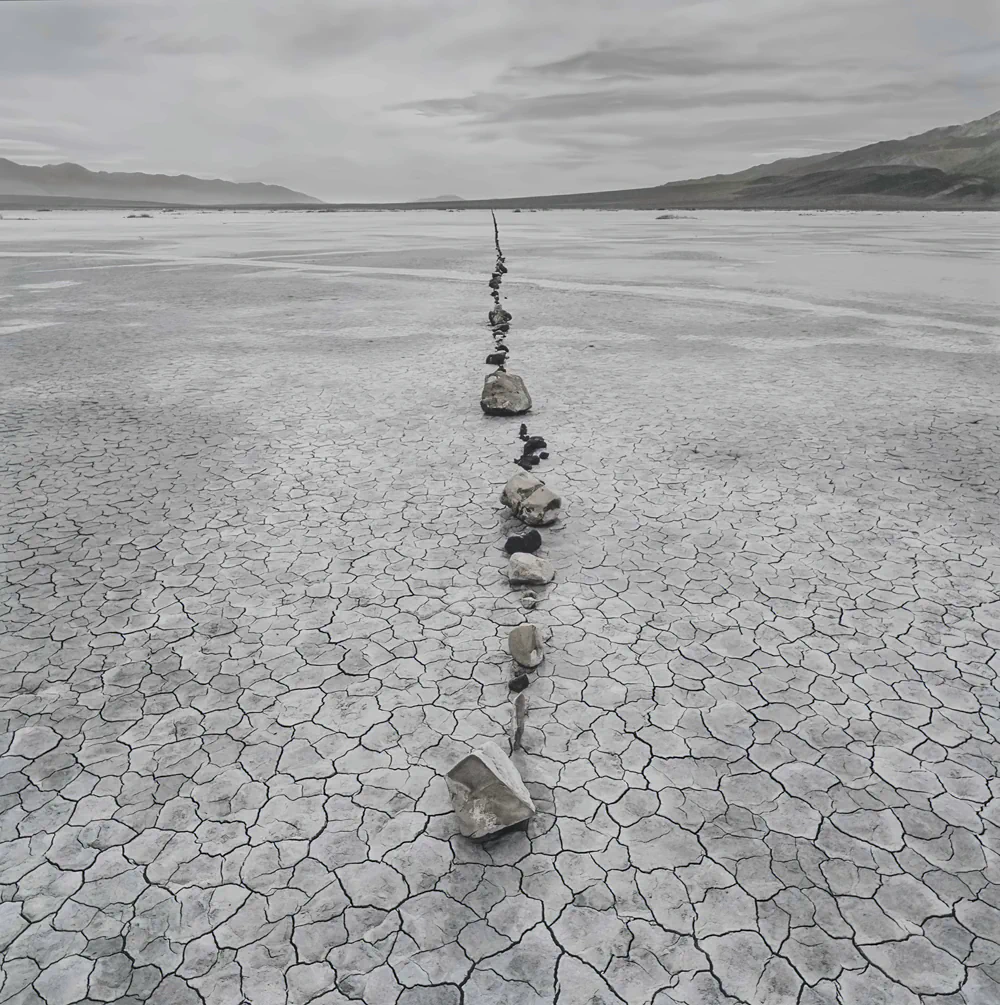
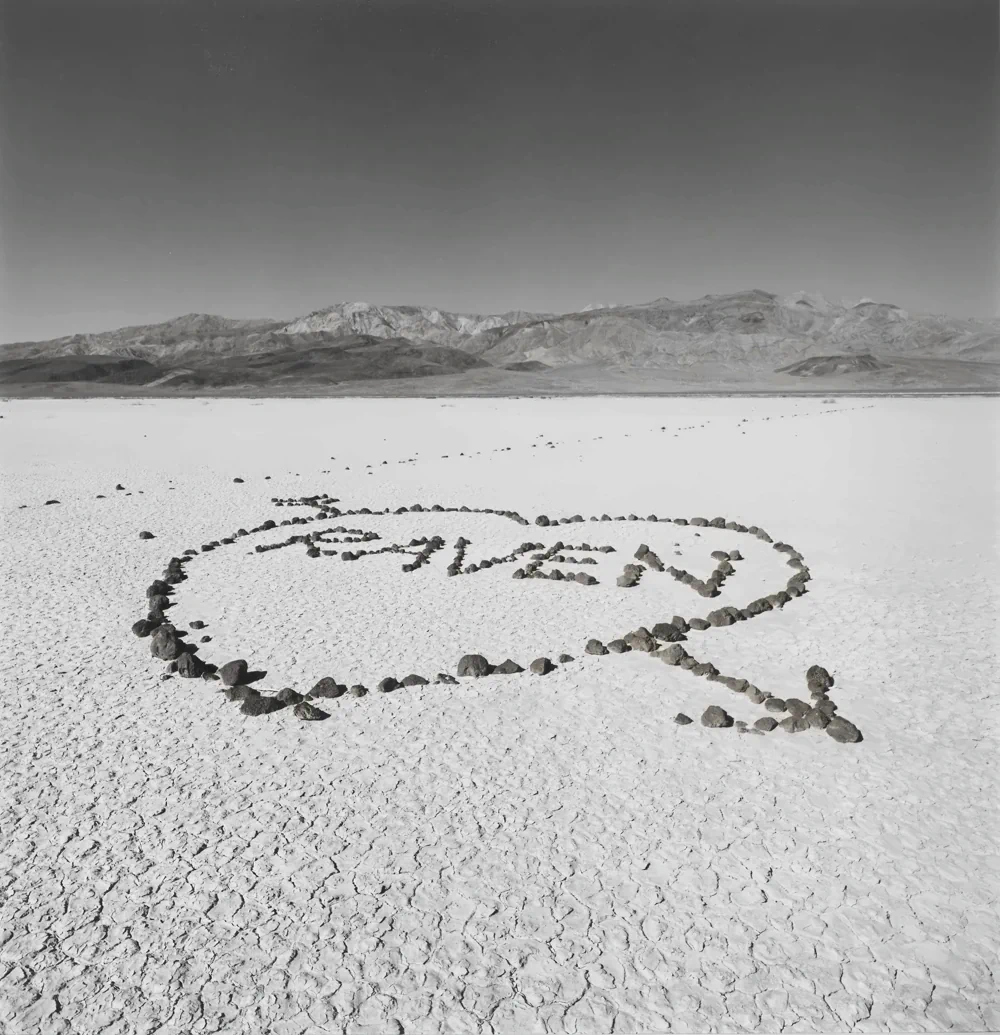
The sub-series Endeavor focuses on the evolution of a specific site in Panamint Valley, where visitors and locals have left messages and designs formed by aligned rocks.
Rock Alignment, California Desert, 1996:
“Apparent from the highway as only a sliver-like exclamation mark, it grew to become a giant linear compass as I walked the quarter-mile of fractured earth. Looking intricately delicate, its clay surface was unaffected by my weight. I trekked along the north-south arrangement of locally gathered stones to a distant intersection with the east-west alignment. Making marks is so common, yet incredibly varied, in the human landscape. How intriguing it was that people would undertake this huge endeavor of moving and lining up stones in such a desolate location. So intriguing, in fact, that every year since, I have returned to document any changes. Because I tend to work from the particular to the general—the inductive method—I realized, as more examples accumulated, that it would become a series.”
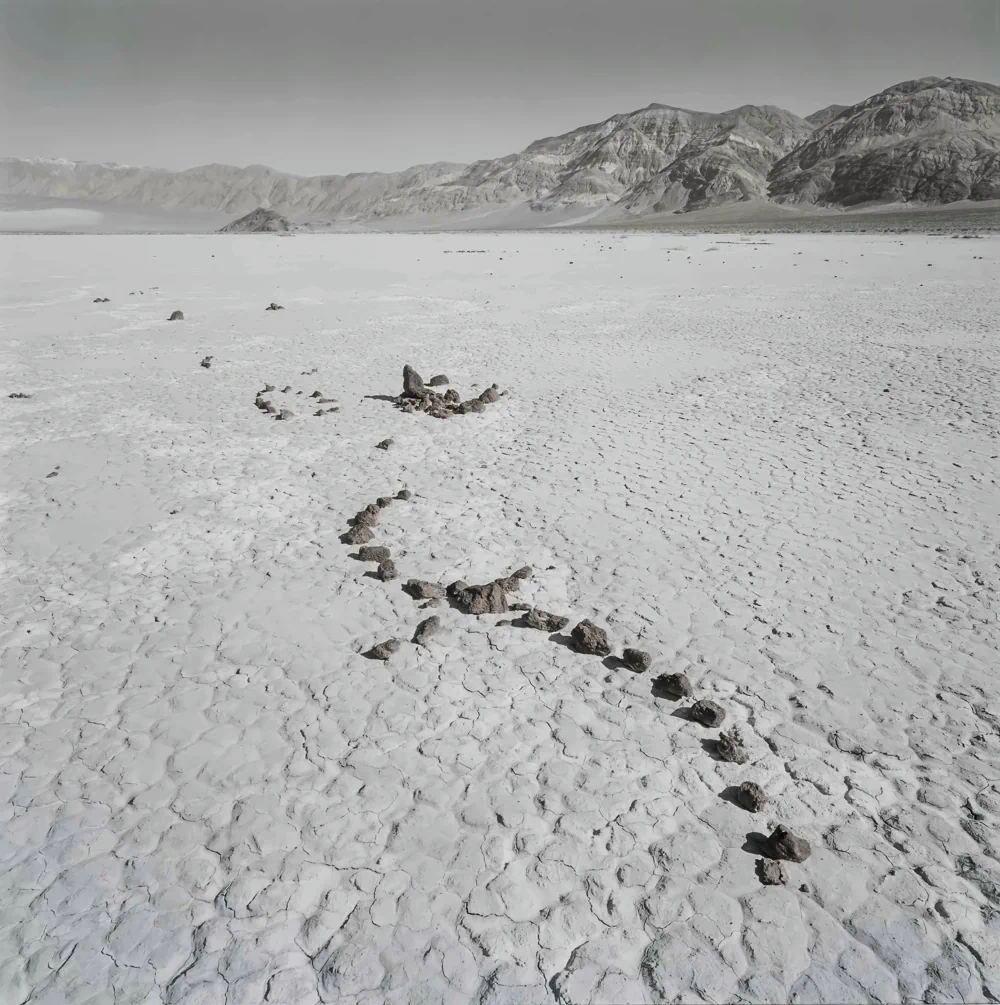
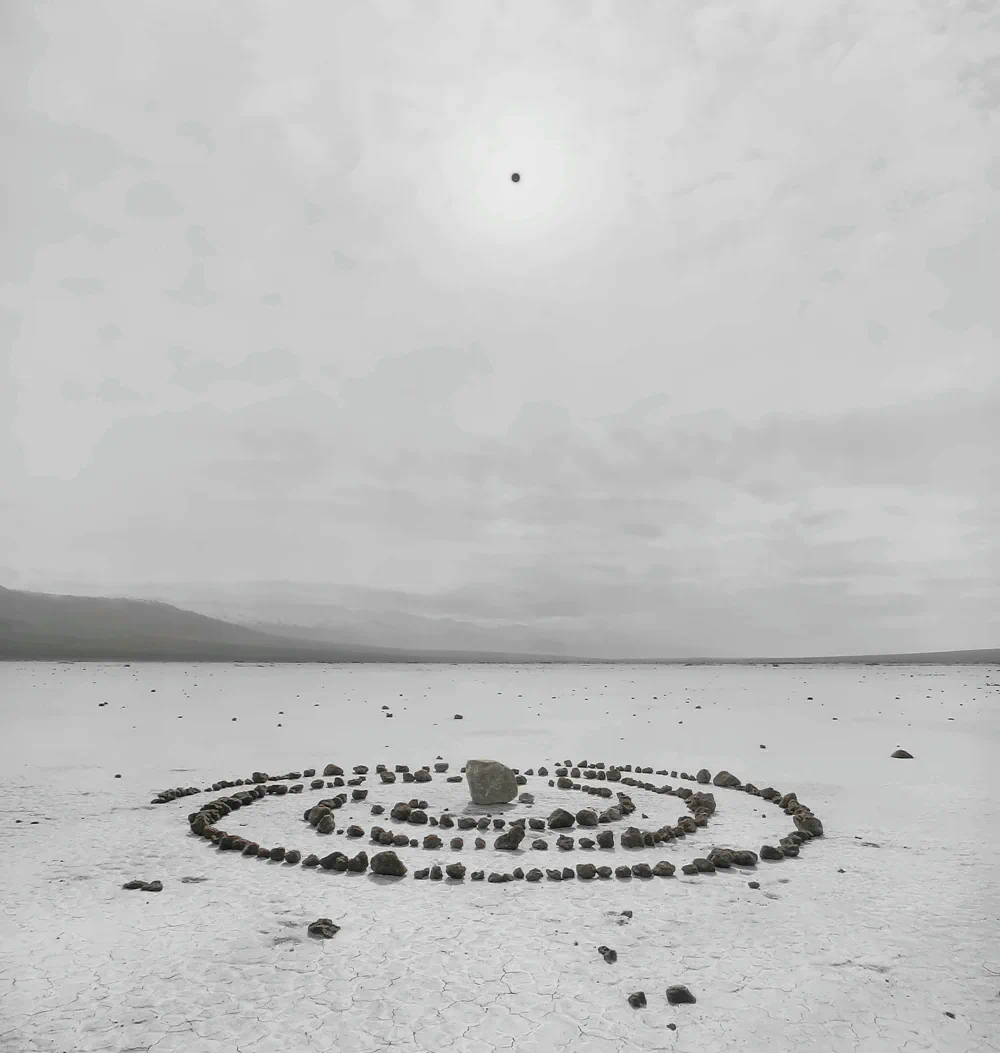
Rock Alignment and Black Sun, 2001:
“One particularly windy morning in 2001, wispy clouds were softly diffusing the light falling on a simple spiral design that passersby had arranged. Positioning my tripod and camera, I centered the sun, glowing through the rapidly changing cloud layer, so that it would hover directly over the large central stone of the spiral. Centering the principal visual element is a compositional choice that I apply especially when it works in conjunction with a meditative and physical method by the same name that I like to practice. It began in my early years with the use of the simplest yoga techniques.
On this day, even with my tripod steadying the camera, the wind was almost unrelentingly shaking my entire setup. Usually, the wind is much like the rhythm of human breath, with subtle pauses now and again when one can manage an exposure or two without movement, if so desired. There appeared to be no complete pauses. Since I was never sure that the camera had stopped moving in the steady, whipping wind, I exposed frame after frame while the clouds subtly varied the sun’s intensity. I maintained the same low shutter speed and high aperture combination that I had calculated.
After ten frames, I called it quits and hoped that one of them would be sharp enough. At the same time, in the back of my mind, I also hoped to achieve the elusive black sun effect of solarization, as Ansel Adams had described in his Examples: The Making of 40 Photographs. I knew that proper development of a sufficiently long exposure with a very intense light source, such as the sun, in the composition would provide the necessary ingredients.
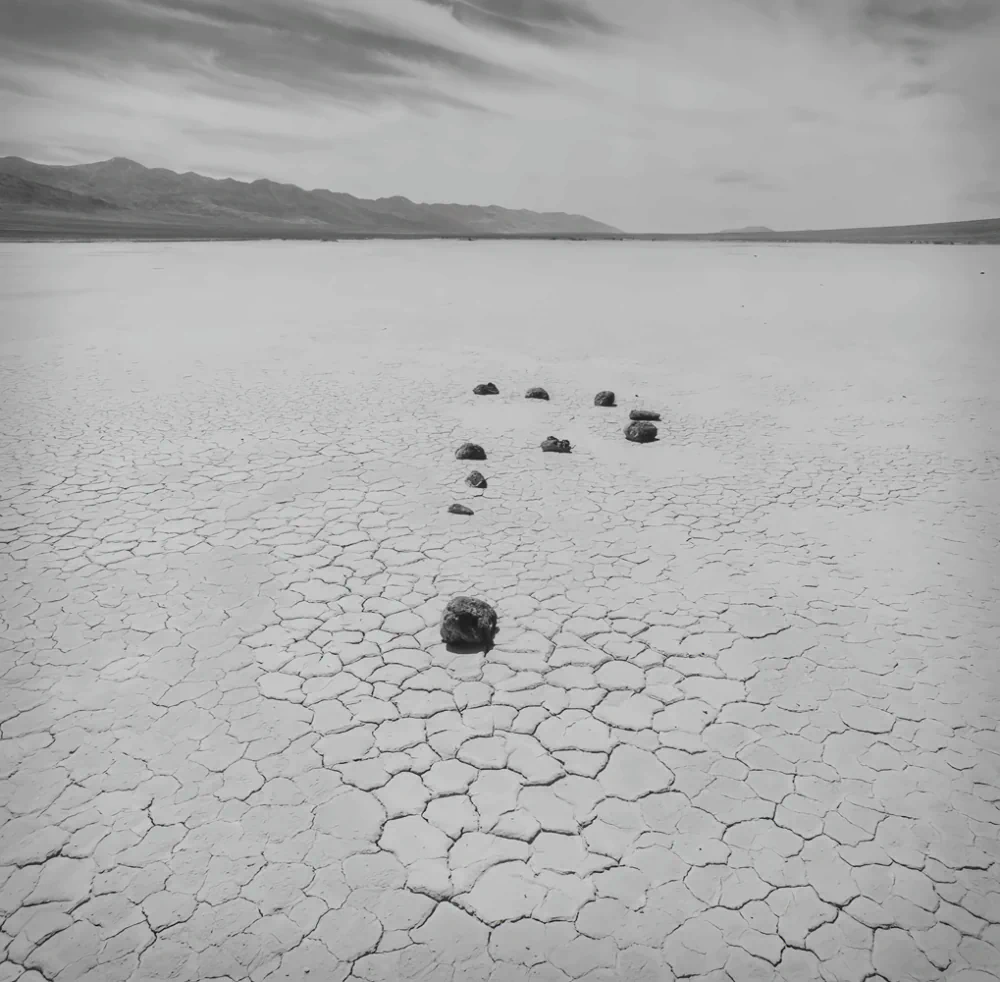
Throughout the years, whenever I happened to include the sun in my viewfinder, I did my best to explore the elusive right side of the sensitometric curve of exposure and development of the negative, where that intense light source produces an absence of density that would print as a dark value. Adams explained very well, in his Basic Photo Series, how to apply the practical approach of the Zone System to one’s advantage when using common pre-digital photographic media.
Upon returning home from that field session documenting this new addition to the Endeavor series, I discovered, after processing those ten negatives, that the clouds had revealed just enough of the sun’s brightness for the black sun effect to appear in three of them. When deciding which negative to print from that session, I chose Rock Alignment and Black Sun, although it diverged from the tighter documentary limits of the rest of the rock alignment series. It represented a variation on centering that provided the psychological closure I needed at the time.
I tend to abide by a leave-no-stone-unturned approach when it comes to artmaking, applying any tool or technique whenever it has the potential to complete a fuller expression of the image.”
About Steve Dzerigian
Steve Dzerigian is a photographer, educator, and artist whose practice weaves together history, philosophy, the natural world, and artmaking. He adopted photography as his primary investigative and contemplative tool, and both the practice of photography and its teaching became central to his life’s work.
His work has been exhibited in museums and galleries throughout the United States and is held in numerous public and private collections. It has appeared in Black & White Magazine, LensWork Quarterly and Bonus Edition, Color Magazine, Focus Magazine, Photography by London, Stone, and Upton, and Exploring Color Photography by Robert Hirsch. In 2018, The Press at California State University, Fresno published his book, Trail of Stones: My Path in Photography.
From 1977 to 2007, Dzerigian led field workshops for the University of California, Santa Cruz Extension. Between 1984 and 1990, he served as an assistant instructor for The Ansel Adams Gallery Photography Workshop in Yosemite and acted as director for one of those years. In 2002, he was co-coordinator of the Ansel Adams Centennial Symposium in Yosemite, Edges and Intersections: The Evolution of Change.
Devoted to advancing art and education in Central California for more than fifty years, Dzerigian has served as a curator, juror, and consultant for numerous exhibitions, competitions, and media events, in addition to teaching photography full-time at Fresno City College. He is a past president and curator of Spectrum Art Gallery, a 501(c)(3) nonprofit cooperative organization that he founded 46 years ago, and he currently serves on its board. [Official Website]