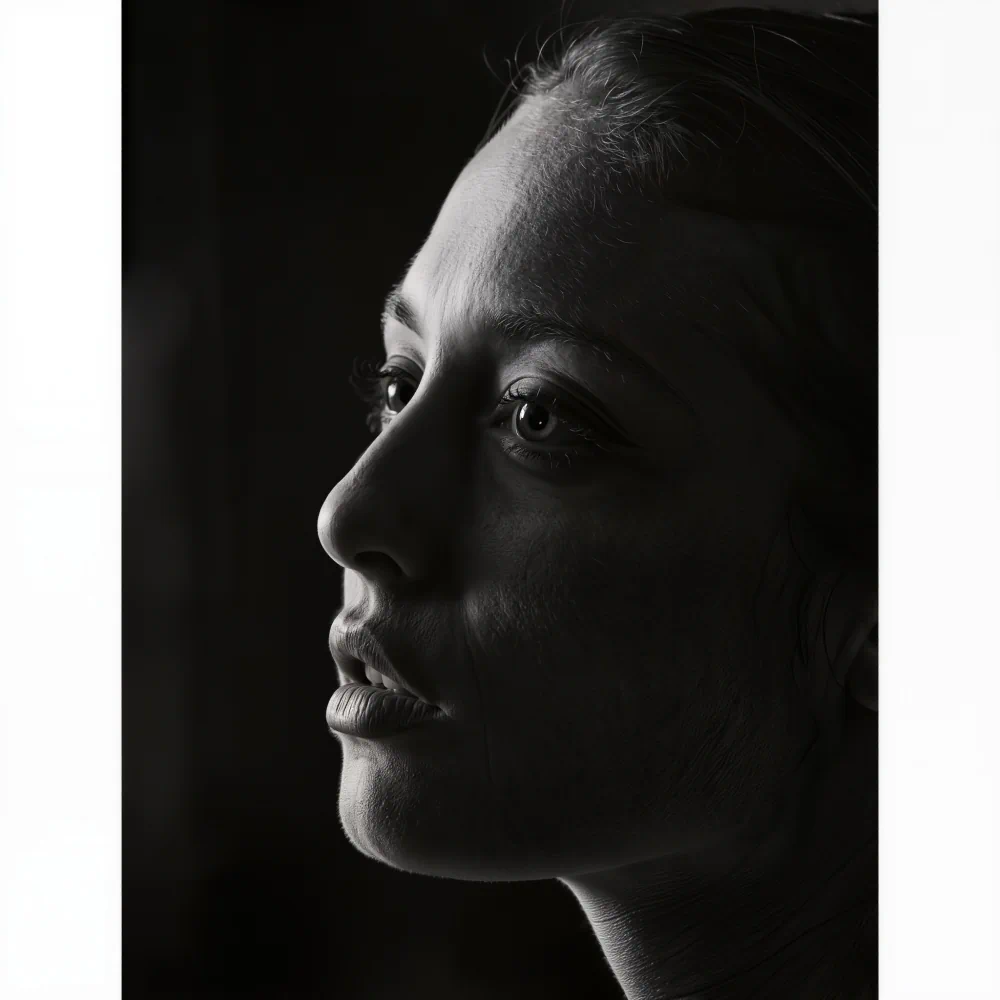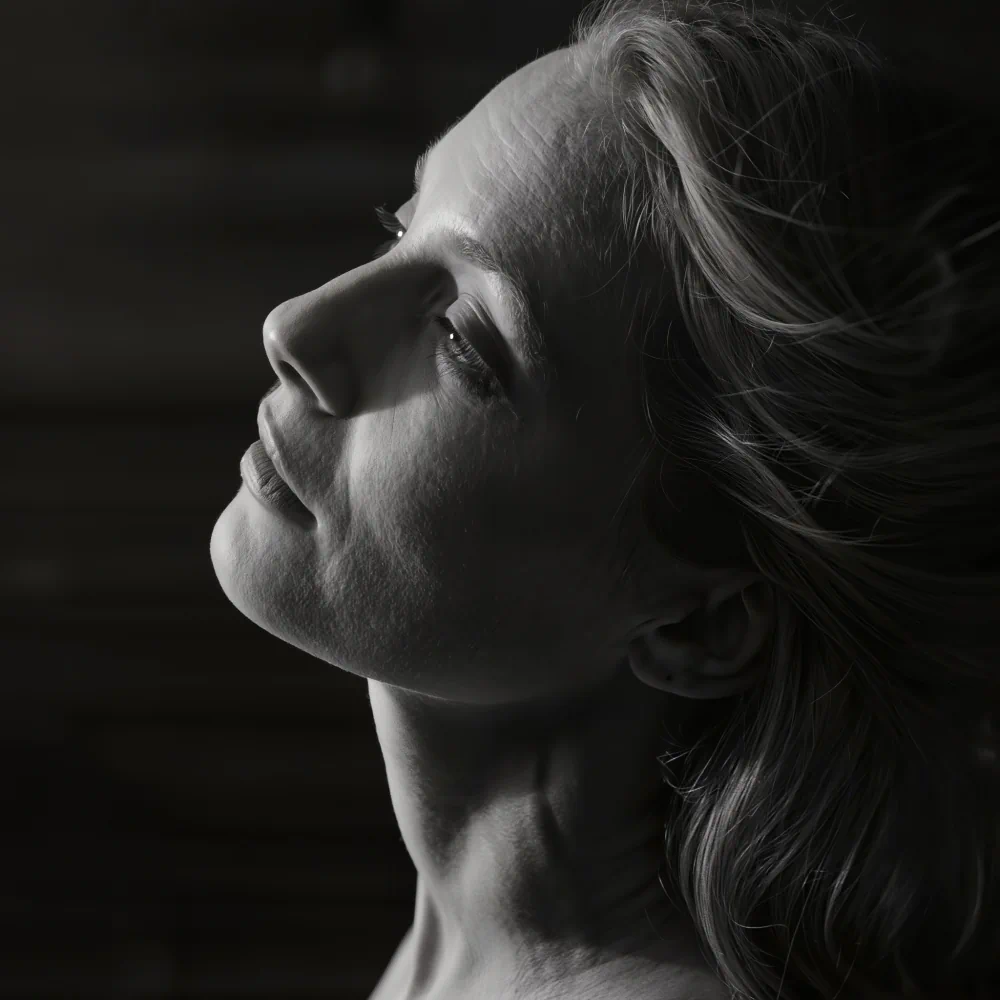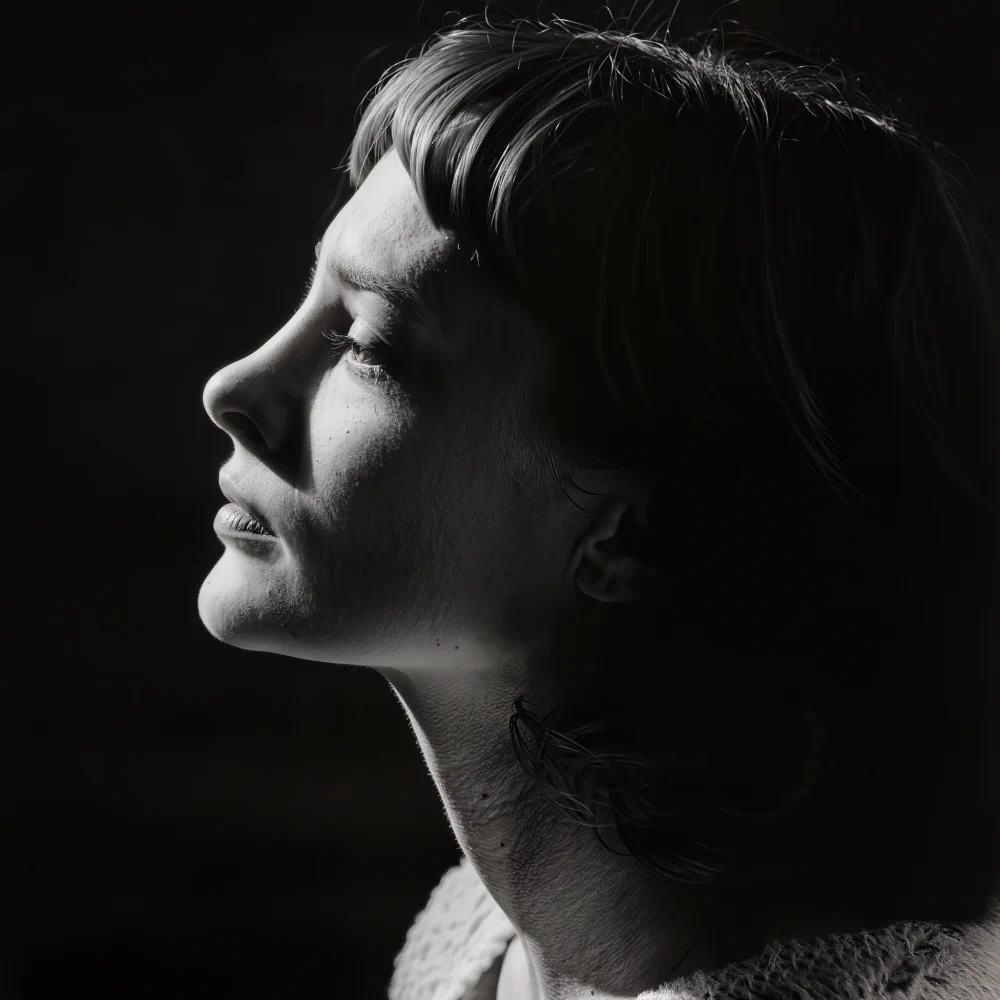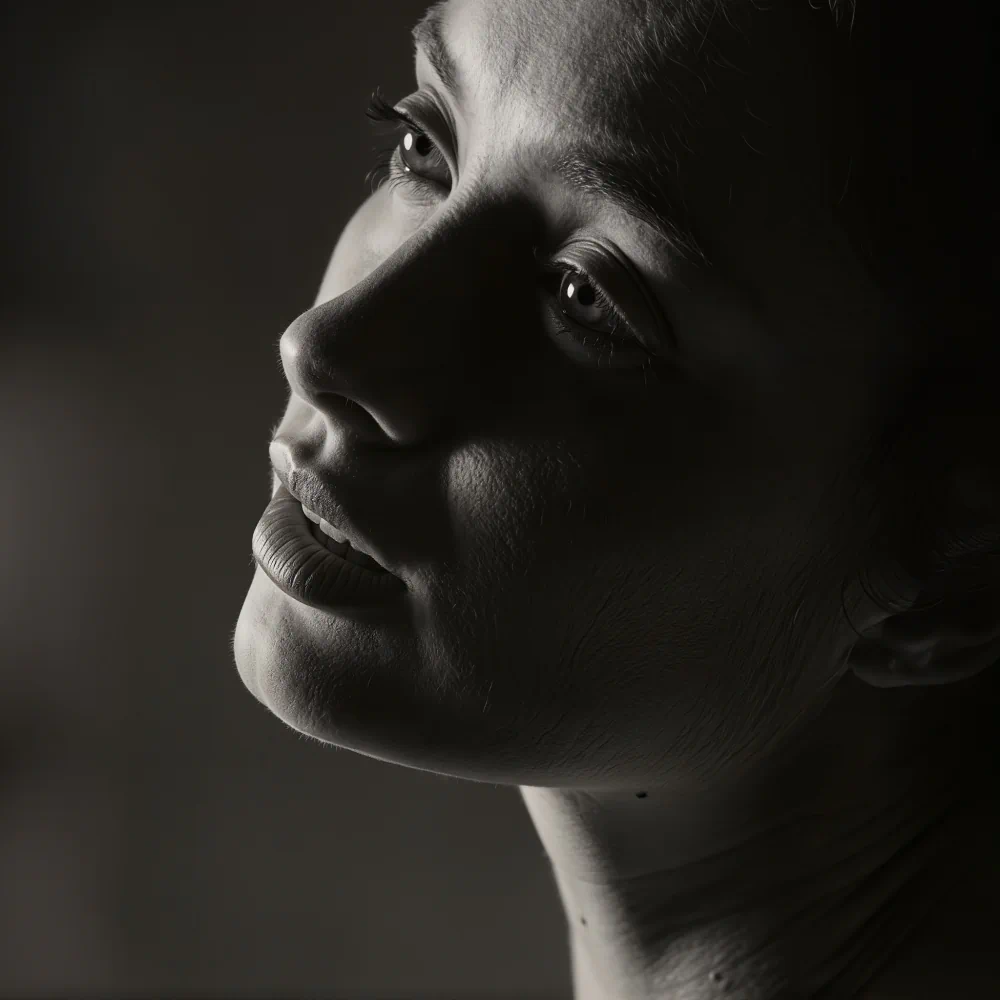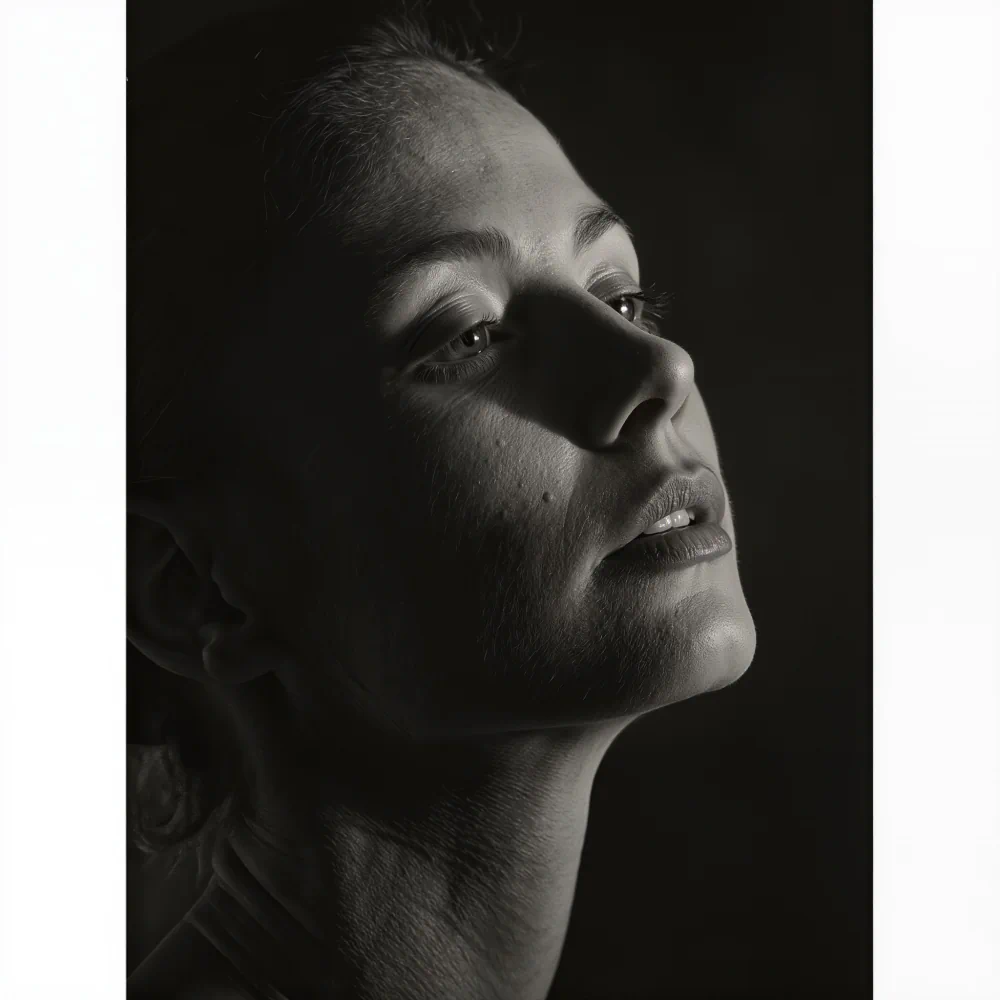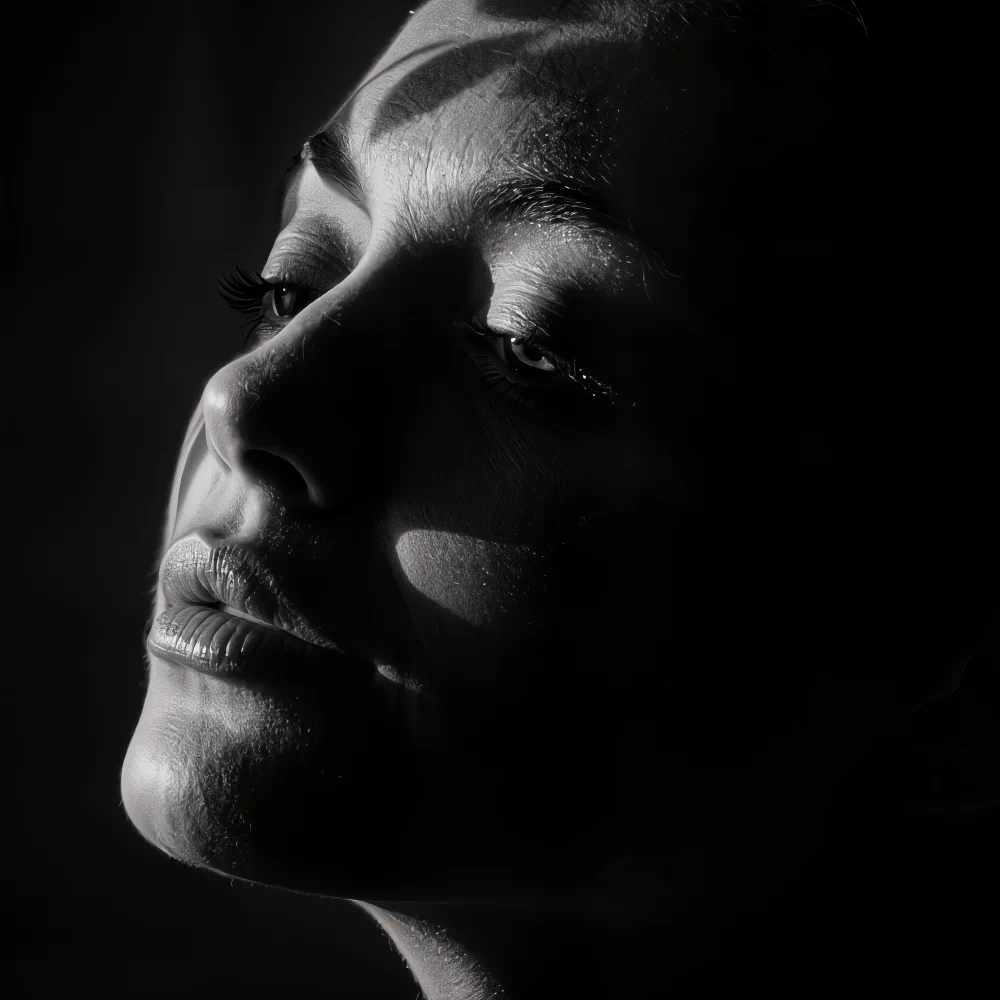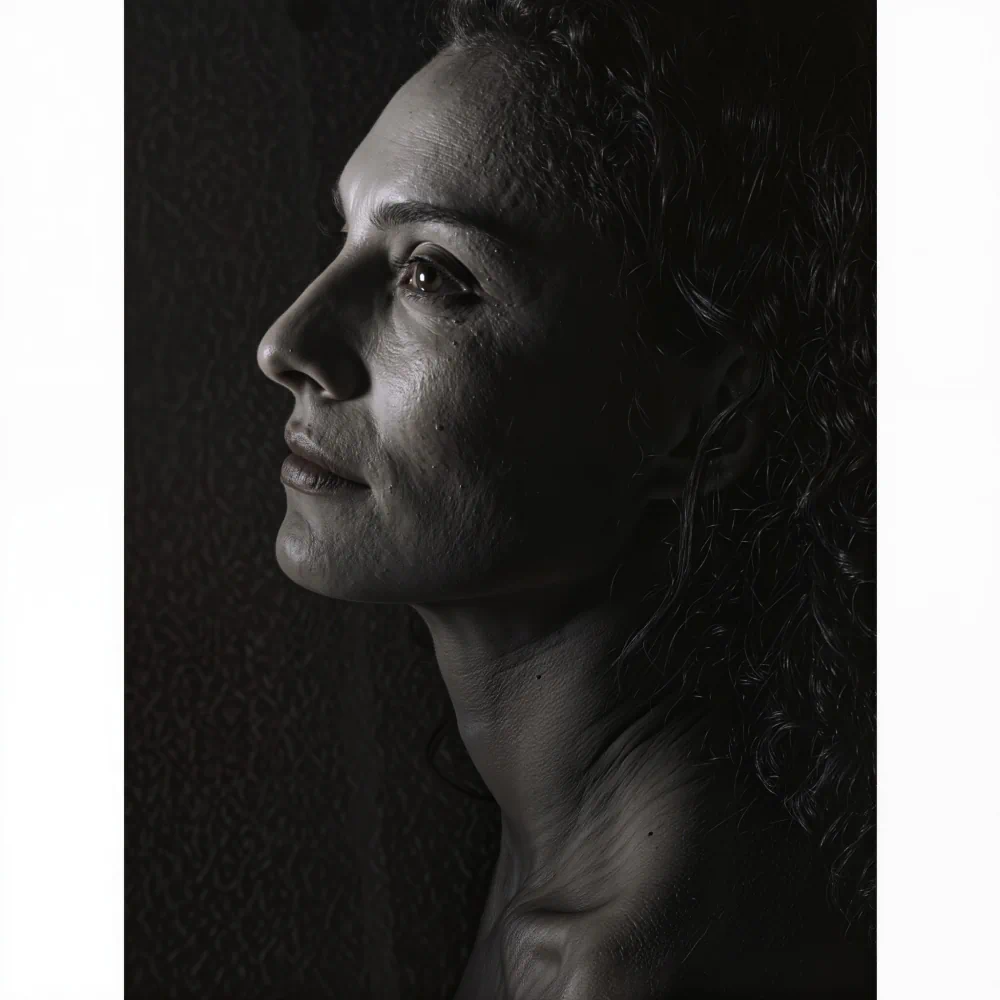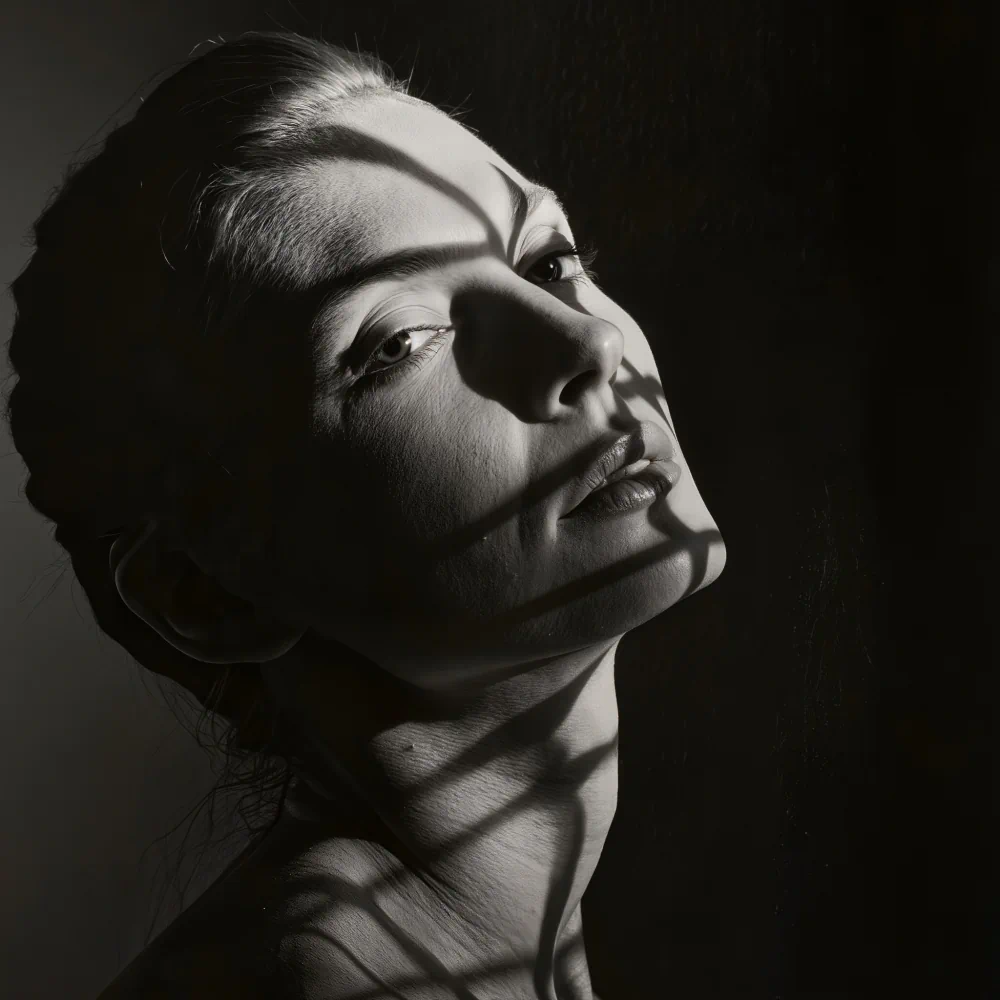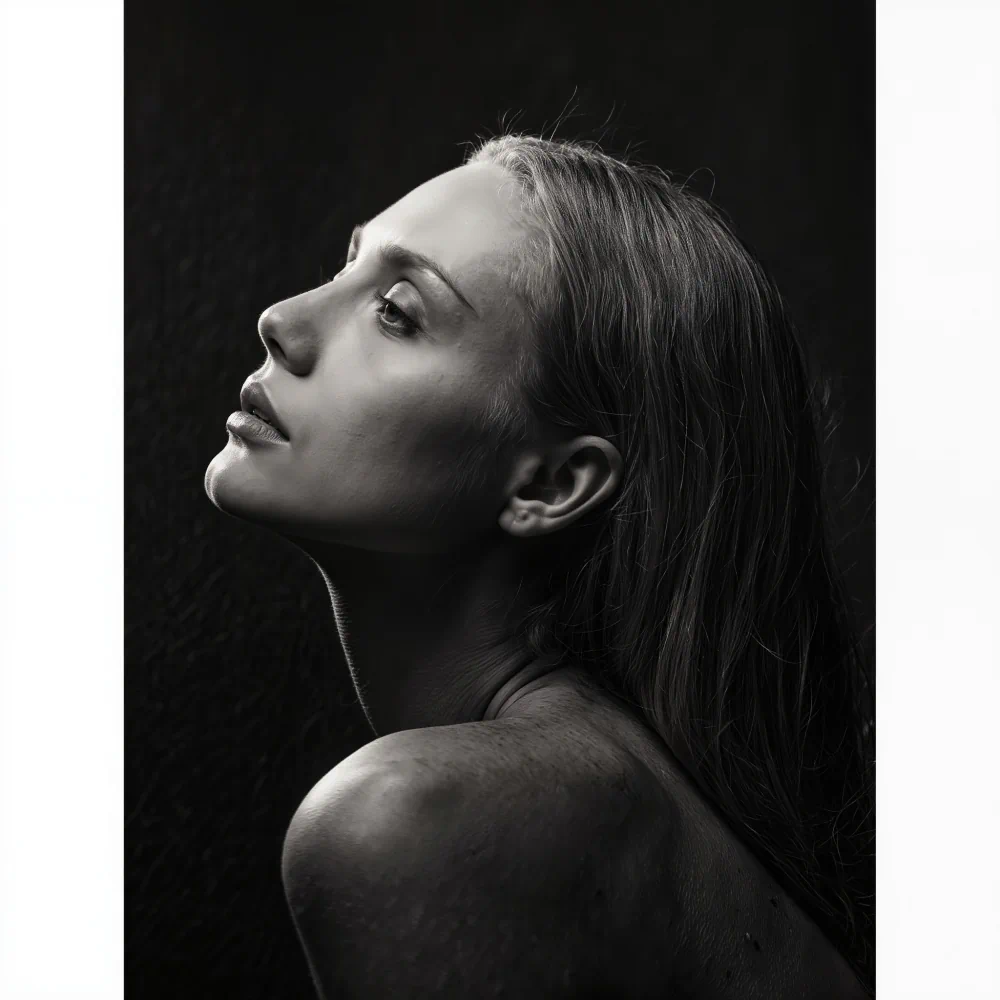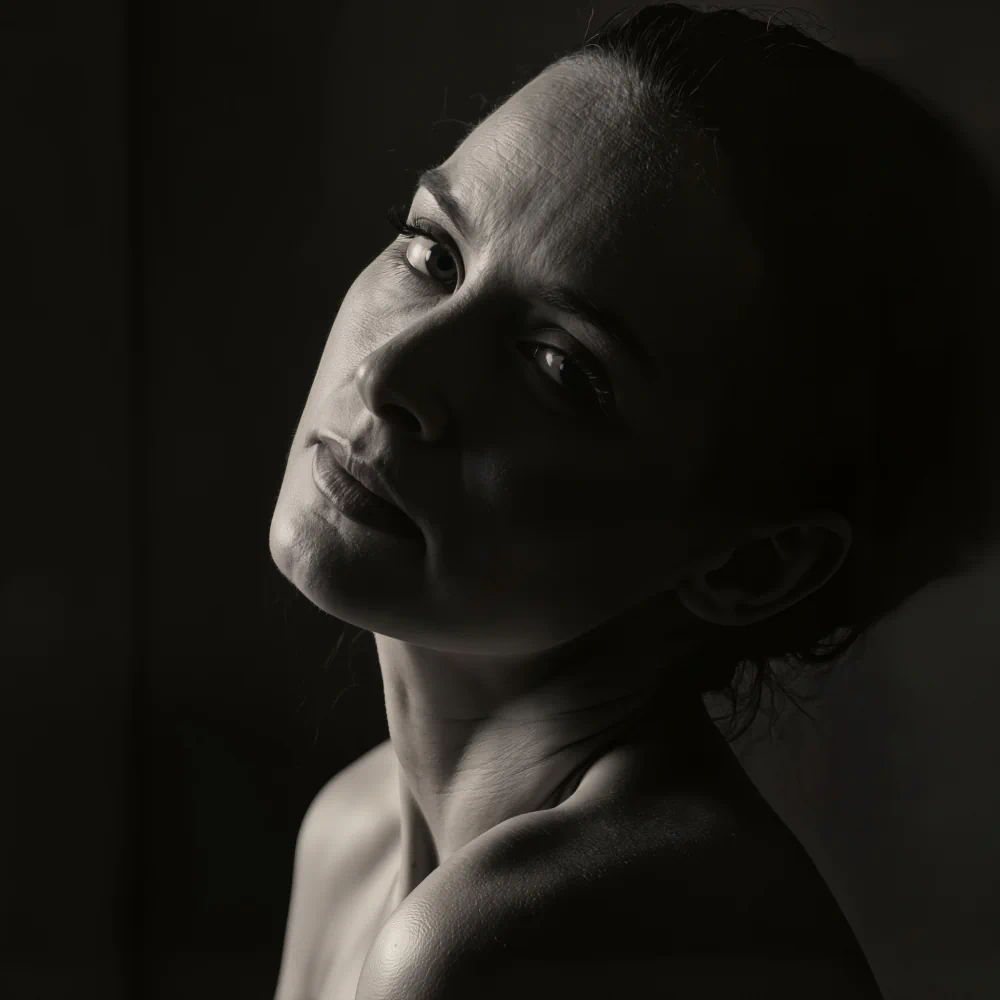


Andrei P’s work operates at the intersection of analogue memory and computational image-making.
Although the images are generated through AI systems, their internal logic is rooted in the sensibilities of physical photography: black-and-white tonal depth, directional light, sculptural shadow, and the quiet tension between presence and absence.
His interest lies not in digital perfection but in the behaviour of light—how it meets a surface, how a female portrait becomes architectural under a single source, and how an image can feel lived-in rather than produced.
For Andrei, analogue influence is structural rather than nostalgic. He treats AI as a material that must be shaped, constrained, and disciplined, much like film, chemistry, or a mechanical camera. His process is built around intentional limitation: narrow palettes, controlled lighting environments, and compositions that rely on silence rather than spectacle. He approaches AI the way one approaches a darkroom—through iteration, micro-adjustment, and an acceptance of controlled unpredictability. The aim is not to imitate film photography but to translate its sensibility—its tactility, patience, and atmospheric weight—into a digital system that does not naturally possess those qualities.
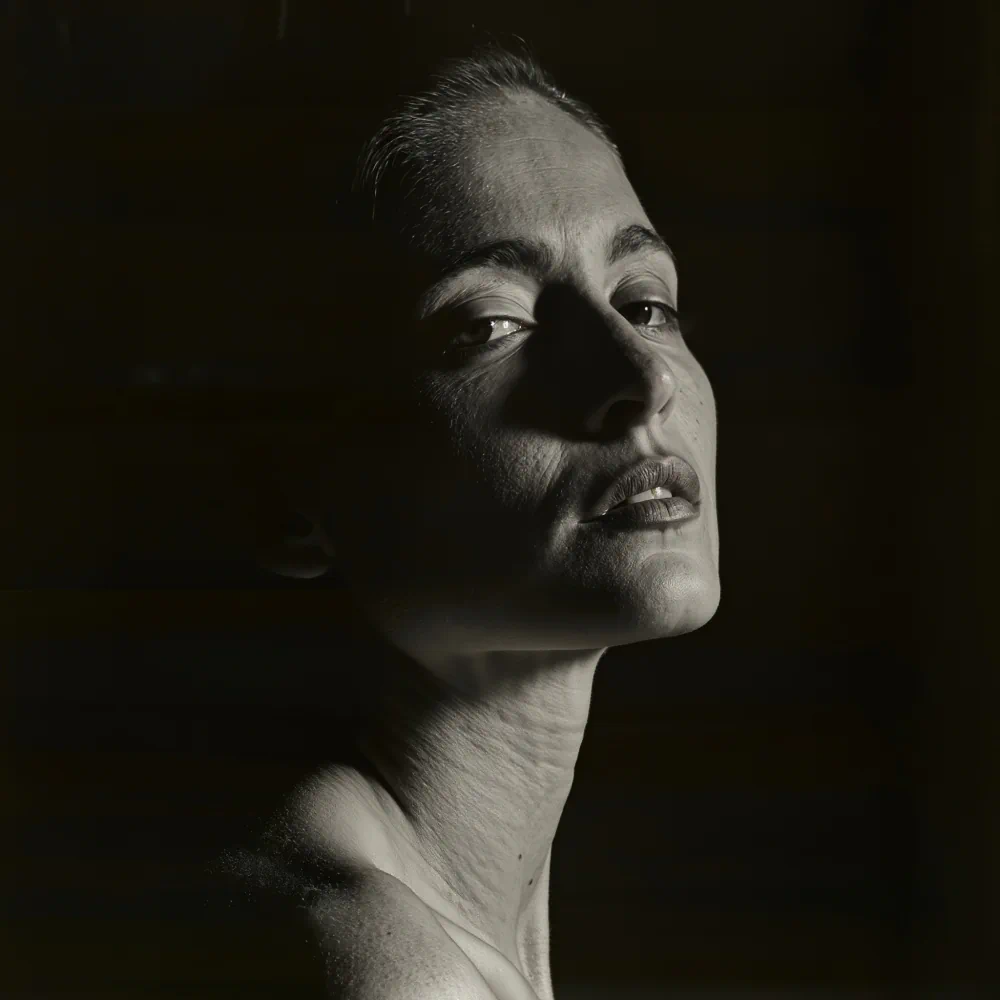
Light functions as the primary instrument in his work. He uses it to carve form, construct emotional architecture, and introduce a sense of physicality into images with no physical origin. Chiaroscuro, dramatic lighting, and deep shadows serve as narrative space, as a form of restraint, and as a counterweight to the clarity of the digital model. The resulting images occupy a liminal zone: recognisable yet slightly displaced, intimate yet impersonal, precise yet softened by the suggestion of something analogue beneath the surface. The mood is often soft-focused, moody, and cinematic, shaped by the quiet presence of a woman rendered through light rather than detail.
His approach is editorial rather than autobiographical. He avoids personal narrative and focuses instead on atmosphere, structure, and internal coherence. Each image is constructed as a controlled environment—a space where light, gesture, and tone can interact without noise. The work is less about depicting subjects and more about building a mood, a rhythm, a spatial experience. For Andrei, AI serves as a medium for examining how light, shadow, and form can carry emotional weight within synthetic imagery.