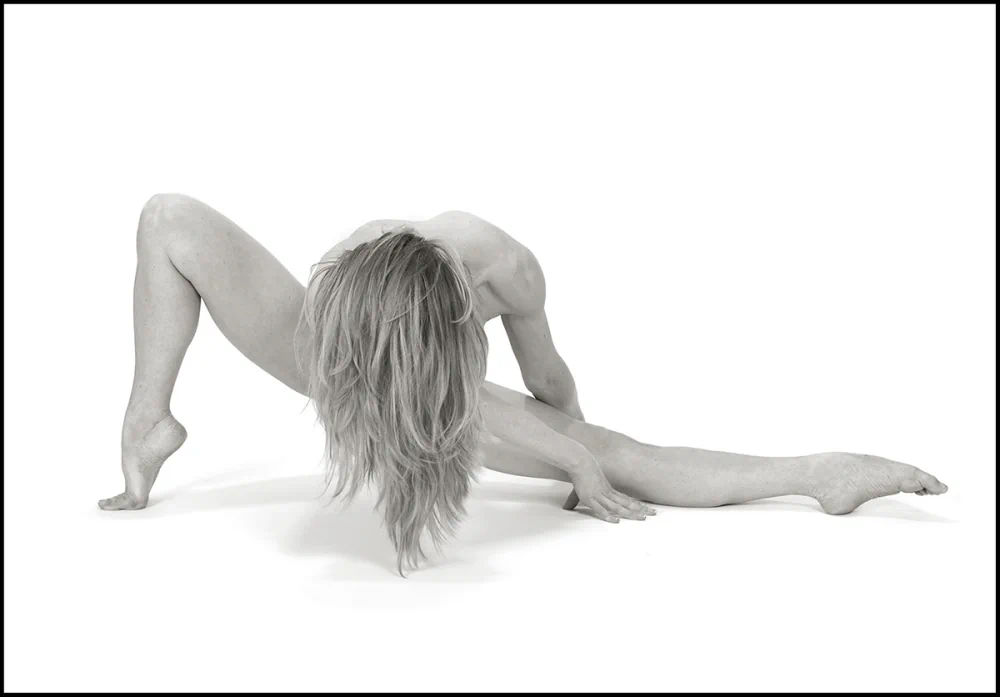
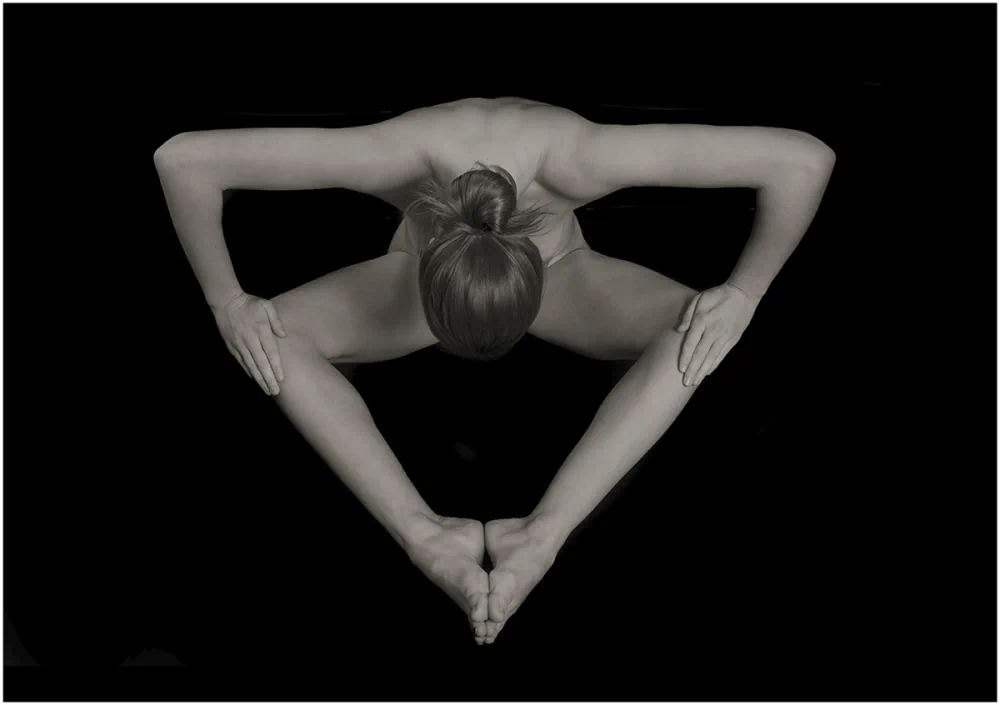
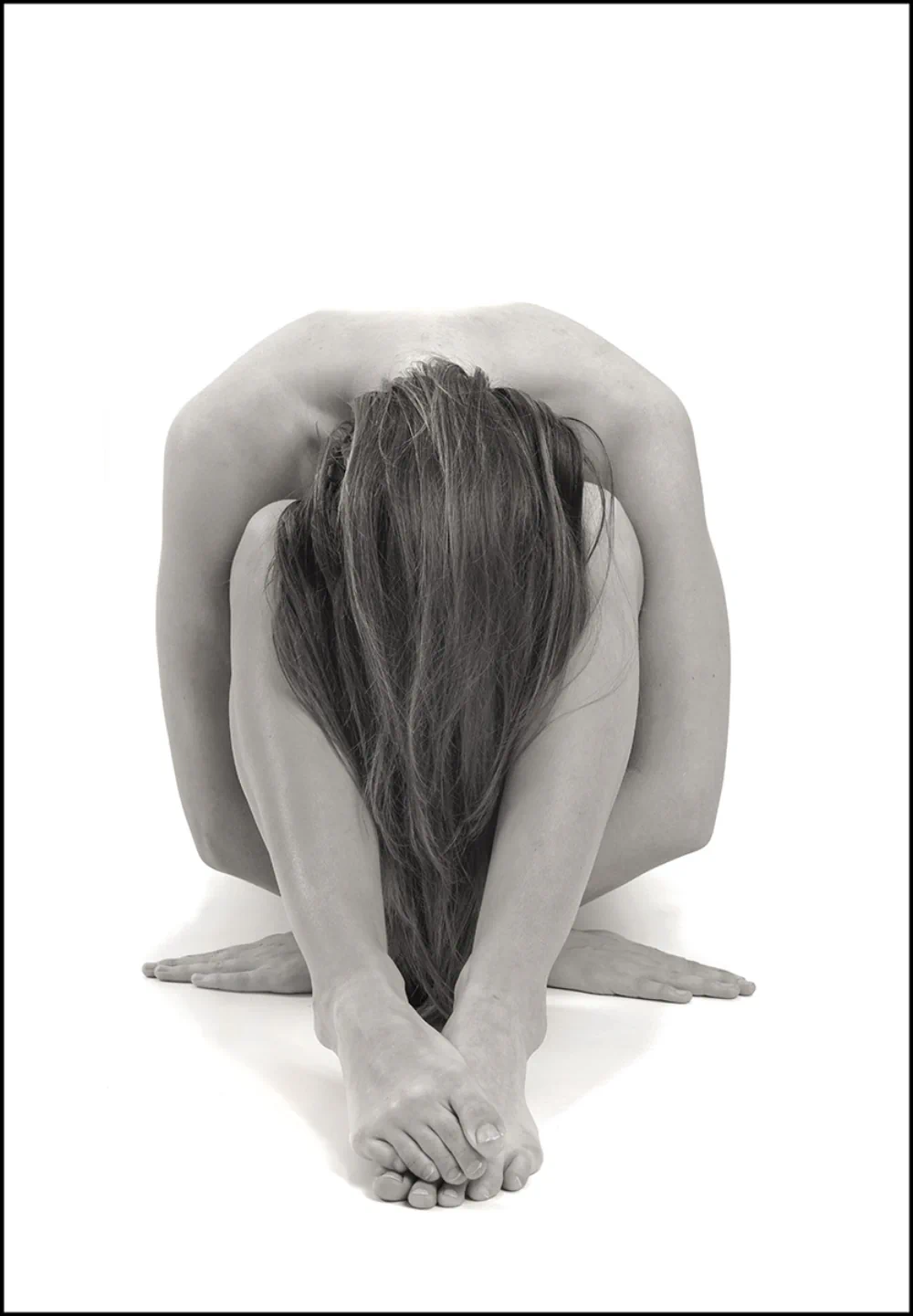
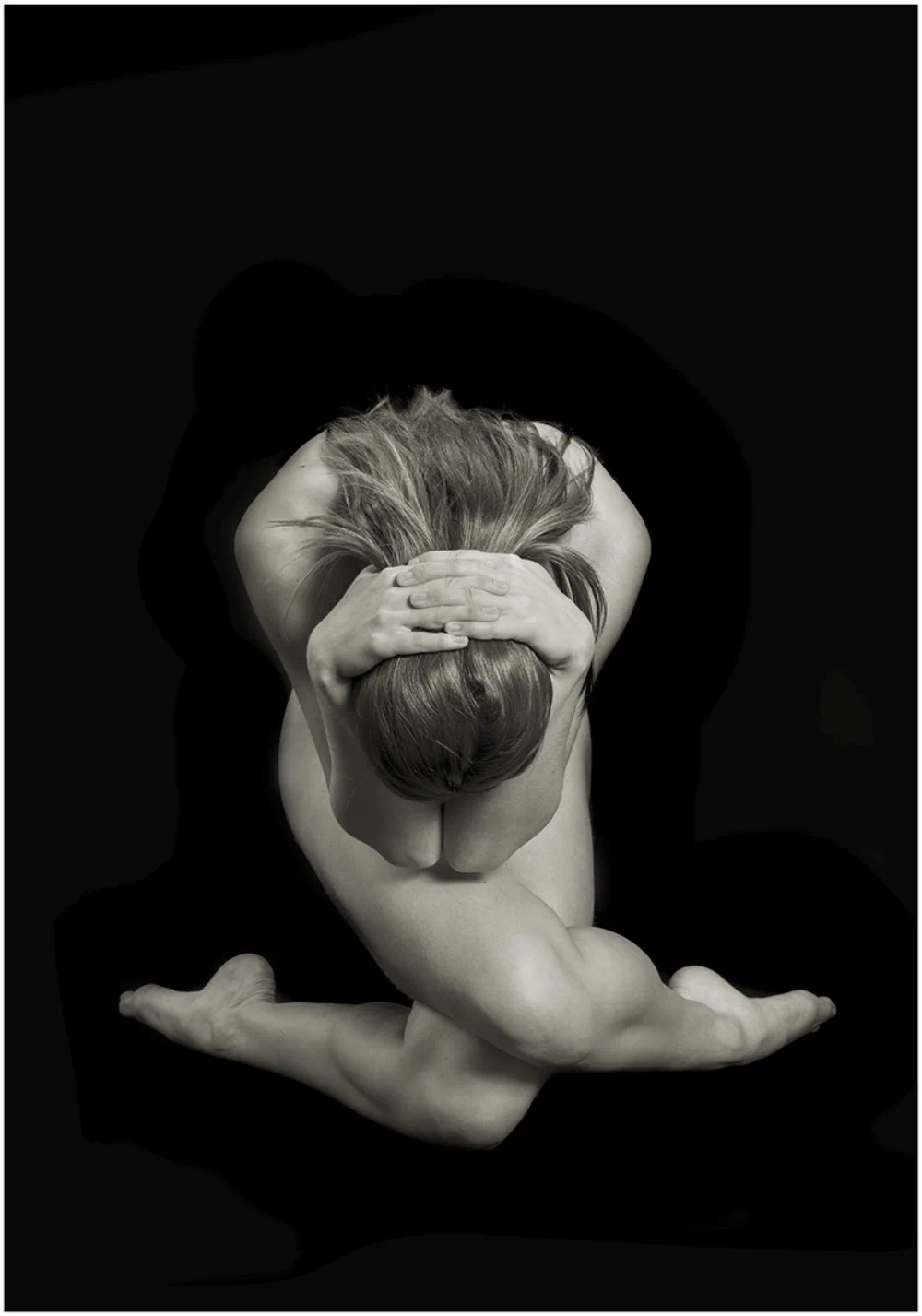
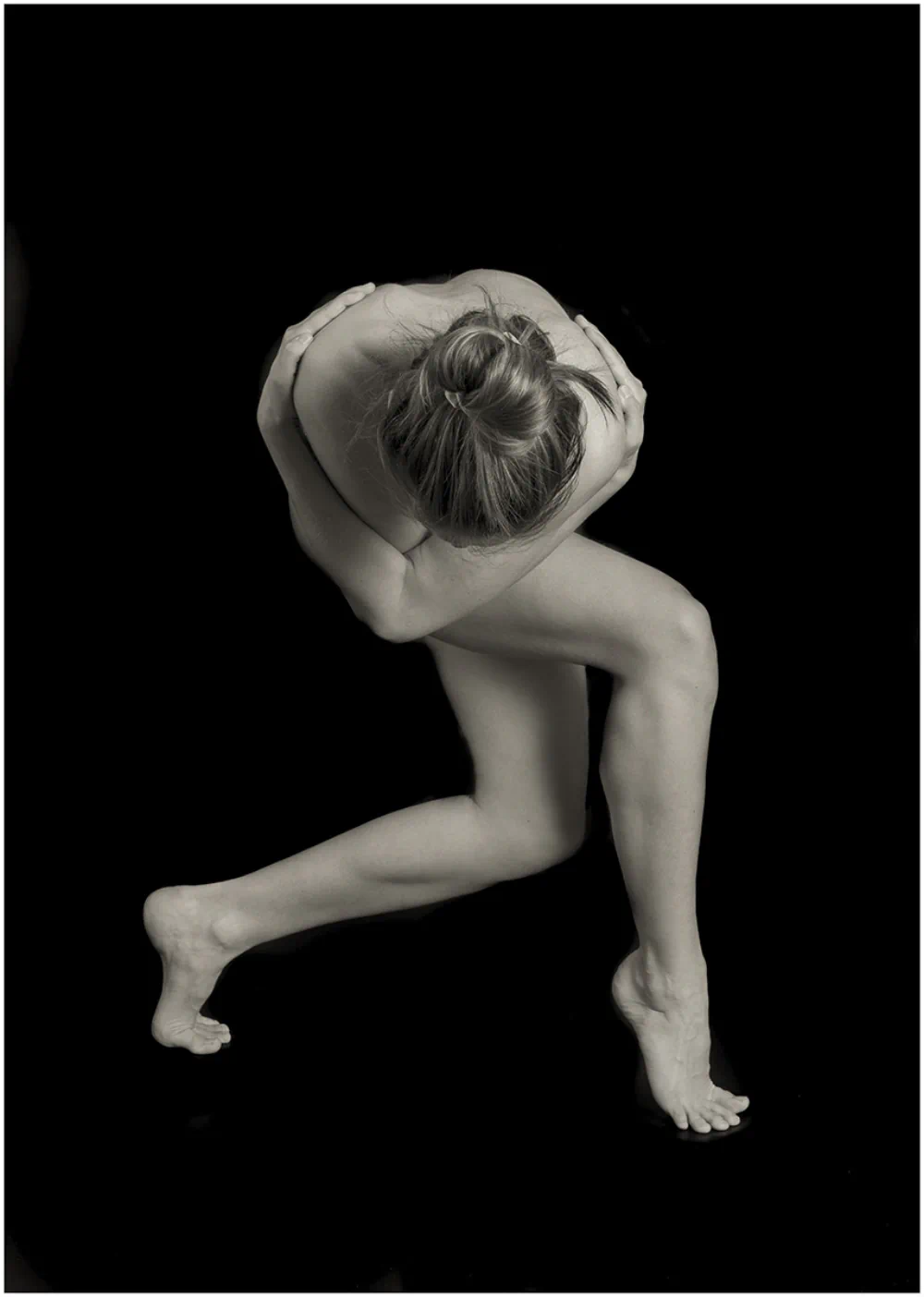
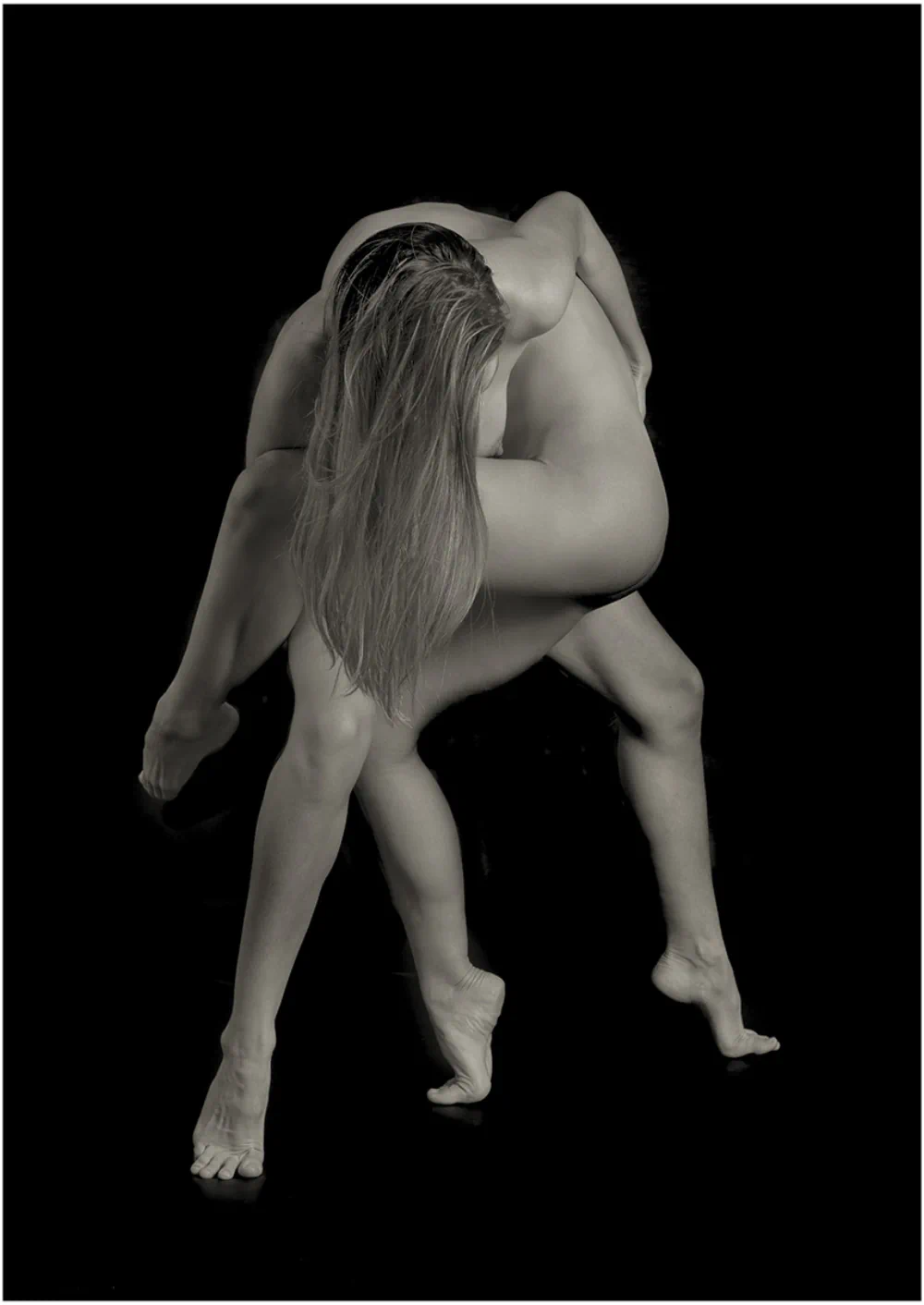
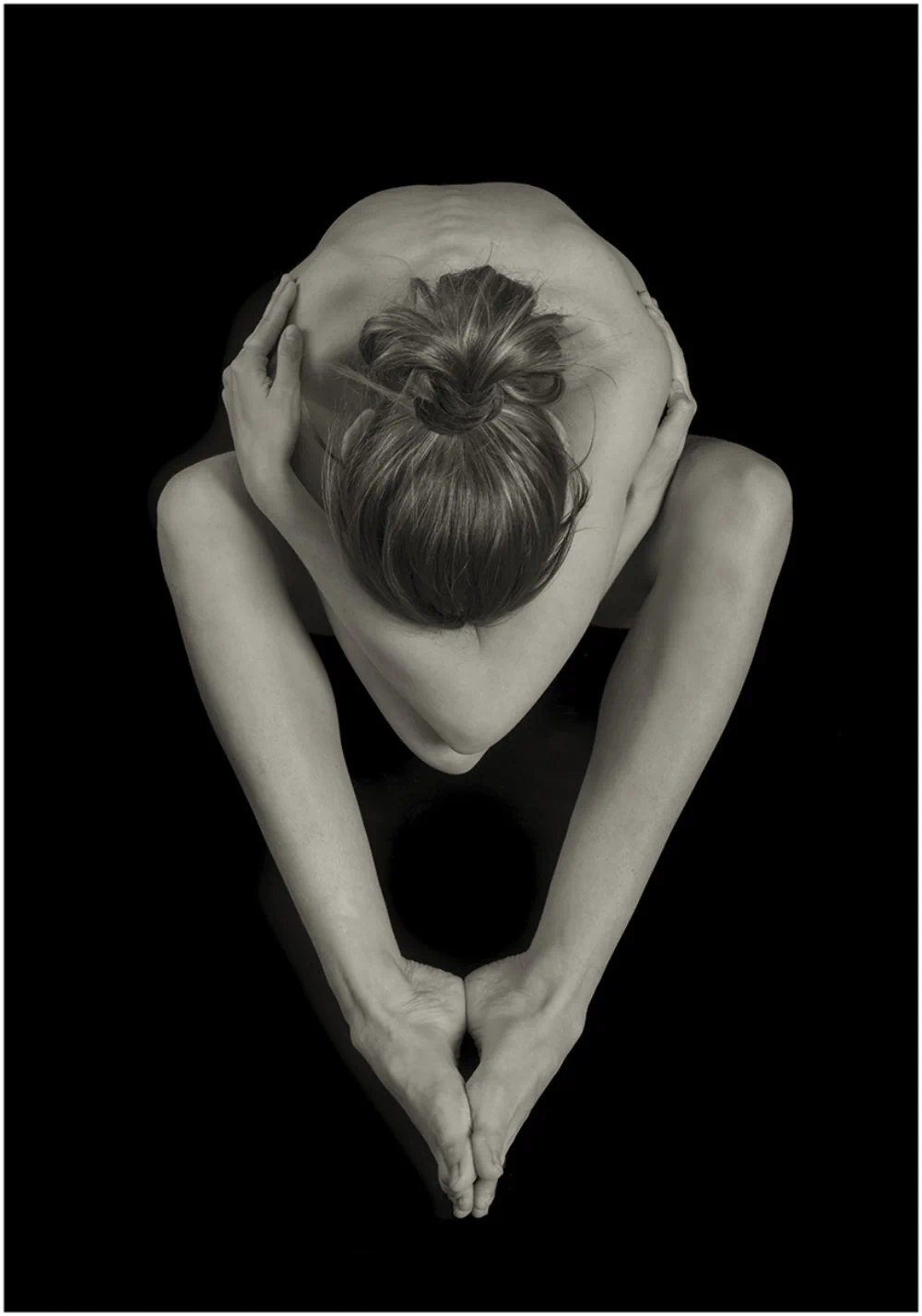
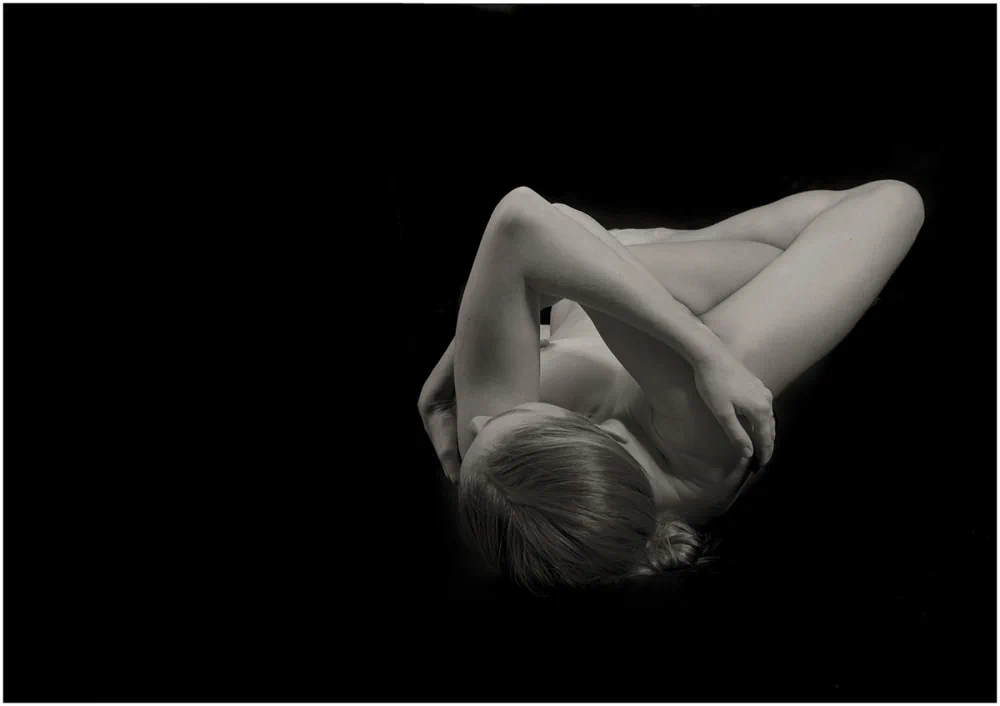
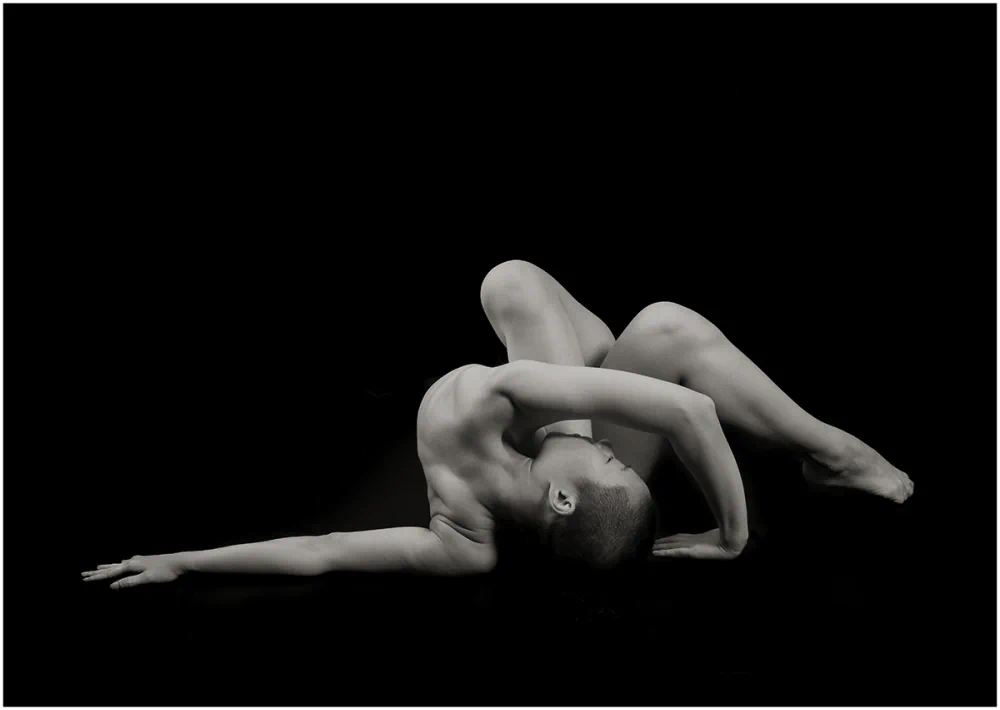
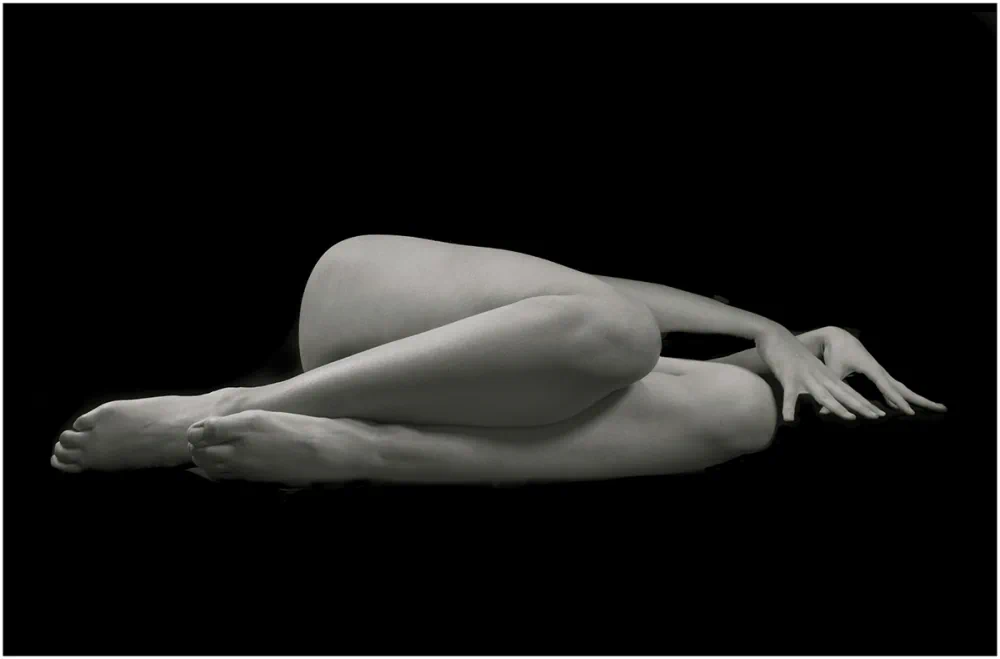
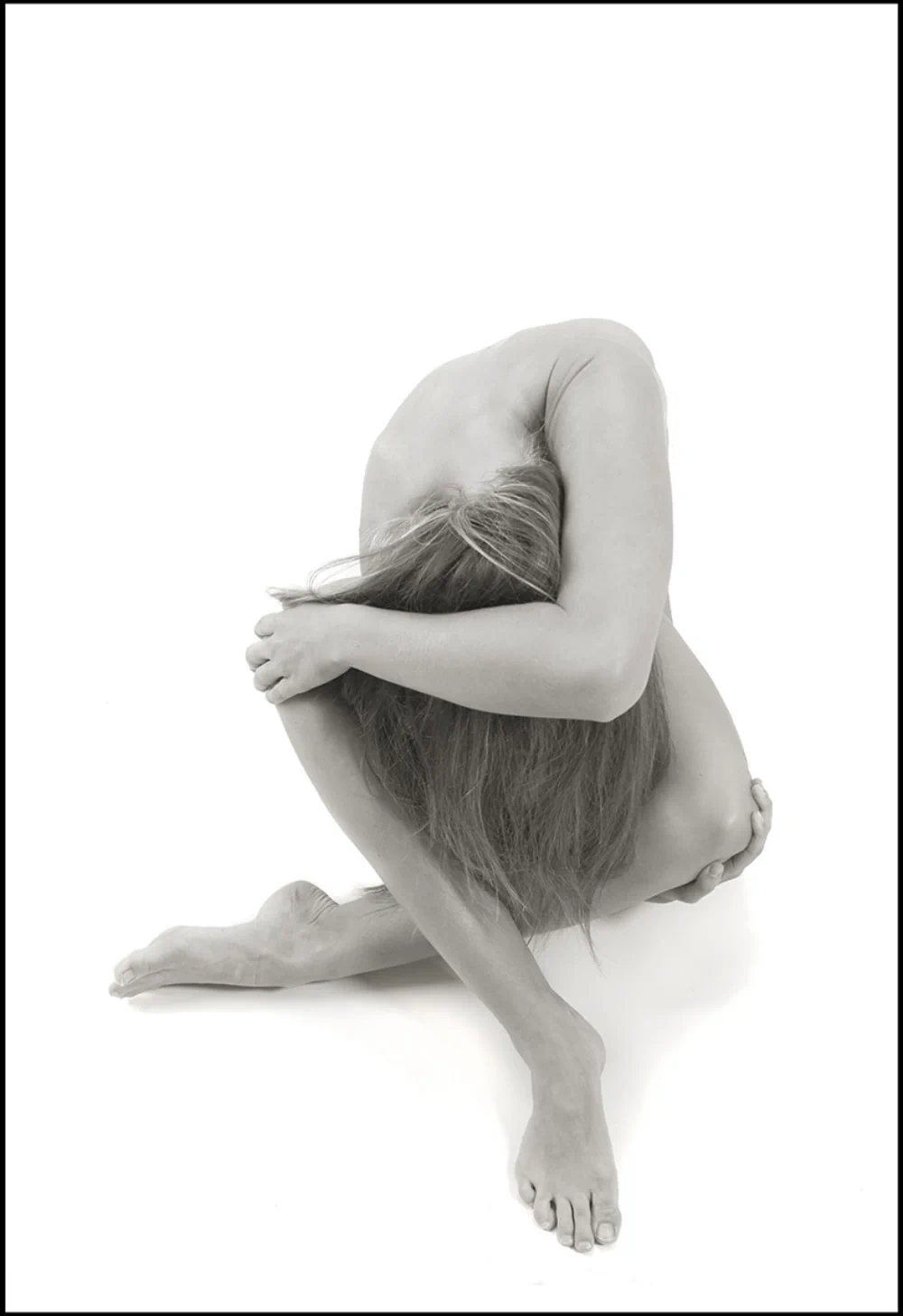
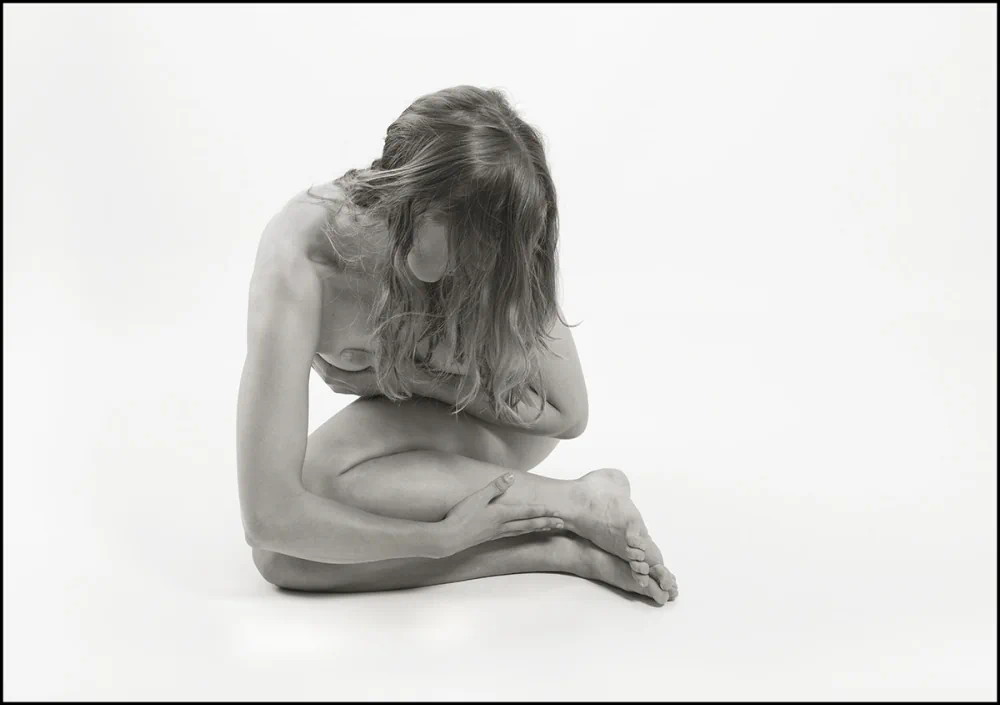
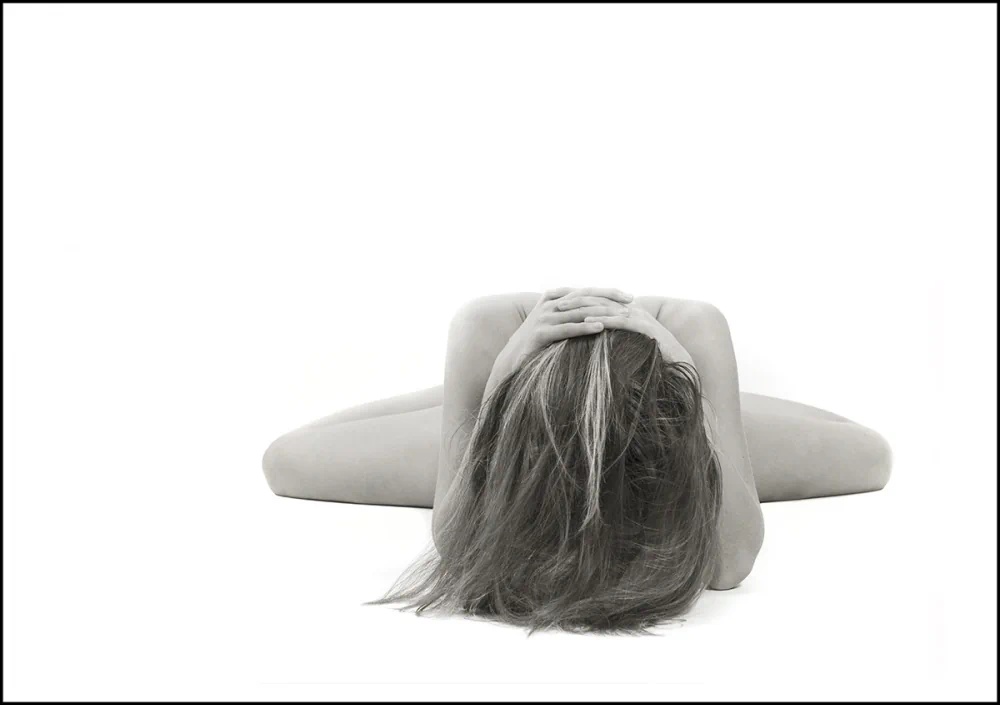
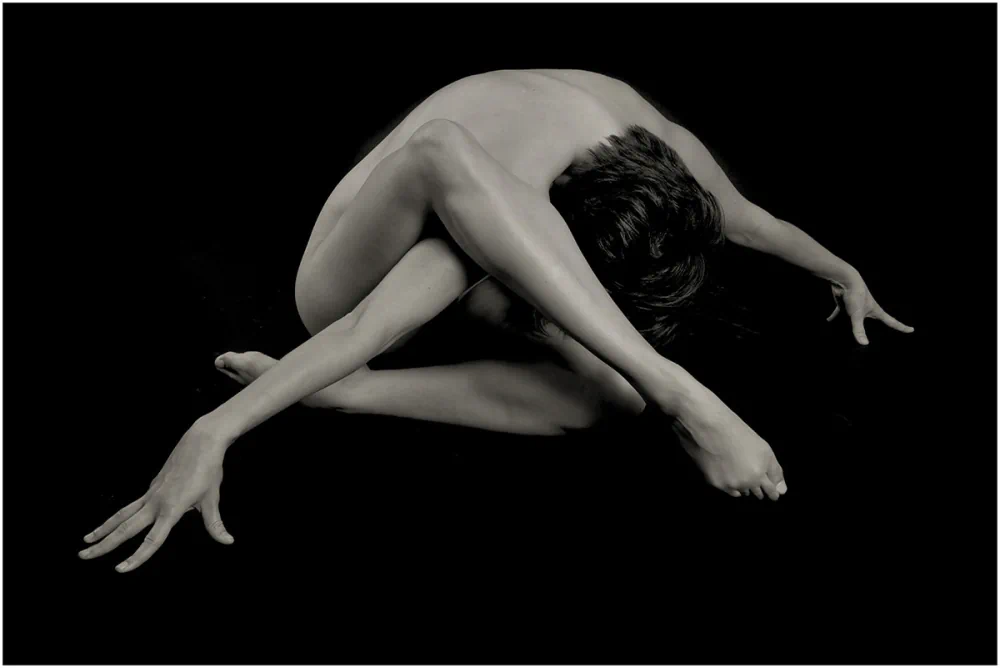
In order to avoid fashionable or contemporary influences, I deliberately create my images in an almost time- and spaceless environment. Moreover, since the dancers act as interpreters, I also try to avoid any identification of the person behind the figure in the photograph, thus fully focusing the viewer’s attention on the form of the image.
In this series ‘ODD BODIES’ I emphasize themes like alienation and estrangement by photographing the female body from a different perspective, in which women are no longer just familiar and sensual, but also pleasantly strange and fascinatingly versatile. I try to show the female body in a way that makes you wonder again about seemingly ordinary forms.
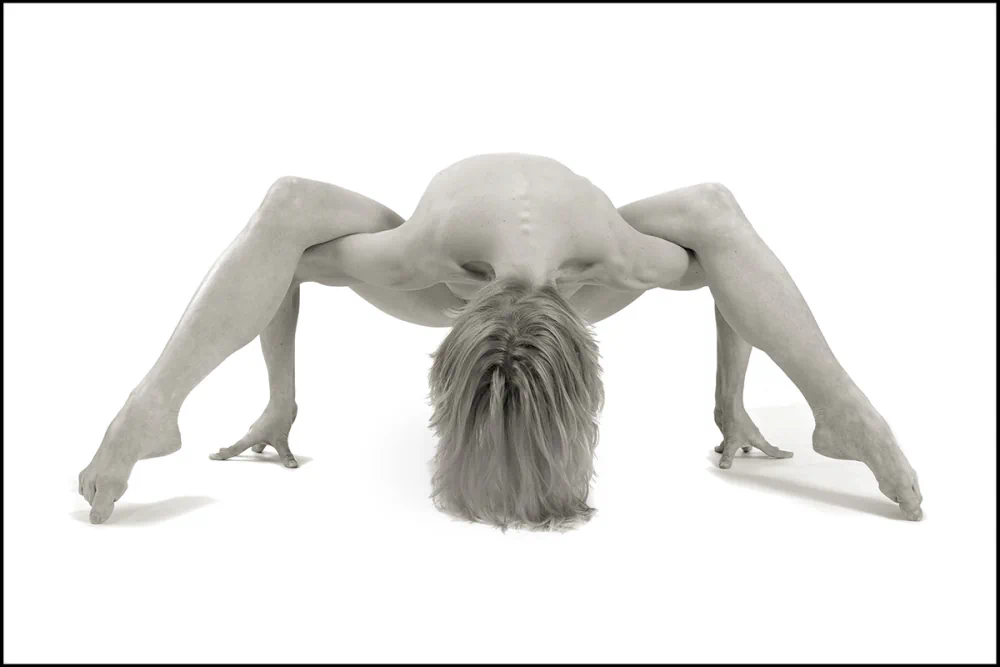
A photoshoot usually starts with a few rather embryonic ideas in my head, and we take it from there. Some of these embryonic ideas turn out to be completely useless, mostly because they are anatomically impossible to realize, even for professional dancers. But other ideas are workable, so by trial and error we move forward until these ideas get their final shape. This process is the best part of all. At times, we laugh a lot during each photoshoot, because this is playing, just like children do. The great pianist Arthur Rubinstein once said, “You should play the piano as if you are whistling a tune.”
That’s how I feel about my work.
People sometimes ask me why my images don’t show any faces.
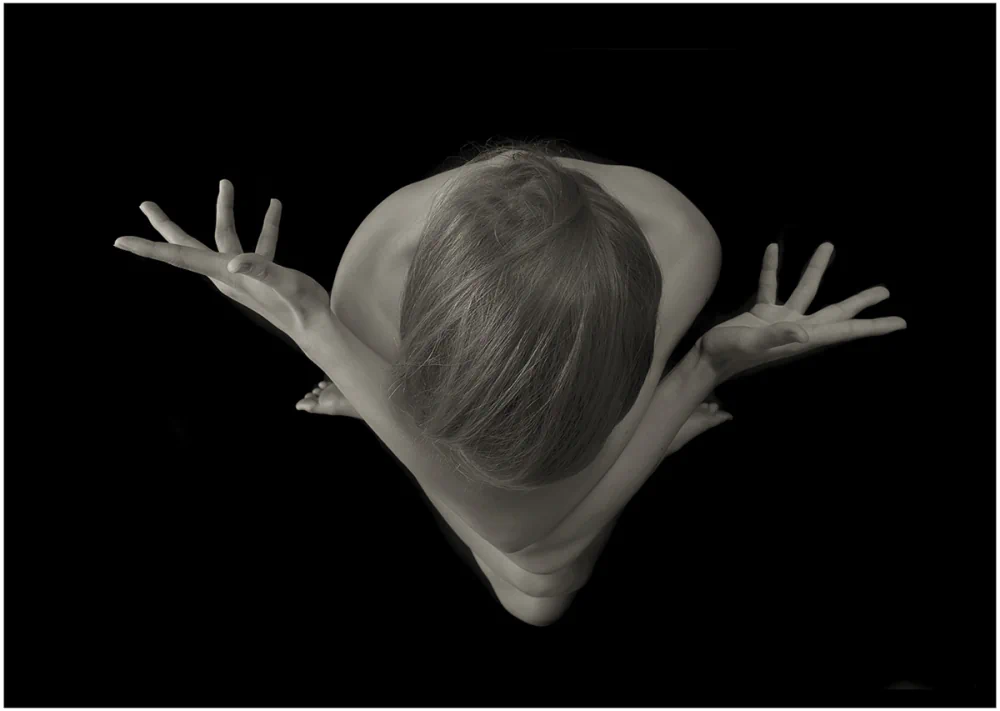
There are two reasons for this. First of all, if I were to add a face to my image, the image would become personalized. Viewers might say, “Wow, she has great eyes,” or, “Hey look, there’s Judy, Nancy, Mary, etc.,” and I don’t want that. I want the viewer to focus on the body forms, without getting distracted by a face. The human face has such a strong attraction that I have to omit it to make people concentrate on the body. Like I said before, I think of myself as a kind of two-dimensional sculptor who loves these women, not just because they can be beautiful and sexy, but also because they are strong, versatile, and basically a mystery to me.
To put things into perspective, I have a wonderful relationship with my wife, Annemieke, who has been most supportive and loyal to me for more than 35 years.
The second reason is a rather practical one: as we all know, the internet is not a very safe place for women. Sometimes, pornographic sites try to hijack my images and show them on their own sites for some strange reason. In order to protect the personal integrity of my models, it is safer to keep them anonymous, so that no one can hurt them in any way.
My photographs have no real titles, just a number for my archive. The reason for this is that I do not wish to lead the spectator toward my own personal view of the image by giving it a title. Instead, I want the viewer to make up their own mind about what the title might be. In fact, I do not feel that my images are suitable at all to have a title. Looking at my photographs, I do not think of titles such as “Moon over Paris” or “Arizona Desert Highway.” Instead, I think of my whole ODD BODIES series as a kind of sketchbook with hundreds of sketches in it that need no specific titles.
Here’s my studio, small and simple. I use a Nikon D3X camera, a 24–70mm f/2.8 G ED Nikkor lens, a 85mm f/1.4 G Nikkor portrait lens, and Bowens flash equipment. I always use flash, mostly at 1/250 sec and ISO 100.
I have a Mac Studio M1, and I use Photoshop 2026 plus Camera RAW for a little bit of post-production. I use the duotone settings in Photoshop to create a smoother skin tone for the nudes, and then I change the image into RGB format.
Apart from that, I hardly ever use any specific filters, special effects, or programs. No frills.
In my teens, I was fascinated by surrealist painters such as Salvador Dalí, Paul Delvaux, and René Magritte. Later on, I discovered Edward Hopper, whom I still admire very much.
Sebastião Salgado is one of my favorites. He is not just a brilliant B&W photographer but also an impressive person with a mind-boggling career. Apart from Salgado, there’s Henri Cartier-Bresson and Dutch photographers Erwin Olaf and Anton Corbijn. Music also plays a very important role in my life, from Bach, Mozart, and Beethoven to minimalists like Steve Reich, John Adams, and Philip Glass. And yes, German choreographer Pina Bausch is one of my favorites too.
QUOTE:
“The purpose of art is not the release of a momentary ejection of adrenaline, but rather the gradual, lifelong construction of a state of wonder and serenity.”
Glenn Gould (1932–1982)