
Wildlife photography has long occupied a curious place within the history of photography.
It is one of the most widely consumed visual genres in the world, yet also one of the most misunderstood. For many viewers it represents pure spectacle: the thrilling image of a predator mid-hunt, the elegance of a bird suspended in flight, or the monumental presence of an elephant walking through an endless savannah.
These images circulate endlessly in magazines, documentaries and social media feeds, reinforcing the idea that wildlife photography is primarily about dramatic encounters with nature.
Yet beneath this surface lies a far more complex narrative. To photograph wildlife today is not simply to witness nature in its untouched state. It is, increasingly, to confront the reality that what we are seeing may be disappearing. The landscapes that once seemed limitless are shrinking. Species that once appeared abundant are now counted in dozens or even single individuals. In this context the camera becomes more than a tool of admiration. It becomes an instrument of testimony.
The transformation of wildlife photography over the past decades reflects this shift in consciousness. Early wildlife images often carried the spirit of exploration. They documented animals in distant territories that appeared exotic to Western audiences. These photographs celebrated discovery and distance. They reassured viewers that wilderness still existed somewhere beyond the reach of modern life.
Contemporary wildlife photography, however, rarely carries such innocence. The photographer today is acutely aware that many of these animals inhabit fragile ecosystems. The act of photographing them inevitably raises questions about responsibility, preservation and human impact. Each image therefore contains an implicit tension. It celebrates the beauty of the natural world while simultaneously acknowledging its vulnerability.
This tension has profoundly influenced how photographers approach their subjects. Some pursue intimacy, seeking to portray animals not as anonymous representatives of a species but as individuals with presence and character. Others focus on movement, capturing moments of explosive energy that reveal the raw dynamics of survival. Still others aim to build emotional bridges between humans and animals, believing that empathy is a powerful catalyst for conservation.
Technology has also reshaped the field. Remote cameras allow photographers to enter spaces that would otherwise be inaccessible or dangerous. Ultra-long lenses compress vast distances, creating the illusion of proximity between viewer and subject. High-speed digital sensors capture fleeting gestures that once vanished before the shutter could react. These tools expand the visual vocabulary of wildlife photography, yet they do not replace the patience and observation that remain at the heart of the craft.
Ultimately wildlife photography is an exercise in attention. The photographer must read landscapes, anticipate behaviour and wait for the brief alignment of light, movement and presence that transforms an observation into an image. When this moment arrives, the photograph does more than depict an animal. It becomes a fragment of a much larger story about coexistence between species.
The projects gathered here illustrate how contemporary photographers navigate this terrain. Their images move between documentation, portraiture, action and environmental awareness. Together they reveal a genre that has evolved far beyond simple visual spectacle. Wildlife photography today is a language through which photographers explore the fragile relationship between humanity and the living world.
Land of Giants by Will Burrard-Lucas
The last great elephants and the photograph as historical witness
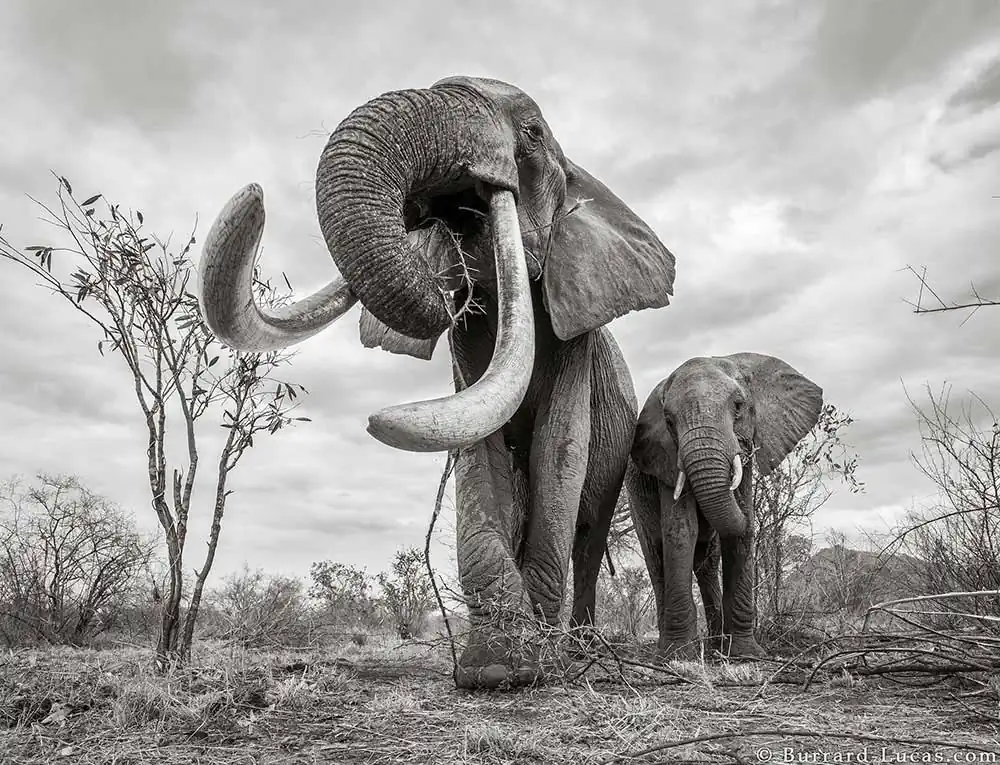
In Land of Giants by Will Burrard-Lucas, wildlife photography becomes an act of preservation. Burrard-Lucas documents one of the rarest creatures remaining in the African wilderness: a female elephant whose enormous tusks dragged across the ground as she walked. Animals like her are known as “big tuskers,” elephants whose tusks exceed one hundred pounds each. Today fewer than twenty such elephants are believed to remain alive.
The images carry a quiet gravity. They show the elephant drinking at waterholes, feeding on acacia branches and moving slowly across the dusty plains of Tsavo in Kenya. At first glance the photographs celebrate the immense dignity of the animal. Her presence dominates the landscape, embodying a scale and majesty that once defined African wildlife.
Yet the deeper significance of the images lies in their timing. These photographs are among the last ever taken of this elephant. Shortly after Burrard-Lucas captured them she died of natural causes, transforming the images into a visual record of an animal that can no longer be encountered.
Burrard-Lucas achieved these perspectives using BeetleCam, a remote-controlled camera buggy he developed to photograph dangerous wildlife at ground level. The technique produces an extraordinary intimacy. The elephant’s tusks stretch toward the lens, emphasising their impossible length while placing the viewer directly within the animal’s path.
Through this perspective the photographs transcend simple documentation. They become historical testimony. Each image records not only the existence of a remarkable elephant but also the fragile status of the species itself. In a world where such animals are vanishing, the photograph becomes an archive of presence.
Wildlife Portraits by Nick Dale
Energy, proximity and the choreography of the hunt
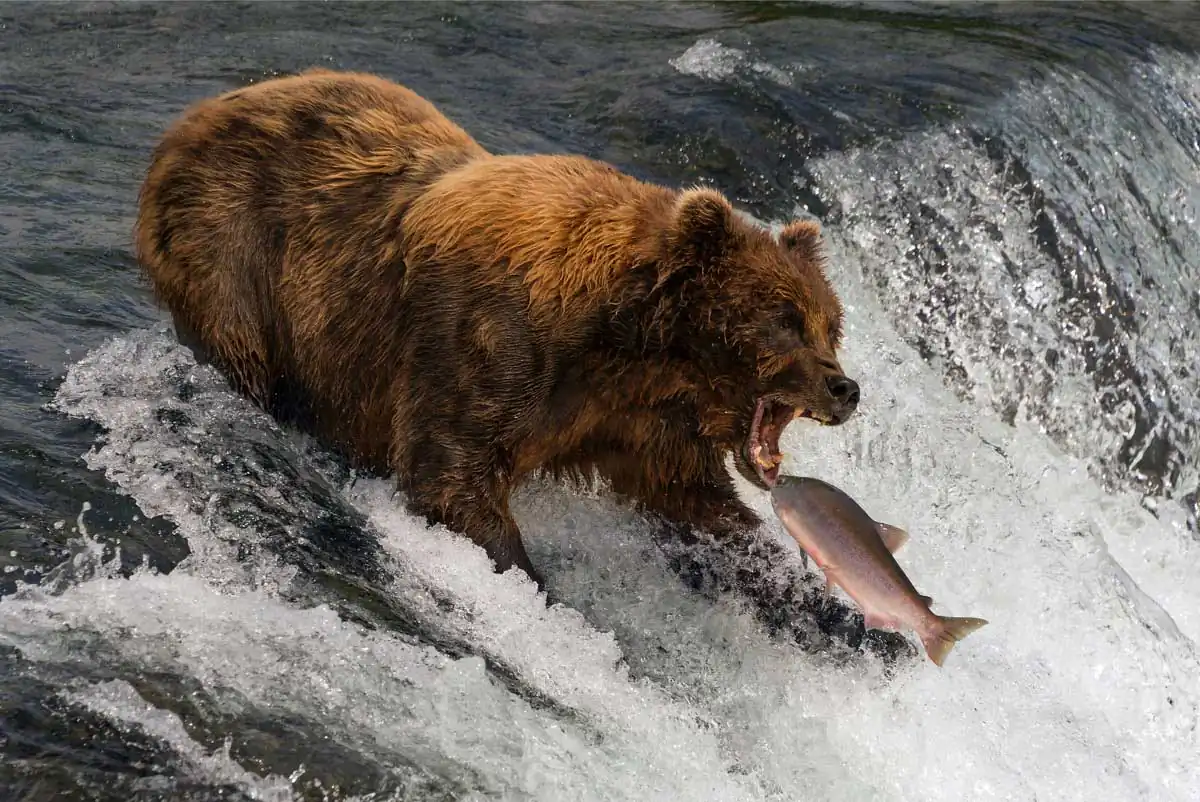
Where Burrard-Lucas focuses on rarity and legacy, Wildlife Portraits by Nick Dale explores the energy of life in motion. Dale initially built his portfolio around classical animal portraits: lions resting in the savannah, jaguars observing the forest from the shadows. Over time, however, he began to feel that these images lacked vitality.
Wild animals rarely remain still. Their lives unfold through movement, tension and sudden bursts of speed. Dale gradually shifted his focus toward these dynamic moments. His photographs capture predators accelerating across the landscape, birds slicing through the air and fleeting interactions that define survival in the wild.
Long lenses play an essential role in this visual strategy. By working with extremely powerful telephoto equipment, Dale compresses distance and creates the illusion that the viewer stands just meters from animals that are actually far away. The resulting images possess a visceral immediacy. They place the audience inside the unfolding drama.
These photographs are therefore less about representation than about sensation. The viewer experiences the tension of the chase, the anticipation before impact and the explosive energy of animals acting on instinct. Through this approach Dale transforms wildlife photography into a theatre of motion where the landscape itself becomes a stage.
Wildlife by Michael Pachis
The animal gaze and the possibility of empathy
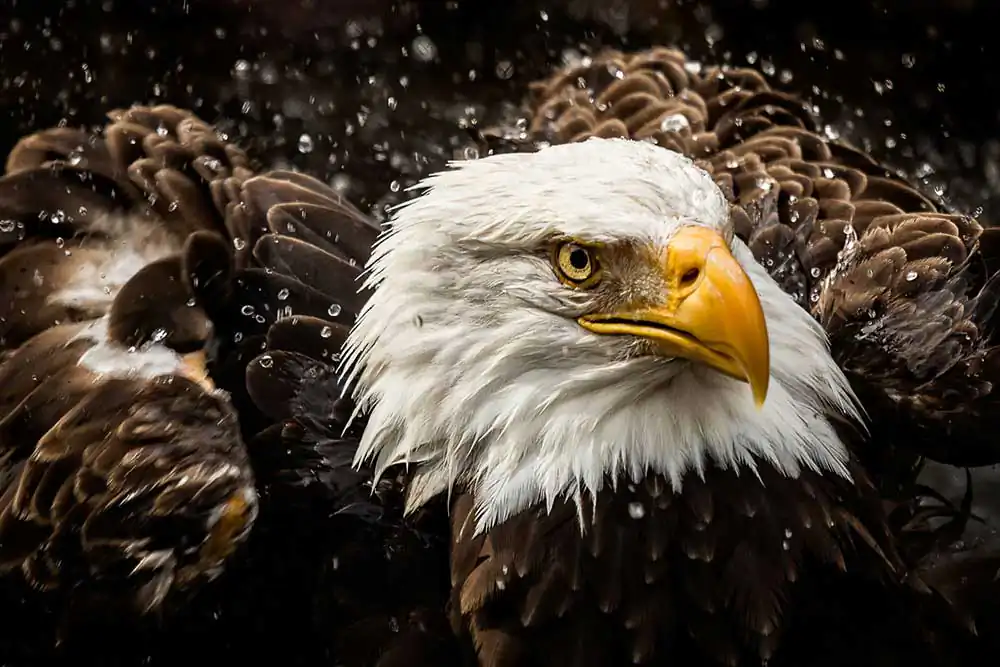
In Wildlife by Michael Pachis, the emphasis shifts toward intimacy and emotional connection. Pachis approaches animals much as a portrait photographer approaches human subjects. The centre of each image is the gaze.
The eyes of the animal become the point of encounter between viewer and subject. By focusing on this moment of direct visual contact, Pachis encourages the audience to recognise the individuality of the creature before them. The animal ceases to be an abstract symbol of its species and instead appears as a singular presence.
Many of these photographs were taken in a zoo environment, a context that introduces another layer of complexity. Zoos exist at the intersection of conservation, education and captivity. Pachis uses this setting not to replicate wilderness but to observe the subtle expressions and gestures of animals living within it.
The resulting images are contemplative and quietly powerful. They remind viewers that animals possess inner lives that remain largely invisible to human perception. Through the photograph, a brief moment of recognition becomes possible.
Wildlife by Jessica Circe Rogers
The transformative encounter with the African landscape
Wildlife by Jessica Circe Rogers reveals another dimension of wildlife photography: the moment when a photographer first encounters the overwhelming presence of the natural world. Rogers discovered her passion for photography during a safari in Kenya, an experience that profoundly reshaped her creative path.
The images from this journey capture the vibrant colours and expansive horizons of the African landscape. Wildlife appears not as isolated subjects but as integral elements of a living ecosystem. The photographs evoke the sense of wonder that accompanies the discovery of animals in their natural environment.
One of the most striking encounters of Rogers’s trip was her meeting with Sudan, the last male northern white rhinoceros. Moments like this reveal the fragile reality behind the beauty of wildlife photography. The animal becomes both a subject and a symbol of a species on the brink of extinction.
Rogers’s photographs therefore oscillate between celebration and awareness. They invite viewers to share the awe of witnessing wildlife while also recognising the urgency of protecting it.
Portraits from the Wilderness by Graeme Purdy
Patience, perspective and the ethics of photographing the wild
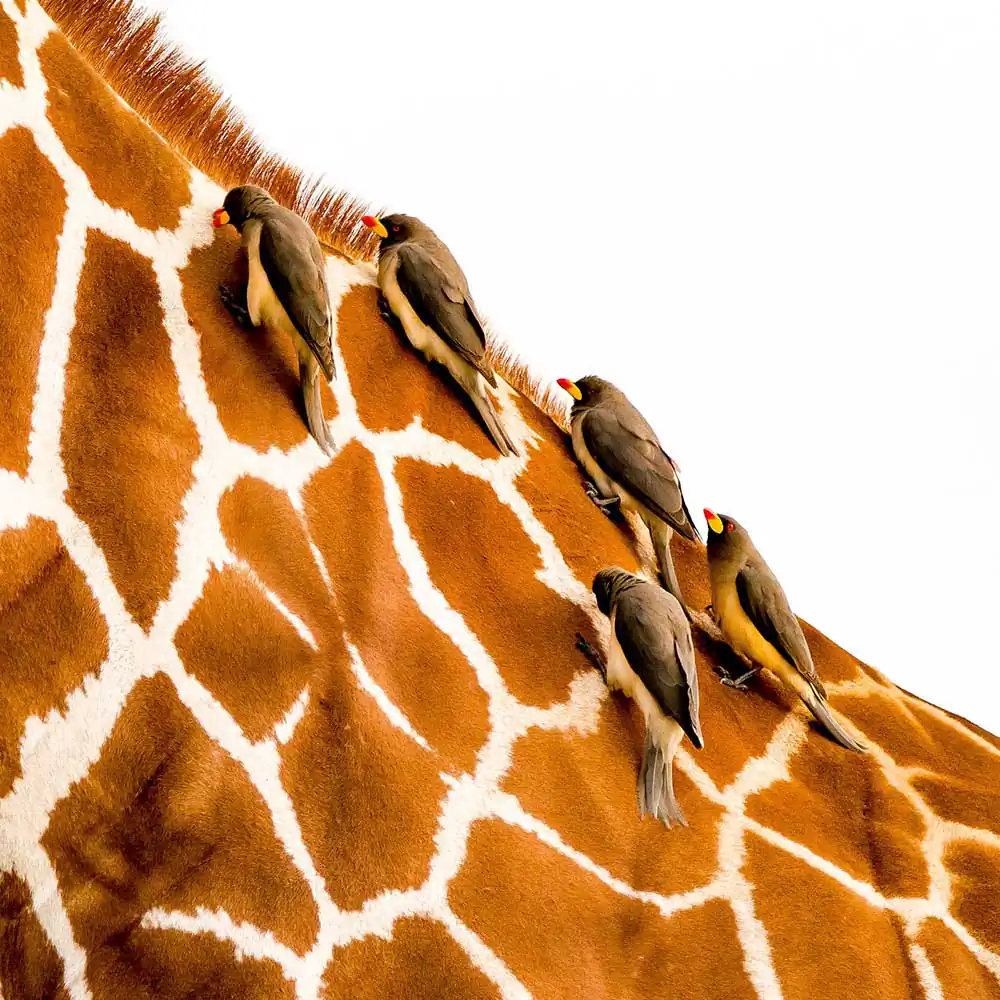
In Portraits from the Wilderness by Graeme Purdy, wildlife photography emerges from a long relationship with nature. Raised in Northern Ireland and deeply connected to the outdoors, Purdy has gradually transformed his photographic practice from spontaneous shooting into a deliberate and reflective pursuit.
Earlier in his career the excitement of wildlife photography often meant capturing thousands of images in a single day. Over time Purdy abandoned this approach. Today his work is defined by patience and precision. Rather than reacting impulsively to every opportunity, he waits for the specific image he has envisioned.
This shift represents a deeper philosophical change. As natural habitats continue to disappear, Purdy has become increasingly concerned about the fate of the animals he photographs. The camera is no longer simply a tool for creating striking images. It has become a way of raising awareness.
His photographs aim to reconnect viewers with wildlife and the landscapes that sustain it. By presenting animals from unexpected perspectives and emphasising their individuality, Purdy encourages audiences to see them not as distant curiosities but as fellow inhabitants of the planet.
In this sense his work reflects a broader transformation within wildlife photography. The genre is no longer driven solely by the thrill of the encounter. It is increasingly shaped by a sense of responsibility toward the fragile ecosystems that still remain.
Wildlife Photography as Witness
Images that connect beauty with responsibility
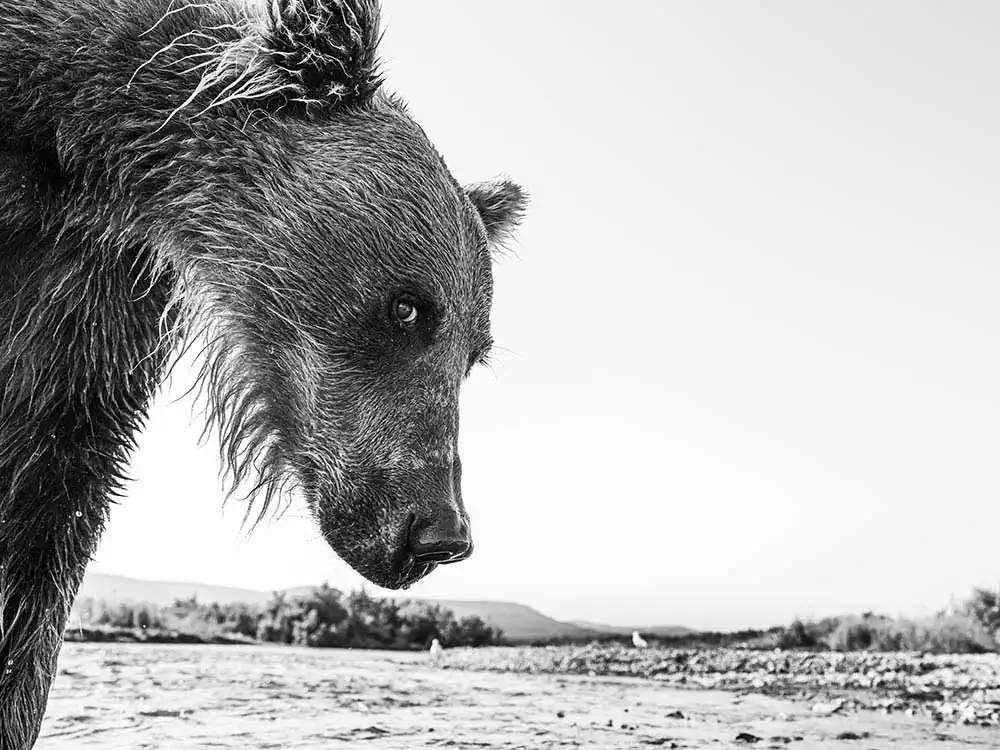
Taken together, these projects reveal the evolving nature of wildlife photography in the contemporary era. The genre continues to celebrate the beauty, power and mystery of the animal world, yet it also carries a growing awareness of the precarious conditions under which many species now survive.
The camera therefore operates simultaneously as a tool of admiration and a form of witness. It records creatures whose presence enriches the planet while reminding us that their future is far from guaranteed.
Through their different approaches, Will Burrard-Lucas, Nick Dale, Michael Pachis, Jessica Circe Rogers and Graeme Purdy demonstrate how wildlife photography can move beyond spectacle. Their images encourage viewers to look more carefully, to recognise the individuality of animals and to reflect on the fragile relationship between humanity and the natural world.
In the end, the most powerful wildlife photographs do more than show animals. They remind us that the wild still exists, but only if we choose to protect it.