

Street photography has often been described as a visual record of the city, but its deeper function lies in observation rather than documentation alone.
It is a way of studying how people inhabit shared spaces, how they move, interact, ignore one another, and construct meaning through ordinary gestures. The street becomes less a location than a living environment in which social behavior unfolds continuously.
Unlike forms of photography that focus on exceptional events, street photography directs attention toward what is habitual and often overlooked. Commuters waiting for transport, informal encounters between strangers, solitary figures absorbed in routine, or subtle negotiations of space in crowded environments all become subjects of inquiry. These scenes may appear mundane, yet they reveal structures of everyday life that are rarely articulated elsewhere.
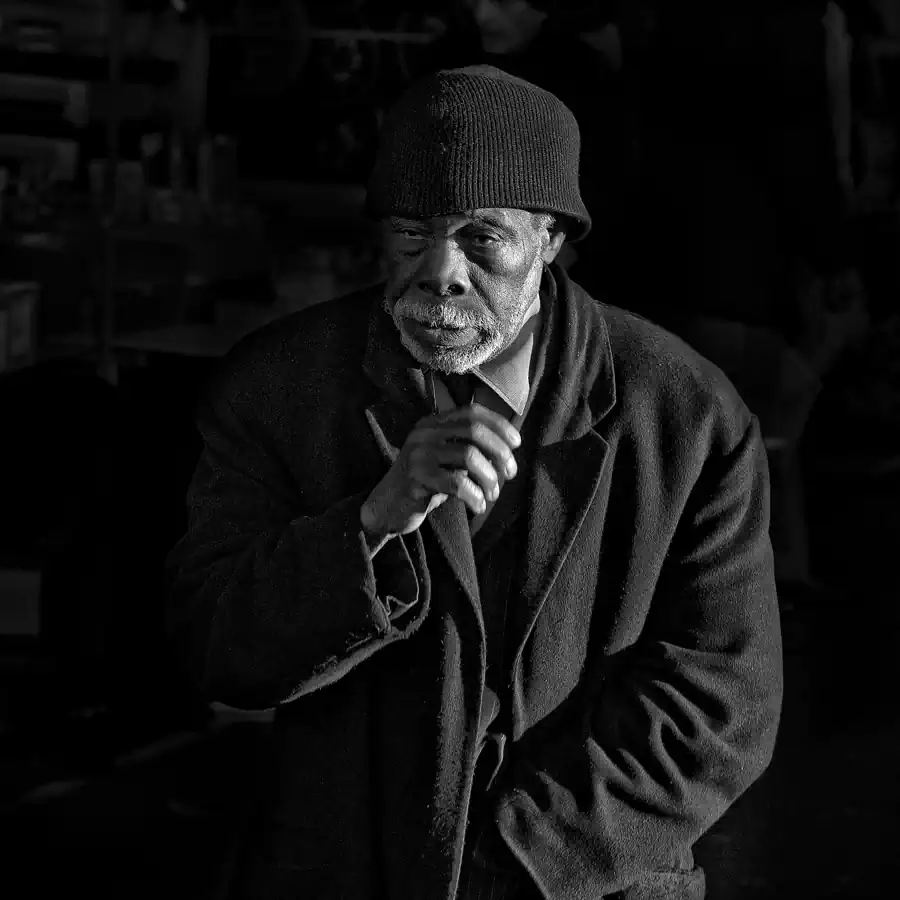
The camera functions here as an observational tool. By isolating fragments of activity from the ongoing flow of the city, street photography makes visible the patterns that shape collective existence. It shows how architecture guides movement, how social codes influence distance and proximity, and how public spaces organize interactions between individuals who may never meet again. Through this process, photography becomes a way of reading the city rather than simply depicting it.
This observational dimension has historical roots in broader traditions of urban analysis. Sociologists, writers, and cultural critics have long examined how modern cities transform relationships between individuals and communities. Street photography translates similar concerns into visual form. Instead of written description, it offers images that condense complex social dynamics into single moments, allowing viewers to interpret behavior, environment, and context simultaneously.
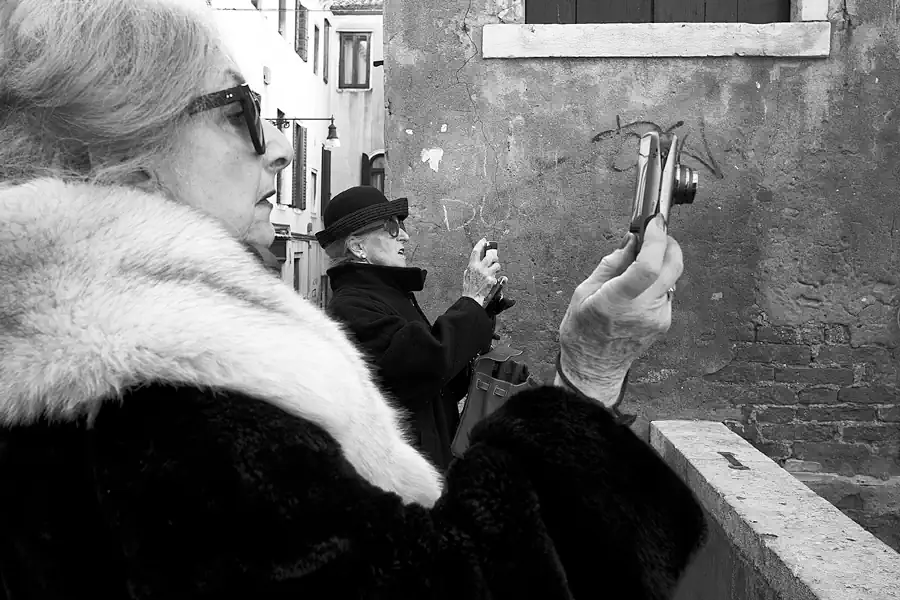
One of the strengths of the medium lies in its ability to reveal contradictions. Cities are spaces of coexistence where differences in class, identity, and purpose intersect. Street photographs frequently show these contrasts without explanation: leisure next to labor, isolation within crowds, anonymity alongside exposure. Such juxtapositions do not provide conclusions, but they invite reflection on how public life accommodates diversity and tension.
Observation in street photography also involves patience. Many practitioners spend extended periods in particular locations, returning repeatedly to the same streets or neighborhoods. This repetition allows them to perceive rhythms that might otherwise remain invisible. Over time, they become attuned to how environments change throughout the day, how light alters perception, and how social interactions follow both predictable and unexpected patterns.
The resulting images can be understood as fragments of a larger narrative that is never fully complete. Each photograph captures only a brief episode within an ongoing social process. Yet when viewed collectively, such images contribute to a broader understanding of how urban societies function. They form a dispersed archive of lived experience, preserving gestures and relationships that official histories rarely acknowledge.
In contemporary contexts, where digital communication increasingly mediates human interaction, street photography retains particular relevance. It continues to examine physical presence and shared environments at a moment when public space itself is undergoing transformation. By focusing on embodied experience rather than virtual exchange, it offers insight into how people continue to negotiate visibility, distance, and coexistence in material settings.
Street photography as social observation therefore extends beyond aesthetic practice. It operates as a form of inquiry into how individuals participate in collective life. Through attentive looking and careful selection, photographers translate everyday occurrences into images that invite viewers to reconsider what is ordinarily taken for granted.
In doing so, the genre affirms that the ordinary is not insignificant. The smallest interactions, once observed closely, reveal the structures and sensibilities through which societies organize themselves. Street photography becomes, in this sense, an ongoing study of human presence within the shared stage of the city.