


Mongolia is often approached as a place of epic scale and simplified narratives. Vast landscapes, nomadic traditions, spirituality, endurance. Yet the projects that truly endure are not those that confirm these expectations, but those that settle into long observation, shared experience, and sustained presence.
The five works below do not attempt to define Mongolia or reduce it to a symbol. They move through it from different positions, aware that territory is not something to be explained, but lived.
In Tsaatan; Mongolia, Madoka Ikegami focuses on one of the country’s most fragile and resilient communities. The Tsaatan, nomadic reindeer herders living in and around the forests of the eastern Taiga, are portrayed without exoticism or forced drama. Ikegami balances portraiture with everyday scenes, revealing a way of life structured by movement, climate, and a deep dependence on animals. The work does not simply document an ancient tradition; it exposes a delicate equilibrium now challenged by conservation laws, climate change, and increasing reliance on tourism. Photography operates here as both record and quiet warning.
France Leclerc’s Kazakh Childhood shifts attention to childhood as a universal space of cultural transmission. Avoiding classical ethnographic distance, Leclerc observes daily life among Kazakh children in Mongolia. Through play, care, and learning, the work highlights values that persist across cultural differences. The strength of the project lies in the tension between distance and familiarity: environments are extreme, yet gestures feel immediately recognizable. Mongolia appears not as a remote exception, but as a place where childhood becomes a shared language.
With Sacred journey to Mongolia, Victoria Knobloch introduces a more introspective approach. Her work is not built on external observation, but on personal experience of travel as ritual. Knobloch understands physical movement as a reflection of an inner process, and her images function as traces of that passage. Landscapes and sacred sites are not descriptive, but evocative, inviting resonance rather than explanation. Mongolia emerges here as a symbolic space where the visible and the invisible intersect.
Josef Buergi’s The migration of the eagle hunters documents one of the harshest cycles of Mongolian nomadic life: winter migration. His photographs follow eagle hunters and their communities as they move through frozen terrain, facing extreme cold and constant risk. There is no easy heroism. Hardship is balanced by solidarity, skill, and knowledge passed down through generations. Migration is presented not as an event, but as a condition, a way of inhabiting land through endurance and memory.
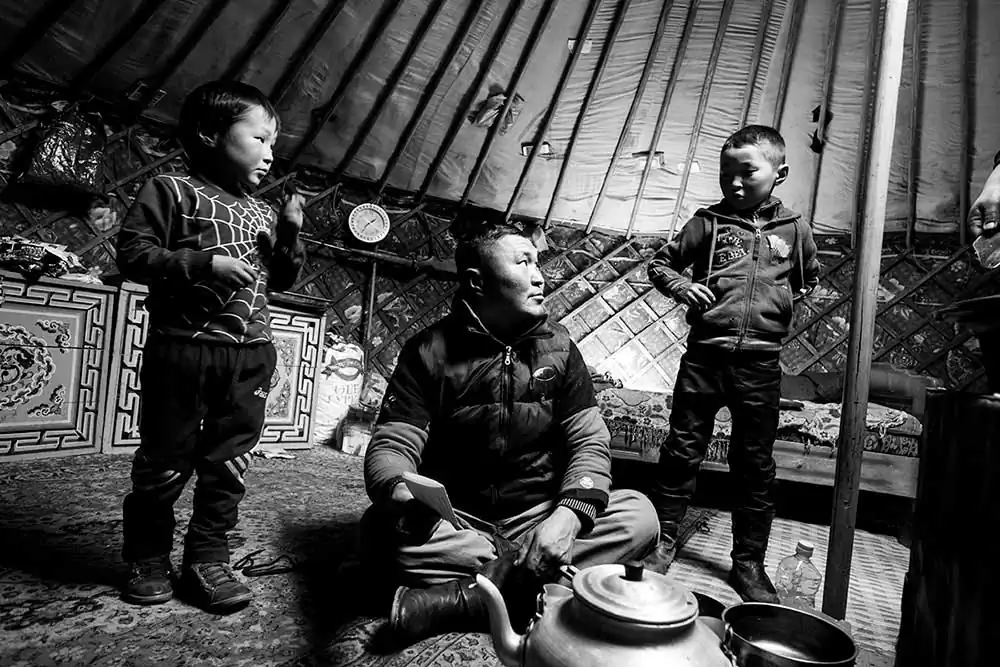
In Tsaatan – The last reindeer tribe, Matteo Maimone returns to northern Mongolia through a more immersive and sensory lens. His work weaves together landscape, ritual, and human presence to create an almost physical experience of place. Spirituality and shamanic practices are not treated as exotic markers, but as lived realities. By moving away from the capital and into remote territories, Maimone portrays Mongolia as a space of silence, vastness, and constant adaptation, one that reshapes those who enter it.
Together, these five projects resist a single, unified image of the country. Instead, they offer multiple points of entry into a complex territory where tradition and transformation exist in constant tension. Mongolia appears as a place where time is non-linear, identity is mobile, and photography can only accompany, never fix.
To rediscover Mongolia through these perspectives is to accept fragmentation, incompleteness, and plurality. It is not about seeing more, but about looking with greater attention. Each of these photographers understands that the real challenge lies not in representing a distant land, but in forming an honest relationship with it, one that remains open and unresolved.
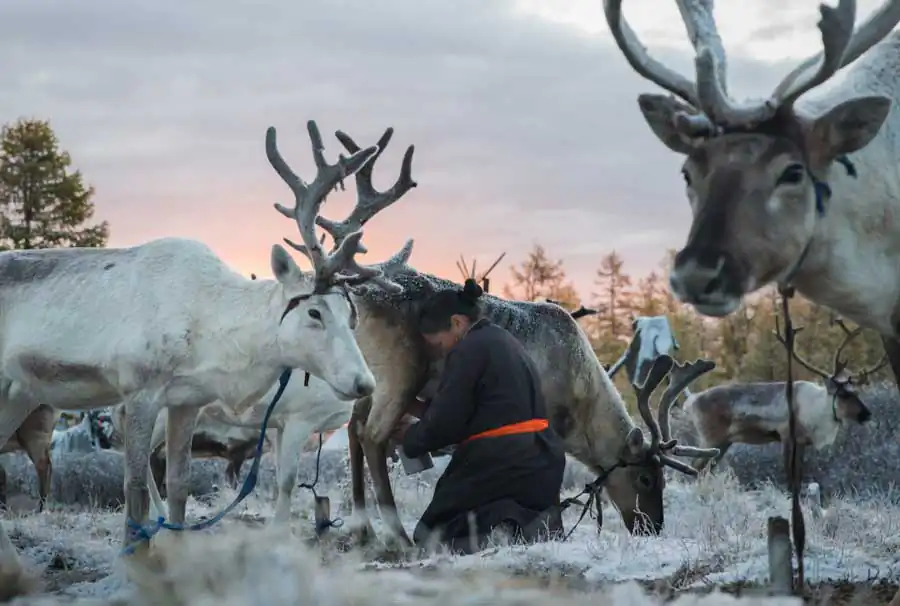
Tsaatan; Mongolia by Madoka Ikegami
This is a series of portraits and general shots of the Tsaatan and Mongolian people who live in and around the forests of the East Taiga region of Khovsgol province in northern Mongolia. The Tsaatan ethnic minority are one of the last remaining groups of nomadic reindeer herders in Mongolia, and have been maintaining their traditions for thousands of years. They seasonally migrate within the forests of the Taiga according to weather and food conditions for their reindeer, which they depend on for milk and transportation. They face challenges to their traditional way of life, with recently introduced laws aimed at conservation limiting their ability to hunt wild animals for food, and climate change affecting their habitat and possibly exposing reindeer to disease. Previously self-supporting, they now are partly dependent on government handouts and tourism to enable them to buy meat and other supplies…Read More
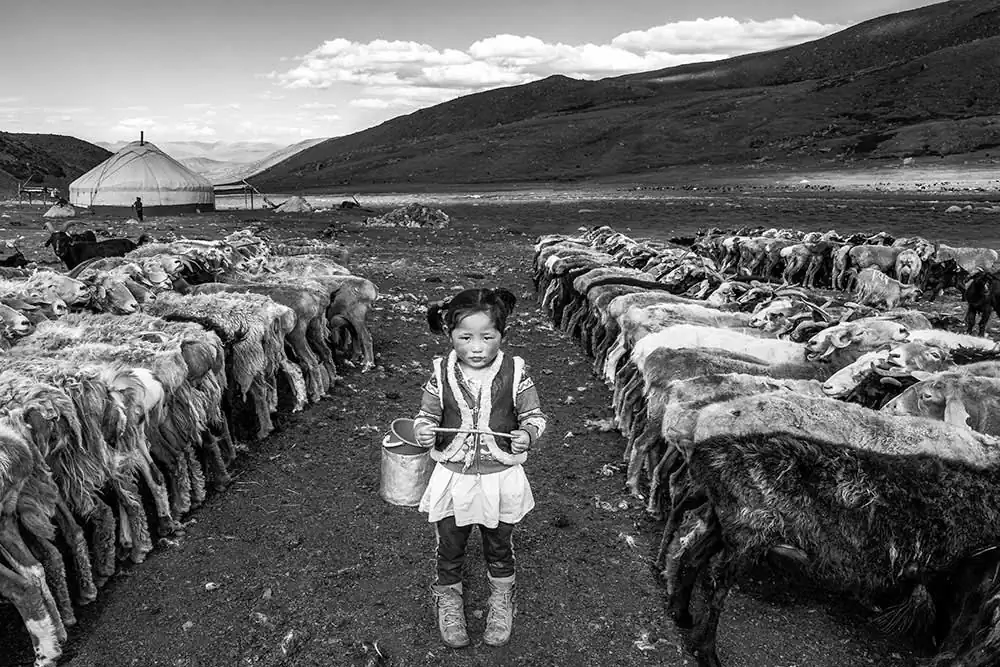
Mongolia; Kazakh Childhood by France Leclerc
For many years I have been traveling and documenting a wide variety of ethnic groups, often in out-of-the-way places worldwide, photographing people with strong ties to their distinctive cultures. My aim in doing so is to illustrate that, despite the vast diversity we see in people around the world, in appearance, traditions, and norms, we nevertheless observe the strong common core values most of us share. I have found that there is no better place to see these commonalities than by observing children’s lives. Though the daily activities may vary quite dramatically from one part of the world to the next, children can thrive if provided with a nurturing caregiver and a safe place to play and explore. Focusing on children also allows me to observe how cultural norms are passed on from one generation to the next… Read More
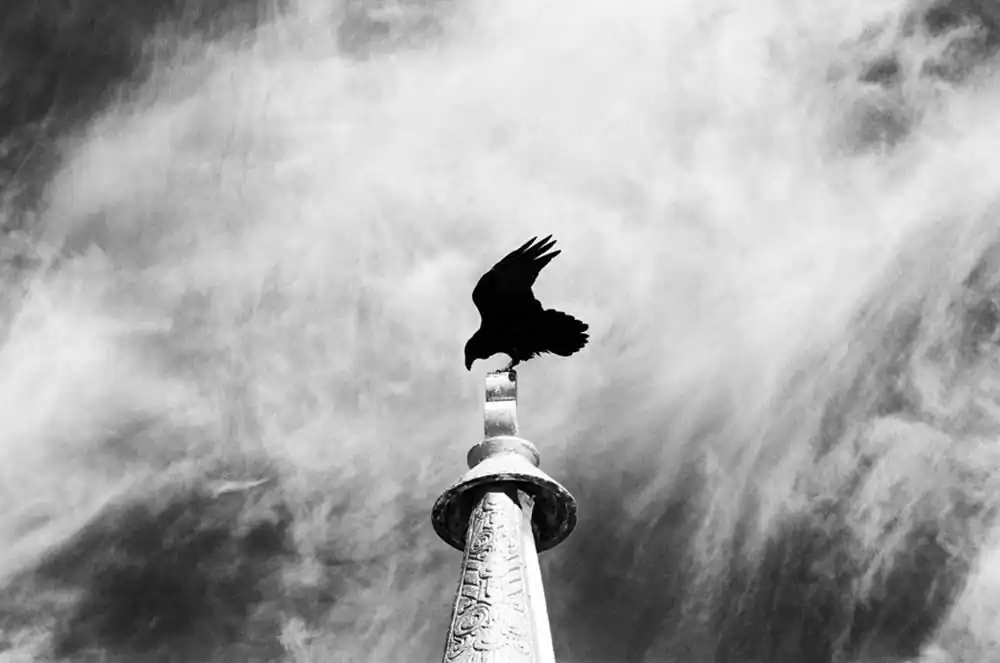
Sacred journey to Mongolia by Victoria Knobloch
It is well said, that the true source, the true human home can only by found within. Yet as humans we live in a world with outside phenomena and the outside influences the inner and vice versa. Therefore once in a while I get a call to visit a sacred place for cleansing, renewal and salvation. So therefore the outer pilgrimage is to be understood as as a symbolic acting out of the inner journey. And since I’m a photographer I always long to share the experiences made with others since I also do believe that even pictures of such places can be uplifting, provided one is open to this of course… Read More
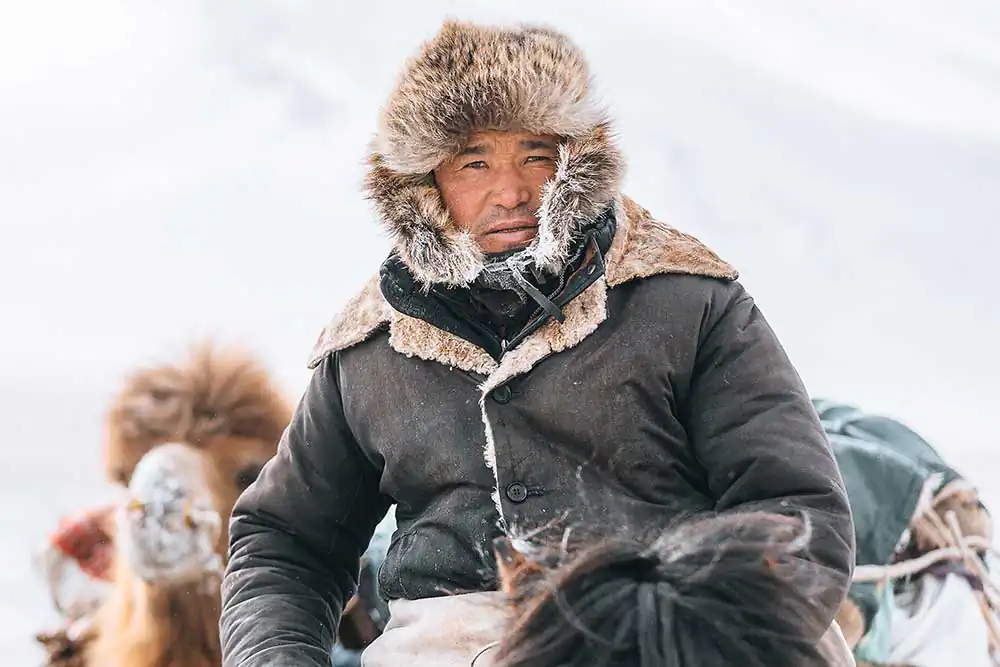
Mongolia – The migration of the eagle hunters by Josef Buergi
Mongolia, a land of vast steppes and rugged beauty, is home to a unique way of life centered around the winter migration of nomadic herders. As temperatures plummet, these resilient people lead their livestock across the frozen landscape in search of fresh grazing grounds. Battling fierce snowstorms and bitter cold, the herders demonstrate remarkable skill and endurance, upholding ancient traditions passed down through generations. The winter migration is a time of hardship and harmony, forging strong bonds within the nomadic community. It is a timeless spectacle that embodies the indomitable spirit of Mongolia’s nomads and their profound connection to the land… Read More
Tsaatan – The last reinder tribe by Matteo Maimone
In Mongolia to the discovery of the last reindeer Dukha men and shamanic rituals. Mongolia is most impressive landscape with a strong spirituality. We start from the tales of the conquests by Genghis Khan and his valiant warriors and then we move on to the beauty that only nature can constantly give. A place where the ability to adapt and a certain mental openness are required because a journey within this land is something sensational. The beauty of these lands is still intact, the views are stunning and the scenarios that are presented are unique. Excluding the chaotic reality of the capital Ulan Batoor and thus immersing yourself in the desolate lands of northern Mongolia, the sensations of peace but also of loneliness and bewilderment envelop you to the point of inducing your own state of mind to merge solely with nature… Read More