
Street photography did not emerge simply because cameras became portable.
It emerged because the modern city itself created a new way of seeing. The growth of industrialized urban centers in the late nineteenth and early twentieth centuries transformed everyday life into a dense field of encounters, movements, and fleeting impressions.
The street became a space defined not by permanence, but by transition. Photography, arriving at this precise historical moment, became the medium best equipped to register that instability.
Modernity altered how individuals experienced time. Cities accelerated perception. Trains, factories, electric lighting, and mass circulation of people generated environments where events unfolded rapidly and often anonymously. Traditional forms of representation, rooted in posed portraiture or monumental subjects, struggled to capture this new rhythm. Street photography answered that challenge by embracing immediacy. Instead of staging reality, it responded to it.
The figure of the urban observer, often associated with the nineteenth century flâneur, anticipated this transformation. Writers and thinkers described the act of walking through the city as a form of attentive drifting, an openness to fragments of life that had no clear narrative. Street photographers inherited this sensibility but replaced literary description with visual interception. The camera allowed them to seize what previously could only be noticed and remembered.
The technological shift to lightweight cameras in the early twentieth century was therefore not merely technical. It aligned perfectly with the psychological condition of modern urban life. Photographers could move within crowds rather than outside them. They no longer documented the city from a distance. They operated inside its flow, reacting to gestures, alignments, and coincidences that existed for only a fraction of a second.
This new practice redefined what constituted a meaningful subject. Instead of historical events or formal compositions, photographers began to focus on ordinary situations: commuters crossing streets, children playing in narrow alleys, strangers sharing public benches, reflections in shop windows, brief visual juxtapositions created by movement and architecture. These moments were not exceptional. Their significance came from their transience. Street photography treated the everyday as historically valuable.
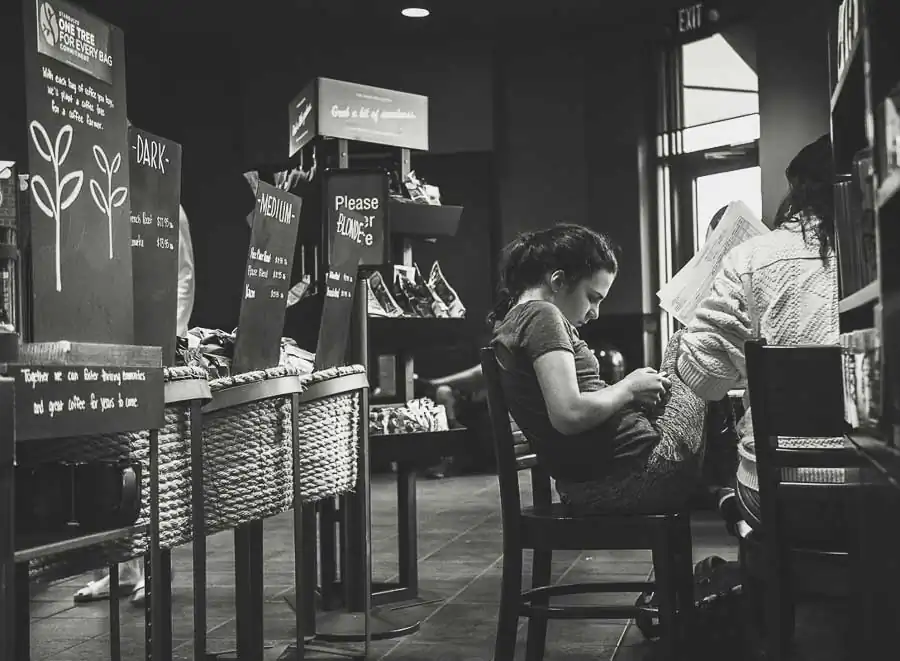
Modernity also fragmented social experience. Urbanization created proximity without familiarity. Individuals shared space without sharing identity. Street photography visualized this paradox. Images often reveal people physically close yet psychologically distant, connected only by circumstance. The camera recorded these silent negotiations of space, offering insight into how modern societies function through coexistence rather than cohesion.
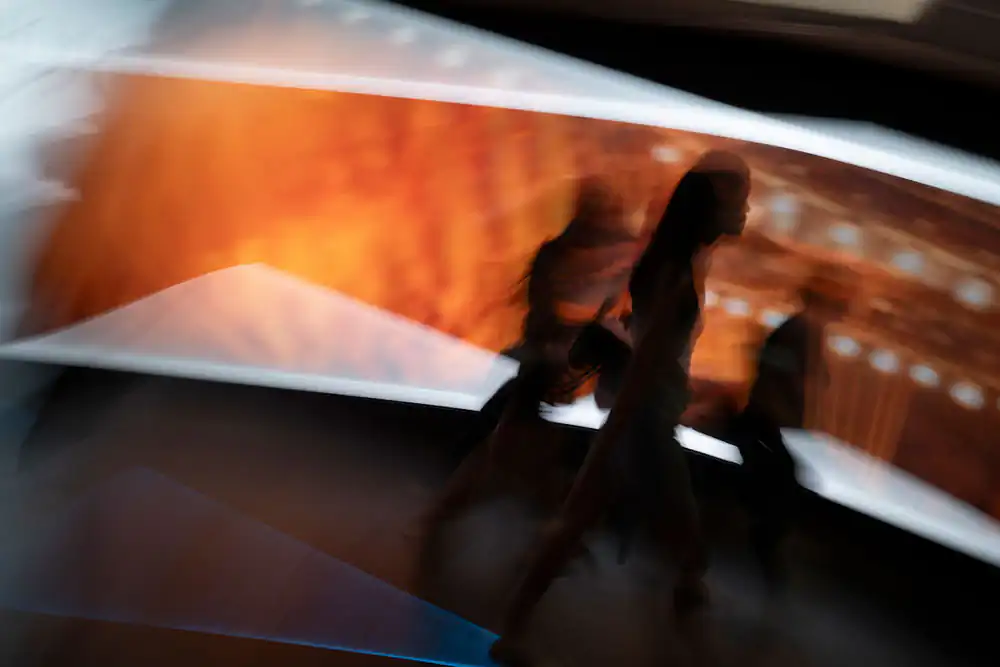
Another defining feature of modern urban life was unpredictability. Unlike studio environments or rural settings shaped by routine, the city produced constant variation. Street photographers embraced this uncertainty as a working method. They did not fully control the image. Instead, they cultivated anticipation, positioning themselves within environments where unexpected relationships between bodies, objects, and light could occur. The photograph became the trace of an encounter rather than the result of design.
This approach challenged long-standing artistic hierarchies. If meaning could arise from an unplanned moment, then authorship shifted from construction to recognition. The photographer’s skill lay not in arranging the world, but in perceiving when form and significance briefly aligned. Street photography thus reflected broader modernist ideas about contingency, perception, and the instability of reality.
Urban architecture also played a crucial role. Modern cities introduced new geometries: grids of streets, repeating facades, signage, and infrastructures that structured movement. These environments generated visual tensions between order and chaos. Street photographers often used architectural elements as frameworks within which human gestures unfolded unpredictably. The resulting images showed the city as both designed system and lived environment.
As the twentieth century progressed, street photography became inseparable from debates about representation and truth. Because it dealt with unstaged situations, it was frequently associated with authenticity. Yet the act of selecting a moment from continuous reality revealed that even candid photography involved interpretation. The photographer decided where to stand, when to react, and what to exclude. Street photography did not simply mirror modern life; it constructed a way of understanding it.
The expansion of mass media reinforced this role. Illustrated magazines and exhibitions circulated street photographs widely, shaping collective visual memory of urban existence. These images helped define how societies imagined themselves during periods of rapid transformation. They offered not grand narratives, but accumulations of small observations that together described the texture of modern living.
In the contemporary era, the relationship between street photography and modernity continues, though the conditions have evolved. Digital technologies and mobile devices have multiplied the production of images, making acts of observation ubiquitous. Yet the essential challenge remains unchanged: to create photographs that reveal something meaningful within environments saturated with visual stimuli. The modern city still produces fleeting configurations of life, and photography still serves as a tool to isolate and interpret them.
Street photography therefore cannot be understood solely as a genre defined by location. It is a response to historical change. It emerged because modernity demanded a visual language capable of addressing speed, anonymity, density, and chance. By engaging directly with the conditions of urban experience, street photography became one of the most enduring ways of thinking about how individuals inhabit public space.
In this sense, every street photograph is not just an image of a place, but a record of how modern life is perceived, negotiated, and remembered.